Rigveda 8.41: To Varuna
Introduction
Rigveda 8.41 is a hymn of 10 verses addressed to Varuna. It stands in book (maṇḍala) 8, the book of the Kaṇva and Aṅgiras poets. The Rigveda is the oldest collection of Sanskrit hymns, composed in the second half of the second millennium BCE and handed down orally for many centuries before it was written down.
The manuscript shown is Penn Ms. Coll. 390 Item 41 (University of Pennsylvania), an undated paper manuscript of the padapāṭha (the word-by-word recitation text, in which every word is written separately and compounds are split) of the whole Ṛgveda in Devanāgarī, 884 leaves in fascicles, 7-9 lines to the page, accents in red; this hymn stands on fol. 612v-613r. Each section below gives the verses that end on one page; the page boundaries were read on the images (the opening words of every page), not counted out. Where the manuscript is a padapāṭha (the word-by-word recitation text), the section shows Aufrecht's continuous (saṃhitā) text first and, as the edition text, the padapāṭha of the same verses, which is the form written on the page.
How was this verified? (Provenance)
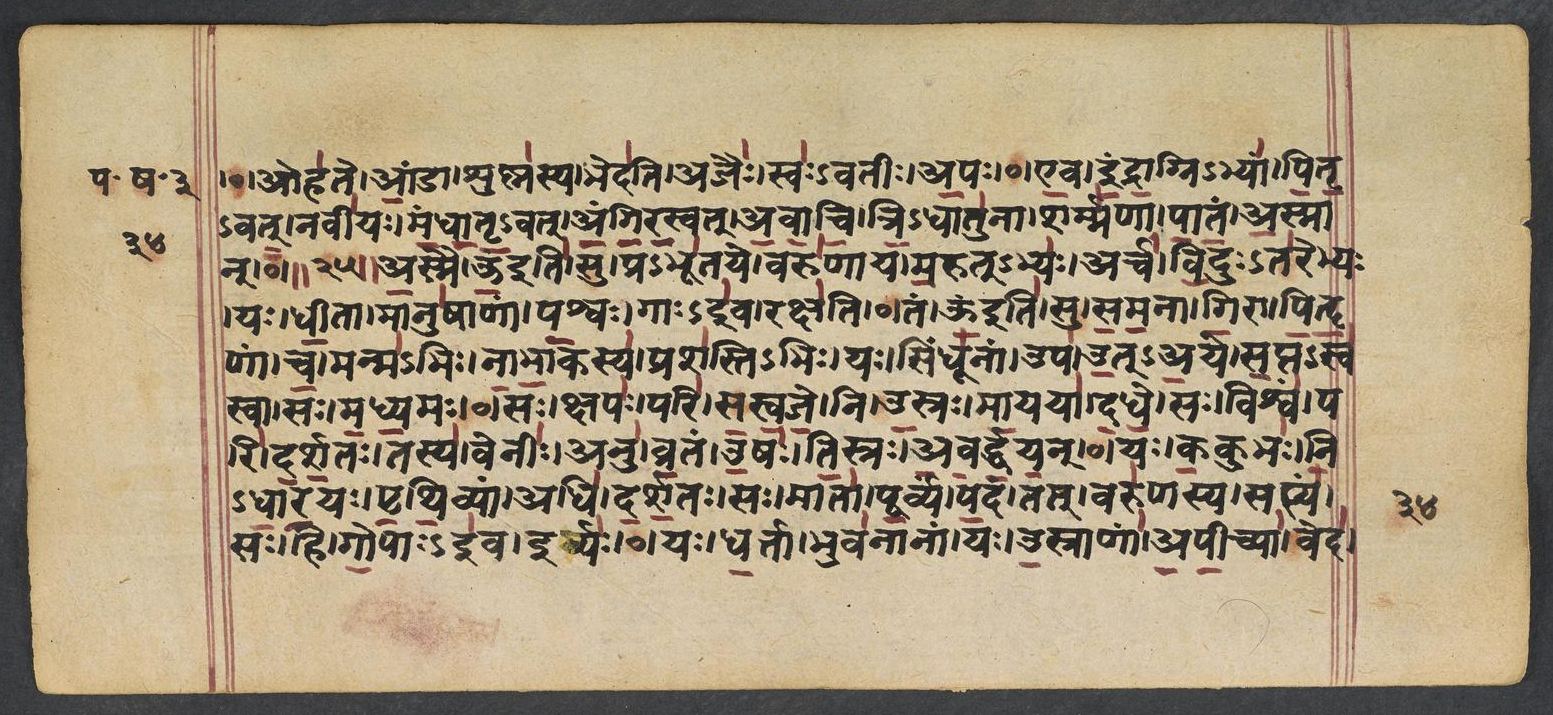
Where on the image
Penn Ms. Coll. 390 Item 41, fol. 612v (numbered 34v by the scribe) (OPenn image 613, upper leaf). Checked on the image: the Rigveda text on this page begins in RV 8.40.10 ‹-cit yaḥ ojasā śuṣṇasya›. The next page with Rigveda text, fol. 613r (numbered 35r by the scribe), begins in RV 8.41.5 ‹nāmāni guhyā saḥ kaviḥ›. Verses 8.41.1-4 end on this page.
1a̱smā ū̱ ṣu prabhū̍taye̱ varu̍ṇāya ma̱rudbhyo 'rcā̍ vi̱duṣṭa̍rebhyaḥ | yo dhī̱tā mānu̍ṣāṇām pa̱śvo gā i̍va̱ rakṣa̍ti̱ nabha̍ntām anya̱ke sa̍me ||
2tam ū̱ ṣu sa̍ma̱nā gi̱rā pi̍tṝ̱ṇāṁ ca̱ manma̍bhiḥ | nā̱bhā̱kasya̱ praśa̍stibhi̱r yaḥ sindhū̍nā̱m upo̍da̱ye sa̱ptasva̍sā̱ sa ma̍dhya̱mo nabha̍ntām anya̱ke sa̍me ||
3sa kṣapa̱ḥ pari̍ ṣasvaje̱ ny u1̱̍sro mā̱yayā̍ dadhe̱ sa viśva̱m pari̍ darśa̱taḥ | tasya̱ venī̱r anu̍ vra̱tam u̱ṣas ti̱sro a̍vardhaya̱n nabha̍ntām anya̱ke sa̍me ||
4yaḥ ka̱kubho̍ nidhāra̱yaḥ pṛ̍thi̱vyām adhi̍ darśa̱taḥ | sa mātā̍ pū̱rvyam pa̱daṁ tad varu̍ṇasya̱ saptya̱ṁ sa hi go̱pā i̱veryo̱ nabha̍ntām anya̱ke sa̍me ||
Compare: Padapāṭha (word-by-word text written in the manuscript; Sansknet e-text via GRETIL)
1asmai | oṃ iti | su | pra-bhūtaye | varuṇāya | marut-bhyaḥ | arca | viduḥ-tarebhyaḥ | yaḥ | dhītā | mānuṣāṇām | paśvaḥ | gāḥ-iva | rakṣati | nabhantām | anyake | same
2tam | oṃ iti | su | samanā | girā | pitṝṇām | ca | manma-bhiḥ | nābhākasya | prasasti-bhiḥ | yaḥ | sindhūnām | upa | ut-aye | sapta-svasā | saḥ | madhyamaḥ | nabhantām | anyake | same
3saḥ | kṣapaḥ | pari | sasvaje | ni | usraḥ | māyayā | dadhe | saḥ | viśvam | pari | darśataḥ | tasya | venīḥ | anu | vratam | uṣaḥ | tisraḥ | avardhayan | nabhantām | anyake | same
4yaḥ | kakubhaḥ | ni-dhārayaḥ | pṛthivyām | adhi | darśataḥ | saḥ | mātā | pūrvyam | padam | tat | varuṇasya | saptyam | saḥ | hi | gopāḥ-iva | iryaḥ | nabhantām | anyake | same
1To make this Varuṇa come forth sing thou a song unto the band of Maruts wiser than thyself,– This Varuṇa who guardeth well the thoughts of men like herds of kine. Let all the others die away.
2Him altogether praise I with the song and hymns our fathers sang, and with Nâbhâka's eulogies,– Him dwelling at the rivers' source, surrounded by his Sisters Seven.
3The nights he hath encompassed, and stablished the morns with magic art visible over all is he. His dear Ones, following his Law, have prospered the Three Dawns for him.
4He, visible o'er all the earth, stablished the quarters of the sky: He measured out the eastern place, that is the fold of Varuṇa: like a strong herdsman is the God.
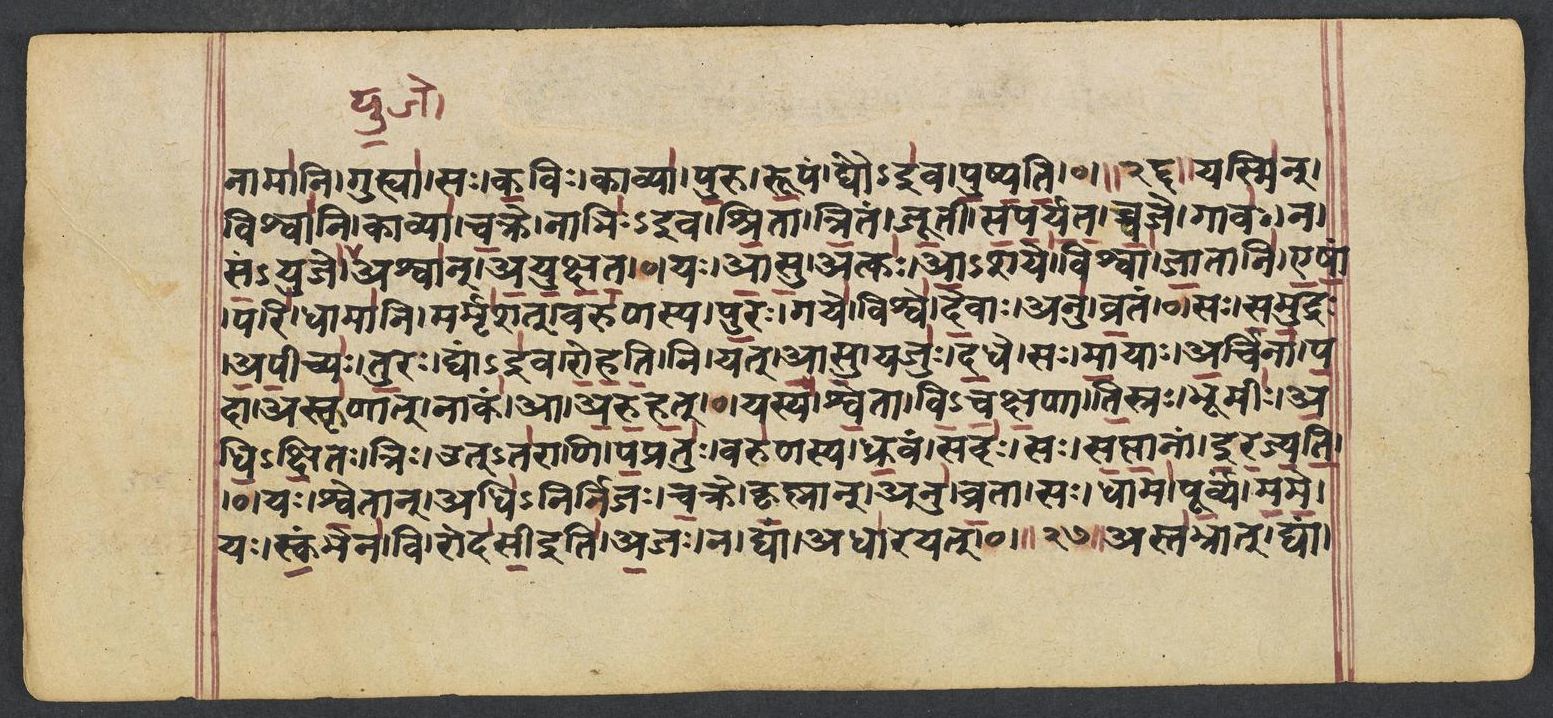
Where on the image
Penn Ms. Coll. 390 Item 41, fol. 613r (numbered 35r by the scribe) (OPenn image 613, lower leaf). Checked on the image: the Rigveda text on this page begins in RV 8.41.5 ‹nāmāni guhyā saḥ kaviḥ›. The next page with Rigveda text, fol. 613v (numbered 35v by the scribe), begins in RV 8.42.1 ‹asuraḥ viśva-vedāḥ amimīta varimāṇam›. Verses 8.41.5-10 end on this page; 8.41.5 begins on fol. 612v (numbered 34v by the scribe).
5yo dha̱rtā bhuva̍nānā̱ṁ ya u̱srāṇā̍m apī̱cyā̱3̱̍ veda̱ nāmā̍ni̱ guhyā̍ | sa ka̱viḥ kāvyā̍ pu̱ru rū̱paṁ dyaur i̍va puṣyati̱ nabha̍ntām anya̱ke sa̍me ||
6yasmi̱n viśvā̍ni̱ kāvyā̍ ca̱kre nābhi̍r iva śri̱tā | tri̱taṁ jū̱tī sa̍paryata vra̱je gāvo̱ na sa̱ṁyuje̍ yu̱je aśvā̍m̐ ayukṣata̱ nabha̍ntām anya̱ke sa̍me ||
7ya ā̱sv atka̍ ā̱śaye̱ viśvā̍ jā̱tāny e̍ṣām | pari̱ dhāmā̍ni̱ marmṛ̍śa̱d varu̍ṇasya pu̱ro gaye̱ viśve̍ de̱vā anu̍ vra̱taṁ nabha̍ntām anya̱ke sa̍me ||
8sa sa̍mu̱dro a̍pī̱cya̍s tu̱ro dyām i̍va rohati̱ ni yad ā̍su̱ yaju̍r da̱dhe | sa mā̱yā a̱rcinā̍ pa̱dāstṛ̍ṇā̱n nāka̱m āru̍ha̱n nabha̍ntām anya̱ke sa̍me ||
9yasya̍ śve̱tā vi̍cakṣa̱ṇā ti̱sro bhūmī̍r adhikṣi̱taḥ | trir utta̍rāṇi pa̱pratu̱r varu̍ṇasya dhru̱vaṁ sada̱ḥ sa sa̍ptā̱nām i̍rajyati̱ nabha̍ntām anya̱ke sa̍me ||
10yaḥ śve̱tām̐ adhi̍nirṇijaś ca̱kre kṛ̱ṣṇām̐ anu̍ vra̱tā | sa dhāma̍ pū̱rvyam ma̍me̱ yaḥ ska̱mbhena̱ vi roda̍sī a̱jo na dyām adhā̍raya̱n nabha̍ntām anya̱ke sa̍me ||
Compare: Padapāṭha (word-by-word text written in the manuscript; Sansknet e-text via GRETIL)
5yaḥ | dhartā | bhuvanānām | yaḥ | usrāṇām | apīcyā | veda | nāmāni | guhyā | saḥ | kaviḥ | kāvyā | puru | rūpam | dyauḥ-iva | puṣyati | nabhantām | anyake | same
6yasmin | viśvāni | kāvyā | cakre | nābhiḥ-iva | śritā | tritam | jūtī | saparyata | vraje | gāvaḥ | na | sam-yuje | yuje | aśvāmn | ayukṣata | nabhantām | anyake | same
7yaḥ | āsu | atkaḥ | āśaye | viśvā | jātāni | eṣām | pari | dhāmāni | marmṛśat | varuṇasya | puraḥ | gayaḥ | viśve | devāḥ | anu | vratam | nabhantām | anyake | same
8saḥ | samudraḥ | apīcyaḥ | turaḥ | dyām-iva | rohati | ni | yat | āsu | yajuḥ | dadhe | saḥ | māyāḥ | arcinā | padā | astṛṇāt | nākam | ā | aruhat | nabhantām | anyake | same
9yasya | śvetā | vi-cakṣaṇā | tisraḥ | bhūmīḥ | adhi-kṣitaḥ | triḥ | ut-tarāṇi | papratuḥ | varuṇasya | dhruvam | sadaḥ | saḥ | saptānām | irajyati | nabhantām | anyake | same
10yaḥ | śvetān | adhi-nirnijaḥ | cakre | kṛṣṇān | anu | vratā | saḥ | dhāma | pūrvyam | mame | yaḥ | skambhena | vi | rodasī iti | ajaḥ | na | dyām | adhārayat | nabhantām | anyake | same
5He who supports the worlds of life, he who well knows the hidden names mysterious of the morning beams, He cherishes much wisdom, Sage, as heaven brings forth each varied form.
6In whom all wisdom centres, as the nave is set within the wheel. Haste ye to honour Trita, as kine haste to gather in the fold, even as they muster steeds to yoke.
7He wraps these regions as a robe; he contemplates the tribes of Gods and all the works of mortal men. Before the home of Varuṇa all the Gods follow his decree.
8He is an Ocean far-removed, yet through the heaven to him ascends the worship which these realms possess. With his bright foot he overthrew their magic, and went up to heaven.
9Ruler, whose bright far-seeing rays, pervading all three earths, have filled the three superior realms of heaven. Firm is the seat of Varuṇa: over the Seven he rules as King.
10Who, after his decree, o'erspread the Dark Ones with a robe of light; Who measured out the ancient seat, who pillared both the worlds apart as the Unborn supported heaven. Let all the others die away.
Notes
- Sanskrit: Aufrecht's edition (1877) with the Vedic accents, as entered by van Nooten and Holland (GRETIL).
- English: Ralph T. H. Griffith, The Hymns of the Rigveda (1889-1892; 2nd ed. 1896-1897), from the VedaWeb digital text; OCR slips in that text were corrected against the printed 2nd edition (data/sources/rigveda/griffith_errata.json).
- Padapāṭha (edition text): Sansknet e-text via GRETIL (CC BY-NC-SA 4.0).
Cite
Sources
- Source: Penn Ms. Coll. 390 Item 41 (undated (catalogued with Penn's 18th-19th c. Vedic manuscripts)), OPenn, Public Domain Mark + Aufrecht's accented text (GRETIL) + Griffith's English (VedaWeb) (holding institution)
- Critical edition: Aufrecht (1877), accented e-text via GRETIL
← previous · → next · v cycle view · l back to library