Rigveda 8.42: To Varuna and the Asvins
Introduction
Rigveda 8.42 is a hymn of 6 verses addressed to Varuna and the Asvins. It stands in book (maṇḍala) 8, the book of the Kaṇva and Aṅgiras poets. The Rigveda is the oldest collection of Sanskrit hymns, composed in the second half of the second millennium BCE and handed down orally for many centuries before it was written down.
The manuscript shown is Penn Ms. Coll. 390 Item 41 (University of Pennsylvania), an undated paper manuscript of the padapāṭha (the word-by-word recitation text, in which every word is written separately and compounds are split) of the whole Ṛgveda in Devanāgarī, 884 leaves in fascicles, 7-9 lines to the page, accents in red; this hymn stands on fol. 613r-613v. Each section below gives the verses that end on one page; the page boundaries were read on the images (the opening words of every page), not counted out. Where the manuscript is a padapāṭha (the word-by-word recitation text), the section shows Aufrecht's continuous (saṃhitā) text first and, as the edition text, the padapāṭha of the same verses, which is the form written on the page.
How was this verified? (Provenance)
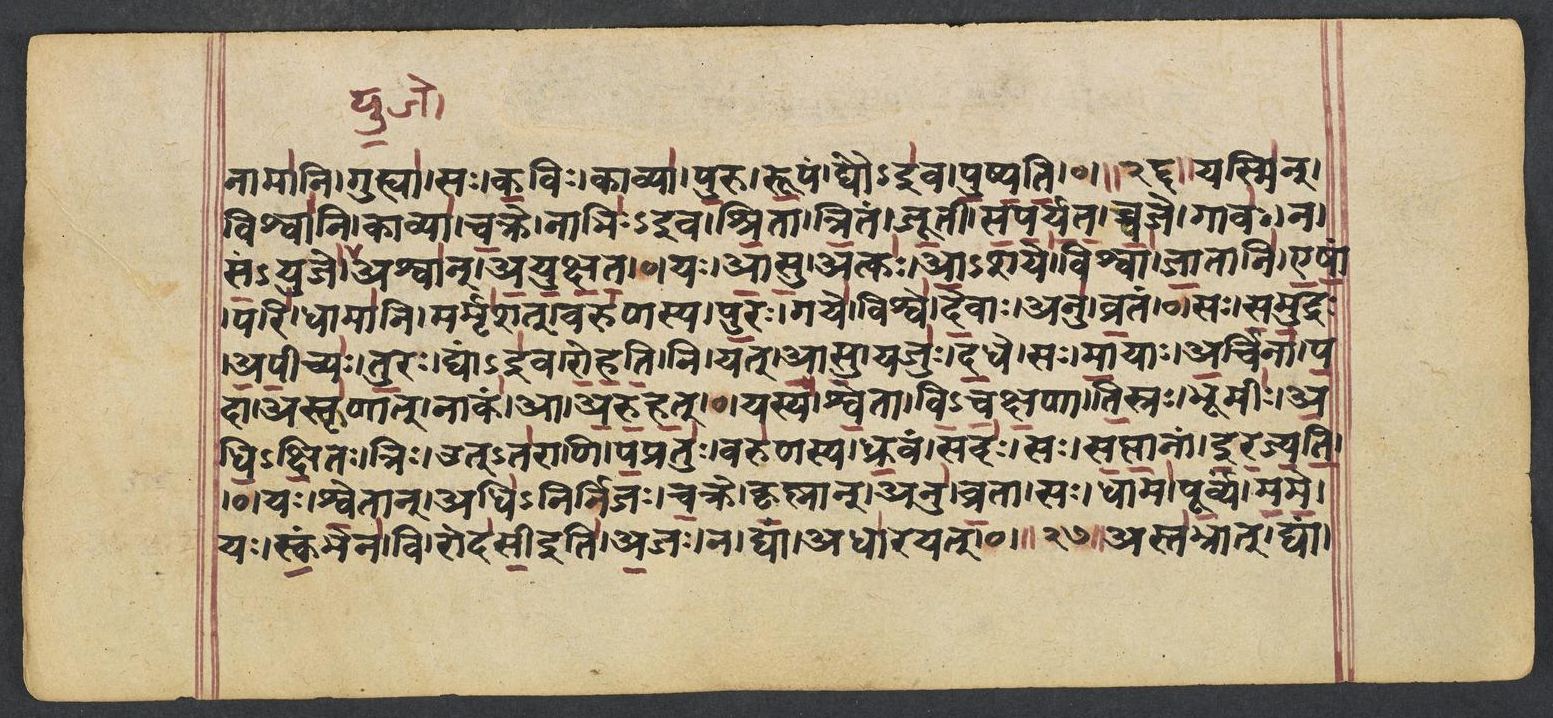
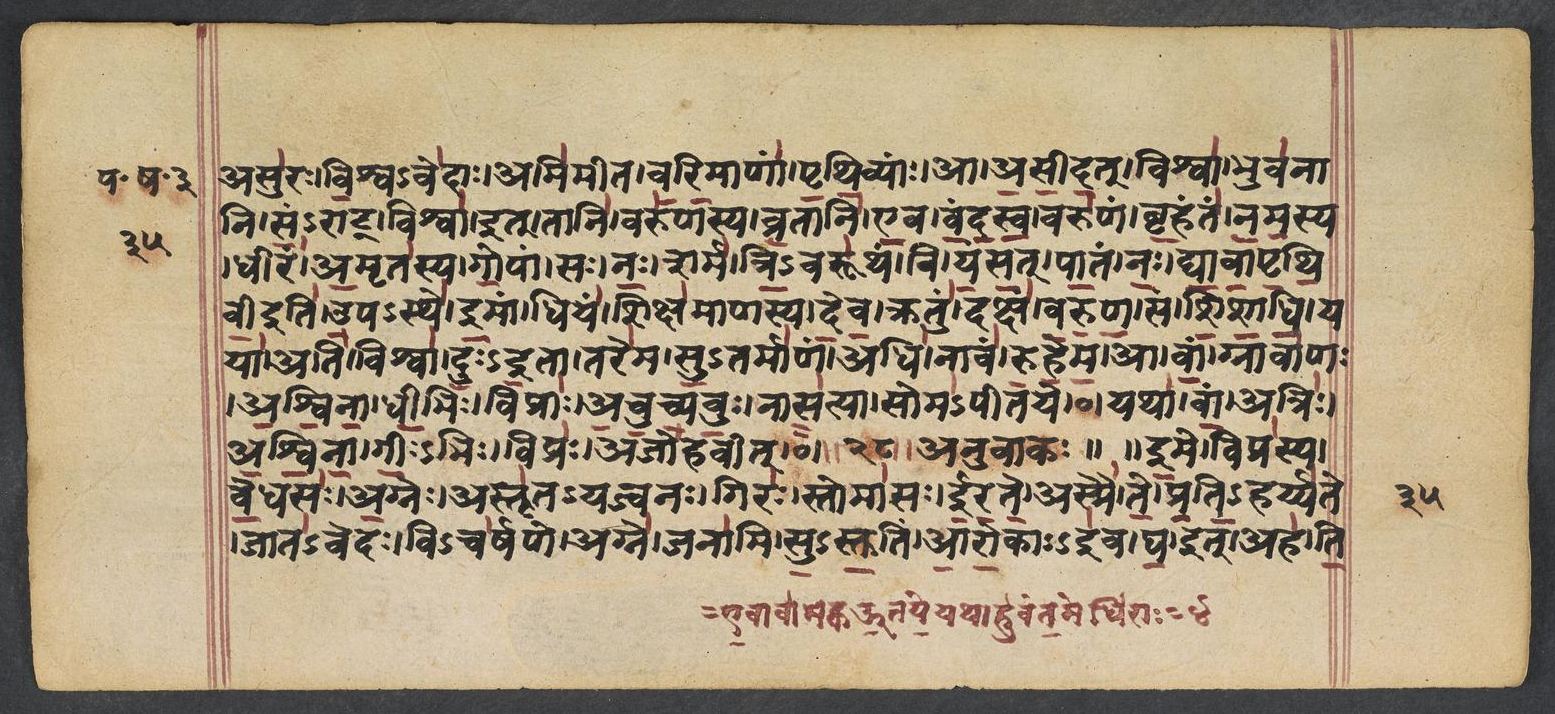
Where on the image
Penn Ms. Coll. 390 Item 41, fol. 613v (numbered 35v by the scribe) (OPenn image 614, upper leaf). Checked on the image: the Rigveda text on this page begins in RV 8.42.1 ‹asuraḥ viśva-vedāḥ amimīta varimāṇam›. The next page with Rigveda text, fol. 614r (numbered 36r by the scribe), begins in RV 8.43.3 ‹-tigmāḥ agne tava tviṣaḥ›. Verses 8.42.1-6 end on this page; 8.42.1 begins on fol. 613r (numbered 35r by the scribe).
1asta̍bhnā̱d dyām asu̍ro vi̱śvave̍dā̱ ami̍mīta vari̱māṇa̍m pṛthi̱vyāḥ | āsī̍da̱d viśvā̱ bhuva̍nāni sa̱mrāḍ viśvet tāni̱ varu̍ṇasya vra̱tāni̍ ||
2e̱vā va̍ndasva̱ varu̍ṇam bṛ̱hanta̍ṁ nama̱syā dhīra̍m a̱mṛta̍sya go̱pām | sa na̱ḥ śarma̍ tri̱varū̍tha̱ṁ vi ya̍ṁsat pā̱taṁ no̍ dyāvāpṛthivī u̱pasthe̍ ||
3i̱māṁ dhiya̱ṁ śikṣa̍māṇasya deva̱ kratu̱ṁ dakṣa̍ṁ varuṇa̱ saṁ śi̍śādhi | yayāti̱ viśvā̍ duri̱tā tare̍ma su̱tarmā̍ṇa̱m adhi̱ nāva̍ṁ ruhema ||
4ā vā̱ṁ grāvā̍ṇo aśvinā dhī̱bhir viprā̍ acucyavuḥ | nāsa̍tyā̱ soma̍pītaye̱ nabha̍ntām anya̱ke sa̍me ||
5yathā̍ vā̱m atri̍r aśvinā gī̱rbhir vipro̱ ajo̍havīt | nāsa̍tyā̱ soma̍pītaye̱ nabha̍ntām anya̱ke sa̍me ||
6e̱vā vā̍m ahva ū̱taye̱ yathāhu̍vanta̱ medhi̍rāḥ | nāsa̍tyā̱ soma̍pītaye̱ nabha̍ntām anya̱ke sa̍me ||
Compare: Padapāṭha (word-by-word text written in the manuscript; Sansknet e-text via GRETIL)
1astabhnāt | dyām | asuraḥ | viśva-vedāḥ | amimīta | varimāṇam | pṛthivyāḥ | ā | asīdat | viśvā | bhuvanāni | sam-rāṭ | viśvā | it | tāni | varuṇasya | vratāni
2eva | vandasva | varuṇam | bṛhantam | namasya | dhīram | amṛtasya | gopām | saḥ | naḥ | śarma | tri-varūtham | vi | yaṃsat | patam | naḥ | dyāvāpṛthivī iti | upa-sthe
3imām | dhiyam | śikṣamāṇasya | deva | kratum | dakṣam | varuṇa | sam | śiśādhi | yayā | ati | viśvā | duḥ-itā | tarema | su-tarmāṇam | adhi | nāvam | ruhema
4ā | vām | grāvāṇaḥ | aśvinā | dhībhiḥ | viprāḥ | acucyavuḥ | nāsatyā | soma-pītaye | nabhantām | anyake | same
5yathā | vām | atriḥ | aśvinā | gīḥ-bhiḥ | vipraḥ | ajohavīt | nāsatyā | soma-pītaye | nabhantām | anyake | same
6eva | vām | ahve | ūtaye | yathā | ahuvanta | medhirāḥ | nāsatyā | soma-pītaye | nabhantām | anyake | same
1LORD of all wealth, the Asura propped the heavens, and measured out the broad earth's wide expanses. He, King supreme, approached all living creatures. All these are Varuṇa's holy operations.
2So humbly worship Varuṇa the Mighty revere the wise Guard of World Immortal. May he vouchsafe us triply-barred protection. O Earth and Heaven, within your lap preserve us.
3Sharpen this song of him who strives his utmost, sharpen, God Varuṇa, his strength and insight; May we ascend the ship that bears us safely, whereby we may pass over all misfortune.
4Aṣvins, with songs the singer stones have made you hasten hitherward, Nâsatyas, to the Soma-draught. Let all the others die away.
5As the sage Atri with his hymns, O Aṣvins, called you eagerly, Nâsatyas, to the Soma-draught. Let all the others die away.
6So have I called you to our aid, even as the wise have called of old, Nâsatyas, to the Soma-draught. Let all the others die away.
Notes
- Sanskrit: Aufrecht's edition (1877) with the Vedic accents, as entered by van Nooten and Holland (GRETIL).
- English: Ralph T. H. Griffith, The Hymns of the Rigveda (1889-1892; 2nd ed. 1896-1897), from the VedaWeb digital text; OCR slips in that text were corrected against the printed 2nd edition (data/sources/rigveda/griffith_errata.json).
- Padapāṭha (edition text): Sansknet e-text via GRETIL (CC BY-NC-SA 4.0).
Cite
Sources
- Source: Penn Ms. Coll. 390 Item 41 (undated (catalogued with Penn's 18th-19th c. Vedic manuscripts)), OPenn, Public Domain Mark + Aufrecht's accented text (GRETIL) + Griffith's English (VedaWeb) (holding institution)
- Critical edition: Aufrecht (1877), accented e-text via GRETIL
← previous · → next · v cycle view · l back to library