Rigveda 8.43: To Agni
Introduction
Rigveda 8.43 is a hymn of 33 verses addressed to Agni. It stands in book (maṇḍala) 8, the book of the Kaṇva and Aṅgiras poets. The Rigveda is the oldest collection of Sanskrit hymns, composed in the second half of the second millennium BCE and handed down orally for many centuries before it was written down.
The manuscript shown is Penn Ms. Coll. 390 Item 41 (University of Pennsylvania), an undated paper manuscript of the padapāṭha (the word-by-word recitation text, in which every word is written separately and compounds are split) of the whole Ṛgveda in Devanāgarī, 884 leaves in fascicles, 7-9 lines to the page, accents in red; this hymn stands on fol. 613v-615r. Each section below gives the verses that end on one page; the page boundaries were read on the images (the opening words of every page), not counted out. Where the manuscript is a padapāṭha (the word-by-word recitation text), the section shows Aufrecht's continuous (saṃhitā) text first and, as the edition text, the padapāṭha of the same verses, which is the form written on the page.
How was this verified? (Provenance)
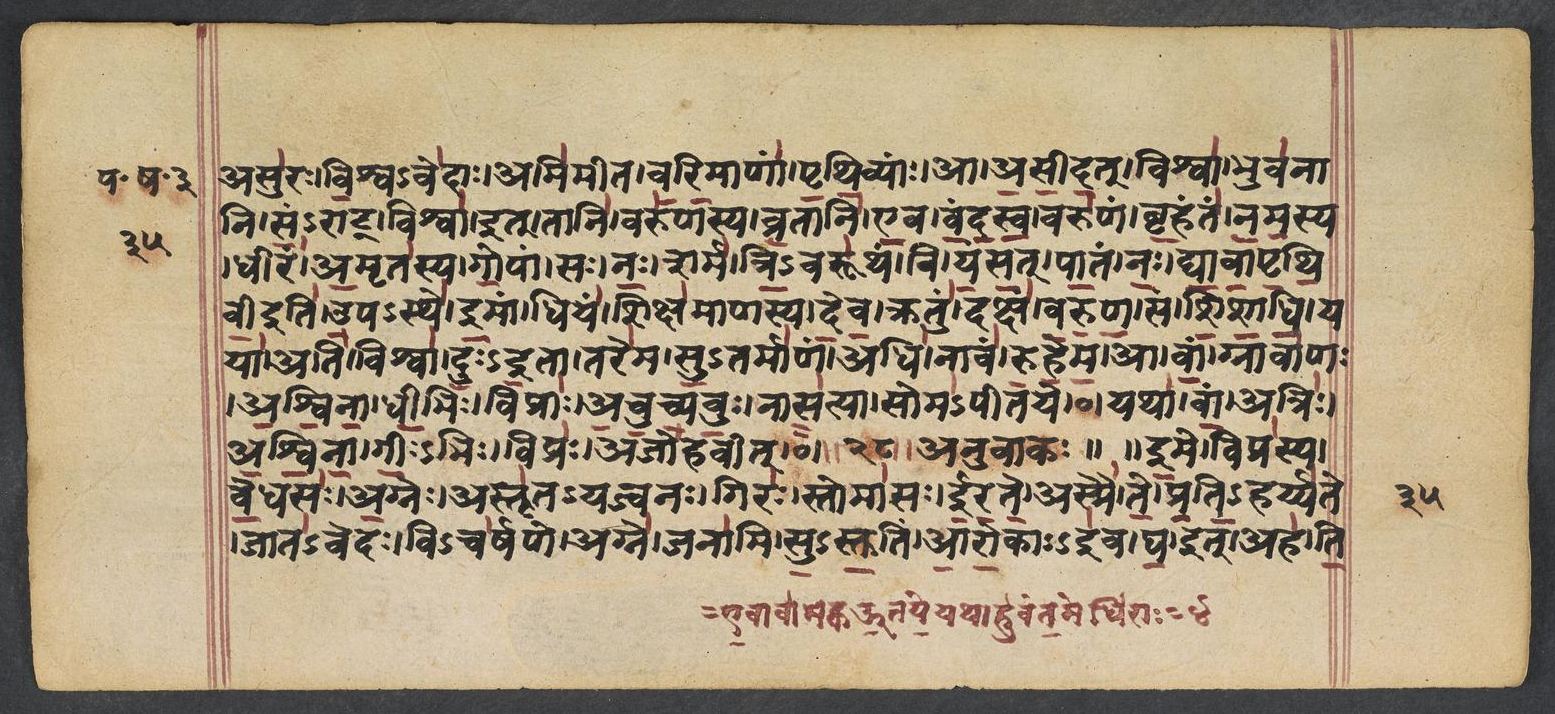
Where on the image
Penn Ms. Coll. 390 Item 41, fol. 613v (numbered 35v by the scribe) (OPenn image 614, upper leaf). Checked on the image: the Rigveda text on this page begins in RV 8.42.1 ‹asuraḥ viśva-vedāḥ amimīta varimāṇam›. The next page with Rigveda text, fol. 614r (numbered 36r by the scribe), begins in RV 8.43.3 ‹-tigmāḥ agne tava tviṣaḥ›. Verses 8.43.1-2 end on this page.
1i̱me vipra̍sya ve̱dhaso̱ 'gner astṛ̍tayajvanaḥ | gira̱ḥ stomā̍sa īrate ||
2asmai̍ te prati̱harya̍te̱ jāta̍vedo̱ vica̍rṣaṇe | agne̱ janā̍mi suṣṭu̱tim ||
Compare: Padapāṭha (word-by-word text written in the manuscript; Sansknet e-text via GRETIL)
1ime | viprasya | vedhasaḥ | agneḥ | astṛta-yajvanaḥ | giraḥ | stomāsaḥ | īrate
2asmai | te | prati-haryate | jāta-vedaḥ | vi-carṣaṇe | agne | janāmi | su-stutim
1THESE songs of mine go forth as lauds of Agni, the disposing Sage, Whose worshipper is ne'er o'erthrawn.
2Wise Agni Jâtavedas, I beget a song of praise for thee. Who willingly receivest it.
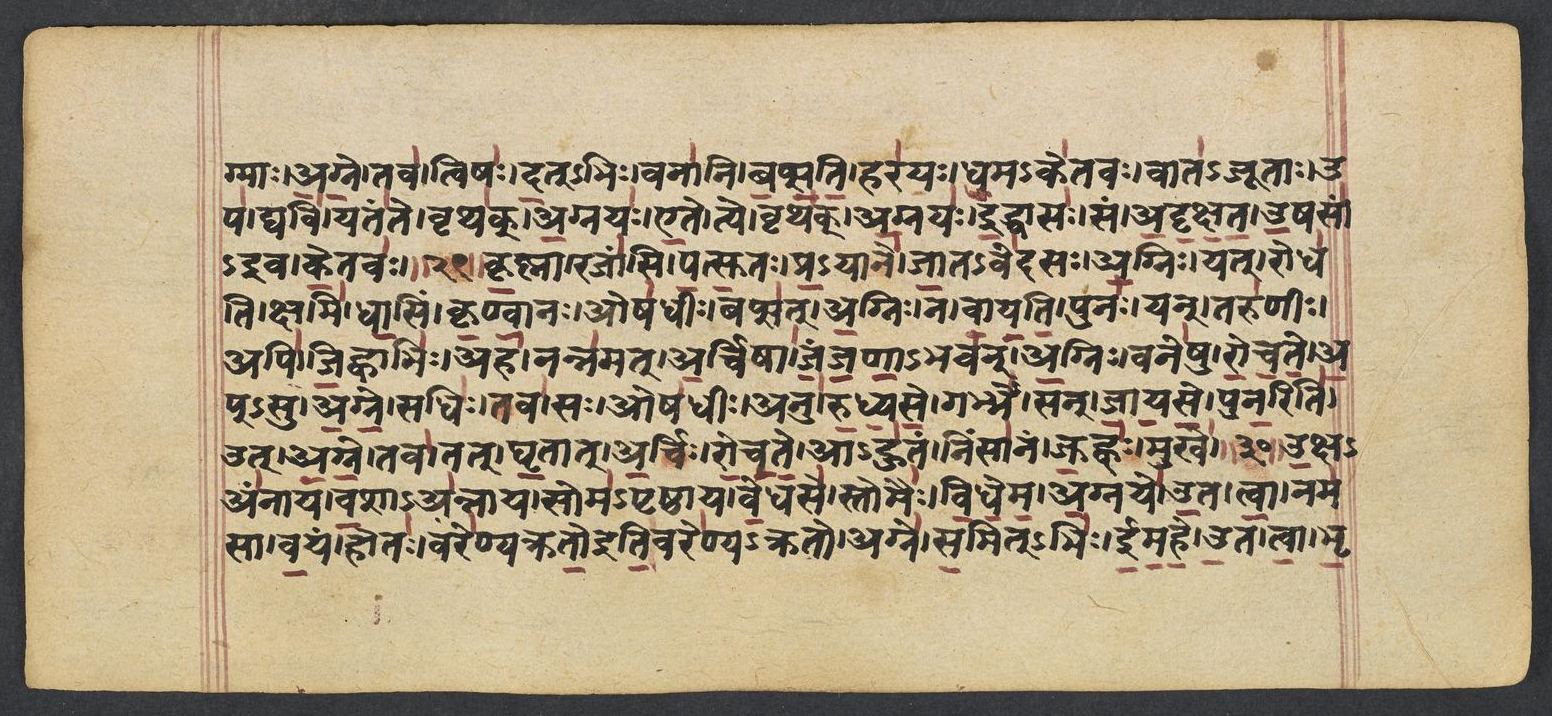
Where on the image
Penn Ms. Coll. 390 Item 41, fol. 614r (numbered 36r by the scribe) (OPenn image 614, lower leaf). Checked on the image: the Rigveda text on this page begins in RV 8.43.3 ‹-tigmāḥ agne tava tviṣaḥ›. The next page with Rigveda text, fol. 614v (numbered 36v by the scribe), begins in RV 8.43.13 ‹-bhṛgu-vat śuce manuṣvat agne›. Verses 8.43.3-12 end on this page; 8.43.3 begins on fol. 613v (numbered 35v by the scribe).
3ā̱ro̱kā i̍va̱ ghed aha̍ ti̱gmā a̍gne̱ tava̱ tviṣa̍ḥ | da̱dbhir vanā̍ni bapsati ||
4hara̍yo dhū̱make̍tavo̱ vāta̍jūtā̱ upa̱ dyavi̍ | yata̍nte̱ vṛtha̍g a̱gnaya̍ḥ ||
5e̱te tye vṛtha̍g a̱gnaya̍ i̱ddhāsa̱ḥ sam a̍dṛkṣata | u̱ṣasā̍m iva ke̱tava̍ḥ ||
6kṛ̱ṣṇā rajā̍ṁsi patsu̱taḥ pra̱yāṇe̍ jā̱tave̍dasaḥ | a̱gnir yad rodha̍ti̱ kṣami̍ ||
7dhā̱siṁ kṛ̍ṇvā̱na oṣa̍dhī̱r bapsa̍d a̱gnir na vā̍yati | puna̱r yan taru̍ṇī̱r api̍ ||
8ji̱hvābhi̱r aha̱ nanna̍mad a̱rciṣā̍ jañjaṇā̱bhava̍n | a̱gnir vane̍ṣu rocate ||
9a̱psv a̍gne̱ sadhi̱ṣ ṭava̱ sauṣa̍dhī̱r anu̍ rudhyase | garbhe̱ sañ jā̍yase̱ puna̍ḥ ||
10ud a̍gne̱ tava̱ tad ghṛ̱tād a̱rcī ro̍cata̱ āhu̍tam | niṁsā̍naṁ ju̱hvo̱3̱̍ mukhe̍ ||
11u̱kṣānnā̍ya va̱śānnā̍ya̱ soma̍pṛṣṭhāya ve̱dhase̍ | stomai̍r vidhemā̱gnaye̍ ||
12u̱ta tvā̱ nama̍sā va̱yaṁ hota̱r vare̍ṇyakrato | agne̍ sa̱midbhi̍r īmahe ||
Compare: Padapāṭha (word-by-word text written in the manuscript; Sansknet e-text via GRETIL)
3ārokāḥ-iva | gha | it | aha | tigmāḥ | agne | tava | tviṣaḥ | dat-bhiḥ | vanāni | bapsati
4harayaḥ | dhūma-ketavaḥ | vāta-jūtāḥ | upa | dyavi | yatante | vṛthak | agnayaḥ
5ete | tye | vṛthak | agnayaḥ | iddhāsaḥ | sam | adṛkṣata | uṣasām-iva | ketavaḥ
6kṛṣṇā | rajāṃsi | patsutaḥ | pra-yāṇe | jāta-vedasaḥ | agniḥ | yat | rodhati | kṣam i
7dhāsim | kṛṇvānaḥ | oṣadhīḥ | bapsat | agniḥ | na | vāyati | punaḥ | yan | taruṇīḥ | api
8jihvābhiḥ | aha | nannamat | arciṣā | jañjaṇābhavan | agniḥ | vaneṣu | rocate
9ap-su | agne | sadhiḥ | tava | saḥ | oṣadhīḥ | anu | rudhyase | garbhe | san | jāyase | punariti
10ut | agne | tava | tat | ghṛtāt | arciḥ | rocate | āhutam | niṃsānam | juhvaḥ | mukhe
11ukṣa-annāya | vaśāannāya | soma-pṛṣṭhāya | vedhase | stomaiḥ | vidhema | agnaye
12uta | tvā | namasā | vayam | hotaḥ | vareṇyakrato itivareṇya-krato | agne | samit-bhiḥ | īmahe
3Thy sharpened flames, O Agni, like the gleams of light that glitter through, Devour the forests with their teeth.
4Gold-coloured, bannered with the smoke, urged by the wind, aloft to heaven Rise, lightly borne, the flames of fire.
5These lightly kindled fiery flames are all around made visible, Even as the gleamings of the Dawns.
6As Jâtavedas speeds along, the dust is black beneath his feet, When Agni spreads upon the earth.
7Making the plants his nourishment, Agni devours and wearies not, Seeking the tender shrubs again.
8Bending him down with all his tongues, he flickers with his fiery glow Splendid is Agni in the woods.
9Agni, thine home is in the floods: into the plants thou forcest way, And as their Child art born anew.
10Worshipped with offerings shines thy flame, O Agni, from the sacred oil, With kisses on the ladle's mouth.
11Let us serve Agni with our hymns, Disposer, fed on ox and cow, Who bears the Soma on his back.
12Yea, thee, O Agni, do we seek with homage and with fuel, Priest Whose wisdom is most excellent.
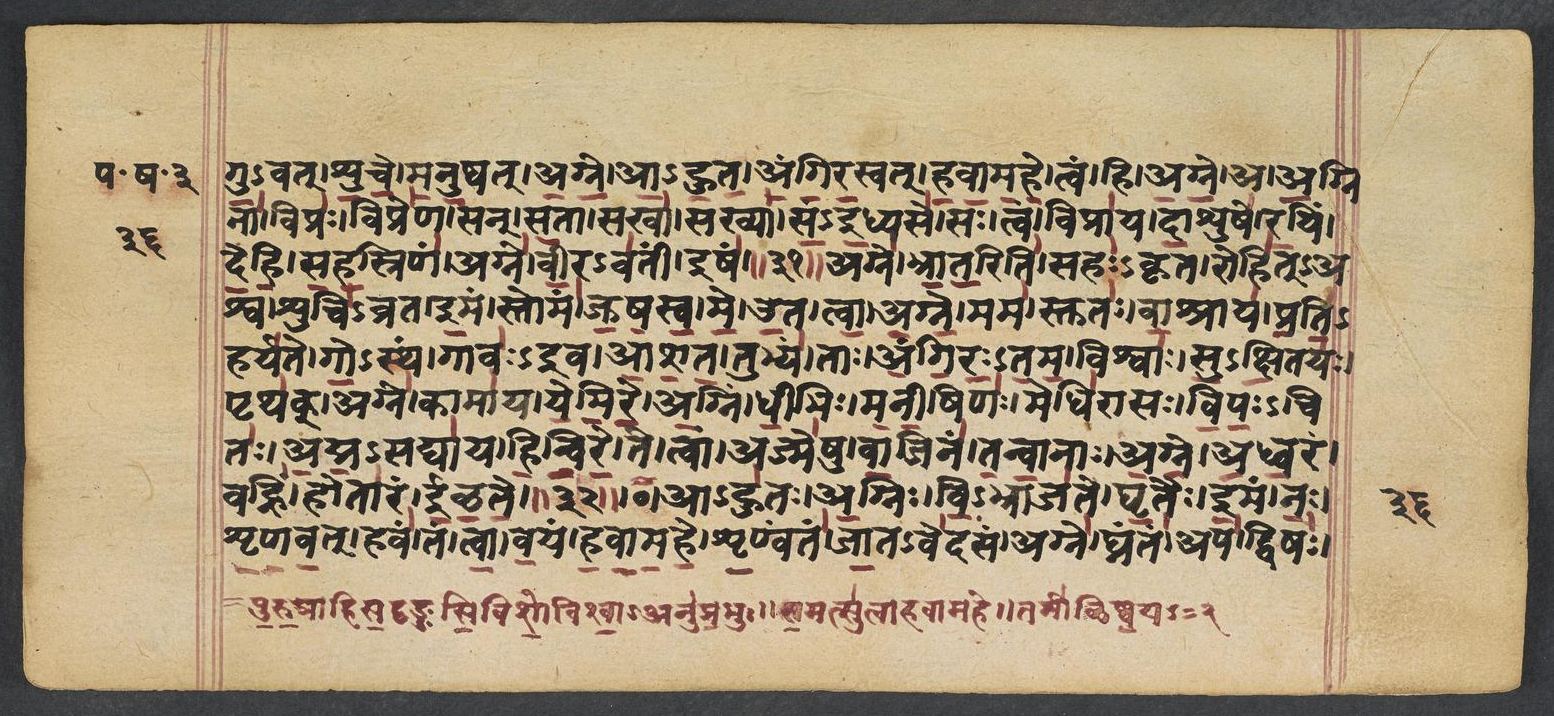
Where on the image
Penn Ms. Coll. 390 Item 41, fol. 614v (numbered 36v by the scribe) (OPenn image 615, upper leaf). Checked on the image: the Rigveda text on this page begins in RV 8.43.13 ‹-bhṛgu-vat śuce manuṣvat agne›. The next page with Rigveda text, fol. 615r (numbered 37r by the scribe), begins in RV 8.43.24 ‹viśām rājānam adbhutam adhi-akṣam›. Verses 8.43.13-23 end on this page; 8.43.13 begins on fol. 614r (numbered 36r by the scribe).
13u̱ta tvā̍ bhṛgu̱vac chu̍ce manu̱ṣvad a̍gna āhuta | a̱ṅgi̱ra̱svad dha̍vāmahe ||
14tvaṁ hy a̍gne a̱gninā̱ vipro̱ vipre̍ṇa̱ san sa̱tā | sakhā̱ sakhyā̍ sami̱dhyase̍ ||
15sa tvaṁ viprā̍ya dā̱śuṣe̍ ra̱yiṁ de̍hi saha̱sriṇa̍m | agne̍ vī̱rava̍tī̱m iṣa̍m ||
16agne̱ bhrāta̱ḥ saha̍skṛta̱ rohi̍daśva̱ śuci̍vrata | i̱maṁ stoma̍ṁ juṣasva me ||
17u̱ta tvā̍gne̱ mama̱ stuto̍ vā̱śrāya̍ prati̱harya̍te | go̱ṣṭhaṁ gāva̍ ivāśata ||
18tubhya̱ṁ tā a̍ṅgirastama̱ viśvā̍ḥ sukṣi̱taya̱ḥ pṛtha̍k | agne̱ kāmā̍ya yemire ||
19a̱gniṁ dhī̱bhir ma̍nī̱ṣiṇo̱ medhi̍rāso vipa̱ścita̍ḥ | a̱dma̱sadyā̍ya hinvire ||
20taṁ tvām ajme̍ṣu vā̱jina̍ṁ tanvā̱nā a̍gne adhva̱ram | vahni̱ṁ hotā̍ram īḻate ||
21pu̱ru̱trā hi sa̱dṛṅṅ asi̱ viśo̱ viśvā̱ anu̍ pra̱bhuḥ | sa̱matsu̍ tvā havāmahe ||
22tam ī̍ḻiṣva̱ ya āhu̍to̱ 'gnir vi̱bhrāja̍te ghṛ̱taiḥ | i̱maṁ na̍ḥ śṛṇava̱d dhava̍m ||
23taṁ tvā̍ va̱yaṁ ha̍vāmahe śṛ̱ṇvanta̍ṁ jā̱tave̍dasam | agne̱ ghnanta̱m apa̱ dviṣa̍ḥ ||
Compare: Padapāṭha (word-by-word text written in the manuscript; Sansknet e-text via GRETIL)
13uta | tvā | bhṛgu-vat | śuce | manuṣvat | agne | āhuta | aṅgirasvat | havāmahe
14tvam | hi | agne | agninā | vipraḥ | vipreṇa | san | satā | sakhā | sakhyā | sam-idhyase
15saḥ | tvam | viprāya | dāśuṣe | rayim | dehi | sahasriṇam | agne | vīra-vatīm | iṣam
16agne | bhrātariti | sahaḥ-kṛta | rohit-aśva | śuci-vrata | imam | stomam | juṣasva | me
17uta | tvā | agne | mama | stutaḥ | vāśrāya | prati-haryate | go--stham | gāvaḥ-iva | āśata
18tubhyam | tāḥ | aṅgiraḥ-tama | viśvāḥ | su-kṣitayaḥ | pṛthak | agne | kāmāya | yemire
19agnim | dhībhiḥ | manīṣiṇaḥ | medhirāsaḥ | vipaḥ-citaḥ | adma-sadyāya | hinvire
20tam | tvām | ajmeṣu | vājinam | tanvānāḥ | agne | adhvaram | vahnim | hotāram | īḷate
21puru-trā | hi | sadṛṅ | asi | viśaḥ | viśvāḥ | anu | pra-bhuḥ | samat-su | tvā | havāmahe
22tam | īḷiṣva | yaḥ | āhutaḥ | agniḥ | vi-bhrājate | ghṛtaiḥ | imam | naḥ | śṛṇavat | havam
23tam | tvā | vayam | havāmahe | śṛṇvantam | jāta-vedasam | agne | ghnantam | apa | dviṣaḥ
13O worshipped with oblations, pure Agni, we call on thee as erst, Did Bhr̥igu, Manus, Angiras.
14For thou, O Agni, by the fire, Sage by the Sage, Good by the Good, Friend by the Friend, art lighted up.
15So wealth in thousands, food with store of heroes give thou to the sage, O Agni, to the worshipper.
16O Agni, Brother, made by strength, Lord of red steeds and brilliant sway, Take pleasure in this laud of mine.
17My praises, Agni, go to thee, as the cows seek the stall to meet, The lowing calf that longs for milk.
18Agni, best Angiras, to thee all people who have pleasant homes, Apart, have turned as to their wish.
19The sages skilled in holy song and thin. kers with their thoughts have urged Agni to share the sacred feast.
20So, Agni, unto thee the Priest, Invoker, strong in forays, pray 'nose who spin out the sacrifice.
21In many a place, the same in look art thou, a Prince o'er all the tribes In battles we invoke thine aid.
22Pray thou to Agni, pray to him who blazes served with sacred oil: Let him give ear to this our call.
23We call on thee as such, as one who hears, as Jâtavedas, one, Agni! who beats away our foes.
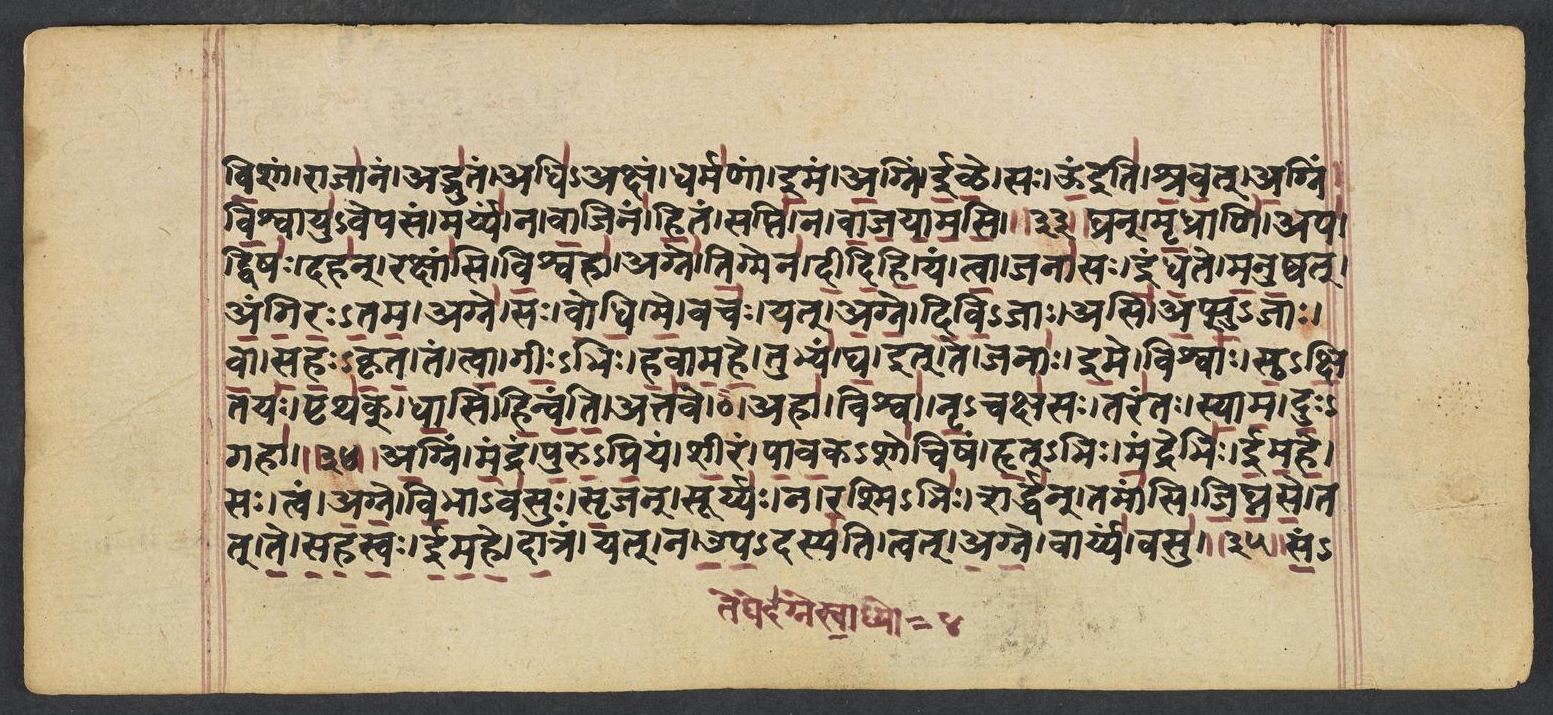
Where on the image
Penn Ms. Coll. 390 Item 41, fol. 615r (numbered 37r by the scribe) (OPenn image 615, lower leaf). Checked on the image: the Rigveda text on this page begins in RV 8.43.24 ‹viśām rājānam adbhutam adhi-akṣam›. The next page with Rigveda text, fol. 615v (numbered 37v by the scribe), begins in RV 8.44.1 ‹-sam-idhā agnim duvasyata ghṛtaiḥ›. Verses 8.43.24-33 end on this page.
24vi̱śāṁ rājā̍na̱m adbhu̍ta̱m adhya̍kṣa̱ṁ dharma̍ṇām i̱mam | a̱gnim ī̍ḻe̱ sa u̍ śravat ||
25a̱gniṁ vi̱śvāyu̍vepasa̱m marya̱ṁ na vā̱jina̍ṁ hi̱tam | sapti̱ṁ na vā̍jayāmasi ||
26ghnan mṛ̱dhrāṇy apa̱ dviṣo̱ daha̱n rakṣā̍ṁsi vi̱śvahā̍ | agne̍ ti̱gmena̍ dīdihi ||
27yaṁ tvā̱ janā̍sa indha̱te ma̍nu̱ṣvad a̍ṅgirastama | agne̱ sa bo̍dhi me̱ vaca̍ḥ ||
28yad a̍gne divi̱jā asy a̍psu̱jā vā̍ sahaskṛta | taṁ tvā̍ gī̱rbhir ha̍vāmahe ||
29tubhya̱ṁ ghet te janā̍ i̱me viśvā̍ḥ sukṣi̱taya̱ḥ pṛtha̍k | dhā̱siṁ hi̍nva̱nty atta̍ve ||
30te ghed a̍gne svā̱dhyo 'hā̱ viśvā̍ nṛ̱cakṣa̍saḥ | tara̍ntaḥ syāma du̱rgahā̍ ||
31a̱gnim ma̱ndram pu̍rupri̱yaṁ śī̱ram pā̍va̱kaśo̍ciṣam | hṛ̱dbhir ma̱ndrebhi̍r īmahe ||
32sa tvam a̍gne vi̱bhāva̍suḥ sṛ̱jan sūryo̱ na ra̱śmibhi̍ḥ | śardha̱n tamā̍ṁsi jighnase ||
33tat te̍ sahasva īmahe dā̱traṁ yan nopa̱dasya̍ti | tvad a̍gne̱ vārya̱ṁ vasu̍ ||
Compare: Padapāṭha (word-by-word text written in the manuscript; Sansknet e-text via GRETIL)
24viśām | rājānam | adbhutam | adhi-akṣam | dharmaṇām | imam | agnim | īḷe | saḥ | oṃ iti | śravat
25agnim | viśvāyu-vepasam | maryam | na | vājinam | hitam | saptim | na | vājayāmasi
26ghnan | mṛdhrāṇi | apa | dviṣaḥ | dahan | rakṣāṃsi | viśvahā | agne | tigmena | dīdi hi
27yam | tvā | janāsaḥ | indhate | manuṣvat | aṅgiraḥ-tama | agne | saḥ | bodhi | me | vacaḥ
28yat | agne | divi-jāḥ | asi | apsu-jāḥ | vā | sahaḥ-kṛta | tam | tvā | gīḥ-bhiḥ | havāmahe
29tubhyam | gha | it | te | janāḥ | ime | viśvāḥ | su-kṣitayaḥ | pṛthak | dhāsim | hinvanti | attave
30te | gha | it | agne | su-ādhyaḥ | ahā | viśvā | nṛ-cakṣasaḥ | tarantaḥ | syāma | duḥ-gahā
31agnim | mandram | puru-priyam | śīram | pāvaka-śociṣam | hṛt-bhiḥ | mandrebhiḥ | īmahe
32saḥ | tvam | agne | vibhāvasuḥ | sṛjan | sūryaḥ | na | raśmi-bhiḥ | śardhan | tamāṃsi | jighnase
33tat | te | sahasvaḥ | īmahe | dātram | yat | na | upa-dasyati | tvat | agne | vāyarm | vasu
24I pray to Agni, King of men, the Wonderful, the President Of holy Laws: may he give ear.
25Him like a bridegroom, him who stirs all people, like a noble horse, Like a fleet steed, we instigate.
26Slaying things deadly, burning up foes, Riksasas, on every side, Shine, Agni, with thy sharpened flame.
27Thou whom the people kindle even as Manus did, best Angiras! O Agni, mark thou this my speech.
28O Agni, made by strength! be thou born in the heavens or born in floods, As such we call on thee with songs.
29Yea, all the people, all the folk who have good dwellings, each apart, Send food for thee to eat thereof.
30O Agni, so may we, devout, gazed at by men, throughout our days, Pass lightly over all distress.
31We venerate with cheerful hearts the cheerful Agni, dear to all, Burning, with purifying flame.
32So thou, O Agni rich in light, beaming like Sûrya with thy rays Boldly demolishest the gloom,
33We pray to thee for this thy gift, Victor the gift that faileth not, O Agni, choicest wealth from thee.
Notes
- Sanskrit: Aufrecht's edition (1877) with the Vedic accents, as entered by van Nooten and Holland (GRETIL).
- English: Ralph T. H. Griffith, The Hymns of the Rigveda (1889-1892; 2nd ed. 1896-1897), from the VedaWeb digital text; OCR slips in that text were corrected against the printed 2nd edition (data/sources/rigveda/griffith_errata.json).
- Padapāṭha (edition text): Sansknet e-text via GRETIL (CC BY-NC-SA 4.0).
Cite
Sources
- Source: Penn Ms. Coll. 390 Item 41 (undated (catalogued with Penn's 18th-19th c. Vedic manuscripts)), OPenn, Public Domain Mark + Aufrecht's accented text (GRETIL) + Griffith's English (VedaWeb) (holding institution)
- Critical edition: Aufrecht (1877), accented e-text via GRETIL
← previous · → next · v cycle view · l back to library