Rigveda 8.44: To Agni
Introduction
Rigveda 8.44 is a hymn of 30 verses addressed to Agni. It stands in book (maṇḍala) 8, the book of the Kaṇva and Aṅgiras poets. The Rigveda is the oldest collection of Sanskrit hymns, composed in the second half of the second millennium BCE and handed down orally for many centuries before it was written down.
The manuscript shown is Penn Ms. Coll. 390 Item 41 (University of Pennsylvania), an undated paper manuscript of the padapāṭha (the word-by-word recitation text, in which every word is written separately and compounds are split) of the whole Ṛgveda in Devanāgarī, 884 leaves in fascicles, 7-9 lines to the page, accents in red; this hymn stands on fol. 615r-616v. Each section below gives the verses that end on one page; the page boundaries were read on the images (the opening words of every page), not counted out. Where the manuscript is a padapāṭha (the word-by-word recitation text), the section shows Aufrecht's continuous (saṃhitā) text first and, as the edition text, the padapāṭha of the same verses, which is the form written on the page.
How was this verified? (Provenance)
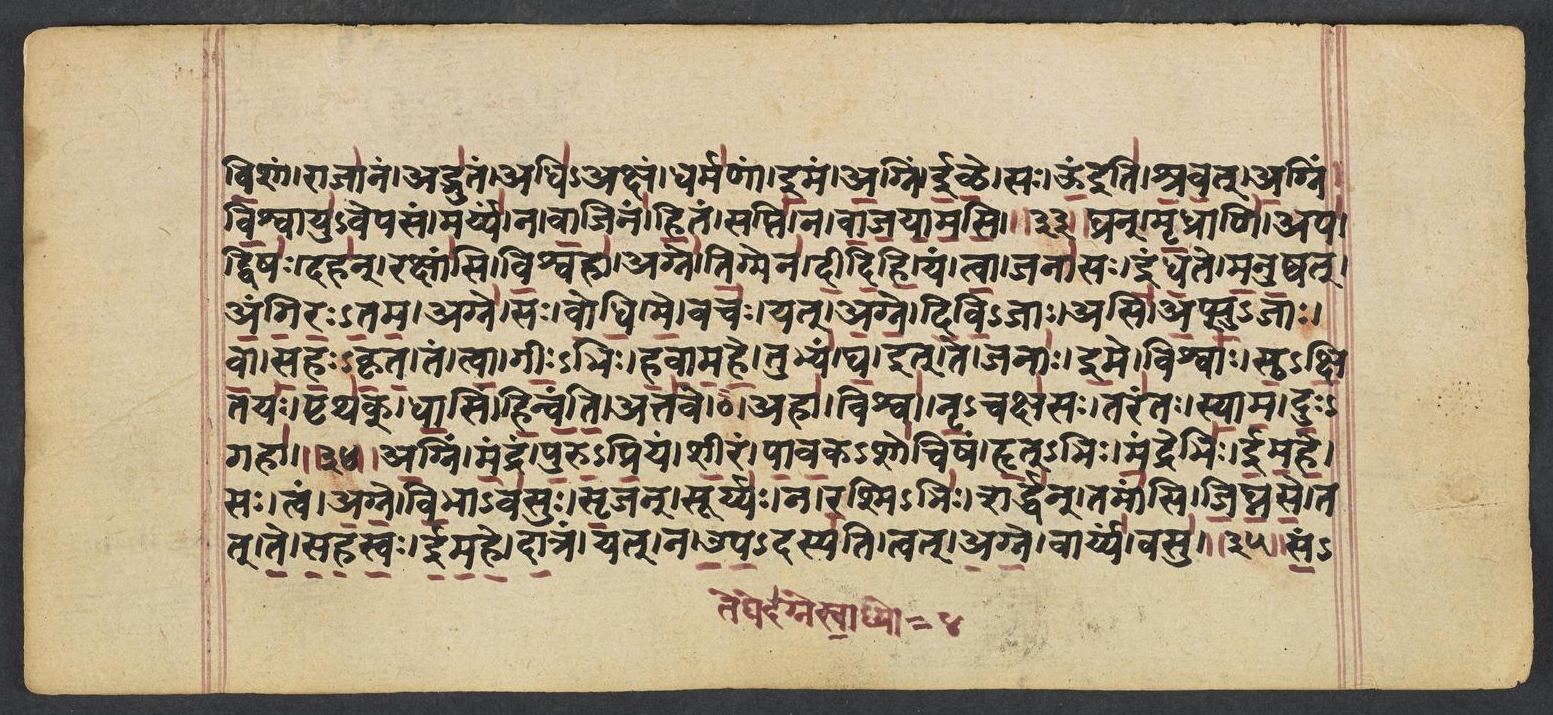
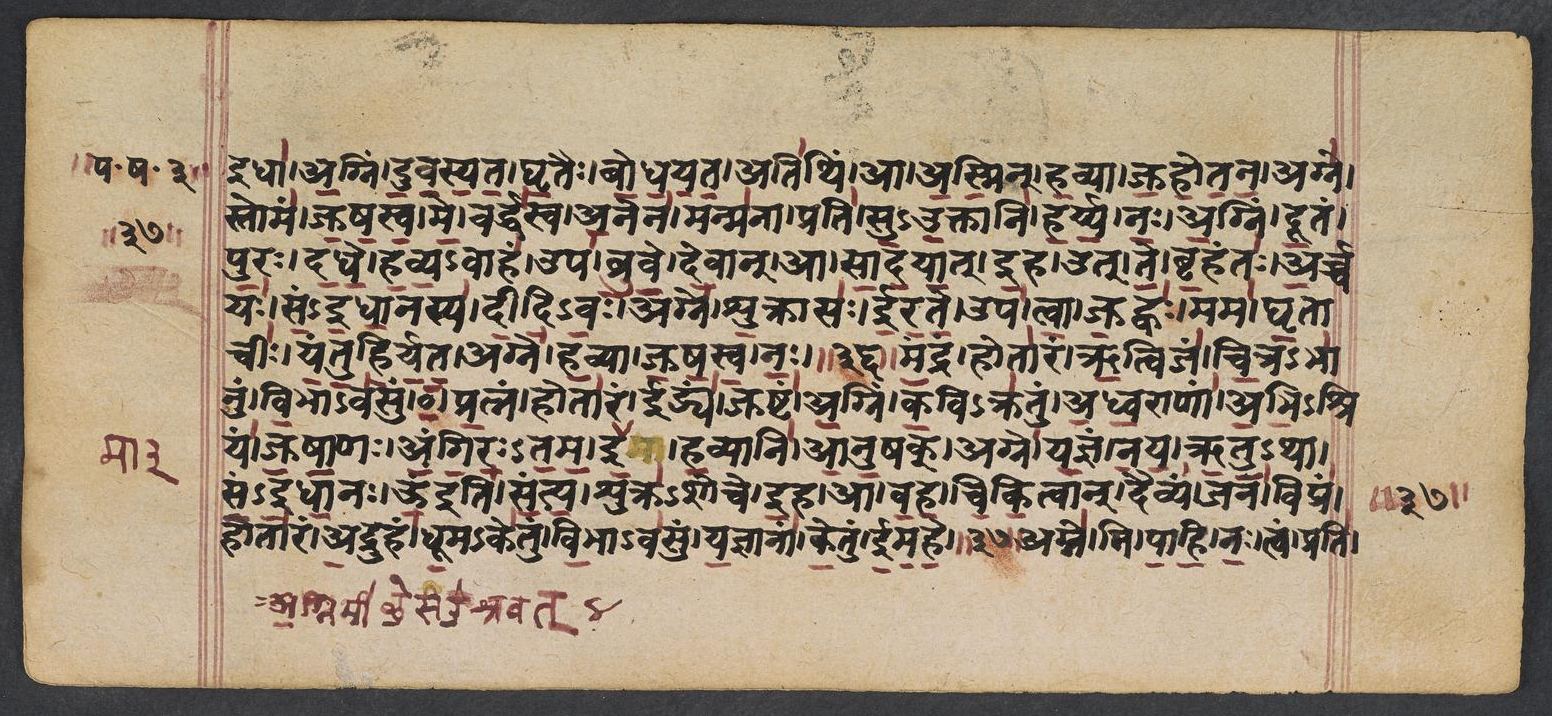
Where on the image
Penn Ms. Coll. 390 Item 41, fol. 615v (numbered 37v by the scribe) (OPenn image 616, upper leaf). Checked on the image: the Rigveda text on this page begins in RV 8.44.1 ‹-sam-idhā agnim duvasyata ghṛtaiḥ›. The next page with Rigveda text, fol. 616r (numbered 38r by the scribe), begins in RV 8.44.11 ‹sma deva riṣataḥ bhindhi›. Verses 8.44.1-10 end on this page; 8.44.1 begins on fol. 615r (numbered 37r by the scribe).
1sa̱midhā̱gniṁ du̍vasyata ghṛ̱tair bo̍dhaya̱tāti̍thim | āsmi̍n ha̱vyā ju̍hotana ||
2agne̱ stoma̍ṁ juṣasva me̱ vardha̍svā̱nena̱ manma̍nā | prati̍ sū̱ktāni̍ harya naḥ ||
3a̱gniṁ dū̱tam pu̱ro da̍dhe havya̱vāha̱m upa̍ bruve | de̱vām̐ ā sā̍dayād i̱ha ||
4ut te̍ bṛ̱hanto̍ a̱rcaya̍ḥ samidhā̱nasya̍ dīdivaḥ | agne̍ śu̱krāsa̍ īrate ||
5upa̍ tvā ju̱hvo̱3̱̍ mama̍ ghṛ̱tācī̍r yantu haryata | agne̍ ha̱vyā ju̍ṣasva naḥ ||
6ma̱ndraṁ hotā̍ram ṛ̱tvija̍ṁ ci̱trabhā̍nuṁ vi̱bhāva̍sum | a̱gnim ī̍ḻe̱ sa u̍ śravat ||
7pra̱tnaṁ hotā̍ra̱m īḍya̱ṁ juṣṭa̍m a̱gniṁ ka̱vikra̍tum | a̱dhva̱rāṇā̍m abhi̱śriya̍m ||
8ju̱ṣā̱ṇo a̍ṅgirastame̱mā ha̱vyāny ā̍nu̱ṣak | agne̍ ya̱jñaṁ na̍ya ṛtu̱thā ||
9sa̱mi̱dhā̱na u̍ santya̱ śukra̍śoca i̱hā va̍ha | ci̱ki̱tvān daivya̱ṁ jana̍m ||
10vipra̱ṁ hotā̍ram a̱druha̍ṁ dhū̱make̍tuṁ vi̱bhāva̍sum | ya̱jñānā̍ṁ ke̱tum ī̍mahe ||
Compare: Padapāṭha (word-by-word text written in the manuscript; Sansknet e-text via GRETIL)
1sam-idhā | agnim | duvasyata | ghṛtaiḥ | bodhayata | atithim | ā | asmin | havyā | juhotana
2agne | stomam | juṣasva | me | vardhasva | anena | manmanā | prati | su-uktāni | harya | naḥ
3agnim | dūtam | puraḥ | dadhe | havya-vāham | upa | bruve | devān | ā | sādayāt | iha
4ut | te | bṛhantaḥ | arcayaḥ | sam-idhānasya | dīdi-vaḥ | agne | śukrāsaḥ | īrate
5upa | tvā | juhvaḥ | mama | ghṛtācīḥ | yantu | haryata | agne | havyā | juṣasva | naḥ
6mandram | hotāram | ṛtvijam | citra-bhānum | vibhāvasum | agnim | īḷe | saḥ | oṃ iti | śravat
7pratnam | hotāram | īḍyam | juṣṭam | agnim | kavi-kratum | adhvarāṇām | abhi-śriyam
8juṣāṇaḥ | aṅgiraḥ-tama | imā | havyāni | ānuṣak | agne | yajñam | naya | ṛtu-thā
9sam-idhānaḥ | oṃ iti | santya | śukra-śoce | iha | ā | vaha | cikitvān | daivyam | janam
10vipram | hotāram | adruham | dhūma-ketum | vibhāvasum | yajñānām | ketum | īmahe
1PAY service unto Agni with your fuel, rouse your Guest with oil: In him present your offerings.
2Agni, do thou accept my laud, be magnified by this my song: Welcome my sweedy-spoken words.
3Agni, envoy, I place in front; the oblation-bearer I address: Here let him seat the Deities.
4Agni, the lofty flames of' thee enkindled have gone up on high, Thy bright flames, thou Refulgent One.
5Beloved! let my ladles full of sacred oil come near to thee: Agni, accept our offerings.
6I worship Agni-may he hear!-the cheerful, the Invoker, Priest, Of varied splendour, rich in light.
7Ancient Invoker, meet for praise, beloved Agni, wise and strong, The visitant of solemn rites.
8Agni, best Angiras, accept straightway these offerings, and guide The seasonable sacrifice.
9Excellent God, with brilliant flames, enkindled bring thou hitherward, Knowing the way, the Heavenly Host.
10Him, Sage and Herald, void of guile, ensign of sacrifices, him Smoke-bannered, rich in light, we seek.
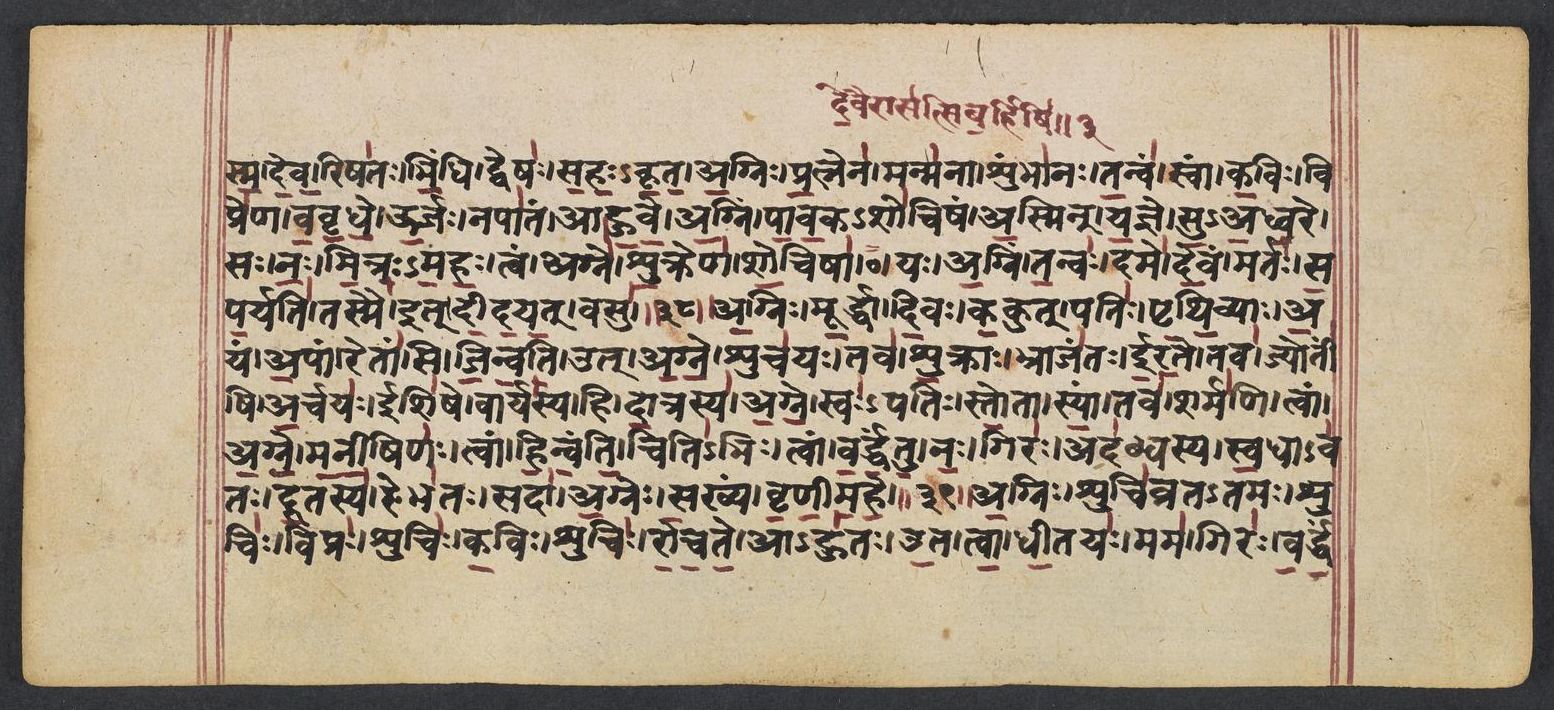
Where on the image
Penn Ms. Coll. 390 Item 41, fol. 616r (numbered 38r by the scribe) (OPenn image 616, lower leaf). Checked on the image: the Rigveda text on this page begins in RV 8.44.11 ‹sma deva riṣataḥ bhindhi›. The next page with Rigveda text, fol. 616v (numbered 38v by the scribe), begins in RV 8.44.22 ‹-vṛdhantu visvahā agne sakhyasya›. Verses 8.44.11-21 end on this page; 8.44.11 begins on fol. 615v (numbered 37v by the scribe).
11agne̱ ni pā̍hi na̱s tvam prati̍ ṣma deva̱ rīṣa̍taḥ | bhi̱ndhi dveṣa̍ḥ sahaskṛta ||
12a̱gniḥ pra̱tnena̱ manma̍nā̱ śumbhā̍nas ta̱nva1̱̍ṁ svām | ka̱vir vipre̍ṇa vāvṛdhe ||
13ū̱rjo napā̍ta̱m ā hu̍ve̱ 'gnim pā̍va̱kaśo̍ciṣam | a̱smin ya̱jñe sva̍dhva̱re ||
14sa no̍ mitramaha̱s tvam agne̍ śu̱kreṇa̍ śo̱ciṣā̍ | de̱vair ā sa̍tsi ba̱rhiṣi̍ ||
15yo a̱gniṁ ta̱nvo̱3̱̍ dame̍ de̱vam marta̍ḥ sapa̱ryati̍ | tasmā̱ id dī̍daya̱d vasu̍ ||
16a̱gnir mū̱rdhā di̱vaḥ ka̱kut pati̍ḥ pṛthi̱vyā a̱yam | a̱pāṁ retā̍ṁsi jinvati ||
17ud a̍gne̱ śuca̍ya̱s tava̍ śu̱krā bhrāja̍nta īrate | tava̱ jyotī̍ṁṣy a̱rcaya̍ḥ ||
18īśi̍ṣe̱ vārya̍sya̱ hi dā̱trasyā̍gne̱ sva̍rpatiḥ | sto̱tā syā̱ṁ tava̱ śarma̍ṇi ||
19tvām a̍gne manī̱ṣiṇa̱s tvāṁ hi̍nvanti̱ citti̍bhiḥ | tvāṁ va̍rdhantu no̱ gira̍ḥ ||
20ada̍bdhasya sva̱dhāva̍to dū̱tasya̱ rebha̍ta̱ḥ sadā̍ | a̱gneḥ sa̱khyaṁ vṛ̍ṇīmahe ||
21a̱gniḥ śuci̍vratatama̱ḥ śuci̱r vipra̱ḥ śuci̍ḥ ka̱viḥ | śucī̍ rocata̱ āhu̍taḥ ||
Compare: Padapāṭha (word-by-word text written in the manuscript; Sansknet e-text via GRETIL)
11agne | ni | pāhi | naḥ | tvam | prati | sma | deva | riṣataḥ | bhindhi | dveṣaḥ | sahaḥ-kṛta
12agniḥ | pratnena | manmanā | śumbhānaḥ | tanvam | svām | kaviḥ | vipreṇa | vavṛdhe
13ūrjaḥ | napātam | ā | huve | agnim | pāvaka-śociṣam | asmin | yajñe | su-adhvare
14saḥ | naḥ | mitra-mahaḥ | tvam | agne | śukreṇa | śociṣā | devaiḥ | ā | satsi | barhi ṣi
15yaḥ | agnim | tanvaḥ | dame | devam | martaḥ | saparyati | tasmai | it | dīdayat | vasu
16agniḥ | mūrdhā | divaḥ | kakut | patiḥ | pṛthivyāḥ | ayam | apām | retāṃsi | jinvati
17ut | agne | śucayaḥ | tava | śukrāḥ | bhrājantaḥ | īrate | tava | jyotīṃṣi | arcayaḥ
18īśiṣe | vāryasya | hi | dātrasya | agne | svaḥ-patiḥ | stotā | syām | tava | śamarṇi
19tvām | agne | manīṣiṇaḥ | tvām | hinvanti | citti-bhiḥ | tvām | vardhantu | naḥ | g iraḥ
20adabdhasya | svadhāvataḥ | dūtasya | rebhataḥ | sadā | agneḥ | sakhyam | vṛṇīmahe
21agniḥ | śucivrata-tamaḥ | śuciḥ | vipraḥ | śuciḥ | kaviḥ | śuciḥ | rocate | āhutaḥ
11O Agni, be our Guardian thou, God, against those who injure us: Destroy our foes, thou Son of Strength.
12Making his body beautiful, Agni the Sage hath waxen by The singer and his ancient hymn.
13I invocate the Child of Strength, Agni with purifying flame, At this well-ordered sacrifice.
14So Agni, rich in many friends, with fiery splendour, seat thyself With Gods upon our sacred grass.
15The mortal man who serves the God Agni within his own abode, For him he causes wealth to shine.
16Agni is head and height of heaven, the Master of the earth is he: He quickeneth the waters' seed.
17Upward, O Agni, rise thy flames, pure and resplendent, blazing high, Thy lustres, fair effulgences.
18For, Agni, thou as Lord of Light rulest o'er choicest gifts: may I, Thy singer, find defence in thee.
19O Agni, they who understand stir thee to action with their thoughts: So let our songs enhance thy might.
20We ever claim the friendship of Agni, the singing messenger, Of God-like nature, void of guile.
21Agni who bears most holy sway, the holy Singer, holy Sage, Shines holy when we worship him.
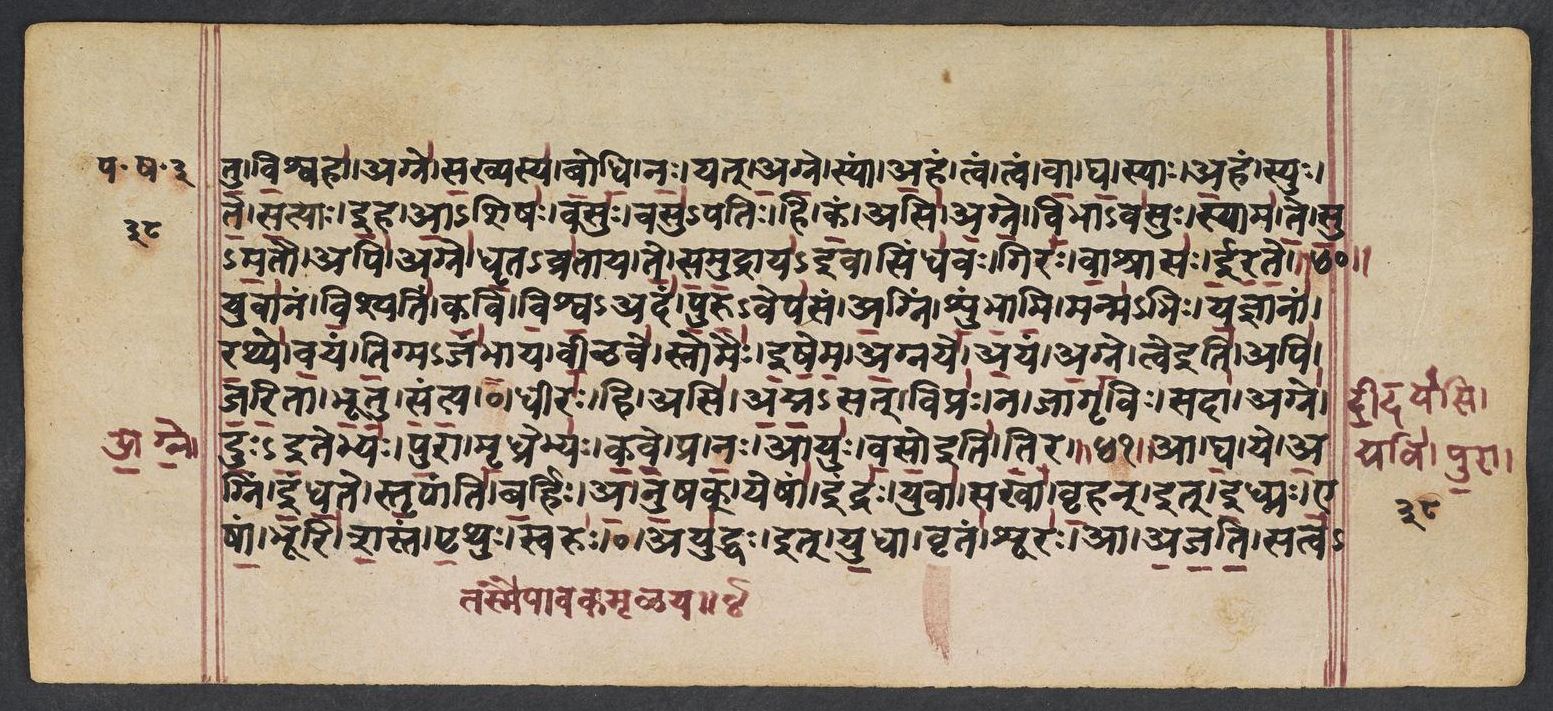
Where on the image
Penn Ms. Coll. 390 Item 41, fol. 616v (numbered 38v by the scribe) (OPenn image 617, upper leaf). Checked on the image: the Rigveda text on this page begins in RV 8.44.22 ‹-vṛdhantu visvahā agne sakhyasya›. The next page with Rigveda text, fol. 617r (numbered 39r by the scribe), begins in RV 8.45.3 ‹-sakhā›. Verses 8.44.22-30 end on this page; 8.44.22 begins on fol. 616r (numbered 38r by the scribe).
22u̱ta tvā̍ dhī̱tayo̱ mama̱ giro̍ vardhantu vi̱śvahā̍ | agne̍ sa̱khyasya̍ bodhi naḥ ||
23yad a̍gne̱ syām a̱haṁ tvaṁ tvaṁ vā̍ ghā̱ syā a̱ham | syuṣ ṭe̍ sa̱tyā i̱hāśiṣa̍ḥ ||
24vasu̱r vasu̍pati̱r hi ka̱m asy a̍gne vi̱bhāva̍suḥ | syāma̍ te suma̱tāv api̍ ||
25agne̍ dhṛ̱tavra̍tāya te samu̱drāye̍va̱ sindha̍vaḥ | giro̍ vā̱śrāsa̍ īrate ||
26yuvā̍naṁ vi̱śpati̍ṁ ka̱viṁ vi̱śvāda̍m puru̱vepa̍sam | a̱gniṁ śu̍mbhāmi̱ manma̍bhiḥ ||
27ya̱jñānā̍ṁ ra̱thye̍ va̱yaṁ ti̱gmaja̍mbhāya vī̱ḻave̍ | stomai̍r iṣemā̱gnaye̍ ||
28a̱yam a̍gne̱ tve api̍ jari̱tā bhū̍tu santya | tasmai̍ pāvaka mṛḻaya ||
29dhīro̱ hy asy a̍dma̱sad vipro̱ na jāgṛ̍vi̱ḥ sadā̍ | agne̍ dī̱daya̍si̱ dyavi̍ ||
30pu̱rāgne̍ duri̱tebhya̍ḥ pu̱rā mṛ̱dhrebhya̍ḥ kave | pra ṇa̱ āyu̍r vaso tira ||
Compare: Padapāṭha (word-by-word text written in the manuscript; Sansknet e-text via GRETIL)
22uta | tvā | dhītayaḥ | mama | giraḥ | vṛdhantu | visvahā | agne | sakhyasya | bodhi | naḥ
23yat | agne | syām | aham | tvam | tvam | vā | gha | syāḥ | aham | syuḥ | te | satyāḥ | iha | āśiṣaḥ
24vasuḥ | vasu-patiḥ | hi | kam | asi | agne | vibhāvasuḥ | syāma | te | su-matau | api
25agne | dhṛta-vratāya | te | samudrāya-iva | sindhavaḥ | giraḥ | vāśrāsaḥ | īrate
26yuvānam | viśpatim | kavim | viśva-adam | puru-vepasam | agnim | śumbhāmi | manma-bhiḥ
27yajñānām | rathye | vayam | tigma-jambhāya | vīḷave | stomaiḥ | iṣema | agnaye
28ayam | agne | tve iti | api | jaritā | bhūtu | santya | tasmai | pāvaka | mṛḷaya
29dhīraḥ | hi | asi | adma-sat | vipraḥ | na | jāgṛviḥ | sadā | agne | dīdayasi | dyavi
30purā | agne | duḥ-itebhyaḥ | purā | mṛdhrebhyaḥ | kave | pra | naḥ | āyuḥ | vaso iti | tira
22Yea, let my meditations, let my songs exalt thee evermore. Think, Agni, of our friendly bond,
23If I were thou and thou wert I, O Agni, every prayer of thine Should have its due fulfilment here.
24For Excellent and Lord of wealth. art thou O Agni, rich in light: May we enjoy thy favouring grace.
25Agni, to thee whose laws stand fast our resonant songs of praise speed forth, As rivers hasten to the sea.
26Agni, the Youthful Lord of men, who stirreth much and eateth all, The Sage, I glorify with hymns.
27To Agni let us haste with lauds, the Guide of sacrificial rites, Armed with sharp teeth, the Mighty One.
28And let this man, good Agni, be with thee the singer of thy praise: Be gracious, Holy One, to him.
29For thou art sharer of our feast, wise, ever watchful as a Sage: Agni, thou shinest in the sky.
30O Agni, Sage, before our foes, before misfortunes fall on us, Excellent Lord, prolong our lives.
Notes
- Sanskrit: Aufrecht's edition (1877) with the Vedic accents, as entered by van Nooten and Holland (GRETIL).
- English: Ralph T. H. Griffith, The Hymns of the Rigveda (1889-1892; 2nd ed. 1896-1897), from the VedaWeb digital text; OCR slips in that text were corrected against the printed 2nd edition (data/sources/rigveda/griffith_errata.json).
- Padapāṭha (edition text): Sansknet e-text via GRETIL (CC BY-NC-SA 4.0).
Cite
Sources
- Source: Penn Ms. Coll. 390 Item 41 (undated (catalogued with Penn's 18th-19th c. Vedic manuscripts)), OPenn, Public Domain Mark + Aufrecht's accented text (GRETIL) + Griffith's English (VedaWeb) (holding institution)
- Critical edition: Aufrecht (1877), accented e-text via GRETIL
← previous · → next · v cycle view · l back to library