Rigveda 8.45: To Indra
Introduction
Rigveda 8.45 is a hymn of 42 verses addressed to Indra. It stands in book (maṇḍala) 8, the book of the Kaṇva and Aṅgiras poets. The Rigveda is the oldest collection of Sanskrit hymns, composed in the second half of the second millennium BCE and handed down orally for many centuries before it was written down.
The manuscript shown is Penn Ms. Coll. 390 Item 41 (University of Pennsylvania), an undated paper manuscript of the padapāṭha (the word-by-word recitation text, in which every word is written separately and compounds are split) of the whole Ṛgveda in Devanāgarī, 884 leaves in fascicles, 7-9 lines to the page, accents in red; this hymn stands on fol. 616v-618v. Each section below gives the verses that end on one page; the page boundaries were read on the images (the opening words of every page), not counted out. Where the manuscript is a padapāṭha (the word-by-word recitation text), the section shows Aufrecht's continuous (saṃhitā) text first and, as the edition text, the padapāṭha of the same verses, which is the form written on the page.
How was this verified? (Provenance)
Where on the image
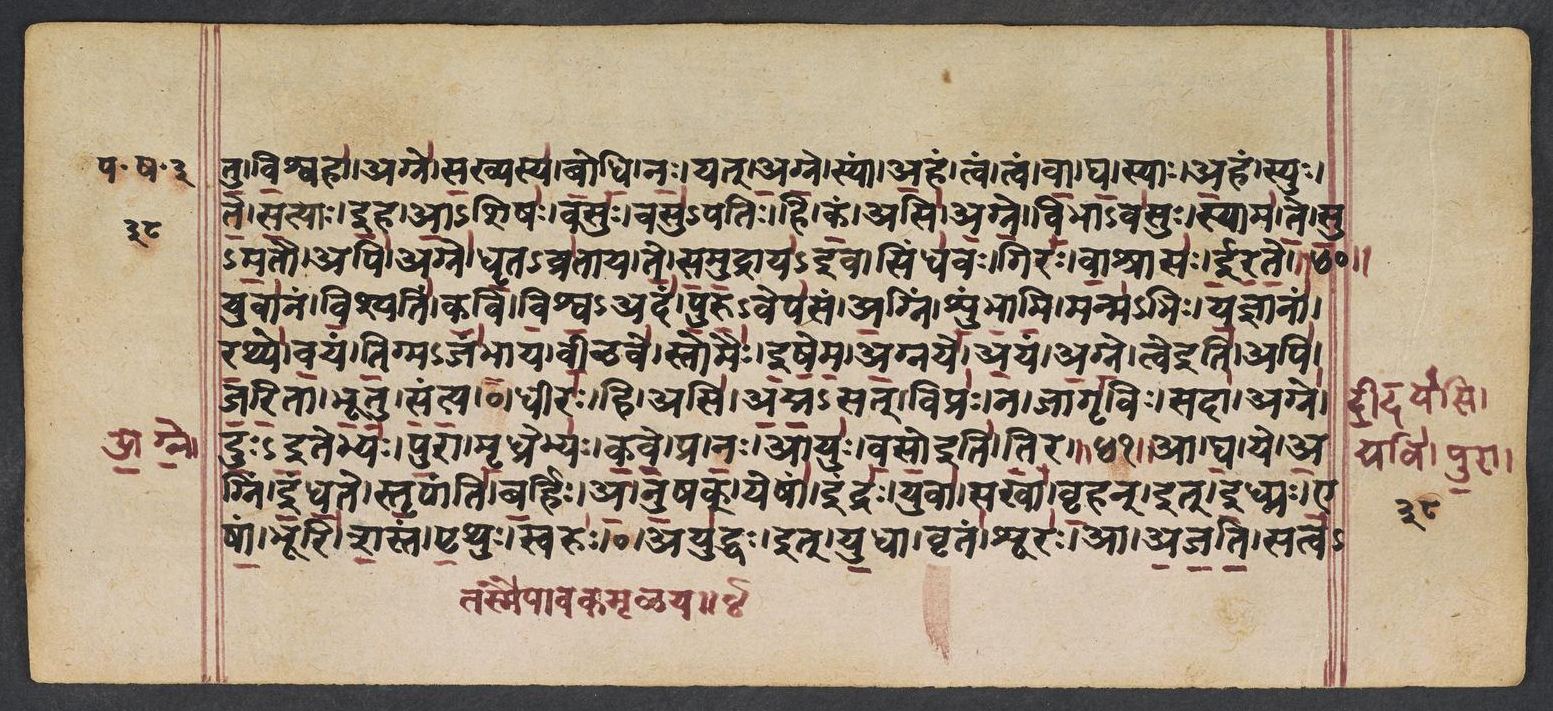
Penn Ms. Coll. 390 Item 41, fol. 616v (numbered 38v by the scribe) (OPenn image 617, upper leaf). Checked on the image: the Rigveda text on this page begins in RV 8.44.22 ‹-vṛdhantu visvahā agne sakhyasya›. The next page with Rigveda text, fol. 617r (numbered 39r by the scribe), begins in RV 8.45.3 ‹-sakhā›. Verses 8.45.1-2 end on this page.
1ā ghā̱ ye a̱gnim i̍ndha̱te stṛ̱ṇanti̍ ba̱rhir ā̍nu̱ṣak | yeṣā̱m indro̱ yuvā̱ sakhā̍ ||
2bṛ̱hann id i̱dhma e̍ṣā̱m bhūri̍ śa̱stam pṛ̱thuḥ svaru̍ḥ | yeṣā̱m indro̱ yuvā̱ sakhā̍ ||
Compare: Padapāṭha (word-by-word text written in the manuscript; Sansknet e-text via GRETIL)
1ā | gha | ye | agnim | indhate | stṛṇanti | barhiḥ | ānuṣak | yeṣām | indraḥ | yuvā | sakhā
2bṛhan | it | idhmaḥ | eṣām | bhūri | śastam | pṛthu | svaruḥ | yeṣām | indraḥ | yuvā | sakhā
1HITHERWARD! they who light flame and straightway trim the sacred grass. Whose Friend is Indra ever young.
2High is their fuel, great their laud, wide is their splinter from the stake, Whose Friend is Indra ever young.
Where on the image
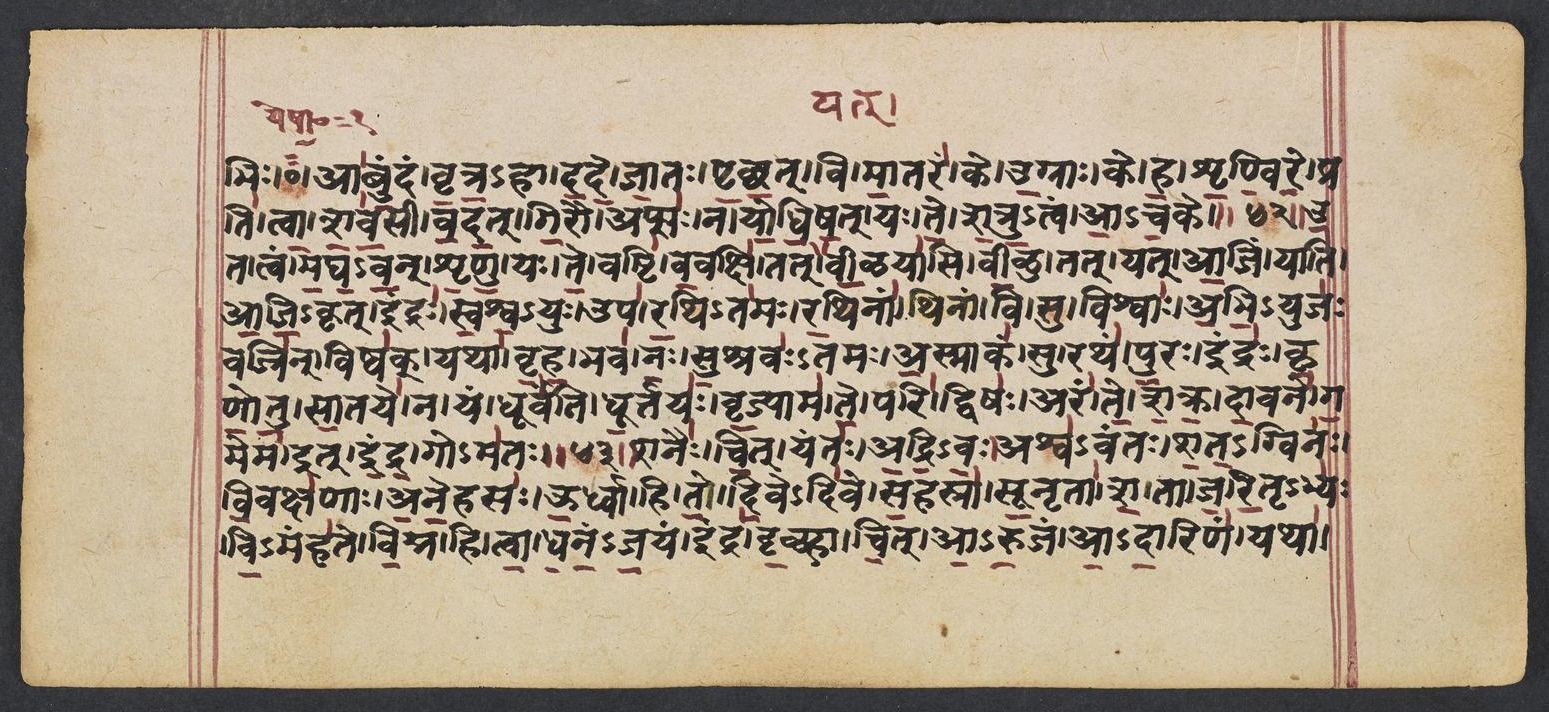
Penn Ms. Coll. 390 Item 41, fol. 617r (numbered 39r by the scribe) (OPenn image 617, lower leaf). Checked on the image: the Rigveda text on this page begins in RV 8.45.3 ‹-sakhā›. The next page with Rigveda text, fol. 617v (numbered 39v by the scribe), begins in RV 8.45.13 ‹yathā gayam›. Verses 8.45.3-12 end on this page; 8.45.3 begins on fol. 616v (numbered 38v by the scribe).
3ayu̍ddha̱ id yu̱dhā vṛta̱ṁ śūra̱ āja̍ti̱ satva̍bhiḥ | yeṣā̱m indro̱ yuvā̱ sakhā̍ ||
4ā bu̱ndaṁ vṛ̍tra̱hā da̍de jā̱taḥ pṛ̍ccha̱d vi mā̱tara̍m | ka u̱grāḥ ke ha̍ śṛṇvire ||
5prati̍ tvā śava̱sī va̍dad gi̱rāv apso̱ na yo̍dhiṣat | yas te̍ śatru̱tvam ā̍ca̱ke ||
6u̱ta tvam ma̍ghavañ chṛṇu̱ yas te̱ vaṣṭi̍ va̱vakṣi̱ tat | yad vī̱ḻayā̍si vī̱ḻu tat ||
7yad ā̱jiṁ yāty ā̍ji̱kṛd indra̍ḥ svaśva̱yur upa̍ | ra̱thīta̍mo ra̱thīnā̍m ||
8vi ṣu viśvā̍ abhi̱yujo̱ vajri̱n viṣva̱g yathā̍ vṛha | bhavā̍ naḥ su̱śrava̍stamaḥ ||
9a̱smāka̱ṁ su ratha̍m pu̱ra indra̍ḥ kṛṇotu sā̱taye̍ | na yaṁ dhūrva̍nti dhū̱rtaya̍ḥ ||
10vṛ̱jyāma̍ te̱ pari̱ dviṣo 'ra̍ṁ te śakra dā̱vane̍ | ga̱memed i̍ndra̱ goma̍taḥ ||
11śanai̍ś ci̱d yanto̍ adri̱vo 'śvā̍vantaḥ śata̱gvina̍ḥ | vi̱vakṣa̍ṇā ane̱hasa̍ḥ ||
12ū̱rdhvā hi te̍ di̱ve-di̍ve sa̱hasrā̍ sū̱nṛtā̍ śa̱tā | ja̱ri̱tṛbhyo̍ vi̱maṁha̍te ||
Compare: Padapāṭha (word-by-word text written in the manuscript; Sansknet e-text via GRETIL)
3ayuddhaḥ | it | yudhā | vṛtam | śūraḥ | ā | ajati | satva-bhiḥ | yeṣām | indraḥ | yuvā | sakhā
4ā | bundam | vṛtra-hā | dade | jātaḥ | pṛcchat | vi | mātaram | ke | ugrāḥ | ke | ha | śṛṇvire
5prati | tvā | śavasī | vadat | ghirau | apsaḥ | na | yodhiṣat | yaḥ | te | śatru-tvam | ācake
6uta | tvam | magha-van | śṛṇu | yaḥ | te | vaṣṭi | vavakṣi | tat | yat | vīḷayāsi | vīḷu | tat
7yat | ājim | yāti | āji-kṛt | indraḥ | svaśva-yuḥ | upa | rathi-tamaḥ | rathīnām
8vi | su | viśvāḥ | abhi-yujaḥ | vajrin | viṣvak | yathā | vṛha | bhava | naḥ | suśravaḥ-tamaḥ
9asmākam | su | ratham | puraḥ | indraḥ | kṛṇotu | sātaye | na | yam | dhūrvanti | dhūtaryaḥ
10vṛjyāma | te | pari | dviṣaḥ | aram | te | śakra | dāvane | gamema | it | indra | go--mataḥ
11śanaiḥ | cit | yantaḥ | adri-vaḥ | aśva-vantaḥ | śata-gvinaḥ | vivakṣaṇāḥ | anehasaḥ
12ūrdhvā | hi | te | dive--dive | sahasrā | sūnṛtā | śatā | jaritṛ-bhyaḥ | vi-maṃhate
3Unequelled in fight the hero leads his army with the warrior chiefs. Whose Friend is Indra ever young.
4The new-born Vr̥itra-slayer asked his Mother, as he seized his shaft, Who are the fierce? Who are renowned?
5Ṣavasî answered, He who seeks thine enmity will battle like A stately elephant on a hill.
6And hear, O Maghavan; to him who craves of thee thou grantest all Whate'er thou makest firm is firm.
7What time the Warrior Indra goes to battle, borne by noble steeds, Best of all charioteers is he.
8Repel, O Thunder-armed, in all directions all attacks on us: And be our own most glorious God.
9May Indra set our car in front, in foremost Place to win the spoil, He whom the wicked injure not.
10Thine enmity may we escape, and, gakra, for thy bounty, rich In kine, may we come near to thee
11Softly approaching, Thunder-armed wealthy by hundreds, rich in steeds, Unrivalled, readywith our gifts.
12For thine exalted excellence gives to thy worshippers each day Hundreds and thousands of thy boons.
Where on the image
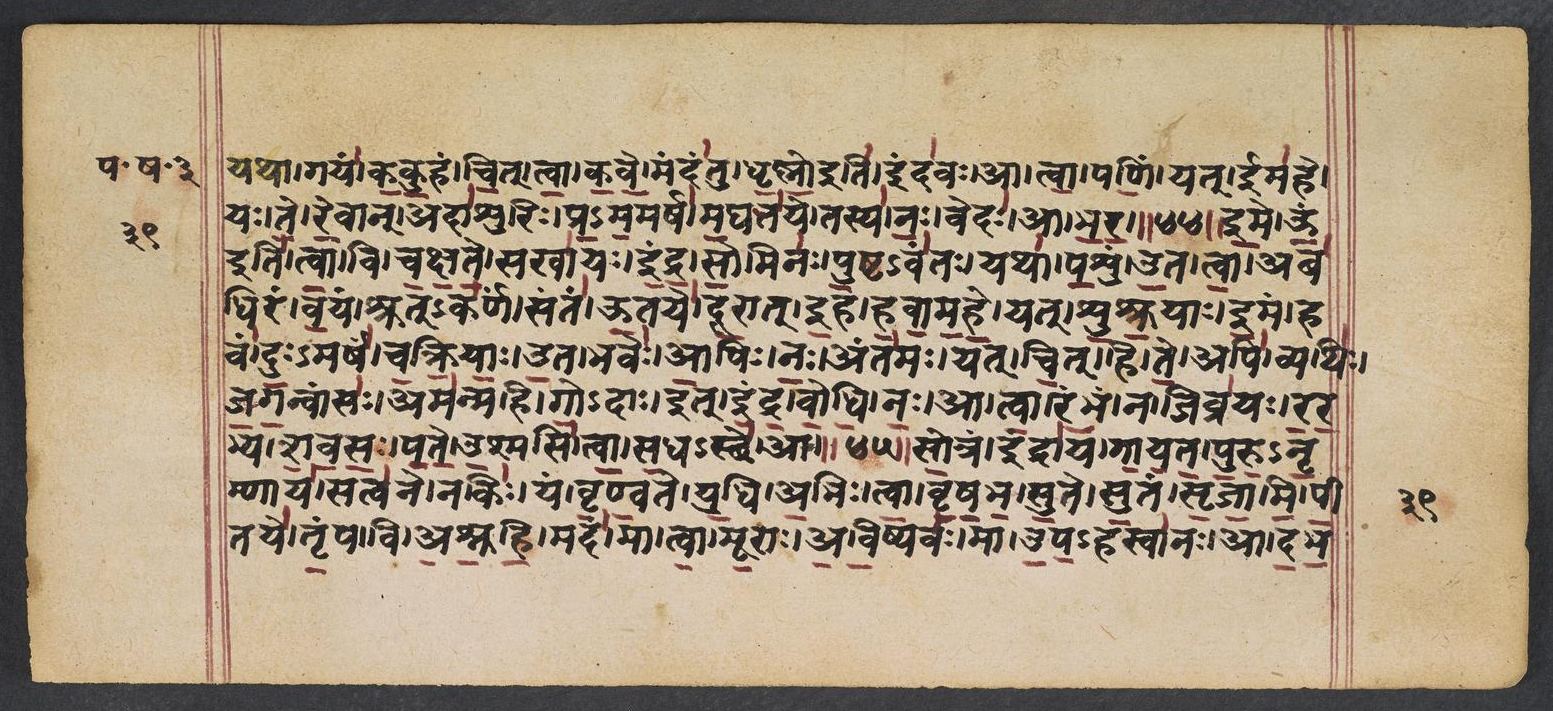
Penn Ms. Coll. 390 Item 41, fol. 617v (numbered 39v by the scribe) (OPenn image 618, upper leaf). Checked on the image: the Rigveda text on this page begins in RV 8.45.13 ‹yathā gayam›. The next page with Rigveda text, fol. 618r (numbered 40r by the scribe), begins in RV 8.45.23 ‹mākīm brahma-dviṣaḥ vanaḥ›. Verses 8.45.13-22 end on this page; 8.45.13 begins on fol. 617r (numbered 39r by the scribe).
13vi̱dmā hi tvā̍ dhanaṁja̱yam indra̍ dṛ̱ḻhā ci̍d āru̱jam | ā̱dā̱riṇa̱ṁ yathā̱ gaya̍m ||
14ka̱ku̱haṁ ci̍t tvā kave̱ manda̍ntu dhṛṣṇa̱v inda̍vaḥ | ā tvā̍ pa̱ṇiṁ yad īma̍he ||
15yas te̍ re̱vām̐ adā̍śuriḥ prama̱marṣa̍ ma̱ghatta̍ye | tasya̍ no̱ veda̱ ā bha̍ra ||
16i̱ma u̍ tvā̱ vi ca̍kṣate̱ sakhā̍ya indra so̱mina̍ḥ | pu̱ṣṭāva̍nto̱ yathā̍ pa̱śum ||
17u̱ta tvāba̍dhiraṁ va̱yaṁ śrutka̍rṇa̱ṁ santa̍m ū̱taye̍ | dū̱rād i̱ha ha̍vāmahe ||
18yac chu̍śrū̱yā i̱maṁ hava̍ṁ du̱rmarṣa̍ṁ cakriyā u̱ta | bhave̍r ā̱pir no̱ anta̍maḥ ||
19yac ci̱d dhi te̱ api̱ vyathi̍r jaga̱nvāṁso̱ ama̍nmahi | go̱dā id i̍ndra bodhi naḥ ||
20ā tvā̍ ra̱mbhaṁ na jivra̍yo rara̱bhmā śa̍vasas pate | u̱śmasi̍ tvā sa̱dhastha̱ ā ||
21sto̱tram indrā̍ya gāyata purunṛ̱mṇāya̱ satva̍ne | naki̱r yaṁ vṛ̍ṇva̱te yu̱dhi ||
22a̱bhi tvā̍ vṛṣabhā su̱te su̱taṁ sṛ̍jāmi pī̱taye̍ | tṛ̱mpā vy a̍śnuhī̱ mada̍m ||
Compare: Padapāṭha (word-by-word text written in the manuscript; Sansknet e-text via GRETIL)
13vidma | hi | tvā | dhanam-jayam | indra | dṛḷhā | cit | ārujam | ādāriṇam | yathā | gayam
14kakuham | cit | tvā | kave | mandantu | dhṛṣṇo iti | indavaḥ | ā | tvā | paṇim | yat | īmahe
15yaḥ | te | revān | adāśuriḥ | pra-mamarṣa | maghattaye | tasya | naḥ | vedaḥ | ā | bhara
16ime | oṃ iti | tvā | vi | cakṣate | sakhāyaḥ | indra | sominaḥ | puṣṭa-vantaḥ | yathā | paśum
17uta | tvā | abadhiram | vayam | śrut-karṇam | santam | ūtaye | dūrāt | iha | havāmahe
18yat | śuśrūyāḥ | imam | havam | duḥ-marṣam | cakriyāḥ | uta | bhaveḥ | āpiḥ | naḥ | antamaḥ
19yat | cit | hi | te | api | vyathiḥ | jaganvāṃsaḥ | amanmahi | go--dāḥ | it | indra | bodhi | naḥ
20ā | tvā | rambham | na | jivrayaḥ | rarabhma | śavasaḥ | pate | uśmasi | tvā | sadha-sthe | ā
21stotram | indrāya | gāyata | puru-nṛmṇāya | satvane | nakiḥ | yam | vṛṇvate | yudhi
22abhi | tvā | vṛṣabha | sute | sutam | sṛjāmi | pītaye | tṛmpa | vi | aśnuhi | madam
13Indra, we know thee breaker-down even of strong forts, winner of spoil, A:one who conquers wealth for us.
14Though thou art highest, Sage and Bold let the drops cheer thee when we come To thee as to a trafficker.
15Bring unto us the treasure of the opulent man who, loth to give, Hath slighted thee for gain of wealth.
16Indra, these friends of ours, supplied with Soma, wait and look to thee, As men with fodder to the herd.
17And thee who art not deaf, whose ears are quick to listen, for our aid, We call to us from far away.
18When thou hast listened, make our call one which thou never wilt forget, And be our very nearest Friend.
19When even now, when we have been in trouble, we have thought of thee, O Indra, give us gifts of kine.
20O Lord of Strength, we rest on thee, as old men rest upon a staff: We long to have. thee dwell with us.
21To Indra sing a song of praise, Hero of mighty valour, him Whom no one challenges to war.
22Hero, the Soma being shed, I pour the juice for thee to drink: Sate thee and finish thy carouse.
Where on the image
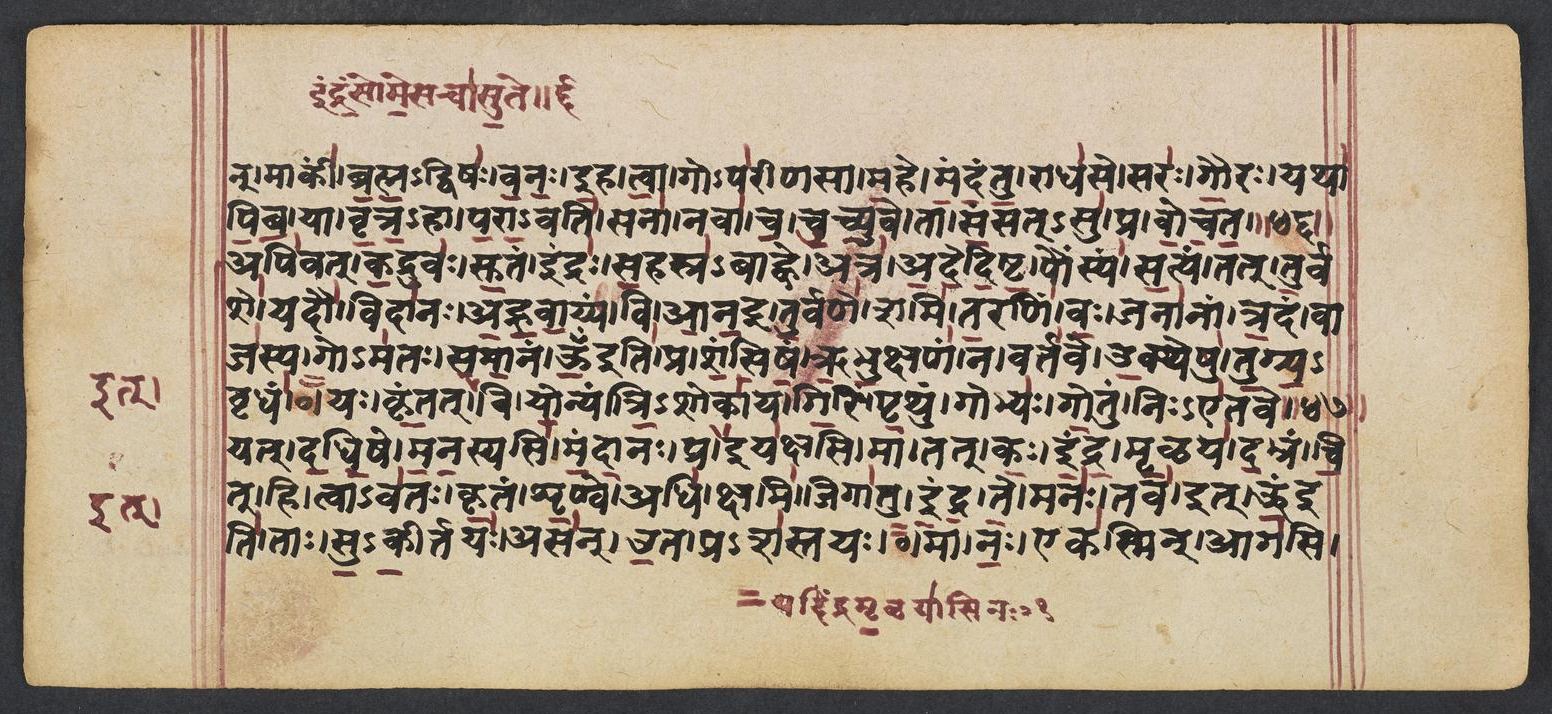
Penn Ms. Coll. 390 Item 41, fol. 618r (numbered 40r by the scribe) (OPenn image 618, lower leaf). Checked on the image: the Rigveda text on this page begins in RV 8.45.23 ‹mākīm brahma-dviṣaḥ vanaḥ›. The next page with Rigveda text, fol. 618v (numbered 40v by the scribe), begins in RV 8.45.34 ‹mā dvayoḥ uta triṣu›. Verses 8.45.23-33 end on this page; 8.45.23 begins on fol. 617v (numbered 39v by the scribe).
23mā tvā̍ mū̱rā a̍vi̱ṣyavo̱ mopa̱hasvā̍na̱ ā da̍bhan | mākī̍m brahma̱dviṣo̍ vanaḥ ||
24i̱ha tvā̱ gopa̍rīṇasā ma̱he ma̍ndantu̱ rādha̍se | saro̍ gau̱ro yathā̍ piba ||
25yā vṛ̍tra̱hā pa̍rā̱vati̱ sanā̱ navā̍ ca cucyu̱ve | tā sa̱ṁsatsu̱ pra vo̍cata ||
26api̍bat ka̱druva̍ḥ su̱tam indra̍ḥ sa̱hasra̍bāhve | atrā̍dediṣṭa̱ pauṁsya̍m ||
27sa̱tyaṁ tat tu̱rvaśe̱ yadau̱ vidā̍no ahnavā̱yyam | vy ā̍naṭ tu̱rvaṇe̱ śami̍ ||
28ta̱raṇi̍ṁ vo̱ janā̍nāṁ tra̱daṁ vāja̍sya̱ goma̍taḥ | sa̱mā̱nam u̱ pra śa̍ṁsiṣam ||
29ṛ̱bhu̱kṣaṇa̱ṁ na varta̍va u̱ktheṣu̍ tugryā̱vṛdha̍m | indra̱ṁ some̱ sacā̍ su̱te ||
30yaḥ kṛ̱ntad id vi yo̱nyaṁ tri̱śokā̍ya gi̱rim pṛ̱thum | gobhyo̍ gā̱tuṁ nire̍tave ||
31yad da̍dhi̱ṣe ma̍na̱syasi̍ mandā̱naḥ pred iya̍kṣasi | mā tat ka̍r indra mṛ̱ḻaya̍ ||
32da̱bhraṁ ci̱d dhi tvāva̍taḥ kṛ̱taṁ śṛ̱ṇve adhi̱ kṣami̍ | jigā̍tv indra te̱ mana̍ḥ ||
33taved u̱ tāḥ su̍kī̱rtayo 'sa̍nn u̱ta praśa̍stayaḥ | yad i̍ndra mṛ̱ḻayā̍si naḥ ||
Compare: Padapāṭha (word-by-word text written in the manuscript; Sansknet e-text via GRETIL)
23mā | tvā | mūrāḥ | aviṣyavaḥ | mā | upa-hasvānaḥ | ā | dabhan | mākīm | brahma-dviṣaḥ | vanaḥ
24iha | tvā | go--parīṇasā | mahe | mandantu | rādhase | saraḥ | gauraḥ | yathā | piba
25yā | vṛtra-hā | parāvati | sanā | navā | ca | cucyuve | tā | saṃsat-su | pra | vocata
26apibat | kadruvaḥ | sutam | indraḥ | sahasra-bāhve | atra | adediṣṭa | paiṃsyam
27satyam | tat | turvaśe | yadau | vidānaḥ | ahnavāyyam | vi | ānaṭ | turvaṇe | śami
28taraṇim | vaḥ | janānām | tradam | vājasya | go--mataḥ | samānam | oṃ iti | pra | śaṃsiṣam
29ṛbhukṣaṇam | na | vartave | uktheṣu | tugrya-vṛdham | indram | some | sacā | sute
30yaḥ | kṛntat | it | vi | yonyam | tri-śokāya | girim | pṛthum | go--bhyaḥ | gātum | niḥ-etave
31yat | dadhiṣe | manasyasi | mandānaḥ | pra | it | iyakṣasi | mā | tat | kaḥ | indra | mṛḷaya
32dabhram | cit | hi | tvāvataḥ | kṛtam | śṛṇve | adhi | kṣami | jigātu | indra | te | manaḥ
33tava | it | oṃ iti | tāḥ | su-kīrtayaḥ | asan | uta | pra-śastayaḥ | yat | indra | mṛḷayāsi | naḥ
23Let not the fools, or those who mock beguile thee when they seek thine aid Love not the enemies of prayer.
24Here let them with rich milky draught cheer thee to great munificence: Drink as the wild-bull drinks the lake.
25Proclaim in our assemblies what deeds, new and ancient, far away, The Vr̥itra-slayer hath achieved.
26In battle of a thousand arms Indra drank Kadrû's Soma juice: There he displayed his manly might.
27True undeniable strength he found in Yadu and in Turvaṣa, And conquered through the sacrifice.
28Him have I magnified, our Lord in, common, Guardian of your folk, Discloser of great wealth in kine;
29R̥ibhukshan, not to be restrained, who strengthened Tugra's son in lauds, Indra beside the flowingjuice;
30Who for Triṣoka clave the hill that formed a wide receptacle, So that the cows might issue forth.
31Whate'er thy plan or purpose be, whate'er, in transport, thou wouldst do, Do it not, Indra, but be kind.
32But little hath been heard of done upon the earth by one like thee i Let thine heart, Indra, turn to us.
33Thine then shall be this high renown, thine shall these lofty praises be, When, Indra, thou art kind to us.
Where on the image
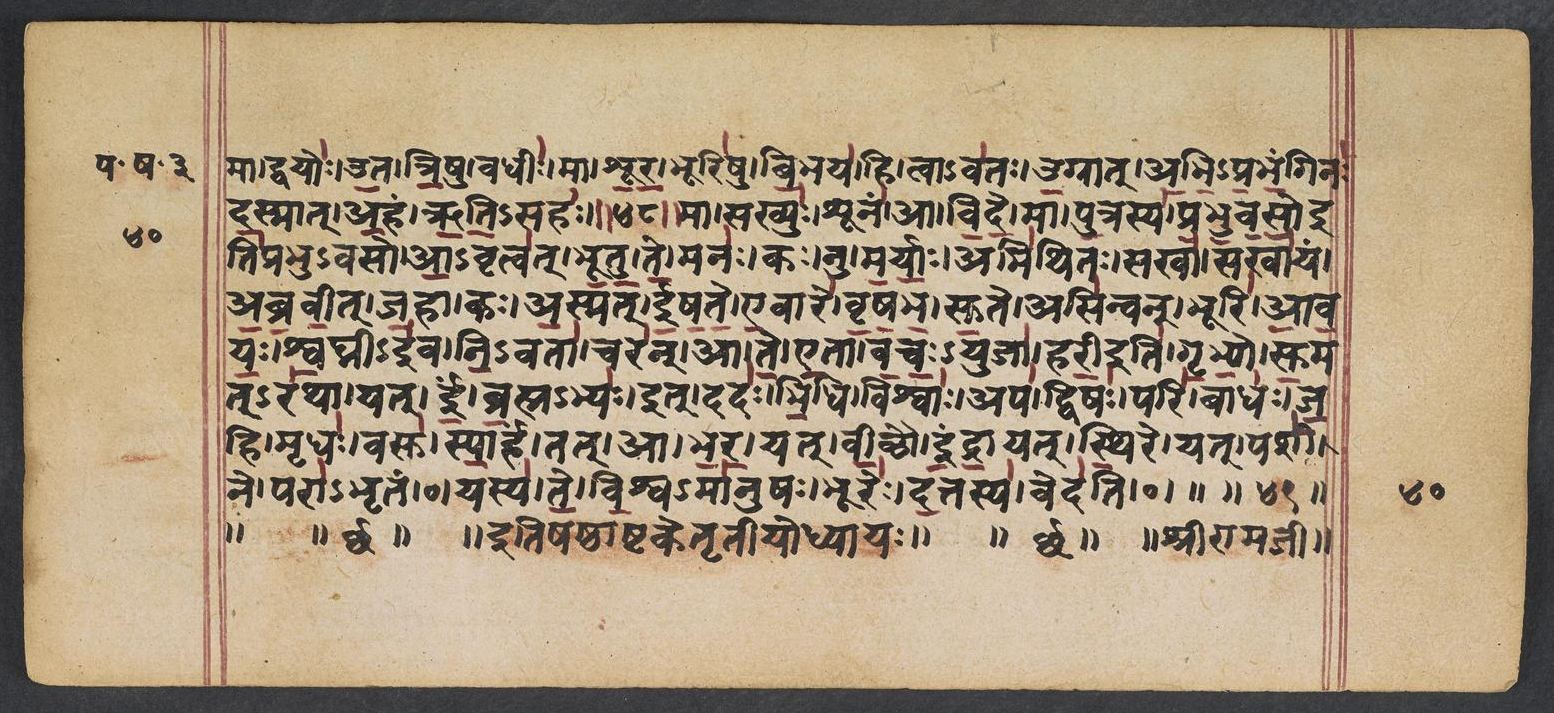
Penn Ms. Coll. 390 Item 41, fol. 618v (numbered 40v by the scribe) (OPenn image 619, upper leaf). Checked on the image: the Rigveda text on this page begins in RV 8.45.34 ‹mā dvayoḥ uta triṣu›. The next page with Rigveda text, fol. 619v (numbered 41v by the scribe), begins in RV 8.46.1 ‹tvāvataḥ puruvaso itipuru-vaso vayam›. Verses 8.45.34-42 end on this page; 8.45.34 begins on fol. 618r (numbered 40r by the scribe).
34mā na̱ eka̍smi̱nn āga̍si̱ mā dvayo̍r u̱ta tri̱ṣu | vadhī̱r mā śū̍ra̱ bhūri̍ṣu ||
35bi̱bhayā̱ hi tvāva̍ta u̱grād a̍bhiprabha̱ṅgiṇa̍ḥ | da̱smād a̱ham ṛ̍tī̱ṣaha̍ḥ ||
36mā sakhyu̱ḥ śūna̱m ā vi̍de̱ mā pu̱trasya̍ prabhūvaso | ā̱vṛtva̍d bhūtu te̱ mana̍ḥ ||
37ko nu ma̍ryā̱ ami̍thita̱ḥ sakhā̱ sakhā̍yam abravīt | ja̱hā ko a̱smad ī̍ṣate ||
38e̱vāre̍ vṛṣabhā su̱te 'si̍nva̱n bhūry ā̍vayaḥ | śva̱ghnīva̍ ni̱vatā̱ cara̍n ||
39ā ta̍ e̱tā va̍co̱yujā̱ harī̍ gṛbhṇe su̱madra̍thā | yad ī̍m bra̱hmabhya̱ id dada̍ḥ ||
40bhi̱ndhi viśvā̱ apa̱ dviṣa̱ḥ pari̱ bādho̍ ja̱hī mṛdha̍ḥ | vasu̍ spā̱rhaṁ tad ā bha̍ra ||
41yad vī̱ḻāv i̍ndra̱ yat sthi̱re yat parśā̍ne̱ parā̍bhṛtam | vasu̍ spā̱rhaṁ tad ā bha̍ra ||
42yasya̍ te vi̱śvamā̍nuṣo̱ bhūre̍r da̱ttasya̱ veda̍ti | vasu̍ spā̱rhaṁ tad ā bha̍ra ||
Compare: Padapāṭha (word-by-word text written in the manuscript; Sansknet e-text via GRETIL)
34mā | naḥ | ekasmin | āgasi | mā | dvayoḥ | uta | triṣu | vadhīḥ | mā | śūra | bhūriṣu
35bibhaya | hi | tvāvataḥ | ugrāt | abhi-prabhaṅgiṇaḥ | dasmāt | aham | ṛti-sahaḥ
36mā | sakhyuḥ | śūnam | ā | vide | mā | putrasya | prabhuvaso itiprabhu-vaso | āvṛtvat | bhūtu | te | manaḥ
37kaḥ | nu | maryāḥ | amithitaḥ | sakhā | sakhāyam | abravīt | jahā | kaḥ | asmat | īṣate
38evāre | vṛṣabha | sute | asinvan | bhūri | āvayaḥ | śvaghnī-iva | ni-vatā | caran
39ā | te | etā | vacaḥ-yujā | harī iti | gṛbhṇe | samat-rathā | yat | īm | brahma-bhyaḥ | it | dadaḥ
40bhindhi | viśvāḥ | apaḥ | dviṣaḥ | pari | bādhaḥ | jahi | mṛdhaḥ | vasu | spārham | tat | ā | bhara
41yat | vīḷau | indra | yat | sthire | yat | parśāne | parābhṛtam | vasu | spārham | tat | ā | bhara
42yasya | te | viśva-mānuṣaḥ | bhūreḥ | dattasya | vedati | vasu | spārham | tat | ā | bhara
34Not for one trespass, not for two, O Hero, slay us, nor for three, Nor yet for many trespasses.
35I fear one powerful like thee, the crusherdown of enemies, Mighty, repelling all attacks.
36O wealthy God, ne'er may I live to see my friend or son in need: Hitherward let thy heart be turned.
37What friend, O people, unprovoked, hath ever said unto a friend, He turns and leaves us in distress?
38Hero, insatiate enjoy this Soma juice so near to thee, Even as a hunter rushing down.
39Hither I draw those Bays of thine yoked by our hymn, with splendid car, That thou mayst give unto the priests.
40Drive all our enemies away, smite down the foes who press around, And bring the wealth for which we long:
41O Tndra, that which is concealed in strong firm place precipitous: Bring us the wealth for which we long
42Great riches which the world of men shall recognize as sent by thbe: Bring us the wealth for which we long.
Notes
- Sanskrit: Aufrecht's edition (1877) with the Vedic accents, as entered by van Nooten and Holland (GRETIL).
- English: Ralph T. H. Griffith, The Hymns of the Rigveda (1889-1892; 2nd ed. 1896-1897), from the VedaWeb digital text; OCR slips in that text were corrected against the printed 2nd edition (data/sources/rigveda/griffith_errata.json).
- Padapāṭha (edition text): Sansknet e-text via GRETIL (CC BY-NC-SA 4.0).
Cite
Sources
- Source: Penn Ms. Coll. 390 Item 41 (undated (catalogued with Penn's 18th-19th c. Vedic manuscripts)), OPenn, Public Domain Mark + Aufrecht's accented text (GRETIL) + Griffith's English (VedaWeb) (holding institution)
- Critical edition: Aufrecht (1877), accented e-text via GRETIL
← previous · → next · v cycle view · l back to library