Rigveda 8.46: To Indra
Introduction
Rigveda 8.46 is a hymn of 33 verses addressed to Indra. It stands in book (maṇḍala) 8, the book of the Kaṇva and Aṅgiras poets. The Rigveda is the oldest collection of Sanskrit hymns, composed in the second half of the second millennium BCE and handed down orally for many centuries before it was written down.
The manuscript shown is Penn Ms. Coll. 390 Item 41 (University of Pennsylvania), an undated paper manuscript of the padapāṭha (the word-by-word recitation text, in which every word is written separately and compounds are split) of the whole Ṛgveda in Devanāgarī, 884 leaves in fascicles, 7-9 lines to the page, accents in red; this hymn stands on fol. 619v-621v. Each section below gives the verses that end on one page; the page boundaries were read on the images (the opening words of every page), not counted out. Where the manuscript is a padapāṭha (the word-by-word recitation text), the section shows Aufrecht's continuous (saṃhitā) text first and, as the edition text, the padapāṭha of the same verses, which is the form written on the page.
How was this verified? (Provenance)
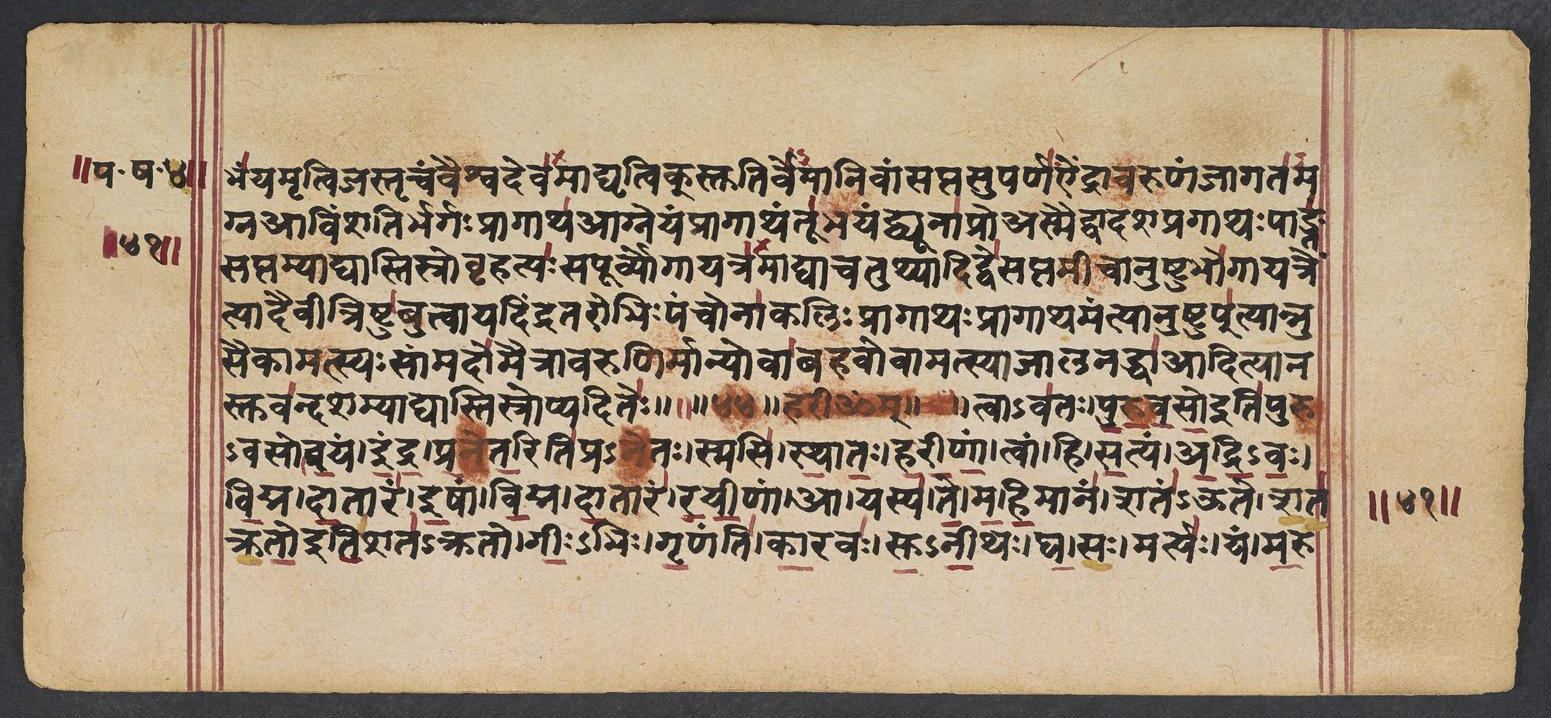
Where on the image
Penn Ms. Coll. 390 Item 41, fol. 619v (numbered 41v by the scribe) (OPenn image 620, upper leaf). Checked on the image: the Rigveda text on this page begins in RV 8.46.1 ‹tvāvataḥ puruvaso itipuru-vaso vayam›. Lines 1-6 end the anukramaṇī; 8.46.1 (tvāvataḥ puruvaso iti puruvaso) begins in line 6. The next page with Rigveda text, fol. 620r (numbered 42r by the scribe), begins in RV 8.46.4 ‹-marutaḥ yam aryamā mitraḥ›. Verses 8.46.1-3 end on this page.
1tvāva̍taḥ purūvaso va̱yam i̍ndra praṇetaḥ | smasi̍ sthātar harīṇām ||
2tvāṁ hi sa̱tyam a̍drivo vi̱dma dā̱tāra̍m i̱ṣām | vi̱dma dā̱tāra̍ṁ rayī̱ṇām ||
3ā yasya̍ te mahi̱māna̱ṁ śata̍mūte̱ śata̍krato | gī̱rbhir gṛ̱ṇanti̍ kā̱rava̍ḥ ||
Compare: Padapāṭha (word-by-word text written in the manuscript; Sansknet e-text via GRETIL)
1tvāvataḥ | puruvaso itipuru-vaso | vayam | indra | pranetaritipra-netaḥ | smasi | sthātaḥ | harīṇām
2tvām | hi | satyam | adri-vaḥ | vidma | dātāram | iṣām | vidma | dātāram | rayīṇām
3ā | yasya | te | mahimānam | śatam-ūte | śatakrato itiśata-krato | gīḥ-bhiḥ | gṛṇanti | kāravaḥ
1WE, Indra, Lord of ample wealth, our Guide, depend on one like thee, Thou driver of the Tawny Steeds.
2For, Hurler of the Bolt, we know thee true, the giver of our food, We know the giver of our wealth.
3O thou whose majesty the bards celebrate with their songs, thou Lord, Of hundred powers and hundred aids.
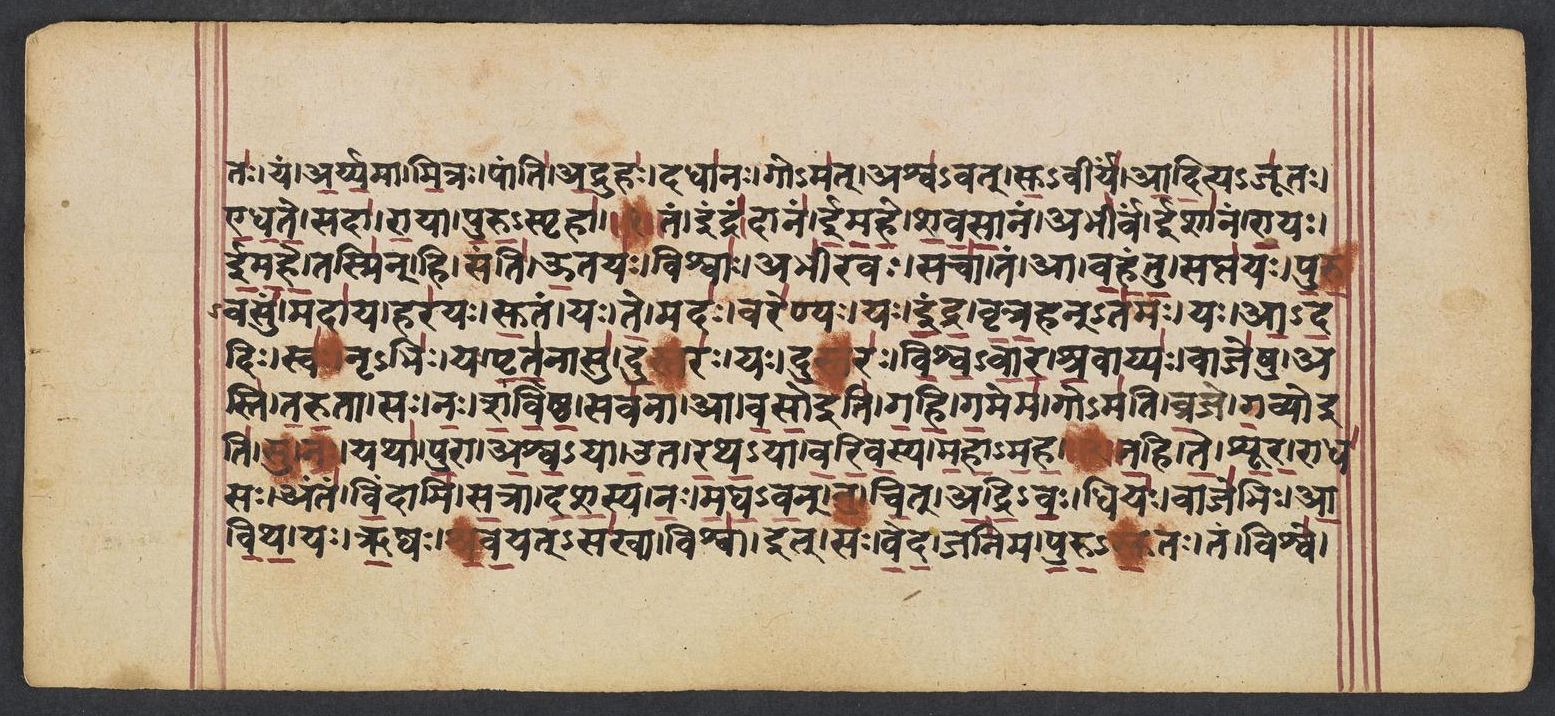
Where on the image
Penn Ms. Coll. 390 Item 41, fol. 620r (numbered 42r by the scribe) (OPenn image 620, lower leaf). Checked on the image: the Rigveda text on this page begins in RV 8.46.4 ‹-marutaḥ yam aryamā mitraḥ›. The next page with Rigveda text, fol. 620v (numbered 42v by the scribe), begins in RV 8.46.12 ‹mānuṣā yugā indram havante›. Verses 8.46.4-11 end on this page; 8.46.4 begins on fol. 619v (numbered 41v by the scribe).
4su̱nī̱tho ghā̱ sa martyo̱ yam ma̱ruto̱ yam a̍rya̱mā | mi̱traḥ pānty a̱druha̍ḥ ||
5dadhā̍no̱ goma̱d aśva̍vat su̱vīrya̍m ādi̱tyajū̍ta edhate | sadā̍ rā̱yā pu̍ru̱spṛhā̍ ||
6tam indra̱ṁ dāna̍m īmahe śavasā̱nam abhī̍rvam | īśā̍naṁ rā̱ya ī̍mahe ||
7tasmi̱n hi santy ū̱tayo̱ viśvā̱ abhī̍rava̱ḥ sacā̍ | tam ā va̍hantu̱ sapta̍yaḥ purū̱vasu̱m madā̍ya̱ hara̍yaḥ su̱tam ||
8yas te̱ mado̱ vare̍ṇyo̱ ya i̍ndra vṛtra̱hanta̍maḥ | ya ā̍da̱diḥ sva1̱̍r nṛbhi̱r yaḥ pṛta̍nāsu du̱ṣṭara̍ḥ ||
9yo du̱ṣṭaro̍ viśvavāra śra̱vāyyo̱ vāje̱ṣv asti̍ taru̱tā | sa na̍ḥ śaviṣṭha̱ sava̱nā va̍so gahi ga̱mema̱ goma̍ti vra̱je ||
10ga̱vyo ṣu ṇo̱ yathā̍ pu̱rāśva̱yota ra̍tha̱yā | va̱ri̱va̱sya ma̍hāmaha ||
11na̱hi te̍ śūra̱ rādha̱so 'nta̍ṁ vi̱ndāmi̍ sa̱trā | da̱śa̱syā no̍ maghava̱n nū ci̍d adrivo̱ dhiyo̱ vāje̍bhir āvitha ||
Compare: Padapāṭha (word-by-word text written in the manuscript; Sansknet e-text via GRETIL)
4su-nīthaḥ | gha | saḥ | martyaḥ | yam | marutaḥ | yam | aryamā | mitraḥ | pānti | adruhaḥ
5dadhānaḥ | go--mat | aśva-vat | su-vīryam | āditya-jūtaḥ | edhate | sadā | rāyā | puru-spṛhā
6tam | indram | dānam | īmahe | śavasānam | abhīrvam | īśānam | rāyaḥ | īmahe
7tasmin | hi | santi | ūtayaḥ | viśvāḥ | abhīravaḥ | sacā | tam | ā | vahantu | saptayaḥ | puru-vasum | madāya | harayaḥ | sutam
8yaḥ | te | madaḥ | vareṇyaḥ | yaḥ | indra | vṛtrahan-tamaḥ | yaḥ | ādadiḥ | svaḥ | nṛ-bhiḥ | yaḥ | pṛtanāsu | dustaraḥ
9yaḥ | dustaraḥ | viśva-vāra | śravāyyaḥ | vājeṣu | asti | tarutā | saḥ | naḥ | śaviṣṭha | savanā | ā | vaso iti | gahi | gamema | go--mati | vraje
10gavyaḥ | su | ṇaḥ | yathā | purā | aśva-yā | uta | ratha-yā | varivasya | mahāmaha
11nahi | te | śūra | rādhasaḥ | antam | vindāmi | satrā | daśasya | naḥ | magha-van | nu | cit | adri-vaḥ | dhiyaḥ | vājebhiḥ | āvitha
4Fair guidance hath the mortal man whom Aryaman, the Marut host, And Mitra, void of guile, protect.
5Kine, steeds, and hero strength he gains, and prospers, by the Âdityas sped, Ever in wealth which all desire.
6We pray to Indra for his gift, to him the Fearless and the Strong, We pray to him the Lord of wealth.
7For verily combined in him are all the fearless powers of aid. Him, rich in wealth, let swift Steeds bring to us, his Bays, to Soma juice for his carouse:
8Yea, that most excellent carouse, Indra, which slays most enemies, With Heroes wins the light of heaven, and is invincible in war:
9Which merits fame, all-bountiful! and, unsubdued, hath victory in deeds of might. So come to our libations, Strongest! Excellent! May we obtain a stall of kine.
10Responding to our wish for cows, for steeds, and chariots, as of old, Be gracious, Greatest of the Great
11For, Hero, nowhere can I find the bounds of thy munificence. Still do thou favour us, O Bolt-armed Maghavan: with strength hast thou rewarded hymns.
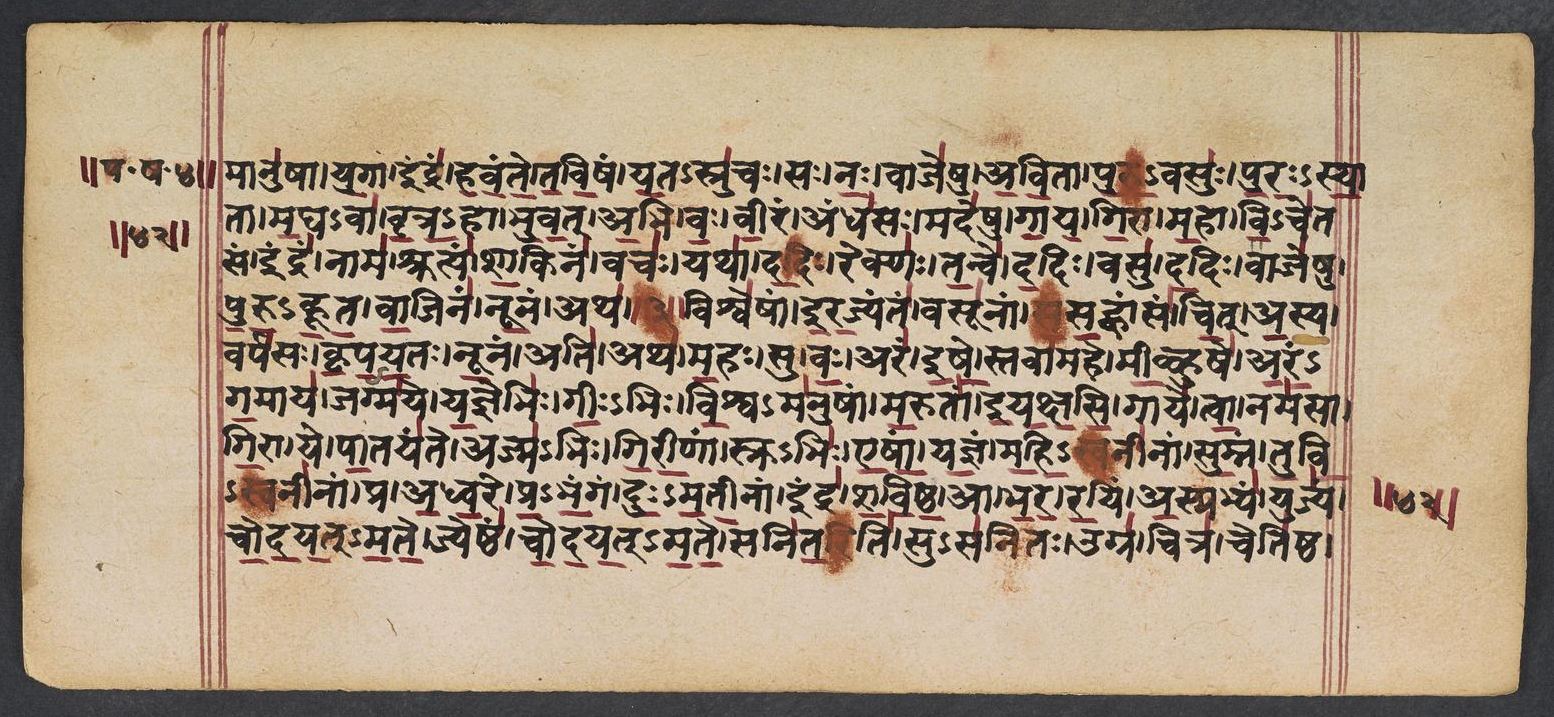
Where on the image
Penn Ms. Coll. 390 Item 41, fol. 620v (numbered 42v by the scribe) (OPenn image 621, upper leaf). Checked on the image: the Rigveda text on this page begins in RV 8.46.12 ‹mānuṣā yugā indram havante›. The next page with Rigveda text, fol. 621r (numbered 43r by the scribe), begins in RV 8.46.20 ‹-pra-sahā sam-rāṭ sahurim sahantam›. Verses 8.46.12-19 end on this page; 8.46.12 begins on fol. 620r (numbered 42r by the scribe).
12ya ṛ̱ṣvaḥ śrā̍va̱yatsa̍khā̱ viśvet sa ve̍da̱ jani̍mā puruṣṭu̱taḥ | taṁ viśve̱ mānu̍ṣā yu̱gendra̍ṁ havante tavi̱ṣaṁ ya̱tasru̍caḥ ||
13sa no̱ vāje̍ṣv avi̱tā pu̍rū̱vasu̍ḥ puraḥsthā̱tā ma̱ghavā̍ vṛtra̱hā bhu̍vat ||
14a̱bhi vo̍ vī̱ram andha̍so̱ made̍ṣu gāya gi̱rā ma̱hā vice̍tasam | indra̱ṁ nāma̱ śrutya̍ṁ śā̱kina̱ṁ vaco̱ yathā̍ ||
15da̱dī rekṇa̍s ta̱nve̍ da̱dir vasu̍ da̱dir vāje̍ṣu puruhūta vā̱jina̍m | nū̱nam atha̍ ||
16viśve̍ṣām ira̱jyanta̱ṁ vasū̍nāṁ sāsa̱hvāṁsa̍ṁ cid a̱sya varpa̍saḥ | kṛ̱pa̱ya̱to nū̱nam aty atha̍ ||
17ma̱haḥ su vo̱ ara̍m iṣe̱ stavā̍mahe mī̱ḻhuṣe̍ araṁga̱māya̱ jagma̍ye | ya̱jñebhi̍r gī̱rbhir vi̱śvama̍nuṣām ma̱rutā̍m iyakṣasi̱ gāye̍ tvā̱ nama̍sā gi̱rā ||
18ye pā̱taya̍nte̱ ajma̍bhir girī̱ṇāṁ snubhi̍r eṣām | ya̱jñam ma̍hi̱ṣvaṇī̍nāṁ su̱mnaṁ tu̍vi̱ṣvaṇī̍nā̱m prādhva̱re ||
19pra̱bha̱ṅgaṁ du̍rmatī̱nām indra̍ śavi̱ṣṭhā bha̍ra | ra̱yim a̱smabhya̱ṁ yujya̍ṁ codayanmate̱ jyeṣṭha̍ṁ codayanmate ||
Compare: Padapāṭha (word-by-word text written in the manuscript; Sansknet e-text via GRETIL)
12yaḥ | ṛṣvaḥ | śravayat-sakhā | viśvā | it | saḥ | veda | janima | puru-stutaḥ | tam | viśve | mānuṣā | yugā | indram | havante | taviṣam | yata-srucaḥ
13saḥ | naḥ | vājeṣu | avitā | puru-vasuḥ | puraḥ-sthātā | magha-vā | vṛtra-hā | bhuvat
14abhi | vaḥ | vīram | andhasaḥ | madeṣu | gāya | girā | mahā | vi-cetasam | indram | nāma | śrutyam | śākinam | vacaḥ | yathā
15dadiḥ | rekṇaḥ | tanve | dadiḥ | vasu | dadiḥ | vājeṣu | puru-hūta | vājinam | nūnam | atha
16viśveṣām | irajyantam | vasūnām | sasahvāṃsam | cit | asya | varpasaḥ | kṛpa-yataḥ | nūnam | ati | atha
17mahaḥ | su | vaḥ | aram | iṣe | stavāmahe | mīḷhuṣe | aram-gamāya | jagmaye | yajñebhiḥ | gīḥ-bhiḥ | viśva-manuṣām | marutām | iyakṣasi | gāye | tvā | namasā | gi rā
18ye | pātayante | ajma-bhiḥ | girīṇām | snu-bhiḥ | eṣām | yajñam | mahi-svaṇīnām | sumnam | tuvi-svaṇīnām | pra | adhvare
19pra-bhaṅgam | duḥ-matīnām | indra | śaviṣṭha | ā | bhara | rayim | asmabhyam | yujyam | codayat-mate | jyeṣṭham | codayat-mate
12High, glorifier of his friend, he knows all generations, he whom many praise. All races of mankind with ladles lifted up invoke that Mighty Indra's aid.
13Be he our Champion and Protector in great deeds, rich in all wealth, the Vr̥itra-slayer, Maghavan.
14In the wild raptures of the juice sing to your Hero with high laud, to him the Wise, To Indra, glorious in his name, the Mighty One, even as the hymn alloweth it.
15Thou givest wealth to me myself, thou givest treasure, Excellent! and the strong steed, O Much-invoked, in deeds of might, yea, even now.
16Him, Sovran Ruler of all precious things, who even hath power o'er this fair form of his, As now it taketh shape, and afterward,
17We praise, so that the Mighty One may speed to you, Pourer of boun ies, Traveller, prepared to go. Thou favourest the Maruts known to all, by song and sacrifice. With song and praise I sing to thee.
18We in the sacrifice perform their will whose voice is lifted high, The worship of those Thundering Ones who o'er the ridges of these mountains fly in troops.
19O Indra, Mightiest, bring us that which crushes men of evil minds, Wealth suited to our needs, O Stirrer of the thought, best wealth, O thou who stirrest thought.
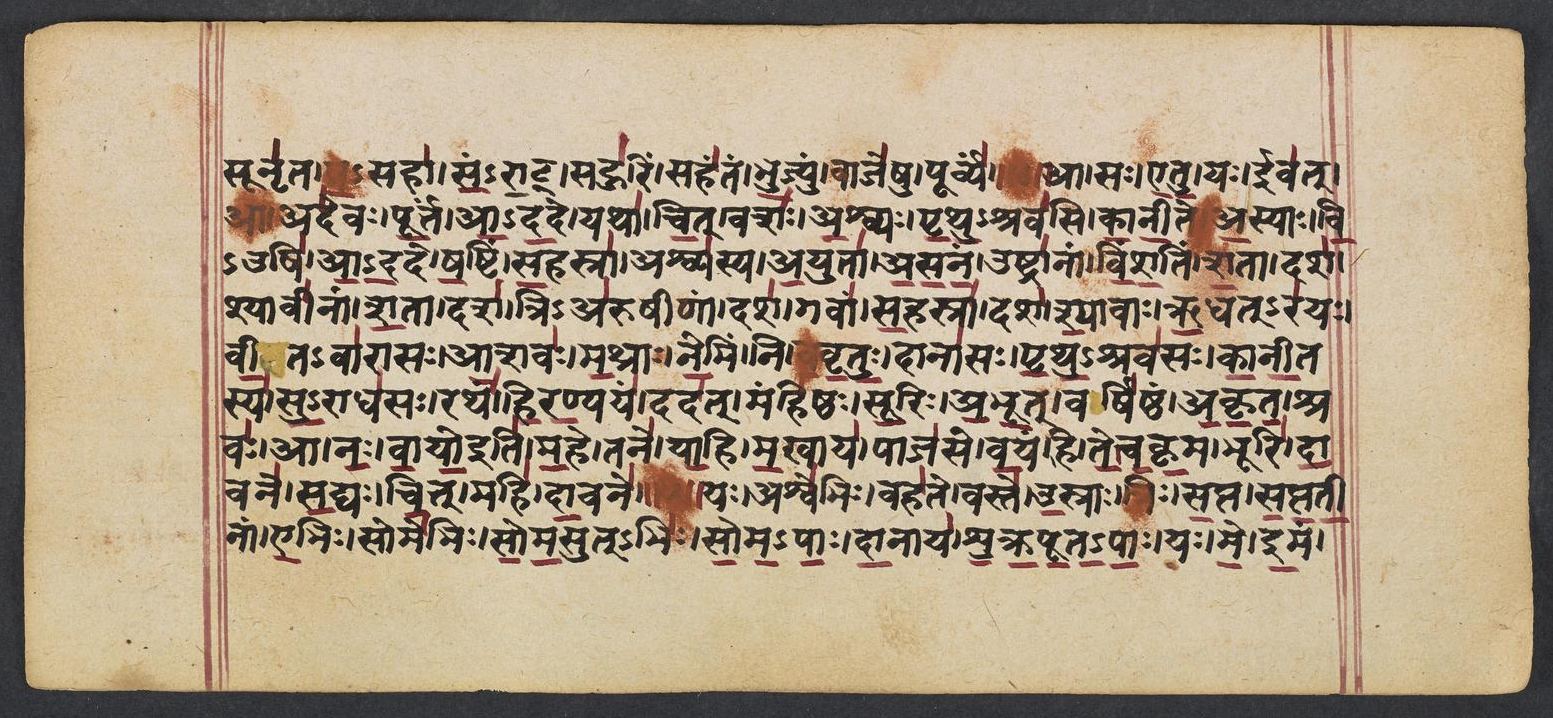
Where on the image
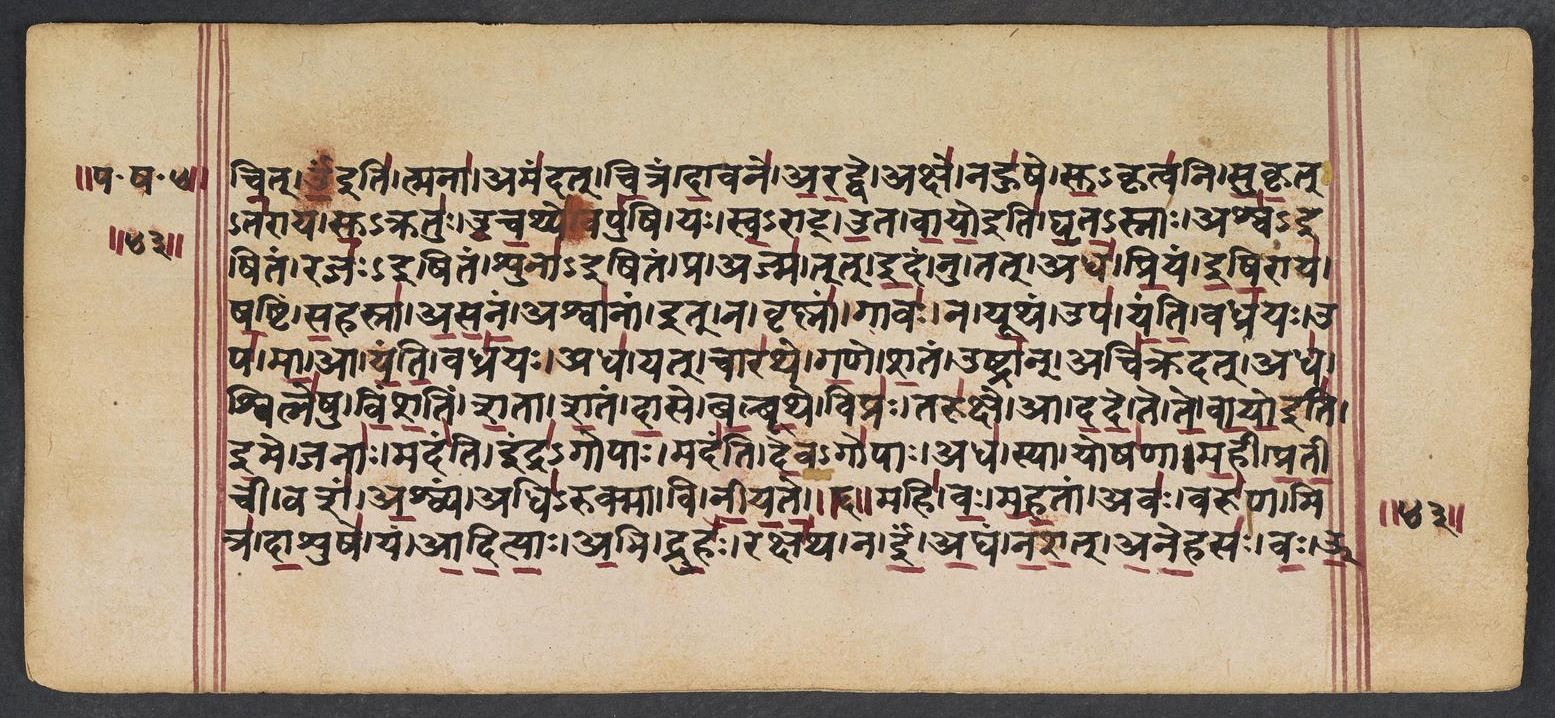
Penn Ms. Coll. 390 Item 41, fol. 621r (numbered 43r by the scribe) (OPenn image 621, lower leaf). Checked on the image: the Rigveda text on this page begins in RV 8.46.20 ‹-pra-sahā sam-rāṭ sahurim sahantam›. The next page with Rigveda text, fol. 621v (numbered 43v by the scribe), begins in RV 8.46.27 ‹cit oṃ iti tmanā›. Verses 8.46.20-26 end on this page; 8.46.20 begins on fol. 620v (numbered 42v by the scribe).
20sani̍ta̱ḥ susa̍nita̱r ugra̱ citra̱ ceti̍ṣṭha̱ sūnṛ̍ta | prā̱sahā̍ samrā̱ṭ sahu̍ri̱ṁ saha̍ntam bhu̱jyuṁ vāje̍ṣu̱ pūrvya̍m ||
21ā sa e̍tu̱ ya īva̱d ām̐ ade̍vaḥ pū̱rtam ā̍da̱de | yathā̍ ci̱d vaśo̍ a̱śvyaḥ pṛ̍thu̱śrava̍si kānī̱te̱3̱̍ 'syā vyuṣy ā̍da̱de ||
22ṣa̱ṣṭiṁ sa̱hasrāśvya̍syā̱yutā̍sana̱m uṣṭrā̍nāṁ viṁśa̱tiṁ śa̱tā | daśa̱ śyāvī̍nāṁ śa̱tā daśa̱ trya̍ruṣīṇā̱ṁ daśa̱ gavā̍ṁ sa̱hasrā̍ ||
23daśa̍ śyā̱vā ṛ̱dhadra̍yo vī̱tavā̍rāsa ā̱śava̍ḥ | ma̱thrā ne̱miṁ ni vā̍vṛtuḥ ||
24dānā̍saḥ pṛthu̱śrava̍saḥ kānī̱tasya̍ su̱rādha̍saḥ | ratha̍ṁ hira̱ṇyaya̱ṁ dada̱n maṁhi̍ṣṭhaḥ sū̱rir a̍bhū̱d varṣi̍ṣṭham akṛta̱ śrava̍ḥ ||
25ā no̍ vāyo ma̱he tane̍ yā̱hi ma̱khāya̱ pāja̍se | va̱yaṁ hi te̍ cakṛ̱mā bhūri̍ dā̱vane̍ sa̱dyaś ci̱n mahi̍ dā̱vane̍ ||
26yo aśve̍bhi̱r vaha̍te̱ vasta̍ u̱srās triḥ sa̱pta sa̍ptatī̱nām | e̱bhiḥ some̍bhiḥ soma̱sudbhi̍ḥ somapā dā̱nāya̍ śukrapūtapāḥ ||
Compare: Padapāṭha (word-by-word text written in the manuscript; Sansknet e-text via GRETIL)
20sanitariti | / su-sanitaḥ | ugra | citra | cetiṣṭha | sūnṛta | pra-sahā | sam-rāṭ | sahurim | sahantam | bhujyum | vājeṣu | pūrvyam
21ā | saḥ | etu | yaḥ | īvat | ā | adevaḥ | pūrtam | ādade | yathā | cit | vaśaḥ | aśvyaḥ | pṛthu-śravasi | kānīte | asyāḥ | vi-uṣi | ādade
22ṣaṣṭim | sahasrā | aśvyasya | ayutā | asanam | uṣṭrānām | viṃśatim | śatā | daśa | śyāvīnām | śatā | daśa | tri-aruṣīṇām | daśa | gavām | sahasrā
23daśa | śyāvāḥ | ṛdhat-rayaḥ | vīta-vārāsaḥ | āśavaḥ | mathrāḥ | nemim | ni | vavṛtuḥ
24dānāsaḥ | pṛthu-śravasaḥ | kānītasya | su-rādhasaḥ | ratham | hiraṇyayam | dadat | maṃhiṣṭhaḥ | sūriḥ | abhūt | varṣiṣṭham | akṛta | śravaḥ
25ā | naḥ | vāyo iti | mahe | tane | yāhi | makhāya | pājase | vayam | hi | te | cakṛma | bhūri | dāvane | sadyaḥ | cit | mahi | dāvane
26yaḥ | aśvebhiḥ | vahate | vaste | usrāḥ | triḥ | sapta | saptatīnām | ebhiḥ | somebhiḥ | somasut-bhiḥ | soma-pāḥ | dānāya | śukrapūta-pāḥ
20O Winner, noble winner, strong, wondrous, most splendid, excellent, Sole Lord of victory, bring all-ovcrpowering wealth, joy-giving, chief in deeds of might.
21Now let the godless man approach who hath received reward so great As Vaṣa Aṣvya, when this light of morning dawned, received from Pr̥ithuṣravas, from Kanîta's son.
22Steeds sixty thousand and ten thousand kine, and twenty hundred camels I obtained; Ten hundred brown in hue, and other ten red in three spots: in all, ten thousand kine.
23Ten browns that make my wealth increase, fleet steeds whose tails are long and fair, Turn with swift whirl my chariot wheel;
24The gifts which Pr̥ithuṣravas gave, Kanîta's son munificent. He gave a chariot wrought of gold: the prince was passing bountiful, and won himself most lofty fame.
25Come thou to this great rite of ours, Vâyu! to give us vigorous light. We have served thee that thou mightest give much to us, yea, mightest quickly give great wealth.
26Who with thrice seven times seventy horses comes to us, invested with the rays of morn, Through these our Soma-draughts and those who press, to give, drinker of pure bright Soma Juice.
Where on the image
Penn Ms. Coll. 390 Item 41, fol. 621v (numbered 43v by the scribe) (OPenn image 622, upper leaf). Checked on the image: the Rigveda text on this page begins in RV 8.46.27 ‹cit oṃ iti tmanā›. The next page with Rigveda text, fol. 622r (numbered 44r by the scribe), begins in RV 8.47.1 ‹-ūtayaḥ su-ūtayaḥ vaḥ ūtayaḥ›. Verses 8.46.27-33 end on this page; 8.46.27 begins on fol. 621r (numbered 43r by the scribe).
27yo ma̍ i̱maṁ ci̍d u̱ tmanāma̍ndac ci̱traṁ dā̱vane̍ | a̱ra̱ṭve akṣe̱ nahu̍ṣe su̱kṛtva̍ni su̱kṛtta̍rāya su̱kratu̍ḥ ||
28u̱ca̱thye̱3̱̍ vapu̍ṣi̱ yaḥ sva̱rāḻ u̱ta vā̍yo ghṛta̱snāḥ | aśve̍ṣita̱ṁ raje̍ṣita̱ṁ śune̍ṣita̱m prājma̱ tad i̱daṁ nu tat ||
29adha̍ pri̱yam i̍ṣi̱rāya̍ ṣa̱ṣṭiṁ sa̱hasrā̍sanam | aśvā̍nā̱m in na vṛṣṇā̍m ||
30gāvo̱ na yū̱tham upa̍ yanti̱ vadhra̍ya̱ upa̱ mā ya̍nti̱ vadhra̍yaḥ ||
31adha̱ yac cāra̍the ga̱ṇe śa̱tam uṣṭrā̱m̐ aci̍kradat | adha̱ śvitne̍ṣu viṁśa̱tiṁ śa̱tā ||
32śa̱taṁ dā̱se ba̍lbū̱the vipra̱s taru̍kṣa̱ ā da̍de | te te̍ vāyav i̱me janā̱ mada̱ntīndra̍gopā̱ mada̍nti de̱vago̍pāḥ ||
33adha̱ syā yoṣa̍ṇā ma̱hī pra̍tī̱cī vaśa̍m a̱śvyam | adhi̍rukmā̱ vi nī̍yate ||
Compare: Padapāṭha (word-by-word text written in the manuscript; Sansknet e-text via GRETIL)
27yaḥ | me | imam | cit | oṃ iti | tmanā | amandat | citram | dāvane | araṭave | akṣe | nahuṣe | su-kṛtvani | sukṛt-tarāya | su-kratuḥ
28ucathye | vapuṣi | yaḥ | sva-rāṭ | uta | vāyo iti | ghṛta-snāḥ | aśva-iṣitam | rajaḥ-iṣitam | śunāiṣitam | pra | ajma | tat | idam | nu | tat
29agha | priyam | iṣirāya | ṣaṣṭim | sahasrā | asanam | aśvānām | it | na | vṛṣṇām
30gāvaḥ | na | yūtham | upa | yanti | vadhrayaḥ | upa | mā | yanti | vadhrayaḥ
31adha | yat | cārathe | gaṇe | śatam | uṣṭrān | acikradat | adha | śvitneṣu | viṃśatim | śatā
32śatam | dāse | balbūthe | vipraḥ | tarukṣe | ā | dade | te | te | vāyo iti | ime | janāḥ | madanti | indra-gopāḥ | madanti | deva-gopāḥ
33adha | syā | yoṣaṇā | mahī | pratīcī | vaśam | aśvyam | adhi-rukmā | vi | nīyate
27Who hath inclined this glorious one, bounteous himself, to give me gifts. Borne on firm chariot with the prosperous Nahusha, wise, to a man yet more devout.
28Sole Lord in beauty meet for praise, O Vâyu, dropping fatness down, Hurried along by steeds, by camels, and by hounds, spreads forth thy train: even this it is.
29So, as a prize dear to the strong, the sixty thousand have I gained, Bulls that resemble vigorous steeds.
30To me come oxen like a herd, yea, unto me the oxen come.
31And in the grazing herd he made a hundred camels bleat for me, And twenty hundred mid the white.
32A hundred has the sage received, Dâsa Balbûtha's and Taruksha's gifts. These are thy people, Vâyu, who rejoice with Indra for their guard, rejoice with Gods for guards.
33And now to Vaṣa Aṣvya here this stately woman is led forth, Adorned with ornaments of gold.
Notes
- Sanskrit: Aufrecht's edition (1877) with the Vedic accents, as entered by van Nooten and Holland (GRETIL).
- English: Ralph T. H. Griffith, The Hymns of the Rigveda (1889-1892; 2nd ed. 1896-1897), from the VedaWeb digital text; OCR slips in that text were corrected against the printed 2nd edition (data/sources/rigveda/griffith_errata.json).
- Padapāṭha (edition text): Sansknet e-text via GRETIL (CC BY-NC-SA 4.0).
Cite
Sources
- Source: Penn Ms. Coll. 390 Item 41 (undated (catalogued with Penn's 18th-19th c. Vedic manuscripts)), OPenn, Public Domain Mark + Aufrecht's accented text (GRETIL) + Griffith's English (VedaWeb) (holding institution)
- Critical edition: Aufrecht (1877), accented e-text via GRETIL
← previous · → next · v cycle view · l back to library