Rigveda 8.48: To Soma
Introduction
Rigveda 8.48 is a hymn of 15 verses addressed to Soma. It stands in book (maṇḍala) 8, the book of the Kaṇva and Aṅgiras poets. The Rigveda is the oldest collection of Sanskrit hymns, composed in the second half of the second millennium BCE and handed down orally for many centuries before it was written down.
The manuscript shown is Penn Ms. Coll. 390 Item 41 (University of Pennsylvania), an undated paper manuscript of the padapāṭha (the word-by-word recitation text, in which every word is written separately and compounds are split) of the whole Ṛgveda in Devanāgarī, 884 leaves in fascicles, 7-9 lines to the page, accents in red; this hymn stands on fol. 623r-624r. Each section below gives the verses that end on one page; the page boundaries were read on the images (the opening words of every page), not counted out. Where the manuscript is a padapāṭha (the word-by-word recitation text), the section shows Aufrecht's continuous (saṃhitā) text first and, as the edition text, the padapāṭha of the same verses, which is the form written on the page.
How was this verified? (Provenance)
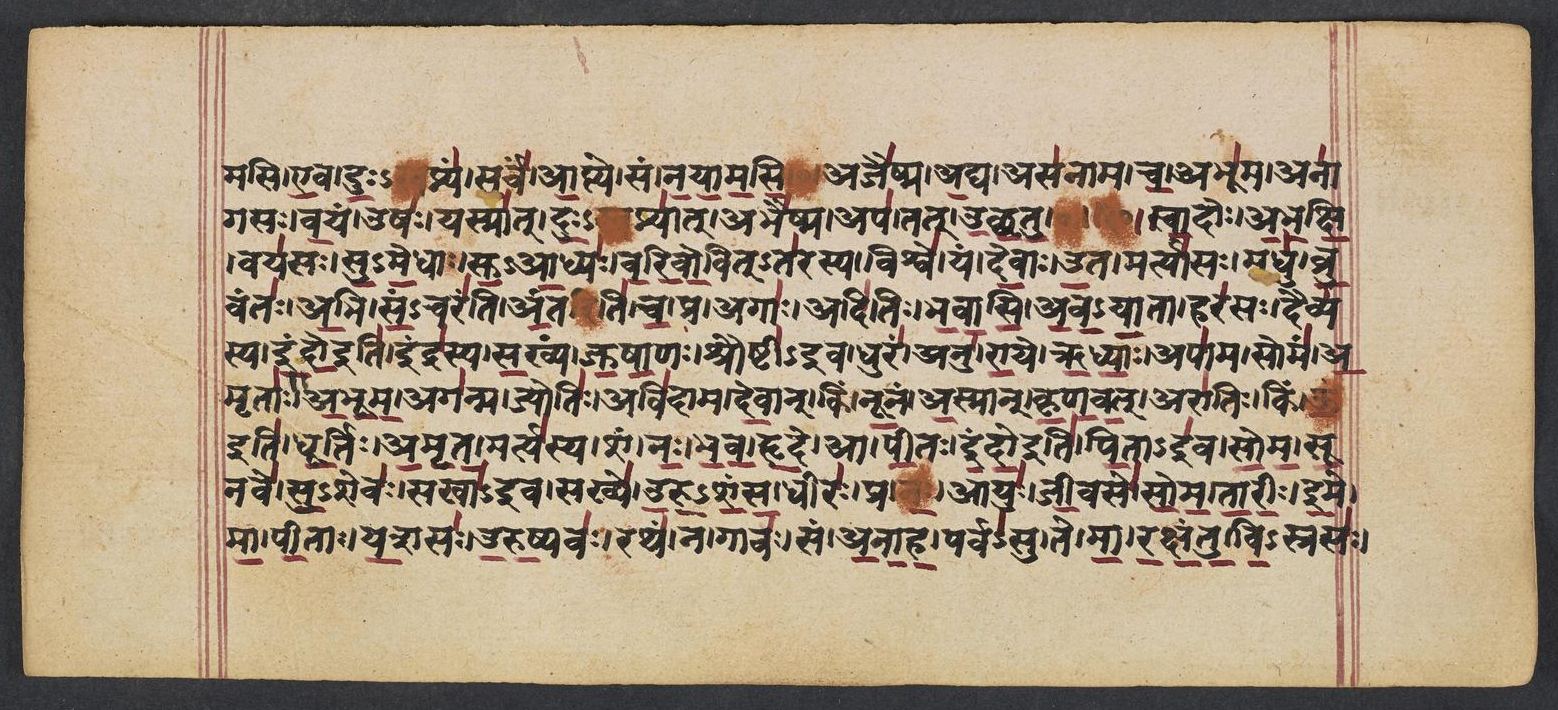
Where on the image
Penn Ms. Coll. 390 Item 41, fol. 623r (numbered 45r by the scribe) (OPenn image 623, lower leaf). Checked on the image: the Rigveda text on this page begins in RV 8.47.17 ‹-sam-nayāmasi eva duḥ-svapnyam sarvam›. The next page with Rigveda text, fol. 623v (numbered 45v by the scribe), begins in RV 8.48.5 ‹-caritrāt uta mā srāmāt›. Verses 8.48.1-4 end on this page.
1svā̱dor a̍bhakṣi̱ vaya̍saḥ sume̱dhāḥ svā̱dhyo̍ varivo̱vitta̍rasya | viśve̱ yaṁ de̱vā u̱ta martyā̍so̱ madhu̍ bru̱vanto̍ a̱bhi sa̱ṁcara̍nti ||
2a̱ntaś ca̱ prāgā̱ adi̍tir bhavāsy avayā̱tā hara̍so̱ daivya̍sya | inda̱v indra̍sya sa̱khyaṁ ju̍ṣā̱ṇaḥ śrauṣṭī̍va̱ dhura̱m anu̍ rā̱ya ṛ̍dhyāḥ ||
3apā̍ma̱ soma̍m a̱mṛtā̍ abhū̱māga̍nma̱ jyoti̱r avi̍dāma de̱vān | kiṁ nū̱nam a̱smān kṛ̍ṇava̱d arā̍ti̱ḥ kim u̍ dhū̱rtir a̍mṛta̱ martya̍sya ||
4śaṁ no̍ bhava hṛ̱da ā pī̱ta i̍ndo pi̱teva̍ soma sū̱nave̍ su̱śeva̍ḥ | sakhe̍va̱ sakhya̍ uruśaṁsa̱ dhīra̱ḥ pra ṇa̱ āyu̍r jī̱vase̍ soma tārīḥ ||
Compare: Padapāṭha (word-by-word text written in the manuscript; Sansknet e-text via GRETIL)
1svādoḥ | abhakṣi | vayasaḥ | su-medhāḥ | su-ādhyaḥ | varivovit-tarasya | viśve | yam | devāḥ | uta | martyāsaḥ | madhu | bruvantaḥ | abhi | sam-caranti
2antariti | ca | pra | agāḥ | aditiḥ | bhavāsi | ava-yātā | harasaḥ | daivyasya | indo iti | indrasya | sakhyam | juṣāṇaḥ | śrauṣṭī-iva | dhuram | anu | rāye | ṛdhyāḥ
3apāma | somam | amṛtāḥ | abhūma | aganma | jyotiḥ | avidāma | devān | kim | nūnam | asmān | kṛṇavat | arāti | kim | oṃ iti | dhūrtiḥ | amṛta | martyasya
4śam | naḥ | bhava | hṛde | ā | pītaḥ | indo iti | pitāiva | soma | sūnave | su-śevaḥ | sakhāiva | sakhye | uru-śaṃsa | dhīraḥ | pra | naḥ | āyuḥ | jīvase | soma | tārīḥ
1WISELY have I enjoyed the savoury viand, religious-thoughted, best to find out treasure, The food to which all Deities and mortals, calling it meath, gather themselves together.
2Tlou shalt be Aditi as thou hast entered within, appeaser of celestial anger. Indu, enjoying Indra's friendship, bring us – as a swift steed the car – forward to riches.
3We have drunk Soma and become immortal; we have attained the light, the Gods discovered. Now what may foeman's malice do to harm us? What, O Immortal, mortal man's deception?
4Absorbed into the heart, be sweet, O Indu, as a kind father to his son, O Soma, As a wise Friend to friend: do thou, wide-ruler, O Soma, lengthen out our days for living.
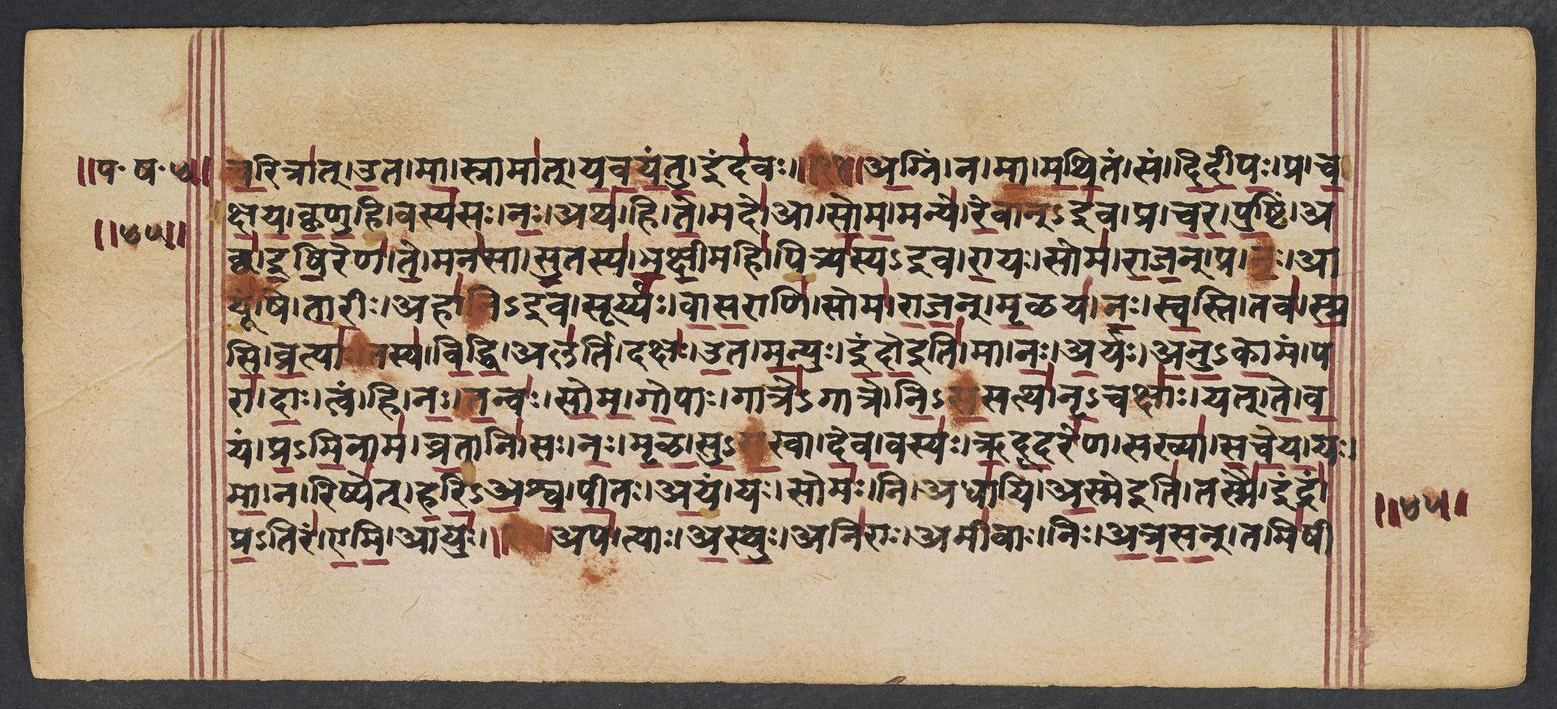
Where on the image
Penn Ms. Coll. 390 Item 41, fol. 623v (numbered 45v by the scribe) (OPenn image 624, upper leaf). Checked on the image: the Rigveda text on this page begins in RV 8.48.5 ‹-caritrāt uta mā srāmāt›. The next page with Rigveda text, fol. 624r (numbered 46r by the scribe), begins in RV 8.48.11 ‹-tamiṣīcīḥ abhaiṣuḥ ā somaḥ›. Verses 8.48.5-10 end on this page; 8.48.5 begins on fol. 623r (numbered 45r by the scribe).
5i̱me mā̍ pī̱tā ya̱śasa̍ uru̱ṣyavo̱ ratha̱ṁ na gāva̱ḥ sam a̍nāha̱ parva̍su | te mā̍ rakṣantu vi̱srasa̍ś ca̱ritrā̍d u̱ta mā̱ srāmā̍d yavaya̱ntv inda̍vaḥ ||
6a̱gniṁ na mā̍ mathi̱taṁ saṁ di̍dīpa̱ḥ pra ca̍kṣaya kṛṇu̱hi vasya̍so naḥ | athā̱ hi te̱ mada̱ ā so̍ma̱ manye̍ re̱vām̐ i̍va̱ pra ca̍rā pu̱ṣṭim accha̍ ||
7i̱ṣi̱reṇa̍ te̱ mana̍sā su̱tasya̍ bhakṣī̱mahi̱ pitrya̍syeva rā̱yaḥ | soma̍ rāja̱n pra ṇa̱ āyū̍ṁṣi tārī̱r ahā̍nīva̱ sūryo̍ vāsa̱rāṇi̍ ||
8soma̍ rājan mṛ̱ḻayā̍ naḥ sva̱sti tava̍ smasi vra̱tyā̱3̱̍s tasya̍ viddhi | ala̍rti̱ dakṣa̍ u̱ta ma̱nyur i̍ndo̱ mā no̍ a̱ryo a̍nukā̱mam parā̍ dāḥ ||
9tvaṁ hi na̍s ta̱nva̍ḥ soma go̱pā gātre̍-gātre niṣa̱satthā̍ nṛ̱cakṣā̍ḥ | yat te̍ va̱yam pra̍mi̱nāma̍ vra̱tāni̱ sa no̍ mṛḻa suṣa̱khā de̍va̱ vasya̍ḥ ||
10ṛ̱dū̱dare̍ṇa̱ sakhyā̍ saceya̱ yo mā̱ na riṣye̍d dharyaśva pī̱taḥ | a̱yaṁ yaḥ somo̱ ny adhā̍yy a̱sme tasmā̱ indra̍m pra̱tira̍m e̱my āyu̍ḥ ||
Compare: Padapāṭha (word-by-word text written in the manuscript; Sansknet e-text via GRETIL)
5ime | mā | pītāḥ | yaśasaḥ | uruṣyavaḥ | ratham | na | gāvaḥ | sam | anāha | parva-su | te | mā | rakṣantu | visrasaḥ | caritrāt | uta | mā | srāmāt | yavayantu | indavaḥ
6agnim | na | mā | mathitam | sam | didīpaḥ | pra | cakṣaya | kṛṇuhi | vasyasaḥ | naḥ | atha | hi | te | made | ā | soma | manye | revān-iva | pra | cara | puṣṭim | accha
7iṣireṇa | te | manasā | sutasya | bhakṣīmahi | pitryasya-iva | rāyaḥ | soma | rājan | pra | naḥ | āyūṃṣi | tārīḥ | ahāni-iva | sūryaḥ | vāsarāṇi
8soma | rājan | mṛḷaya | naḥ | svasti | tava | smasi | vratyāḥ | tasya | viddhi | alarti | dakṣaḥ | uta | manyuḥ | indo iti | mā | naḥ | aryaḥ | anu-kāmam | parā | dāḥ
9tvam | hi | naḥ | tanvaḥ | soma | gopāḥ | gātre--gātre | ni-sasattha | nṛ-cakṣāḥ | yat | te | vayam | pra-mināma | vratāni | saḥ | naḥ | mṛḷa | su-sakhā | deva | vasyaḥ
10ṛdūdareṇa | sakhyā | saceya | yaḥ | mā | na | riṣyet | hari-aśva | pītaḥ | ayam | yaḥ | somaḥ | ni | adhāyi | asme iti | tasmai | indram | pra-tiram | emi | āyuḥ
5These glorious drops that give me freedom have I drunk. Closely they knit my joints as straps secure a car. Let them protect my foot from slipping on the way: yea, let the drops I drink preserve me from disease.
6Make me shine bright like fire produced by friction: give us a clearer sight and make us better. For in carouse I think of thee, O Soma, Shall I, as a rich man, attain to comfort?
7May we enjoy with an enlivened spirit the juice thou givest, like ancestral riches. O Soma, King, prolong thou our existence as Sûrya makes the shining days grow longer.
8King Soma, favour us and make us prosper: we are thy devotees; of this be mindful. Spirit and power are fresh in us, O Indu give us not up unto our foeman's pleasure.
9For thou hast settled in each joint, O Soma, aim of men's eyes and guardian of our bodies. When we offend against thine holy statutes, as a kind Friend, God, best of all, be gracious.
10May I be with the Friend whose heart is tender, who, Lord of Bays! when quaffed will never harm me- This Soma now deposited within me. For this, I pray for longer life to Indra.
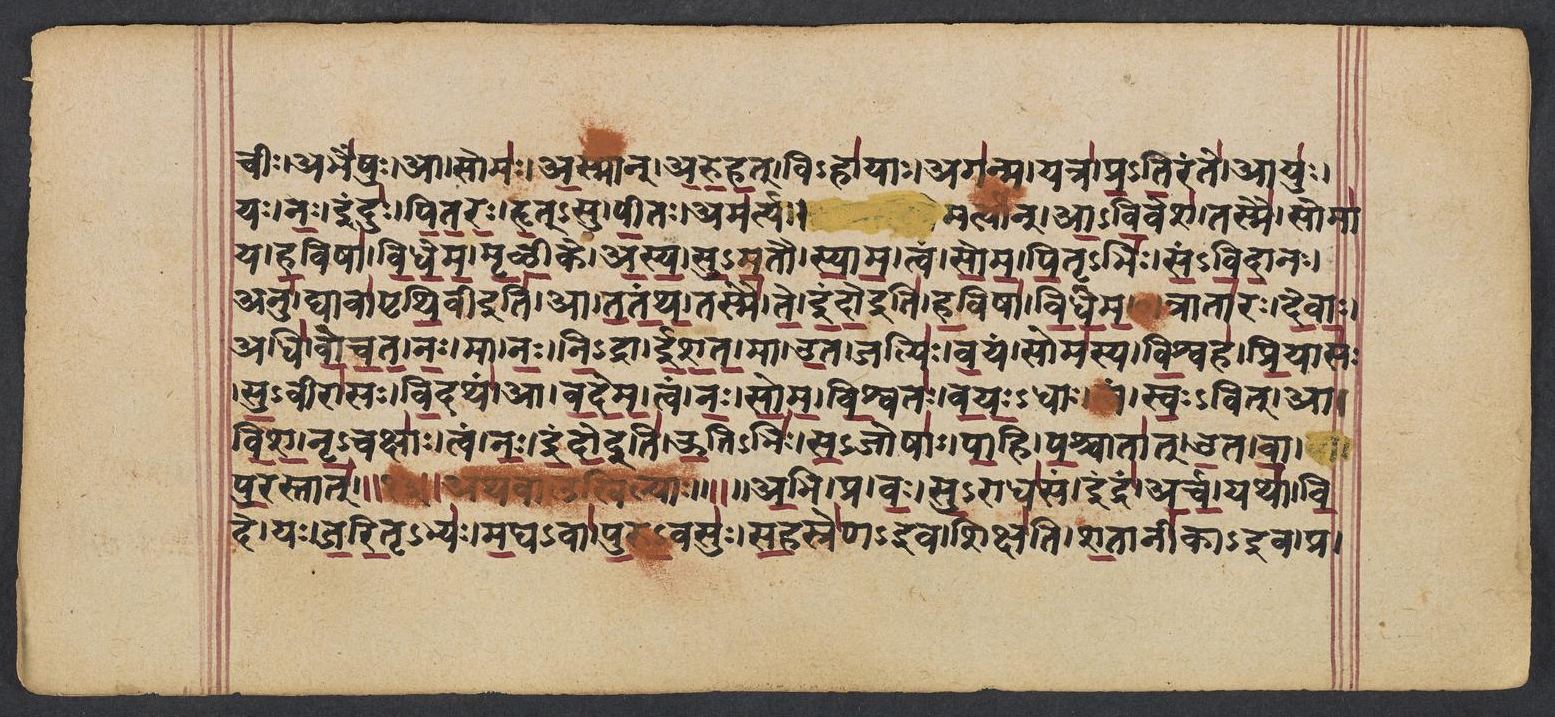
Where on the image
Penn Ms. Coll. 390 Item 41, fol. 624r (numbered 46r by the scribe) (OPenn image 624, lower leaf). Checked on the image: the Rigveda text on this page begins in RV 8.48.11 ‹-tamiṣīcīḥ abhaiṣuḥ ā somaḥ›. The next page with Rigveda text, fol. 624v (numbered 46v by the scribe), begins in RV 8.49.2 ‹jigāti dhṛṣṇu-yā hanti vṛtrāṇi›. Verses 8.48.11-15 end on this page; 8.48.11 begins on fol. 623v (numbered 45v by the scribe).
11apa̱ tyā a̍sthu̱r ani̍rā̱ amī̍vā̱ nir a̍trasa̱n tami̍ṣīcī̱r abhai̍ṣuḥ | ā somo̍ a̱smām̐ a̍ruha̱d vihā̍yā̱ aga̍nma̱ yatra̍ prati̱ranta̱ āyu̍ḥ ||
12yo na̱ indu̍ḥ pitaro hṛ̱tsu pī̱to 'ma̍rtyo̱ martyā̍m̐ āvi̱veśa̍ | tasmai̱ somā̍ya ha̱viṣā̍ vidhema mṛḻī̱ke a̍sya suma̱tau syā̍ma ||
13tvaṁ so̍ma pi̱tṛbhi̍ḥ saṁvidā̱no 'nu̱ dyāvā̍pṛthi̱vī ā ta̍tantha | tasmai̍ ta indo ha̱viṣā̍ vidhema va̱yaṁ syā̍ma̱ pata̍yo rayī̱ṇām ||
14trātā̍ro devā̱ adhi̍ vocatā no̱ mā no̍ ni̱drā ī̍śata̱ mota jalpi̍ḥ | va̱yaṁ soma̍sya vi̱śvaha̍ pri̱yāsa̍ḥ su̱vīrā̍so vi̱datha̱m ā va̍dema ||
15tvaṁ na̍ḥ soma vi̱śvato̍ vayo̱dhās tvaṁ sva̱rvid ā vi̍śā nṛ̱cakṣā̍ḥ | tvaṁ na̍ inda ū̱tibhi̍ḥ sa̱joṣā̍ḥ pā̱hi pa̱ścātā̍d u̱ta vā̍ pu̱rastā̍t ||
Compare: Padapāṭha (word-by-word text written in the manuscript; Sansknet e-text via GRETIL)
11apa | tyāḥ | asthuḥ | anirāḥ | amīvāḥ | niḥ | atrasan | tamiṣīcīḥ | abhaiṣuḥ | ā | somaḥ | asmān | aruhat | vi-hāyāḥ | aganma | yatra | pra-tirante | āyuḥ
12yaḥ | naḥ | induḥ | pitaraḥ | hṛt-su | pītaḥ | amartyaḥ | martyān | āviveśa | tasmai | somāya | haviṣā | vidhema | mṛḷīke | asya | su-matau | syāma
13tvam | soma | pitṛ-bhiḥ | sam-vidānaḥ | anu | dyāvāpṛthivī iti | ā | tatantha | tasmai | te | indo iti | haviṣā | vidhema | vayam | syāma | patayaḥ | rayīṇām
14trātāraḥ | devāḥ | adhi | vocata | naḥ | mā | naḥ | ni-drā | īśata | mā | uta | jalpiḥ | vayam | somasya | viśvaha | priyāsaḥ | su-vīrāsaḥ | vidatham | ā | vadema
15tvam | naḥ | soma | viśvataḥ | vayaḥ-dhāḥ | tvam | svaḥ-vit | ā | viśa | nṛ-cakṣāḥ | tvam | naḥ | indo iti | ūti-bhiḥ | sa-joṣāḥ | pāhi | paścātāt | uta | vā | purastāt
11Our maladies have lost their strength and vanished: they feared, and passed away into the darkness. Soma hath risen in us, exceeding mighty, and we are come where men prolong existence.
12, Fathers, that Indu which our hearts have drunken, Immortal in himself, hath entered mortals. So let us serve this Soma with oblation, and rest securely in his grace and favour.
13Associate with the Fathers thou, O Soma, hast spread thyself abroad through earth and heaven. So with oblation let us serve thee, Indu, and so let us become the lords of riches,
14Give us your blessing, O ye Gods' preservers. Never may sleep or idle talk control us. But evermore may we, as friends of Soma, speak to the synod with brave sons around us.
15On all sides,. Soma, thou art our life-giver: aim of all eyes, light-finder, come within us. Indu, of one accord with thy protections both from behind and from before preserve us.
Notes
- Sanskrit: Aufrecht's edition (1877) with the Vedic accents, as entered by van Nooten and Holland (GRETIL).
- English: Ralph T. H. Griffith, The Hymns of the Rigveda (1889-1892; 2nd ed. 1896-1897), from the VedaWeb digital text; OCR slips in that text were corrected against the printed 2nd edition (data/sources/rigveda/griffith_errata.json).
- Padapāṭha (edition text): Sansknet e-text via GRETIL (CC BY-NC-SA 4.0).
Cite
Sources
- Source: Penn Ms. Coll. 390 Item 41 (undated (catalogued with Penn's 18th-19th c. Vedic manuscripts)), OPenn, Public Domain Mark + Aufrecht's accented text (GRETIL) + Griffith's English (VedaWeb) (holding institution)
- Critical edition: Aufrecht (1877), accented e-text via GRETIL
← previous · → next · v cycle view · l back to library