Rigveda 8.49: To Indra
Introduction
Rigveda 8.49 is a hymn of 10 verses addressed to Indra. It stands in book (maṇḍala) 8, the book of the Kaṇva and Aṅgiras poets. The Rigveda is the oldest collection of Sanskrit hymns, composed in the second half of the second millennium BCE and handed down orally for many centuries before it was written down.
The manuscript shown is Penn Ms. Coll. 390 Item 41 (University of Pennsylvania), an undated paper manuscript of the padapāṭha (the word-by-word recitation text, in which every word is written separately and compounds are split) of the whole Ṛgveda in Devanāgarī, 884 leaves in fascicles, 7-9 lines to the page, accents in red; this hymn stands on fol. 624r-625r. Each section below gives the verses that end on one page; the page boundaries were read on the images (the opening words of every page), not counted out. Where the manuscript is a padapāṭha (the word-by-word recitation text), the section shows Aufrecht's continuous (saṃhitā) text first and, as the edition text, the padapāṭha of the same verses, which is the form written on the page.
How was this verified? (Provenance)
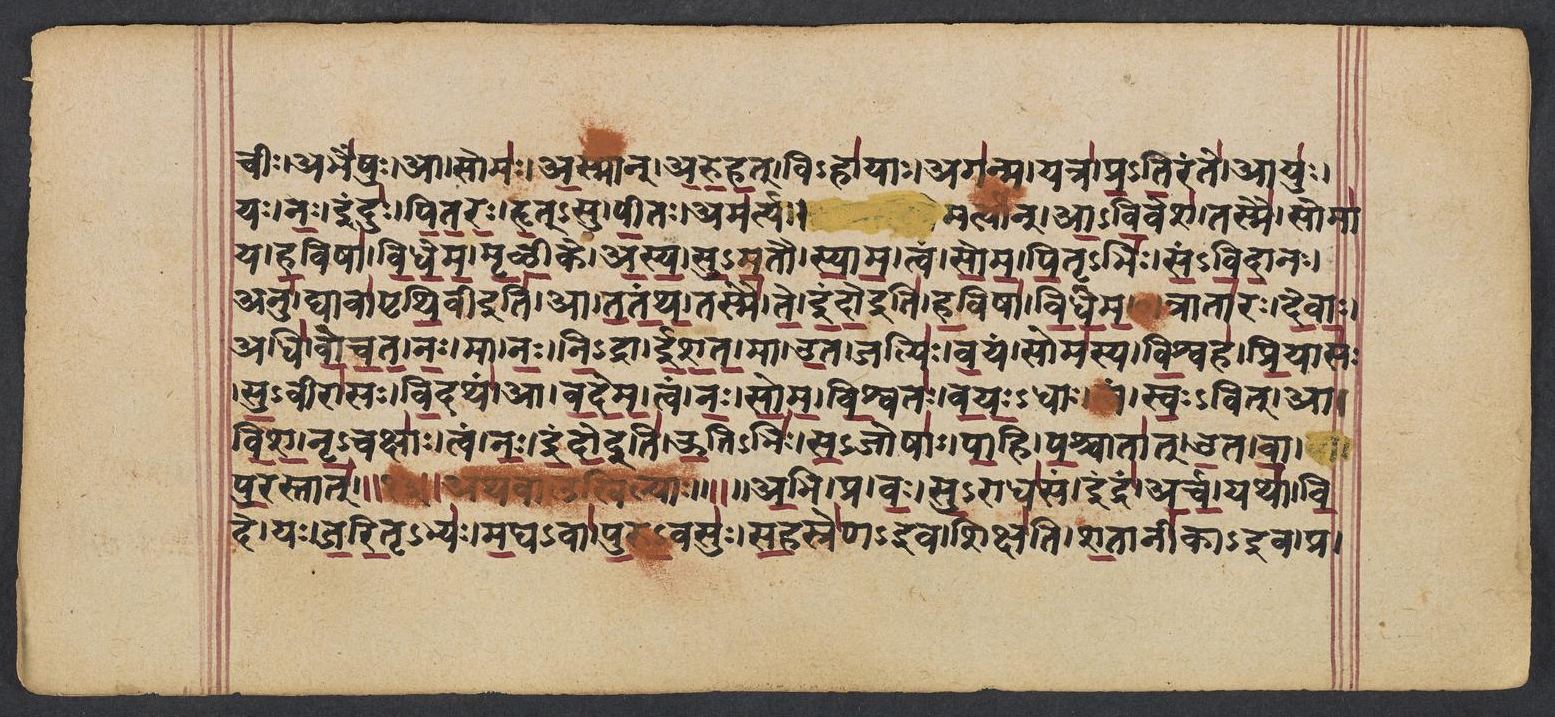
Where on the image
Penn Ms. Coll. 390 Item 41, fol. 624r (numbered 46r by the scribe) (OPenn image 624, lower leaf). Checked on the image: the Rigveda text on this page begins in RV 8.48.11 ‹-tamiṣīcīḥ abhaiṣuḥ ā somaḥ›. The next page with Rigveda text, fol. 624v (numbered 46v by the scribe), begins in RV 8.49.2 ‹jigāti dhṛṣṇu-yā hanti vṛtrāṇi›. Verse 8.49.1 ends on this page.
1a̱bhi pra va̍ḥ su̱rādha̍sa̱m indra̍m arca̱ yathā̍ vi̱de | yo ja̍ri̱tṛbhyo̍ ma̱ghavā̍ purū̱vasu̍ḥ sa̱hasre̍ṇeva̱ śikṣa̍ti ||
Compare: Padapāṭha (word-by-word text written in the manuscript; Sansknet e-text via GRETIL)
1abhi | pra | vaḥ | su-rādhasam | indram | arca | yathā | vide | yaḥ | jaritṛ-bhyaḥ | magha-vā | puru-vasuḥ | sahasreṇa-iva | śikṣati
1TO you will I sing Indra's praise who gives good gifts as well we know; The praise of Maghavan who, rich in treasure, aids his singers with wealth thousandfold.
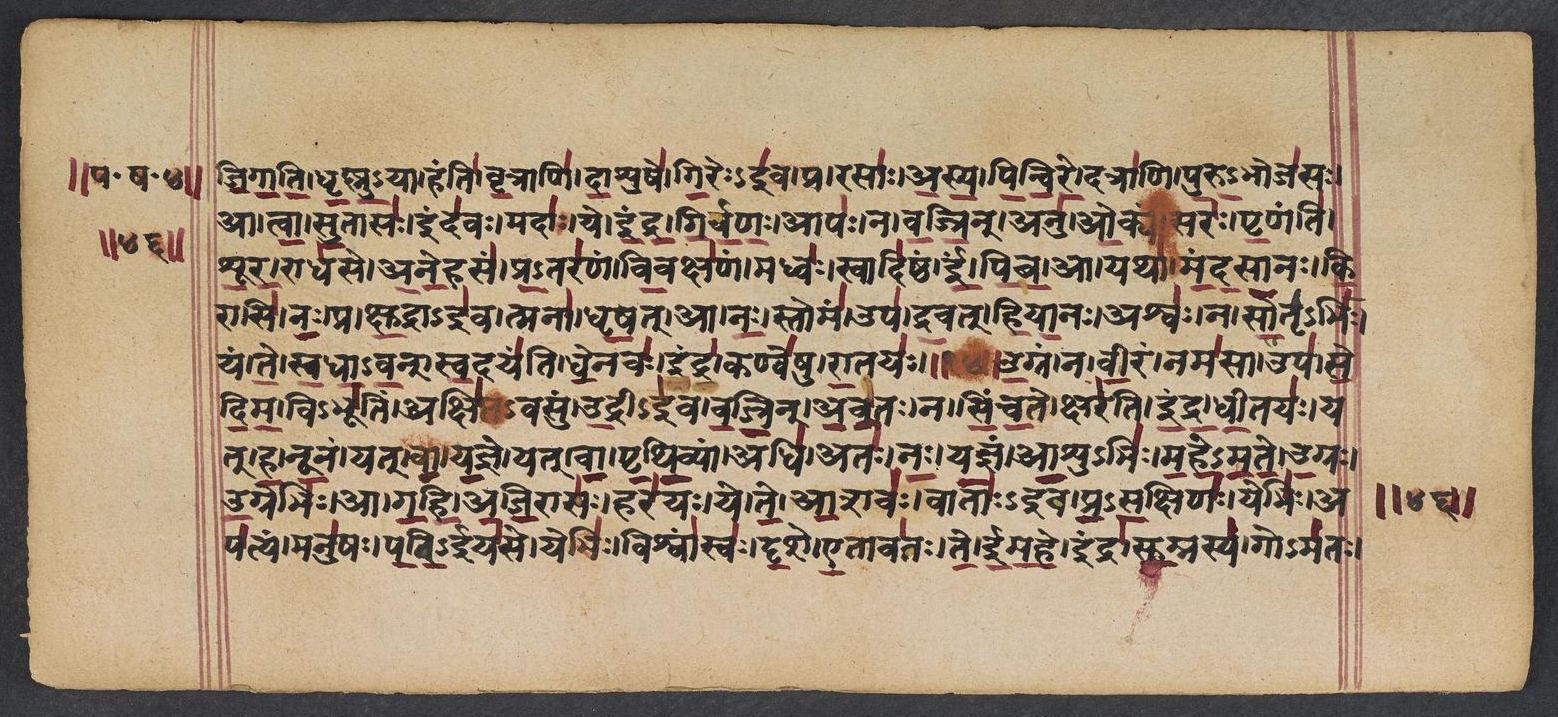
Where on the image
Penn Ms. Coll. 390 Item 41, fol. 624v (numbered 46v by the scribe) (OPenn image 625, upper leaf). Checked on the image: the Rigveda text on this page begins in RV 8.49.2 ‹jigāti dhṛṣṇu-yā hanti vṛtrāṇi›. The next page with Rigveda text, fol. 625r (numbered 47r by the scribe), begins in RV 8.49.9 ‹yathā pra āvaḥ magha-van›. Verses 8.49.2-8 end on this page; 8.49.2 begins on fol. 624r (numbered 46r by the scribe).
2śa̱tānī̍keva̱ pra ji̍gāti dhṛṣṇu̱yā hanti̍ vṛ̱trāṇi̍ dā̱śuṣe̍ | gi̱rer i̍va̱ pra rasā̍ asya pinvire̱ datrā̍ṇi puru̱bhoja̍saḥ ||
3ā tvā̍ su̱tāsa̱ inda̍vo̱ madā̱ ya i̍ndra girvaṇaḥ | āpo̱ na va̍jri̱nn anv o̱kya1̱̍ṁ sara̍ḥ pṛ̱ṇanti̍ śūra̱ rādha̍se ||
4a̱ne̱hasa̍m pra̱tara̍ṇaṁ vi̱vakṣa̍ṇa̱m madhva̱ḥ svādi̍ṣṭham īm piba | ā yathā̍ mandasā̱naḥ ki̱rāsi̍ na̱ḥ pra kṣu̱dreva̱ tmanā̍ dhṛ̱ṣat ||
5ā na̱ḥ stoma̱m upa̍ dra̱vad dhi̍yā̱no aśvo̱ na sotṛ̍bhiḥ | yaṁ te̍ svadhāvan sva̱daya̍nti dhe̱nava̱ indra̱ kaṇve̍ṣu rā̱taya̍ḥ ||
6u̱graṁ na vī̱raṁ nama̱sopa̍ sedima̱ vibhū̍ti̱m akṣi̍tāvasum | u̱drīva̍ vajrinn ava̱to na si̍ñca̱te kṣara̍ntīndra dhī̱taya̍ḥ ||
7yad dha̍ nū̱naṁ yad vā̍ ya̱jñe yad vā̍ pṛthi̱vyām adhi̍ | ato̍ no ya̱jñam ā̱śubhi̍r mahemata u̱gra u̱grebhi̱r ā ga̍hi ||
8a̱ji̱rāso̱ hara̍yo̱ ye ta̍ ā̱śavo̱ vātā̍ iva prasa̱kṣiṇa̍ḥ | yebhi̱r apa̍tya̱m manu̍ṣaḥ pa̱rīya̍se̱ yebhi̱r viśva̱ṁ sva̍r dṛ̱śe ||
Compare: Padapāṭha (word-by-word text written in the manuscript; Sansknet e-text via GRETIL)
2śatānīkāiva | pra | jigāti | dhṛṣṇu-yā | hanti | vṛtrāṇi | dāśuṣe | gireḥ-iva | pra | rasāḥ | asya | pinvire | datrāṇi | puru-bhojasaḥ
3ā | tvā | sutāsaḥ | indavaḥ | madāḥ | ye | indra | girvaṇaḥ | āpaḥ | na | vajrin | anu | okyam | saraḥ | pṛṇanti | śūra | rādhase
4anehasam | pra-taraṇam | vivakṣaṇam | madhvaḥ | svādiṣṭham | īm | piba | ā | yathā | mandasānaḥ | kirāsi | naḥ | pra | kṣudrāiva | tmanā | dhṛṣat
5ā | naḥ | stomam | upa | dravat | hiyānaḥ | aśvaḥ | na | sotṛ-bhiḥ | yam | te | svadhāvan | svadayanti | dhenavaḥ | indra | kaṇveṣu | rātayaḥ
6ugram | na | vīram | namasā | upa | sedima | vi-bhūtim | akṣita-vasum | udrī-iva | vajrin | avataḥ | na | siñcate | kṣaranti | indra | dhītayaḥ
7yat | ha | nūnam | yat | vā | yajñe | yat | vā | pṛthivyām | adhi | ataḥ | naḥ | yajñam | āśu-bhiḥ | mahe--mate | ugraḥ | ugrebhiḥ | ā | gahi
8ajirāsaḥ | harayaḥ | ye | te | āśavaḥ | vātāḥ-iva | pra-sakṣiṇaḥ | yebhiḥ | apatyam | manuṣaḥ | pari-īyase | yebhiḥ | viśvam | svaḥ | dṛśe
2As with a hundred hosts, he rushes boldly on, and for the offerer slays his foes. As from a mountain flow the water-brooks, thus flow his gifts who feedeth many a one.
3The drops effused, the gladdening draughts, O Indra, Lover of the Son As waters seek the lake where they are wont to rest, fill thee, for bounty, Thunderer.
4The matchless draught that strengthens and gives eloquence, the sweetest of the meath drink thou, That in thy joy thou mayst scatter thy gifts o'er us, plenteously, even as the dust.
5Come quickly to our laud, urged on by Soma-pressers like a horse- Laud, Godlike Indra, which milch-kine make sweet for thee: with Kaṇva's sons are gifts for thee.
6With homage have we sought thee as a Hero, strong, preeminent, with unfailing wealth. O Thunderer, as a plenteous spring pours forth its stream, so, Indra, flow our songs to thee.
7If now thou art at sacrifice, or if thou art upon the earth, Come thence, high-thoughted! to our sacrifice with the Swift, come, Mighty with the Mighty Ones.
8The active, fleet-foot, tawny Coursers that are thine are swift to victory, like the Wind, Wherewith thou goest round to visit Manus' seed, wherewith all heaven is visible.
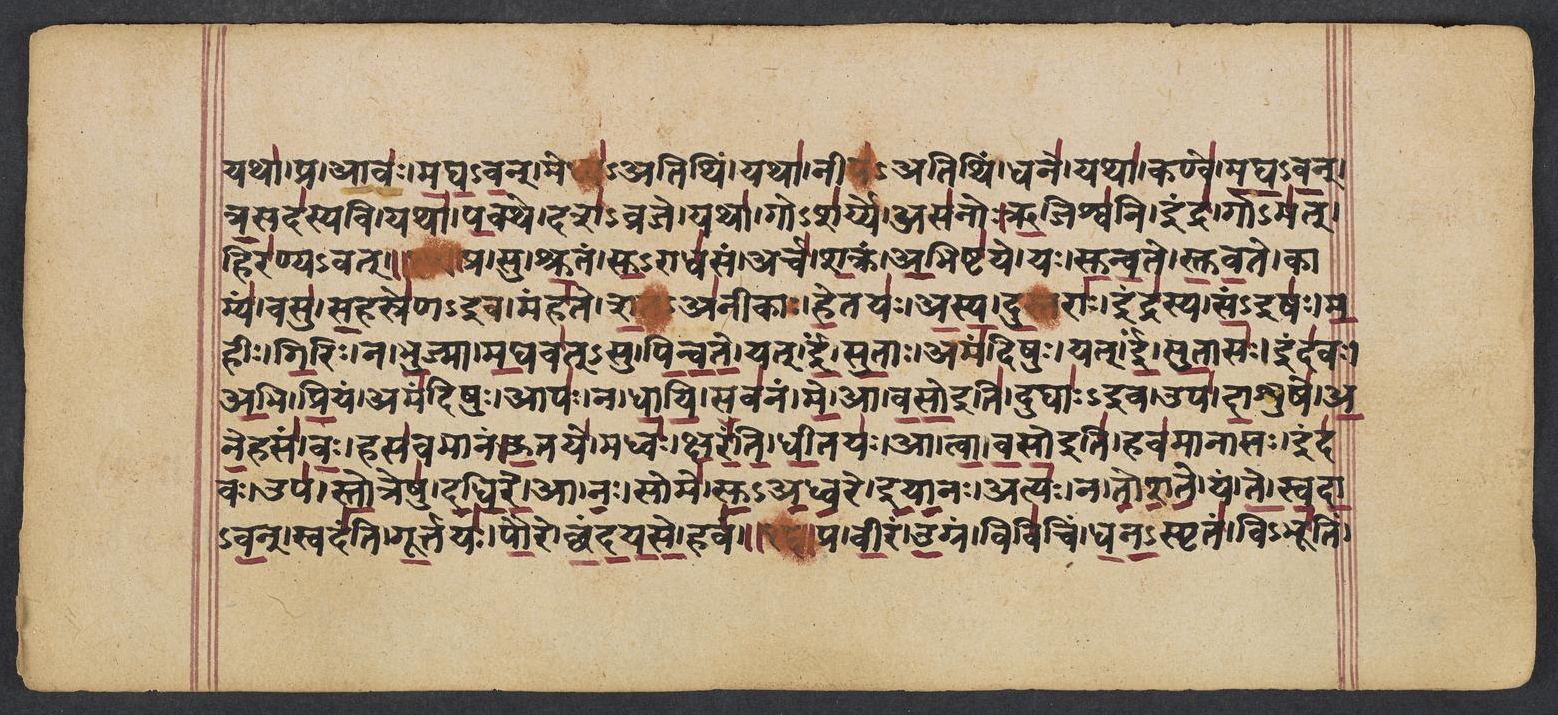
Where on the image
Penn Ms. Coll. 390 Item 41, fol. 625r (numbered 47r by the scribe) (OPenn image 625, lower leaf). Checked on the image: the Rigveda text on this page begins in RV 8.49.9 ‹yathā pra āvaḥ magha-van›. The next page with Rigveda text, fol. 625v (numbered 47v by the scribe), begins in RV 8.50.6 ‹-vi-bhūtim rādhasaḥ mahaḥ udrī-iva›. Verses 8.49.9-10 end on this page; 8.49.9 begins on fol. 624v (numbered 46v by the scribe).
9e̱tāva̍tas ta īmaha̱ indra̍ su̱mnasya̱ goma̍taḥ | yathā̱ prāvo̍ maghava̱n medhyā̍tithi̱ṁ yathā̱ nīpā̍tithi̱ṁ dhane̍ ||
10yathā̱ kaṇve̍ maghavan tra̱sada̍syavi̱ yathā̍ pa̱kthe daśa̍vraje | yathā̱ gośa̍rye̱ asa̍nor ṛ̱jiśva̱nīndra̱ goma̱d dhira̍ṇyavat ||
Compare: Padapāṭha (word-by-word text written in the manuscript; Sansknet e-text via GRETIL)
9etāvataḥ | te | īmahe | indra | sumnasya | go--mataḥ | yathā | pra | āvaḥ | magha-van | medhya-atithim | yathā | nīpa-atithim | dhane
10yathā | kaṇve | magha-van | trasadasyavi | yathā | pakthe | daśa-vraje | yathā | go--śarye | asanoḥ | ṛjiśvani | indra | go--mat | hiraṇya-vat
9Indra, from thee so great we crave prosperity in wealth of kine, As, Maghavan, thou favouredst Medhyâtithi, and, in the fight, Nîpâtithi.
10As, Maghavan, to Kaṇva, Trasadasyu, and to Paktha and Daṣavraja; As, Indra, to Goṣarya and R̥ijiṣvan, thou vouchsafedst wealth in kine and gold.
Notes
- Sanskrit: Aufrecht's edition (1877) with the Vedic accents, as entered by van Nooten and Holland (GRETIL).
- English: Ralph T. H. Griffith, The Hymns of the Rigveda (1889-1892; 2nd ed. 1896-1897), from the VedaWeb digital text; OCR slips in that text were corrected against the printed 2nd edition (data/sources/rigveda/griffith_errata.json).
- Padapāṭha (edition text): Sansknet e-text via GRETIL (CC BY-NC-SA 4.0).
Cite
Sources
- Source: Penn Ms. Coll. 390 Item 41 (undated (catalogued with Penn's 18th-19th c. Vedic manuscripts)), OPenn, Public Domain Mark + Aufrecht's accented text (GRETIL) + Griffith's English (VedaWeb) (holding institution)
- Critical edition: Aufrecht (1877), accented e-text via GRETIL
← previous · → next · v cycle view · l back to library