Rigveda 8.6: To Indra
Introduction
Rigveda 8.6 is a hymn of 48 verses addressed to Indra. It stands in book (maṇḍala) 8, the book of the Kaṇva and Aṅgiras poets. The Rigveda is the oldest collection of Sanskrit hymns, composed in the second half of the second millennium BCE and handed down orally for many centuries before it was written down.
The manuscript shown is Penn Ms. Coll. 390 Item 41 (University of Pennsylvania), an undated paper manuscript of the padapāṭha (the word-by-word recitation text, in which every word is written separately and compounds are split) of the whole Ṛgveda in Devanāgarī, 884 leaves in fascicles, 7-9 lines to the page, accents in red; this hymn stands on fol. 570r-572v. Each section below gives the verses that end on one page; the page boundaries were read on the images (the opening words of every page), not counted out. Where the manuscript is a padapāṭha (the word-by-word recitation text), the section shows Aufrecht's continuous (saṃhitā) text first and, as the edition text, the padapāṭha of the same verses, which is the form written on the page.
How was this verified? (Provenance)
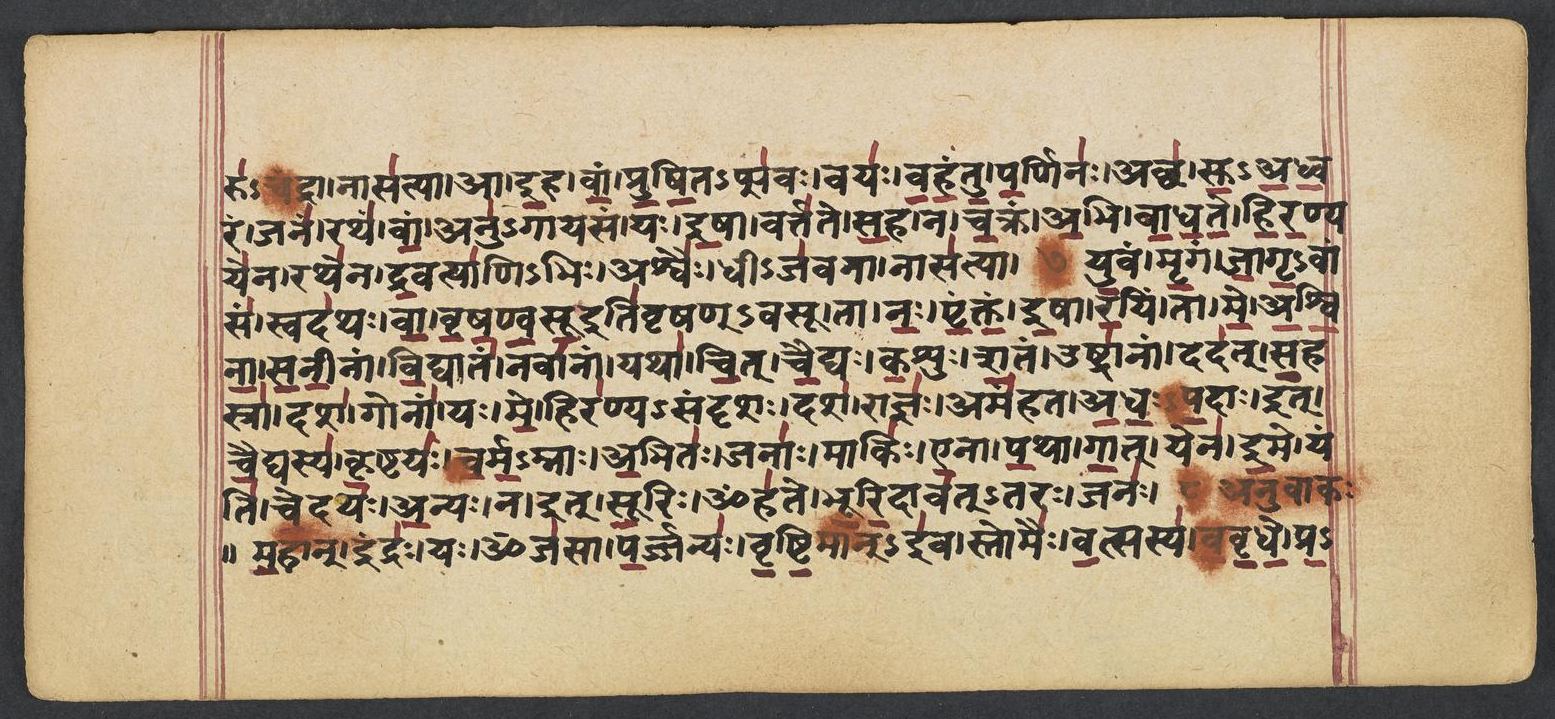
Where on the image
Penn Ms. Coll. 390 Item 41, fol. 570r (numbered 91r by the scribe) (OPenn image 570, lower leaf). Checked on the image: the Rigveda text on this page begins in RV 8.5.32 ‹-puru-candrā nāsatyā›. The next page with Rigveda text, fol. 570v (numbered 91v by the scribe), begins in RV 8.6.2 ‹-pra-jām ṛtasya piprataḥ pra›. Verse 8.6.1 ends on this page.
1ma̱hām̐ indro̱ ya oja̍sā pa̱rjanyo̍ vṛṣṭi̱mām̐ i̍va | stomai̍r va̱tsasya̍ vāvṛdhe ||
Compare: Padapāṭha (word-by-word text written in the manuscript; Sansknet e-text via GRETIL)
1mahān | indraḥ | yaḥ | ojasā | parjanyaḥ | vṛṣṭimān-iva | stomaiḥ | vatsasya | vavṛdhe
1INDRA, great in his power and might, and like Parjanya rich in rain, Is magnified by Vatsa's lauds.
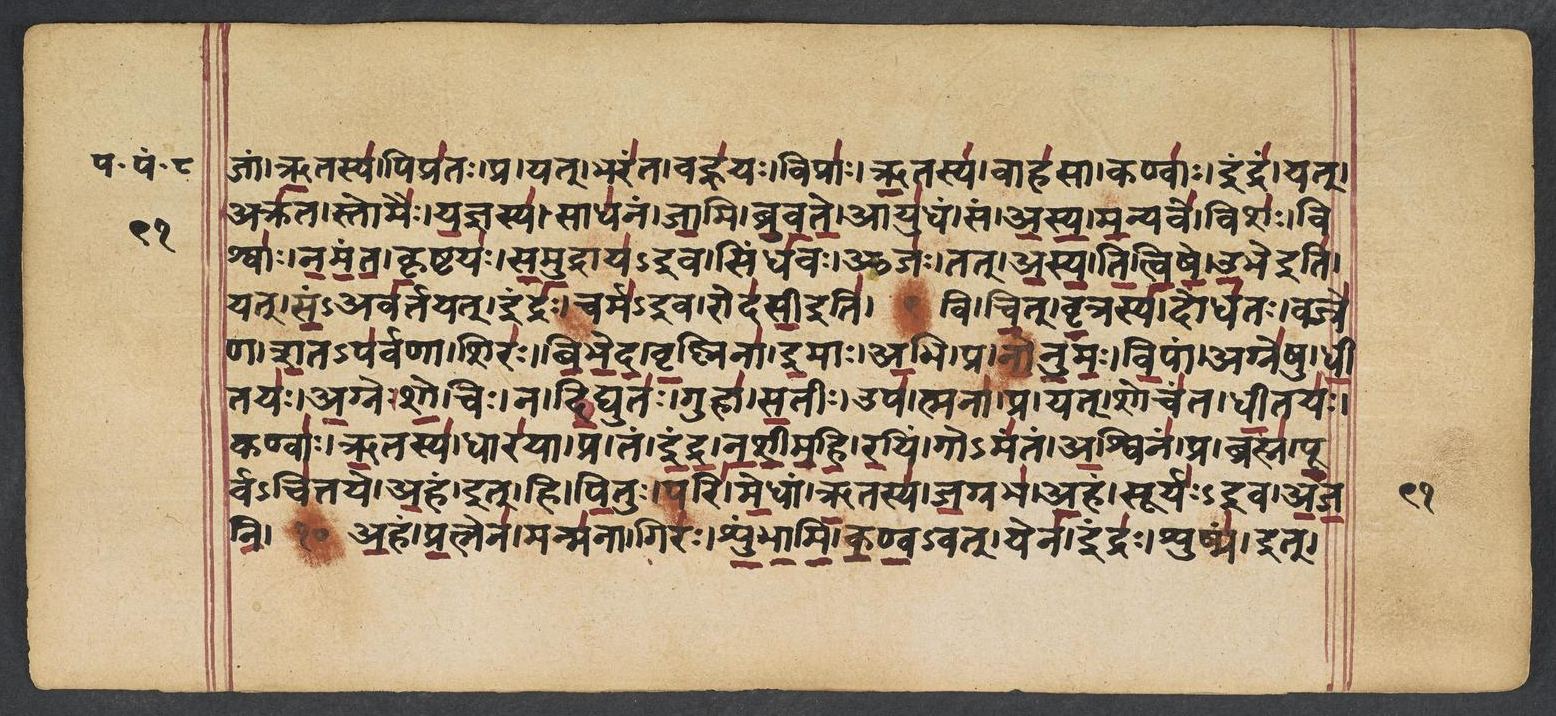
Where on the image
Penn Ms. Coll. 390 Item 41, fol. 570v (numbered 91v by the scribe) (OPenn image 571, upper leaf). Checked on the image: the Rigveda text on this page begins in RV 8.6.2 ‹-pra-jām ṛtasya piprataḥ pra›. The next page with Rigveda text, fol. 571r (numbered 92r by the scribe), begins in RV 8.6.11 ‹dadhe›. Verses 8.6.2-10 end on this page; 8.6.2 begins on fol. 570r (numbered 91r by the scribe).
2pra̱jām ṛ̱tasya̱ pipra̍ta̱ḥ pra yad bhara̍nta̱ vahna̍yaḥ | viprā̍ ṛ̱tasya̱ vāha̍sā ||
3kaṇvā̱ indra̱ṁ yad akra̍ta̱ stomai̍r ya̱jñasya̱ sādha̍nam | jā̱mi bru̍vata̱ āyu̍dham ||
4sam a̍sya ma̱nyave̱ viśo̱ viśvā̍ namanta kṛ̱ṣṭaya̍ḥ | sa̱mu̱drāye̍va̱ sindha̍vaḥ ||
5oja̱s tad a̍sya titviṣa u̱bhe yat sa̱mava̍rtayat | indra̱ś carme̍va̱ roda̍sī ||
6vi ci̍d vṛ̱trasya̱ dodha̍to̱ vajre̍ṇa śa̱tapa̍rvaṇā | śiro̍ bibheda vṛ̱ṣṇinā̍ ||
7i̱mā a̱bhi pra ṇo̍numo vi̱pām agre̍ṣu dhī̱taya̍ḥ | a̱gneḥ śo̱cir na di̱dyuta̍ḥ ||
8guhā̍ sa̱tīr upa̱ tmanā̱ pra yac choca̍nta dhī̱taya̍ḥ | kaṇvā̍ ṛ̱tasya̱ dhāra̍yā ||
9pra tam i̍ndra naśīmahi ra̱yiṁ goma̍ntam a̱śvina̍m | pra brahma̍ pū̱rvaci̍ttaye ||
10a̱ham id dhi pi̱tuṣ pari̍ me̱dhām ṛ̱tasya̍ ja̱grabha̍ | a̱haṁ sūrya̍ ivājani ||
Compare: Padapāṭha (word-by-word text written in the manuscript; Sansknet e-text via GRETIL)
2pra-jām | ṛtasya | piprataḥ | pra | yat | bharanta | vahnayaḥ | viprāḥ | ṛtasya | vāhasā
3kaṇvāḥ | indram | yat | akrata | stomaiḥ | yajñasya | sādhanam | jāmi | bruvate | āyudham
4sam | asya | manyave | viśaḥ | viśvāḥ | namanta | kṛṣṭayaḥ | samudrāya-iva | sindhavaḥ
5ojaḥ | tat | asya | titviṣe | ubhe iti | yat | sam-avartayat | indraḥ | carma-iva | rodasī iti
6vi | cit | vṛtrasya | dodhataḥ | vajreṇa | śata-parvaṇā | śiraḥ | bibheda | vṛṣṇinā
7imāḥ | abhi | pra | nonumaḥ | vipām | agreṣu | dhītayaḥ | agneḥ | śociḥ | na | didyutaḥ
8guhā | satīḥ | upa | tmanā | pra | yat | śocanta | dhītayaḥ | kaṇvāḥ | ṛtasya | dhārayā
9pra | tam | indra | naśīmahi | rayim | go--mantam | aśvinam | pra | brahma | pūrva-cittaye
10aham | it | hi | pituḥ | pari | medhām | ṛtasya | jagrabha | aham | sūryaḥ-iva | ajani
2When the priests, strengthening the Son of Holy Law, present their gifts, Singers with Order's hymn of praiser.
3Since Kaṇvas with their lauds have made Indra complete the sacrifice. Words are their own appropriate arms.
4Before his hot displeasure all the peoples, all the men, bow down, As rivers bow them to the sea.
5This power of his shone brightly forth when Indra brought together, like A skin, the worlds of heaven and earth.
6The fiercely-moving Vr̥itra's head he severed with his thunderbolt, His mighty hundred-knotted bolt.
7Here are-we sing them loudly forth-our thoughts among-the best of songs. Even lightnings like the blaze of fire.
8When hidden thoughts, spontaneously advancing, glow, and with the stream Of sacrifice the Kaṇvas shine.
9Indra, may we obtain that wealth in horses and in herds of cows, And prayer that may be noticed first.
10I from my Father have received deep knowledge of the Holy Law I was born like unto the Sun.
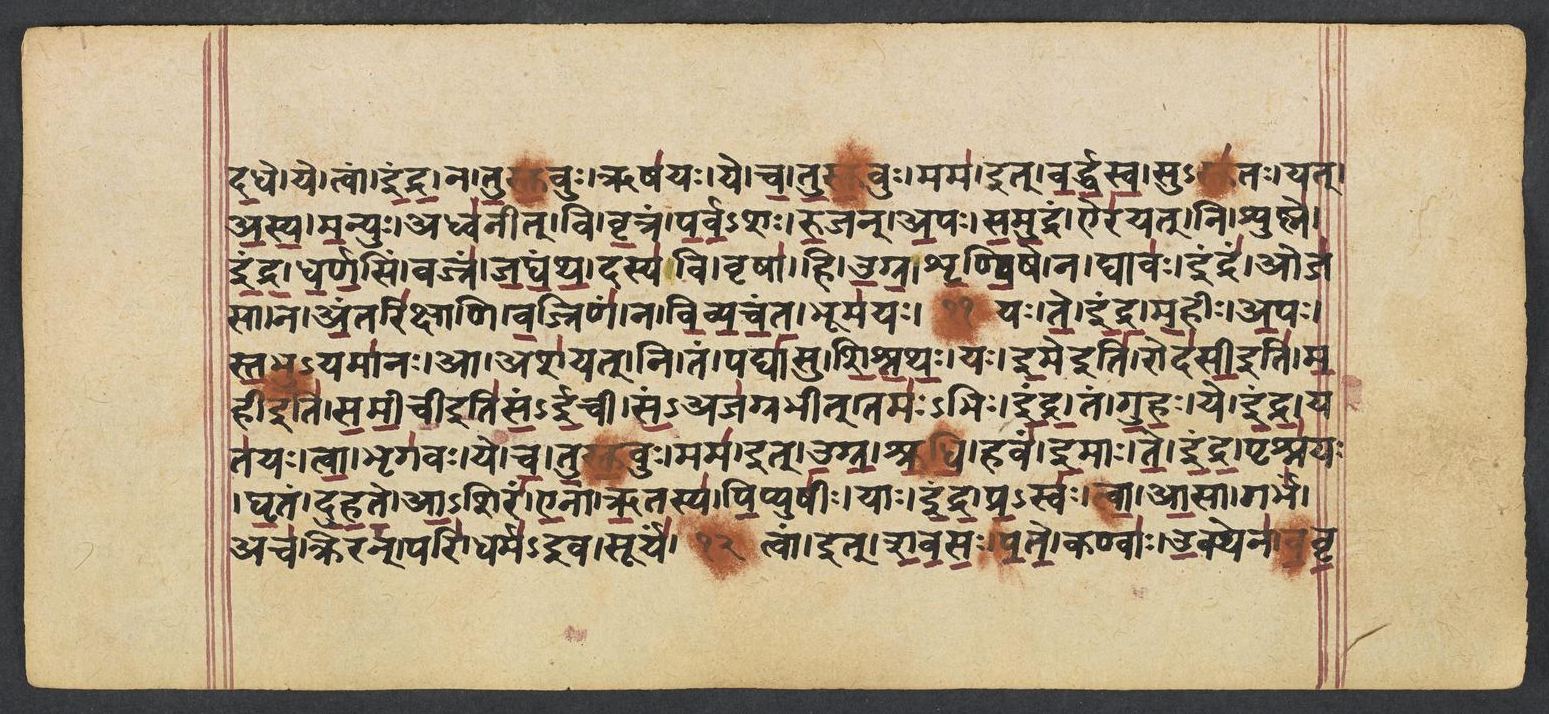
Where on the image
Penn Ms. Coll. 390 Item 41, fol. 571r (numbered 92r by the scribe) (OPenn image 571, lower leaf). Checked on the image: the Rigveda text on this page begins in RV 8.6.11 ‹dadhe›. The next page with Rigveda text, fol. 571v (numbered 92v by the scribe), begins in RV 8.6.21 ‹-vavṛdhuḥ tvām sutāsaḥ indavaḥ›. Verses 8.6.11-20 end on this page; 8.6.11 begins on fol. 570v (numbered 91v by the scribe).
11a̱ham pra̱tnena̱ manma̍nā̱ gira̍ḥ śumbhāmi kaṇva̱vat | yenendra̱ḥ śuṣma̱m id da̱dhe ||
12ye tvām i̍ndra̱ na tu̍ṣṭu̱vur ṛṣa̍yo̱ ye ca̍ tuṣṭu̱vuḥ | mamed va̍rdhasva̱ suṣṭu̍taḥ ||
13yad a̍sya ma̱nyur adhva̍nī̱d vi vṛ̱tram pa̍rva̱śo ru̱jan | a̱paḥ sa̍mu̱dram aira̍yat ||
14ni śuṣṇa̍ indra dharṇa̱siṁ vajra̍ṁ jaghantha̱ dasya̍vi | vṛṣā̱ hy u̍gra śṛṇvi̱ṣe ||
15na dyāva̱ indra̱m oja̍sā̱ nāntari̍kṣāṇi va̱jriṇa̍m | na vi̍vyacanta̱ bhūma̍yaḥ ||
16yas ta̍ indra ma̱hīr a̱paḥ sta̍bhū̱yamā̍na̱ āśa̍yat | ni tam padyā̍su śiśnathaḥ ||
17ya i̱me roda̍sī ma̱hī sa̍mī̱cī sa̱maja̍grabhīt | tamo̍bhir indra̱ taṁ gu̍haḥ ||
18ya i̍ndra̱ yata̍yas tvā̱ bhṛga̍vo̱ ye ca̍ tuṣṭu̱vuḥ | mamed u̍gra śrudhī̱ hava̍m ||
19i̱mās ta̍ indra̱ pṛśna̍yo ghṛ̱taṁ du̍hata ā̱śira̍m | e̱nām ṛ̱tasya̍ pi̱pyuṣī̍ḥ ||
20yā i̍ndra pra̱sva̍s tvā̱sā garbha̱m aca̍kriran | pari̱ dharme̍va̱ sūrya̍m ||
Compare: Padapāṭha (word-by-word text written in the manuscript; Sansknet e-text via GRETIL)
11aham | pratnena | manmanā | giraḥ | śumbhāmi | kaṇva-vat | yena | indraḥ | śuṣmam | it | dadhe
12ye | tvām | indra | na | tustuvuḥ | ṛṣayaḥ | ye | ca | tustuvuḥ | mama | it | vardhasva | su-stutaḥ
13yat | asya | manyuḥ | adhvanīt | vi | vṛtram | parva-śaḥ | rujan | apaḥ | samudram | airayat
14ni | śuṣṇe | indra | dharṇasim | vajram | jaghantha | dasyavi | vṛṣā | hi | ugra | śṛṇvi ṣe
15na | dyāvaḥ | indram | ojasā | na | antarikṣāṇi | vajriṇam | na | vivyacanta | bhūmayaḥ
16yaḥ | te | indra | mahīḥ | apaḥ | stabhu-yamānaḥ | ā | aśayat | ni | tam | padyāsu | śiśnathaḥ
17yaḥ | ime iti | rodasī iti | mahī iti | samīcī itisam-īcī | sam-ajagrabhīt | tamaḥ-bhiḥ | indra | tam | guhaḥ
18ye | indra | yatayaḥ | tvā | bhṛgavaḥ | ye | ca | tustuvuḥ | mama | it | ugra | srudhi | havam
19imāḥ | te | indra | pṛśnayaḥ | ghṛtam | duhate | āśiram | enām | ṛtasya | pipyuṣīḥ
20yāḥ | indra | pra-svaḥ | tvā | āsā | garbham | acakriran | pari | dharma-iva | sūryam
11After the lore of ancient time I make, like Kaṇva, beauteous songs, And Indra's selfgains strength thereby.
12Whatever R̥ishis have not praised thee, Indra, or have lauded thee, By me exalted wax thou strong.
13When his wrath thundered, when he rent Vr̥itra to pieces, limb by limb, He sent the waters to the sea.
14Against the Dasyu gusna thou, Indra, didst hurl thy during bolt: Thou, Dread one, hast a hero's fame.
15Neither the heavens nor firmaments nor regions of the earth contain Indra, the Thunderer with his might.
16O Indra him who lay at length staying thy copious waters thou, In his own footsteps, smotest down
17Thou hiddest deep in darkness itim, O Indra, who had set his grasp On spacious heaven and earth conjoined.
18Indra, whatever Yatis and Bhr̥igus have offered praise to thee, Listen, thou Mighty, to my call.
19Indra, these spotted cows yield thee their butter and the milky draught; Aiders, thereby, of sacrifice;
20Which, teeming, have received thee as a life-germ, Indra, with their mouth, Like Sûrya who sustaineth all.
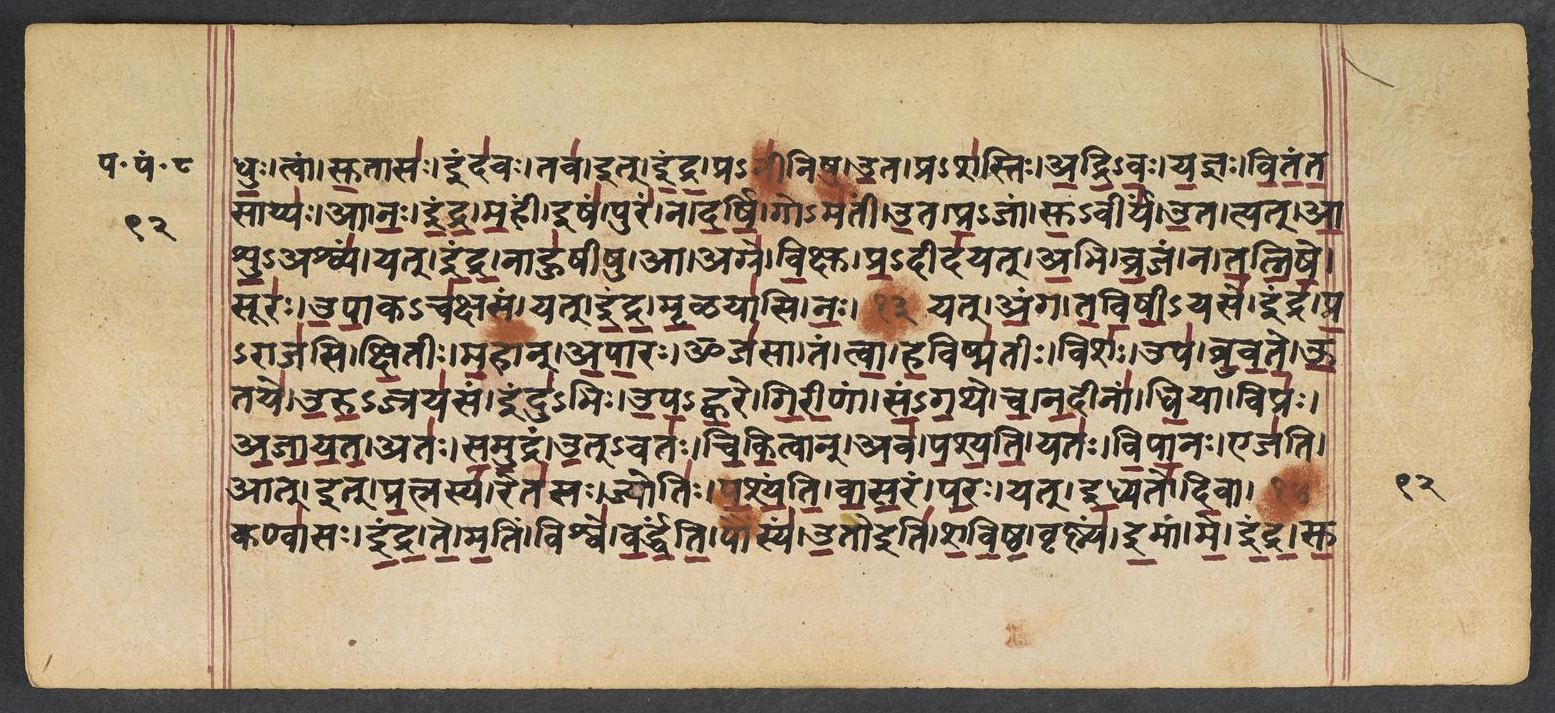
Where on the image
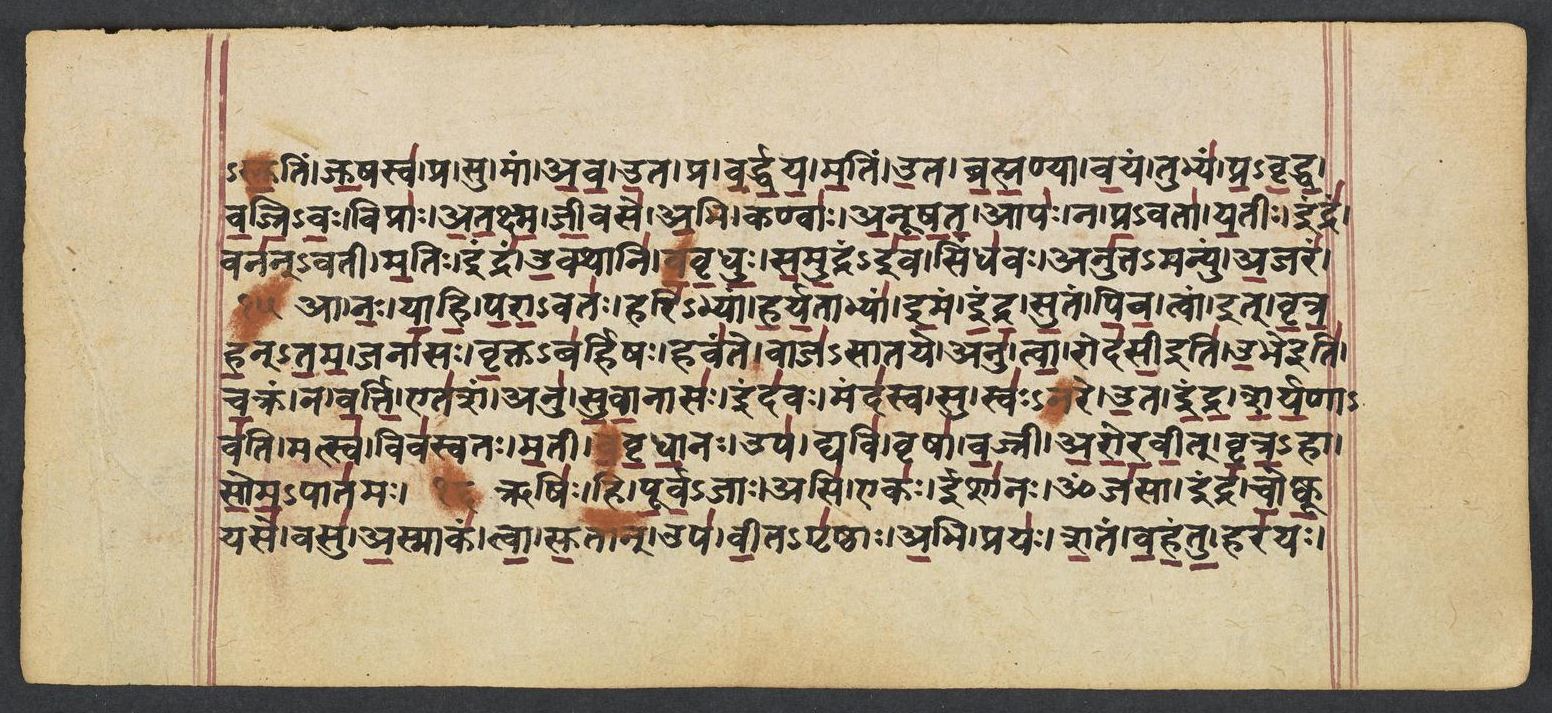
Penn Ms. Coll. 390 Item 41, fol. 571v (numbered 92v by the scribe) (OPenn image 572, upper leaf). Checked on the image: the Rigveda text on this page begins in RV 8.6.21 ‹-vavṛdhuḥ tvām sutāsaḥ indavaḥ›. The next page with Rigveda text, fol. 572r (numbered 93r by the scribe), begins in RV 8.6.32 ‹-su-stutim juṣasva pra su›. Verses 8.6.21-31 end on this page; 8.6.21 begins on fol. 571r (numbered 92r by the scribe).
21tvām ic cha̍vasas pate̱ kaṇvā̍ u̱kthena̍ vāvṛdhuḥ | tvāṁ su̱tāsa̱ inda̍vaḥ ||
22taved i̍ndra̱ praṇī̍tiṣū̱ta praśa̍stir adrivaḥ | ya̱jño vi̍tanta̱sāyya̍ḥ ||
23ā na̍ indra ma̱hīm iṣa̱m pura̱ṁ na da̍rṣi̱ goma̍tīm | u̱ta pra̱jāṁ su̱vīrya̍m ||
24u̱ta tyad ā̱śvaśvya̱ṁ yad i̍ndra̱ nāhu̍ṣī̱ṣv ā | agre̍ vi̱kṣu pra̱dīda̍yat ||
25a̱bhi vra̱jaṁ na ta̍tniṣe̱ sūra̍ upā̱kaca̍kṣasam | yad i̍ndra mṛ̱ḻayā̍si naḥ ||
26yad a̱ṅga ta̍viṣī̱yasa̱ indra̍ pra̱rāja̍si kṣi̱tīḥ | ma̱hām̐ a̍pā̱ra oja̍sā ||
27taṁ tvā̍ ha̱viṣma̍tī̱r viśa̱ upa̍ bruvata ū̱taye̍ | u̱ru̱jraya̍sa̱m indu̍bhiḥ ||
28u̱pa̱hva̱re gi̍rī̱ṇāṁ sa̍ṁga̱the ca̍ na̱dīnā̍m | dhi̱yā vipro̍ ajāyata ||
29ata̍ḥ samu̱dram u̱dvata̍ś ciki̱tvām̐ ava̍ paśyati | yato̍ vipā̱na eja̍ti ||
30ād it pra̱tnasya̱ reta̍so̱ jyoti̍ṣ paśyanti vāsa̱ram | pa̱ro yad i̱dhyate̍ di̱vā ||
31kaṇvā̍sa indra te ma̱tiṁ viśve̍ vardhanti̱ pauṁsya̍m | u̱to śa̍viṣṭha̱ vṛṣṇya̍m ||
Compare: Padapāṭha (word-by-word text written in the manuscript; Sansknet e-text via GRETIL)
21tvām | it | śavasaḥ | pate | kaṇvāḥ | ukthena | vavṛdhuḥ | tvām | sutāsaḥ | indavaḥ
22tava | it | indra | pra-nītiṣu | uta | pra-śastiḥ | adri-vaḥ | yajñaḥ | vitantasāyyaḥ
23ā | naḥ | indra | mahīm | iṣam | puram | na | darṣi | go--matīm | uta | pra-jām | su-vīryam
24uta | tyat | āśu-aśvyam | yat | indra | nāhuṣīṣu | ā | agre | vikṣu | pra-dīdayat
25abhi | vrajam | na | tatniṣe | sūraḥ | upāka-cakṣasam | yat | indra | mṛḷayāsi | naḥ
26yat | aṅga | taviṣī-yase | indra | pra-rājasi | kṣitīḥ | mahān | apāraḥ | ojasā
27tam | tvā | haviṣmatīḥ | viśaḥ | upa | bruvate | ūtaye | uru-jrayasam | indu-bhi ḥ
28upa-hvare | girīṇām | sam-gathe | ca | nadīnām | dhiyā | vipraḥ | ajāyata
29ataḥ | samudram | ut-vataḥ | cikitvān | ava | paśyati | yataḥ | vipānaḥ | ejati
30āt | it | pratnasya | retasaḥ | jyotiḥ | paśyanti | vāsaram | paraḥ | yat | idhyate | divā
31kaṇvāsaḥ | indra | te | matim | viśve | vardhanti | paiṃsyam | uto iti | śaviṣṭha | vṛṣṇyam
21O Lord of Might, with hymns of praise the Kaṇvas have increased thy power, The drops poured forth have strengthened thee.
22Under thy guidance, Indra, mid thy praises, Lord of Thunder, shall The sacrifice be soon performed.
23Indra, disclose much food for us, like a stronghold with store of kine: Give progeny and heroic strength.
24And, Indra, grant us all that wealth of fleet steeds which shone bright of old Among the tribes of Nahushas.
25Hither thou seemest to attract heaven's fold which shines before our eyes, When, Indra, thou art kind to us.
26Yea, when thou puttest forth thy power, Indra, thou governest the folk. Mighty, unlimited in strength.
27The tribes who bring oblations call to thee, to thee to give them help, With drops to thee who spreadest far.
28There where the mountains downward slope, there by the meeting of the streams The Sage was manifest with song.
29Thence, marking, from his lofty place downward he looks upon the sea, And thence with rapid stir he moves.
30Then, verily, they see the light refulgent of primeval seed, Kindled on yonder side of heaven.
31Indra, the Kaṇvas all exalt thy wisdom and thy manly power, And, Mightiest! thine heroic strength.
Where on the image
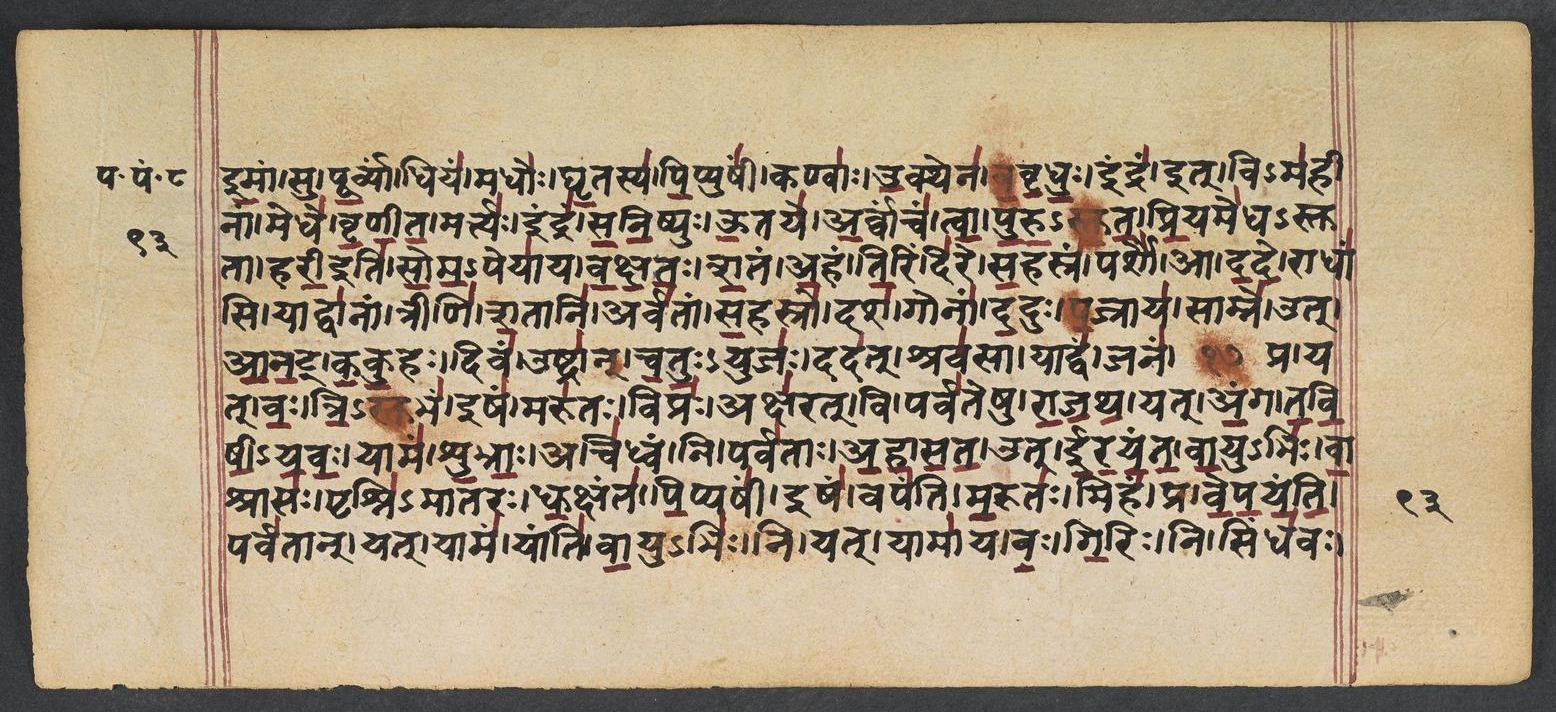
Penn Ms. Coll. 390 Item 41, fol. 572r (numbered 93r by the scribe) (OPenn image 572, lower leaf). Checked on the image: the Rigveda text on this page begins in RV 8.6.32 ‹-su-stutim juṣasva pra su›. The next page with Rigveda text, fol. 572v (numbered 93v by the scribe), begins in RV 8.6.43 ‹imām su pūrvyām dhiyam›. Verses 8.6.32-42 end on this page; 8.6.32 begins on fol. 571v (numbered 92v by the scribe).
32i̱mām ma̍ indra suṣṭu̱tiṁ ju̱ṣasva̱ pra su mām a̍va | u̱ta pra va̍rdhayā ma̱tim ||
33u̱ta bra̍hma̱ṇyā va̱yaṁ tubhya̍m pravṛddha vajrivaḥ | viprā̍ atakṣma jī̱vase̍ ||
34a̱bhi kaṇvā̍ anūṣa̱tāpo̱ na pra̱vatā̍ ya̱tīḥ | indra̱ṁ vana̍nvatī ma̱tiḥ ||
35indra̍m u̱kthāni̍ vāvṛdhuḥ samu̱dram i̍va̱ sindha̍vaḥ | anu̍ttamanyum a̱jara̍m ||
36ā no̍ yāhi parā̱vato̱ hari̍bhyāṁ harya̱tābhyā̍m | i̱mam i̍ndra su̱tam pi̍ba ||
37tvām id vṛ̍trahantama̱ janā̍so vṛ̱ktaba̍rhiṣaḥ | hava̍nte̱ vāja̍sātaye ||
38anu̍ tvā̱ roda̍sī u̱bhe ca̱kraṁ na va̱rty eta̍śam | anu̍ suvā̱nāsa̱ inda̍vaḥ ||
39manda̍svā̱ su sva̍rṇara u̱tendra̍ śarya̱ṇāva̍ti | matsvā̱ viva̍svato ma̱tī ||
40vā̱vṛ̱dhā̱na upa̱ dyavi̱ vṛṣā̍ va̱jry a̍roravīt | vṛ̱tra̱hā so̍ma̱pāta̍maḥ ||
41ṛṣi̱r hi pū̍rva̱jā asy eka̱ īśā̍na̱ oja̍sā | indra̍ coṣkū̱yase̱ vasu̍ ||
42a̱smāka̍ṁ tvā su̱tām̐ upa̍ vī̱tapṛ̍ṣṭhā a̱bhi praya̍ḥ | śa̱taṁ va̍hantu̱ hara̍yaḥ ||
Compare: Padapāṭha (word-by-word text written in the manuscript; Sansknet e-text via GRETIL)
32imām | me | indra | su-stutim | juṣasva | pra | su | mām | ava | uta | pra | vardhaya | matim
33uta | brahmaṇyā | vayam | tubhyam | pra-vṛddha | vajri-vaḥ | viprāḥ | atakṣma | jīvase
34abhi | kaṇvāḥ | anūṣata | āpaḥ | na | pra-vatā | yatīḥ | indram | vanan-vatī | matiḥ
35indram | ukthāni | vavṛdhuḥ | samudram-iva | sindhavaḥ | anutta-manyum | ajaram
36ā | naḥ | yāhi | parāvataḥ | hari-bhyām | haryatābhyām | imam | indra | sutam | piba
37tvām | it | vṛtrahan-tama | janāsaḥ | vṛkta-barhiṣaḥ | havante | vāja-sātaye
38anu | tvā | rodasī iti | ubhe iti | cakram | na | varti | etaśam | anu | suvānāsaḥ | indavaḥ
39mandasva | su | svaḥ-nare | uta | indra | śaryaṇāvati | matsva | vivasvataḥ | matī
40vavṛdhānaḥ | upa | dyavi | vṛṣā | vajrī | aroravīt | vṛtra-hā | soma-pātamaḥ
41ṛṣiḥ | hi | pūrva-jāḥ | asi | ekaḥ | īśānaḥ | ojasā | indra | coṣkūyase | vasu
42asmākam | tvā | sutān | upa | vīta-pṛṣṭhāḥ | abhi | prayaḥ | śatam | vahantu | harayaḥ
32Accept this eulogy of mine, Indra, and guard me carefully: Strengthen my thought and prosper it.
33For thee, O Mighty, Thunder-armed, we singers through devotionhave Fashioned the hymn that we may live.
34To Indra have the Kaṇvas sung, like waters speeding down a slope: The song is fain to go to him.
35As rivers swell the ocean, so our hymns of praise make Indra strong, Eternal, of resistless wrath.
36Come with thy lovely Bay Steeds, come to us from regions far away O Indra, drink this Soma juice.
37Best slayer of Vr̥itras, men whose sacred grass is ready trimmed Invoke thee for the gain of spoil.
38The heavens and earth come after thee as the wheel follows Etaṣa: To thee flow Soma-drops effused.
39Rejoice, O Indra, in the light, rejoice in Ṣaryaṇâvân, be Glad in the sacrificer's hymn.
40Grown strong in heaven, the Thunder-armed hath bellowed, Vr̥itra-slayer, Bull, Chief drinker of the Soma juice.
41Thou art a R̥ishi born of old, sole Ruler over all by might: Thou, Indra, guardest well our wealth.
42May thy Bay Steeds with beauteous backs, a hundred, bring thee to the feast, Bring thee to these our Soma-draughts.
Where on the image
Penn Ms. Coll. 390 Item 41, fol. 572v (numbered 93v by the scribe) (OPenn image 573, upper leaf). Checked on the image: the Rigveda text on this page begins in RV 8.6.43 ‹imām su pūrvyām dhiyam›. The next page with Rigveda text, fol. 573r (numbered 94r by the scribe), begins in RV 8.7.5 ‹vi-dharmaṇe mahe śuṣmāya yemire›. Verses 8.6.43-48 end on this page.
43i̱māṁ su pū̱rvyāṁ dhiya̱m madho̍r ghṛ̱tasya̍ pi̱pyuṣī̍m | kaṇvā̍ u̱kthena̍ vāvṛdhuḥ ||
44indra̱m id vima̍hīnā̱m medhe̍ vṛṇīta̱ martya̍ḥ | indra̍ṁ sani̱ṣyur ū̱taye̍ ||
45a̱rvāñca̍ṁ tvā puruṣṭuta pri̱yame̍dhastutā̱ harī̍ | so̱ma̱peyā̍ya vakṣataḥ ||
46śa̱tam a̱haṁ ti̱rindi̍re sa̱hasra̱m parśā̱v ā da̍de | rādhā̍ṁsi̱ yādvā̍nām ||
47trīṇi̍ śa̱tāny arva̍tāṁ sa̱hasrā̱ daśa̱ gonā̍m | da̱duṣ pa̱jrāya̱ sāmne̍ ||
48ud ā̍naṭ kaku̱ho diva̱m uṣṭrā̍ñ catu̱ryujo̱ dada̍t | śrava̍sā̱ yādva̱ṁ jana̍m ||
Compare: Padapāṭha (word-by-word text written in the manuscript; Sansknet e-text via GRETIL)
43imām | su | pūrvyām | dhiyam | madhoḥ | ghṛtasya | pipyuṣīm | kaṇvāḥ | ukthena | vavṛdhuḥ
44indram | it | vi-mahīnām | medhe | vṛṇīta | martyaḥ | indram | saniṣyuḥ | ūtaye
45arvāñcam | tvā | puru-stuta | priyamedha-stutā | harī | soma-peyāya | vakṣataḥ
46śatam | aham | tirindire | sahasram | parśau | ā | dade | rādhāṃsi | yādvānām
47trīṇi | śatāni | arvatām | sahasrā | daśa | gonām | daduḥ | pajrāya | sāmne
48ut | ānaṭ | kakuhaḥ | divam | uṣṭrān | catuḥ-yujaḥ | dadat | śravasā | yādvam | janam
43The Kaṇvas with their hymns of praise have magnified this ancient thought That swells with streams of meath and oil.
44Mid mightiest Gods let mortal man choose Indra at the sacrifice, Indra, whoe'er would win, for help.
45Thy steeds, by Priyamedhas praised, shall bring thee, God whom all invoke, Hither to drink the Somajuice.
46A hundred thousand have I gained from Parṣu, from Tirindira, And presents of the Yadavas.
47Ten thousand head of kine, and steeds three times a hundred they bestowed On Pajra for the Sâma-song.
48Kakuha hath reached up to heaven, bestowing buffaloes yoked in fours, And matched in fame the Yadavas.
Notes
- Sanskrit: Aufrecht's edition (1877) with the Vedic accents, as entered by van Nooten and Holland (GRETIL).
- English: Ralph T. H. Griffith, The Hymns of the Rigveda (1889-1892; 2nd ed. 1896-1897), from the VedaWeb digital text; OCR slips in that text were corrected against the printed 2nd edition (data/sources/rigveda/griffith_errata.json).
- Padapāṭha (edition text): Sansknet e-text via GRETIL (CC BY-NC-SA 4.0).
Cite
Sources
- Source: Penn Ms. Coll. 390 Item 41 (undated (catalogued with Penn's 18th-19th c. Vedic manuscripts)), OPenn, Public Domain Mark + Aufrecht's accented text (GRETIL) + Griffith's English (VedaWeb) (holding institution)
- Critical edition: Aufrecht (1877), accented e-text via GRETIL
← previous · → next · v cycle view · l back to library