Rigveda 8.51: To Indra
Introduction
Rigveda 8.51 is a hymn of 10 verses addressed to Indra. It stands in book (maṇḍala) 8, the book of the Kaṇva and Aṅgiras poets. The Rigveda is the oldest collection of Sanskrit hymns, composed in the second half of the second millennium BCE and handed down orally for many centuries before it was written down.
The manuscript shown is Penn Ms. Coll. 390 Item 41 (University of Pennsylvania), an undated paper manuscript of the padapāṭha (the word-by-word recitation text, in which every word is written separately and compounds are split) of the whole Ṛgveda in Devanāgarī, 884 leaves in fascicles, 7-9 lines to the page, accents in red; this hymn stands on fol. 625v-626v. Each section below gives the verses that end on one page; the page boundaries were read on the images (the opening words of every page), not counted out. Where the manuscript is a padapāṭha (the word-by-word recitation text), the section shows Aufrecht's continuous (saṃhitā) text first and, as the edition text, the padapāṭha of the same verses, which is the form written on the page.
How was this verified? (Provenance)
Where on the image
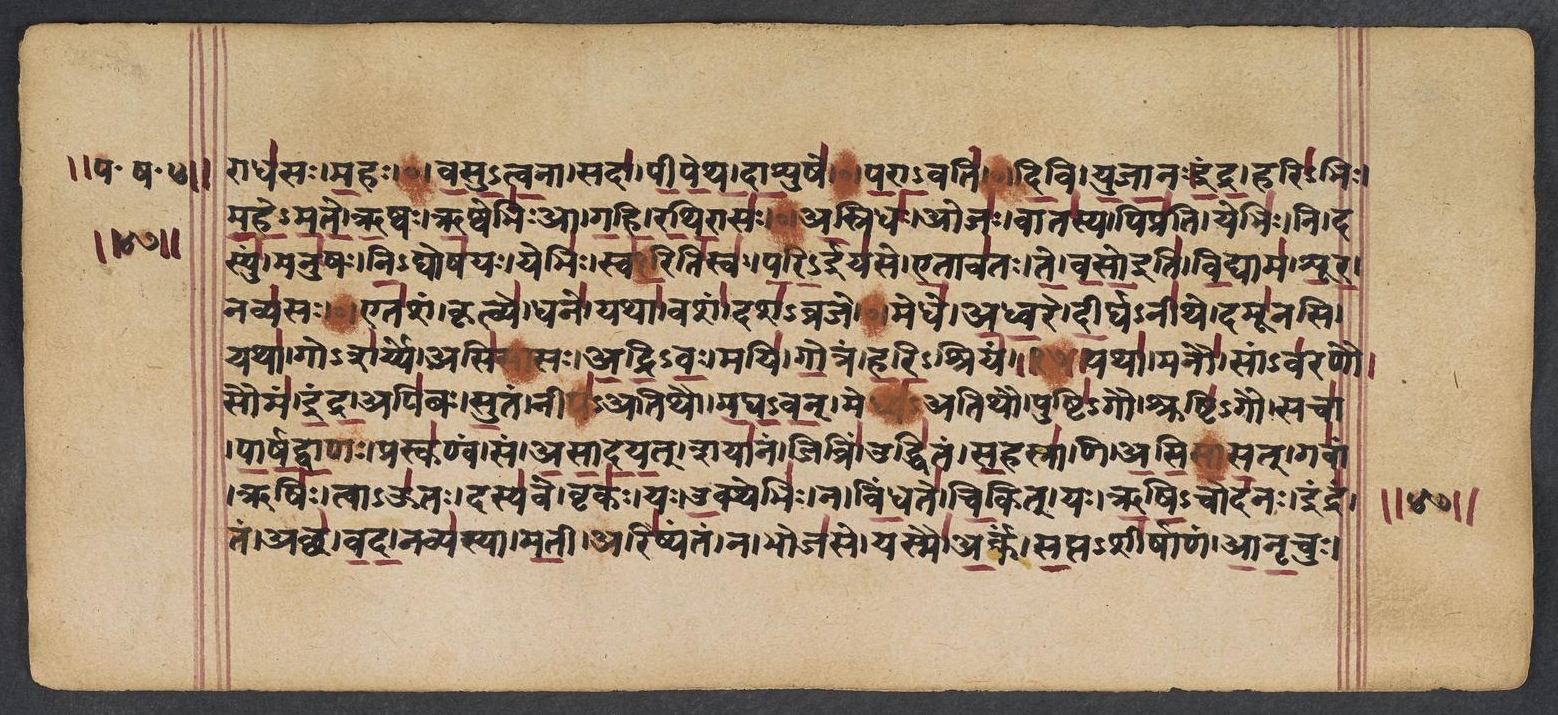
Penn Ms. Coll. 390 Item 41, fol. 625v (numbered 47v by the scribe) (OPenn image 626, upper leaf). Checked on the image: the Rigveda text on this page begins in RV 8.50.6 ‹-vi-bhūtim rādhasaḥ mahaḥ udrī-iva›. The next page with Rigveda text, fol. 626r (numbered 48r by the scribe), begins in RV 8.51.4 ‹-tri-dhātum ut-tame pade saḥ›. Verses 8.51.1-3 end on this page.
1yathā̱ manau̱ sāṁva̍raṇau̱ soma̍m i̱ndrāpi̍baḥ su̱tam | nīpā̍tithau maghava̱n medhyā̍tithau̱ puṣṭi̍gau̱ śruṣṭi̍gau̱ sacā̍ ||
2pā̱rṣa̱dvā̱ṇaḥ praska̍ṇva̱ṁ sam a̍sādaya̱c chayā̍na̱ṁ jivri̱m uddhi̍tam | sa̱hasrā̍ṇy asiṣāsa̱d gavā̱m ṛṣi̱s tvoto̱ dasya̍ve̱ vṛka̍ḥ ||
3ya u̱kthebhi̱r na vi̱ndhate̍ ci̱kid ya ṛ̍ṣi̱coda̍naḥ | indra̱ṁ tam acchā̍ vada̱ navya̍syā ma̱ty ari̍ṣyanta̱ṁ na bhoja̍se ||
Compare: Padapāṭha (word-by-word text written in the manuscript; Sansknet e-text via GRETIL)
1yathā | manau | sām-varaṇau | somam | indra | apibaḥ | sutam | nīpa-atithau | magha-van | medhya-atithau | puṣṭi-gau | śruṣṭi-gau | sacā
2pārṣadvāṇaḥ | praskaṇvam | sam | asādayat | śayānam | jivrim | uddhitam | sahasrāṇi | asisāsat | gavām | ṛṣiḥ | tvāūtaḥ | dasyave | vṛkaḥ
3yaḥ | ukthebhiḥ | na | vindhate | cikit | yaḥ | ṛṣi-codanaḥ | indram | tam | accha | vada | navyasyā | matī | ariṣyantam | na | bhojase
1As with Manu Sâmvaraṇi, Indra, thou drankest Soma juice, And, Maghavan, with Nîpâtithi, Medhyâtithi, with Pushṭigu and Ṣrushṭigu,–
2The son of Pr̥ishadvâna was Praskaṇva's host, who lay decrepit and forlorn. Aided by thee the R̥ishi Dasyave-vr̥ika strove to obtain thousands of kine.
3Lord of swift bounty, he will win e'en with a steed of worthless sort. This, Indra, must be told of thee who wilt perform heroic deeds.
Where on the image
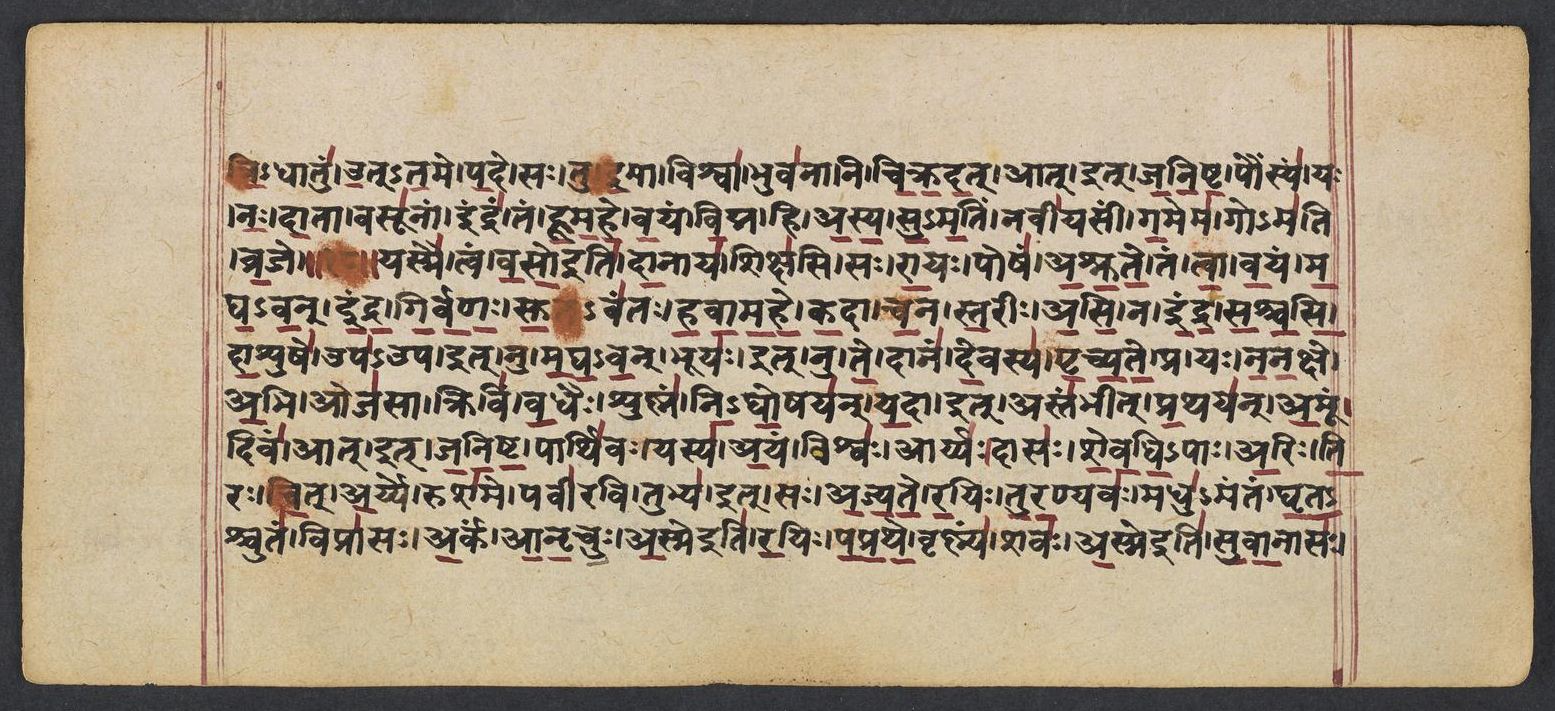
Penn Ms. Coll. 390 Item 41, fol. 626r (numbered 48r by the scribe) (OPenn image 626, lower leaf). Checked on the image: the Rigveda text on this page begins in RV 8.51.4 ‹-tri-dhātum ut-tame pade saḥ›. The next page with Rigveda text, fol. 626v (numbered 48v by the scribe), begins in RV 8.51.10 ‹indavaḥ›. Verses 8.51.4-9 end on this page; 8.51.4 begins on fol. 625v (numbered 47v by the scribe).
4yasmā̍ a̱rkaṁ sa̱ptaśī̍rṣāṇam ānṛ̱cus tri̱dhātu̍m utta̱me pa̱de | sa tv i1̱̍mā viśvā̱ bhuva̍nāni cikrada̱d ād ij ja̍niṣṭa̱ pauṁsya̍m ||
5yo no̍ dā̱tā vasū̍nā̱m indra̱ṁ taṁ hū̍mahe va̱yam | vi̱dmā hy a̍sya suma̱tiṁ navī̍yasīṁ ga̱mema̱ goma̍ti vra̱je ||
6yasmai̱ tvaṁ va̍so dā̱nāya̱ śikṣa̍si̱ sa rā̱yas poṣa̍m aśnute | taṁ tvā̍ va̱yam ma̍ghavann indra girvaṇaḥ su̱tāva̍nto havāmahe ||
7ka̱dā ca̱na sta̱rīr a̍si̱ nendra̍ saścasi dā̱śuṣe̍ | upo̱pen nu ma̍ghava̱n bhūya̱ in nu te̱ dāna̍ṁ de̱vasya̍ pṛcyate ||
8pra yo na̍na̱kṣe a̱bhy oja̍sā̱ krivi̍ṁ va̱dhaiḥ śuṣṇa̍ṁ nigho̱ṣaya̍n | ya̱ded asta̍mbhīt pra̱thaya̍nn a̱mūṁ diva̱m ād ij ja̍niṣṭa̱ pārthi̍vaḥ ||
9yasyā̱yaṁ viśva̱ āryo̱ dāsa̍ḥ śevadhi̱pā a̱riḥ | ti̱raś ci̍d a̱rye ruśa̍me̱ parī̍ravi̱ tubhyet so a̍jyate ra̱yiḥ ||
Compare: Padapāṭha (word-by-word text written in the manuscript; Sansknet e-text via GRETIL)
4yasmai | arkam | sapta-śīrṣāṇam | ānṛcuḥ | tri-dhātum | ut-tame | pade | saḥ | tu | imā | viśvā | bhuvanāni | cikradat | āt | it | janiṣṭa | paiṃsyam
5yaḥ | naḥ | dātā | vasūnām | indram | tam | hūmahe | vayam | vidma | hi | asya | su-matim | navīyasīm | ghamema | go--mati | vraje
6yasmai | tvam | vaso iti | dānāya | śikṣasi | saḥ | rāyaḥ | poṣam | aśnute | tam | tvā | vayam | magha-van | indra | girvaṇaḥ | suta-vantaḥ | havāmahe
7kadā | cana | starīḥ | asi | na | indra | saścasi | dāśuṣe | upa-upa | it | nu | magha-van | bhūyaḥ | it | nu | te | dānam | devasya | pṛcyate
8pra | yaḥ | nanakṣe | abhi | ojasā | krivim | vadhaiḥ | śuṣṇam | ni-ghoṣayan | yadā | it | astambhīt | prathayan | amūm | divam | āt | it | janiṣṭa | pārthivaḥ
9yasya | ayam | viśvaḥ | āryaḥ | dāsaḥ | śevadhi-pāḥ | ariḥ | tiraḥ | cit | arye | ruśame | pavīravi | tubhya | it | saḥ | ajyate | rayiḥ
4He unto whom they sang the seven-headed hymn, three-parted, in the loftiest place, He sent his thunder down on all these living things, and so displayed heroic might.
5We invocate that Indra who bestoweth precious things on us. Now do we know his newest favour; may we gain a stable that is full of kine.
6He whom thou aidest, gracious Lord, to give again, obtains great wealth to nourish him. We with our Soma ready, Lover of the Song! call, Indra Maghavan, on thee.
7Ne'er art thou fruitless, Indra ne'er dost thou desert the worshipper But now, O Maghavan, thy bounty as a God is poured forth ever more and more.
8He who hath overtaken Krivi with his might, and silenced Ṣushṇa with deathbolts,– When he supported yonder heaven and spread it out, then first the son of earth was born.
9Good Lord of wealth is he to whom all Aryas, Dâsas here belong. Directly unto thee, the pious Ruṣama Pavîru, is that wealth brought nigh.
Where on the image
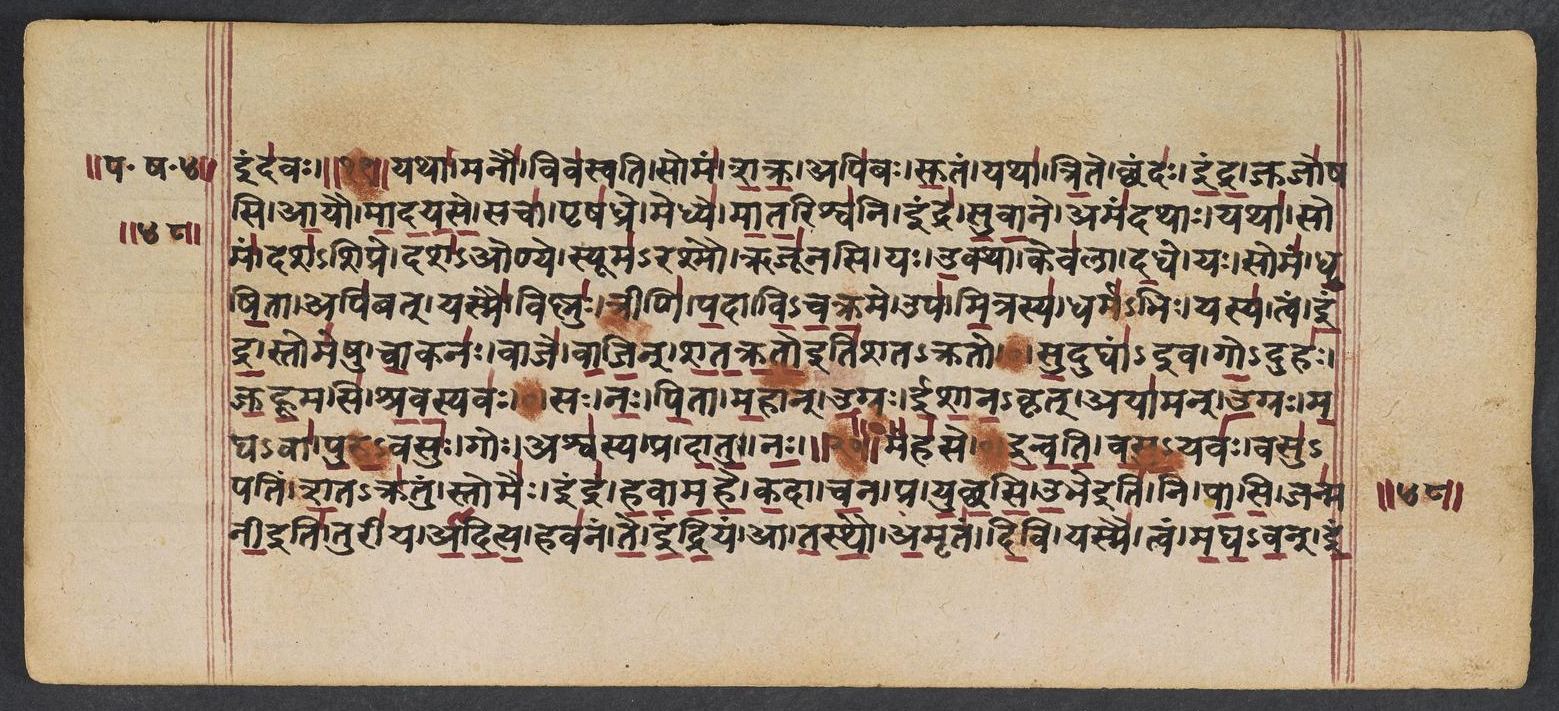
Penn Ms. Coll. 390 Item 41, fol. 626v (numbered 48v by the scribe) (OPenn image 627, upper leaf). Checked on the image: the Rigveda text on this page begins in RV 8.51.10 ‹indavaḥ›. The next page with Rigveda text, fol. 627r (numbered 49r by the scribe), begins in RV 8.52.8 ‹-indra girvaṇaḥ śikṣo iti›. Verse 8.51.10 ends on this page; 8.51.10 begins on fol. 626r (numbered 48r by the scribe).
10tu̱ra̱ṇyavo̱ madhu̍mantaṁ ghṛta̱ścuta̱ṁ viprā̍so a̱rkam ā̍nṛcuḥ | a̱sme ra̱yiḥ pa̍prathe̱ vṛṣṇya̱ṁ śavo̱ 'sme su̍vā̱nāsa̱ inda̍vaḥ ||
Compare: Padapāṭha (word-by-word text written in the manuscript; Sansknet e-text via GRETIL)
10turaṇyavaḥ | madhu-mantam | ghṛta-ścutam | viprāsaḥ | arkam | ānṛcuḥ | asme iti | rayiḥ | paprathe | vṛṣṇyam | śavaḥ | asme iti | suvānāsaḥ | indavaḥ
10In zealous haste the singers have sung forth a song distilling oil and rich in sweets. Riches have spread among us and heroic strength, with us are flowing Soma-drops.
Notes
- Sanskrit: Aufrecht's edition (1877) with the Vedic accents, as entered by van Nooten and Holland (GRETIL).
- English: Ralph T. H. Griffith, The Hymns of the Rigveda (1889-1892; 2nd ed. 1896-1897), from the VedaWeb digital text; OCR slips in that text were corrected against the printed 2nd edition (data/sources/rigveda/griffith_errata.json).
- Padapāṭha (edition text): Sansknet e-text via GRETIL (CC BY-NC-SA 4.0).
Cite
Sources
- Source: Penn Ms. Coll. 390 Item 41 (undated (catalogued with Penn's 18th-19th c. Vedic manuscripts)), OPenn, Public Domain Mark + Aufrecht's accented text (GRETIL) + Griffith's English (VedaWeb) (holding institution)
- Critical edition: Aufrecht (1877), accented e-text via GRETIL
← previous · → next · v cycle view · l back to library