Rigveda 8.52: To Indra
Introduction
Rigveda 8.52 is a hymn of 10 verses addressed to Indra. It stands in book (maṇḍala) 8, the book of the Kaṇva and Aṅgiras poets. The Rigveda is the oldest collection of Sanskrit hymns, composed in the second half of the second millennium BCE and handed down orally for many centuries before it was written down.
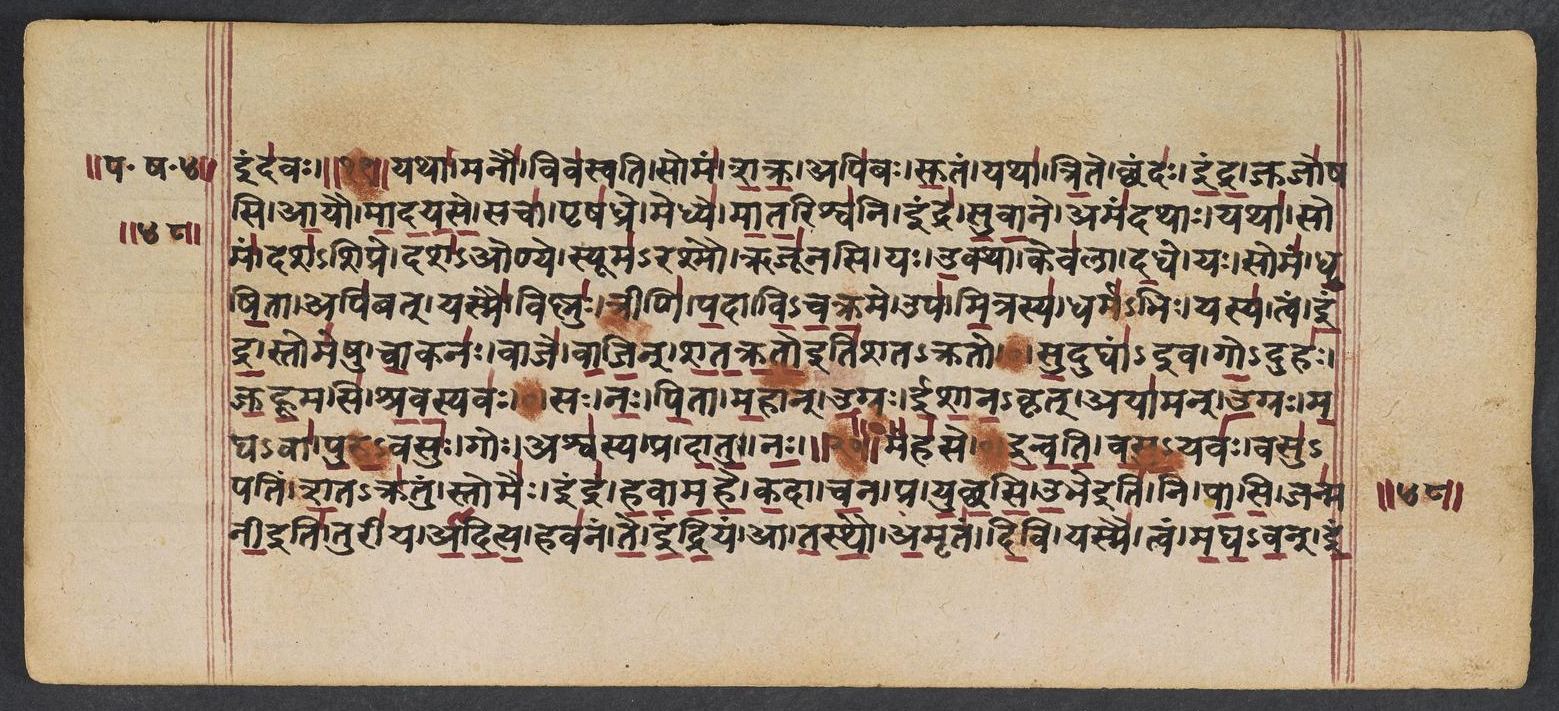
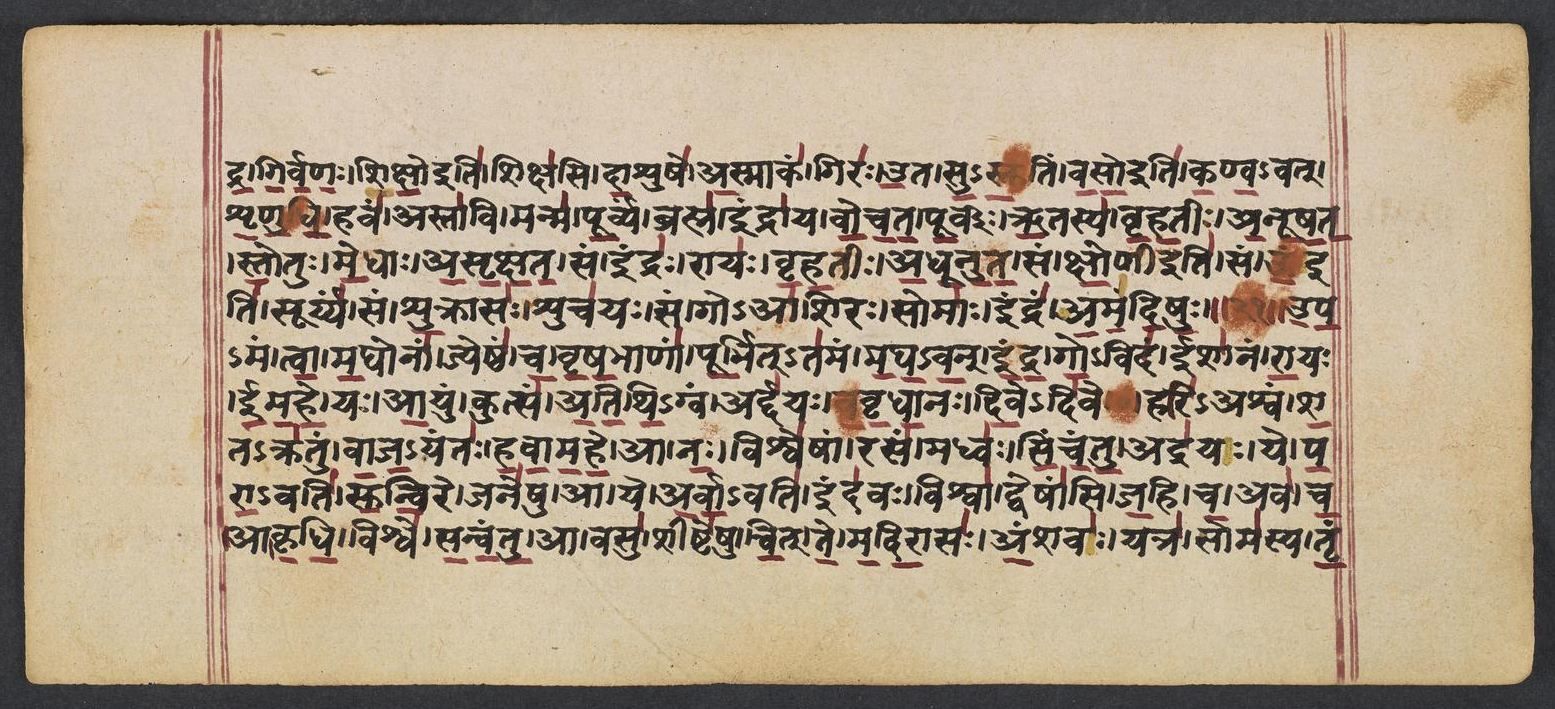
The manuscript shown is Penn Ms. Coll. 390 Item 41 (University of Pennsylvania), an undated paper manuscript of the padapāṭha (the word-by-word recitation text, in which every word is written separately and compounds are split) of the whole Ṛgveda in Devanāgarī, 884 leaves in fascicles, 7-9 lines to the page, accents in red; this hymn stands on fol. 626v-627r. Each section below gives the verses that end on one page; the page boundaries were read on the images (the opening words of every page), not counted out. Where the manuscript is a padapāṭha (the word-by-word recitation text), the section shows Aufrecht's continuous (saṃhitā) text first and, as the edition text, the padapāṭha of the same verses, which is the form written on the page.
How was this verified? (Provenance)
Where on the image
Penn Ms. Coll. 390 Item 41, fol. 626v (numbered 48v by the scribe) (OPenn image 627, upper leaf). Checked on the image: the Rigveda text on this page begins in RV 8.51.10 ‹indavaḥ›. The next page with Rigveda text, fol. 627r (numbered 49r by the scribe), begins in RV 8.52.8 ‹-indra girvaṇaḥ śikṣo iti›. Verses 8.52.1-7 end on this page.
1yathā̱ manau̱ viva̍svati̱ soma̍ṁ śa̱krāpi̍baḥ su̱tam | yathā̍ tri̱te chanda̍ indra̱ jujo̍ṣasy ā̱yau mā̍dayase̱ sacā̍ ||
2pṛṣa̍dhre̱ medhye̍ māta̱riśva̱nīndra̍ suvā̱ne ama̍ndathāḥ | yathā̱ soma̱ṁ daśa̍śipre̱ daśo̍ṇye̱ syūma̍raśmā̱v ṛjū̍nasi ||
3ya u̱kthā keva̍lā da̱dhe yaḥ soma̍ṁ dhṛṣi̱tāpi̍bat | yasmai̱ viṣṇu̱s trīṇi̍ pa̱dā vi̍cakra̱ma upa̍ mi̱trasya̱ dharma̍bhiḥ ||
4yasya̱ tvam i̍ndra̱ stome̍ṣu cā̱kano̱ vāje̍ vājiñ chatakrato | taṁ tvā̍ va̱yaṁ su̱dughā̍m iva go̱duho̍ juhū̱masi̍ śrava̱syava̍ḥ ||
5yo no̍ dā̱tā sa na̍ḥ pi̱tā ma̱hām̐ u̱gra ī̍śāna̱kṛt | ayā̍mann u̱gro ma̱ghavā̍ purū̱vasu̱r gor aśva̍sya̱ pra dā̍tu naḥ ||
6yasmai̱ tvaṁ va̍so dā̱nāya̱ maṁha̍se̱ sa rā̱yas poṣa̍m invati | va̱sū̱yavo̱ vasu̍patiṁ śa̱takra̍tu̱ṁ stomai̱r indra̍ṁ havāmahe ||
7ka̱dā ca̱na pra yu̍cchasy u̱bhe ni pā̍si̱ janma̍nī | turī̍yāditya̱ hava̍naṁ ta indri̱yam ā ta̍sthāv a̱mṛta̍ṁ di̱vi ||
Compare: Padapāṭha (word-by-word text written in the manuscript; Sansknet e-text via GRETIL)
1yathā | manau | vivasvati | somam | śakra | apibaḥ | sutam | yathā | trite | chandaḥ | indra | jujoṣasi | āyau | mādayase | sacā
2pṛṣadhre | medhye | mātariśvani | indra | suvāne | amandathāḥ | yathā | somam | daśa-śipre | daśa-oṇye | syūma-raśmau | ṛjūnasi
3yaḥ | ukthā | kevalā | dadhe | yaḥ | somam | dhṛṣitā | apibat | yasmai | viṣṇuḥ | trīṇi | padā | vi-cakrame | upa | mitrasya | dharma-bhiḥ
4yasya | tvam | indra | stomeṣu | cākanaḥ | vāje | vājin | śatakrato itiśata-krato | tam | tvā | vayam | sudughām-iva | go--duhaḥ | juhūmasi | śravasyavaḥ
5yaḥ | naḥ | dātā | saḥ | naḥ | pitā | mahān | ugraḥ | īśāna-kṛt | ayāman | ugraḥ | magha-vā | puru-vasuḥ | goḥ | aśvasya | pra | dātu | naḥ
6yasmai | tvam | vaso iti | dānāya | maṃhase | saḥ | rāyaḥ | poṣam | invati | vasu-yavaḥ | vasu-patim | śata-kratum | stomaiḥ | indram | havāmahe
7kadā | cana | pra | yucchasi | ubhe iti | ni | pāsi | janmanī iti | / turīya | āditya | havanam | te | indriyam | ā | tasthau | amṛtam | divi
1As, Ṣakra, thou with Manu called Vivasvan drankest Soma juice, As, Indra, thou didst love the hymn by Trita's side, so dost thou joy with Âyu now.
2As thou with Mâtariṣvan, Medhya, Pr̥ishadhra, hast cheered thee Indra, with pressed juice, Drunk Soma with R̥ijûnas, Syûmaraṣmi, by Daṣoṇya's Daṣaṣipra's side.
3Tis he who made the lauds his own and boldly drank the Soma juice, He to whom Vishṇu came striding his three wide steps, as Mitra's statutes ordered it.
4In whose laud thou didst joy, Indra, at the great deed, O Ṣatakratu, Mighty One! Seeking renown we call thee as the milkers call the cow who yields abundant milk.
5He is our Sire who gives to us, Great, Mighty, ruling as he wills. Unsought, may he the Strong, Rich, Lord of ample wealth, give us of horses and of kine.
6He to whom thou, Good Lord, givest that he may give increases wealth that nourishes. Eager for wealth we call on Indra, Lord of wealth, on Ṣatakratu with our lauds.
7Never art thou neglectful: thou guardest both races with thy care. The call on Indra, fourth Âditya! is thine own. Amrit is stablished in the heavens.
Where on the image
Penn Ms. Coll. 390 Item 41, fol. 627r (numbered 49r by the scribe) (OPenn image 627, lower leaf). Checked on the image: the Rigveda text on this page begins in RV 8.52.8 ‹-indra girvaṇaḥ śikṣo iti›. The next page with Rigveda text, fol. 627v (numbered 49v by the scribe), begins in RV 8.53.4 ‹-tṛmpasi›. Verses 8.52.8-10 end on this page; 8.52.8 begins on fol. 626v (numbered 48v by the scribe).
8yasmai̱ tvam ma̍ghavann indra girvaṇa̱ḥ śikṣo̱ śikṣa̍si dā̱śuṣe̍ | a̱smāka̱ṁ gira̍ u̱ta su̍ṣṭu̱tiṁ va̍so kaṇva̱vac chṛ̍ṇudhī̱ hava̍m ||
9astā̍vi̱ manma̍ pū̱rvyam brahmendrā̍ya vocata | pū̱rvīr ṛ̱tasya̍ bṛha̱tīr a̍nūṣata sto̱tur me̱dhā a̍sṛkṣata ||
10sam indro̱ rāyo̍ bṛha̱tīr a̍dhūnuta̱ saṁ kṣo̱ṇī sam u̱ sūrya̍m | saṁ śu̱krāsa̱ḥ śuca̍ya̱ḥ saṁ gavā̍śira̱ḥ somā̱ indra̍m amandiṣuḥ ||
Compare: Padapāṭha (word-by-word text written in the manuscript; Sansknet e-text via GRETIL)
8yasmai | tvam | magha-van | indra | girvaṇaḥ | śikṣo iti | śikṣasi | dāśuṣe | asmākam | giraḥ | uta | sustutim | vaso iti | kaṇva-vat | śṛṇudhi | havam
9astāvi | manma | pūrvyam | brahma | indrāya | vocata | pūrvīḥ | ṛtasya | bṛhatīḥ | anūṣata | stotuḥ | medhāḥ | asṛkṣata
10sam | indraḥ | rāyaḥ | bṛhatīḥ | adhūnuta | sam | kṣoṇī iti | sam | oṃ iti | sūryam | sam | śukrāsaḥ | śucayaḥ | sam | go--āśiraḥ | somāḥ | indram | amandiṣuḥ
8The offerer whom thou, Indra, Lover of the Song, liberal Maghavan, favourest,– As at the call of Kaṇva so, O gracious Lord, hear, thou our songs and eulogy.
9Sung is the song of ancient time: to Indra have ye said the prayer. They have sung many a Br̥ihatî of sacrifice, poured forth the worshipper's many thoughts.
10Indra hath tossed together mighty stores of wealth, and both the worlds, yea, and the Sun. Pure, brightly-shining, mingled with the milk, the draughts of Soma have made Indra glad.
Notes
- Sanskrit: Aufrecht's edition (1877) with the Vedic accents, as entered by van Nooten and Holland (GRETIL).
- English: Ralph T. H. Griffith, The Hymns of the Rigveda (1889-1892; 2nd ed. 1896-1897), from the VedaWeb digital text; OCR slips in that text were corrected against the printed 2nd edition (data/sources/rigveda/griffith_errata.json).
- Padapāṭha (edition text): Sansknet e-text via GRETIL (CC BY-NC-SA 4.0).
Cite
Sources
- Source: Penn Ms. Coll. 390 Item 41 (undated (catalogued with Penn's 18th-19th c. Vedic manuscripts)), OPenn, Public Domain Mark + Aufrecht's accented text (GRETIL) + Griffith's English (VedaWeb) (holding institution)
- Critical edition: Aufrecht (1877), accented e-text via GRETIL
← previous · → next · v cycle view · l back to library