Rigveda 8.61: To Indra
Introduction
Rigveda 8.61 is a hymn of 18 verses addressed to Indra. It stands in book (maṇḍala) 8, the book of the Kaṇva and Aṅgiras poets. The Rigveda is the oldest collection of Sanskrit hymns, composed in the second half of the second millennium BCE and handed down orally for many centuries before it was written down.
The manuscript shown is Penn Ms. Coll. 390 Item 41 (University of Pennsylvania), an undated paper manuscript of the padapāṭha (the word-by-word recitation text, in which every word is written separately and compounds are split) of the whole Ṛgveda in Devanāgarī, 884 leaves in fascicles, 7-9 lines to the page, accents in red; this hymn stands on fol. 631v-633r. Each section below gives the verses that end on one page; the page boundaries were read on the images (the opening words of every page), not counted out. Where the manuscript is a padapāṭha (the word-by-word recitation text), the section shows Aufrecht's continuous (saṃhitā) text first and, as the edition text, the padapāṭha of the same verses, which is the form written on the page.
How was this verified? (Provenance)
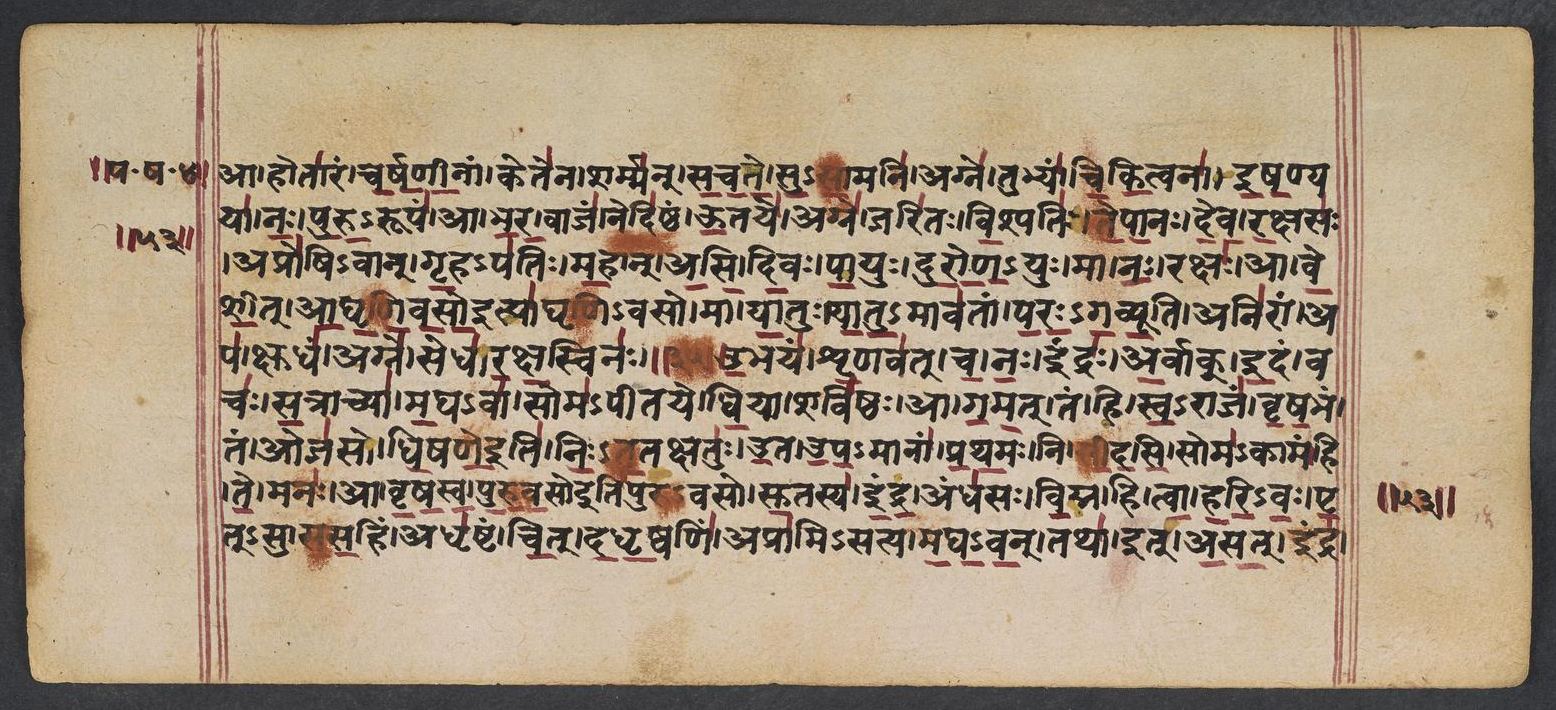
Where on the image
Penn Ms. Coll. 390 Item 41, fol. 631v (numbered 53v by the scribe) (OPenn image 632, upper leaf). Checked on the image: the Rigveda text on this page begins in RV 8.60.17 ‹ā hotāram carṣaṇīnām›. The next page with Rigveda text, fol. 632r (numbered 54r by the scribe), begins in RV 8.61.4 ‹kratvā yathā vaśaḥ sanema›. Verses 8.61.1-3 end on this page.
1u̱bhaya̍ṁ śṛ̱ṇava̍c ca na̱ indro̍ a̱rvāg i̱daṁ vaca̍ḥ | sa̱trācyā̍ ma̱ghavā̱ soma̍pītaye dhi̱yā śavi̍ṣṭha̱ ā ga̍mat ||
2taṁ hi sva̱rāja̍ṁ vṛṣa̱bhaṁ tam oja̍se dhi̱ṣaṇe̍ niṣṭata̱kṣatu̍ḥ | u̱topa̱mānā̍m pratha̱mo ni ṣī̍dasi̱ soma̍kāma̱ṁ hi te̱ mana̍ḥ ||
3ā vṛ̍ṣasva purūvaso su̱tasye̱ndrāndha̍saḥ | vi̱dmā hi tvā̍ harivaḥ pṛ̱tsu sā̍sa̱him adhṛ̍ṣṭaṁ cid dadhṛ̱ṣvaṇi̍m ||
Compare: Padapāṭha (word-by-word text written in the manuscript; Sansknet e-text via GRETIL)
1ubhayam | śṛṇavat | ca | naḥ | indraḥ | arvāk | idam | vacaḥ | satrācyā | magha-vā | soma-pītaye | dhiyā | śaviṣṭhaḥ | ā | gamat
2tam | hi | sva-rājam | vṛṣabham | tam | ojase | dhiṣaṇe | niḥ-tatakṣatuḥ | uta | upa-mānām | prathamaḥ | ni | sīdasi | soma-kāmam | hi | te | manaḥ
3ā | vṛṣasva | puruvaso itipuru-vaso | sutasya | indra | andhasaḥ | vidma | hi | tvā | hari-vaḥ | pṛt-su | sasahim | adhṛṣṭam | cit | dadhṛṣvaṇim
1BOTH boons, – may Indra, hitherward turned, listen to this prayer of ours, And mightiest Maghavan with thought inclined to us come near to drink the Soma juice.
2For him, strong, independent Ruler, Heaven and Earth have fashioned forth for power and might. Thou seatest thee as first among thy peers in place, for thy soul longs for Soma juice.
3Fill thyself full, O Lord of wealth, O Indra, with the juice we shed. We know thee, Lord of Bay Steeds! victor in the fight, vanquishing e'en the invincible.
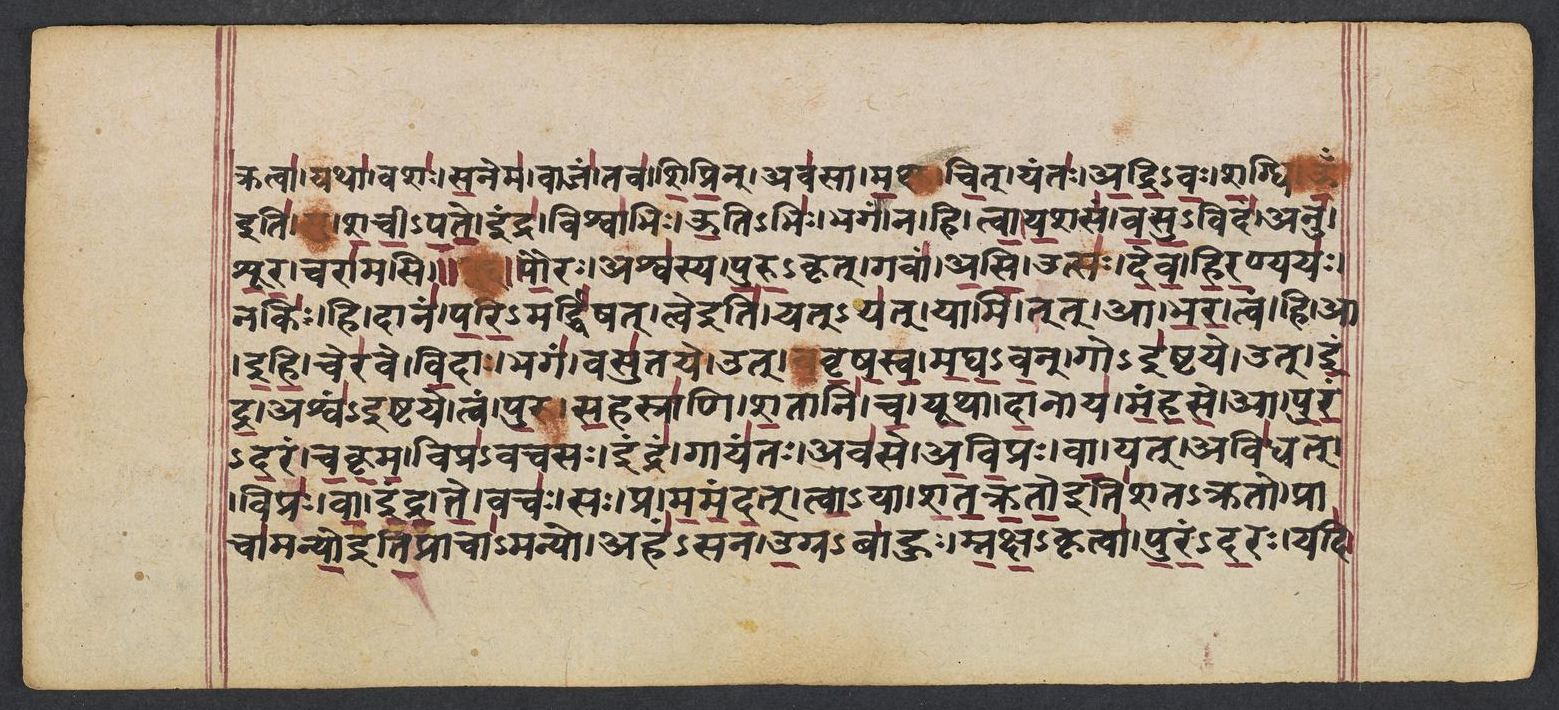
Where on the image
Penn Ms. Coll. 390 Item 41, fol. 632r (numbered 54r by the scribe) (OPenn image 632, lower leaf). Checked on the image: the Rigveda text on this page begins in RV 8.61.4 ‹kratvā yathā vaśaḥ sanema›. The next page with Rigveda text, fol. 632v (numbered 54v by the scribe), begins in RV 8.61.10 ‹me śṛṇavat havam vasūyavo›. Verses 8.61.4-9 end on this page; 8.61.4 begins on fol. 631v (numbered 53v by the scribe).
4aprā̍misatya maghava̱n tathed a̍sa̱d indra̱ kratvā̱ yathā̱ vaśa̍ḥ | sa̱nema̱ vāja̱ṁ tava̍ śipri̱nn ava̍sā ma̱kṣū ci̱d yanto̍ adrivaḥ ||
5śa̱gdhy ū̱3̱̍ ṣu śa̍cīpata̱ indra̱ viśvā̍bhir ū̱tibhi̍ḥ | bhaga̱ṁ na hi tvā̍ ya̱śasa̍ṁ vasu̱vida̱m anu̍ śūra̱ carā̍masi ||
6pau̱ro aśva̍sya puru̱kṛd gavā̍m a̱sy utso̍ deva hira̱ṇyaya̍ḥ | naki̱r hi dāna̍m pari̱mardhi̍ṣa̱t tve yad-ya̱d yāmi̱ tad ā bha̍ra ||
7tvaṁ hy ehi̱ cera̍ve vi̱dā bhaga̱ṁ vasu̍ttaye | ud vā̍vṛṣasva maghava̱n gavi̍ṣṭaya̱ ud i̱ndrāśva̍miṣṭaye ||
8tvam pu̱rū sa̱hasrā̍ṇi śa̱tāni̍ ca yū̱thā dā̱nāya̍ maṁhase | ā pu̍raṁda̱raṁ ca̍kṛma̱ vipra̍vacasa̱ indra̱ṁ gāya̱nto 'va̍se ||
9a̱vi̱pro vā̱ yad avi̍dha̱d vipro̍ vendra te̱ vaca̍ḥ | sa pra ma̍mandat tvā̱yā śa̍takrato̱ prācā̍manyo̱ aha̍ṁsana ||
Compare: Padapāṭha (word-by-word text written in the manuscript; Sansknet e-text via GRETIL)
4aprāmi-satya | magha-van | tathā | it | asat | indra | kratvā | yathā | vaśaḥ | sanema | vājam | tava | śiprin | avasā | makṣu | cit | yantaḥ | adri-vaḥ
5śagdhi | oṃ iti | su | śacī-pate | indra | viśvābhiḥ | ūti-bhiḥ | bhagam | na | hi | tvā | yaśasam | vasu-vidam | anu | śūra | carāmasi
6pauraḥ | aśvasya | puru-kṛt | gavām | asi | utsaḥ | deva | hiraṇyayaḥ | nakiḥ | h i | dānam | pari-mardhiṣat | tve iti | yat-yat | yāmi | tat | ā | bhara
7tvam | hi | ā | ihi | cerave | vidāḥ | bhagam | vasuttaye | ut | vavṛṣasva | magha-van | go--iṣṭaye | ut | indra | aśvam-iṣṭaye
8tvam | puru | sahasrāṇi | śatāni | ca | yūthā | dānāya | maṃhase | ā | puram-daram | cakṛma | vipra-vacasaḥ | indram | gāyantaḥ | avase
9avipraḥ | vā | yat | avidhat | vipraḥ | vā | indra | te | vacaḥ | saḥ | pra | mamandat | tvāyā | śatakrato itiśāta-krato | prācāmanyo itiprācāmanyo | aham-sana
4Changeless in truth, O Maghavan Indra, let it be as thou in wisdom willest it. May we, O fair of cheek, win booty with thine aid, O Thunderer, swiftly seeking it.
5Indra, with all thy saving helps give us assistance, Lord of power. For after thee we follow even as glorious bliss, thee, Hero, finder-out of wealth.
6Increaser of our steeds and multiplying kine, a golden well, O God, art thou, For no one may impair the gifts laid up in thee. Bring me whatever thing I ask.
7For thou, – come to the worshipper! – wilt find great wealth to make us rich. Fill thyself full, O Maghavan, for gain of kine, full, Indra, for the gain of steeds.
8Thou as thy gift bestowest many hundred herds, yea, many thousands dost thou give. With singers' hymns have we brought the Fort-render near, singing to Indra for his grace.
9Whether the simple or the sage, Indra, have offered praise to thee, He, Ṣatakratu! by his love hath gladdened thee, ambitious! ever pressing on!
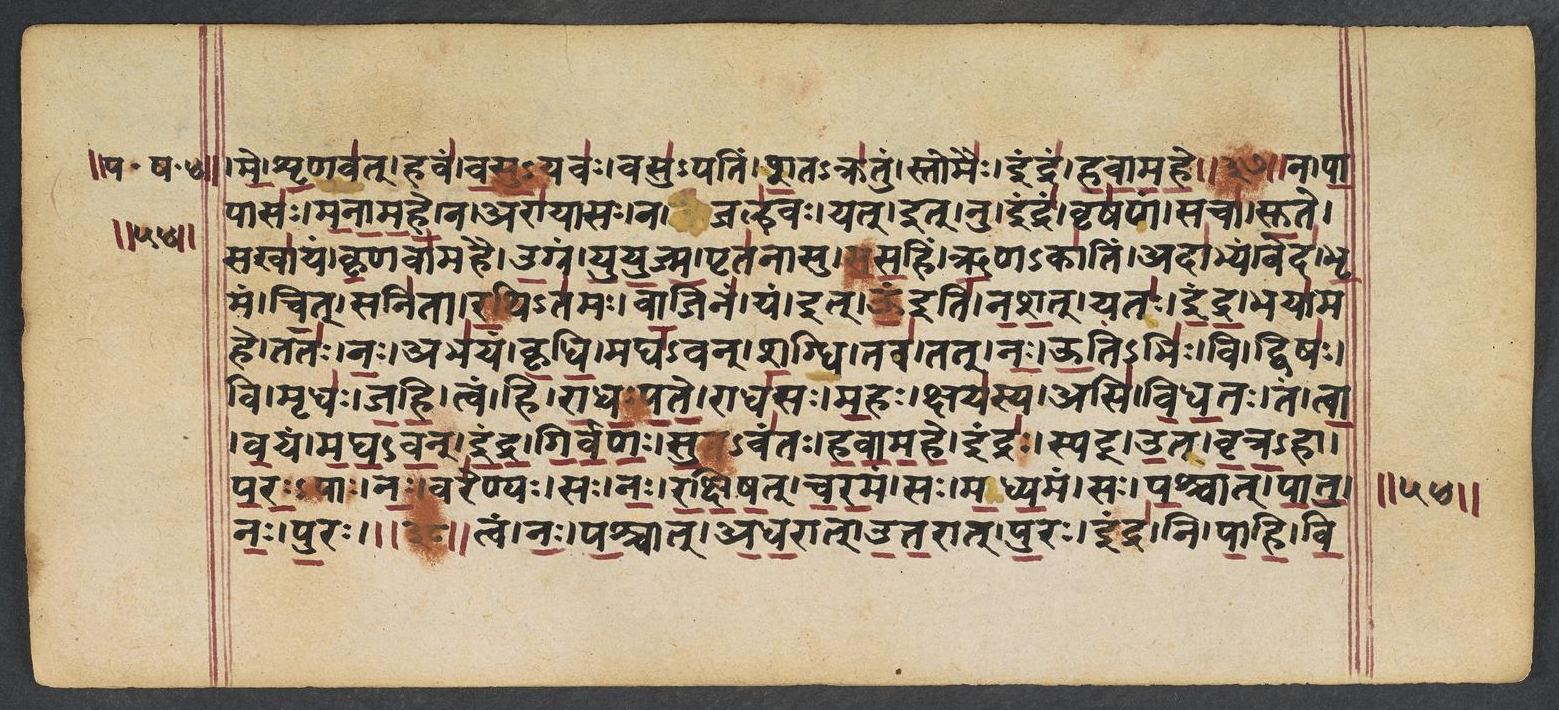
Where on the image
Penn Ms. Coll. 390 Item 41, fol. 632v (numbered 54v by the scribe) (OPenn image 633, upper leaf). Checked on the image: the Rigveda text on this page begins in RV 8.61.10 ‹me śṛṇavat havam vasūyavo›. The next page with Rigveda text, fol. 633r (numbered 55r by the scribe), begins in RV 8.61.16 ‹-viśvataḥ āre asmat kṛṇuhi›. Verses 8.61.10-15 end on this page; 8.61.10 begins on fol. 632r (numbered 54r by the scribe).
10u̱grabā̍hur mrakṣa̱kṛtvā̍ puraṁda̱ro yadi̍ me śṛ̱ṇava̱d dhava̍m | va̱sū̱yavo̱ vasu̍patiṁ śa̱takra̍tu̱ṁ stomai̱r indra̍ṁ havāmahe ||
11na pā̱pāso̍ manāmahe̱ nārā̍yāso̱ na jaḻha̍vaḥ | yad in nv indra̱ṁ vṛṣa̍ṇa̱ṁ sacā̍ su̱te sakhā̍yaṁ kṛ̱ṇavā̍mahai ||
12u̱graṁ yu̍yujma̱ pṛta̍nāsu sāsa̱him ṛ̱ṇakā̍ti̱m adā̍bhyam | vedā̍ bhṛ̱maṁ ci̱t sani̍tā ra̱thīta̍mo vā̱jina̱ṁ yam id ū̱ naśa̍t ||
13yata̍ indra̱ bhayā̍mahe̱ tato̍ no̱ abha̍yaṁ kṛdhi | magha̍vañ cha̱gdhi tava̱ tan na̍ ū̱tibhi̱r vi dviṣo̱ vi mṛdho̍ jahi ||
14tvaṁ hi rā̍dhaspate̱ rādha̍so ma̱haḥ kṣaya̱syāsi̍ vidha̱taḥ | taṁ tvā̍ va̱yam ma̍ghavann indra girvaṇaḥ su̱tāva̍nto havāmahe ||
15indra̱ḥ spaḻ u̱ta vṛ̍tra̱hā pa̍ra̱spā no̱ vare̍ṇyaḥ | sa no̍ rakṣiṣac cara̱maṁ sa ma̍dhya̱maṁ sa pa̱ścāt pā̍tu naḥ pu̱raḥ ||
Compare: Padapāṭha (word-by-word text written in the manuscript; Sansknet e-text via GRETIL)
10ugra-bāhuḥ | mrakṣa-kṛtvā | puram-daraḥ | yadi | me | śṛṇavat | havam | vasūyavo vasupatiṃ śatakratum stomair indram havāmahe
11na | pāpāsaḥ | manāmahe | na | arāyāsaḥ | na | jalhavaḥ | yat | it | nu | indram | vṛṣaṇam | sacā | sute | sakhāyam | kṛṇavāmahai
12ugram | yuyujma | pṛtanāsu | sasahim | ṛṇa-kātim | adābhyam | veda | bhṛmam | cit | sanitā | rathi-tamaḥ | vājinam | yam | it | oṃ iti | naśat
13yataḥ | indra | bhayāmahe | tataḥ | naḥ | abhayam | kṛdhi | magha-van | śagdhi | tava | tam | naḥ | ūti-bhiḥ | vi | dviṣaḥ | vi | mṛdhaḥ | jahi
14tvam | hi | rādhaḥ-pate | rādhasaḥ | mahaḥ | kṣayasya | asi | vidhataḥ | tam | tvā | vayam | magha-van | indra | girvaṇaḥ | suta-vantaḥ | havāmahe
15indraḥ | spaṭ | uta | vṛtra-hā | paraḥ-pāḥ | naḥ | vareṇyaḥ | saḥ | naḥ | rakṣiṣat | caramam | saḥ | madhyamam | saḥ | paścāt | pātu | naḥ | puraḥ
10If he the Strong of arm, the breaker-down of forts, the great Destroyer, hear my call, We, seeking riches cry to Indra, Lord of wealth, to Ṣatakratu with our lauds.
11We count not then as sinners, nor as niggardly or foolish men, When with the Soma juice which we have shed we make Indra, the Mighty One, our Friend.
12Him have we yoked in fight, the powerful Conqueror, debt-claimer, not to be deceived. Best charioteer, the Victor marks each fault, he knows the strong to whom he will come near.
13Indra, give us security from that whereof we are afraid. Help us, O Maghavan, let thy succour give us this: drive away foes and enemies.
14For thou, O liberal Lord of bounty, strengthenest his ample home who worships thee. So Indra, Maghavan, thou Lover of the Song, we with pressed Soma call on thee.
15Indra is Vritra-slayer, guard, our best defender from the foe. May he preserve our last and middlemost, and keep watch from behind us and before.
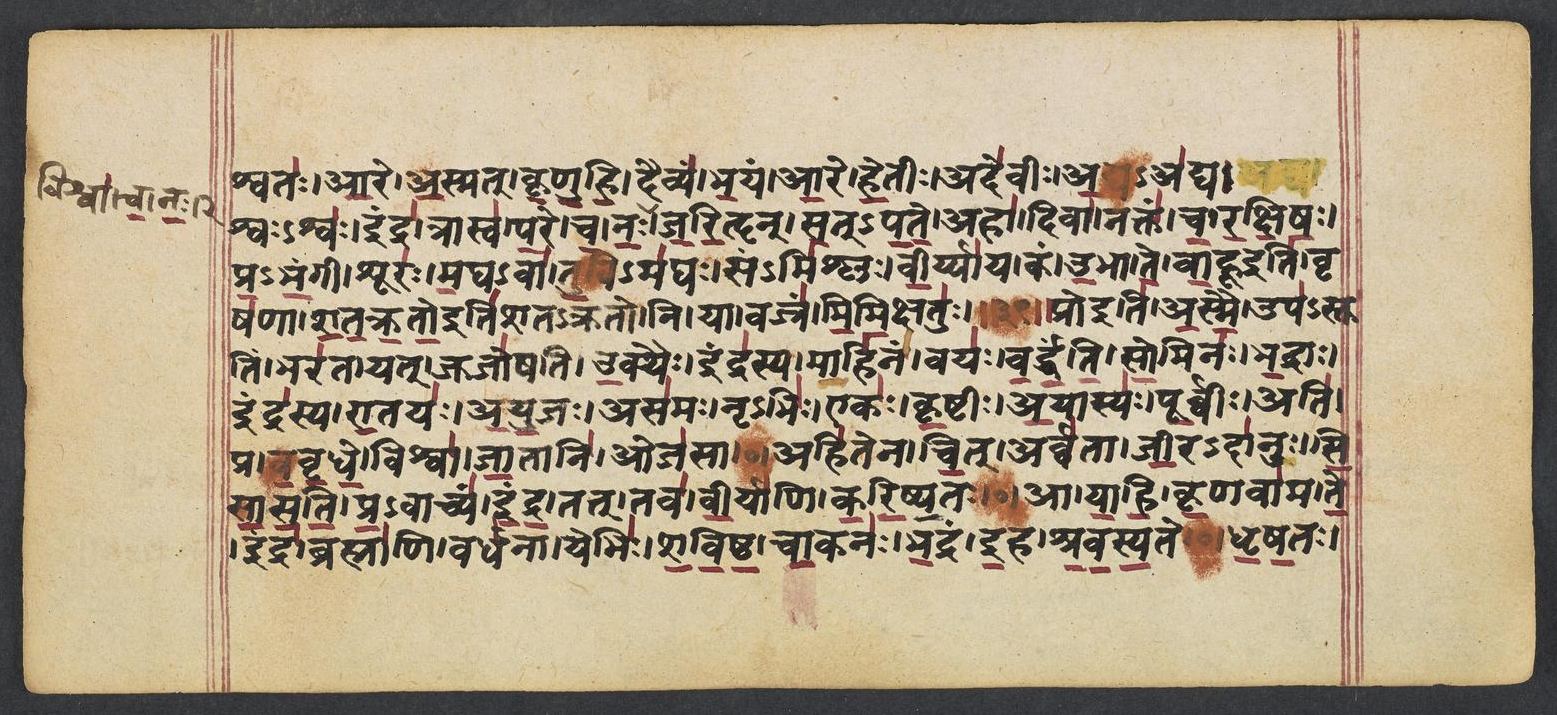
Where on the image
Penn Ms. Coll. 390 Item 41, fol. 633r (numbered 55r by the scribe) (OPenn image 633, lower leaf). Checked on the image: the Rigveda text on this page begins in RV 8.61.16 ‹-viśvataḥ āre asmat kṛṇuhi›. The next page with Rigveda text, fol. 633v (numbered 55v by the scribe), begins in RV 8.62.5 ‹cit dhṛṣat manaḥ kṛṇoṣi›. Verses 8.61.16-18 end on this page; 8.61.16 begins on fol. 632v (numbered 54v by the scribe).
16tvaṁ na̍ḥ pa̱ścād a̍dha̱rād u̍tta̱rāt pu̱ra indra̱ ni pā̍hi vi̱śvata̍ḥ | ā̱re a̱smat kṛ̍ṇuhi̱ daivya̍m bha̱yam ā̱re he̱tīr ade̍vīḥ ||
17a̱dyādyā̱ śvaḥ-śva̱ indra̱ trāsva̍ pa̱re ca̍ naḥ | viśvā̍ ca no jari̱tṝn sa̍tpate̱ ahā̱ divā̱ nakta̍ṁ ca rakṣiṣaḥ ||
18pra̱bha̱ṅgī śūro̍ ma̱ghavā̍ tu̱vīma̍gha̱ḥ sammi̍ślo vi̱ryā̍ya̱ kam | u̱bhā te̍ bā̱hū vṛṣa̍ṇā śatakrato̱ ni yā vajra̍m mimi̱kṣatu̍ḥ ||
Compare: Padapāṭha (word-by-word text written in the manuscript; Sansknet e-text via GRETIL)
16tvam | naḥ | paścāt | adharāt | uttarāt | puraḥ | indra | ni | pāhi | viśvataḥ | āre | asmat | kṛṇuhi | daivyam | bhayam | āre | hetīḥ | adevīḥ
17adya-adya | śvaḥ-śvaḥ | indras | trāsva | pare | ca | naḥ | viśvā | ca | naḥ | jaritṝn | sat-pate | ahā | divā | naktam | ca | rakṣiṣaḥ
18pra-bhaṅgī | śūraḥ | magha-vā | tuvi-maghaḥ | sam-miślaḥ | vīryāya | kam | ubhā | te | bāhū iti | vṛṣaṇā | śatakrato itiśata-krato | ni | yā | vajram | mimikṣatuḥ
16Defend us from behind, below, above, in front, on all sides, Indra, shield us well. Keep far away from us the terror sent from heaven: keep impious weapons far away.
17Protect us, Indra, each to-day, each morrow, and each following day. Our singers, through all days, shalt thou, Lord of the brave, keep safely both by day and night.
18A crushing Warrior, passing rich is Maghavan, endowed with all heroic might. Thine arms, O Ṣatakratu, are exceeding strong, arms which have grasped the thunderbolt.
Notes
- Sanskrit: Aufrecht's edition (1877) with the Vedic accents, as entered by van Nooten and Holland (GRETIL).
- English: Ralph T. H. Griffith, The Hymns of the Rigveda (1889-1892; 2nd ed. 1896-1897), from the VedaWeb digital text; OCR slips in that text were corrected against the printed 2nd edition (data/sources/rigveda/griffith_errata.json).
- Padapāṭha (edition text): Sansknet e-text via GRETIL (CC BY-NC-SA 4.0).
Cite
Sources
- Source: Penn Ms. Coll. 390 Item 41 (undated (catalogued with Penn's 18th-19th c. Vedic manuscripts)), OPenn, Public Domain Mark + Aufrecht's accented text (GRETIL) + Griffith's English (VedaWeb) (holding institution)
- Critical edition: Aufrecht (1877), accented e-text via GRETIL
← previous · → next · v cycle view · l back to library