Rigveda 8.62: To Indra
Introduction
Rigveda 8.62 is a hymn of 12 verses addressed to Indra. It stands in book (maṇḍala) 8, the book of the Kaṇva and Aṅgiras poets. The Rigveda is the oldest collection of Sanskrit hymns, composed in the second half of the second millennium BCE and handed down orally for many centuries before it was written down.
The manuscript shown is Penn Ms. Coll. 390 Item 41 (University of Pennsylvania), an undated paper manuscript of the padapāṭha (the word-by-word recitation text, in which every word is written separately and compounds are split) of the whole Ṛgveda in Devanāgarī, 884 leaves in fascicles, 7-9 lines to the page, accents in red; this hymn stands on fol. 633r-634r. Each section below gives the verses that end on one page; the page boundaries were read on the images (the opening words of every page), not counted out. Where the manuscript is a padapāṭha (the word-by-word recitation text), the section shows Aufrecht's continuous (saṃhitā) text first and, as the edition text, the padapāṭha of the same verses, which is the form written on the page.
How was this verified? (Provenance)
Where on the image
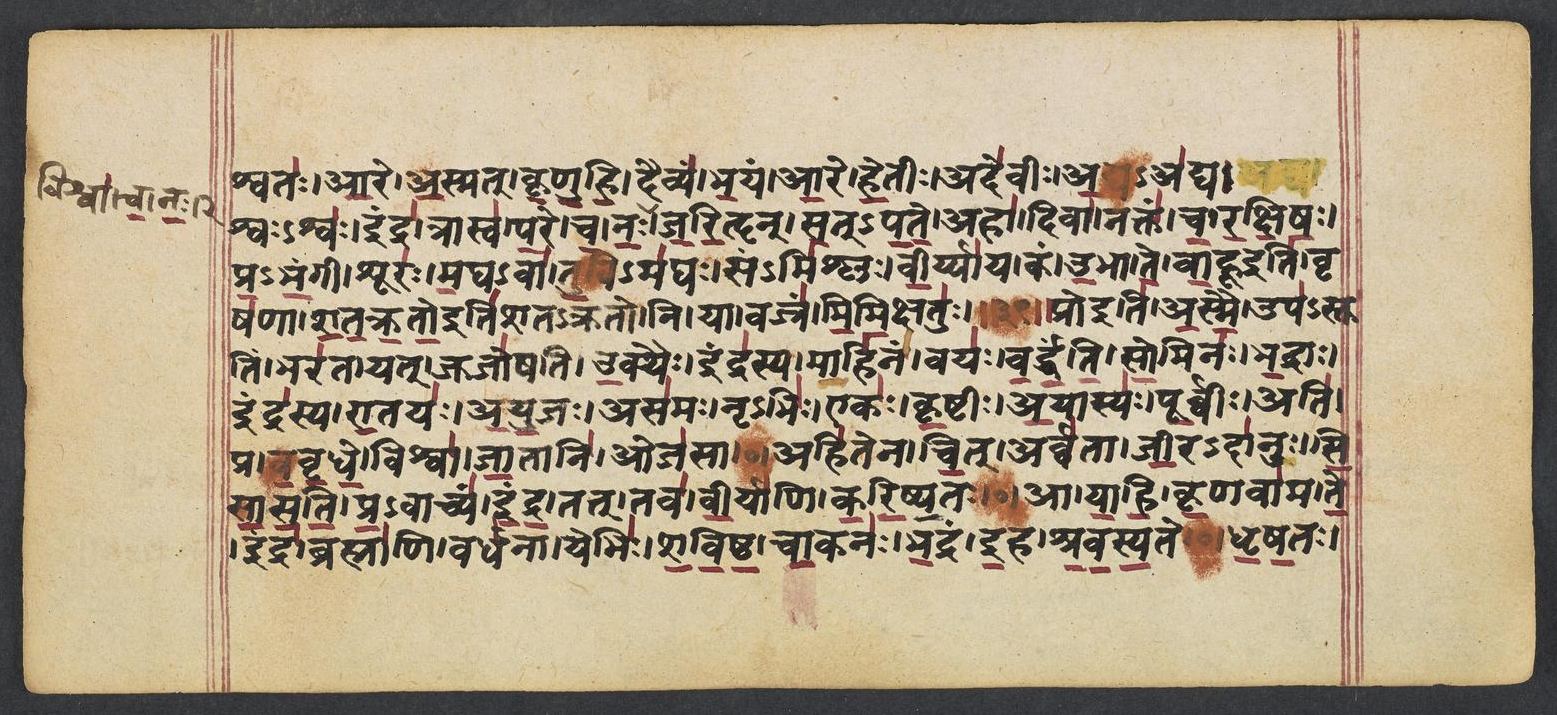
Penn Ms. Coll. 390 Item 41, fol. 633r (numbered 55r by the scribe) (OPenn image 633, lower leaf). Checked on the image: the Rigveda text on this page begins in RV 8.61.16 ‹-viśvataḥ āre asmat kṛṇuhi›. The next page with Rigveda text, fol. 633v (numbered 55v by the scribe), begins in RV 8.62.5 ‹cit dhṛṣat manaḥ kṛṇoṣi›. Verses 8.62.1-4 end on this page.
1pro a̍smā̱ upa̍stuti̱m bhara̍tā̱ yaj jujo̍ṣati | u̱kthair indra̍sya̱ māhi̍na̱ṁ vayo̍ vardhanti so̱mino̍ bha̱drā indra̍sya rā̱taya̍ḥ ||
2a̱yu̱jo asa̍mo̱ nṛbhi̱r eka̍ḥ kṛ̱ṣṭīr a̱yāsya̍ḥ | pū̱rvīr ati̱ pra vā̍vṛdhe̱ viśvā̍ jā̱tāny oja̍sā bha̱drā indra̍sya rā̱taya̍ḥ ||
3ahi̍tena ci̱d arva̍tā jī̱radā̍nuḥ siṣāsati | pra̱vācya̍m indra̱ tat tava̍ vī̱ryā̍ṇi kariṣya̱to bha̱drā indra̍sya rā̱taya̍ḥ ||
4ā yā̍hi kṛ̱ṇavā̍ma ta̱ indra̱ brahmā̍ṇi̱ vardha̍nā | yebhi̍ḥ śaviṣṭha cā̱kano̍ bha̱dram i̱ha śra̍vasya̱te bha̱drā indra̍sya rā̱taya̍ḥ ||
Compare: Padapāṭha (word-by-word text written in the manuscript; Sansknet e-text via GRETIL)
1pro iti | asmai | upa-stutim | bharata | yat | jujoṣati | ukthaiḥ | indrasya | māhinam | vayaḥ | vardhanti | sominaḥ | bhadrāḥ | indrasya | rātayaḥ
2ayujaḥ | asamaḥ | nṛ-bhiḥ | ekaḥ | kṛṣṭīḥ | ayāsyaḥ | pūrvīḥ | ati | pra | vavṛdhe | viśvā | jātāni | ojasā | bhadrāḥ | indrasya | rātayaḥ
3ahitena | cit | arvatā | jīra-dānuḥ | siṣāsati | pra-vācyam | indra | tat | tava | vīryāṇi | kariṣyataḥ | bhadrāḥ | indrasya | rātayaḥ
4ā | yāhi | kṛṇavāma | te | indra | brahmāṇi | vardhanā | yebhiḥ | śaviṣṭha | cākanaḥ | bhadram | iha | śravasyate | bhadrāḥ | indrasya | rātayaḥ
1OFFER ye up as praise to him that wherein Indra takes delight. The Soma-bringers magnify Indra's great energy with hymns. Good are the gifts that Indra gives.
2Sole among chiefs, companionless, impetuous, and peerless, he Hath waxen great o'er many folk, yea., over all things born, in might.
3Call hither with thy newest song Indra who lacks not hymns of praise, Him who observes and knows, inspirer of the sage, him who seems eager to enjoy.
4Come to us.hither: let us pay devotions that enhance thy might, For which, Most Potent! thou wouldst fain bless the man here who strives for fame.
Where on the image
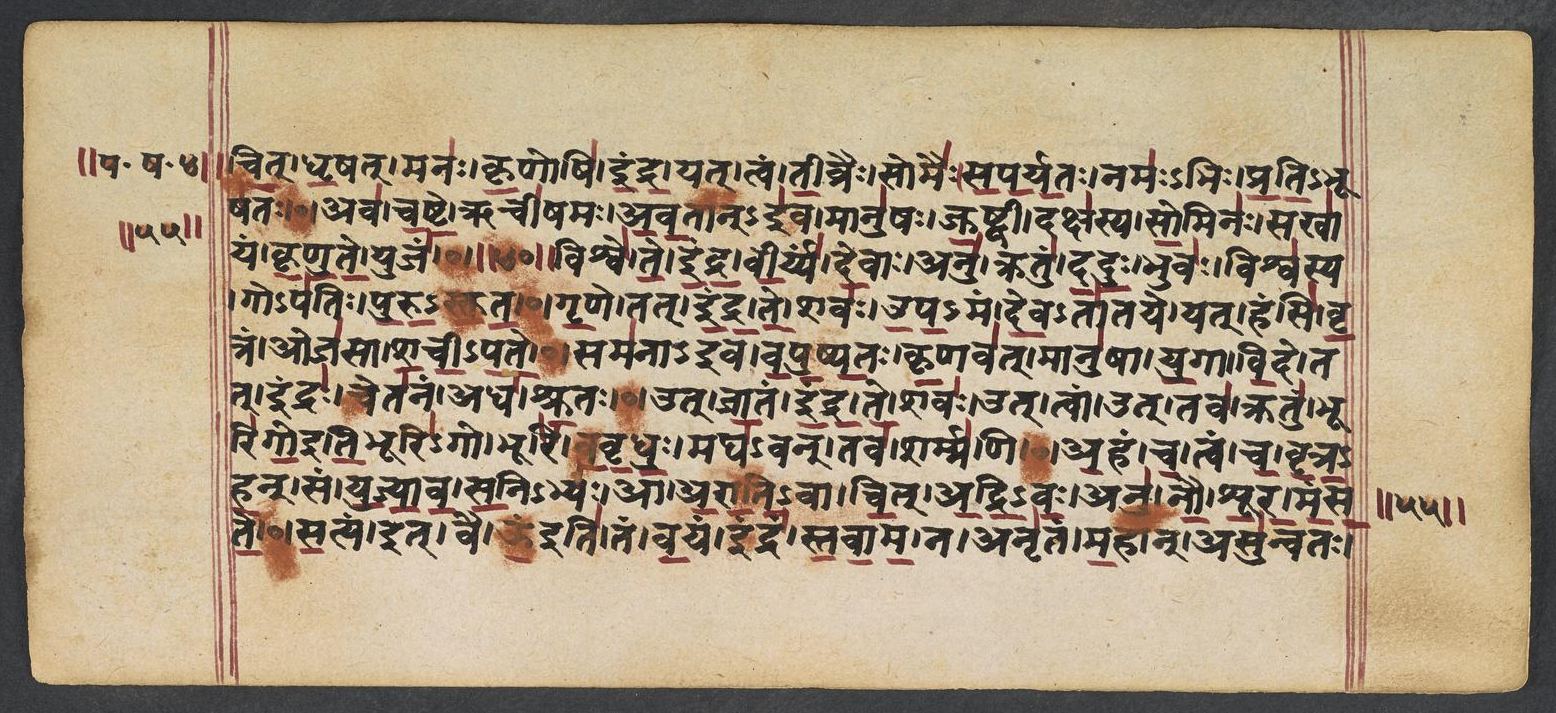
Penn Ms. Coll. 390 Item 41, fol. 633v (numbered 55v by the scribe) (OPenn image 634, upper leaf). Checked on the image: the Rigveda text on this page begins in RV 8.62.5 ‹cit dhṛṣat manaḥ kṛṇoṣi›. The next page with Rigveda text, fol. 634r (numbered 56r by the scribe), begins in RV 8.62.12 ‹bhūri jyotīṃṣi sunvataḥ bhadrāḥ›. Verses 8.62.5-11 end on this page; 8.62.5 begins on fol. 633r (numbered 55r by the scribe).
5dhṛ̱ṣa̱taś ci̍d dhṛ̱ṣan mana̍ḥ kṛ̱ṇoṣī̍ndra̱ yat tvam | tī̱vraiḥ somai̍ḥ saparya̱to namo̍bhiḥ prati̱bhūṣa̍to bha̱drā indra̍sya rā̱taya̍ḥ ||
6ava̍ caṣṭa̱ ṛcī̍ṣamo 'va̱tām̐ i̍va̱ mānu̍ṣaḥ | ju̱ṣṭvī dakṣa̍sya so̱mina̱ḥ sakhā̍yaṁ kṛṇute̱ yuja̍m bha̱drā indra̍sya rā̱taya̍ḥ ||
7viśve̍ ta indra vī̱rya̍ṁ de̱vā anu̱ kratu̍ṁ daduḥ | bhuvo̱ viśva̍sya̱ gopa̍tiḥ puruṣṭuta bha̱drā indra̍sya rā̱taya̍ḥ ||
8gṛ̱ṇe tad i̍ndra te̱ śava̍ upa̱maṁ de̱vatā̍taye | yad dhaṁsi̍ vṛ̱tram oja̍sā śacīpate bha̱drā indra̍sya rā̱taya̍ḥ ||
9sama̍neva vapuṣya̱taḥ kṛ̱ṇava̱n mānu̍ṣā yu̱gā | vi̱de tad indra̱ś ceta̍na̱m adha̍ śru̱to bha̱drā indra̍sya rā̱taya̍ḥ ||
10uj jā̱tam i̍ndra te̱ śava̱ ut tvām ut tava̱ kratu̍m | bhūri̍go̱ bhūri̍ vāvṛdhu̱r magha̍va̱n tava̱ śarma̍ṇi bha̱drā indra̍sya rā̱taya̍ḥ ||
11a̱haṁ ca̱ tvaṁ ca̍ vṛtraha̱n saṁ yu̍jyāva sa̱nibhya̱ ā | a̱rā̱tī̱vā ci̍d adri̱vo 'nu̍ nau śūra maṁsate bha̱drā indra̍sya rā̱taya̍ḥ ||
Compare: Padapāṭha (word-by-word text written in the manuscript; Sansknet e-text via GRETIL)
5dhṛṣataḥ | cit | dhṛṣat | manaḥ | kṛṇoṣi | indra | yat | tvam | tīvraiḥ | somaiḥ | saparyataḥ | namaḥ-bhiḥ | prati-bhūṣataḥ | bhadrāḥ | indrasya | rātayaḥ
6ava | caṣṭe | ṛcīṣamaḥ | avatān-iva | mānuṣaḥ | juṣṭavī | dakṣasya | sominaḥ | sakhāyam | kṛṇute | yujam | bhadrāḥ | indrasya | rātayaḥ
7viśve | te | indra | vīryam | devāḥ | anu | kratum | daduḥ | bhuvaḥ | viśvasya | go--patiḥ | puru-stuta | bhadrāḥ | indrasya | rātayaḥ
8gṛṇe | tat | indra | te | śavaḥ | upa-mam | deva-tātaye | yat | haṃsi | vṛtram | ojasā | śacī-pate | bhadrāḥ | indrasya | rātayaḥ
9samanāiva | vapuṣyataḥ | kṛṇavat | mānuṣā | yugā | vide | tat | indraḥ | cetanam | agha | śrutaḥ | bhadrāḥ | indrasya | rātayaḥ
10ut | jātam | indra | te | śavaḥ | ut | tvām | ut | tava | kratum | bhūrigo itibhūri-go | bhūri | vavṛdhuḥ | magha-van | tava | śarmaṇi | bhadrāḥ | indrasya | rātayaḥ
11aham | ca | tvam | ca | vṛtra-han | sam | yujyāva | sani-bhyaḥ | ā | arāti-vā | ci t | adri-vaḥ | anu | nau | śūra | maṃsate | bhadrāḥ | indrasya | rātayaḥ
5For thou, O Indra, makest yet more bold the spirit of the bold Who with strong Soma serveth thee, still ready with his reverent prayers.
6Worthy of song, he looketh down as a man looketh into wells. Pleased with the Soma-bringer's skill he maketh him his mate and friend.
7In strength and wisdom all the Gods, Indra, have yielded unto thee. Be thou the Guard of all, O thou whom many praise.
8Praised, Indra, is this might of thine, best for the service of the Gods, That thou with power dost slay Vr̥itra, O Lord of Strength.
9He makes the races of mankind like synods of the Beauteous One. Indra knows this his manifest deed, and is renowned.
10Thy might, O Indra, at its birth, thee also, and thy mental power, In thy care, Maghavan rich in kine! they have increased exceedingly.
11O Vritra-slayer, thou and I will both combine for winning spoil. Even malignity will consent, O Bolt-armed Hero, unto us.
Where on the image
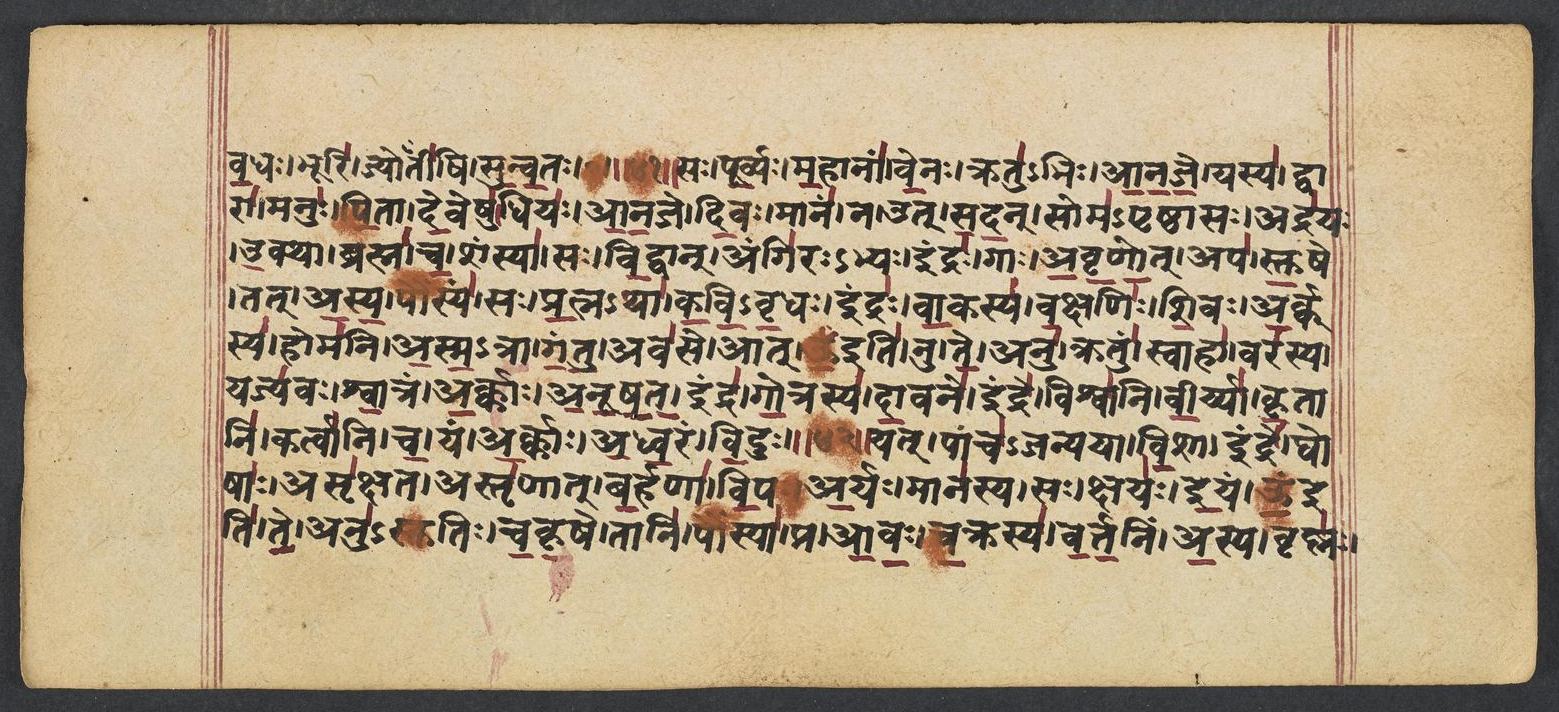
Penn Ms. Coll. 390 Item 41, fol. 634r (numbered 56r by the scribe) (OPenn image 634, lower leaf). Checked on the image: the Rigveda text on this page begins in RV 8.62.12 ‹bhūri jyotīṃṣi sunvataḥ bhadrāḥ›. The next page with Rigveda text, fol. 634v (numbered 56v by the scribe), begins in RV 8.63.9 ‹vi-odane uru kramiṣṭa jīvase›. Verse 8.62.12 ends on this page; 8.62.12 begins on fol. 633v (numbered 55v by the scribe).
12sa̱tyam id vā u̱ taṁ va̱yam indra̍ṁ stavāma̱ nānṛ̍tam | ma̱hām̐ asu̍nvato va̱dho bhūri̱ jyotī̍ṁṣi sunva̱to bha̱drā indra̍sya rā̱taya̍ḥ ||
Compare: Padapāṭha (word-by-word text written in the manuscript; Sansknet e-text via GRETIL)
12satyam | ir | vai | oṃ iti | tam | vayam | indram | stavāma | na | anṛtam | mahān | asunvataḥ | vadhaḥ | bhūri | jyotīṃṣi | sunvataḥ | bhadrāḥ | indrasya | rātayaḥ
12Let us extol this Indra as truthful and never as untrue. Dire is his death who pours no gifts: great light hath he who offers them. Good are the gifts that Indra gives.
Notes
- Sanskrit: Aufrecht's edition (1877) with the Vedic accents, as entered by van Nooten and Holland (GRETIL).
- English: Ralph T. H. Griffith, The Hymns of the Rigveda (1889-1892; 2nd ed. 1896-1897), from the VedaWeb digital text; OCR slips in that text were corrected against the printed 2nd edition (data/sources/rigveda/griffith_errata.json).
- Padapāṭha (edition text): Sansknet e-text via GRETIL (CC BY-NC-SA 4.0).
Cite
Sources
- Source: Penn Ms. Coll. 390 Item 41 (undated (catalogued with Penn's 18th-19th c. Vedic manuscripts)), OPenn, Public Domain Mark + Aufrecht's accented text (GRETIL) + Griffith's English (VedaWeb) (holding institution)
- Critical edition: Aufrecht (1877), accented e-text via GRETIL
← previous · → next · v cycle view · l back to library