Rigveda 8.63: To Indra
Introduction
Rigveda 8.63 is a hymn of 12 verses addressed to Indra. It stands in book (maṇḍala) 8, the book of the Kaṇva and Aṅgiras poets. The Rigveda is the oldest collection of Sanskrit hymns, composed in the second half of the second millennium BCE and handed down orally for many centuries before it was written down.
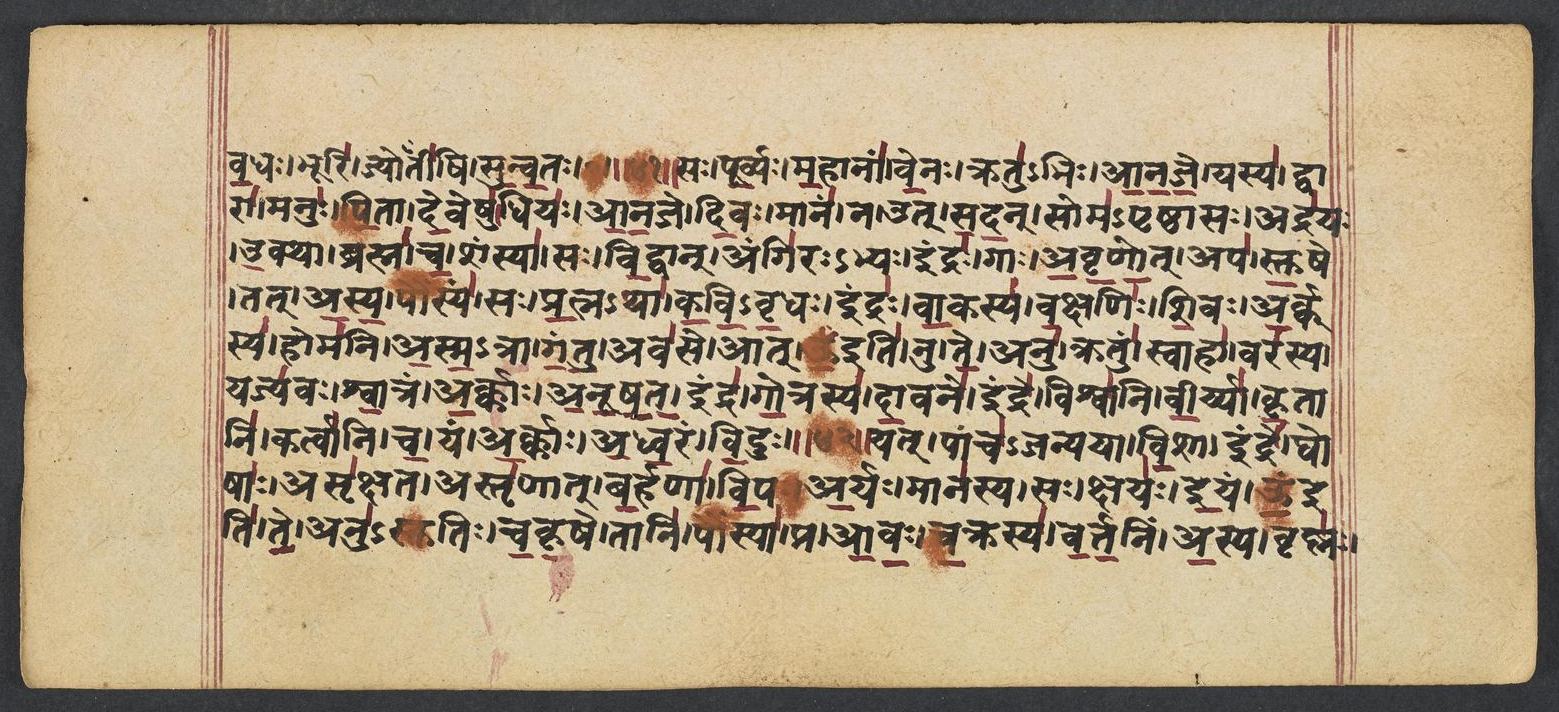
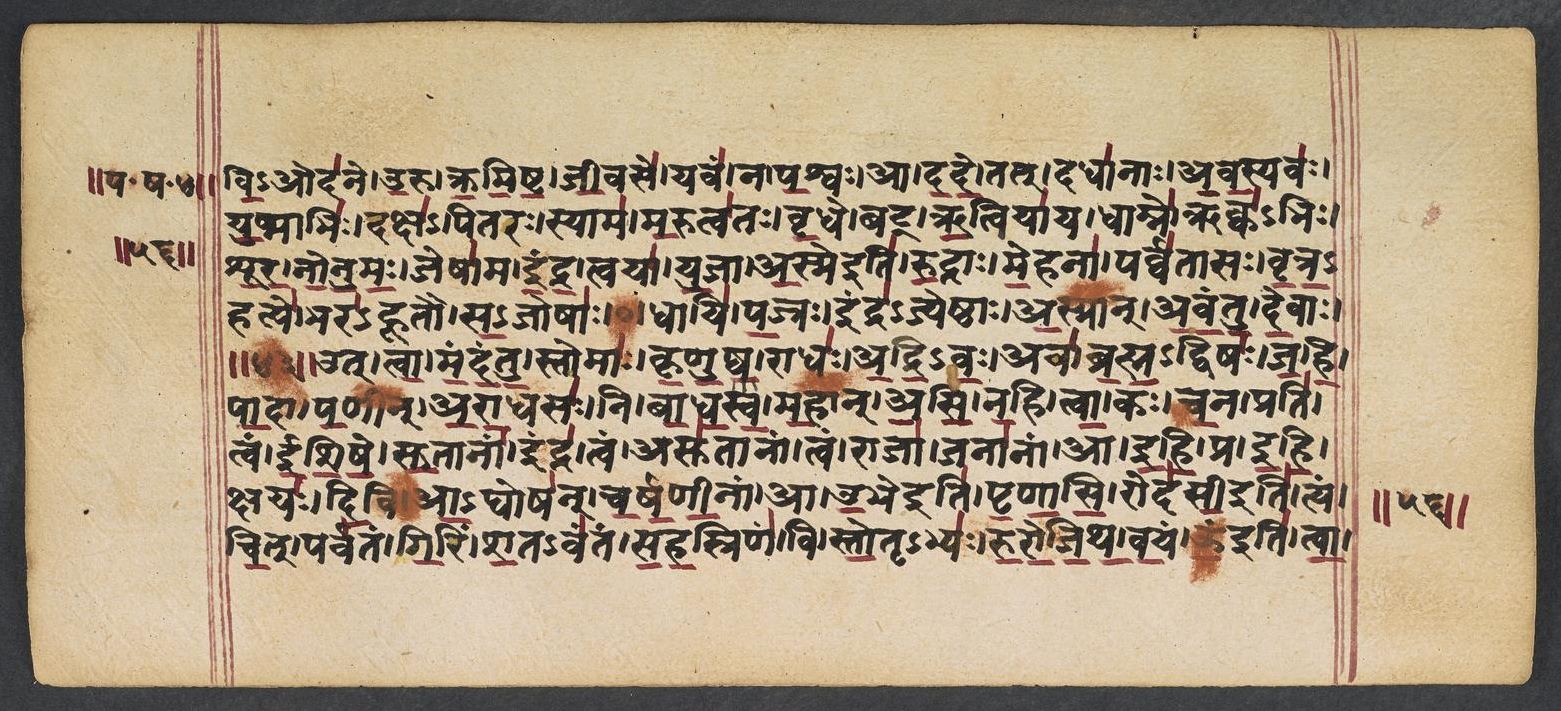
The manuscript shown is Penn Ms. Coll. 390 Item 41 (University of Pennsylvania), an undated paper manuscript of the padapāṭha (the word-by-word recitation text, in which every word is written separately and compounds are split) of the whole Ṛgveda in Devanāgarī, 884 leaves in fascicles, 7-9 lines to the page, accents in red; this hymn stands on fol. 634r-634v. Each section below gives the verses that end on one page; the page boundaries were read on the images (the opening words of every page), not counted out. Where the manuscript is a padapāṭha (the word-by-word recitation text), the section shows Aufrecht's continuous (saṃhitā) text first and, as the edition text, the padapāṭha of the same verses, which is the form written on the page.
How was this verified? (Provenance)
Where on the image
Penn Ms. Coll. 390 Item 41, fol. 634r (numbered 56r by the scribe) (OPenn image 634, lower leaf). Checked on the image: the Rigveda text on this page begins in RV 8.62.12 ‹bhūri jyotīṃṣi sunvataḥ bhadrāḥ›. The next page with Rigveda text, fol. 634v (numbered 56v by the scribe), begins in RV 8.63.9 ‹vi-odane uru kramiṣṭa jīvase›. Verses 8.63.1-8 end on this page.
1sa pū̱rvyo ma̱hānā̍ṁ ve̱naḥ kratu̍bhir ānaje | yasya̱ dvārā̱ manu̍ṣ pi̱tā de̱veṣu̱ dhiya̍ āna̱je ||
2di̱vo māna̱ṁ not sa̍da̱n soma̍pṛṣṭhāso̱ adra̍yaḥ | u̱kthā brahma̍ ca̱ śaṁsyā̍ ||
3sa vi̱dvām̐ aṅgi̍robhya̱ indro̱ gā a̍vṛṇo̱d apa̍ | stu̱ṣe tad a̍sya̱ pauṁsya̍m ||
4sa pra̱tnathā̍ kavivṛ̱dha indro̍ vā̱kasya̍ va̱kṣaṇi̍ḥ | śi̱vo a̱rkasya̱ homa̍ny asma̱trā ga̱ntv ava̍se ||
5ād ū̱ nu te̱ anu̱ kratu̱ṁ svāhā̱ vara̍sya̱ yajya̍vaḥ | śvā̱tram a̱rkā a̍nūṣa̱tendra̍ go̱trasya̍ dā̱vane̍ ||
6indre̱ viśvā̍ni vī̱ryā̍ kṛ̱tāni̱ kartvā̍ni ca | yam a̱rkā a̍dhva̱raṁ vi̱duḥ ||
7yat pāñca̍janyayā vi̱śendre̱ ghoṣā̱ asṛ̍kṣata | astṛ̍ṇād ba̱rhaṇā̍ vi̱po̱3̱̍ 'ryo māna̍sya̱ sa kṣaya̍ḥ ||
8i̱yam u̍ te̱ anu̍ṣṭutiś cakṛ̱ṣe tāni̱ pauṁsyā̍ | prāva̍ś ca̱krasya̍ varta̱nim ||
Compare: Padapāṭha (word-by-word text written in the manuscript; Sansknet e-text via GRETIL)
1saḥ | pūrvyaḥ | mahānām | venaḥ | kratu-bhiḥ | ānaje | yasya | dvārā | manuḥ | pitā | deveṣu | dhiyaḥ | ānaje
2divaḥ | mānam | na | ut | sadan | soma-pṛṣṭhāsaḥ | adrayaḥ | ukthā | brahma | ca | śaṃsyā
3saḥ | vidvāṃn | aṅgiraḥ-bhyaḥ | indraḥ | gāḥ | avṛṇot | apa | stuṣe | tat | asya | paiṃsyam
4saḥ | pratna-thā | kavi-vṛdhaḥ | indraḥ | vākasya | vakṣaṇiḥ | śivaḥ | arkasya | homani | asma-trā | gantu | avase
5āt | oṃ iti | nu | te | anu | kratum | svāhā | varasya | yajyavaḥ | śvātram | arkāḥ | anūṣata | indra | gotrasya | dāvane
6indre | viśvāni | vīryā | kṛtāni | kartvāni | ca | yam | arkāḥ | adhvaram | viduḥ
7yat | pāñca-janyayā | viśā | indre | ghoṣāḥ | asṛkṣata | astṛṇāt | barhaṇā | vipaḥ | aryaḥ | mānasya | saḥ | kṣayaḥ
8iyam | oṃ iti | te | anu-stutiḥ | cakṛṣe | tāni | paiṃsyā | pra | āvaḥ | cakrasya | vartanim
1WITH powers of Mighty Ones hath he, Ancient, Beloved, been equipped, Through whom the Father Manu made prayers efficacious with the Gods.
2Him, Maker of the sky, let stones wet with the Soma ne'er forsake, Nor hymns and prayer that must be said.
3Indra who knew full well disclosed the kine to the Angirases. This his great deed must be extolled.
4Indra, promoter of the song, the sage's Strengthener as of old, Shall come to bless and succour us at presentation of this laud.
5Now after their desire's intent the pious singers with the cry Of Hail! have sung loud hymns to thee, Indra, to gain a stall of kine.
6With Indra rest all deeds of might, deeds done and yet to be performed, Whom singers know devoid of guile.
7When the Five Tribes with all their men to Indra have sent out their voice, And when the priest hath strewn much grass, this is the Friend's own dwellingpiace.
8This praise is verily thine own: thou hast performed these manly deeds, And sped the wheel upon its way.
Where on the image
Penn Ms. Coll. 390 Item 41, fol. 634v (numbered 56v by the scribe) (OPenn image 635, upper leaf). Checked on the image: the Rigveda text on this page begins in RV 8.63.9 ‹vi-odane uru kramiṣṭa jīvase›. The next page with Rigveda text, fol. 635r (numbered 57r by the scribe), begins in RV 8.64.6 ‹divā sute vayam naktam›. Verses 8.63.9-12 end on this page; 8.63.9 begins on fol. 634r (numbered 56r by the scribe).
9a̱sya vṛṣṇo̱ vyoda̍na u̱ru kra̍miṣṭa jī̱vase̍ | yava̱ṁ na pa̱śva ā da̍de ||
10tad dadhā̍nā ava̱syavo̍ yu̱ṣmābhi̱r dakṣa̍pitaraḥ | syāma̍ ma̱rutva̍to vṛ̱dhe ||
11baḻ ṛ̱tviyā̍ya̱ dhāmna̱ ṛkva̍bhiḥ śūra nonumaḥ | jeṣā̍mendra̱ tvayā̍ yu̱jā ||
12a̱sme ru̱drā me̱hanā̱ parva̍tāso vṛtra̱hatye̱ bhara̍hūtau sa̱joṣā̍ḥ | yaḥ śaṁsa̍te stuva̱te dhāyi̍ pa̱jra indra̍jyeṣṭhā a̱smām̐ a̍vantu de̱vāḥ ||
Compare: Padapāṭha (word-by-word text written in the manuscript; Sansknet e-text via GRETIL)
9asya | vṛṣṇaḥ | vi-odane | uru | kramiṣṭa | jīvase | yavam | na | paśvaḥ | ā | dade
10tat | dadhānāḥ | avasyavaḥ | yuṣmābhiḥ | dakṣa-pitaraḥ | syāma | marutvataḥ | vṛdhe
11baṭ | ṛtviyāya | dhāmnai | ṛkva-bhiḥ | śūra | nonumaḥ | jeṣāma | indra | tvayā | yujā
12asme iti | rudrāḥ | mehanā | parvatāsaḥ | vṛtra-hatye | bhara-hūtau | sa-joṣāḥ | yaḥ | śaṃsate | stuvate | dhāyi | pajraḥ | indra-jyeṣṭāḥ | asmān | avantu | devāḥ
9At the o'erflowing of this Steer, boldly he strode for life, and took Soma as cattle take their corn.
10Receiving this and craving help, we, who with you are Daksha's sons, Would fain exalt the Maruts' Lord.
11Yea, Hero, with the singers we sing to the duly-coming Band Allied with thee may we prevail.
12With us are raining Rudras, clouds accordant in call to battle at the death of Vritra, The strong assigned to him who sings and praises. May Gods with Indra at their head protect us.
Notes
- Sanskrit: Aufrecht's edition (1877) with the Vedic accents, as entered by van Nooten and Holland (GRETIL).
- English: Ralph T. H. Griffith, The Hymns of the Rigveda (1889-1892; 2nd ed. 1896-1897), from the VedaWeb digital text; OCR slips in that text were corrected against the printed 2nd edition (data/sources/rigveda/griffith_errata.json).
- Padapāṭha (edition text): Sansknet e-text via GRETIL (CC BY-NC-SA 4.0).
Cite
Sources
- Source: Penn Ms. Coll. 390 Item 41 (undated (catalogued with Penn's 18th-19th c. Vedic manuscripts)), OPenn, Public Domain Mark + Aufrecht's accented text (GRETIL) + Griffith's English (VedaWeb) (holding institution)
- Critical edition: Aufrecht (1877), accented e-text via GRETIL
← previous · → next · v cycle view · l back to library