Rigveda 8.64: To Indra
Introduction
Rigveda 8.64 is a hymn of 12 verses addressed to Indra. It stands in book (maṇḍala) 8, the book of the Kaṇva and Aṅgiras poets. The Rigveda is the oldest collection of Sanskrit hymns, composed in the second half of the second millennium BCE and handed down orally for many centuries before it was written down.
The manuscript shown is Penn Ms. Coll. 390 Item 41 (University of Pennsylvania), an undated paper manuscript of the padapāṭha (the word-by-word recitation text, in which every word is written separately and compounds are split) of the whole Ṛgveda in Devanāgarī, 884 leaves in fascicles, 7-9 lines to the page, accents in red; this hymn stands on fol. 634v-635r. Each section below gives the verses that end on one page; the page boundaries were read on the images (the opening words of every page), not counted out. Where the manuscript is a padapāṭha (the word-by-word recitation text), the section shows Aufrecht's continuous (saṃhitā) text first and, as the edition text, the padapāṭha of the same verses, which is the form written on the page.
How was this verified? (Provenance)
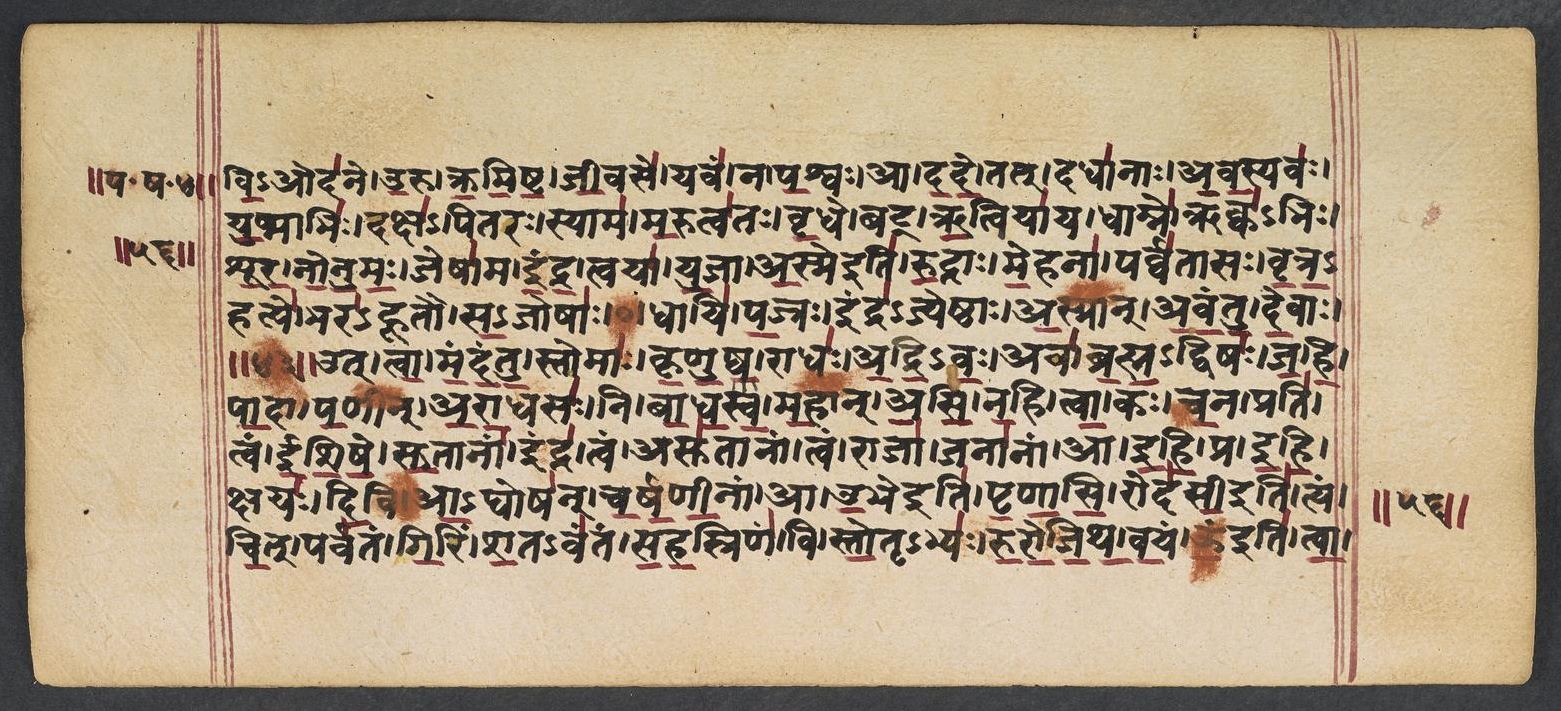
Where on the image
Penn Ms. Coll. 390 Item 41, fol. 634v (numbered 56v by the scribe) (OPenn image 635, upper leaf). Checked on the image: the Rigveda text on this page begins in RV 8.63.9 ‹vi-odane uru kramiṣṭa jīvase›. The next page with Rigveda text, fol. 635r (numbered 57r by the scribe), begins in RV 8.64.6 ‹divā sute vayam naktam›. Verses 8.64.1-5 end on this page.
1ut tvā̍ mandantu̱ stomā̍ḥ kṛṇu̱ṣva rādho̍ adrivaḥ | ava̍ brahma̱dviṣo̍ jahi ||
2pa̱dā pa̱ṇīm̐r a̍rā̱dhaso̱ ni bā̍dhasva ma̱hām̐ a̍si | na̱hi tvā̱ kaś ca̱na prati̍ ||
3tvam ī̍śiṣe su̱tānā̱m indra̱ tvam asu̍tānām | tvaṁ rājā̱ janā̍nām ||
4ehi̱ prehi̱ kṣayo̍ di̱vy ā̱3̱̍ghoṣa̍ñ carṣaṇī̱nām | obhe pṛ̍ṇāsi̱ roda̍sī ||
5tyaṁ ci̱t parva̍taṁ gi̱riṁ śa̱tava̍ntaṁ saha̱sriṇa̍m | vi sto̱tṛbhyo̍ rurojitha ||
Compare: Padapāṭha (word-by-word text written in the manuscript; Sansknet e-text via GRETIL)
1ut | tvā | mandantu | stomāḥ | kṛṇuṣva | rādhaḥ | adri-vaḥ | ava | brahma-dviṣaḥ | jahi
2padā | paṇīn | arādhasaḥ | ni | bādhasva | mahān | asi | nahi | tvā | kaḥ | cana | prati
3tvam | īśiṣe | sutānām | indra | tvam | asutānām | tvam | rājā | janānām
4ā | ihi | pra | ihi | kṣayaḥ | divi | āghoṣan | carṣaṇīṇām | ā | ubhe iti | pṛṇāsi | rodasī iti
5tyam | cit | parvatam | girim | śata-vantam | sahasriṇam | vi | stotṛ-bhyaḥ | rurojitha
1MAY our hymns give thee great delight. Display thy bounty, Thunderer. Drive off the enemies of prayer.
2Crush with thy foot the niggard churls who bring no gifts. Mighty art thou There is not one to equal thee.
3Thou art the Lord of Soma pressed, Soma impressed is also thine. Thou art the Sovran of the folk.
4Come, go thou forth, dwelling in heaven and listening to the prayers of men: Thou fillest both the heavens and earth.
5Even that hill with rocky heights, with hundreds, thousands, held within. Thou for thy worshippers brakest through.
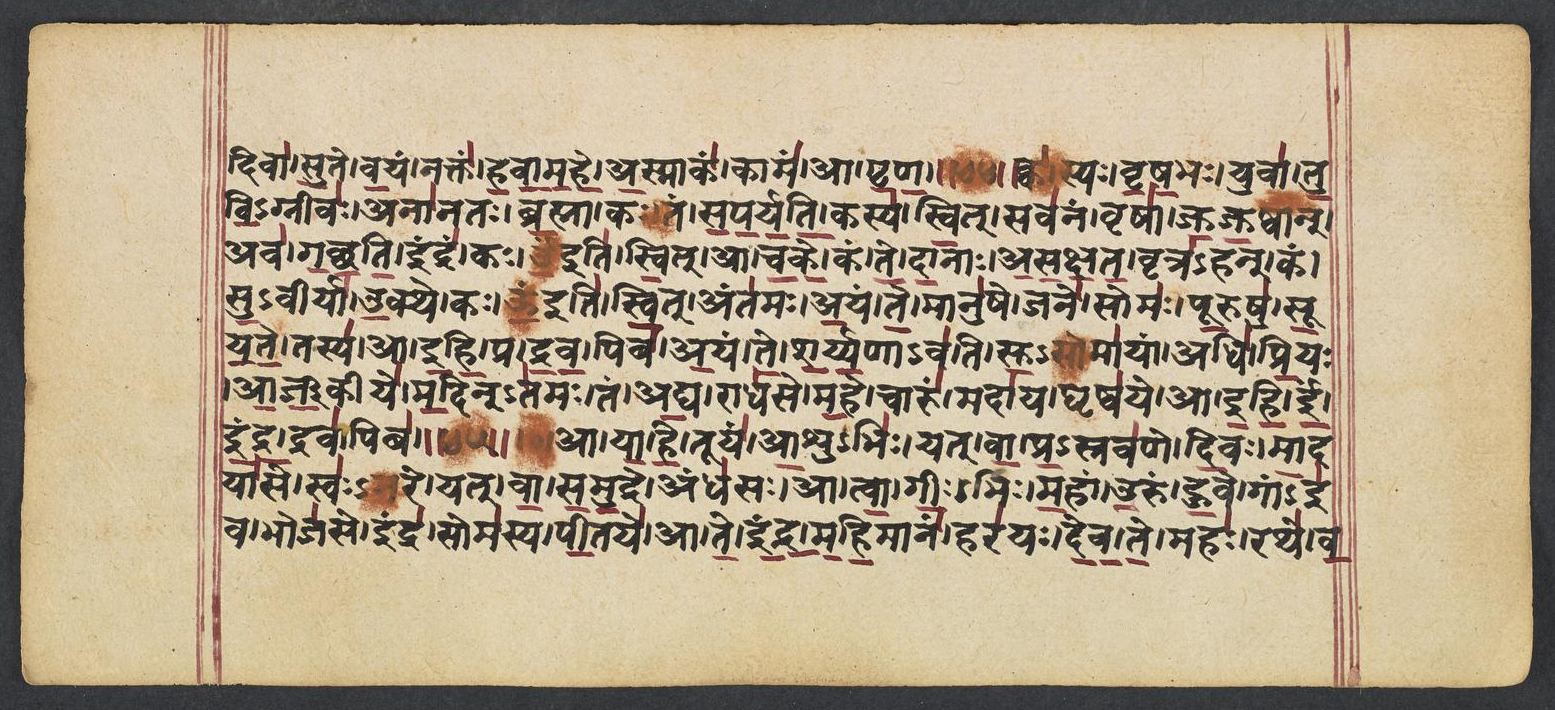
Where on the image
Penn Ms. Coll. 390 Item 41, fol. 635r (numbered 57r by the scribe) (OPenn image 635, lower leaf). Checked on the image: the Rigveda text on this page begins in RV 8.64.6 ‹divā sute vayam naktam›. The next page with Rigveda text, fol. 635v (numbered 57v by the scribe), begins in RV 8.65.4 ‹-vahantu bibhrataḥ›. Verses 8.64.6-12 end on this page; 8.64.6 begins on fol. 634v (numbered 56v by the scribe).
6va̱yam u̍ tvā̱ divā̍ su̱te va̱yaṁ nakta̍ṁ havāmahe | a̱smāka̱ṁ kāma̱m ā pṛ̍ṇa ||
7kva1̱̍ sya vṛ̍ṣa̱bho yuvā̍ tuvi̱grīvo̱ anā̍nataḥ | bra̱hmā kas taṁ sa̍paryati ||
8kasya̍ svi̱t sava̍na̱ṁ vṛṣā̍ juju̱ṣvām̐ ava̍ gacchati | indra̱ṁ ka u̍ svi̱d ā ca̍ke ||
9kaṁ te̍ dā̱nā a̍sakṣata̱ vṛtra̍ha̱n kaṁ su̱vīryā̍ | u̱kthe ka u̍ svi̱d anta̍maḥ ||
10a̱yaṁ te̱ mānu̍ṣe̱ jane̱ soma̍ḥ pū̱ruṣu̍ sūyate | tasyehi̱ pra dra̍vā̱ piba̍ ||
11a̱yaṁ te̍ śarya̱ṇāva̍ti su̱ṣomā̍yā̱m adhi̍ pri̱yaḥ | ā̱rjī̱kīye̍ ma̱dinta̍maḥ ||
12tam a̱dya rādha̍se ma̱he cāru̱m madā̍ya̱ ghṛṣva̍ye | ehī̍m indra̱ dravā̱ piba̍ ||
Compare: Padapāṭha (word-by-word text written in the manuscript; Sansknet e-text via GRETIL)
6vayam | oṃ iti | tvā | divā | sute | vayam | naktam | havāmahe | asmākam | kāmam | ā | pṛṇa
7kva | syaḥ | vṛṣabhaḥ | yuvā | tuvi-grīvaḥ | anānataḥ | brahmā | kaḥ | tam | saparyati
8kasya | svit | savanam | vṛṣā | jujuṣvān | ava | gacchati | indram | kaḥ | oṃ iti | svit | ā | cake
9kam | te | dānāḥ | asakṣata | vṛtra-han | kam | su-vīryā | ukthe | kaḥ | oṃ iti | svit | antamaḥ
10ayam | te | mānuṣe | jane | somaḥ | pūruṣu | sūyate | tasya | ā | ihi | pra | drava | p iba
11ayam | te | śaryaṇāvati | su-somāyām | adhi | priyaḥ | ārjīkīye | madin-tamaḥ
12tam | adya | rādhase | mahe | cārum | madāya | ghṛṣvaye | ā | ihi | īm | indra | drava | piba
6We call on thee both night and day to taste the flowing Soma juice: Do thou fulfil our heart's desire.
7Where is that ever-youthful Steer, strong-necked and never yet bent down? What Brahman ministers to him?
8To whose libation doth the Steer, betake him with delight therein? Who takes delight in Indra now?
9Whom, Vritra-slayer, have thy gifts and hero powers accompanied? Who is thy dearest in the land?
10For thee among mankind, among the Pûrus is this Soma shed. Hasten thou hither: drink thereof.
11This, growing by Sushomâ and by Ṣaryaṇâvân, dear to thee, In Ârjîkîya, cheers thee best.
12Hasten thou hitherward, and drink this for munificence to-day Delightful for thine eager draught.
Notes
- Sanskrit: Aufrecht's edition (1877) with the Vedic accents, as entered by van Nooten and Holland (GRETIL).
- English: Ralph T. H. Griffith, The Hymns of the Rigveda (1889-1892; 2nd ed. 1896-1897), from the VedaWeb digital text; OCR slips in that text were corrected against the printed 2nd edition (data/sources/rigveda/griffith_errata.json).
- Padapāṭha (edition text): Sansknet e-text via GRETIL (CC BY-NC-SA 4.0).
Cite
Sources
- Source: Penn Ms. Coll. 390 Item 41 (undated (catalogued with Penn's 18th-19th c. Vedic manuscripts)), OPenn, Public Domain Mark + Aufrecht's accented text (GRETIL) + Griffith's English (VedaWeb) (holding institution)
- Critical edition: Aufrecht (1877), accented e-text via GRETIL
← previous · → next · v cycle view · l back to library