Rigveda 8.65: To Indra
Introduction
Rigveda 8.65 is a hymn of 12 verses addressed to Indra. It stands in book (maṇḍala) 8, the book of the Kaṇva and Aṅgiras poets. The Rigveda is the oldest collection of Sanskrit hymns, composed in the second half of the second millennium BCE and handed down orally for many centuries before it was written down.
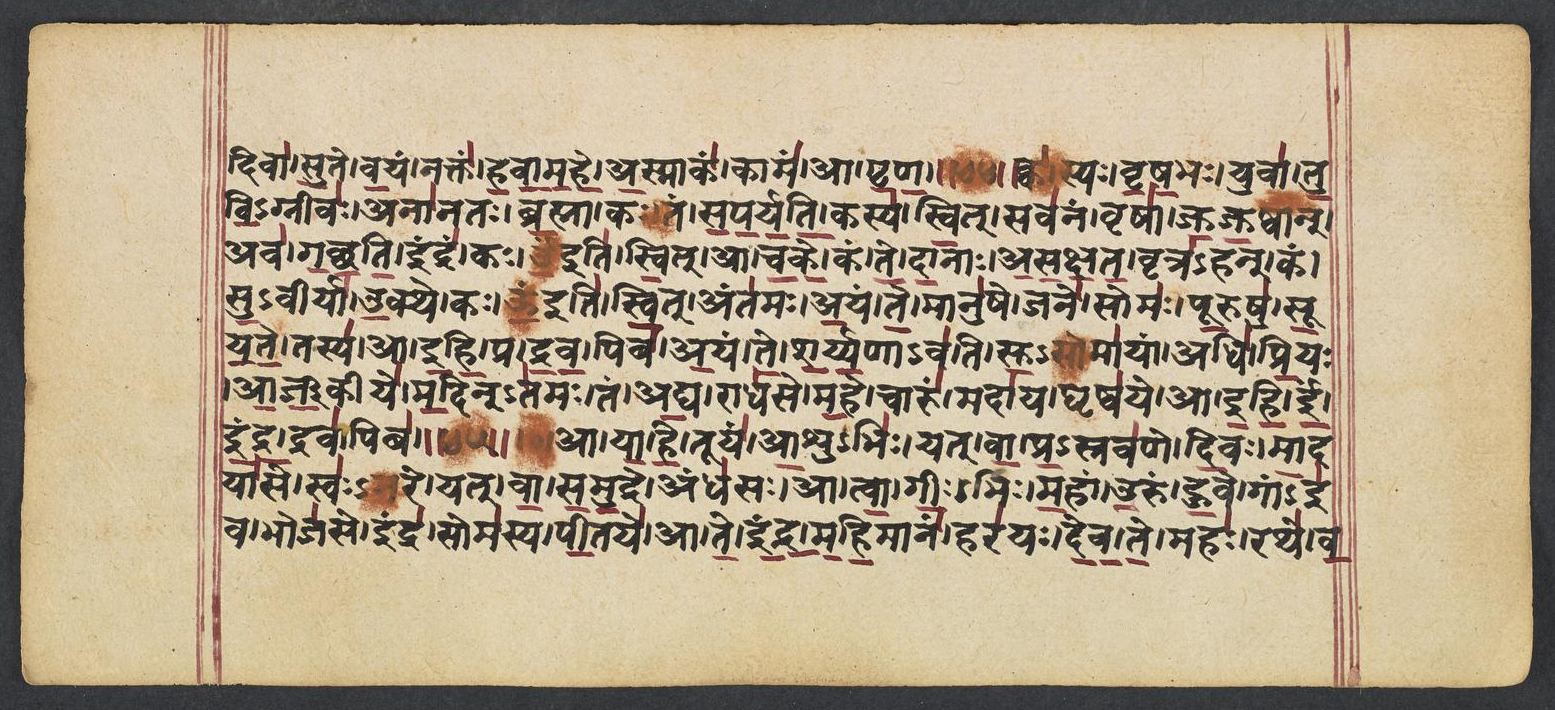
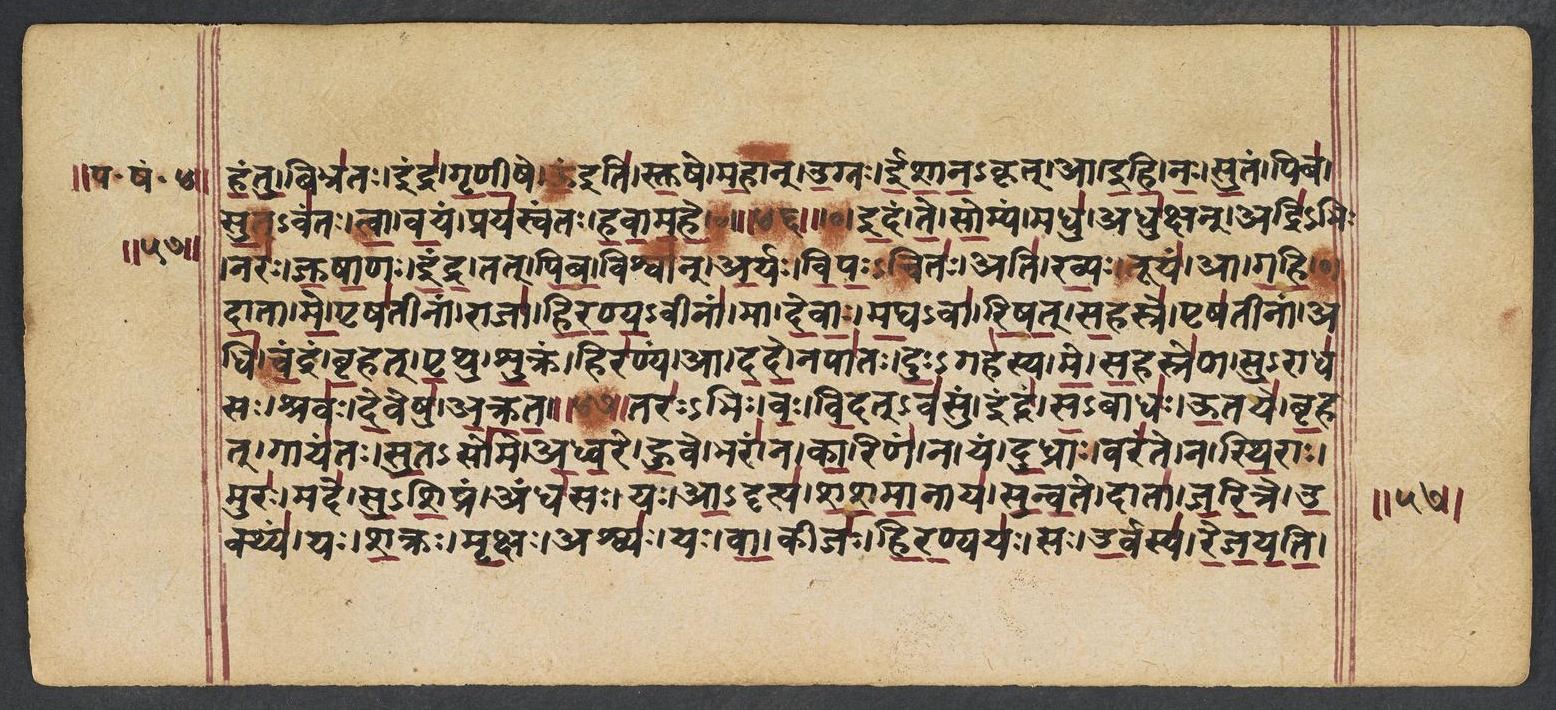
The manuscript shown is Penn Ms. Coll. 390 Item 41 (University of Pennsylvania), an undated paper manuscript of the padapāṭha (the word-by-word recitation text, in which every word is written separately and compounds are split) of the whole Ṛgveda in Devanāgarī, 884 leaves in fascicles, 7-9 lines to the page, accents in red; this hymn stands on fol. 635r-635v. Each section below gives the verses that end on one page; the page boundaries were read on the images (the opening words of every page), not counted out. Where the manuscript is a padapāṭha (the word-by-word recitation text), the section shows Aufrecht's continuous (saṃhitā) text first and, as the edition text, the padapāṭha of the same verses, which is the form written on the page.
How was this verified? (Provenance)
Where on the image
Penn Ms. Coll. 390 Item 41, fol. 635r (numbered 57r by the scribe) (OPenn image 635, lower leaf). Checked on the image: the Rigveda text on this page begins in RV 8.64.6 ‹divā sute vayam naktam›. The next page with Rigveda text, fol. 635v (numbered 57v by the scribe), begins in RV 8.65.4 ‹-vahantu bibhrataḥ›. Verses 8.65.1-3 end on this page.
1yad i̍ndra̱ prāg apā̱g uda̱ṅ nya̍g vā hū̱yase̱ nṛbhi̍ḥ | ā yā̍hi̱ tūya̍m ā̱śubhi̍ḥ ||
2yad vā̍ pra̱srava̍ṇe di̱vo mā̱dayā̍se̱ sva̍rṇare | yad vā̍ samu̱dre andha̍saḥ ||
3ā tvā̍ gī̱rbhir ma̱hām u̱ruṁ hu̱ve gām i̍va̱ bhoja̍se | indra̱ soma̍sya pī̱taye̍ ||
Compare: Padapāṭha (word-by-word text written in the manuscript; Sansknet e-text via GRETIL)
1yat | indra | prāk | apāk | udak | nyak | vā | hūyase | nṛ-bhiḥ | ā | yāhi | tūyam | āśu-bhiḥ
2yat | vā | pra-sravaṇe | divaḥ | mādayāse | svaḥ-nare | yat | vā | samudre | andhasaḥ
3ā | tvā | gīḥ-bhiḥ | mahām | urum | huve | gām-iva | bhojase | indra | somasya | pītaye
1THOUGH, Indra, thou art called by men from east and west, from north and south, Come hither quickly with fleet steeds;
2If in the effluence of heaven, rich in its light, thou takest joy, Or in the sea in Soma juice.
3With songs I call thee, Great and Wide, even as a cow to profit us, Indra, to drink the Soma-draught.
Where on the image
Penn Ms. Coll. 390 Item 41, fol. 635v (numbered 57v by the scribe) (OPenn image 636, upper leaf). Checked on the image: the Rigveda text on this page begins in RV 8.65.4 ‹-vahantu bibhrataḥ›. The next page with Rigveda text, fol. 636r (numbered 58r by the scribe), begins in RV 8.66.3 ‹indraḥ gavyasya vṛtra-hā›. Verses 8.65.4-12 end on this page; 8.65.4 begins on fol. 635r (numbered 57r by the scribe).
4ā ta̍ indra mahi̱māna̱ṁ hara̍yo deva te̱ maha̍ḥ | rathe̍ vahantu̱ bibhra̍taḥ ||
5indra̍ gṛṇī̱ṣa u̍ stu̱ṣe ma̱hām̐ u̱gra ī̍śāna̱kṛt | ehi̍ naḥ su̱tam piba̍ ||
6su̱tāva̍ntas tvā va̱yam praya̍svanto havāmahe | i̱daṁ no̍ ba̱rhir ā̱sade̍ ||
7yac ci̱d dhi śaśva̍tā̱m asīndra̱ sādhā̍raṇa̱s tvam | taṁ tvā̍ va̱yaṁ ha̍vāmahe ||
8i̱daṁ te̍ so̱myam madhv adhu̍kṣa̱nn adri̍bhi̱r nara̍ḥ | ju̱ṣā̱ṇa i̍ndra̱ tat pi̍ba ||
9viśvā̍m̐ a̱ryo vi̍pa̱ścito 'ti̍ khya̱s tūya̱m ā ga̍hi | a̱sme dhe̍hi̱ śravo̍ bṛ̱hat ||
10dā̱tā me̱ pṛṣa̍tīnā̱ṁ rājā̍ hiraṇya̱vīnā̍m | mā de̍vā ma̱ghavā̍ riṣat ||
11sa̱hasre̱ pṛṣa̍tīnā̱m adhi̍ śca̱ndram bṛ̱hat pṛ̱thu | śu̱kraṁ hira̍ṇya̱m ā da̍de ||
12napā̍to du̱rgaha̍sya me sa̱hasre̍ṇa su̱rādha̍saḥ | śravo̍ de̱veṣv a̍krata ||
Compare: Padapāṭha (word-by-word text written in the manuscript; Sansknet e-text via GRETIL)
4ā | te | indra | mahimānam | harayaḥ | deva | te | mahaḥ | rathe | vahantu | bibhrataḥ
5indra | gṛṇīṣe | oṃ iti | stuṣe | mahān | ugraḥ | īśāna-kṛt | ā | ihi | naḥ | sutam | piba
6suta-vantaḥ | tvā | vayam | prayasvantaḥ | havāmahe | idam | naḥ | barhi ḥ | āsade
7yat | cit | hi | śaśvatām | asi | indra | sādhāraṇaḥ | tvam | tam | tvā | vayam | havāmahe
8idam | te | somyam | madhu | adhukṣan | adri-bhiḥ | naraḥ | juṣāṇaḥ | indra | tat | pi ba
9viśvān | aryaḥ | vipaḥ-citaḥ | ati | khyaḥ | tūyam | ā | gahi | asme iti | dhehi | śravaḥ | bṛhat
10dātā | me | pṛṣatīnām | rājā | hiraṇya-vīnām | mā | devāḥ | magha-vā | riṣat
11sahasre | pṛṣatīnām | adhi | candram | bṛhat | pṛthu | śukram | hiraṇyam | ā | dade
12napātaḥ | duḥ-gahasya | me | sahasreṇa | su-rādhasaḥ | śravaḥ | deveṣu | akrata
4Hither, O Indra, let thy Bays bear up and, bring upon thy car Thy glory, God! and majesty.
5Thou, Indra, wouldst be sung and praised as great, strong, lordly in thy deeds Come hither, drink our Soma juice.
6We who have shed the Soma and prepared the feast are calling thee. To sit on this our sacred grass.
7As, Indra, thou art evermore the common Lord of all alike, As such we invocate thee now.
8The men with stones have milked for thee this nectar of the Soma juice: Indra, be pleased with it, and drink.
9Neglect all pious men with skill in sacred song: come hitherward With speed, and give us high renown.
10Gods, may the mighty rest unharmed, the King who gives spotted kine, Kine decked with golden ornaments.
11Beside a thousand spotted kine I have received a gift of gold Pure, brilliant, and exceeding great.
12Durgaha’s grandsons, giving me a thousand kine, munificent Have won renown among the Gods.
Notes
- Sanskrit: Aufrecht's edition (1877) with the Vedic accents, as entered by van Nooten and Holland (GRETIL).
- English: Ralph T. H. Griffith, The Hymns of the Rigveda (1889-1892; 2nd ed. 1896-1897), from the VedaWeb digital text; OCR slips in that text were corrected against the printed 2nd edition (data/sources/rigveda/griffith_errata.json).
- Padapāṭha (edition text): Sansknet e-text via GRETIL (CC BY-NC-SA 4.0).
Cite
Sources
- Source: Penn Ms. Coll. 390 Item 41 (undated (catalogued with Penn's 18th-19th c. Vedic manuscripts)), OPenn, Public Domain Mark + Aufrecht's accented text (GRETIL) + Griffith's English (VedaWeb) (holding institution)
- Critical edition: Aufrecht (1877), accented e-text via GRETIL
← previous · → next · v cycle view · l back to library