Rigveda 8.66: To Indra
Introduction
Rigveda 8.66 is a hymn of 15 verses addressed to Indra. It stands in book (maṇḍala) 8, the book of the Kaṇva and Aṅgiras poets. The Rigveda is the oldest collection of Sanskrit hymns, composed in the second half of the second millennium BCE and handed down orally for many centuries before it was written down.
The manuscript shown is Penn Ms. Coll. 390 Item 41 (University of Pennsylvania), an undated paper manuscript of the padapāṭha (the word-by-word recitation text, in which every word is written separately and compounds are split) of the whole Ṛgveda in Devanāgarī, 884 leaves in fascicles, 7-9 lines to the page, accents in red; this hymn stands on fol. 635v-636v. Each section below gives the verses that end on one page; the page boundaries were read on the images (the opening words of every page), not counted out. Where the manuscript is a padapāṭha (the word-by-word recitation text), the section shows Aufrecht's continuous (saṃhitā) text first and, as the edition text, the padapāṭha of the same verses, which is the form written on the page.
How was this verified? (Provenance)
Where on the image
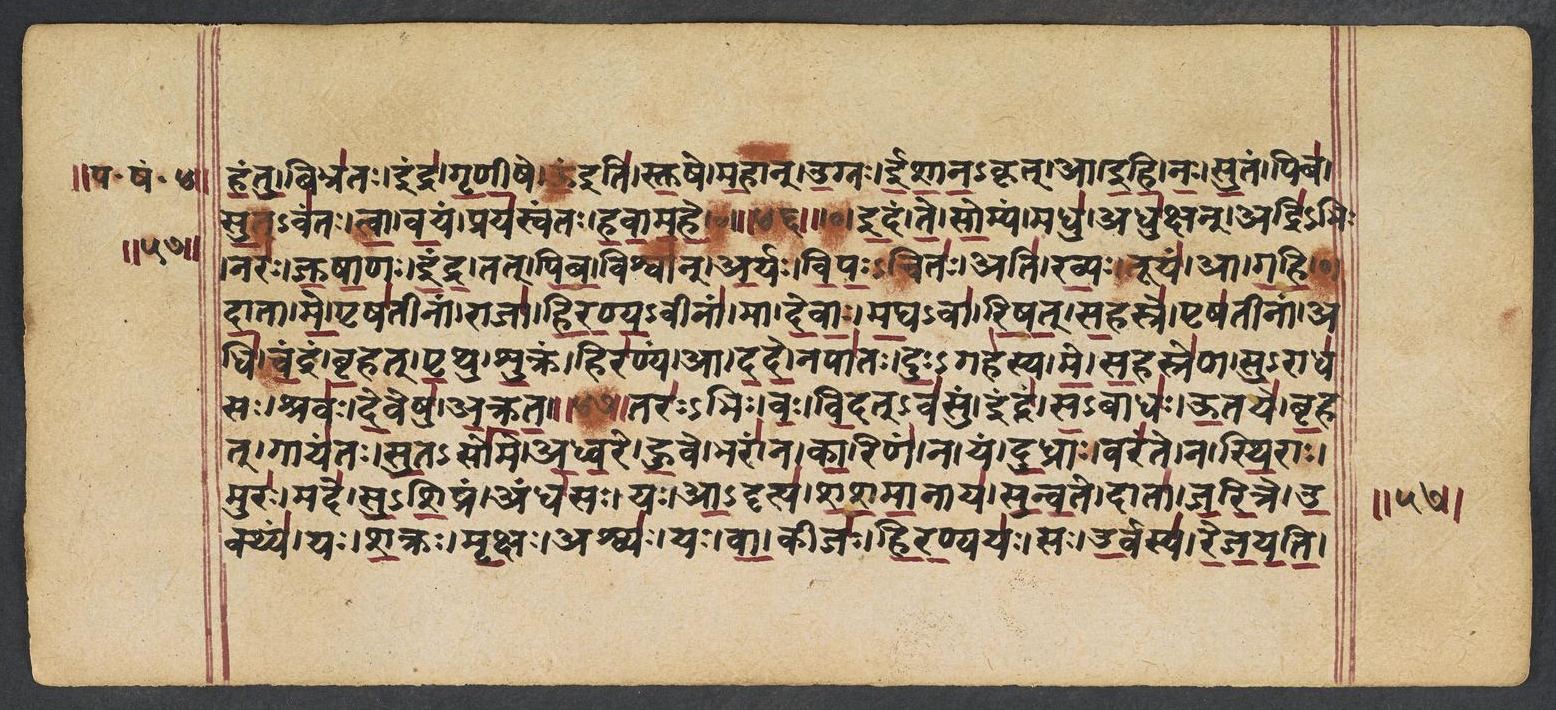
Penn Ms. Coll. 390 Item 41, fol. 635v (numbered 57v by the scribe) (OPenn image 636, upper leaf). Checked on the image: the Rigveda text on this page begins in RV 8.65.4 ‹-vahantu bibhrataḥ›. The next page with Rigveda text, fol. 636r (numbered 58r by the scribe), begins in RV 8.66.3 ‹indraḥ gavyasya vṛtra-hā›. Verses 8.66.1-2 end on this page.
1taro̍bhir vo vi̱dadva̍su̱m indra̍ṁ sa̱bādha̍ ū̱taye̍ | bṛ̱had gāya̍ntaḥ su̱taso̍me adhva̱re hu̱ve bhara̱ṁ na kā̱riṇa̍m ||
2na yaṁ du̱dhrā vara̍nte̱ na sthi̱rā muro̱ made̍ suśi̱pram andha̍saḥ | ya ā̱dṛtyā̍ śaśamā̱nāya̍ sunva̱te dātā̍ jari̱tra u̱kthya̍m ||
Compare: Padapāṭha (word-by-word text written in the manuscript; Sansknet e-text via GRETIL)
1taraḥ-bhiḥ | vaḥ | vidat-vasum | indram | sa-bādhaḥ | ūtaye | bṛhat | gāyantaḥ | suta-some | adhvare | huve | bharam | na | kāriṇam
2na | yam | dudhrāḥ | varante | na | sthirāḥ | muraḥ | made | su-śipram | andhasaḥ | yaḥ | ādṛtya | śaśamānāya | sunvate | dātā | jaritre | ukthyam
1LOUD singing at the sacred rite where Soma flows we priests invoke With haste, that he may help, as the bard's Cherisher, Indra who findeth wealth for you.
2Whom with fair helm, in rapture of the juice, the firm resistless slayers hinder not: Giver of glorious wealth to him who sing a his praise, honouring him who toils and pours:
Where on the image
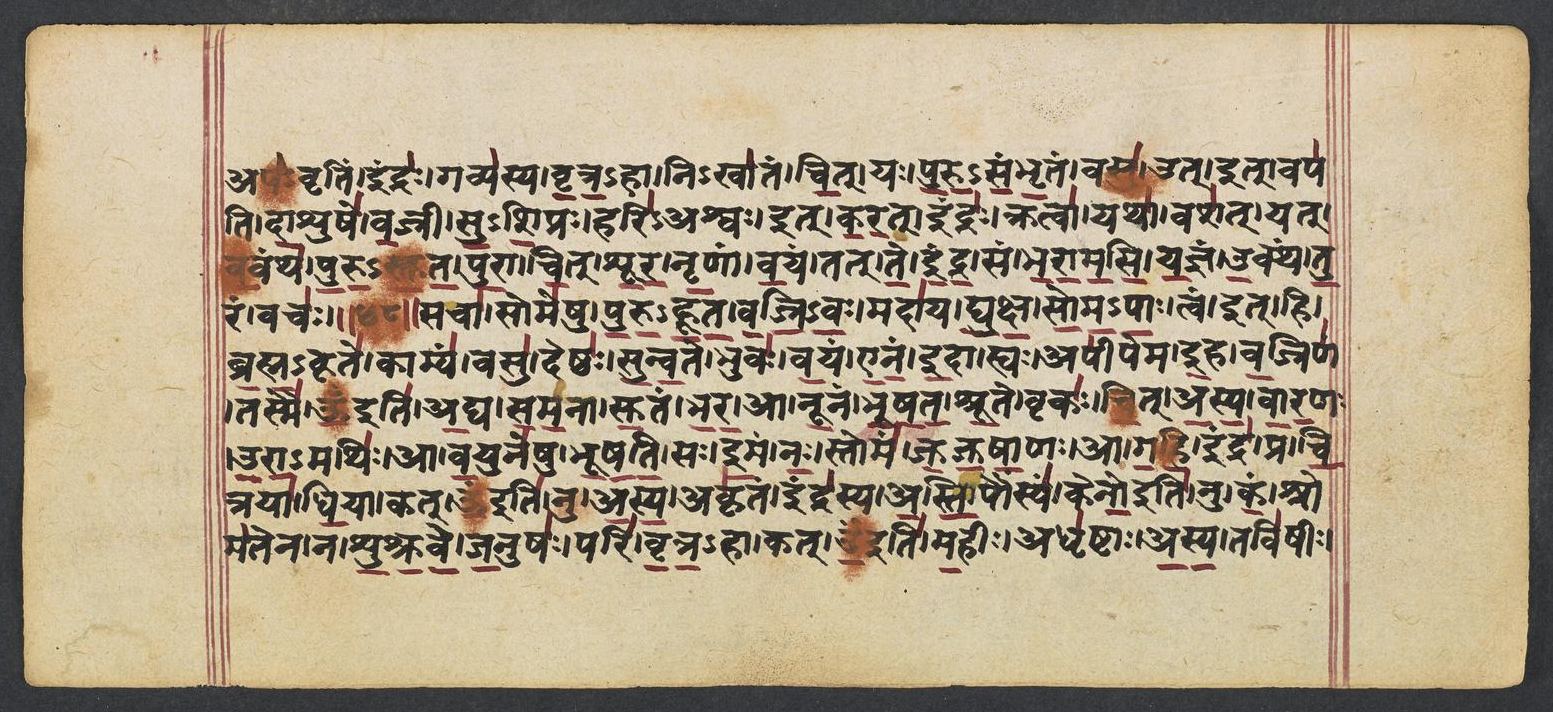
Penn Ms. Coll. 390 Item 41, fol. 636r (numbered 58r by the scribe) (OPenn image 636, lower leaf). Checked on the image: the Rigveda text on this page begins in RV 8.66.3 ‹indraḥ gavyasya vṛtra-hā›. The next page with Rigveda text, fol. 636v (numbered 58v by the scribe), begins in RV 8.66.10 ‹kat oṃ iti vṛtra-ghnaḥ›. Verses 8.66.3-9 end on this page; 8.66.3 begins on fol. 635v (numbered 57v by the scribe).
3yaḥ śa̱kro mṛ̱kṣo aśvyo̱ yo vā̱ kījo̍ hira̱ṇyaya̍ḥ | sa ū̱rvasya̍ rejaya̱ty apā̍vṛti̱m indro̱ gavya̍sya vṛtra̱hā ||
4nikhā̍taṁ ci̱d yaḥ pu̍rusambhṛ̱taṁ vasūd id vapa̍ti dā̱śuṣe̍ | va̱jrī su̍śi̱pro harya̍śva̱ it ka̍ra̱d indra̱ḥ kratvā̱ yathā̱ vaśa̍t ||
5yad vā̱vantha̍ puruṣṭuta pu̱rā ci̍c chūra nṛ̱ṇām | va̱yaṁ tat ta̍ indra̱ sam bha̍rāmasi ya̱jñam u̱kthaṁ tu̱raṁ vaca̍ḥ ||
6sacā̱ some̍ṣu puruhūta vajrivo̱ madā̍ya dyukṣa somapāḥ | tvam id dhi bra̍hma̱kṛte̱ kāmya̱ṁ vasu̱ deṣṭha̍ḥ sunva̱te bhuva̍ḥ ||
7va̱yam e̍nam i̱dā hyo 'pī̍peme̱ha va̱jriṇa̍m | tasmā̍ u a̱dya sa̍ma̱nā su̱tam bha̱rā nū̱nam bhū̍ṣata śru̱te ||
8vṛka̍ś cid asya vāra̱ṇa u̍rā̱mathi̱r ā va̱yune̍ṣu bhūṣati | semaṁ na̱ḥ stoma̍ṁ jujuṣā̱ṇa ā ga̱hīndra̱ pra ci̱trayā̍ dhi̱yā ||
9kad ū̱ nv a1̱̍syākṛ̍ta̱m indra̍syāsti̱ pauṁsya̍m | keno̱ nu ka̱ṁ śroma̍tena̱ na śu̍śruve ja̱nuṣa̱ḥ pari̍ vṛtra̱hā ||
Compare: Padapāṭha (word-by-word text written in the manuscript; Sansknet e-text via GRETIL)
3yaḥ | śakraḥ | mṛkṣaḥ | aśvyaḥ | yaḥ | vā | kījaḥ | hiraṇyayaḥ | saḥ | ūrvasya | rejayati | apa-vṛtim | indraḥ | gavyasya | vṛtra-hā
4nikhātam | cit | yaḥ | puru-sambhṛtam | vasu | ut | it | vapati | dāśuṣe | vajrī | su-śi praḥ | hari-aśvaḥ | it | karat | indraḥ | kratvā | yathā | vaśat
5yat | vavantha | puru-stuta | purā | cit | śūra | nṛṇām | vayam | tat | te | indra | sam | bharāmasi | yajñam | uktham | turam | vacaḥ
6sacā | someṣu | puru-hūta | vajri-vaḥ | madāya | dyukṣa | soma-pāḥ | tvam | it | hi | brahma-kṛte | kāmyam | vasu | deṣṭhaḥ | sunvate | bhuvaḥ
7vayam | enam | idā | hyaḥ | apīpema | iha | vajriṇam | tasmai | oṃ iti | adya | samanā | sutam | bhara | ā | nūnam | bhūṣata | śrute
8vṛkaḥ | cit | asya | vāraṇaḥ | urāmathiḥ | ā | vayuneṣu | bhūṣati | saḥ | imam | naḥ | stomam | jujuṣāṇaḥ | ā | gahi | indra | pra | citrayā | dhiyā
9kat | oṃ iti | nu | asya | akṛtam | indrasya | asti | paiṃsyam | keno iti | nu | kam | śromatena | na | śiśruve | januṣaḥ | pari | vṛtra-hā
3Ṣakra, who like a curry-comb for horses or a golden goad, Indra, the Vr̥itra-slayer, urges eagerly the opening of the stall of kine:
4Who for the worshipper scatters forth ample wealth, even though buried, piled in heaps: May Indra, Lord of Bay Steeds, fair-helmed Thunderer, act at his pleasure, as he lists.
5Hero whom many praise, what thou hast longed for, even of old, from men. All that we offer unto thee, O Indra, now, sacrifice, laud, effectual speech.
6To Soma, Much-invoked, Bolt-armed! for thy carouse, Celestial, Soma-drinker! come. Thou to the man who prays and pours the juice hast been best giver of delightful wealth.
7Here, verily, yesterday we let the Thunder-wielder drink his fill. So in like manner offer him the juice to-day. Now range you by the Glorious One.
8Even the wolf, the savage beast that rends the sheep, follows the path of his decrees. So graciously accepting, Indra, this our praise, with wondrous thought come forth to us.
9What manly deed of vigour now remains that Indra hath not done? Who hath not heard his glorious title and his fame, the Vritra-slayer from his birth?
Where on the image
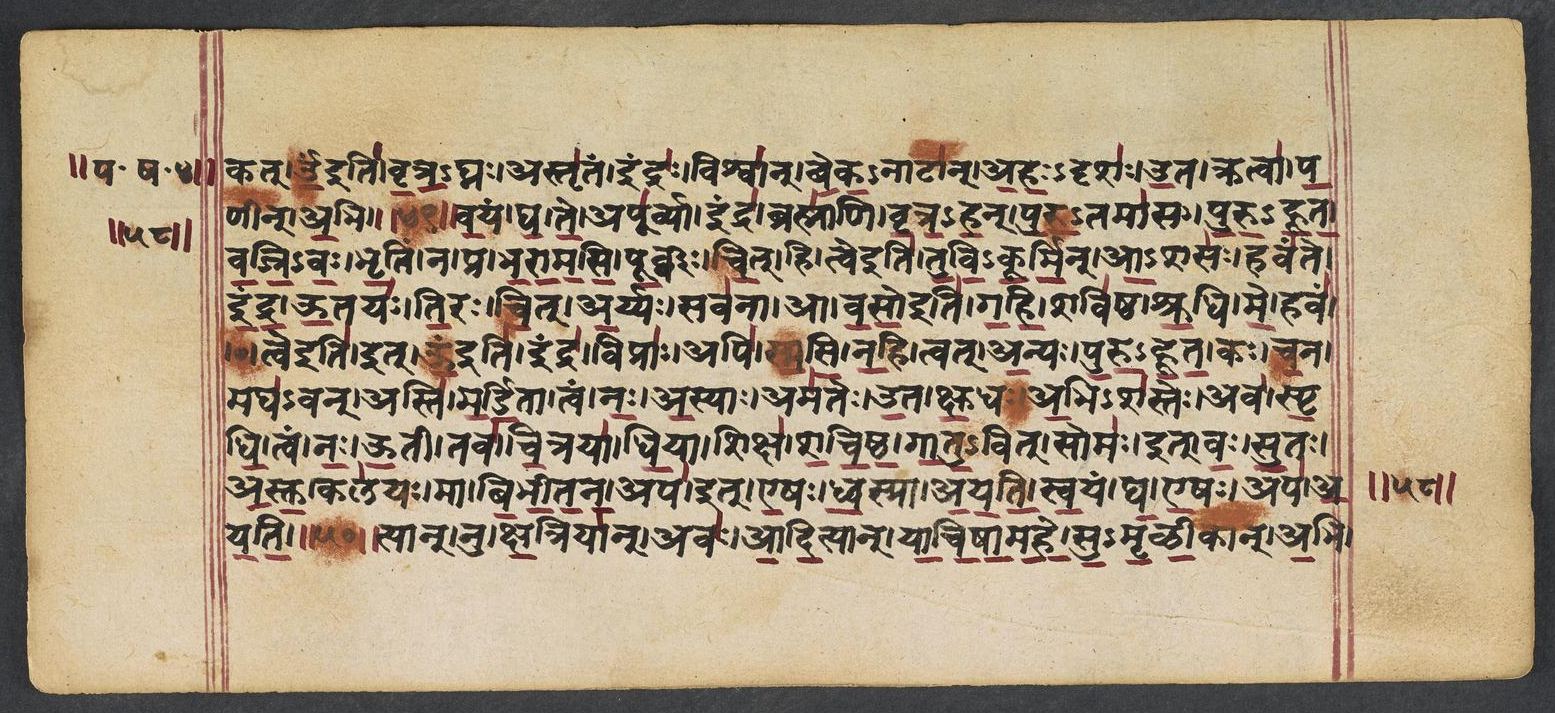
Penn Ms. Coll. 390 Item 41, fol. 636v (numbered 58v by the scribe) (OPenn image 637, upper leaf). Checked on the image: the Rigveda text on this page begins in RV 8.66.10 ‹kat oṃ iti vṛtra-ghnaḥ›. The next page with Rigveda text, fol. 637r (numbered 59r by the scribe), begins in RV 8.67.1 ‹-abhiṣṭaye›. Verses 8.66.10-15 end on this page; 8.66.10 begins on fol. 636r (numbered 58r by the scribe).
10kad ū̍ ma̱hīr adhṛ̍ṣṭā asya̱ tavi̍ṣī̱ḥ kad u̍ vṛtra̱ghno astṛ̍tam | indro̱ viśvā̍n beka̱nāṭā̍m̐ aha̱rdṛśa̍ u̱ta kratvā̍ pa̱ṇīm̐r a̱bhi ||
11va̱yaṁ ghā̍ te̱ apū̱rvyendra̱ brahmā̍ṇi vṛtrahan | pu̱rū̱tamā̍saḥ puruhūta vajrivo bhṛ̱tiṁ na pra bha̍rāmasi ||
12pū̱rvīś ci̱d dhi tve tu̍vikūrminn ā̱śaso̱ hava̍nta indro̱taya̍ḥ | ti̱raś ci̍d a̱ryaḥ sava̱nā va̍so gahi̱ śavi̍ṣṭha śru̱dhi me̱ hava̍m ||
13va̱yaṁ ghā̍ te̱ tve id v indra̱ viprā̱ api̍ ṣmasi | na̱hi tvad a̱nyaḥ pu̍ruhūta̱ kaś ca̱na magha̍va̱nn asti̍ marḍi̱tā ||
14tvaṁ no̍ a̱syā ama̍ter u̱ta kṣu̱dho̱3̱̍ 'bhiśa̍ste̱r ava̍ spṛdhi | tvaṁ na̍ ū̱tī tava̍ ci̱trayā̍ dhi̱yā śikṣā̍ śaciṣṭha gātu̱vit ||
15soma̱ id va̍ḥ su̱to a̍stu̱ kala̍yo̱ mā bi̍bhītana | aped e̱ṣa dhva̱smāya̍ti sva̱yaṁ ghai̱ṣo apā̍yati ||
Compare: Padapāṭha (word-by-word text written in the manuscript; Sansknet e-text via GRETIL)
10kat | oṃ iti | mahīḥ | adhṛṣṭāḥ | asya | taviṣīḥ | kat | oṃ iti | vṛtra-ghnaḥ | astṛtam | indraḥ | viśvān | beka-nāṭān | ahaḥ-dṛṣaḥ | uta | kratvā | paṇīn | abhi
11vayam | gha | te | apūrvyā | indra | brahmāṇi | vṛtra-han | puru-tamāsaḥ | puru-hūta | vajri-vaḥ | bhṛtim | na | pra | bharāmasi
12pūrvīḥ | cit | hi | tve iti | tuvi-kūrmin | āśasaḥ | havante | indra | ūtayaḥ | tiraḥ | cit | aryaḥ | savanā | vaso iti | gahi | śaviṣṭha | śrudhi | me | havam
13vayam | gha | te | tve iti | it | oṃ iti | indra | viprāḥ | api | smasi | nahi | tvat | anyaḥ | puru-hūta | kaḥ | cana | magha-van | asti | marḍitā
14tvam | naḥ | asyāḥ | amateḥ | uta | kṣudhaḥ | abhi-śasteḥ | ava | spṛdhi | tvam | naḥ | ūtī | tava | citrayā | dhiyā | śikṣa | śaciṣṭha | gātu-vit
15somaḥ | it | vaḥ | sutaḥ | astu | kalayaḥ | mā | bibhītana | apa | it | eṣaḥ dhvasmā | ayati | svayam | gha | eṣaḥ | apa | ayati
10How great his power resistless! how invincible the Vritra-slayer’s matchless might! Indra excels all usurers who see the day, excels all traffickers in strength.
11O Indra, Vritra-slayer, we, thy very constant worshippers, Bring prayers ne’er heard before to thee, O Much-invoked, O Thunder-armed, to be thy meed.
12O thou of mighty acts, the aids that are in thee call forward many an eager hope. Past the drink-offerings, Vasu, even of the good, hear my call, Strongest God, and come.
13Verily, Indra, we are thine, we worshippers depend on thee, For there is none but only thou to show us grace, O Maghavan, thou much invoked.
14From this our misery and famine set us free, from this dire curse deliver us. Succour us with thine help and with thy wondrous thought, Most Mighty, finder of the way,
15Now let your Soma juice be poured: be not afraid, O Kali's sons. This darkening sorrow goes away; yea, of itself it vanishes.
Notes
- Sanskrit: Aufrecht's edition (1877) with the Vedic accents, as entered by van Nooten and Holland (GRETIL).
- English: Ralph T. H. Griffith, The Hymns of the Rigveda (1889-1892; 2nd ed. 1896-1897), from the VedaWeb digital text; OCR slips in that text were corrected against the printed 2nd edition (data/sources/rigveda/griffith_errata.json).
- Padapāṭha (edition text): Sansknet e-text via GRETIL (CC BY-NC-SA 4.0).
Cite
Sources
- Source: Penn Ms. Coll. 390 Item 41 (undated (catalogued with Penn's 18th-19th c. Vedic manuscripts)), OPenn, Public Domain Mark + Aufrecht's accented text (GRETIL) + Griffith's English (VedaWeb) (holding institution)
- Critical edition: Aufrecht (1877), accented e-text via GRETIL
← previous · → next · v cycle view · l back to library