Rigveda 8.67: To Adityas
Introduction
Rigveda 8.67 is a hymn of 21 verses addressed to Adityas. It stands in book (maṇḍala) 8, the book of the Kaṇva and Aṅgiras poets. The Rigveda is the oldest collection of Sanskrit hymns, composed in the second half of the second millennium BCE and handed down orally for many centuries before it was written down.
The manuscript shown is Penn Ms. Coll. 390 Item 41 (University of Pennsylvania), an undated paper manuscript of the padapāṭha (the word-by-word recitation text, in which every word is written separately and compounds are split) of the whole Ṛgveda in Devanāgarī, 884 leaves in fascicles, 7-9 lines to the page, accents in red; this hymn stands on fol. 636v-637v. Each section below gives the verses that end on one page; the page boundaries were read on the images (the opening words of every page), not counted out. Where the manuscript is a padapāṭha (the word-by-word recitation text), the section shows Aufrecht's continuous (saṃhitā) text first and, as the edition text, the padapāṭha of the same verses, which is the form written on the page.
How was this verified? (Provenance)
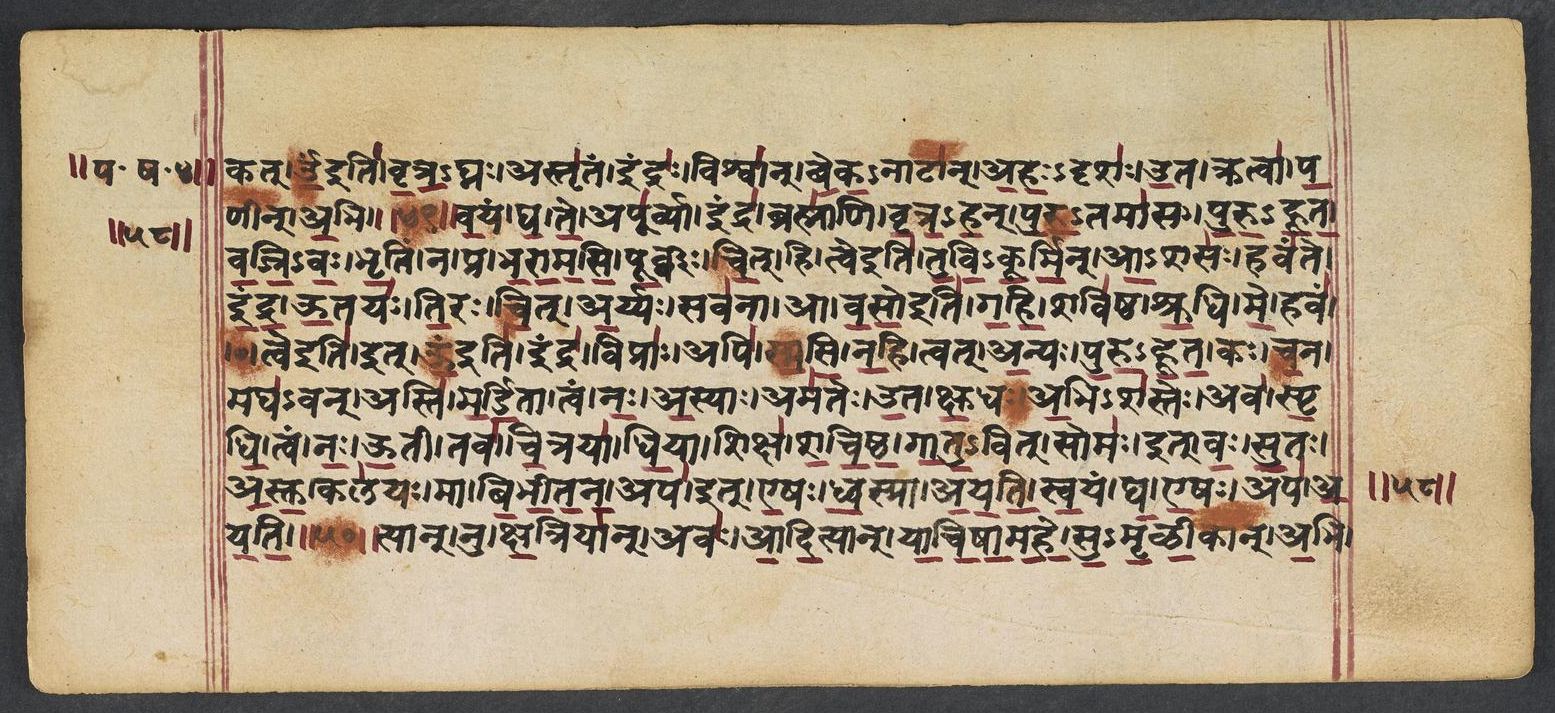
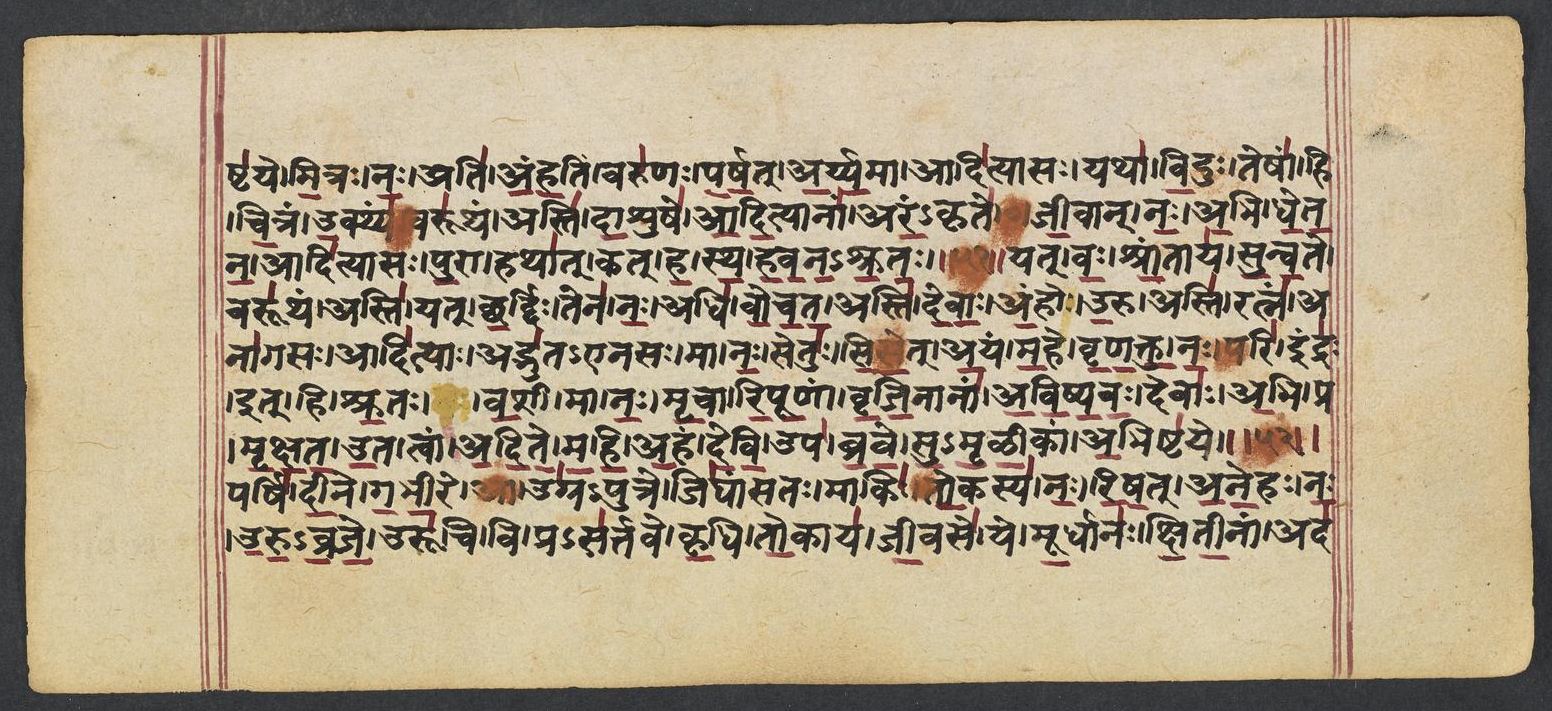
Where on the image
Penn Ms. Coll. 390 Item 41, fol. 637r (numbered 59r by the scribe) (OPenn image 637, lower leaf). Checked on the image: the Rigveda text on this page begins in RV 8.67.1 ‹-abhiṣṭaye›. The next page with Rigveda text, fol. 637v (numbered 59v by the scribe), begins in RV 8.67.13 ‹-adabdhāsaḥ sva-yaśasaḥ vratā rakṣante›. Verses 8.67.1-12 end on this page; 8.67.1 begins on fol. 636v (numbered 58v by the scribe).
1tyān nu kṣa̱triyā̱m̐ ava̍ ādi̱tyān yā̍ciṣāmahe | su̱mṛ̱ḻī̱kām̐ a̱bhiṣṭa̍ye ||
2mi̱tro no̱ aty a̍ṁha̱tiṁ varu̍ṇaḥ parṣad arya̱mā | ā̱di̱tyāso̱ yathā̍ vi̱duḥ ||
3teṣā̱ṁ hi ci̱tram u̱kthya1̱̍ṁ varū̍tha̱m asti̍ dā̱śuṣe̍ | ā̱di̱tyānā̍m ara̱ṁkṛte̍ ||
4mahi̍ vo maha̱tām avo̱ varu̍ṇa̱ mitrārya̍man | avā̱ṁsy ā vṛ̍ṇīmahe ||
5jī̱vān no̍ a̱bhi dhe̍ta̱nādi̍tyāsaḥ pu̱rā hathā̍t | kad dha̍ stha havanaśrutaḥ ||
6yad va̍ḥ śrā̱ntāya̍ sunva̱te varū̍tha̱m asti̱ yac cha̱rdiḥ | tenā̍ no̱ adhi̍ vocata ||
7asti̍ devā a̱ṁhor u̱rv asti̱ ratna̱m anā̍gasaḥ | ādi̍tyā̱ adbhu̍tainasaḥ ||
8mā na̱ḥ setu̍ḥ siṣed a̱yam ma̱he vṛ̍ṇaktu na̱s pari̍ | indra̱ id dhi śru̱to va̱śī ||
9mā no̍ mṛ̱cā ri̍pū̱ṇāṁ vṛ̍ji̱nānā̍m aviṣyavaḥ | devā̍ a̱bhi pra mṛ̍kṣata ||
10u̱ta tvām a̍dite mahy a̱haṁ de̱vy upa̍ bruve | su̱mṛ̱ḻī̱kām a̱bhiṣṭa̍ye ||
11parṣi̍ dī̱ne ga̍bhī̱ra ām̐ ugra̍putre̱ jighā̍ṁsataḥ | māki̍s to̱kasya̍ no riṣat ||
12a̱ne̱ho na̍ uruvraja̱ urū̍ci̱ vi prasa̍rtave | kṛ̱dhi to̱kāya̍ jī̱vase̍ ||
Compare: Padapāṭha (word-by-word text written in the manuscript; Sansknet e-text via GRETIL)
1tyān | nu | kṣatriyān | avaḥ | ādityān | yāciṣāmahe | su-mṛḷīkān | abhiṣṭaye
2mitraḥ | naḥ | ati | aṃhatim | varuṇaḥ | parṣat | aryamā | ādityāsaḥ | yathā | viduḥ
3teṣām | hi | citram | ukthyam | varūtham | asti | dāśuṣe | ādityānām | aram-kṛte
4mahi | vaḥ | mahatām | avaḥ | varuṇa | mitra | aryaman | avāṃsi | ā | vṛṇīmahe
5jīvān | naḥ | abhi | dhetana | ādityāsaḥ | purā | hathāt | kat | ha | stha | havana-śrutaḥ
6yat | vaḥ | śrāntāya | sunvate | varūtham | asti | yat | chardiḥ | tena | naḥ | adhi | vocata
7asti | devāḥ | aṃhoḥ | uru | asti | ratnam | anāgasaḥ | ādityāḥ | adbhuta-enasaḥ
8mā | naḥ | setuḥ | siset | ayam | mahe | vṛṇaktu | naḥ | pari | indraḥ | it | hi | śrutaḥ | vaśī
9mā | naḥ | mṛcā | ripūṇām | vṛjinānām | aviṣyavaḥ | devāḥ | abhi | pra | mṛkṣata
10uta | tvām | adite | mahi | aham | devi | upa | bruve | su-mṛḷīkām | abhiṣṭaye
11parṣi | dīne | gabhīre | ā | ugra-putre | jighāṃsataḥ | mākiḥ | tokasya | naḥ | riṣat
12anehaḥ | naḥ | uru-vraje | urūci | vi | pra-sartave | kṛdhi | tokāya | jīvase
1Now pray we to these Kshatriyas, to the Âdityas for their aid, These who are gracious to assist.
2May Mitra bear us o'er distress, and Varuṇa and Aryaman, Yea, the Âdityas, as they know.
3For wonderful and meet for praise is these Âdityas' saving help To him who offers and prepares.
4The mighty aid of you, the Great, Varuṇa, Mitra, Aryaman, We claim to be our sure defence.
5Guard us, Âdityas, still alive, before the deadly weapon strike: Are ye not they who hear our call?
6What sheltering defence ye have for him who toils in pouring gifts, Graciously bless ye us therewith.
7Âdityas, Gods, from sorrow there is freedom, for the sinless, wealth, O ye in whom no fault is seen.
8Let not this fetter bind us fast: may he release us for success; For strong is Indra and renowned.
90 Gods who fain would lend your aid, destroy not us as ye destroy Your enemies who go astray.
10And thee too, O Great Aditi, thee also, Goddess, I address, Thee very gracious to assist.
11Save us in depth and shallow from the foe, thou Mother of Strong Sons: Let no one of our seed be harmed.
12Far-spread! wide-ruling! grant that we, unharmed by envy may expand: Grant that our progeny may live.
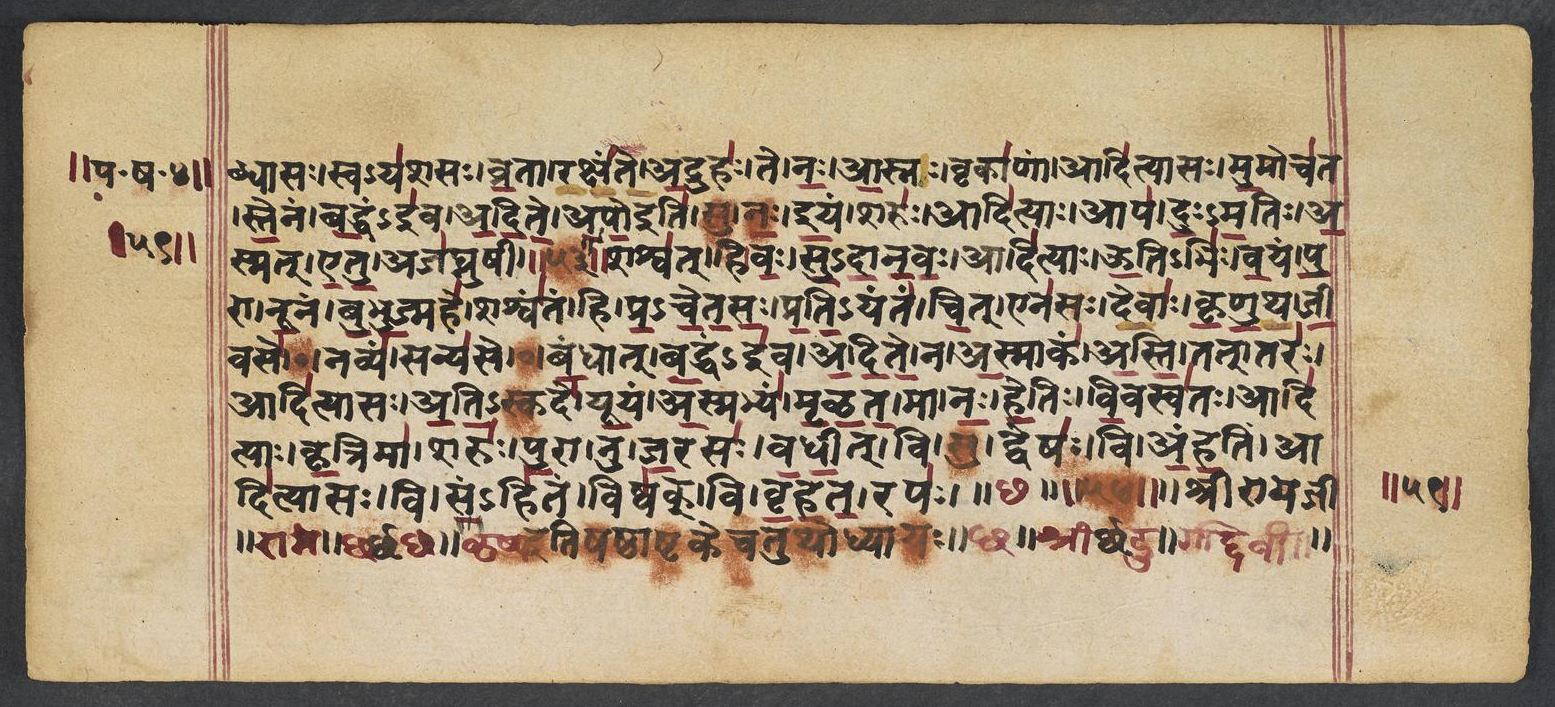
Where on the image
Penn Ms. Coll. 390 Item 41, fol. 637v (numbered 59v by the scribe) (OPenn image 638, upper leaf). Checked on the image: the Rigveda text on this page begins in RV 8.67.13 ‹-adabdhāsaḥ sva-yaśasaḥ vratā rakṣante›. The next page with Rigveda text, fol. 638v (numbered 60v by the scribe), begins in RV 8.68.1 ‹ā tvā ratham yathā›. Verses 8.67.13-21 end on this page; 8.67.13 begins on fol. 637r (numbered 59r by the scribe).
13ye mū̱rdhāna̍ḥ kṣitī̱nām ada̍bdhāsa̱ḥ svaya̍śasaḥ | vra̱tā rakṣa̍nte a̱druha̍ḥ ||
14te na̍ ā̱sno vṛkā̍ṇā̱m ādi̍tyāso mu̱moca̍ta | ste̱nam ba̱ddham i̍vādite ||
15apo̱ ṣu ṇa̍ i̱yaṁ śaru̱r ādi̍tyā̱ apa̍ durma̱tiḥ | a̱smad e̱tv aja̍ghnuṣī ||
16śaśva̱d dhi va̍ḥ sudānava̱ ādi̍tyā ū̱tibhi̍r va̱yam | pu̱rā nū̱nam bu̍bhu̱jmahe̍ ||
17śaśva̍nta̱ṁ hi pra̍cetasaḥ prati̱yanta̍ṁ ci̱d ena̍saḥ | devā̍ḥ kṛṇu̱tha jī̱vase̍ ||
18tat su no̱ navya̱ṁ sanya̍sa̱ ādi̍tyā̱ yan mumo̍cati | ba̱ndhād ba̱ddham i̍vādite ||
19nāsmāka̍m asti̱ tat tara̱ ādi̍tyāso ati̱ṣkade̍ | yū̱yam a̱smabhya̍m mṛḻata ||
20mā no̍ he̱tir vi̱vasva̍ta̱ ādi̍tyāḥ kṛ̱trimā̱ śaru̍ḥ | pu̱rā nu ja̱raso̍ vadhīt ||
21vi ṣu dveṣo̱ vy a̍ṁha̱tim ādi̍tyāso̱ vi saṁhi̍tam | viṣva̱g vi vṛ̍hatā̱ rapa̍ḥ ||
Compare: Padapāṭha (word-by-word text written in the manuscript; Sansknet e-text via GRETIL)
13ye | mūrdhānaḥ | kṣitīnām | adabdhāsaḥ | sva-yaśasaḥ | vratā | rakṣante | adruhaḥ
14te | naḥ | āsnaḥ | vṛkāṇām | ādityāsaḥ | mumocata | stenam | baddham-iva | adite
15apo iti | su | naḥ | iyam | śaruḥ | ādityāḥ | apa | duḥ-matiḥ | asmat | etu | ajaghnuṣī
16śaśvat | hi | vaḥ | su-dānavaḥ | ādityāḥ | ūti-bhiḥ | vayam | purā | nūnam | bubhujmahe
17śaśvantam | hi | pra-cetasaḥ | prati-yantam | cit | enasaḥ | devāḥ | kṛṇutha | jīvase
18tat | su | naḥ | navyam | sanyase | ādityāḥ | yat | mumocati | bandhāt | baddham-iva | adite
19na | asmākam | asti | tat | taraḥ | ādityāsaḥ | ati-skade | yūyam | asmabhyam | mṛḷata
20mā | naḥ | hetiḥ | vivasvataḥ | ādityāḥ | kṛtrimā | śaruḥ | purā | nu | jarasaḥ | vadhīt
21vi | su | dveṣaḥ | vi | aṃhatim | ādityāsaḥ | vi | sam-hitam | viṣvak | vi | vṛhata | rapaḥ
13Those who, the Princes of the folk, in native glory, ne'er deceived, Maintain their statutes, void of guile —
14As such, from mouth of ravening wolves, O ye Âdityas, rescue us, Like a bound thief, O Aditi.
15Âdityas, let this arrow, yea, let this malignity depart From us or e’er it strike us dead.
16For, Bountiful Âdityas, we have evermore enjoyed your help, Both now and in the days of old.
17To every one, O ye Most Wise, who turneth even from sin to you, Ye Gods vouchsafe that he may live.
18May this new mercy profit us, which, ye Âdityas, frees like one Bound from his bonds, O Aditi.
19O ye Âdityas, this your might is not to be despised by us: So be ye graciously inclined.
20Let not Vivasvan’s weapon nor the shaft, Âdityas, wrought with skill, Destroy us ere old age be nigh.
21On every side dispel all sin, Âdityas, all hostility, Indigence, and combined attack.
Notes
- Sanskrit: Aufrecht's edition (1877) with the Vedic accents, as entered by van Nooten and Holland (GRETIL).
- English: Ralph T. H. Griffith, The Hymns of the Rigveda (1889-1892; 2nd ed. 1896-1897), from the VedaWeb digital text; OCR slips in that text were corrected against the printed 2nd edition (data/sources/rigveda/griffith_errata.json).
- Padapāṭha (edition text): Sansknet e-text via GRETIL (CC BY-NC-SA 4.0).
Cite
Sources
- Source: Penn Ms. Coll. 390 Item 41 (undated (catalogued with Penn's 18th-19th c. Vedic manuscripts)), OPenn, Public Domain Mark + Aufrecht's accented text (GRETIL) + Griffith's English (VedaWeb) (holding institution)
- Critical edition: Aufrecht (1877), accented e-text via GRETIL
← previous · → next · v cycle view · l back to library