Rigveda 8.68: To Indra
Introduction
Rigveda 8.68 is a hymn of 19 verses addressed to Indra. It stands in book (maṇḍala) 8, the book of the Kaṇva and Aṅgiras poets. The Rigveda is the oldest collection of Sanskrit hymns, composed in the second half of the second millennium BCE and handed down orally for many centuries before it was written down.
The manuscript shown is Penn Ms. Coll. 390 Item 41 (University of Pennsylvania), an undated paper manuscript of the padapāṭha (the word-by-word recitation text, in which every word is written separately and compounds are split) of the whole Ṛgveda in Devanāgarī, 884 leaves in fascicles, 7-9 lines to the page, accents in red; this hymn stands on fol. 638v-639r. Each section below gives the verses that end on one page; the page boundaries were read on the images (the opening words of every page), not counted out. Where the manuscript is a padapāṭha (the word-by-word recitation text), the section shows Aufrecht's continuous (saṃhitā) text first and, as the edition text, the padapāṭha of the same verses, which is the form written on the page.
How was this verified? (Provenance)
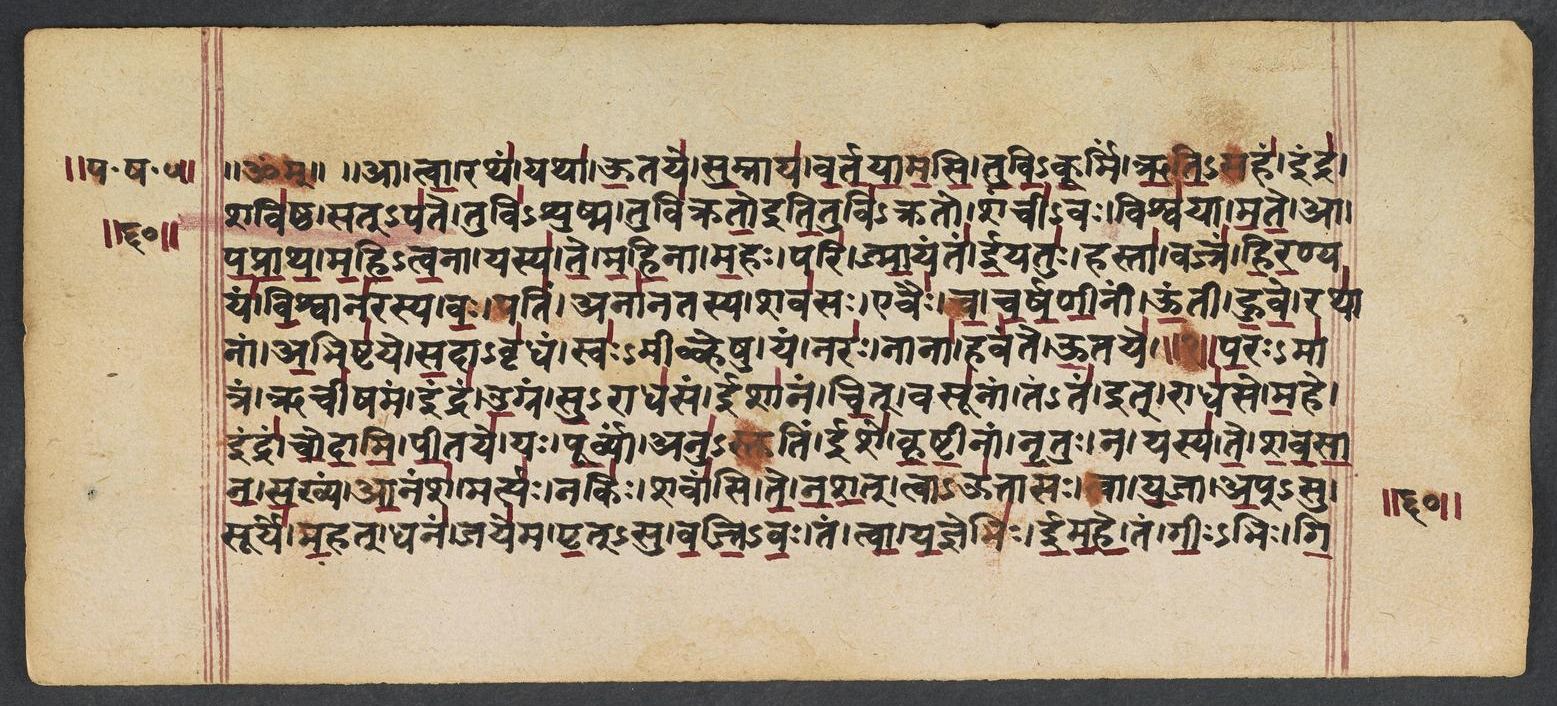
Where on the image
Penn Ms. Coll. 390 Item 41, fol. 638v (numbered 60v by the scribe) (OPenn image 639, upper leaf). Checked on the image: the Rigveda text on this page begins in RV 8.68.1 ‹ā tvā ratham yathā›. Line 1 opens with oṃ, then 8.68.1 (ā tvā ratham yathā ūtaye). The next page with Rigveda text, fol. 639r (numbered 61r by the scribe), begins in RV 8.68.10 ‹-girvaṇaḥ-tama indra yathā cit›. Verses 8.68.1-9 end on this page.
1ā tvā̱ ratha̱ṁ yatho̱taye̍ su̱mnāya̍ vartayāmasi | tu̱vi̱kū̱rmim ṛ̍tī̱ṣaha̱m indra̱ śavi̍ṣṭha̱ satpa̍te ||
2tuvi̍śuṣma̱ tuvi̍krato̱ śacī̍vo̱ viśva̍yā mate | ā pa̍prātha mahitva̱nā ||
3yasya̍ te mahi̱nā ma̱haḥ pari̍ jmā̱yanta̍m ī̱yatu̍ḥ | hastā̱ vajra̍ṁ hira̱ṇyaya̍m ||
4vi̱śvāna̍rasya va̱s pati̱m anā̍natasya̱ śava̍saḥ | evai̍ś ca carṣaṇī̱nām ū̱tī hu̍ve̱ rathā̍nām ||
5a̱bhiṣṭa̍ye sa̱dāvṛ̍dha̱ṁ sva̍rmīḻheṣu̱ yaṁ nara̍ḥ | nānā̱ hava̍nta ū̱taye̍ ||
6pa̱romā̍tra̱m ṛcī̍ṣama̱m indra̍m u̱graṁ su̱rādha̍sam | īśā̍naṁ ci̱d vasū̍nām ||
7taṁ-ta̱m id rādha̍se ma̱ha indra̍ṁ codāmi pī̱taye̍ | yaḥ pū̱rvyām anu̍ṣṭuti̱m īśe̍ kṛṣṭī̱nāṁ nṛ̱tuḥ ||
8na yasya̍ te śavasāna sa̱khyam ā̱naṁśa̱ martya̍ḥ | naki̱ḥ śavā̍ṁsi te naśat ||
9tvotā̍sa̱s tvā yu̱jāpsu sūrye̍ ma̱had dhana̍m | jaye̍ma pṛ̱tsu va̍jrivaḥ ||
Compare: Padapāṭha (word-by-word text written in the manuscript; Sansknet e-text via GRETIL)
1ā | tvā | ratham | yathā | ūtaye | sumnāya | vartayāmasi | tuvi-kūrmim | ṛti-saham | indra | śaviṣṭha | sat-pate
2tuvi-śuṣma | tuvikrato itituvi-krato | śacī-vaḥ | viśvayā | mate | ā | paprātha | mahi-tvanā
3yasya | te | mahinā | mahaḥ | pari | jmāyantam | īyatuḥ | hastā | vajram | hiraṇyayam
4viśvānarasya | vaḥ | patim | anānatasya | śavasaḥ | evaiḥ | ca | carṣaṇīnām | ūtī | huve | rathānām
5abhiṣṭaye | sadāvṛdham | svaḥ-mīḷheṣu | yam | naraḥ | nānā | havante | ūtaye
6paraḥ-mātram | ṛcīṣamam | indram | ugram | su-rādhasam | īśānam | cit | vasūnām
7tam-tam | it | rādhase | mahe | indram | codāmi | pītaye | yaḥ | pūrvyām | anu-stut im | īśe | kṛṣṭīnām | nṛtuḥ
8na | yasya | te | śavasāna | sakhyam | ānaṃśa | martyaḥ | nakiḥ | śavāṃsi | te | naśat
9tvāūtāsaḥ | tvā | yujā | ap-su | sūrye | mahat | dhanam | jayema | pṛt-su | vajri-vaḥ
1EVEN as a car to give us aid, we draw thee hither for our bliss, Strong in thy deeds, checking assault, Lord, Mightiest Indra, of the brave!
2Great in thy power and wisdom, Strong, with thought that comprehendeth all Thou hast filled full with majesty.
3Thou very Mighty One, whose hands by virtue of thy greatness grasp, The golden bolt that breaks its way.
4Your Lord of might that ne'er hath bent, that ruleth over all mankind, I call, that he, as he is wont, may aid the chariots and the men.
5Whom, ever furthering, in frays that win the light, in both the hosts Men call to succour and to help.
6Indra, the Strong, the measureless, worthy of praise, Most Bountiful, Sole Ruler even over wealth.
7Him, for his ample bounty, him, this Indra do I urge to drink, Who, as his praise was sung of old, the Dancer, is the Lord of men.
8Thou Mighty One, whose friendship none of mortals ever hath obtained: None will attain unto thy might.
9Aided by thee, with thee allied, in frays for water and for sun, Bolt-armed! may we win ample spoil.
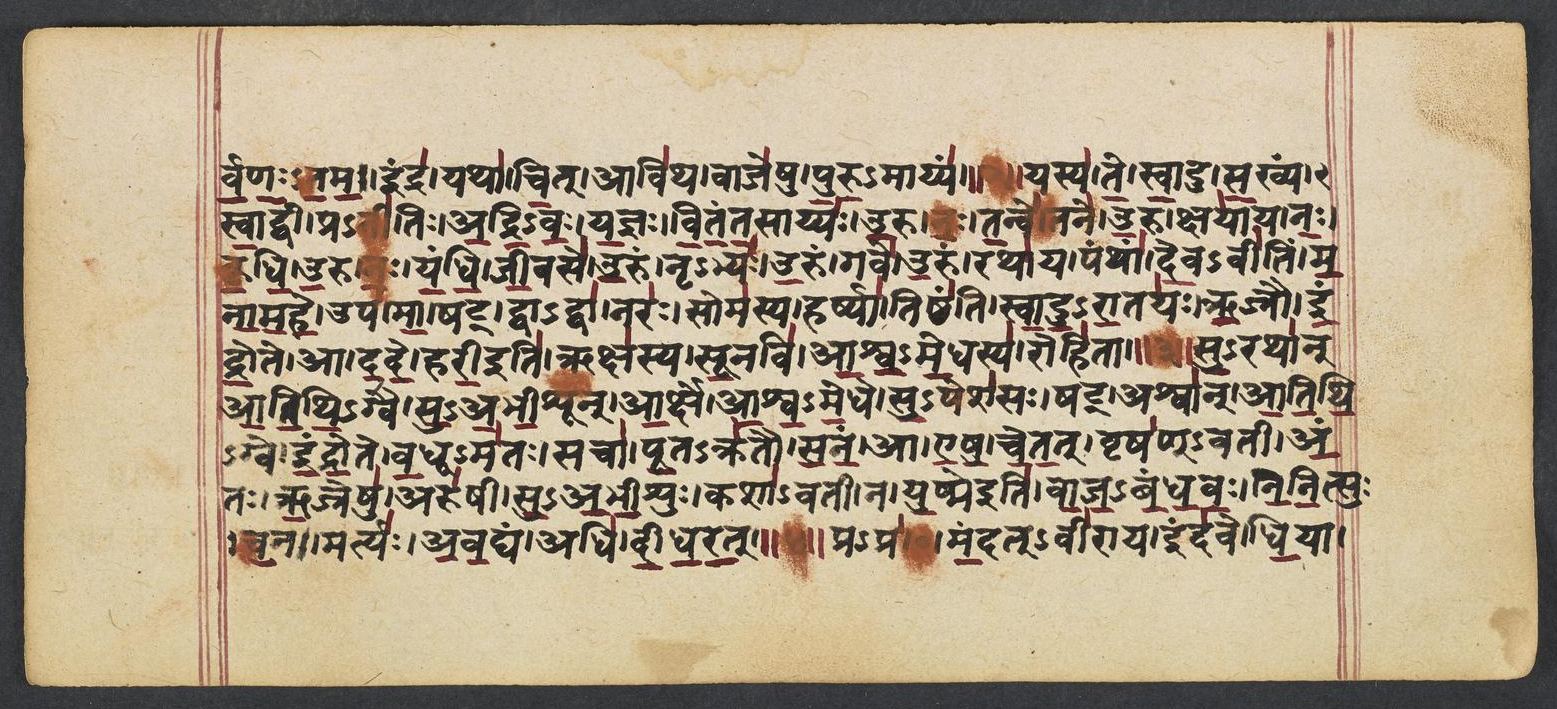
Where on the image
Penn Ms. Coll. 390 Item 41, fol. 639r (numbered 61r by the scribe) (OPenn image 639, lower leaf). Checked on the image: the Rigveda text on this page begins in RV 8.68.10 ‹-girvaṇaḥ-tama indra yathā cit›. The next page with Rigveda text, fol. 639v (numbered 61v by the scribe), begins in RV 8.69.1 ‹vaḥ medha-sātaye puram-dhyā ā›. Verses 8.68.10-19 end on this page; 8.68.10 begins on fol. 638v (numbered 60v by the scribe).
10taṁ tvā̍ ya̱jñebhi̍r īmahe̱ taṁ gī̱rbhir gi̍rvaṇastama | indra̱ yathā̍ ci̱d āvi̍tha̱ vāje̍ṣu puru̱māyya̍m ||
11yasya̍ te svā̱du sa̱khyaṁ svā̱dvī praṇī̍tir adrivaḥ | ya̱jño vi̍tanta̱sāyya̍ḥ ||
12u̱ru ṇa̍s ta̱nve̱3̱̍ tana̍ u̱ru kṣayā̍ya nas kṛdhi | u̱ru ṇo̍ yandhi jī̱vase̍ ||
13u̱ruṁ nṛbhya̍ u̱ruṁ gava̍ u̱ruṁ rathā̍ya̱ panthā̍m | de̱vavī̍tim manāmahe ||
14upa̍ mā̱ ṣaḍ dvā-dvā̱ nara̱ḥ soma̍sya̱ harṣyā̍ | tiṣṭha̍nti svādurā̱taya̍ḥ ||
15ṛ̱jrāv i̍ndro̱ta ā da̍de̱ harī̱ ṛkṣa̍sya sū̱navi̍ | ā̱śva̱me̱dhasya̱ rohi̍tā ||
16su̱rathā̍m̐ ātithi̱gve sva̍bhī̱śūm̐r ā̱rkṣe | ā̱śva̱me̱dhe su̱peśa̍saḥ ||
17ṣaḻ aśvā̍m̐ ātithi̱gva i̍ndro̱te va̱dhūma̍taḥ | sacā̍ pū̱takra̍tau sanam ||
18aiṣu̍ ceta̱d vṛṣa̍ṇvaty a̱ntar ṛ̱jreṣv aru̍ṣī | sva̱bhī̱śuḥ kaśā̍vatī ||
19na yu̱ṣme vā̍jabandhavo nini̱tsuś ca̱na martya̍ḥ | a̱va̱dyam adhi̍ dīdharat ||
Compare: Padapāṭha (word-by-word text written in the manuscript; Sansknet e-text via GRETIL)
10tam | tvā | yajñebhiḥ | īmahe | tam | gīḥ-bhiḥ | girvaṇaḥ-tama | indra | yathā | cit | āvitha | vājeṣu | puru-māyyam
11yasya | te | svādu | sakhyam | svādvī | pra-nītiḥ | adri-vaḥ | yajñaḥ | vitantasāyyaḥ
12uru | naḥ | tanve | tane | uru | kṣayāya | naḥ | kṛdhi | uru | naḥ | yandhi | jīvase
13urum | nṛ-bhyaḥ | urum | gave | urum | rathāya | panthām | deva-vītim | manāmahe
14upa | mā | ṣaṭ | dvādvā | naraḥ | somasya | harṣyā | tiṣṭhanti | svādu-rātayaḥ
15ṛjrau | indrote | ā | dade | harī iti | ṛkṣasya | sūnavi | āśva-medhasya | rohitā
16su-rathān | ātithi-gve | su-abhīśūn | ārkṣe | āśva-medhe | su-peśasaḥ
17ṣaṭ | aśvān | ātithi-gve | indrote | vadhū-mataḥ | sacā | pūta-kratau | sanam
18ā | eṣu | cetat | vṛṣaṇ-vatī | antaḥ | ṛjreṣu | aruṣī | su-abhīśuḥ | kaśāvatī
19na | yuṣme iti | vāja-bandhavaḥ | ninitsuḥ | cana | martyaḥ | avadyam | adhi | dīdharat
10So seek we thee with sacrifice and songs, chief Lover of the Song, As, in our battles, Indra, thou to Purumâyya gavest help.
11O Thunderer, thou whose friendship and whose onward guidance both are sweet, Thy sacrifice must be prepared.
12To us, ourselves, give ample room, give for our dwelling ample room: Give ample room to us to live.
13We count the banquet of the Gods a spacious pathway for the men, And for the cattle, and the car.
14Six men, yea, two and two, made glad with Soma juice, come near to me With offerings pleasant to the taste.
15Two brown-hued steeds, Indrota’s gift, two bays from Riksha’s son were mine, From Aṣvamedha’s son two red.
16From Âtithigva good car-steeds, from Arksha rein-obeying steeds, From Aṣvamedha beauteous ones.
17Indrota, Âtithigva’s son, gave me six horses matched with mares: And Putakratu gave besides.
18Marked above all, amid the brown, is the red mare Vr̥ishaṇvatî, Obedient to the rein and whip.
19O bound to me by deeds of might, not even the man who loves to blame Hath found a single fault in you.
Notes
- Sanskrit: Aufrecht's edition (1877) with the Vedic accents, as entered by van Nooten and Holland (GRETIL).
- English: Ralph T. H. Griffith, The Hymns of the Rigveda (1889-1892; 2nd ed. 1896-1897), from the VedaWeb digital text; OCR slips in that text were corrected against the printed 2nd edition (data/sources/rigveda/griffith_errata.json).
- Padapāṭha (edition text): Sansknet e-text via GRETIL (CC BY-NC-SA 4.0).
Cite
Sources
- Source: Penn Ms. Coll. 390 Item 41 (undated (catalogued with Penn's 18th-19th c. Vedic manuscripts)), OPenn, Public Domain Mark + Aufrecht's accented text (GRETIL) + Griffith's English (VedaWeb) (holding institution)
- Critical edition: Aufrecht (1877), accented e-text via GRETIL
← previous · → next · v cycle view · l back to library