Rigveda 8.69: To Indra
Introduction
Rigveda 8.69 is a hymn of 18 verses addressed to Indra. It stands in book (maṇḍala) 8, the book of the Kaṇva and Aṅgiras poets. The Rigveda is the oldest collection of Sanskrit hymns, composed in the second half of the second millennium BCE and handed down orally for many centuries before it was written down.
The manuscript shown is Penn Ms. Coll. 390 Item 41 (University of Pennsylvania), an undated paper manuscript of the padapāṭha (the word-by-word recitation text, in which every word is written separately and compounds are split) of the whole Ṛgveda in Devanāgarī, 884 leaves in fascicles, 7-9 lines to the page, accents in red; this hymn stands on fol. 639r-640v. Each section below gives the verses that end on one page; the page boundaries were read on the images (the opening words of every page), not counted out. Where the manuscript is a padapāṭha (the word-by-word recitation text), the section shows Aufrecht's continuous (saṃhitā) text first and, as the edition text, the padapāṭha of the same verses, which is the form written on the page.
How was this verified? (Provenance)
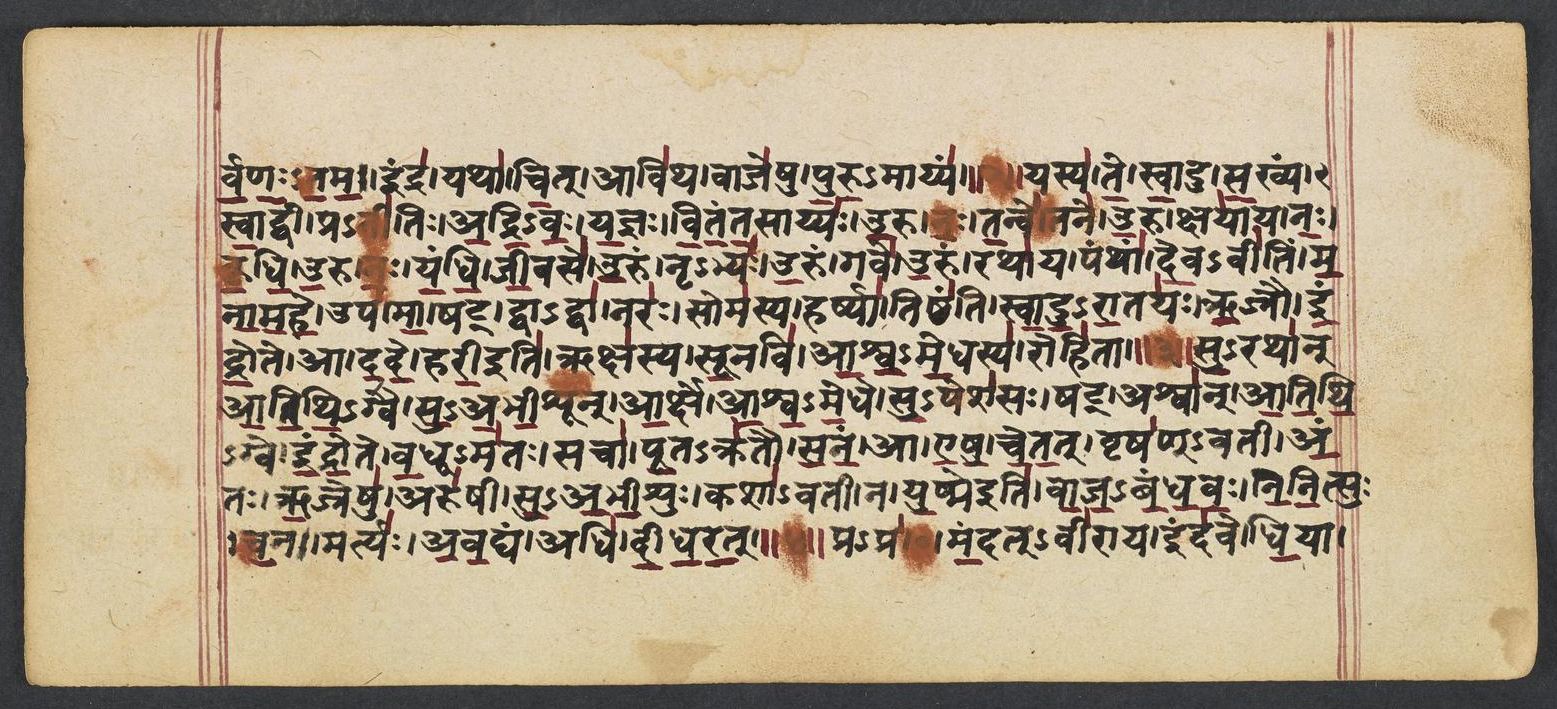
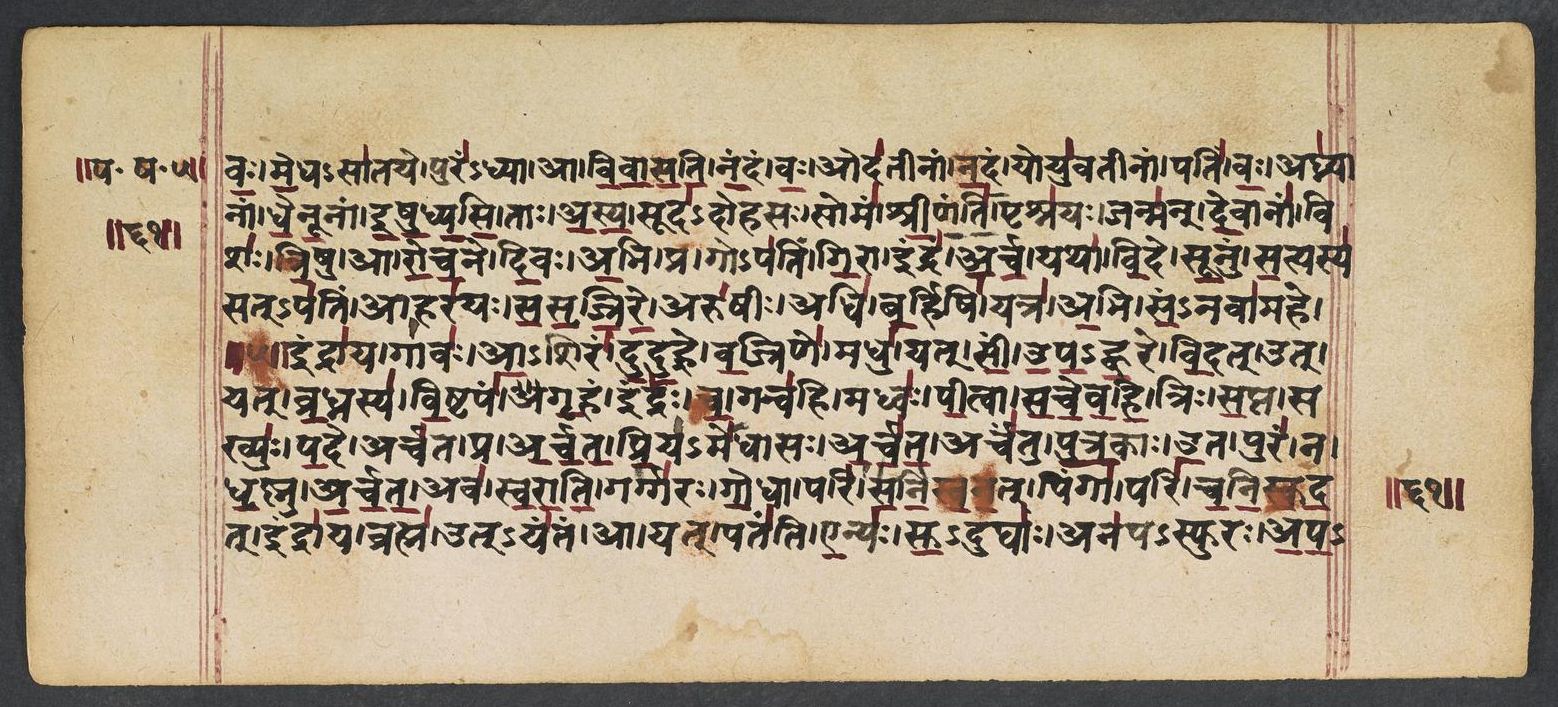
Where on the image
Penn Ms. Coll. 390 Item 41, fol. 639v (numbered 61v by the scribe) (OPenn image 640, upper leaf). Checked on the image: the Rigveda text on this page begins in RV 8.69.1 ‹vaḥ medha-sātaye puram-dhyā ā›. The next page with Rigveda text, fol. 640r (numbered 62r by the scribe), begins in RV 8.69.10 ‹-apa-sphuram gṛbhāyata somam indrāya›. Verses 8.69.1-9 end on this page; 8.69.1 begins on fol. 639r (numbered 61r by the scribe).
1pra-pra̍ vas tri̱ṣṭubha̱m iṣa̍m ma̱ndadvī̍rā̱yenda̍ve | dhi̱yā vo̍ me̱dhasā̍taye̱ pura̱ṁdhyā vi̍vāsati ||
2na̱daṁ va̱ oda̍tīnāṁ na̱daṁ yoyu̍vatīnām | pati̍ṁ vo̱ aghnyā̍nāṁ dhenū̱nām i̍ṣudhyasi ||
3tā a̍sya̱ sūda̍dohasa̱ḥ soma̍ṁ śrīṇanti̱ pṛśna̍yaḥ | janma̍n de̱vānā̱ṁ viśa̍s tri̱ṣv ā ro̍ca̱ne di̱vaḥ ||
4a̱bhi pra gopa̍tiṁ gi̱rendra̍m arca̱ yathā̍ vi̱de | sū̱nuṁ sa̱tyasya̱ satpa̍tim ||
5ā hara̍yaḥ sasṛjri̱re 'ru̍ṣī̱r adhi̍ ba̱rhiṣi̍ | yatrā̱bhi sa̱ṁnavā̍mahe ||
6indrā̍ya̱ gāva̍ ā̱śira̍ṁ dudu̱hre va̱jriṇe̱ madhu̍ | yat sī̍m upahva̱re vi̱dat ||
7ud yad bra̱dhnasya̍ vi̱ṣṭapa̍ṁ gṛ̱ham indra̍ś ca̱ ganva̍hi | madhva̍ḥ pī̱tvā sa̍cevahi̱ triḥ sa̱pta sakhyu̍ḥ pa̱de ||
8arca̍ta̱ prārca̍ta̱ priya̍medhāso̱ arca̍ta | arca̍ntu putra̱kā u̱ta pura̱ṁ na dhṛ̱ṣṇv a̍rcata ||
9ava̍ svarāti̱ garga̍ro go̱dhā pari̍ saniṣvaṇat | piṅgā̱ pari̍ caniṣkada̱d indrā̍ya̱ brahmodya̍tam ||
Compare: Padapāṭha (word-by-word text written in the manuscript; Sansknet e-text via GRETIL)
1pra-pra | vaḥ | tri-stubham | iṣam | mandat-vīrāya | indave | dhiyā | vaḥ | medha-sātaye | puram-dhyā | ā | vivāsati
2nadam | vaḥ | odatīnām | nadam | yoyuvatīnām | patim | vaḥ | aghnyānām | dhenūnām | iṣudhyasi
3tāḥ | asya | sūda-dohasaḥ | somam | śrīṇanti | pṛśnayaḥ | janman | devānām | v iśaḥ | triṣu | ā | rocane | divaḥ
4abhi | pra | go--patim | girā | indram | arca | yathā | vide | sūnum | satyasya | sat-patim
5ā | harayaḥ | sasṛjrire | aruṣīḥ | adhi | barhiṣi | yatra | abhi | sam-navāmahe
6indrāya | gāvaḥ | āśiram | duduhre | vajriṇe | madhu | yat | sīm | upa-hvare | vidat
7ut | yat | bradhnasya | viṣṭapam | gṛham | indraḥ | ca | ganvahi | madhvaḥ | pītvā | sacevahi | triḥ | sapta | sakhyuḥ | pade
8arcata | pra | arcata | priya-medhāsaḥ | arcata | arcantu | putrakāḥ | uta | puram | na | dhṛṣṇu | arcata
9ava | svarāti | gargaraḥ | godhā | pari | sanisvanat | piṅgā | pari | caniskadat | indrāya | brahma | ut-yatam
1I SEND you forth the song of praise for Indu, hero-gladdener. With hymn and plenty he invites you to complete the sacrifice.
2Thou wishest for thy kine a bull, for those who long for his approach, For those who turn away from him, lord of thy cows whom none may kill.
3The dappled kine who stream with milk prepare his draught of Soma juice: Clans in the birth-place of the Gods, in the three luminous realms of heaven.
4Praise, even as he is known, with song Indra the guardian of the kine, The Son of Truth, Lord of the brave.
5Hither his Bay Steeds have been sent, red Steeds are on the sacred grass Where we in concert sing our songs.
6For Indra Thunder-armed the kine have yielded mingled milk and meath, What time he found them in the vault.
7When I and Indra mount on high up to the Bright One’s place and home, We, having drunk of meath, will reach his seat whose Friends are three times seven.
8Sing, sing ye forth your songs of praise, ye Priyamedhas, sing your songs: Yea, let young children sing their lauds: as a strong castle praise ye him.
9Now loudly let the viol sound, the lute send out its voice with might, Shrill be the music of the string. To Indra is the hymn upraised
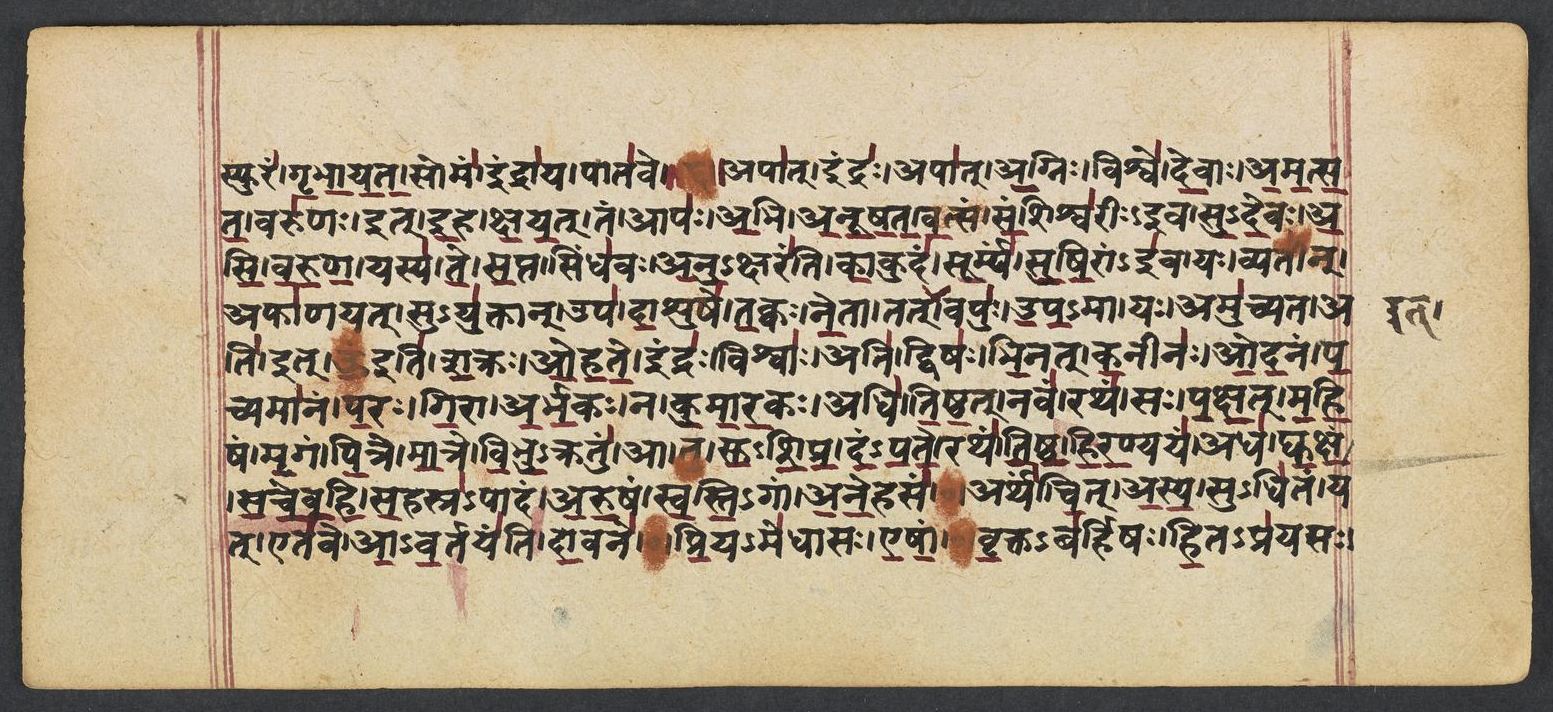
Where on the image
Penn Ms. Coll. 390 Item 41, fol. 640r (numbered 62r by the scribe) (OPenn image 640, lower leaf). Checked on the image: the Rigveda text on this page begins in RV 8.69.10 ‹-apa-sphuram gṛbhāyata somam indrāya›. The next page with Rigveda text, fol. 640v (numbered 62v by the scribe), begins in RV 8.69.18 ‹āśata›. Verses 8.69.10-17 end on this page; 8.69.10 begins on fol. 639v (numbered 61v by the scribe).
10ā yat pata̍nty e̱nya̍ḥ su̱dughā̱ ana̍pasphuraḥ | a̱pa̱sphura̍ṁ gṛbhāyata̱ soma̱m indrā̍ya̱ pāta̍ve ||
11apā̱d indro̱ apā̍d a̱gnir viśve̍ de̱vā a̍matsata | varu̍ṇa̱ id i̱ha kṣa̍ya̱t tam āpo̍ a̱bhy a̍nūṣata va̱tsaṁ sa̱ṁśiśva̍rīr iva ||
12su̱de̱vo a̍si varuṇa̱ yasya̍ te sa̱pta sindha̍vaḥ | a̱nu̱kṣara̍nti kā̱kuda̍ṁ sū̱rmya̍ṁ suṣi̱rām i̍va ||
13yo vyatī̱m̐r aphā̍ṇaya̱t suyu̍ktā̱m̐ upa̍ dā̱śuṣe̍ | ta̱kvo ne̱tā tad id vapu̍r upa̱mā yo amu̍cyata ||
14atīd u̍ śa̱kra o̍hata̱ indro̱ viśvā̱ ati̱ dviṣa̍ḥ | bhi̱nat ka̱nīna̍ oda̱nam pa̱cyamā̍nam pa̱ro gi̱rā ||
15a̱rbha̱ko na ku̍māra̱ko 'dhi̍ tiṣṭha̱n nava̱ṁ ratha̍m | sa pa̍kṣan mahi̱ṣam mṛ̱gam pi̱tre mā̱tre vi̍bhu̱kratu̍m ||
16ā tū su̍śipra dampate̱ ratha̍ṁ tiṣṭhā hira̱ṇyaya̍m | adha̍ dyu̱kṣaṁ sa̍cevahi sa̱hasra̍pādam aru̱ṣaṁ sva̍sti̱gām a̍ne̱hasa̍m ||
17taṁ ghe̍m i̱tthā na̍ma̱svina̱ upa̍ sva̱rāja̍m āsate | artha̍ṁ cid asya̱ sudhi̍ta̱ṁ yad eta̍va āva̱rtaya̍nti dā̱vane̍ ||
Compare: Padapāṭha (word-by-word text written in the manuscript; Sansknet e-text via GRETIL)
10ā | yat | patanti | enyaḥ | su-dughāḥ | anapa-sphuraḥ | apa-sphuram | gṛbhāyata | somam | indrāya | pātave
11apāt | indraḥ | apāt | agniḥ | viśve | devāḥ | amatsata | varuṇaḥ | it | iha | kṣayat | tam | āpaḥ | abhi | anūṣata | vatsam | saṃśiśvarīḥ-iva
12su-devaḥ | asi | varuṇa | yasya | te | sapta | sindhavaḥ | anu-kṣaranti | kākudam | sūrmyam | suṣirām-iva
13yaḥ | vyatīn | aphāṇayat | su-yuktān | upa | dāśuṣe | takvaḥ | netā | tat | it | vapuḥ | upa-mā | yaḥ | amucyata
14ati | it | oṃ iti | śakraḥ | ahate | indraḥ | viśvāḥ | ati | dviṣaḥ | bhinat | kanīnaḥ | odanam | pacyamānam | paraḥ | girā
15arbhakaḥ | na | kumārakaḥ | adhi | tiṣṭhat | navam | ratham | saḥ | pakṣat | mahiṣam | mṛgam | pitre | mātre | vibhu-kratum
16ā | tu | su-śipra | dam-pate | ratham | tiṣṭha | hiraṇyayam | adha | dyukṣam | sacevahi | sahasra-pādam | aruṣam | svasti-gām | anehasam
17tam | gha | īm | itthā | namasvinaḥ | upa | sva-rājam | āsate | artham | cit | asya | su-dhitam | yat | etave | āvartayanti | dāvane
10When hither speed the dappled cows, unflinching, easy to be milked, Seize quickly, as it bursts away, the Soma juice for Indra’s drink
11Indra hath drunk, Agni hath drunk: all Deities have drunk their fill. Here Varuṇa shall have his home, to whom the floods have sung aloud as mother-kine unto their calves.
12Thou, Varuṇa, to whom belong Seven Rivers, art a glorious God. The waters flow into thy throat as 'twere a pipe with ample mouth.
13He who hath made the fleet steeds spring, well-harnessed, to the worshipper, He, the swift Guide, is that fair form that loosed the horses near at hand.
14Indra, the very Mighty, holds his enemies in utter scorn. He, far away, and yet a child, cleft the cloud smitten by his voice.
15He, yet a boy exceeding small, mounted his newly-fashioned car. He for his Mother and his Sire cooked the wild mighty buffalo.
16Lord of the home, fair-helmeted, ascend thy chariot wrought of gold. We will attend the Heavenly One, the thousand-footed, red of hue, matchless, who blesses where he goes.
17With reverence they come hitherward to him as to a Sovran Lord, That they may bring him near for this man’s good success, to prosper and bestow his gifts.
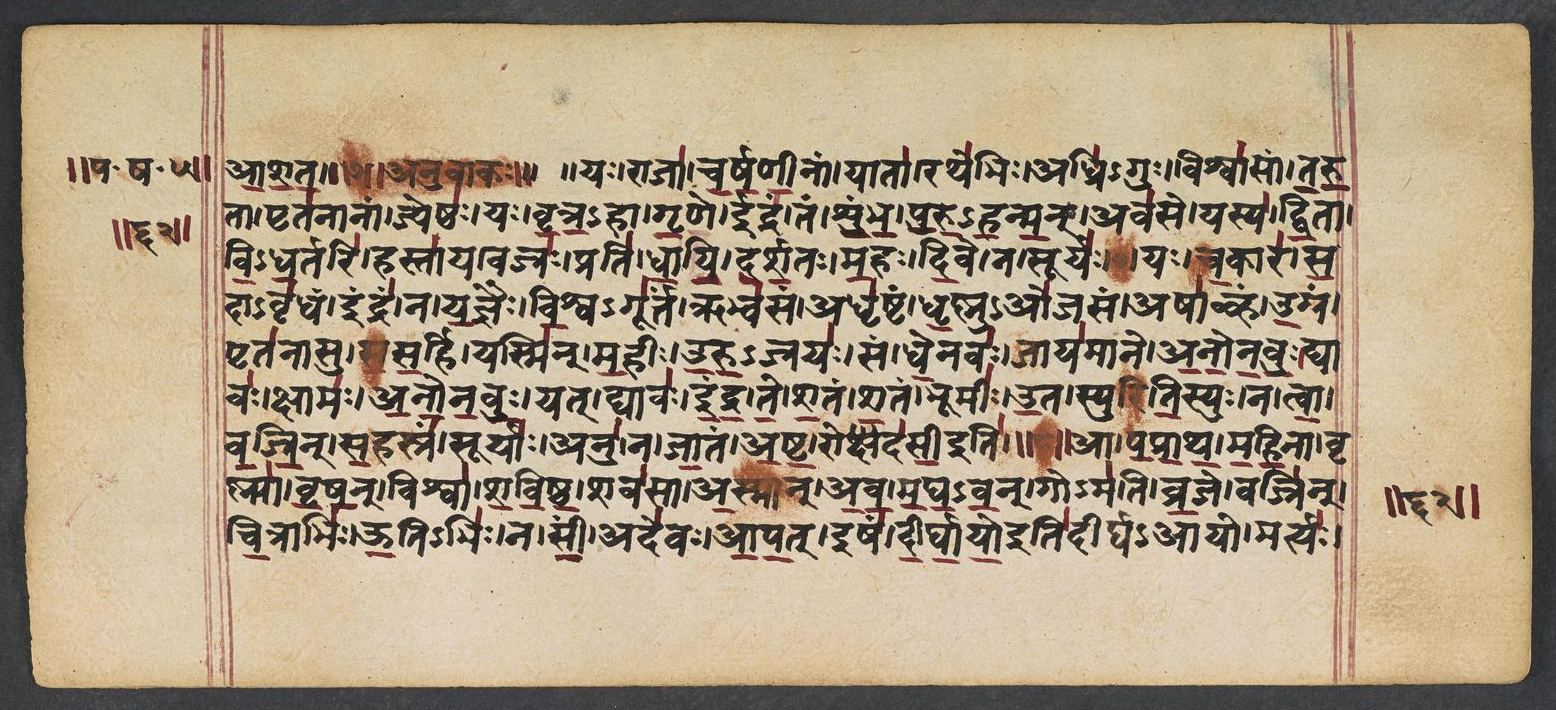
Where on the image
Penn Ms. Coll. 390 Item 41, fol. 640v (numbered 62v by the scribe) (OPenn image 641, upper leaf). Checked on the image: the Rigveda text on this page begins in RV 8.69.18 ‹āśata›. The next page with Rigveda text, fol. 641r (numbered 63r by the scribe), begins in RV 8.70.7 ‹eta-gvā cit yaḥ etaśā›. Verse 8.69.18 ends on this page; 8.69.18 begins on fol. 640r (numbered 62r by the scribe).
18anu̍ pra̱tnasyauka̍saḥ pri̱yame̍dhāsa eṣām | pūrvā̱m anu̱ praya̍tiṁ vṛ̱ktaba̍rhiṣo hi̱tapra̍yasa āśata ||
Compare: Padapāṭha (word-by-word text written in the manuscript; Sansknet e-text via GRETIL)
18anu | pratnasya | okasaḥ | priya-medhāsaḥ | eṣām | pūrvām | anu | pra-yati m | vṛkta-barhiṣaḥ | hita-prayasaḥ | āśata
18The Priyamedhas have observed the offering of the men of old, Of ancient custom, while they strewed the sacred grass, and spread their sacrificial food.
Notes
- Sanskrit: Aufrecht's edition (1877) with the Vedic accents, as entered by van Nooten and Holland (GRETIL).
- English: Ralph T. H. Griffith, The Hymns of the Rigveda (1889-1892; 2nd ed. 1896-1897), from the VedaWeb digital text; OCR slips in that text were corrected against the printed 2nd edition (data/sources/rigveda/griffith_errata.json).
- Padapāṭha (edition text): Sansknet e-text via GRETIL (CC BY-NC-SA 4.0).
Cite
Sources
- Source: Penn Ms. Coll. 390 Item 41 (undated (catalogued with Penn's 18th-19th c. Vedic manuscripts)), OPenn, Public Domain Mark + Aufrecht's accented text (GRETIL) + Griffith's English (VedaWeb) (holding institution)
- Critical edition: Aufrecht (1877), accented e-text via GRETIL
← previous · → next · v cycle view · l back to library