Rigveda 8.70: To Indra
Introduction
Rigveda 8.70 is a hymn of 15 verses addressed to Indra. It stands in book (maṇḍala) 8, the book of the Kaṇva and Aṅgiras poets. The Rigveda is the oldest collection of Sanskrit hymns, composed in the second half of the second millennium BCE and handed down orally for many centuries before it was written down.
The manuscript shown is Penn Ms. Coll. 390 Item 41 (University of Pennsylvania), an undated paper manuscript of the padapāṭha (the word-by-word recitation text, in which every word is written separately and compounds are split) of the whole Ṛgveda in Devanāgarī, 884 leaves in fascicles, 7-9 lines to the page, accents in red; this hymn stands on fol. 640v-641v. Each section below gives the verses that end on one page; the page boundaries were read on the images (the opening words of every page), not counted out. Where the manuscript is a padapāṭha (the word-by-word recitation text), the section shows Aufrecht's continuous (saṃhitā) text first and, as the edition text, the padapāṭha of the same verses, which is the form written on the page.
How was this verified? (Provenance)
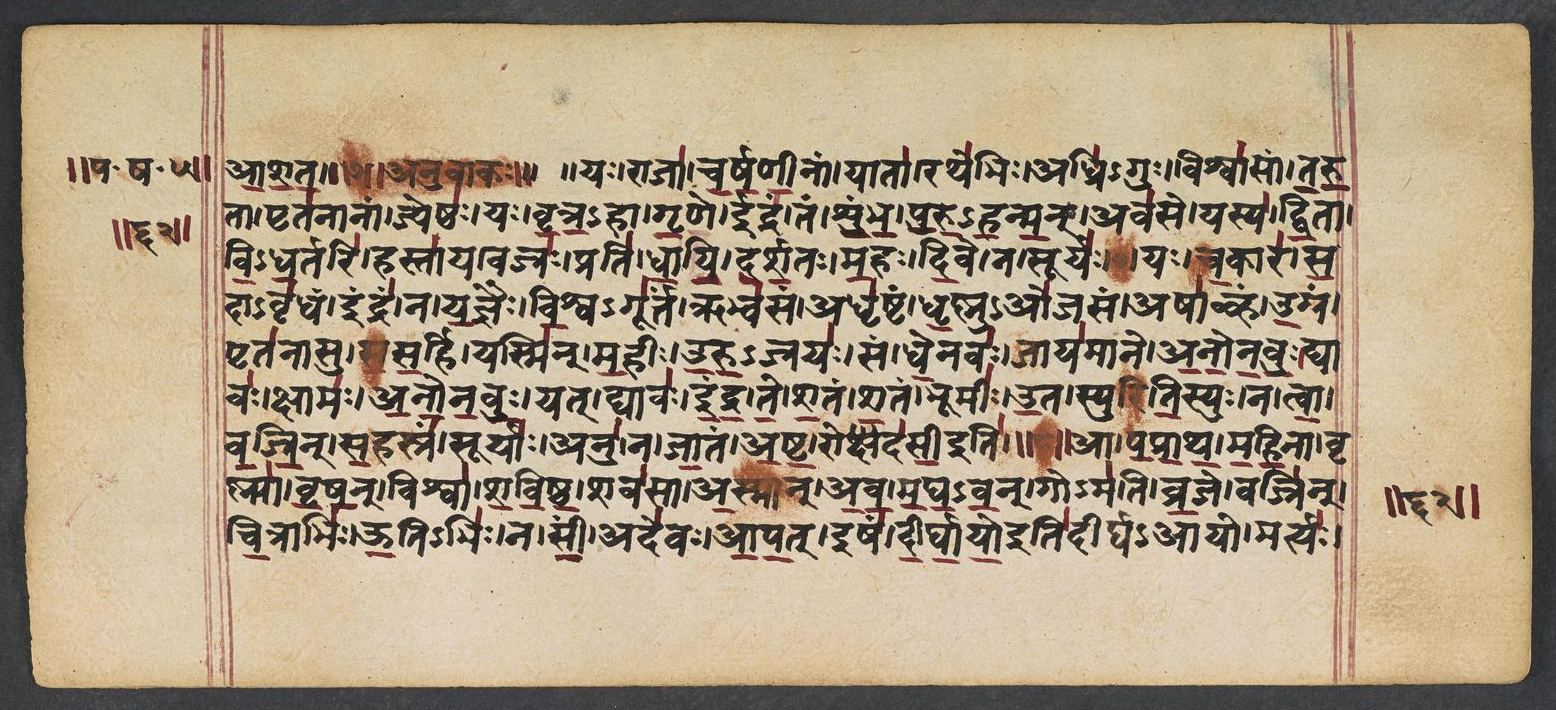
Where on the image
Penn Ms. Coll. 390 Item 41, fol. 640v (numbered 62v by the scribe) (OPenn image 641, upper leaf). Checked on the image: the Rigveda text on this page begins in RV 8.69.18 ‹āśata›. The next page with Rigveda text, fol. 641r (numbered 63r by the scribe), begins in RV 8.70.7 ‹eta-gvā cit yaḥ etaśā›. Verses 8.70.1-6 end on this page.
1yo rājā̍ carṣaṇī̱nāṁ yātā̱ rathe̍bhi̱r adhri̍guḥ | viśvā̍sāṁ taru̱tā pṛta̍nānā̱ṁ jyeṣṭho̱ yo vṛ̍tra̱hā gṛ̱ṇe ||
2indra̱ṁ taṁ śu̍mbha puruhanma̱nn ava̍se̱ yasya̍ dvi̱tā vi̍dha̱rtari̍ | hastā̍ya̱ vajra̱ḥ prati̍ dhāyi darśa̱to ma̱ho di̱ve na sūrya̍ḥ ||
3naki̱ṣ ṭaṁ karma̍ṇā naśa̱d yaś ca̱kāra̍ sa̱dāvṛ̍dham | indra̱ṁ na ya̱jñair vi̱śvagū̍rta̱m ṛbhva̍sa̱m adhṛ̍ṣṭaṁ dhṛ̱ṣṇvo̍jasam ||
4aṣā̍ḻham u̱gram pṛta̍nāsu sāsa̱hiṁ yasmi̍n ma̱hīr u̍ru̱jraya̍ḥ | saṁ dhe̱navo̱ jāya̍māne anonavu̱r dyāva̱ḥ kṣāmo̍ anonavuḥ ||
5yad dyāva̍ indra te śa̱taṁ śa̱tam bhūmī̍r u̱ta syuḥ | na tvā̍ vajrin sa̱hasra̱ṁ sūryā̱ anu̱ na jā̱tam a̍ṣṭa̱ roda̍sī ||
6ā pa̍prātha mahi̱nā vṛṣṇyā̍ vṛṣa̱n viśvā̍ śaviṣṭha̱ śava̍sā | a̱smām̐ a̍va maghava̱n goma̍ti vra̱je vajri̍ñ ci̱trābhi̍r ū̱tibhi̍ḥ ||
Compare: Padapāṭha (word-by-word text written in the manuscript; Sansknet e-text via GRETIL)
1yaḥ | rājā | carṣaṇīnām | yātā | rathebhiḥ | adhri-guḥ | viśvāsām | tarutā | pṛtanānām | jyeṣṭhaḥ | yaḥ | vṛtra-hā | gṛṇe
2indram | tam | śumbha | puru-hanman | avase | yasya | dvitā | vi-dhartari | hastāya | vajraḥ | prati | dhāyi | darśataḥ | mahaḥ | dive | na | sūryaḥ
3nakiḥ | tam | karmaṇā | naśat | yaḥ | cakāra | sadāvṛdham | indram | na | yajñaiḥ | viśva-gūrtam | ṛbhvasam | adhṛṣṭam | dhṛṣṇu-ojasam
4aṣāḷham | ugram | pṛtanāsu | sasahim | yasmin | mahīḥ | uru-jrayaḥ | sam | dhenavaḥ | jāyamāne | anonavuḥ | dyāvaḥ | kṣāmaḥ | anonavuḥ
5yat | dyāvaḥ | indra | te | śatam | śatam | bhūmīḥ | uta | syuritisyuḥ | na | tvā | vajr in | sahasram | sūryāḥ | anu | na | jātam | aṣṭa | rodasī iti
6ā | paprātha | mahinā | vṛṣṇyā | vṛṣan | viśvā | śaviṣṭha | śavasā | asmān | ava | magha-van | go--mati | vraje | vajrin | citrābhiḥ | ūti-bhiḥ
1HE who, as Sovran Lord of men, moves with his chariots unrestrained, The Vr̥itra-slayer vanquisher, of fighting hosts, preeminent, is praised with song.
2Honour that Indra, Puruhanman! for his aid, in whose sustaining hand of old, The splendid bolt of thunder was deposited, as the great Sun was set in heaven.
3No one by deed attains to him who works and strengthens evermore: No, not by sacrifice, to Indra. praised o all, resistless, daring, bold in might.
4The potent Conqueror, invincible in war, him at whose birth the Mighty Ones, The Kine who spread afar, sent their loud voices out, heavens, earths sent their loud voices out,
5O Indra, if a hundred heavens and if a hundred earths were thine- No, not a thousand Suns could match thee at thy birth, not both the worlds, O Thunderer.
6Thou, Hero, hast performed thy hero deeds with might, yea, all with strength, O Strongest One. Maghavan, help us to a stable full of kine, O Thunderer, with wondrous aids.
Where on the image
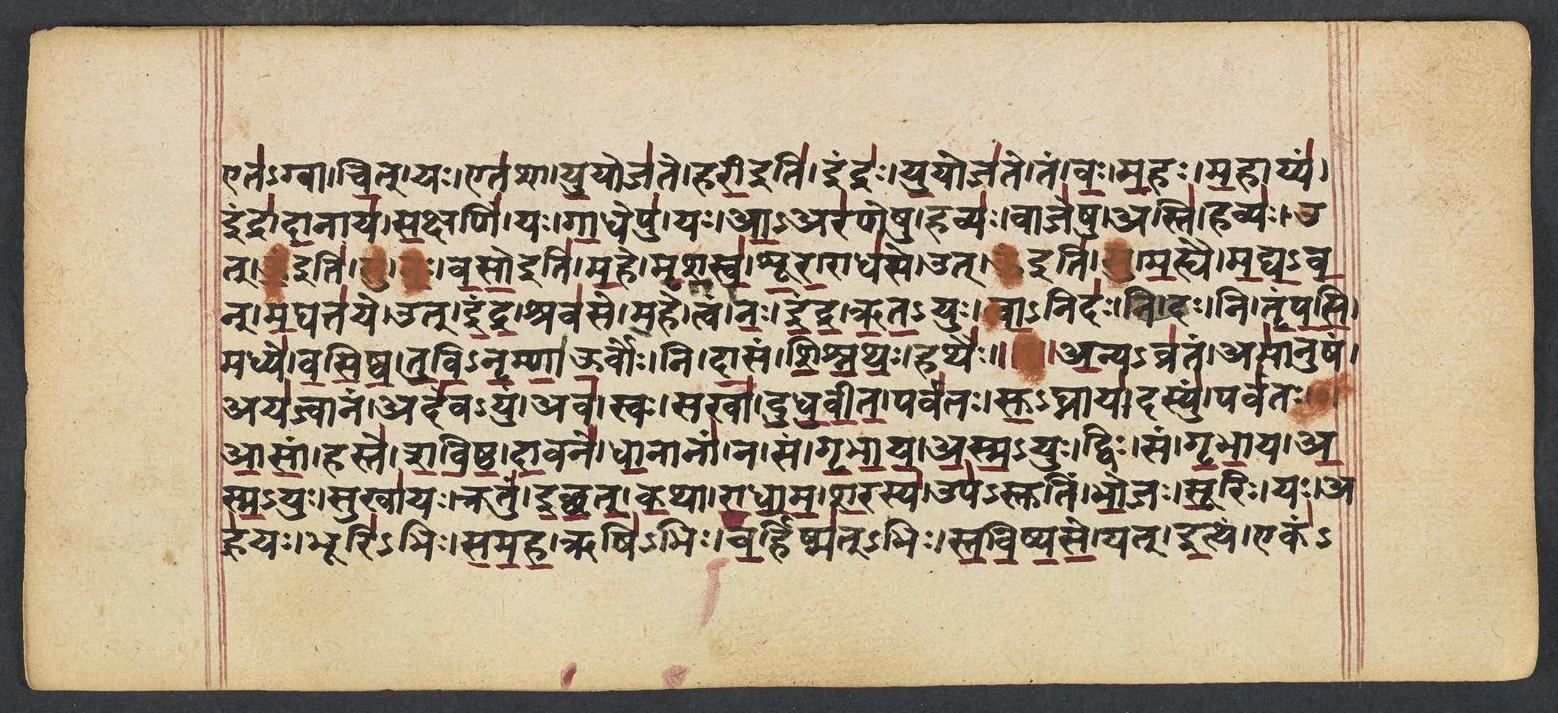
Penn Ms. Coll. 390 Item 41, fol. 641r (numbered 63r by the scribe) (OPenn image 641, lower leaf). Checked on the image: the Rigveda text on this page begins in RV 8.70.7 ‹eta-gvā cit yaḥ etaśā›. The next page with Rigveda text, fol. 641v (numbered 63v by the scribe), begins in RV 8.70.14 ‹ekam it śara vatsān›. Verses 8.70.7-13 end on this page; 8.70.7 begins on fol. 640v (numbered 62v by the scribe).
7na sī̱m ade̍va āpa̱d iṣa̍ṁ dīrghāyo̱ martya̍ḥ | eta̍gvā ci̱d ya eta̍śā yu̱yoja̍te̱ harī̱ indro̍ yu̱yoja̍te ||
8taṁ vo̍ ma̱ho ma̱hāyya̱m indra̍ṁ dā̱nāya̍ sa̱kṣaṇi̍m | yo gā̱dheṣu̱ ya āra̍ṇeṣu̱ havyo̱ vāje̱ṣv asti̱ havya̍ḥ ||
9ud ū̱ ṣu ṇo̍ vaso ma̱he mṛ̱śasva̍ śūra̱ rādha̍se | ud ū̱ ṣu ma̱hyai ma̍ghavan ma̱ghatta̍ya̱ ud i̍ndra̱ śrava̍se ma̱he ||
10tvaṁ na̍ indra ṛta̱yus tvā̱nido̱ ni tṛ̍mpasi | madhye̍ vasiṣva tuvinṛmṇo̱rvor ni dā̱saṁ śi̍śnatho̱ hathai̍ḥ ||
11a̱nyavra̍ta̱m amā̍nuṣa̱m aya̍jvāna̱m ade̍vayum | ava̱ svaḥ sakhā̍ dudhuvīta̱ parva̍taḥ su̱ghnāya̱ dasyu̱m parva̍taḥ ||
12tvaṁ na̍ indrāsā̱ṁ haste̍ śaviṣṭha dā̱vane̍ | dhā̱nānā̱ṁ na saṁ gṛ̍bhāyāsma̱yur dviḥ saṁ gṛ̍bhāyāsma̱yuḥ ||
13sakhā̍ya̱ḥ kratu̍m icchata ka̱thā rā̍dhāma śa̱rasya̍ | upa̍stutim bho̱jaḥ sū̱rir yo ahra̍yaḥ ||
Compare: Padapāṭha (word-by-word text written in the manuscript; Sansknet e-text via GRETIL)
7na | sīm | adevaḥ | āpat | iṣam | dīrghāyo itidīrgha-āyo | martyaḥ | eta-gvā | cit | yaḥ | etaśā | yuyojate | harī iti | indraḥ | yuyojate
8tam | vaḥ | mahaḥ | mahāyyam | indram | dānāya | sakṣaṇim | yaḥ | gādheṣu | yaḥ | āaraṇeṣu | havyaḥ | vājeṣu | asti | havyaḥ
9ut | oṃ iti | su | ṇaḥ | vaso iti | mahe | mṛśasva | śūra | rādhase | ut | oṃ iti | su | mahyai | magha-van | maghattaye | ut | indra | śravase | mahe
10tvam | naḥ | indra | ṛta-yuḥ | tvānidaḥ | ni | tṛmpasi | madhye | vasiṣva | tuvi-nṛmṇa | ūrvoḥ | ni | dāsam | śiśnathaḥ | hathaiḥ
11anya-vratam | amānuṣam | ayajvānam | adeva-yum | ava | svaḥ | sakhā | dudhuvīta | parvataḥ | su-ghnāya | dasyum | parvataḥ
12tvam | naḥ | indra | āsām | haste | śaviṣṭha | dāvane | dhānānām | na | sam | gṛbhāya | asma-yuḥ | dviḥ | sam | gṛbhāya | asma-yuḥ
13sakhāyaḥ | kratum | icchata | kathā | rādhāma | śarasya | upa-stutim | bhojaḥ | sūriḥ | yaḥ | ahrayaḥ
7Let not a godless mortal gain this food, O thou whose life is long! But one who yokes the bright-hued steeds, the Etaṣas, even Indra yoker of the Bays.
8Urge ye the Conqueror to give, your Indra greatly to be praised, To be invoked in shallow waters and in depths, to be invoked in deeds of might.
9O Vasu, O thou Hero, raise us up to ample opulence. Raise us to gain of mighty wealth, O Maghavan, O Indra, to sublime renown.
10Indra, thou justifiest us, and tramplest down thy slanderers. Guard thyself, valiant Hero, in thy vital parts: strike down the Dâsa with thy blows.
11The man who brings no sacrifice, inhuman, godless, infidel, Him let his friend the mountain cast to rapid death, the mountain cast the Dasyu down.
12O Mightiest Indra, loving us, gather thou up, as grains of corn Within thine hand, of these their kine, to give away, yea, gather twice as loving us.
13O my companions, wish for power. How may we perfect Saras praise, The liberal princely patron, never to be harmed?
Where on the image
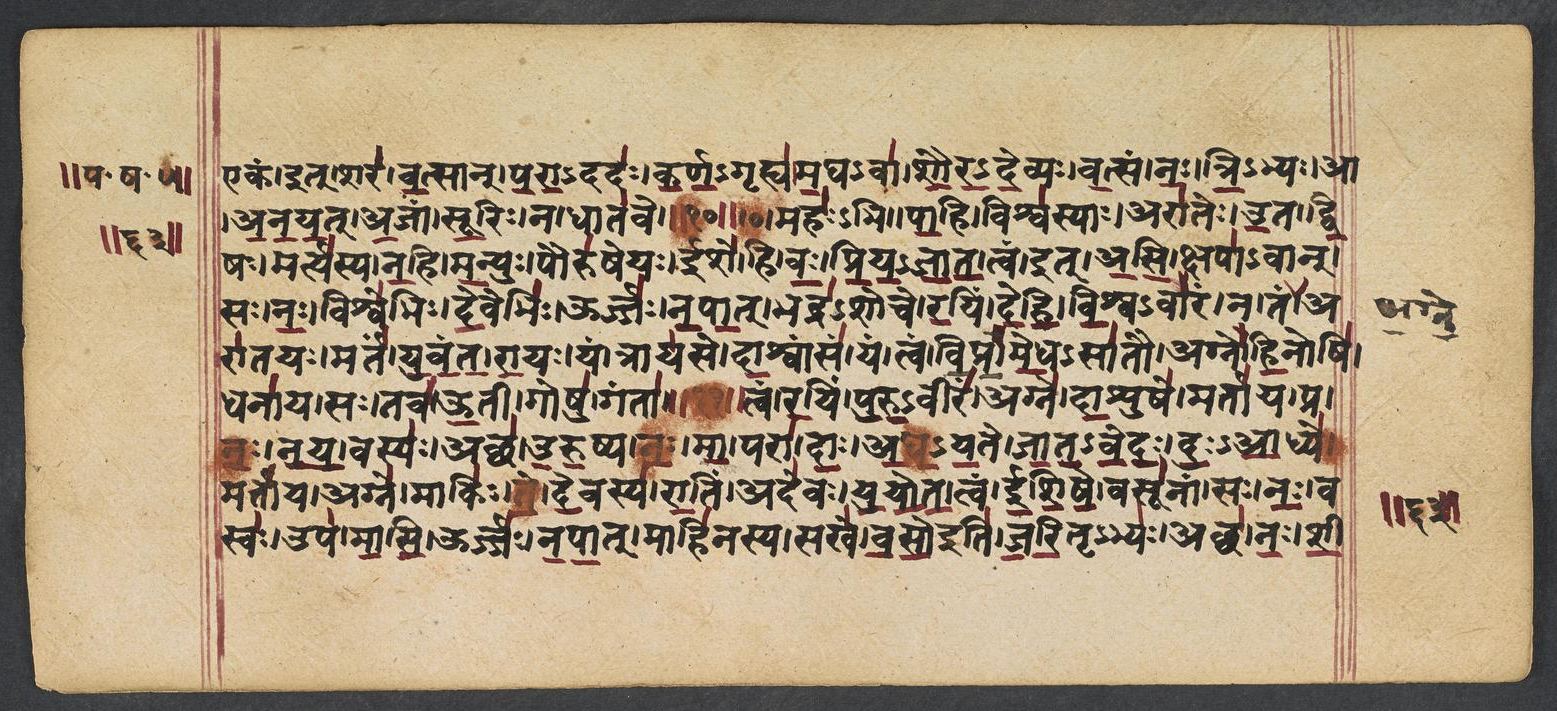
Penn Ms. Coll. 390 Item 41, fol. 641v (numbered 63v by the scribe) (OPenn image 642, upper leaf). Checked on the image: the Rigveda text on this page begins in RV 8.70.14 ‹ekam it śara vatsān›. The next page with Rigveda text, fol. 642r (numbered 64r by the scribe), begins in RV 8.71.10 ‹-śīra-śociṣam giraḥ yantu darśatam›. Verses 8.70.14-15 end on this page; 8.70.14 begins on fol. 641r (numbered 63r by the scribe).
14bhūri̍bhiḥ samaha̱ ṛṣi̍bhir ba̱rhiṣma̍dbhiḥ staviṣyase | yad i̱ttham eka̍m-eka̱m ic chara̍ va̱tsān pa̍rā̱dada̍ḥ ||
15ka̱rṇa̱gṛhyā̍ ma̱ghavā̍ śaurade̱vyo va̱tsaṁ na̍s tri̱bhya āna̍yat | a̱jāṁ sū̱rir na dhāta̍ve ||
Compare: Padapāṭha (word-by-word text written in the manuscript; Sansknet e-text via GRETIL)
14bhūri-bhiḥ | samaha | ṛṣi-bhiḥ | barhiṣmat-bhiḥ | staviṣyase | yat | ittham | ekam | ekam | it | śara | vatsān | parādadaḥ
15karṇa-gṛhya | magha-vā | śaura-devyaḥ | vatsam | naḥ | tri-bhyaḥ | ā | anayat | ajām | sūriḥ | na | dhātave
14By many a sage whose grass is trimmed thou art continually praised, That thou, O Ṣara, hast bestowed here one and here another calf.
15The noble, Ṣûradeva’s son, hath brought a calf, led by the ear, to three of us, As a chief brings a goat to milk.
Notes
- Sanskrit: Aufrecht's edition (1877) with the Vedic accents, as entered by van Nooten and Holland (GRETIL).
- English: Ralph T. H. Griffith, The Hymns of the Rigveda (1889-1892; 2nd ed. 1896-1897), from the VedaWeb digital text; OCR slips in that text were corrected against the printed 2nd edition (data/sources/rigveda/griffith_errata.json).
- Padapāṭha (edition text): Sansknet e-text via GRETIL (CC BY-NC-SA 4.0).
Cite
Sources
- Source: Penn Ms. Coll. 390 Item 41 (undated (catalogued with Penn's 18th-19th c. Vedic manuscripts)), OPenn, Public Domain Mark + Aufrecht's accented text (GRETIL) + Griffith's English (VedaWeb) (holding institution)
- Critical edition: Aufrecht (1877), accented e-text via GRETIL
← previous · → next · v cycle view · l back to library