Rigveda 8.71: To Agni
Introduction
Rigveda 8.71 is a hymn of 15 verses addressed to Agni. It stands in book (maṇḍala) 8, the book of the Kaṇva and Aṅgiras poets. The Rigveda is the oldest collection of Sanskrit hymns, composed in the second half of the second millennium BCE and handed down orally for many centuries before it was written down.
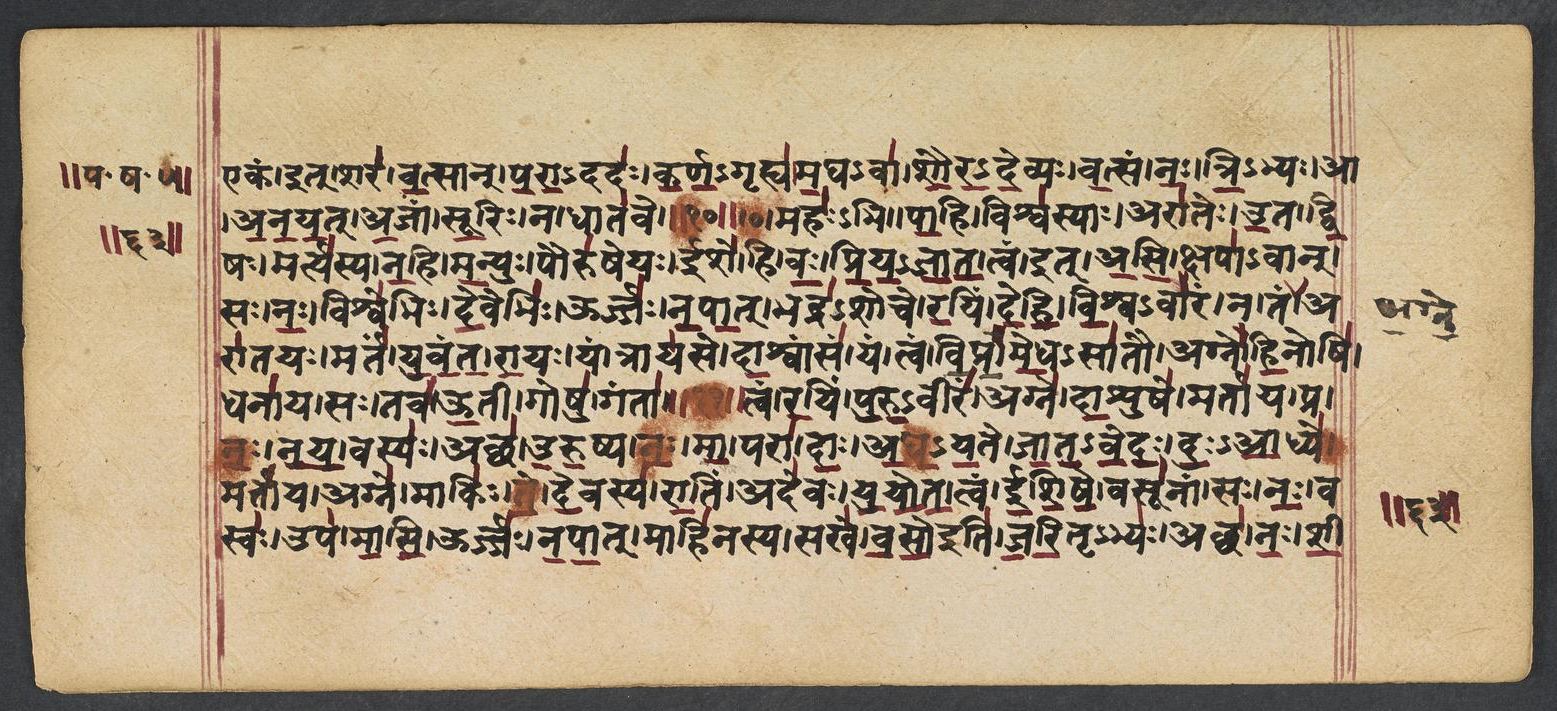
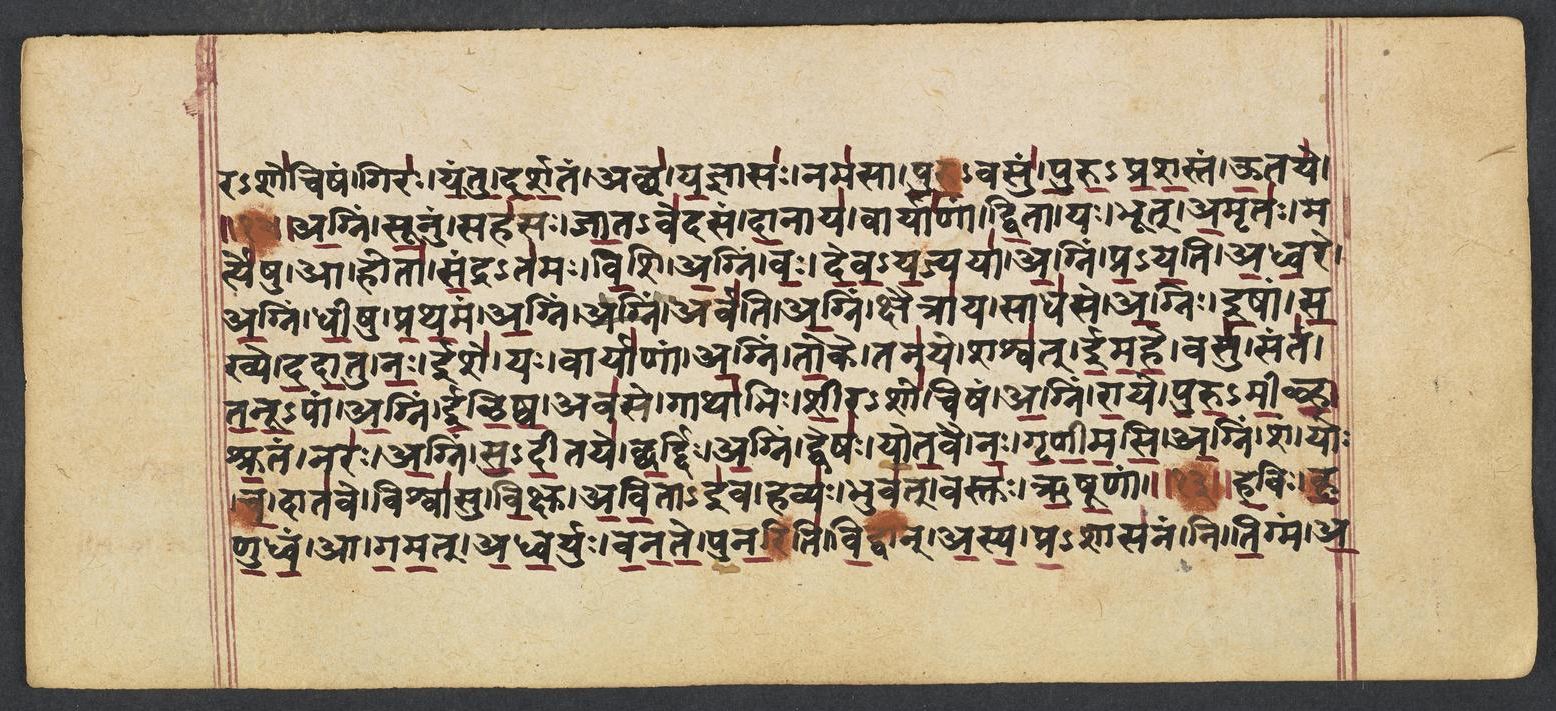
The manuscript shown is Penn Ms. Coll. 390 Item 41 (University of Pennsylvania), an undated paper manuscript of the padapāṭha (the word-by-word recitation text, in which every word is written separately and compounds are split) of the whole Ṛgveda in Devanāgarī, 884 leaves in fascicles, 7-9 lines to the page, accents in red; this hymn stands on fol. 641v-642r. Each section below gives the verses that end on one page; the page boundaries were read on the images (the opening words of every page), not counted out. Where the manuscript is a padapāṭha (the word-by-word recitation text), the section shows Aufrecht's continuous (saṃhitā) text first and, as the edition text, the padapāṭha of the same verses, which is the form written on the page.
How was this verified? (Provenance)
Where on the image
Penn Ms. Coll. 390 Item 41, fol. 641v (numbered 63v by the scribe) (OPenn image 642, upper leaf). Checked on the image: the Rigveda text on this page begins in RV 8.70.14 ‹ekam it śara vatsān›. The next page with Rigveda text, fol. 642r (numbered 64r by the scribe), begins in RV 8.71.10 ‹-śīra-śociṣam giraḥ yantu darśatam›. Verses 8.71.1-9 end on this page.
1tvaṁ no̍ agne̱ maho̍bhiḥ pā̱hi viśva̍syā̱ arā̍teḥ | u̱ta dvi̱ṣo martya̍sya ||
2na̱hi ma̱nyuḥ pauru̍ṣeya̱ īśe̱ hi va̍ḥ priyajāta | tvam id a̍si̱ kṣapā̍vān ||
3sa no̱ viśve̍bhir de̱vebhi̱r ūrjo̍ napā̱d bhadra̍śoce | ra̱yiṁ de̍hi vi̱śvavā̍ram ||
4na tam a̍gne̱ arā̍tayo̱ marta̍ṁ yuvanta rā̱yaḥ | yaṁ trāya̍se dā̱śvāṁsa̍m ||
5yaṁ tvaṁ vi̍pra me̱dhasā̍tā̱v agne̍ hi̱noṣi̱ dhanā̍ya | sa tavo̱tī goṣu̱ gantā̍ ||
6tvaṁ ra̱yim pu̍ru̱vīra̱m agne̍ dā̱śuṣe̱ martā̍ya | pra ṇo̍ naya̱ vasyo̱ accha̍ ||
7u̱ru̱ṣyā ṇo̱ mā parā̍ dā aghāya̱te jā̍tavedaḥ | du̱rā̱dhye̱3̱̍ martā̍ya ||
8agne̱ māki̍ṣ ṭe de̱vasya̍ rā̱tim ade̍vo yuyota | tvam ī̍śiṣe̱ vasū̍nām ||
9sa no̱ vasva̱ upa̍ mā̱sy ūrjo̍ napā̱n māhi̍nasya | sakhe̍ vaso jari̱tṛbhya̍ḥ ||
Compare: Padapāṭha (word-by-word text written in the manuscript; Sansknet e-text via GRETIL)
1tvam | naḥ | agne | mahaḥ-bhiḥ | pāhi | viśvasyāḥ | arāteḥ | uta | dviṣaḥ | martyasya
2nahi | manyuḥ | pauruṣeyaḥ | īśe | hi | vaḥ | priya-jāta | tvam | it | asi | kṣapāvān
3saḥ | naḥ | viśvebhiḥ | devebhiḥ | ūrjaḥ | napāt | bhadra-śoce | rayim | dehi | viśva-vāram
4na | tam | agne | arātayaḥ | martam | yuvanta | rāyaḥ | yam | trāyase | dāśvāṃsam
5yam | tvam | vipra | medha-sātau | agne | hinoṣi | dhanāya | saḥ | tava | ūtī | goṣu | gantā
6tvam | rayim | puru-vīram | agne | dāśuṣe | martāya | pra | naḥ | naya | vasyaḥ | accha
7uruṣya | ṇaḥ | mā | parā | dāḥ | agha-yate | jata-vedaḥ | duḥ-ādhye | martāya
8agne | mākiḥ | te | devasya | rātim | adevaḥ | yuyota | tvam | īśiṣe | vasūnām
9saḥ | naḥ | vasvaḥ | upa | māsi | ūrjaḥ | napāt | māhinasya | sakhe | vaso iti | jaritṛ-bhyaḥ
1O AGNI, with thy mighty wealth guard us from all malignity, Yea, from all hate of mortal man.
2For over thee, O Friend from birth, the wrath of man hath no control: Nay, Guardian of the earth art thou.
3As such, with all the Gods, O Son of Strength, auspicious in thy flame, Give us wealth bringing all things good.
4Malignities stay not from wealth the mortal man whom, Agni, thou Protectest while he offers gifts.
5Sage Agni, be whom thou dost urge, in worship of the Gods, to wealth, With thine assistance winneth kine.
6Riches with many heroes thou hast for the man who offers gifts: Lead thou us on to higher bliss.
7Save us, O Jâtavedas, nor abandon us to him who sins, Unto the evil-hearted man.
8O Agni, let no godless man avert thy bounty as a God: Over all treasures thou art Lord.
9So, Son of Strength, thou aidest us to what is great and excellent. Those, Vasu! Friend! who sing thy praise.
Where on the image
Penn Ms. Coll. 390 Item 41, fol. 642r (numbered 64r by the scribe) (OPenn image 642, lower leaf). Checked on the image: the Rigveda text on this page begins in RV 8.71.10 ‹-śīra-śociṣam giraḥ yantu darśatam›. The next page with Rigveda text, fol. 642v (numbered 64v by the scribe), begins in RV 8.72.2 ‹-abhi aṃśum sīdat hotā›. Verses 8.71.10-15 end on this page; 8.71.10 begins on fol. 641v (numbered 63v by the scribe).
10acchā̍ naḥ śī̱raśo̍ciṣa̱ṁ giro̍ yantu darśa̱tam | acchā̍ ya̱jñāso̱ nama̍sā purū̱vasu̍m purupraśa̱stam ū̱taye̍ ||
11a̱gniṁ sū̱nuṁ saha̍so jā̱tave̍dasaṁ dā̱nāya̱ vāryā̍ṇām | dvi̱tā yo bhūd a̱mṛto̱ martye̱ṣv ā hotā̍ ma̱ndrata̍mo vi̱śi ||
12a̱gniṁ vo̍ devaya̱jyayā̱gnim pra̍ya̱ty a̍dhva̱re | a̱gniṁ dhī̱ṣu pra̍tha̱mam a̱gnim arva̍ty a̱gniṁ kṣaitrā̍ya̱ sādha̍se ||
13a̱gnir i̱ṣāṁ sa̱khye da̍dātu na̱ īśe̱ yo vāryā̍ṇām | a̱gniṁ to̱ke tana̍ye̱ śaśva̍d īmahe̱ vasu̱ṁ santa̍ṁ tanū̱pām ||
14a̱gnim ī̍ḻi̱ṣvāva̍se̱ gāthā̍bhiḥ śī̱raśo̍ciṣam | a̱gniṁ rā̱ye pu̍rumīḻha śru̱taṁ naro̱ 'gniṁ su̍dī̱taye̍ cha̱rdiḥ ||
15a̱gniṁ dveṣo̱ yota̱vai no̍ gṛṇīmasy a̱gniṁ śaṁ yoś ca̱ dāta̍ve | viśvā̍su vi̱kṣv a̍vi̱teva̱ havyo̱ bhuva̱d vastu̍r ṛṣū̱ṇām ||
Compare: Padapāṭha (word-by-word text written in the manuscript; Sansknet e-text via GRETIL)
10accha | naḥ | śīra-śociṣam | giraḥ | yantu | darśatam | accha | yajñāsaḥ | namasā | puru-vasum | puru-praśastam | ūtaye
11agnim | sūnum | sahasaḥ | jāta-vedasam | dānāya | vāryāṇām | dvitā | yaḥ | bhūt | amṛtaḥ | martyeṣu | ā | hotā | mandra-tamaḥ | viśi
12agnim | vaḥ | deva-yajyayā | agnim | pra-yati | adhvare | agnim | dhīṣu | prathamam | agnim | arvati | agnim | kṣaitrāya | sādhase
13agniḥ | iṣām | sakhye | dadātu | naḥ | īśe | yaḥ | vāryāṇām | agnim | toke | tanaye | śaśvat | īmahe | vasum | santam | tanū-pām
14agnim | īḷiṣva | avase | gāthābhiḥ | śīra-śociṣam | agnim | rāye | puru-mīḷha | śrutam | naraḥ | agnim | su-dītaye | chardhiḥ
15agnim | dveṣaḥ | yotavai | naḥ | gṛṇīmasi | agnim | śam | yoḥ | ca | dātave | viśvāsu | vikṣu | avitāiva | havyaḥ | bhuvat | vastuḥ | ṛṣūṇām
10Let our songs come anear to him beauteous and bright with piercing flame Our offerings, with our homage, to the Lord of wealth, to him whom many praise, for help:
11To Agni Jâtavedas, to the Son of Strength, that he may give us precious gifts, Immortal, from of old Priest among mortal men, the most delightful in the house.
12Agni, made yours by sacrifice, Agni, while holy rites advance; Agni, the first in songs, first with the warrior steed; Agril to win the land for us.
13May Agni who is Lord of wealth vouchsafe us food for friendship sake. Agni we ever seek for seed and progeny, the Vasu who protects our lives.
14Solicit with your chants, for help, Agni the God with piercing flame, For riches famous Agni, Purumîḷha and ye men! Agni to light our dwelling well.
15Agni we laud that he may keep our foes afar, Agni to give us health and strength. Let him as Guardian be invoked in all the tribes, the lighter-up of glowing brands.
Notes
- Sanskrit: Aufrecht's edition (1877) with the Vedic accents, as entered by van Nooten and Holland (GRETIL).
- English: Ralph T. H. Griffith, The Hymns of the Rigveda (1889-1892; 2nd ed. 1896-1897), from the VedaWeb digital text; OCR slips in that text were corrected against the printed 2nd edition (data/sources/rigveda/griffith_errata.json).
- Padapāṭha (edition text): Sansknet e-text via GRETIL (CC BY-NC-SA 4.0).
Cite
Sources
- Source: Penn Ms. Coll. 390 Item 41 (undated (catalogued with Penn's 18th-19th c. Vedic manuscripts)), OPenn, Public Domain Mark + Aufrecht's accented text (GRETIL) + Griffith's English (VedaWeb) (holding institution)
- Critical edition: Aufrecht (1877), accented e-text via GRETIL
← previous · → next · v cycle view · l back to library