Rigveda 8.72: To Agni or praise of the oblations
Introduction
Rigveda 8.72 is a hymn of 18 verses addressed to Agni or praise of the oblations. It stands in book (maṇḍala) 8, the book of the Kaṇva and Aṅgiras poets. The Rigveda is the oldest collection of Sanskrit hymns, composed in the second half of the second millennium BCE and handed down orally for many centuries before it was written down.
The manuscript shown is Penn Ms. Coll. 390 Item 41 (University of Pennsylvania), an undated paper manuscript of the padapāṭha (the word-by-word recitation text, in which every word is written separately and compounds are split) of the whole Ṛgveda in Devanāgarī, 884 leaves in fascicles, 7-9 lines to the page, accents in red; this hymn stands on fol. 642r-643r. Each section below gives the verses that end on one page; the page boundaries were read on the images (the opening words of every page), not counted out. Where the manuscript is a padapāṭha (the word-by-word recitation text), the section shows Aufrecht's continuous (saṃhitā) text first and, as the edition text, the padapāṭha of the same verses, which is the form written on the page.
How was this verified? (Provenance)
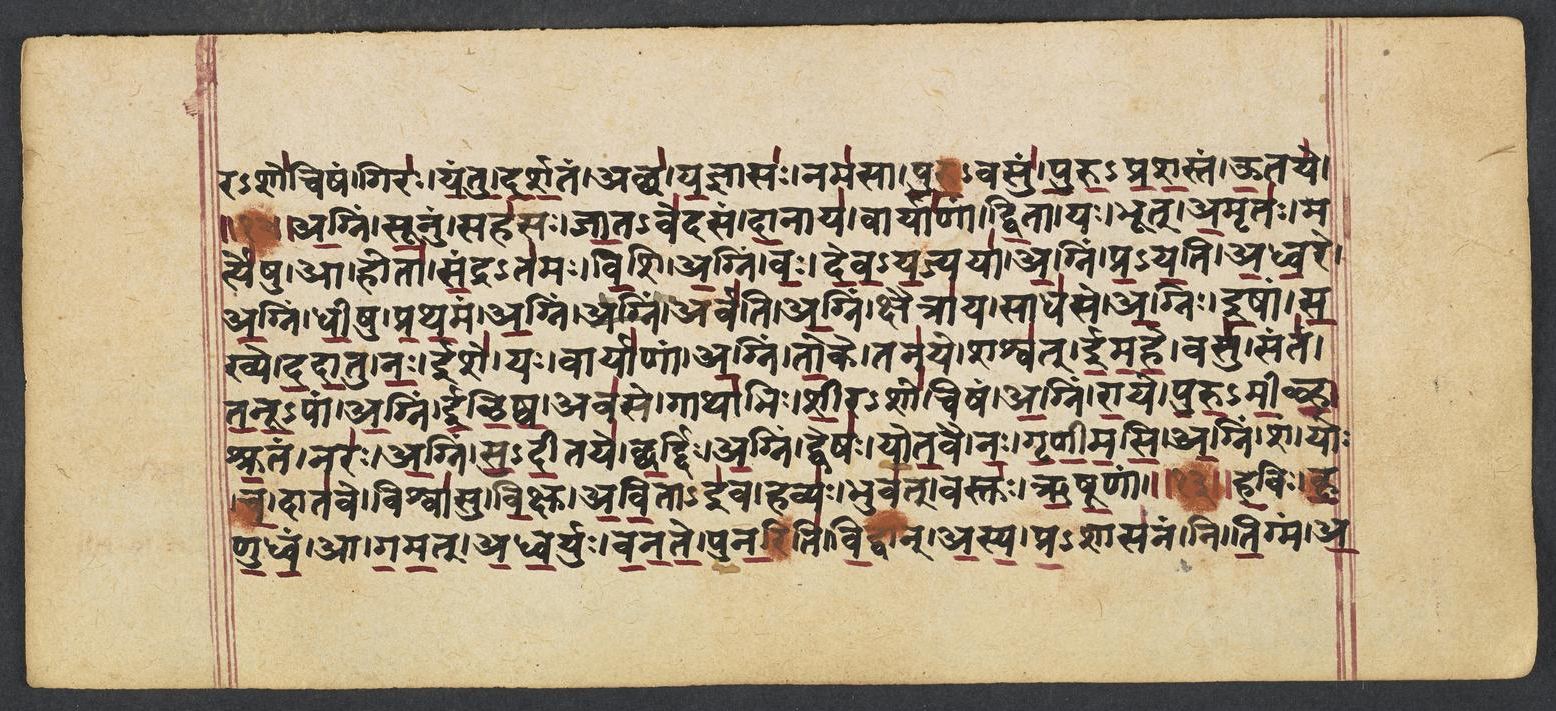
Where on the image
Penn Ms. Coll. 390 Item 41, fol. 642r (numbered 64r by the scribe) (OPenn image 642, lower leaf). Checked on the image: the Rigveda text on this page begins in RV 8.71.10 ‹-śīra-śociṣam giraḥ yantu darśatam›. The next page with Rigveda text, fol. 642v (numbered 64v by the scribe), begins in RV 8.72.2 ‹-abhi aṃśum sīdat hotā›. Verse 8.72.1 ends on this page.
1ha̱viṣ kṛ̍ṇudhva̱m ā ga̍mad adhva̱ryur va̍nate̱ puna̍ḥ | vi̱dvām̐ a̍sya pra̱śāsa̍nam ||
Compare: Padapāṭha (word-by-word text written in the manuscript; Sansknet e-text via GRETIL)
1haviḥ | kṛṇudhvam | ā | gamat | adhvaryuḥ | vanate | punariti | vidvān | asya | pra-śāsanam
1PREPARE oblation: let him come; and let the minister serve again Who knows the ordering thereof,
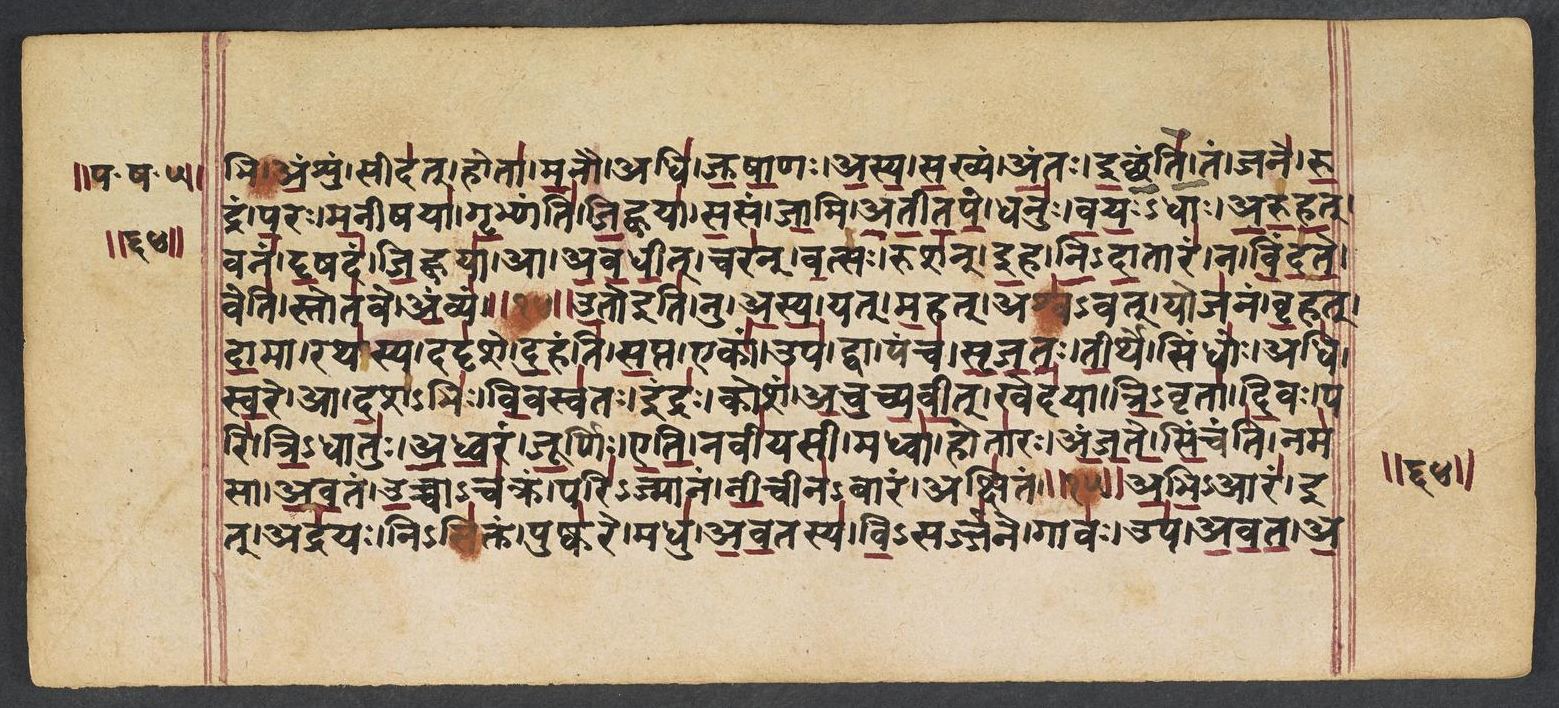
Where on the image
Penn Ms. Coll. 390 Item 41, fol. 642v (numbered 64v by the scribe) (OPenn image 643, upper leaf). Checked on the image: the Rigveda text on this page begins in RV 8.72.2 ‹-abhi aṃśum sīdat hotā›. The next page with Rigveda text, fol. 643r (numbered 65r by the scribe), begins in RV 8.72.12 ‹-avatam mahī iti yajñasya›. Verses 8.72.2-11 end on this page; 8.72.2 begins on fol. 642r (numbered 64r by the scribe).
2ni ti̱gmam a̱bhy a1̱̍ṁśuṁ sīda̱d dhotā̍ ma̱nāv adhi̍ | ju̱ṣā̱ṇo a̍sya sa̱khyam ||
3a̱ntar i̍cchanti̱ taṁ jane̍ ru̱dram pa̱ro ma̍nī̱ṣayā̍ | gṛ̱bhṇanti̍ ji̱hvayā̍ sa̱sam ||
4jā̱my a̍tītape̱ dhanu̍r vayo̱dhā a̍ruha̱d vana̍m | dṛ̱ṣada̍ṁ ji̱hvayāva̍dhīt ||
5cara̍n va̱tso ruśa̍nn i̱ha ni̍dā̱tāra̱ṁ na vi̍ndate | veti̱ stota̍va a̱mbya̍m ||
6u̱to nv a̍sya̱ yan ma̱had aśvā̍va̱d yoja̍nam bṛ̱had | dā̱mā ratha̍sya̱ dadṛ̍śe ||
7du̱hanti̍ sa̱ptaikā̱m upa̱ dvā pañca̍ sṛjataḥ | tī̱rthe sindho̱r adhi̍ sva̱re ||
8ā da̱śabhi̍r vi̱vasva̍ta̱ indra̱ḥ kośa̍m acucyavīt | kheda̍yā tri̱vṛtā̍ di̱vaḥ ||
9pari̍ tri̱dhātu̍r adhva̱raṁ jū̱rṇir e̍ti̱ navī̍yasī | madhvā̱ hotā̍ro añjate ||
10si̱ñcanti̱ nama̍sāva̱tam u̱ccāca̍kra̱m pari̍jmānam | nī̱cīna̍bāra̱m akṣi̍tam ||
11a̱bhyāra̱m id adra̍yo̱ niṣi̍kta̱m puṣka̍re̱ madhu̍ | a̱va̱tasya̍ vi̱sarja̍ne ||
Compare: Padapāṭha (word-by-word text written in the manuscript; Sansknet e-text via GRETIL)
2ni | tigmam | abhi | aṃśum | sīdat | hotā | manau | adhi | juṣāṇaḥ | asya | sakhyam
3antaḥ | icchanti | tam | jane | rudram | paraḥ | manīṣayā | gṛbhṇanti | jihvayā | sasam
4jāmi | atītape | dhanuḥ | vayaḥ-dhāḥ | aruhat | vanam | dṛṣadam | jihvayā | ā | avadhīt
5caran | vatsaḥ | ruśan | iha | ni-dātāram | na | vindate | veti | stotavr | ambyam
6uto iti | nu | asya | yat | mahat | aśva-vat | yojanam | bṛhat | dāmā | rathasya | dadṛśe
7duhanti | sapta | ekām | upa | dvā | pañca | sṛjataḥ | tīrthe | sindhoḥ | adhi | svare
8ā | daśa-bhiḥ | vivasvataḥ | indraḥ | kośam | acucyavīt | khedayā | tri-vṛtā | divaḥ
9pari | tri-dhātuḥ | adhvaram | jūrṇiḥ | eti | navīyasī | madhvā | hotāraḥ | añjate
10siñcanti | namasā | avatam | uccācakram | pari-jmānam | nīcīna-bāram | akṣitam
11abhi-āram | it | adrayaḥ | ni-siktam | puṣkare | madhu | avatasya | vi-sarjane
2Rejoicing in his friendship, let the priest be seated over man, Beside the shoot of active power.
3Him, glowing bright beyond all thought, they seek among the race of man; With him for tongue they seize the food.
4He hath inflamed the twofold plain: lifegiving, he hath climbed the wood, And with his tongue hath struck the rock.
5Wandering here the radiant Calf finds none to fetter him, and seeks The Mother to declare his praise.
6And now that great and mighty team, the team of horses that are his, And traces of his car, are seen.
7The seven milk a single cow; the two set other five to work, On the stream's loud-resounding bank.
8Entreated by Vivasvan's ten, Indra cast down the water-jar With threefold hammer from the sky.
9Three times the newly-kindled flame proceeds around the sacrifice: The priests anoint it with the meath.
10With reverence they drain the fount that circles with its wheel above, Exhaustless, with the mouth below.
11The pressing-stones are set at work: the meath is poured into the tank, At the out-shedding of the fount.
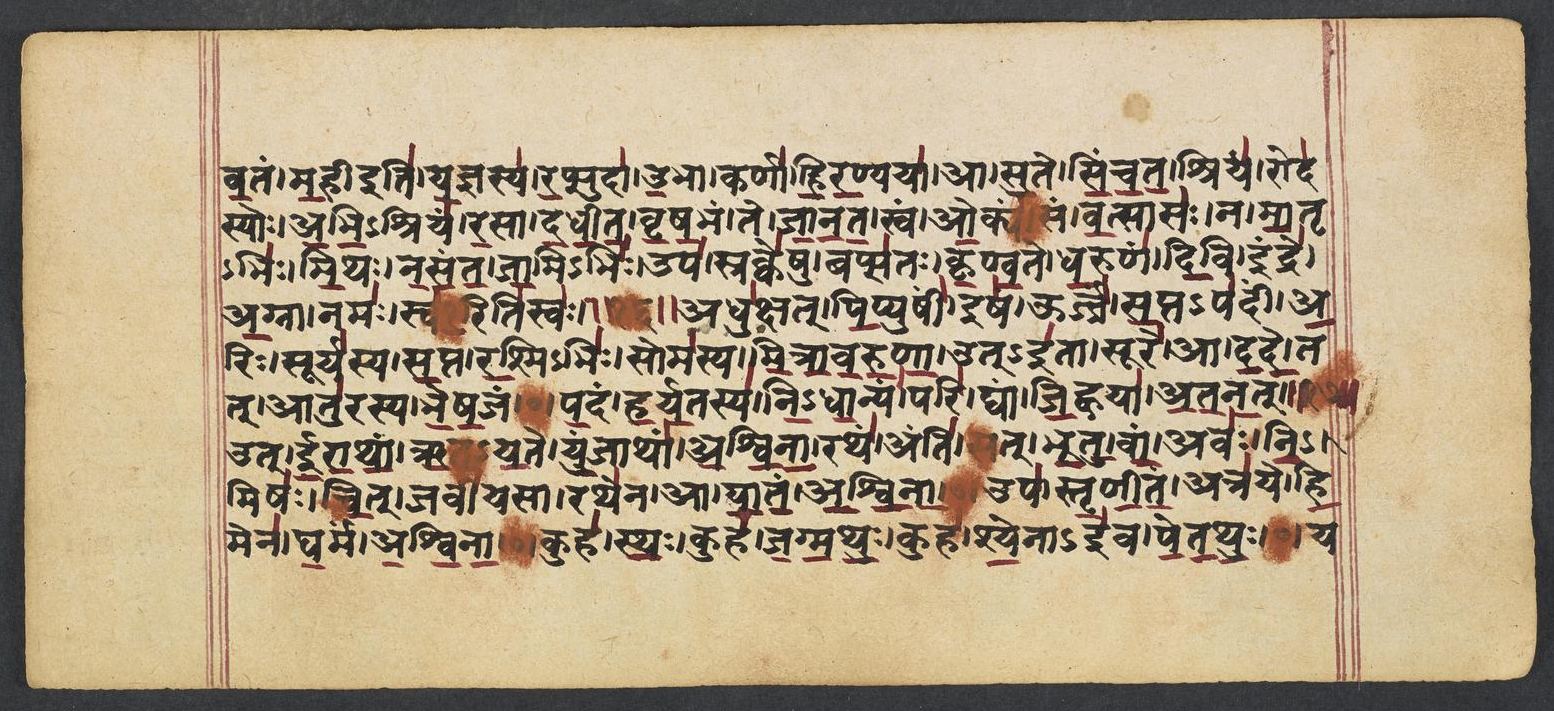
Where on the image
Penn Ms. Coll. 390 Item 41, fol. 643r (numbered 65r by the scribe) (OPenn image 643, lower leaf). Checked on the image: the Rigveda text on this page begins in RV 8.72.12 ‹-avatam mahī iti yajñasya›. The next page with Rigveda text, fol. 643v (numbered 65v by the scribe), begins in RV 8.73.5 ‹adya karhi karhi cit›. Verses 8.72.12-18 end on this page; 8.72.12 begins on fol. 642v (numbered 64v by the scribe).
12gāva̱ upā̍vatāva̱tam ma̱hī ya̱jñasya̍ ra̱psudā̍ | u̱bhā karṇā̍ hira̱ṇyayā̍ ||
13ā su̱te si̍ñcata̱ śriya̱ṁ roda̍syor abhi̱śriya̍m | ra̱sā da̍dhīta vṛṣa̱bham ||
14te jā̍nata̱ svam o̱kya1̱̍ṁ saṁ va̱tsāso̱ na mā̱tṛbhi̍ḥ | mi̱tho na̍santa jā̱mibhi̍ḥ ||
15upa̱ srakve̍ṣu̱ bapsa̍taḥ kṛṇva̱te dha̱ruṇa̍ṁ di̱vi | indre̍ a̱gnā nama̱ḥ sva̍ḥ ||
16adhu̍kṣat pi̱pyuṣī̱m iṣa̱m ūrja̍ṁ sa̱ptapa̍dīm a̱riḥ | sūrya̍sya sa̱pta ra̱śmibhi̍ḥ ||
17soma̍sya mitrāvaru̱ṇodi̍tā̱ sūra̱ ā da̍de | tad ātu̍rasya bheṣa̱jam ||
18u̱to nv a̍sya̱ yat pa̱daṁ ha̍rya̱tasya̍ nidhā̱nya̍m | pari̱ dyāṁ ji̱hvayā̍tanat ||
Compare: Padapāṭha (word-by-word text written in the manuscript; Sansknet e-text via GRETIL)
12gāvaḥ | upa | avata | avatam | mahī iti | yajñasya | rapsudā | ubhā | karṇā | hiraṇyayā
13ā | sute | siñcata | śriyam | rodasyoḥ | abhi-śriyam | rasā | dadhīta | vṛṣabham
14te | jānata | svam | okyam | sam | vatsāsaḥ | na | mātṛ-bhiḥ | mithaḥ | nasanta | jāmi-bhiḥ
15upa | srakveṣu | bapsataḥ | kṛṇvate | dharuṇam | divi | indre | agnā | namaḥ | svaḥ
16adhukṣat | pipyuṣīm | iṣam | ūrjam | sapta-padīm | ariḥ | sūryasya | sapta | raśmi-bhiḥ
17somasya | mitrāvaruṇā | ut-itā | sūre | ā | dade | tat | āturasya | bheṣajam
18uto iti | nu | asya | yat | padam | haryatasya | ni-dhānyam | pari | dyām | jihvayā | atanat
12Ye cows, protect the fount: the two Mighty Ones bless the sacrifice. The handles twain are wrought of gold.
13Pour on the juice the ornament which reaches both the heaven and earth Supply the liquid to the Bull.
14These know their own abiding-place: like calves beside the mother cows They meet together with their kin.
15Devouring in their greedy jaws, they make sustaining food in heaven, To Indra, Agni light and prayer.
16The Pious One milked out rich food, sustenance dealt in portions seven, Together with the Sun's seven rays.
17I took some Soma when the Sun rose up, O Mitra, Varuṇa. That is the sick man's medicine.
18From where oblations must be laid, which is the Well-beloved's home, He with his tongue hath compassed heaven.
Notes
- Sanskrit: Aufrecht's edition (1877) with the Vedic accents, as entered by van Nooten and Holland (GRETIL).
- English: Ralph T. H. Griffith, The Hymns of the Rigveda (1889-1892; 2nd ed. 1896-1897), from the VedaWeb digital text; OCR slips in that text were corrected against the printed 2nd edition (data/sources/rigveda/griffith_errata.json).
- Padapāṭha (edition text): Sansknet e-text via GRETIL (CC BY-NC-SA 4.0).
Cite
Sources
- Source: Penn Ms. Coll. 390 Item 41 (undated (catalogued with Penn's 18th-19th c. Vedic manuscripts)), OPenn, Public Domain Mark + Aufrecht's accented text (GRETIL) + Griffith's English (VedaWeb) (holding institution)
- Critical edition: Aufrecht (1877), accented e-text via GRETIL
← previous · → next · v cycle view · l back to library