Rigveda 8.74: To Agni
Introduction
Rigveda 8.74 is a hymn of 15 verses addressed to Agni. It stands in book (maṇḍala) 8, the book of the Kaṇva and Aṅgiras poets. The Rigveda is the oldest collection of Sanskrit hymns, composed in the second half of the second millennium BCE and handed down orally for many centuries before it was written down.
The manuscript shown is Penn Ms. Coll. 390 Item 41 (University of Pennsylvania), an undated paper manuscript of the padapāṭha (the word-by-word recitation text, in which every word is written separately and compounds are split) of the whole Ṛgveda in Devanāgarī, 884 leaves in fascicles, 7-9 lines to the page, accents in red; this hymn stands on fol. 643v-644v. Each section below gives the verses that end on one page; the page boundaries were read on the images (the opening words of every page), not counted out. Where the manuscript is a padapāṭha (the word-by-word recitation text), the section shows Aufrecht's continuous (saṃhitā) text first and, as the edition text, the padapāṭha of the same verses, which is the form written on the page.
How was this verified? (Provenance)
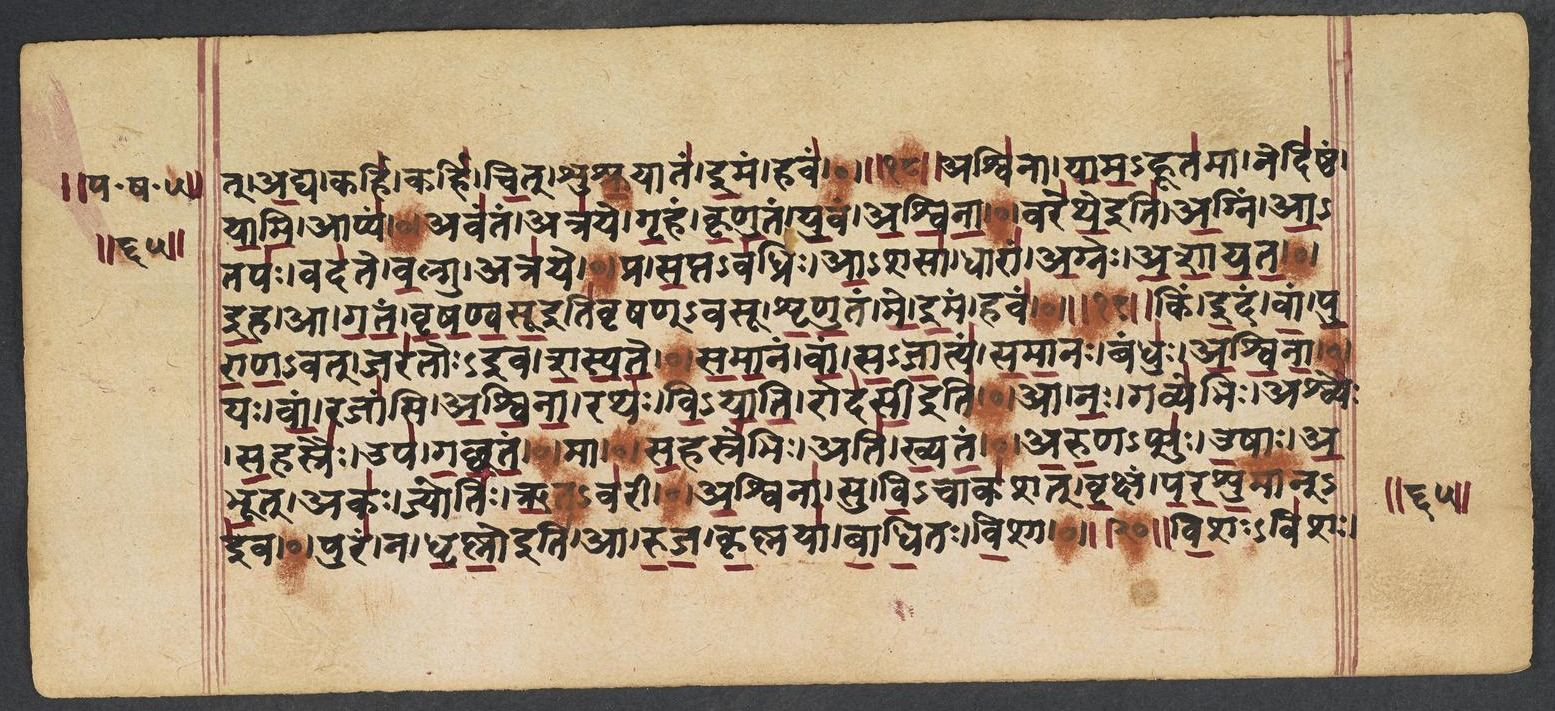
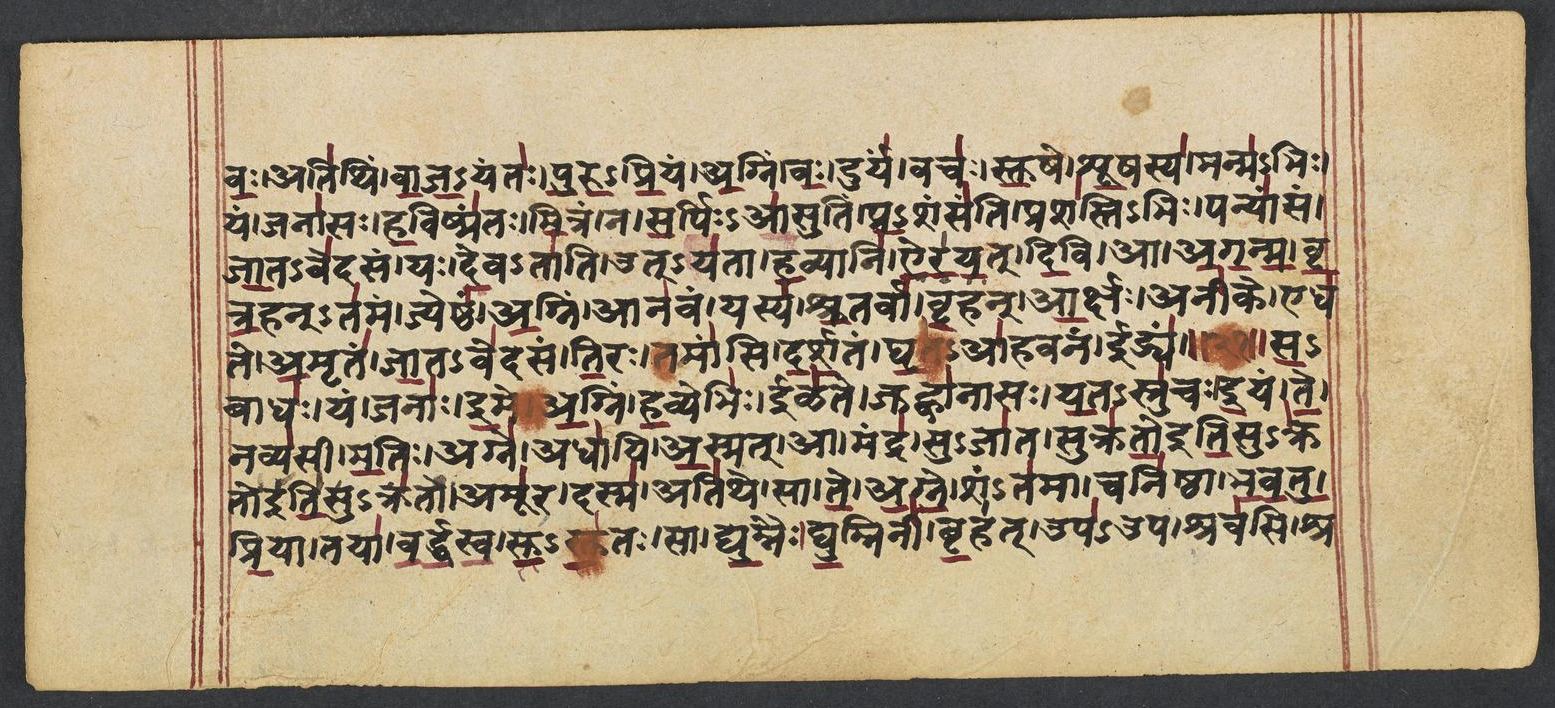
Where on the image
Penn Ms. Coll. 390 Item 41, fol. 644r (numbered 66r by the scribe) (OPenn image 644, lower leaf). Checked on the image: the Rigveda text on this page begins in RV 8.74.1 ‹vaḥ atithim vāja-yantaḥ puru-priyam›. The next page with Rigveda text, fol. 644v (numbered 66v by the scribe), begins in RV 8.74.9 ‹-śravaḥ dadhīta vṛtra-tūrye›. Verses 8.74.1-8 end on this page; 8.74.1 begins on fol. 643v (numbered 65v by the scribe).
1vi̱śo-vi̍śo vo̱ ati̍thiṁ vāja̱yanta̍ḥ purupri̱yam | a̱gniṁ vo̱ durya̱ṁ vaca̍ḥ stu̱ṣe śū̱ṣasya̱ manma̍bhiḥ ||
2yaṁ janā̍so ha̱viṣma̍nto mi̱traṁ na sa̱rpirā̍sutim | pra̱śaṁsa̍nti̱ praśa̍stibhiḥ ||
3panyā̍ṁsaṁ jā̱tave̍dasa̱ṁ yo de̱vatā̱ty udya̍tā | ha̱vyāny aira̍yad di̱vi ||
4āga̍nma vṛtra̱hanta̍ma̱ṁ jyeṣṭha̍m a̱gnim āna̍vam | yasya̍ śru̱tarvā̍ bṛ̱hann ā̱rkṣo anī̍ka̱ edha̍te ||
5a̱mṛta̍ṁ jā̱tave̍dasaṁ ti̱ras tamā̍ṁsi darśa̱tam | ghṛ̱tāha̍vana̱m īḍya̍m ||
6sa̱bādho̱ yaṁ janā̍ i̱me̱3̱̍ 'gniṁ ha̱vyebhi̱r īḻa̍te | juhvā̍nāso ya̱tasru̍caḥ ||
7i̱yaṁ te̱ navya̍sī ma̱tir agne̱ adhā̍yy a̱smad ā | mandra̱ sujā̍ta̱ sukra̱to 'mū̍ra̱ dasmāti̍the ||
8sā te̍ agne̱ śaṁta̍mā̱ cani̍ṣṭhā bhavatu pri̱yā | tayā̍ vardhasva̱ suṣṭu̍taḥ ||
Compare: Padapāṭha (word-by-word text written in the manuscript; Sansknet e-text via GRETIL)
1viśaḥ-visaḥ | vaḥ | atithim | vāja-yantaḥ | puru-priyam | agnim | vaḥ | duyarm | vacaḥ | stuṣe | śūṣasya | manma-bhiḥ
2yam | janāsaḥ | haviṣmantaḥ | mitram | na | sarpiḥ-āsutim | pra-śaṃsanti | praśasti-bhiḥ
3panyāsam | jāta-vedasam | yaḥ | deva-tāti | ut-yatā | havyāni | airayat | divi
4ā | aganma | vṛtrahan-tamam | jyeṣṭham | agnim | ānavam | yasya | śrutarvā | bṛhan | ārkṣaḥ | anīke | edhate
5amṛtam | jāta-vedasam | tiraḥ | tamāṃsi | darśatam | ghṛta-āhavanam | īḍyam
6sa-bādhaḥ | yam | janāḥ | ime | agnim | havyebhiḥ | īḷate | juhvānāsaḥ | yata-srucaḥ
7iyam | te | navyasī | matiḥ | agne | adhāyi | asmat | ā | mandra | su-jāta | sukrato itisu-krato | amūra | dasma | atithe
8sā | te | agne | śam-tamā | caniṣṭhā | bhavatu | priyā | tayā | vardhasva | su-stutaḥ
1EXERTING all our strength with thoughts of power we glorify in speech Agni your dear familiar Friend, the darling Guest in every home.
2Whom, served with sacrificial oil like Mitra, men presenting gifts Eulogize with their songs of praise
3Much-lauded Jâtavedas, him who bears oblations up to heaven Prepared in service of the Gods.
4To noblest Agni, Friend of man, best Vr̥itra-slayer, are we come, Him in whose presenceR̥iksha's son, mighty Ṣrutarvan, waxes great;
5To deathless Jâtavedas, meet for praise, adored, with sacred oil, Visible through the gloom of night
6Even Agni whom these priestly men worship with sacrificial gifts, With lifted ladles offering them.
7O Agni, this our newest hymn hath been addressed from us to thee, O cheerful Guest, well-born, most wise, worker of wonders, ne'er deceived.
8Agni, may it be dear to thee, most grateful, and exceeding sweet: Grow mightier, eulogized therewith.
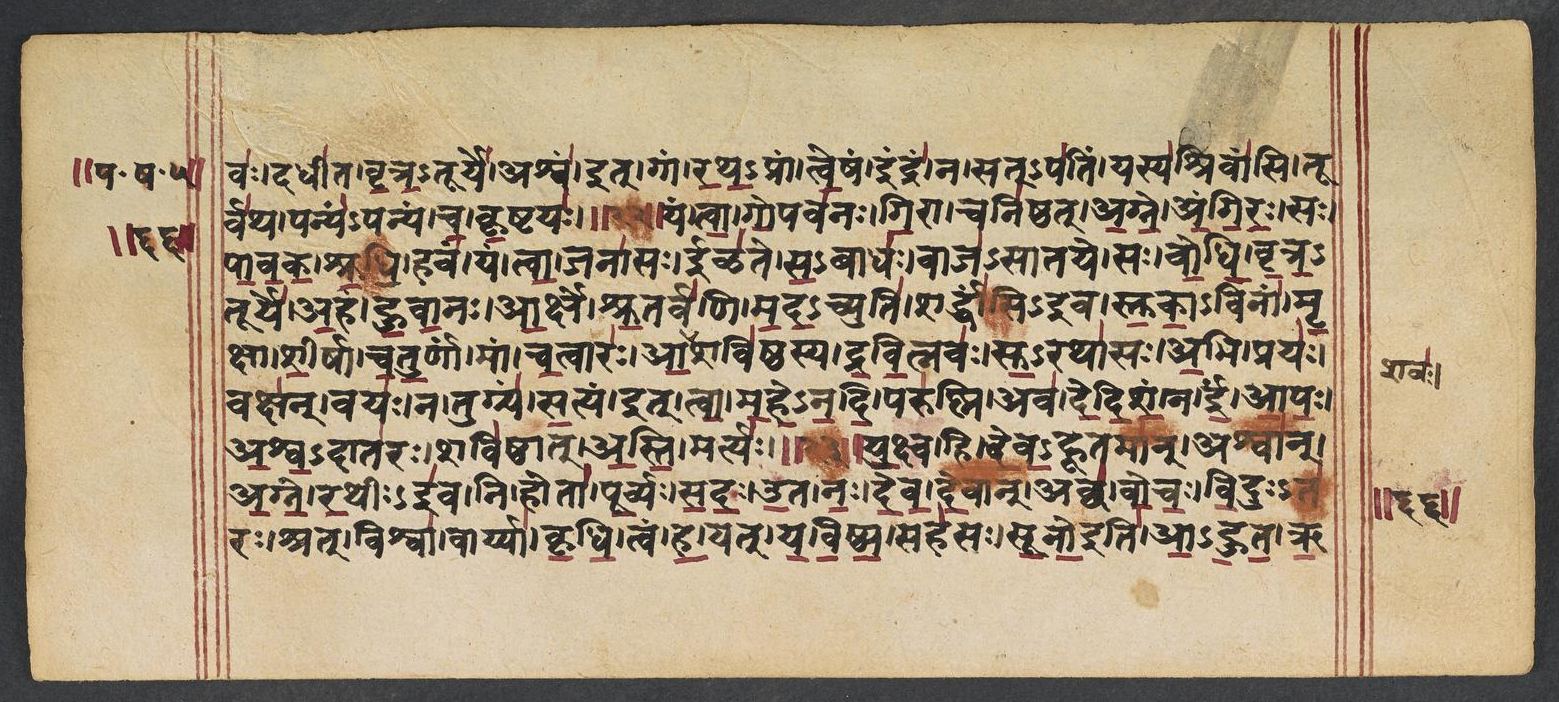
Where on the image
Penn Ms. Coll. 390 Item 41, fol. 644v (numbered 66v by the scribe) (OPenn image 645, upper leaf). Checked on the image: the Rigveda text on this page begins in RV 8.74.9 ‹-śravaḥ dadhīta vṛtra-tūrye›. The next page with Rigveda text, fol. 645r (numbered 67r by the scribe), begins in RV 8.75.3 ‹yajñiyaḥ bhuvaḥ›. Verses 8.74.9-15 end on this page; 8.74.9 begins on fol. 644r (numbered 66r by the scribe).
9sā dyu̱mnair dyu̱mninī̍ bṛ̱had upo̍pa̱ śrava̍si̱ śrava̍ḥ | dadhī̍ta vṛtra̱tūrye̍ ||
10aśva̱m id gāṁ ra̍tha̱prāṁ tve̱ṣam indra̱ṁ na satpa̍tim | yasya̱ śravā̍ṁsi̱ tūrva̍tha̱ panya̍m-panyaṁ ca kṛ̱ṣṭaya̍ḥ ||
11yaṁ tvā̍ go̱pava̍no gi̱rā cani̍ṣṭhad agne aṅgiraḥ | sa pā̍vaka śrudhī̱ hava̍m ||
12yaṁ tvā̱ janā̍sa̱ īḻa̍te sa̱bādho̱ vāja̍sātaye | sa bo̍dhi vṛtra̱tūrye̍ ||
13a̱haṁ hu̍vā̱na ā̱rkṣe śru̱tarva̍ṇi mada̱cyuti̍ | śardhā̍ṁsīva stukā̱vinā̍m mṛ̱kṣā śī̱rṣā ca̍tu̱rṇām ||
14māṁ ca̱tvāra̍ ā̱śava̱ḥ śavi̍ṣṭhasya dravi̱tnava̍ḥ | su̱rathā̍so a̱bhi prayo̱ vakṣa̱n vayo̱ na tugrya̍m ||
15sa̱tyam it tvā̍ mahenadi̱ paru̱ṣṇy ava̍ dediśam | nem ā̍po aśva̱dāta̍ra̱ḥ śavi̍ṣṭhād asti̱ martya̍ḥ ||
Compare: Padapāṭha (word-by-word text written in the manuscript; Sansknet e-text via GRETIL)
9sā | dyumnaiḥ | dyumninī | bṛhat | upa-upa | śravasi | śravaḥ | dadhīta | vṛtra-tūrye
10aśvam | it | gām | ratha-prām | tveṣam | indram | na | sat-patim | yasya | śravāṃsi | tūrvatha | panyam-panyam | ca | kṛṣṭayaḥ
11yam | tvā | gopavanaḥ | girā | caniṣṭhat | agne | aṅgiraḥ | saḥ | pāvaka | śrudhi | havam
12yam | tvā | janāsaḥ | īḷate | sa-bādhaḥ | vāja-sātaye | saḥ | bodhi | vṛtra-tūrye
13aham | huvānaḥ | ārkṣe | śrutarvaṇi | mada-cyuti | śardhāṃsi-iva | stukāvinām | mṛkṣā | śīrṣā | caturṇām
14mām | catvāraḥ | āśavaḥ | śaviṣṭhasya | dravitnavaḥ | su-rathāsaḥ | abhi | prayaḥ | vakṣan | vayaḥ | na | tugryam
15satyam | it | tvā | mahe--nadi | paruṣṇi | ava | dediśam | na | īm | āpaḥ | aśva-dātaraḥ | śaviṣṭhāt | asti | martyaḥ
9Splendid with splendours may it be, and in the battle with the foe Add loftier glory to thy fame.
10Steed, cow, a lord of heroes, bright like Indra, who shall fill the car. Whose high renown ye celebrate, and people praise each glorious deed.
11Thou whom Gopavana made glad with song, O Agni Angiras, Hear this my call, thou Holy One.
12Thou whom the priestly folk implore to aid the gathering of the spoil, Such be thou in the fight with foes.
13I, called to him who reels with joy, Ṣrutarvan, Riksha’s son, shall stroke The heads of four presented steeds, like the long wool of fleecy rams.
14Four coursers with a splendid car, Savistha’s horses, fleet of foot, Shall bring me to the sacred feast, as flying steeds brought Tugra’s son.
15The very truth do I declare to thee, Parushṇî, mighty flood. Waters! no man is there who gives more horses than Savishtha gives.
Notes
- Sanskrit: Aufrecht's edition (1877) with the Vedic accents, as entered by van Nooten and Holland (GRETIL).
- English: Ralph T. H. Griffith, The Hymns of the Rigveda (1889-1892; 2nd ed. 1896-1897), from the VedaWeb digital text; OCR slips in that text were corrected against the printed 2nd edition (data/sources/rigveda/griffith_errata.json).
- Padapāṭha (edition text): Sansknet e-text via GRETIL (CC BY-NC-SA 4.0).
Cite
Sources
- Source: Penn Ms. Coll. 390 Item 41 (undated (catalogued with Penn's 18th-19th c. Vedic manuscripts)), OPenn, Public Domain Mark + Aufrecht's accented text (GRETIL) + Griffith's English (VedaWeb) (holding institution)
- Critical edition: Aufrecht (1877), accented e-text via GRETIL
← previous · → next · v cycle view · l back to library