Rigveda 8.75: To Agni
Introduction
Rigveda 8.75 is a hymn of 16 verses addressed to Agni. It stands in book (maṇḍala) 8, the book of the Kaṇva and Aṅgiras poets. The Rigveda is the oldest collection of Sanskrit hymns, composed in the second half of the second millennium BCE and handed down orally for many centuries before it was written down.
The manuscript shown is Penn Ms. Coll. 390 Item 41 (University of Pennsylvania), an undated paper manuscript of the padapāṭha (the word-by-word recitation text, in which every word is written separately and compounds are split) of the whole Ṛgveda in Devanāgarī, 884 leaves in fascicles, 7-9 lines to the page, accents in red; this hymn stands on fol. 644v-645v. Each section below gives the verses that end on one page; the page boundaries were read on the images (the opening words of every page), not counted out. Where the manuscript is a padapāṭha (the word-by-word recitation text), the section shows Aufrecht's continuous (saṃhitā) text first and, as the edition text, the padapāṭha of the same verses, which is the form written on the page.
How was this verified? (Provenance)
Where on the image
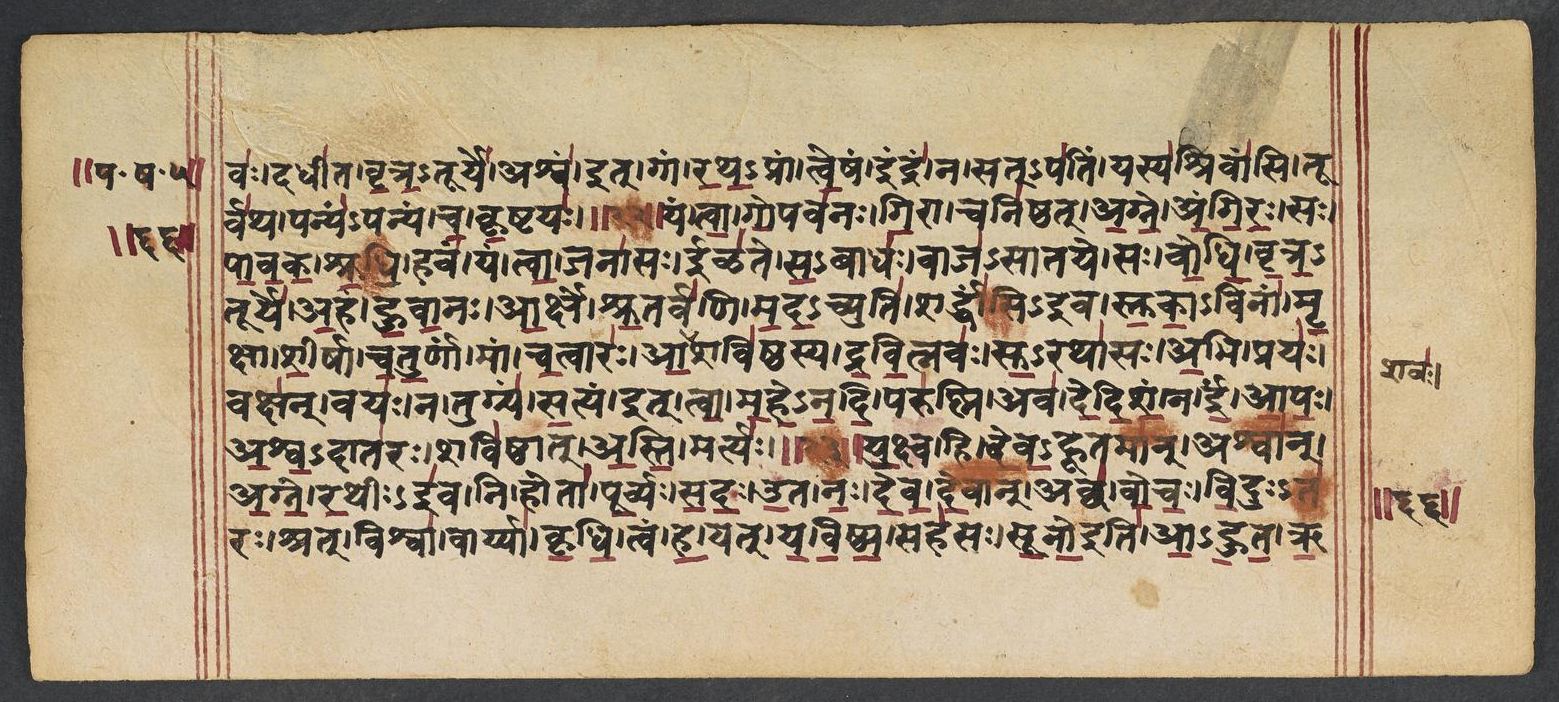
Penn Ms. Coll. 390 Item 41, fol. 644v (numbered 66v by the scribe) (OPenn image 645, upper leaf). Checked on the image: the Rigveda text on this page begins in RV 8.74.9 ‹-śravaḥ dadhīta vṛtra-tūrye›. The next page with Rigveda text, fol. 645r (numbered 67r by the scribe), begins in RV 8.75.3 ‹yajñiyaḥ bhuvaḥ›. Verses 8.75.1-2 end on this page.
1yu̱kṣvā hi de̍va̱hūta̍mā̱m̐ aśvā̍m̐ agne ra̱thīr i̍va | ni hotā̍ pū̱rvyaḥ sa̍daḥ ||
2u̱ta no̍ deva de̱vām̐ acchā̍ voco vi̱duṣṭa̍raḥ | śrad viśvā̱ vāryā̍ kṛdhi ||
Compare: Padapāṭha (word-by-word text written in the manuscript; Sansknet e-text via GRETIL)
1yukṣva | hi | deva-hūtamān | aśvān | agne | rathīḥ-iva | ni | hotā | pūrvyaḥ | sadaḥ
2uta | naḥ | deva | devān | accha | vocaḥ | viduḥ-taraḥ | śrat | viśvā | vāryā | kṛdhi
1YOKE, Agni, as a charioteer, thy steeds who best invite the Gods: As ancient Herald seat thyself.
2And, God, as skilfullest of all, call for us hitherward the Gods: Give all our wishes sure effect.
Where on the image
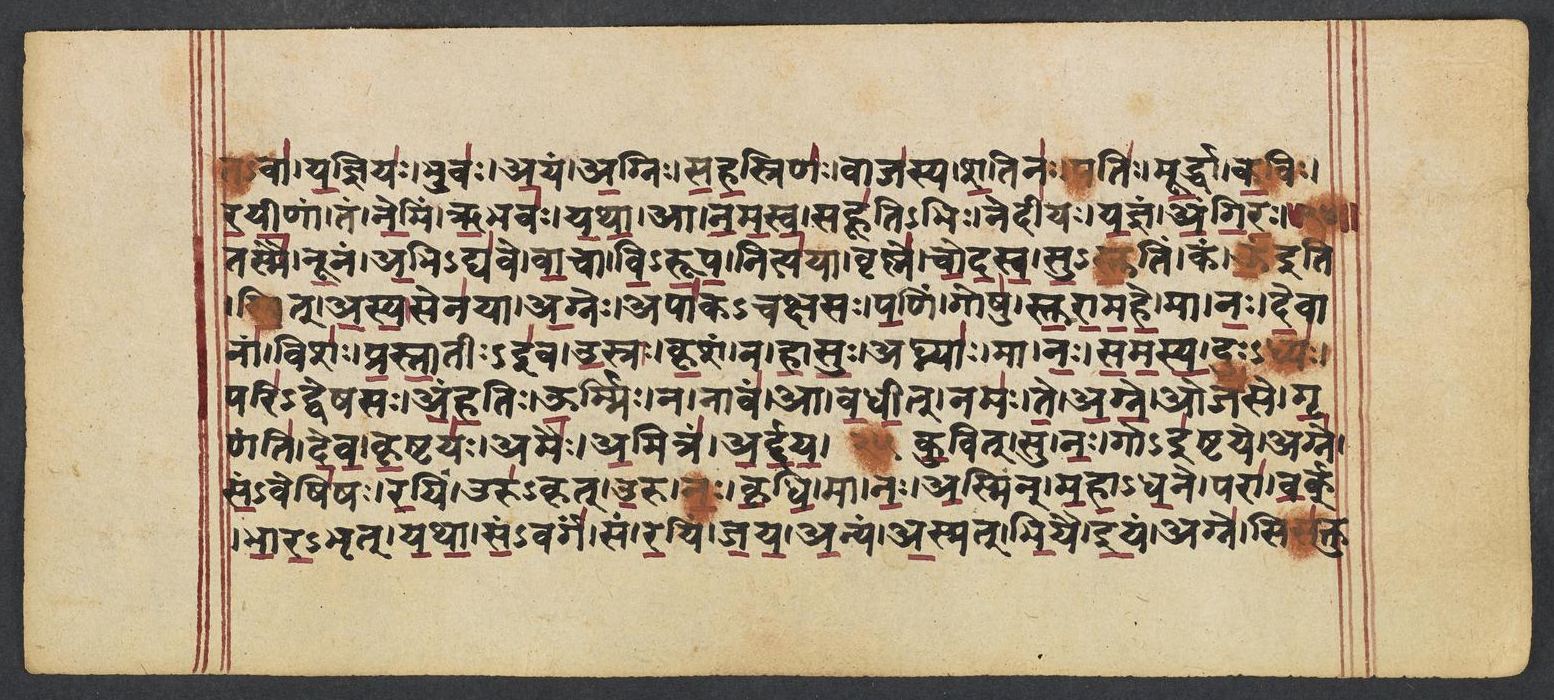
Penn Ms. Coll. 390 Item 41, fol. 645r (numbered 67r by the scribe) (OPenn image 645, lower leaf). Checked on the image: the Rigveda text on this page begins in RV 8.75.3 ‹yajñiyaḥ bhuvaḥ›. The next page with Rigveda text, fol. 645v (numbered 67v by the scribe), begins in RV 8.75.13 ‹ducchunā vardha naḥ ama-vat›. Verses 8.75.3-12 end on this page; 8.75.3 begins on fol. 644v (numbered 66v by the scribe).
3tvaṁ ha̱ yad ya̍viṣṭhya̱ saha̍saḥ sūnav āhuta | ṛ̱tāvā̍ ya̱jñiyo̱ bhuva̍ḥ ||
4a̱yam a̱gniḥ sa̍ha̱sriṇo̱ vāja̍sya śa̱tina̱s pati̍ḥ | mū̱rdhā ka̱vī ra̍yī̱ṇām ||
5taṁ ne̱mim ṛ̱bhavo̍ ya̱thā na̍masva̱ sahū̍tibhiḥ | nedī̍yo ya̱jñam a̍ṅgiraḥ ||
6tasmai̍ nū̱nam a̱bhidya̍ve vā̱cā vi̍rūpa̱ nitya̍yā | vṛṣṇe̍ codasva suṣṭu̱tim ||
7kam u̍ ṣvid asya̱ sena̍yā̱gner apā̍kacakṣasaḥ | pa̱ṇiṁ goṣu̍ starāmahe ||
8mā no̍ de̱vānā̱ṁ viśa̍ḥ prasnā̱tīr i̍vo̱srāḥ | kṛ̱śaṁ na hā̍su̱r aghnyā̍ḥ ||
9mā na̍ḥ samasya dū̱ḍhya1̱̍ḥ pari̍dveṣaso aṁha̱tiḥ | ū̱rmir na nāva̱m ā va̍dhīt ||
10nama̍s te agna̱ oja̍se gṛ̱ṇanti̍ deva kṛ̱ṣṭaya̍ḥ | amai̍r a̱mitra̍m ardaya ||
11ku̱vit su no̱ gavi̍ṣṭa̱ye 'gne̍ sa̱ṁveṣi̍ṣo ra̱yim | uru̍kṛd u̱ru ṇa̍s kṛdhi ||
12mā no̍ a̱smin ma̍hādha̱ne parā̍ varg bhāra̱bhṛd ya̍thā | sa̱ṁvarga̱ṁ saṁ ra̱yiṁ ja̍ya ||
Compare: Padapāṭha (word-by-word text written in the manuscript; Sansknet e-text via GRETIL)
3tvam | ha | yat | yaviṣṭhya | sahasaḥ | sūno iti | āhuta | ṛta-vā | yajñiyaḥ | bhuvaḥ
4ayam | agniḥ | sahasriṇaḥ | vājasya | śatinaḥ | patiḥ | mūrdhā | kaviḥ | rayīṇām
5tam | nemim | ṛbhavaḥ | yathā | ā | namasva | sahūti-bhiḥ | nedīyaḥ | yajñam | aṅgiraḥ
6tasmai | nūnam | abhi-dyave | vācā | vi-rūpa | nityayā | vṛṣṇe | codasva | su-stuti m
7kam | oṃ iti | svit | asya | senayā | agneḥ | apāka-cakṣasaḥ | paṇim | goṣu | starāmahe
8mā | naḥ | devānām | viśaḥ | prasnātīḥ-iva | usrāḥ | kṛśam | na | hāsuḥ | aghnyāḥ
9mā | naḥ | samasya | duḥ-dhyaḥ | pari-dveṣasaḥ | aṃhatiḥ | ūrmiḥ | na | nāvam | ā | vadhīt
10namaḥ | te | agne | ojase | gṛṇanti | deva | kṛṣṭayaḥ | amaiḥ | amitram | ardaya
11kuvit | su | naḥ | go--iṣṭaye | agne | sam-veṣiṣaḥ | rayim | uru-kṛt | uru | naḥ | kṛdhi
12mā | naḥ | asmin | mahādhane | parā | varka | bhāra-bhṛt | yathā | sam-vargam | sam | rayim | jaya
3For thou, Most Youthful, Son of Strength, thou to whom sacrifice is paid, Art holy, faithful to the Law.
4This Agni, Lord of wealth and spoil hundredfold, thousandfold, is head And chief of riches and a Sage.
5As craftsmen bend the felly, so bend at our general call: come nigh, Angiras, to the sacrifice.
6Now, O Virûpa, rouse for him, Strong God who shines at early morn, Fair praise with voice that ceases not.
7With missile of this Agni, his who looks afar, will we lay low The thief in combat for the kine.
8Let not the Companies of Gods fail us, like Dawns that float away, Like cows who leave the niggardly.
9Let not the sinful tyranny of any fiercely hating foe Smite us, as billows smite a ship.
10O Agni, God, the people sing reverent praise to thee for strength: With terrors trouble thou the foe.
11Wilt thou not, Agni, lend us aid in winning cattle, winning wealth? Maker of room, make room for us.
12In this great battle cast us not aside as one who bears a load: Snatch up the wealth and win it all.
Where on the image
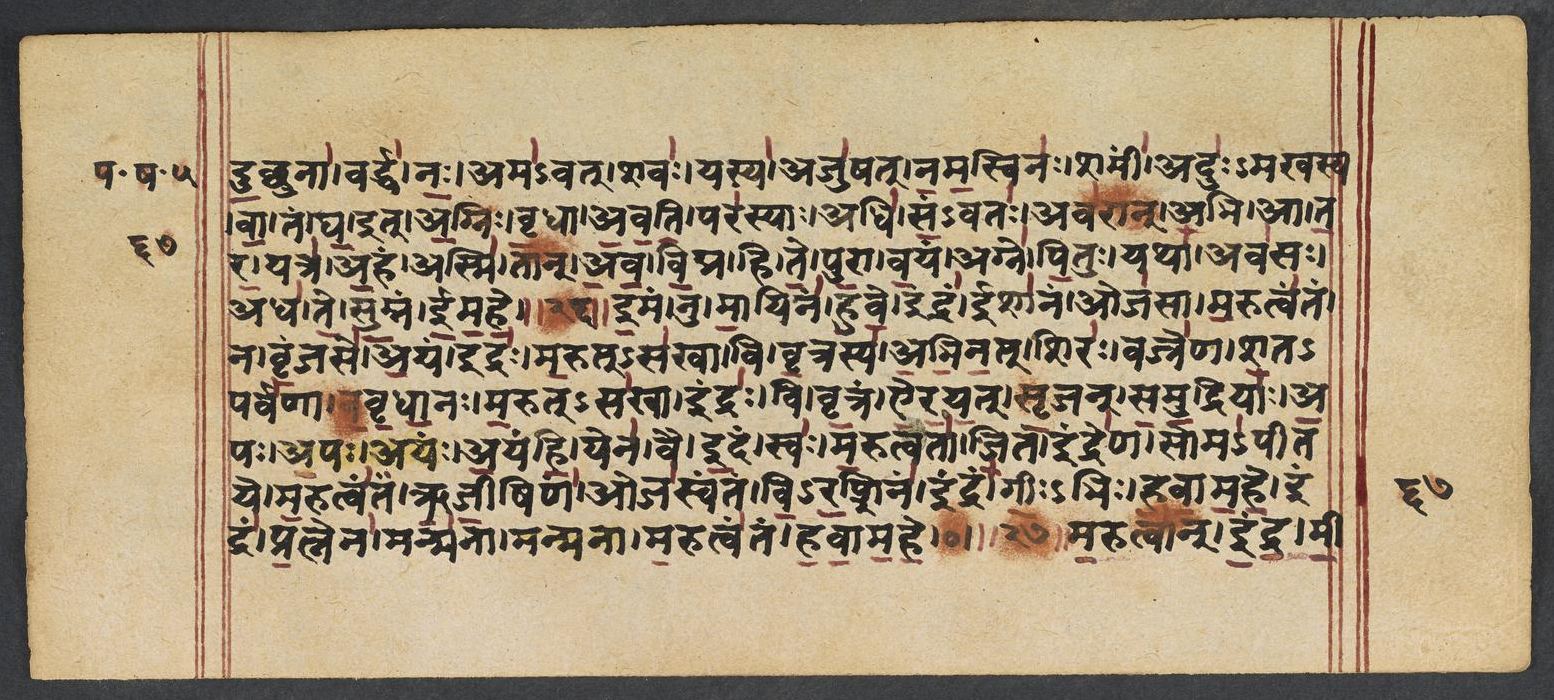
Penn Ms. Coll. 390 Item 41, fol. 645v (numbered 67v by the scribe) (OPenn image 646, upper leaf). Checked on the image: the Rigveda text on this page begins in RV 8.75.13 ‹ducchunā vardha naḥ ama-vat›. The next page with Rigveda text, fol. 646r (numbered 68r by the scribe), begins in RV 8.76.7 ‹-mīḍhavaḥ piba somam śatakrato›. Verses 8.75.13-16 end on this page; 8.75.13 begins on fol. 645r (numbered 67r by the scribe).
13a̱nyam a̱smad bhi̱yā i̱yam agne̱ siṣa̍ktu du̱cchunā̍ | vardhā̍ no̱ ama̍va̱c chava̍ḥ ||
14yasyāju̍ṣan nama̱svina̱ḥ śamī̱m adu̍rmakhasya vā | taṁ ghed a̱gnir vṛ̱dhāva̍ti ||
15para̍syā̱ adhi̍ sa̱ṁvato 'va̍rām̐ a̱bhy ā ta̍ra | yatrā̱ham asmi̱ tām̐ a̍va ||
16vi̱dmā hi te̍ pu̱rā va̱yam agne̍ pi̱tur yathāva̍saḥ | adhā̍ te su̱mnam ī̍mahe ||
Compare: Padapāṭha (word-by-word text written in the manuscript; Sansknet e-text via GRETIL)
13anyam | asmat | bhiyai | iyam | agne | sisaktu | ducchunā | vardha | naḥ | ama-vat | śavaḥ
14yasya | ajuṣat | namasvinaḥ | śamīm | aduḥ-makhasya | vā | tam | gha | it | agniḥ | vṛdhā | avati
15parasyāḥ | adhi | sam-vataḥ | avarān | abhi | ā | tara | yatra | aham | asmi | tān | ava
16vidma | hi | te | purā | vayam | agne | pituḥ | yathā | avasaḥ | adha | te | sumnam | īmahe
13O Agni, let this plague pursue and fright another and not us: Make our impetuous strength more strong.
14The reverent or unwearied man whose holy labour he accepts, Him Agni favours with success.
15Abandoning the foeman’s host pass hither to this company: Assist the men with whom I stand.
16As we have known thy gracious help, as of a Father, long ago, So now we pray to thee for bliss.
Notes
- Sanskrit: Aufrecht's edition (1877) with the Vedic accents, as entered by van Nooten and Holland (GRETIL).
- English: Ralph T. H. Griffith, The Hymns of the Rigveda (1889-1892; 2nd ed. 1896-1897), from the VedaWeb digital text; OCR slips in that text were corrected against the printed 2nd edition (data/sources/rigveda/griffith_errata.json).
- Padapāṭha (edition text): Sansknet e-text via GRETIL (CC BY-NC-SA 4.0).
Cite
Sources
- Source: Penn Ms. Coll. 390 Item 41 (undated (catalogued with Penn's 18th-19th c. Vedic manuscripts)), OPenn, Public Domain Mark + Aufrecht's accented text (GRETIL) + Griffith's English (VedaWeb) (holding institution)
- Critical edition: Aufrecht (1877), accented e-text via GRETIL
← previous · → next · v cycle view · l back to library