Rigveda 8.77: To Indra
Introduction
Rigveda 8.77 is a hymn of 11 verses addressed to Indra. It stands in book (maṇḍala) 8, the book of the Kaṇva and Aṅgiras poets. The Rigveda is the oldest collection of Sanskrit hymns, composed in the second half of the second millennium BCE and handed down orally for many centuries before it was written down.
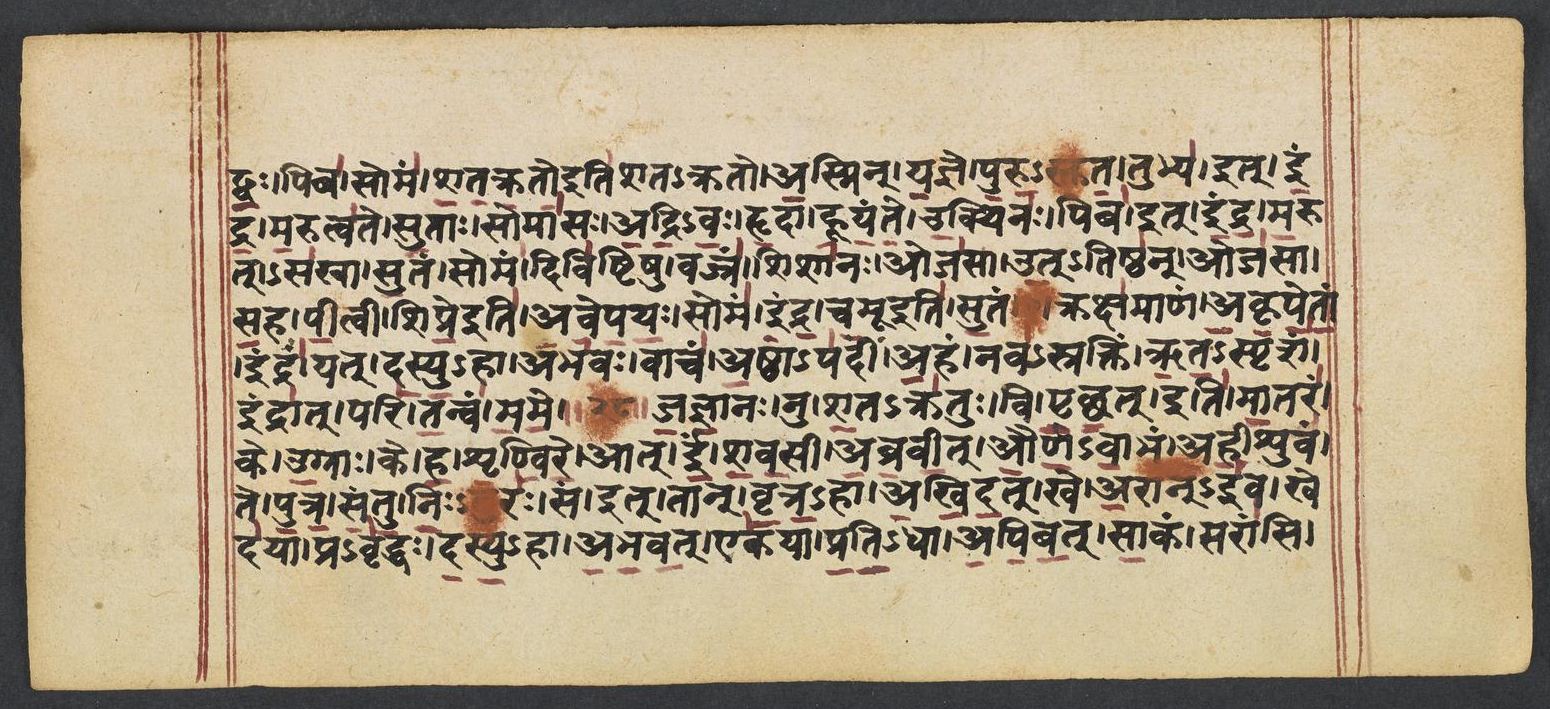
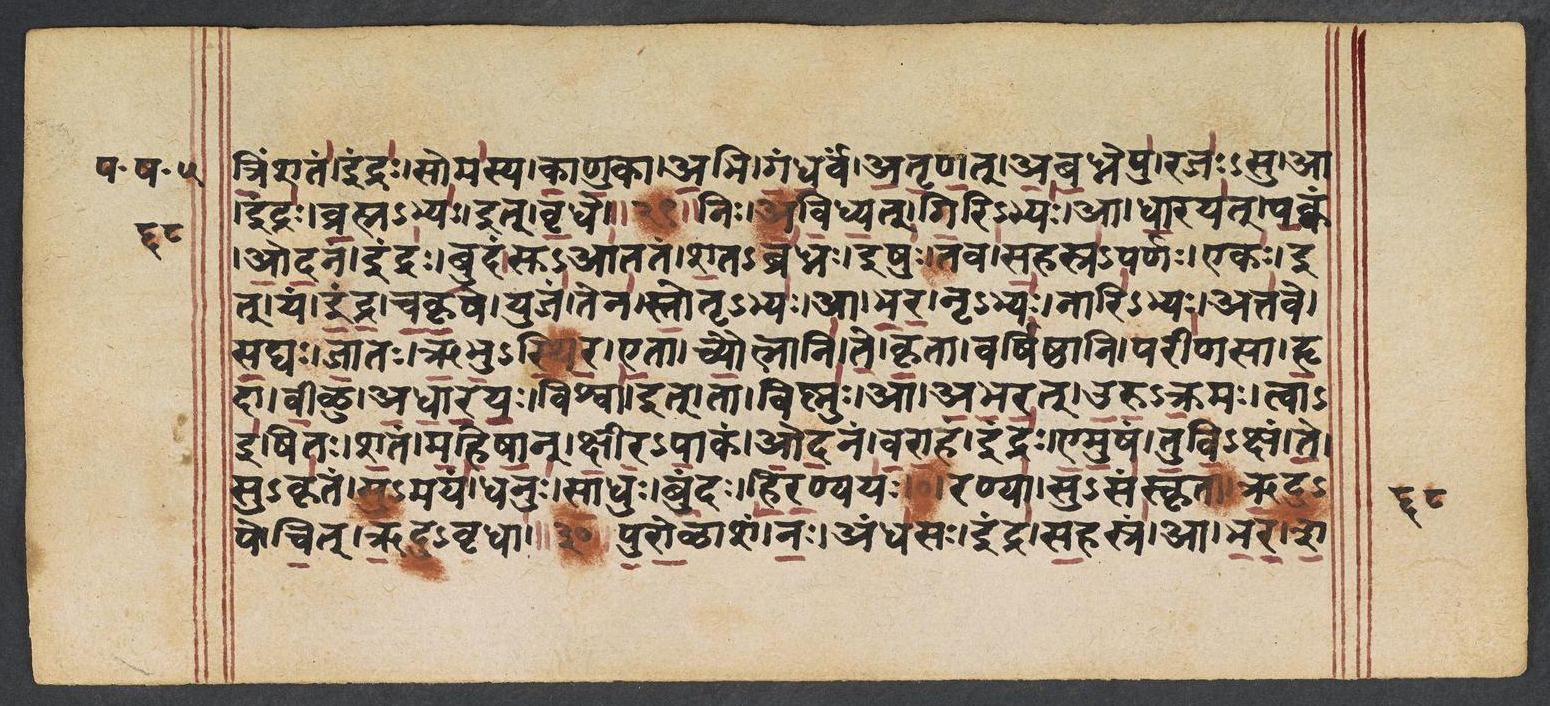
The manuscript shown is Penn Ms. Coll. 390 Item 41 (University of Pennsylvania), an undated paper manuscript of the padapāṭha (the word-by-word recitation text, in which every word is written separately and compounds are split) of the whole Ṛgveda in Devanāgarī, 884 leaves in fascicles, 7-9 lines to the page, accents in red; this hymn stands on fol. 646r-646v. Each section below gives the verses that end on one page; the page boundaries were read on the images (the opening words of every page), not counted out. Where the manuscript is a padapāṭha (the word-by-word recitation text), the section shows Aufrecht's continuous (saṃhitā) text first and, as the edition text, the padapāṭha of the same verses, which is the form written on the page.
How was this verified? (Provenance)
Where on the image
Penn Ms. Coll. 390 Item 41, fol. 646r (numbered 68r by the scribe) (OPenn image 646, lower leaf). Checked on the image: the Rigveda text on this page begins in RV 8.76.7 ‹-mīḍhavaḥ piba somam śatakrato›. The next page with Rigveda text, fol. 646v (numbered 68v by the scribe), begins in RV 8.77.4 ‹triṃśatam indraḥ somasya kāṇukā›. Verses 8.77.1-3 end on this page.
1ja̱jñā̱no nu śa̱takra̍tu̱r vi pṛ̍ccha̱d iti̍ mā̱tara̍m | ka u̱grāḥ ke ha̍ śṛṇvire ||
2ād ī̍ṁ śava̱sy a̍bravīd aurṇavā̱bham a̍hī̱śuva̍m | te pu̍tra santu ni̱ṣṭura̍ḥ ||
3sam it tān vṛ̍tra̱hākhi̍da̱t khe a̱rām̐ i̍va̱ kheda̍yā | pravṛ̍ddho dasyu̱hābha̍vat ||
Compare: Padapāṭha (word-by-word text written in the manuscript; Sansknet e-text via GRETIL)
1jajñānaḥ | nu | śata-kratuḥ | vi | pṛcchat | iti | mātaram | ke | ugrāḥ | ke | ha | śṛṇvire
2āt | īm | śavasī | abravīt | aurṇa-vābham | ahīśuvam | te | putra | santu | niḥ-turaḥ
3sam | it | tān | vṛtra-hā | akhidat | khe | arān-iva | khedayā | pra-vṛddhaḥ | dasyuhā | abhavat
1SCARCELY was Ṣatakratu, born when of his Mother he inquired, Who are the mighty? Who are famed?
2Then Ṣavasî declared to him Aurṇavâbha, Ahîṣuva: Son, these be they thou must o'erthrow
3The Vritra-slayer smote them all as spokes are hammered into naves: The Dasyu-killer waxed in might.
Where on the image
Penn Ms. Coll. 390 Item 41, fol. 646v (numbered 68v by the scribe) (OPenn image 647, upper leaf). Checked on the image: the Rigveda text on this page begins in RV 8.77.4 ‹triṃśatam indraḥ somasya kāṇukā›. The next page with Rigveda text, fol. 647r (numbered 69r by the scribe), begins in RV 8.78.1 ‹-śatā ca śūra gonām›. Verses 8.77.4-11 end on this page; 8.77.4 begins on fol. 646r (numbered 68r by the scribe).
4eka̍yā prati̱dhāpi̍bat sā̱kaṁ sarā̍ṁsi tri̱ṁśata̍m | indra̱ḥ soma̍sya kāṇu̱kā ||
5a̱bhi ga̍ndha̱rvam a̍tṛṇad abu̱dhneṣu̱ raja̱ḥsv ā | indro̍ bra̱hmabhya̱ id vṛ̱dhe ||
6nir ā̍vidhyad gi̱ribhya̱ ā dhā̱raya̍t pa̱kvam o̍da̱nam | indro̍ bu̱ndaṁ svā̍tatam ||
7śa̱tabra̍dhna̱ iṣu̱s tava̍ sa̱hasra̍parṇa̱ eka̱ it | yam i̍ndra cakṛ̱ṣe yuja̍m ||
8tena̍ sto̱tṛbhya̱ ā bha̍ra̱ nṛbhyo̱ nāri̍bhyo̱ atta̍ve | sa̱dyo jā̱ta ṛ̍bhuṣṭhira ||
9e̱tā cyau̱tnāni̍ te kṛ̱tā varṣi̍ṣṭhāni̱ parī̍ṇasā | hṛ̱dā vī̱ḍv a̍dhārayaḥ ||
10viśvet tā viṣṇu̱r ābha̍rad urukra̱mas tveṣi̍taḥ | śa̱tam ma̍hi̱ṣān kṣī̍rapā̱kam o̍da̱naṁ va̍rā̱ham indra̍ emu̱ṣam ||
11tu̱vi̱kṣaṁ te̱ sukṛ̍taṁ sū̱maya̱ṁ dhanu̍ḥ sā̱dhur bu̱ndo hi̍ra̱ṇyaya̍ḥ | u̱bhā te̍ bā̱hū raṇyā̱ susa̍ṁskṛta ṛdū̱pe ci̍d ṛdū̱vṛdhā̍ ||
Compare: Padapāṭha (word-by-word text written in the manuscript; Sansknet e-text via GRETIL)
4ekayā | prati-dhā | apibat | sākam | sarāṃsi | triṃśatam | indraḥ | somasya | kāṇukā
5abhi | gandharvam | atṛṇat | abudhneṣu | rajaḥ-su | ā | indraḥ | brahma-bhyaḥ | it | vṛdhe
6niḥ | avidhyat | giri-bhyaḥ | ā | dhārayat | pakvam | odanam | indraḥ | bundam | su-ātatam
7śata-bradhnaḥ | iṣuḥ | tava | sahasra-parṇaḥ | ekaḥ | it | yam | indra | cakṛṣe | yujam
8tena | stotṛ-bhyaḥ | ā | bhara | nṛ-bhyaḥ | nāri-bhyaḥ | attave | sadyaḥ | jātaḥ | ṛbhu-sthira
9etā | cyautnāni | te | kṛtā | varṣiṣṭhāni | parīṇasā | hṛdā | vīḷu | adhārayaḥ
10viśvā | it | tā | viṣṇuḥ | ā | abharat | uru-kramaḥ | tvāiṣitaḥ | śatam | mahiṣān | kṣīra-pākam | odanam | varāham | indraḥ | emuṣam
11tuvi-kṣam | te | su-kṛtam | su-mayam | dhanuḥ | sādhuḥ | bundaḥ | hiraṇyayaḥ | ubhā | te | bāhū iti | raṇyā | su-saṃskṛtā | ṛdu-pe | cit | ṛdu-vṛdhā
4Then Indra at a single draught drank the contents of thirty pails, Pails that were filled with Soma juice.
5Indra in groundless realms of space pierced the Gandharva through, that he Might make Brahmans' strength increase.
6Down from the mountains Indra shot hither his well-directed shaft: He gained the ready brew of rice.
7One only is that shaft of thine, with thousand feathers, hundred barbs, Which, Indra, thou hast made thy friend.
8Strong as the Ribhus at thy birth, therewith to those who praise thee, men, And women, bring thou food to eat.
9By thee these exploits were achieved, the mightiest deeds, abundantly: Firm in thy heart thou settest them.
10All these things Vishṇu brought, the Lord of ample stride whom thou hadst sent- A hundred buffaloes, a brew of rice and milk: and Indra, slew the ravening boar
11Most deadly is thy bow, successful, fashioned well: good is thine arrow, decked with gold. Warlike and well equipped thine arms are, which increase sweetness for him who drinks the sweet.
Notes
- Sanskrit: Aufrecht's edition (1877) with the Vedic accents, as entered by van Nooten and Holland (GRETIL).
- English: Ralph T. H. Griffith, The Hymns of the Rigveda (1889-1892; 2nd ed. 1896-1897), from the VedaWeb digital text; OCR slips in that text were corrected against the printed 2nd edition (data/sources/rigveda/griffith_errata.json).
- Padapāṭha (edition text): Sansknet e-text via GRETIL (CC BY-NC-SA 4.0).
Cite
Sources
- Source: Penn Ms. Coll. 390 Item 41 (undated (catalogued with Penn's 18th-19th c. Vedic manuscripts)), OPenn, Public Domain Mark + Aufrecht's accented text (GRETIL) + Griffith's English (VedaWeb) (holding institution)
- Critical edition: Aufrecht (1877), accented e-text via GRETIL
← previous · → next · v cycle view · l back to library