Rigveda 8.78: To Indra
Introduction
Rigveda 8.78 is a hymn of 10 verses addressed to Indra. It stands in book (maṇḍala) 8, the book of the Kaṇva and Aṅgiras poets. The Rigveda is the oldest collection of Sanskrit hymns, composed in the second half of the second millennium BCE and handed down orally for many centuries before it was written down.
The manuscript shown is Penn Ms. Coll. 390 Item 41 (University of Pennsylvania), an undated paper manuscript of the padapāṭha (the word-by-word recitation text, in which every word is written separately and compounds are split) of the whole Ṛgveda in Devanāgarī, 884 leaves in fascicles, 7-9 lines to the page, accents in red; this hymn stands on fol. 646v-647v. Each section below gives the verses that end on one page; the page boundaries were read on the images (the opening words of every page), not counted out. Where the manuscript is a padapāṭha (the word-by-word recitation text), the section shows Aufrecht's continuous (saṃhitā) text first and, as the edition text, the padapāṭha of the same verses, which is the form written on the page.
How was this verified? (Provenance)
Where on the image
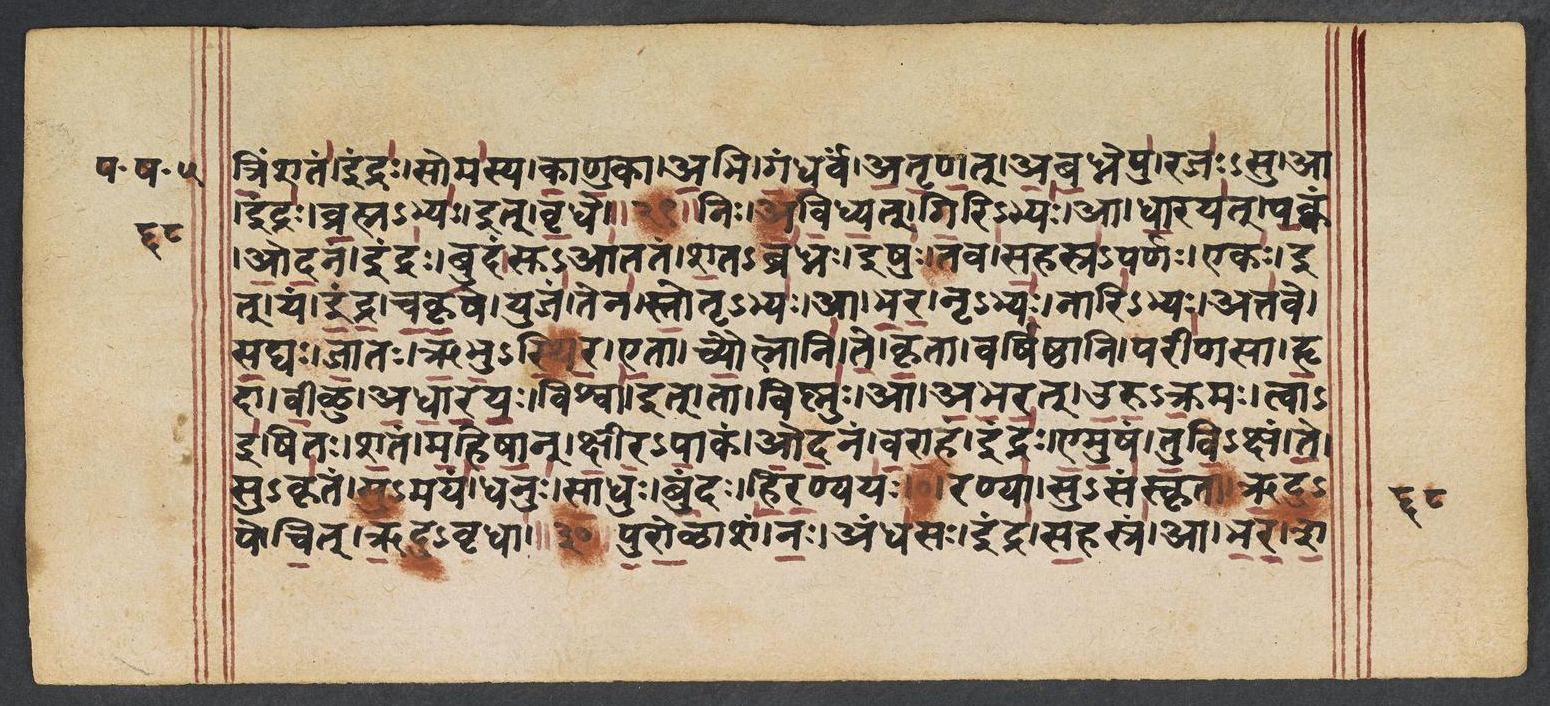
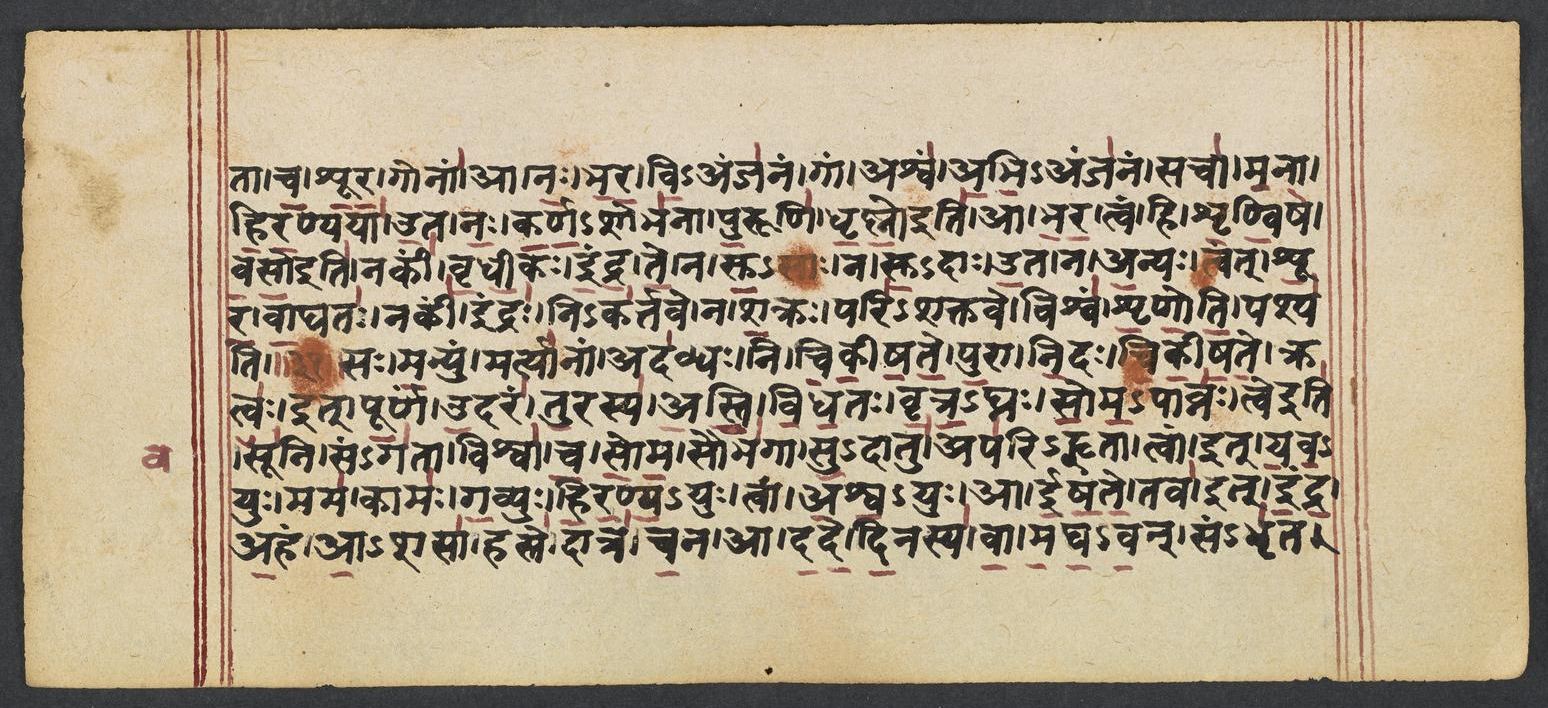
Penn Ms. Coll. 390 Item 41, fol. 647r (numbered 69r by the scribe) (OPenn image 647, lower leaf). Checked on the image: the Rigveda text on this page begins in RV 8.78.1 ‹-śatā ca śūra gonām›. The next page with Rigveda text, fol. 647v (numbered 69v by the scribe), begins in RV 8.78.10 ‹-sam-bhṛtasya vā pūrdhi yavasya›. Verses 8.78.1-9 end on this page; 8.78.1 begins on fol. 646v (numbered 68v by the scribe).
1pu̱ro̱ḻāśa̍ṁ no̱ andha̍sa̱ indra̍ sa̱hasra̱m ā bha̍ra | śa̱tā ca̍ śūra̱ gonā̍m ||
2ā no̍ bhara̱ vyañja̍na̱ṁ gām aśva̍m a̱bhyañja̍nam | sacā̍ ma̱nā hi̍ra̱ṇyayā̍ ||
3u̱ta na̍ḥ karṇa̱śobha̍nā pu̱rūṇi̍ dhṛṣṇa̱v ā bha̍ra | tvaṁ hi śṛ̍ṇvi̱ṣe va̍so ||
4nakī̍ṁ vṛdhī̱ka i̍ndra te̱ na su̱ṣā na su̱dā u̱ta | nānyas tvac chū̍ra vā̱ghata̍ḥ ||
5nakī̱m indro̱ nika̍rtave̱ na śa̱kraḥ pari̍śaktave | viśva̍ṁ śṛṇoti̱ paśya̍ti ||
6sa ma̱nyum martyā̍nā̱m ada̍bdho̱ ni ci̍kīṣate | pu̱rā ni̱daś ci̍kīṣate ||
7kratva̱ it pū̱rṇam u̱dara̍ṁ tu̱rasyā̍sti vidha̱taḥ | vṛ̱tra̱ghnaḥ so̍ma̱pāvna̍ḥ ||
8tve vasū̍ni̱ saṁga̍tā̱ viśvā̍ ca soma̱ saubha̍gā | su̱dātv apa̍rihvṛtā ||
9tvām id ya̍va̱yur mama̱ kāmo̍ ga̱vyur hi̍raṇya̱yuḥ | tvām a̍śva̱yur eṣa̍te ||
Compare: Padapāṭha (word-by-word text written in the manuscript; Sansknet e-text via GRETIL)
1puroḷāśam | naḥ | andhasaḥ | indra | sahasram | ā | bhara | śatā | ca | śūra | gonām
2ā | naḥ | bhara | vi-añjanam | gām | aśvam | abhi-añjanam | sacā | manā | hiraṇyayā
3uta | naḥ | karṇa-śobhanā | purūṇi | dhṛṣṇo iti | ā | bhara | tvam | hi | śṛṇviṣe | vaso iti
4nakīm | vṛdhīkaḥ | indra | te | na | su-sāḥ | na | su-dāḥ | uta | na | anyaḥ | tvat | śūra | vāghataḥ
5nakīm | indraḥ | ni-kartave | na | śakraḥ | pari-śaktave | viśvam | śṛṇoti | paśyati
6saḥ | manyum | martyānām | adabdhaḥ | ni | cikīṣate | purā | nidaḥ | cikīṣate
7kratvaḥ | it | pūrṇam | udaram | turasya | asti | vidhataḥ | vṛtra-ghnaḥ | soma-pāvnaḥ
8tve iti | vasūni | sam-gatā | viśvā | ca | soma | saubhagā | su-dātu | apari-hvṛtā
9tvām | it | yava-yuḥ | mama | kāmaḥ | gavyuḥ | hiraṇyayuḥ | tvām | aśva-yuḥ | ā | īṣate
1BRING us a thousand, Indra, as our guerdon for the Soma juice: Hundreds of kine, O Hero, bring.
2Bring cattle, bring us ornament, bring us embellishment and steeds, Give us, besides, two rings of gold.
3And, Bold One, bring in ample store rich jewels to adorn the ear, For thou, Good Lord, art far renowned.
4None other is there for the priest, Hero! but thou, to give him gifts, To win much spoil and prosper him.
5Indra can never be brought low, Ṣakra can never be subdued: He heareth and beholdeth all.
6He spieth out the wrath of man, he who can never be deceived: Ere blame can come he marketh it.
7He hath his stomach full of might, the Vritra-slayer, Conqueror, The Soma-drinker, ordering all.
8In thee all treasures are combined, Soma all blessed things in thee, Uninjured, easy to bestow.
9To thee speeds forth my hope that craves the gift of corn, and kine and gold, Yea, craving horses, speeds to thee.
Where on the image
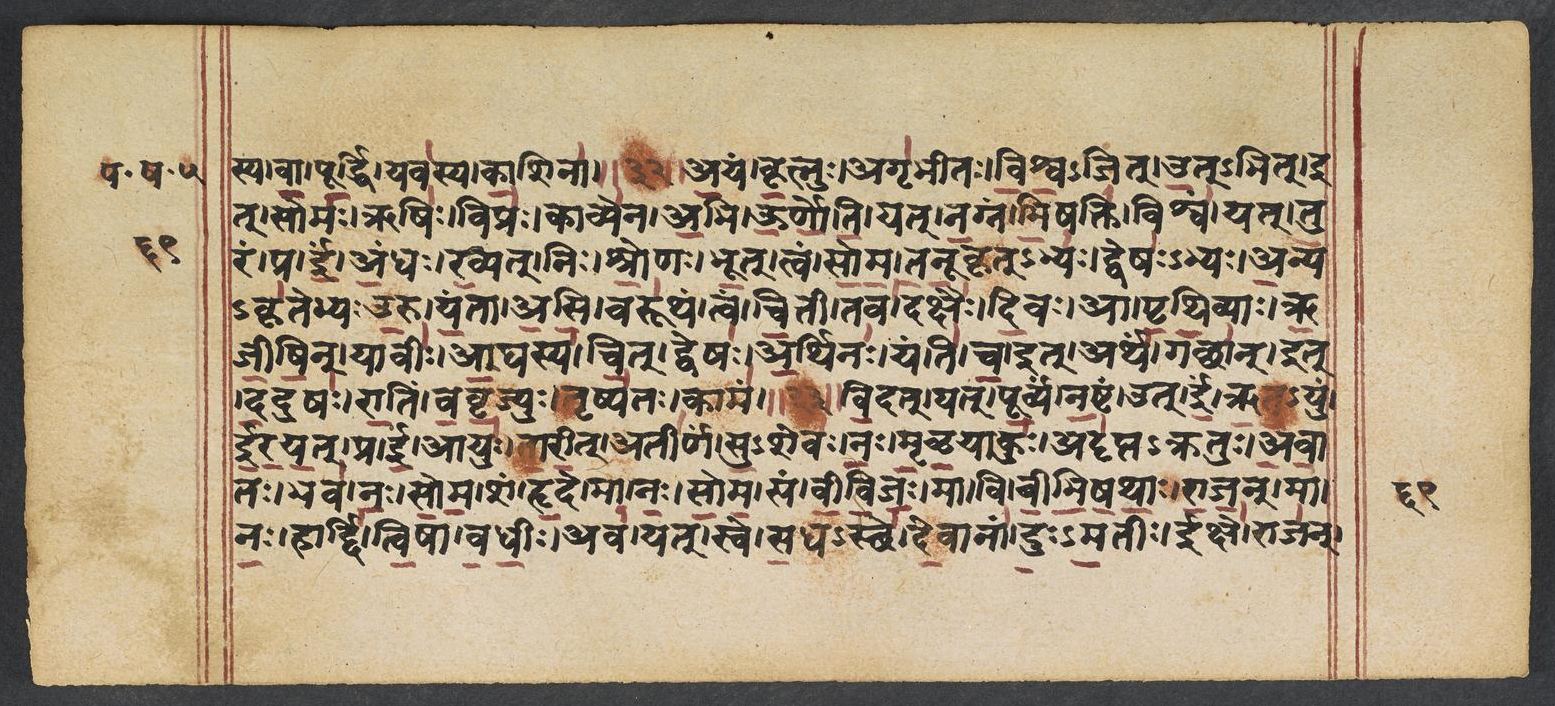
Penn Ms. Coll. 390 Item 41, fol. 647v (numbered 69v by the scribe) (OPenn image 648, upper leaf). Checked on the image: the Rigveda text on this page begins in RV 8.78.10 ‹-sam-bhṛtasya vā pūrdhi yavasya›. The next page with Rigveda text, fol. 648r (numbered 70r by the scribe), begins in RV 8.79.9 ‹apa dviṣaḥ sedha mīḍhavaḥ›. Verse 8.78.10 ends on this page; 8.78.10 begins on fol. 647r (numbered 69r by the scribe).
10taved i̍ndrā̱ham ā̱śasā̱ haste̱ dātra̍ṁ ca̱nā da̍de | di̱nasya̍ vā maghava̱n sambhṛ̍tasya vā pū̱rdhi yava̍sya kā̱śinā̍ ||
Compare: Padapāṭha (word-by-word text written in the manuscript; Sansknet e-text via GRETIL)
10tava | it | indra | aham | āśasā | haste | dātram | cana | ā | dade | dinasya | vā | magha-van | sam-bhṛtasya | vā | pūrdhi | yavasya | kāśinā
10Indra, through hope in thee alone even this sickle do I grasp. Fill my hand, Maghavan, with all that it can hold of barley cut or gathered up.
Notes
- Sanskrit: Aufrecht's edition (1877) with the Vedic accents, as entered by van Nooten and Holland (GRETIL).
- English: Ralph T. H. Griffith, The Hymns of the Rigveda (1889-1892; 2nd ed. 1896-1897), from the VedaWeb digital text; OCR slips in that text were corrected against the printed 2nd edition (data/sources/rigveda/griffith_errata.json).
- Padapāṭha (edition text): Sansknet e-text via GRETIL (CC BY-NC-SA 4.0).
Cite
Sources
- Source: Penn Ms. Coll. 390 Item 41 (undated (catalogued with Penn's 18th-19th c. Vedic manuscripts)), OPenn, Public Domain Mark + Aufrecht's accented text (GRETIL) + Griffith's English (VedaWeb) (holding institution)
- Critical edition: Aufrecht (1877), accented e-text via GRETIL
← previous · → next · v cycle view · l back to library