Rigveda 8.8: To Asvins
Introduction
Rigveda 8.8 is a hymn of 23 verses addressed to Asvins. It stands in book (maṇḍala) 8, the book of the Kaṇva and Aṅgiras poets. The Rigveda is the oldest collection of Sanskrit hymns, composed in the second half of the second millennium BCE and handed down orally for many centuries before it was written down.
The manuscript shown is Penn Ms. Coll. 390 Item 41 (University of Pennsylvania), an undated paper manuscript of the padapāṭha (the word-by-word recitation text, in which every word is written separately and compounds are split) of the whole Ṛgveda in Devanāgarī, 884 leaves in fascicles, 7-9 lines to the page, accents in red; this hymn stands on fol. 574r-575v. Each section below gives the verses that end on one page; the page boundaries were read on the images (the opening words of every page), not counted out. Where the manuscript is a padapāṭha (the word-by-word recitation text), the section shows Aufrecht's continuous (saṃhitā) text first and, as the edition text, the padapāṭha of the same verses, which is the form written on the page.
How was this verified? (Provenance)
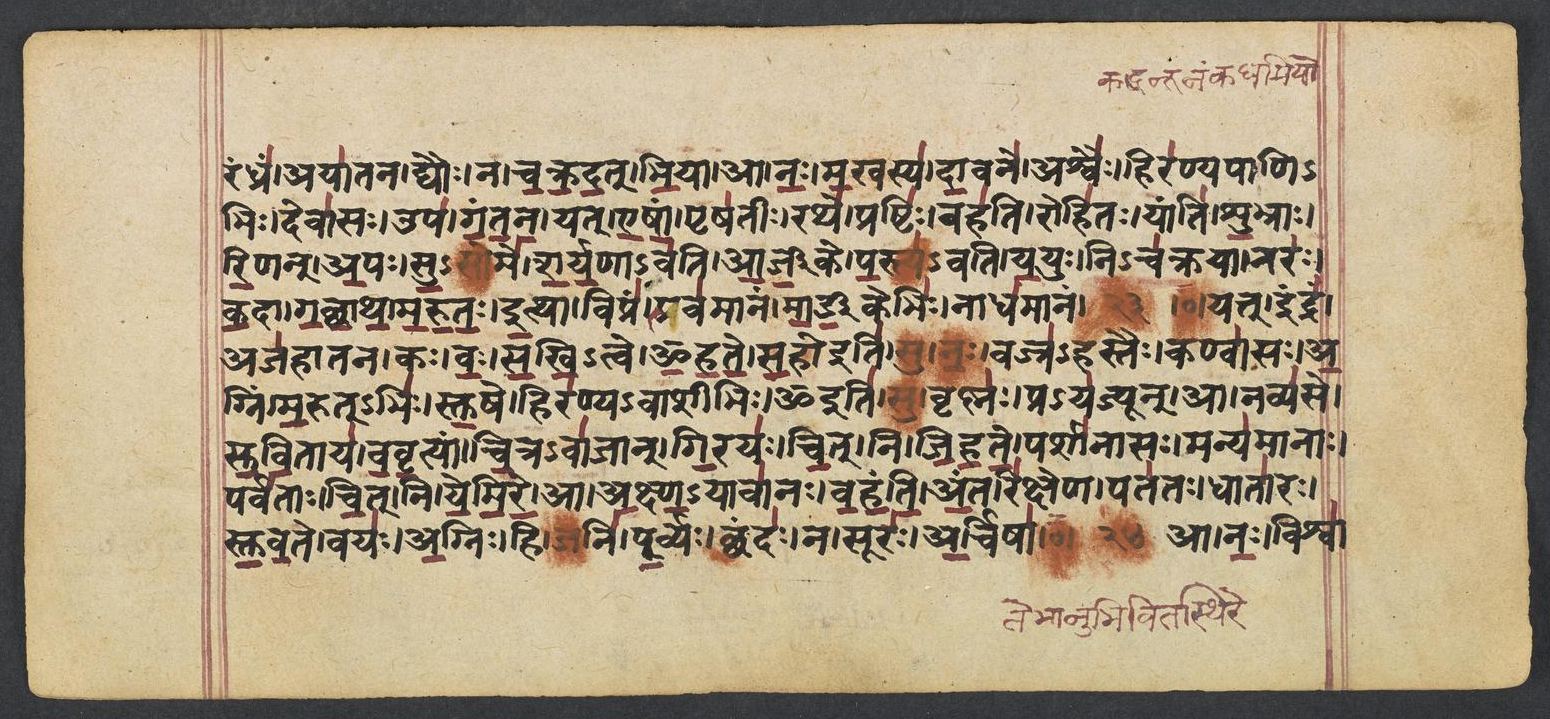
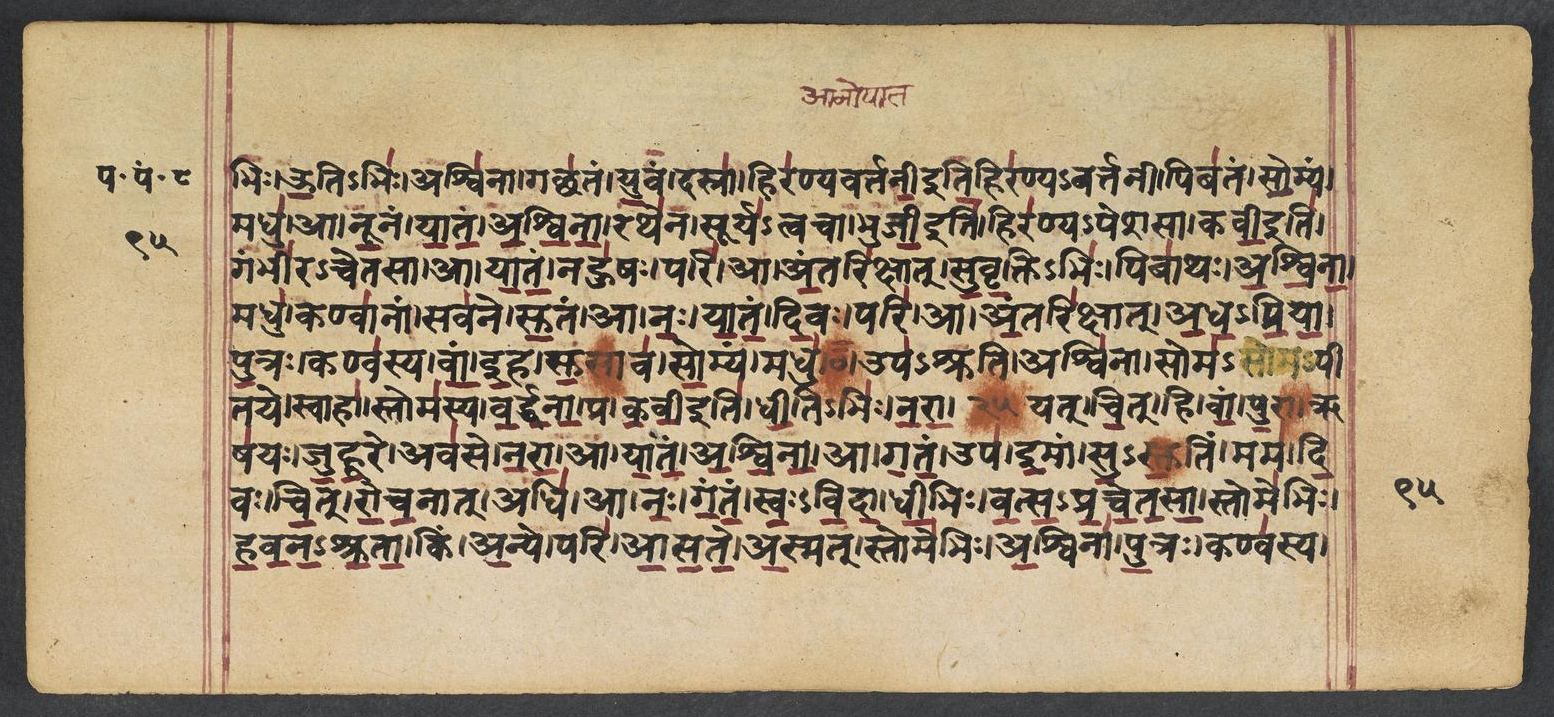
Where on the image
Penn Ms. Coll. 390 Item 41, fol. 574v (numbered 95v by the scribe) (OPenn image 575, upper leaf). Checked on the image: the Rigveda text on this page begins in RV 8.8.1 ‹-viśvābhiḥ ūti-bhiḥ aśvinā gacchatam›. The next page with Rigveda text, fol. 575r (numbered 96r by the scribe), begins in RV 8.8.8 ‹vām ṛṣiḥ gīḥ-bhiḥ vatsaḥ›. Verses 8.8.1-7 end on this page; 8.8.1 begins on fol. 574r (numbered 95r by the scribe).
1ā no̱ viśvā̍bhir ū̱tibhi̱r aśvi̍nā̱ gaccha̍taṁ yu̱vam | dasrā̱ hira̍ṇyavartanī̱ piba̍taṁ so̱myam madhu̍ ||
2ā nū̱naṁ yā̍tam aśvinā̱ rathe̍na̱ sūrya̍tvacā | bhujī̱ hira̍ṇyapeśasā̱ kavī̱ gambhī̍racetasā ||
3ā yā̍ta̱ṁ nahu̍ṣa̱s pary āntari̍kṣāt suvṛ̱ktibhi̍ḥ | pibā̍tho aśvinā̱ madhu̱ kaṇvā̍nā̱ṁ sava̍ne su̱tam ||
4ā no̍ yātaṁ di̱vas pary āntari̍kṣād adhapriyā | pu̱traḥ kaṇva̍sya vām i̱ha su̱ṣāva̍ so̱myam madhu̍ ||
5ā no̍ yāta̱m upa̍śru̱ty aśvi̍nā̱ soma̍pītaye | svāhā̱ stoma̍sya vardhanā̱ pra ka̍vī dhī̱tibhi̍r narā ||
6yac ci̱d dhi vā̍m pu̱ra ṛṣa̍yo juhū̱re 'va̍se narā | ā yā̍tam aśvi̱nā ga̍ta̱m upe̱māṁ su̍ṣṭu̱tim mama̍ ||
7di̱vaś ci̍d roca̱nād adhy ā no̍ gantaṁ svarvidā | dhī̱bhir va̍tsapracetasā̱ stome̍bhir havanaśrutā ||
Compare: Padapāṭha (word-by-word text written in the manuscript; Sansknet e-text via GRETIL)
1ā | naḥ | viśvābhiḥ | ūti-bhiḥ | aśvinā | gacchatam | yuvam | dasrā | hiraṇya-vartanī itihiraṇya-vartanī | pibatam | somyam | madhu
2ā | nūnam | yātam | aśvinā | rathena | sūrya-tvacā | bhujī iti | hiraṇya-peśasā | kavī iti | gambhīra-cetasā
3ā | yātam | nahuṣaḥ | pari | ā | antarikṣāt | suvṛkti-bhiḥ | pibāthaḥ | aśvinā | madhu | kaṇvānām | savane | sutam
4ā | naḥ | yātam | divaḥ | pari | ā | antarikṣāt | adha-priyā | putraḥ | kaṇvasya | vām | iha | susāva | somyam | madhu
5ā | naḥ | yātam | upa-śruti | aśvinā | soma-pītaye | svāhā | stomasya | vardhanā | pra | kavī iti | dhīti-bhiḥ | narā
6yat | cit | hi | vām | purā | ṛṣayaḥ | juhūre | avase | narā | ā | yātam | aśvinā | ā | gatam | upa | imām | su-stutim | mama
7divaḥ | cit | rocanāt | adhi | ā | naḥ | gantam | svaḥ-vidā | dhībhiḥ | vatsa-pracetasā | stomebhiḥ | havana-śrutā
1WITH all the succours that are yours, O Aṣvins, hither come to us: Wonderful, borne on paths of gold, drink ye the meath with Soma juice.
2Come now, ye Aṣvins, on your car decked with a sun-bright canopy, Bountiful, with your golden forms, Sages with depth of intellect.
3Come hither from the Nahushas, come, drawn by pure hymns, from mid-air. O Aṣvins, drink the savoury juice shed in the Kaṇvas' sacrifice.
4Come to us hither from the heavens, come from mid-air, well-loved by us: Here Kaṇva's son hath pressed for you the pleasant meath of Soma juice.
5Come, Aṣvins, to give ear to us, to drink the Soma, Aṣvins, come. Hail, Strengtheners of the praise-song speed onward, ye Heroes, with your thoughts.
6As, Heroes, in the olden time the R̥ishis called you to their aid, So now, O Aṣvins, come to us, come near to this mine eulogy.
7Even from the luminous sphere of heaven come to us, ye who find the light, Carers for Vatsa, through our prayers and lauds, O yewho hearour call.
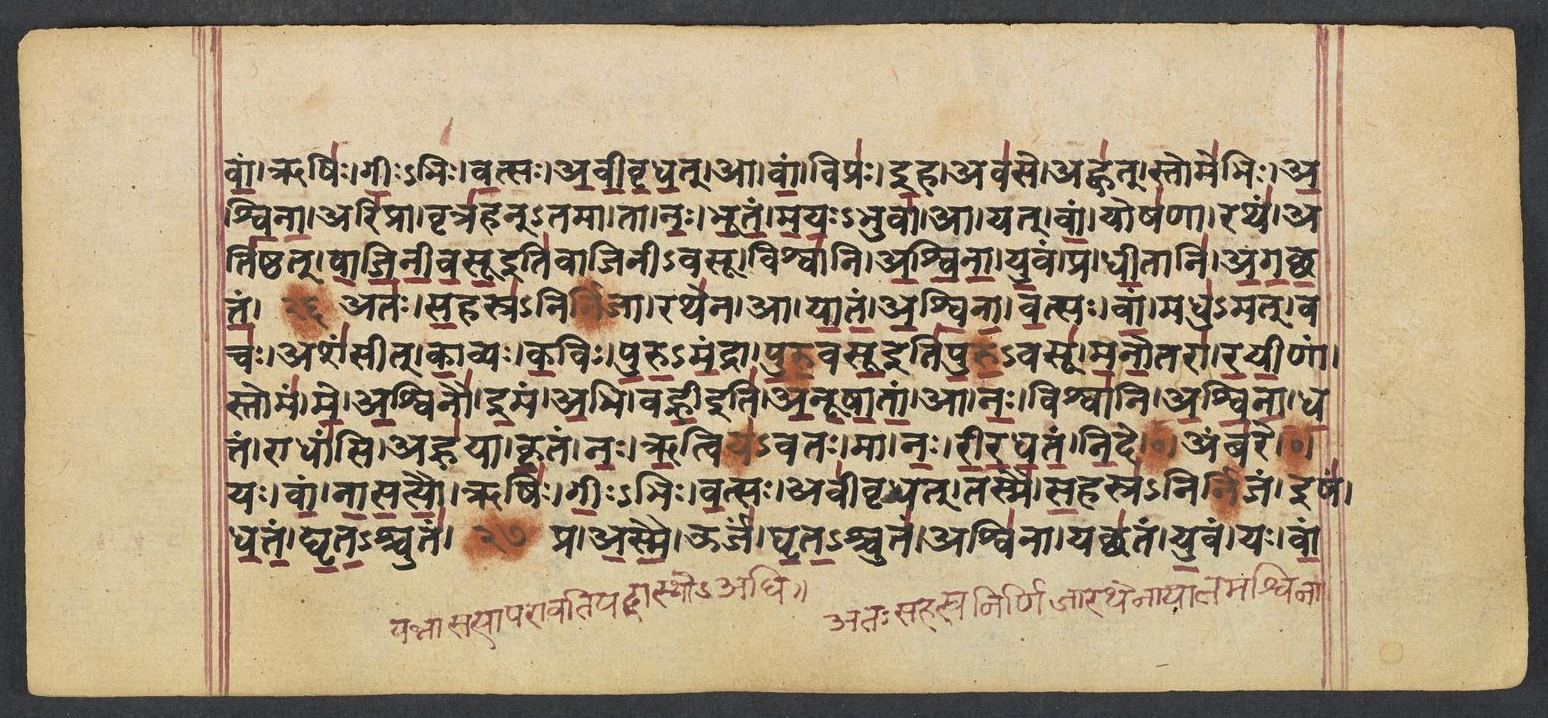
Where on the image
Penn Ms. Coll. 390 Item 41, fol. 575r (numbered 96r by the scribe) (OPenn image 575, lower leaf). Checked on the image: the Rigveda text on this page begins in RV 8.8.8 ‹vām ṛṣiḥ gīḥ-bhiḥ vatsaḥ›. The next page with Rigveda text, fol. 575v (numbered 96v by the scribe), begins in RV 8.8.16 ‹sumnāya tustavat vasu-yāt dānunaḥ›. Verses 8.8.8-15 end on this page; 8.8.8 begins on fol. 574v (numbered 95v by the scribe).
8kim a̱nye pary ā̍sate̱ 'smat stome̍bhir a̱śvinā̍ | pu̱traḥ kaṇva̍sya vā̱m ṛṣi̍r gī̱rbhir va̱tso a̍vīvṛdhat ||
9ā vā̱ṁ vipra̍ i̱hāva̱se 'hva̱t stome̍bhir aśvinā | ari̍prā̱ vṛtra̍hantamā̱ tā no̍ bhūtam mayo̱bhuvā̍ ||
10ā yad vā̱ṁ yoṣa̍ṇā̱ ratha̱m ati̍ṣṭhad vājinīvasū | viśvā̍ny aśvinā yu̱vam pra dhī̱tāny a̍gacchatam ||
11ata̍ḥ sa̱hasra̍nirṇijā̱ rathe̱nā yā̍tam aśvinā | va̱tso vā̱m madhu̍ma̱d vaco 'śa̍ṁsīt kā̱vyaḥ ka̱viḥ ||
12pu̱ru̱ma̱ndrā pu̍rū̱vasū̍ mano̱tarā̍ rayī̱ṇām | stoma̍m me a̱śvinā̍v i̱mam a̱bhi vahnī̍ anūṣātām ||
13ā no̱ viśvā̍ny aśvinā dha̱ttaṁ rādhā̱ṁsy ahra̍yā | kṛ̱taṁ na̍ ṛ̱tviyā̍vato̱ mā no̍ rīradhataṁ ni̱de ||
14yan nā̍satyā parā̱vati̱ yad vā̱ stho adhy amba̍re | ata̍ḥ sa̱hasra̍nirṇijā̱ rathe̱nā yā̍tam aśvinā ||
15yo vā̍ṁ nāsatyā̱v ṛṣi̍r gī̱rbhir va̱tso avī̍vṛdhat | tasmai̍ sa̱hasra̍nirṇija̱m iṣa̍ṁ dhattaṁ ghṛta̱ścuta̍m ||
Compare: Padapāṭha (word-by-word text written in the manuscript; Sansknet e-text via GRETIL)
8kim | anye | pari | āsate | asmat | stomebhiḥ | aśvinā | putraḥ | kaṇvasya | vām | ṛṣiḥ | gīḥ-bhiḥ | vatsaḥ | avīvṛdhat
9ā | vām | vipraḥ | iha | avase | ahvat | stomebhiḥ | aśvinā | ariprā | vṛtrahan-tamā | tā | naḥ | bhūtam | mayaḥ-bhuvā
10ā | yat | vām | yoṣaṇā | ratham | atiṣṭhat | vājinīvasūitivājinī-vasū | viśvāni | aśv inā | yuvam | pra | dhītāni | agacchatam
11ataḥ | sahasra-nirnijā | rathena | ā | yātam | aśvinā | vatsaḥ | vām | madhu-mat | vacaḥ | aśaṃsīt | kāvyaḥ | kaviḥ
12puru-mandrā | puruvasūitipuru-vasū | manotarā | rayīṇām | stomam | me | aśvinau | imam | abhi | vahniti | anūṣātām
13ā | naḥ | viśvāni | aśvinā | dhattam | rādhāṃsi | ahūyā | kṛtam | naḥ | ṛtviya-vataḥ | mā | naḥ | rīradhatam | nide
14yat | nāsatyā | parāvati | yat | vā | sthaḥ | adhi | ambare | ataḥ | sahasra-nirnijā | rathena | ā | yātam | aśvinā
15yaḥ | vām | nāsatyau | ṛṣiḥ | gīḥ-bhiḥ | vatsaḥ | avīvṛdhat | tasmai | sahasra-n irnijam | iṣam | dhattam | ghṛta-ścutam
8Do others more than we adore the Aṣvins with their hymns of praise? The R̥ishi Vatsa, Kaṇva's son, hath magnified you with his songs.
9The holy singer with his hymns hath called you, Aṣvins, hither-ward; Best Vr̥itra-slayers, free from stain, as such bring us felicity.
10What time, ye Lords of ample wealth, the Lady mounted on your car, Then, O ye Aṣvins, ye attained all wishes that your hearts desired.
11Come thence, O Aṣvins, on your car that hath a thousand ornaments: Vatsa the sage, the sage's son, hath sung a song of sweets to you.
12Cheerers of many, rich in goods, discoverers of opulence, The Aṣvins, Riders through the sky, have welcomed this my song of praise.
13O Aṣvins, grant us all rich gifts wherewith no man mav interfere. Make us observe the stated times: give us not over to reproach.
14Whether, Nâsatyas, ye be nigh, or whether ye be far away, Come thence, O Aṣvins, on your car that hath a thousand ornaments.
15Vatsa the R̥ishi with his songs, Nâsatyas, hath exalted you: Grant him rich food distilling oil, graced with a thousand ornaments.
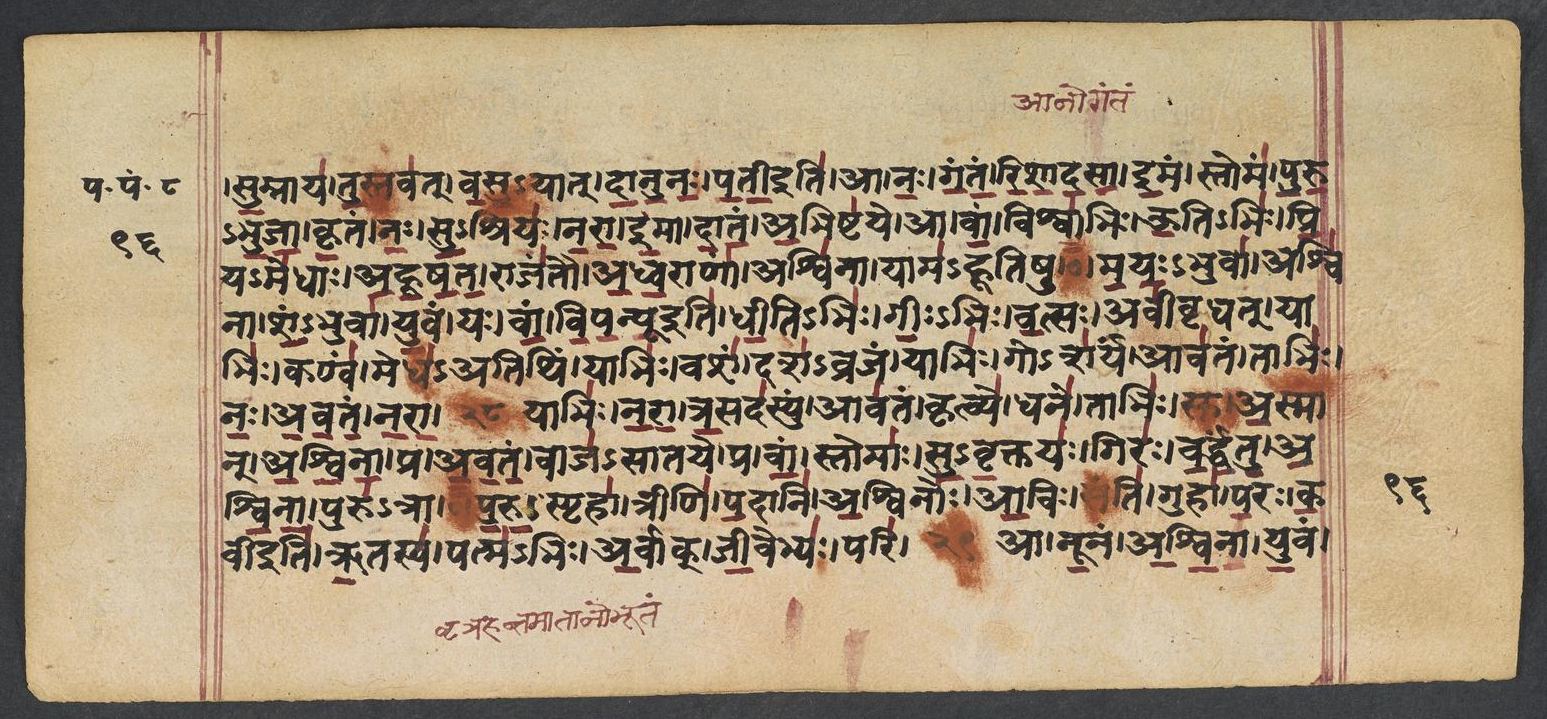
Where on the image
Penn Ms. Coll. 390 Item 41, fol. 575v (numbered 96v by the scribe) (OPenn image 576, upper leaf). Checked on the image: the Rigveda text on this page begins in RV 8.8.16 ‹sumnāya tustavat vasu-yāt dānunaḥ›. The next page with Rigveda text, fol. 576r (numbered 97r by the scribe), begins in RV 8.9.1 ‹vatsasya gantam avase pra›. Verses 8.8.16-23 end on this page; 8.8.16 begins on fol. 575r (numbered 96r by the scribe).
16prāsmā̱ ūrja̍ṁ ghṛta̱ścuta̱m aśvi̍nā̱ yaccha̍taṁ yu̱vam | yo vā̍ṁ su̱mnāya̍ tu̱ṣṭava̍d vasū̱yād dā̍nunas patī ||
17ā no̍ gantaṁ riśādase̱maṁ stoma̍m purubhujā | kṛ̱taṁ na̍ḥ su̱śriyo̍ nare̱mā dā̍tam a̱bhiṣṭa̍ye ||
18ā vā̱ṁ viśvā̍bhir ū̱tibhi̍ḥ pri̱yame̍dhā ahūṣata | rāja̍ntāv adhva̱rāṇā̱m aśvi̍nā̱ yāma̍hūtiṣu ||
19ā no̍ gantam mayo̱bhuvāśvi̍nā śa̱mbhuvā̍ yu̱vam | yo vā̍ṁ vipanyū dhī̱tibhi̍r gī̱rbhir va̱tso avī̍vṛdhat ||
20yābhi̱ḥ kaṇva̱m medhā̍tithi̱ṁ yābhi̱r vaśa̱ṁ daśa̍vrajam | yābhi̱r gośa̍rya̱m āva̍ta̱ṁ tābhi̍r no 'vataṁ narā ||
21yābhi̍r narā tra̱sada̍syu̱m āva̍ta̱ṁ kṛtvye̱ dhane̍ | tābhi̱ḥ ṣv a1̱̍smām̐ a̍śvinā̱ prāva̍ta̱ṁ vāja̍sātaye ||
22pra vā̱ṁ stomā̍ḥ suvṛ̱ktayo̱ giro̍ vardhantv aśvinā | puru̍trā̱ vṛtra̍hantamā̱ tā no̍ bhūtam puru̱spṛhā̍ ||
23trīṇi̍ pa̱dāny a̱śvino̍r ā̱viḥ sānti̱ guhā̍ pa̱raḥ | ka̱vī ṛ̱tasya̱ patma̍bhir a̱rvāg jī̱vebhya̱s pari̍ ||
Compare: Padapāṭha (word-by-word text written in the manuscript; Sansknet e-text via GRETIL)
16pra | asmai | ūrjam | ghṛta-ścutam | aśvinā | yacchatam | yuvam | yaḥ | vām | sumnāya | tustavat | vasu-yāt | dānunaḥ | patī iti
17ā | naḥ | gantam | riśādasā | imam | stomam | puru-bhujā | kṛtam | naḥ | su-śriyaḥ | narā | imā | dātam | abhiṣṭaye
18ā | vām | viśvābhiḥ | ūti-bhiḥ | priya-medhāḥ | ahūṣata | rājantau | adhvarāṇām | aśvi nā | yāma-hūtiṣu
19ā | naḥ | gantam | mayaḥ-bhuvā | aśvinā | śam-bhuvā | yuvam | yaḥ | vām | vipanyūiti | dhīti-bhiḥ | gīḥ-bhiḥ | vatsaḥ | avīvṛdhat
20yābhiḥ | kaṇvam | medha-atithim | yābhiḥ | vaśam | daśa-vrajam | yābhiḥ | go--śaryam | āvatam | tābhiḥ | naḥ | avatam | narā
21yābhiḥ | narā | trasadasyum | āvatam | kṛtvye | dhane | tābhiḥ | su | asmān | aśvinā | pra | avatam | vāja-sātaye
22pra | vām | stomāḥ | su-vṛktayaḥ | giraḥ | vardhantu | aśvinā | puru-trā | vṛtrahan-tamā | tā | naḥ | bhūtam | puru-spṛhā
23trīṇi | padāni | aśvinoḥ | āviḥ | santi | guihā | paraḥ | kavī iti | ṛtasya | patma-bhiḥ | arvāk | jīvebhyaḥ | pari
16Bestow on him, O Aṣvins, food that strengthens, and that drops with oil, On him who praises you for bliss, and, Lords of bounty, prays for wealth.
17Come to us, ye who slay the foe, Lords of rich treasure, to this hymn. O Heroes, give us high renown and these good things of earth for help.
18The Priyamedhas have invoked you with all succours that are yours, You, Aṣvins, Lords of solemn rites, with calls entreating you to come.
19Come to us, Aṣvins, ye Who bring felicity, auspicious Ones, To Vatsa who with prayer and hymn, lovers of song, hath honoured you.
20Aid us, O Heroes, for those hymns for which ye helped Goṣarya erst, Gave Vaṣa, Daṣavraja aid, and Kaṇva and Medhâtithi:
21And favoured Trasadasyu, ye Heroes, in spoil-deciding fray: For these, O Aṣvins, graciously assist us in acquiring strength.
22O Aṣvins, may pure hymns of ours, and songs and praises, honour you: Best slayers everywhere of foes, as such we fondly yearn for you.
23Three places of the Aṣvins, erst concealed, are made apparent now. Both Sages, with the flight of Law come hither unto those who live.
Notes
- Sanskrit: Aufrecht's edition (1877) with the Vedic accents, as entered by van Nooten and Holland (GRETIL).
- English: Ralph T. H. Griffith, The Hymns of the Rigveda (1889-1892; 2nd ed. 1896-1897), from the VedaWeb digital text; OCR slips in that text were corrected against the printed 2nd edition (data/sources/rigveda/griffith_errata.json).
- Padapāṭha (edition text): Sansknet e-text via GRETIL (CC BY-NC-SA 4.0).
Cite
Sources
- Source: Penn Ms. Coll. 390 Item 41 (undated (catalogued with Penn's 18th-19th c. Vedic manuscripts)), OPenn, Public Domain Mark + Aufrecht's accented text (GRETIL) + Griffith's English (VedaWeb) (holding institution)
- Critical edition: Aufrecht (1877), accented e-text via GRETIL
← previous · → next · v cycle view · l back to library