Rigveda 8.92: To Indra
Introduction
Rigveda 8.92 is a hymn of 33 verses addressed to Indra. It stands in book (maṇḍala) 8, the book of the Kaṇva and Aṅgiras poets. The Rigveda is the oldest collection of Sanskrit hymns, composed in the second half of the second millennium BCE and handed down orally for many centuries before it was written down.
The manuscript shown is Penn Ms. Coll. 390 Item 41 (University of Pennsylvania), an undated paper manuscript of the padapāṭha (the word-by-word recitation text, in which every word is written separately and compounds are split) of the whole Ṛgveda in Devanāgarī, 884 leaves in fascicles, 7-9 lines to the page, accents in red; this hymn stands on fol. 653v-655r. Each section below gives the verses that end on one page; the page boundaries were read on the images (the opening words of every page), not counted out. Where the manuscript is a padapāṭha (the word-by-word recitation text), the section shows Aufrecht's continuous (saṃhitā) text first and, as the edition text, the padapāṭha of the same verses, which is the form written on the page.
How was this verified? (Provenance)
Where on the image
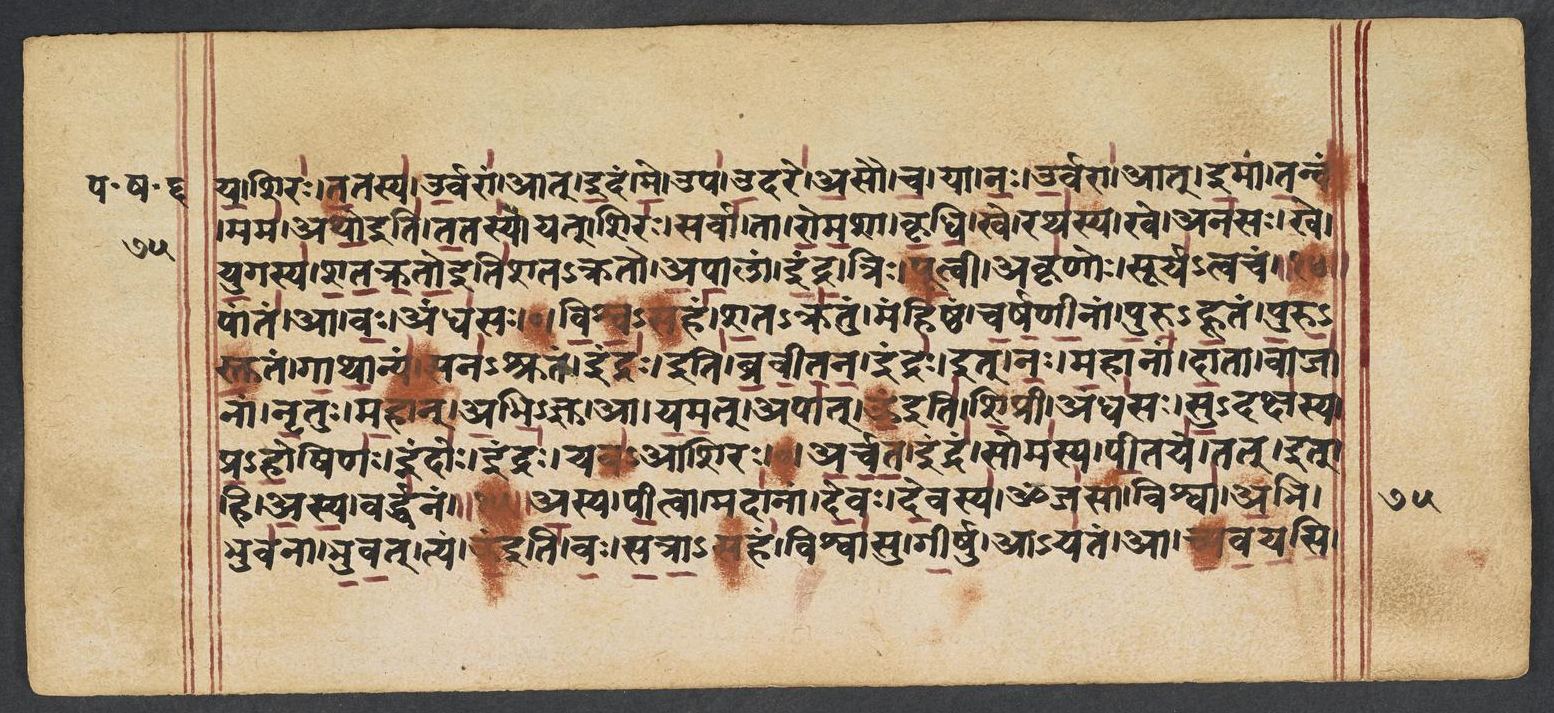
Penn Ms. Coll. 390 Item 41, fol. 653v (numbered 75v by the scribe) (OPenn image 654, upper leaf). Checked on the image: the Rigveda text on this page begins in RV 8.91.5 ‹śiraḥ tatasya urvarām āt›. The next page with Rigveda text, fol. 654r (numbered 76r by the scribe), begins in RV 8.92.7 ‹ūtaye›. Verses 8.92.1-6 end on this page.
1pānta̱m ā vo̱ andha̍sa̱ indra̍m a̱bhi pra gā̍yata | vi̱śvā̱sāha̍ṁ śa̱takra̍tu̱m maṁhi̍ṣṭhaṁ carṣaṇī̱nām ||
2pu̱ru̱hū̱tam pu̍ruṣṭu̱taṁ gā̍thā̱nya1̱̍ṁ sana̍śrutam | indra̱ iti̍ bravītana ||
3indra̱ in no̍ ma̱hānā̍ṁ dā̱tā vājā̍nāṁ nṛ̱tuḥ | ma̱hām̐ a̍bhi̱jñv ā ya̍mat ||
4apā̍d u śi̱pry andha̍saḥ su̱dakṣa̍sya praho̱ṣiṇa̍ḥ | indo̱r indro̱ yavā̍śiraḥ ||
5tam v a̱bhi prārca̱tendra̱ṁ soma̍sya pī̱taye̍ | tad id dhy a̍sya̱ vardha̍nam ||
6a̱sya pī̱tvā madā̍nāṁ de̱vo de̱vasyauja̍sā | viśvā̱bhi bhuva̍nā bhuvat ||
Compare: Padapāṭha (word-by-word text written in the manuscript; Sansknet e-text via GRETIL)
1pāntam | ā | vaḥ | andhasaḥ | indram | abhi | pra | gāyata | viśva-saham | śata-kratum | maṃhiṣṭham | carṣaṇīnām
2puru-hūtam | puru-stutam | gāthānyam | sana-śrutam | indraḥ | iti | bravītana
3indraḥ | it | naḥ | mahānām | datā | vājānām | nṛtuḥ | mahān | abhi-jñu | ā | yamat
4apāt | oṃ iti | śiprī | andhasaḥ | su-dakṣasya | pra-hoṣiṇaḥ | indoḥ | indraḥ | yava-āśiraḥ
5tam | oṃ iti | abhi | pra | arcata | indram | somasya | pītaye | tat | it | hi | asya | vardhanam
6asya | pītvā | madānām | devaḥ | devasya | ojasā | viśvā | abhi | bhuvanā | bhuvat
1INVITE ye Indra with a song to drink your draught of Soma juice, All-conquering Ṣatakratu, most munificent of all who live.
2Lauded by many, much-invoked, leader of song, renowned of old: His name is Indra, tell it forth.
3Indra the Dancer be to us the giver of abundant strength: May he, the mighty, bring it near.
4Indra whose jaws are strong hath drunk of worshipping Sudaksha's draught, The Soma juice with barley mixt.
5Call Indra loudly with your songs of praise to drink the Soma juice. For this is what augments his stiength.
6When he hath drunk its gladdening drops, the God with vigour of a God Hath far surpassed all things that are.
Where on the image
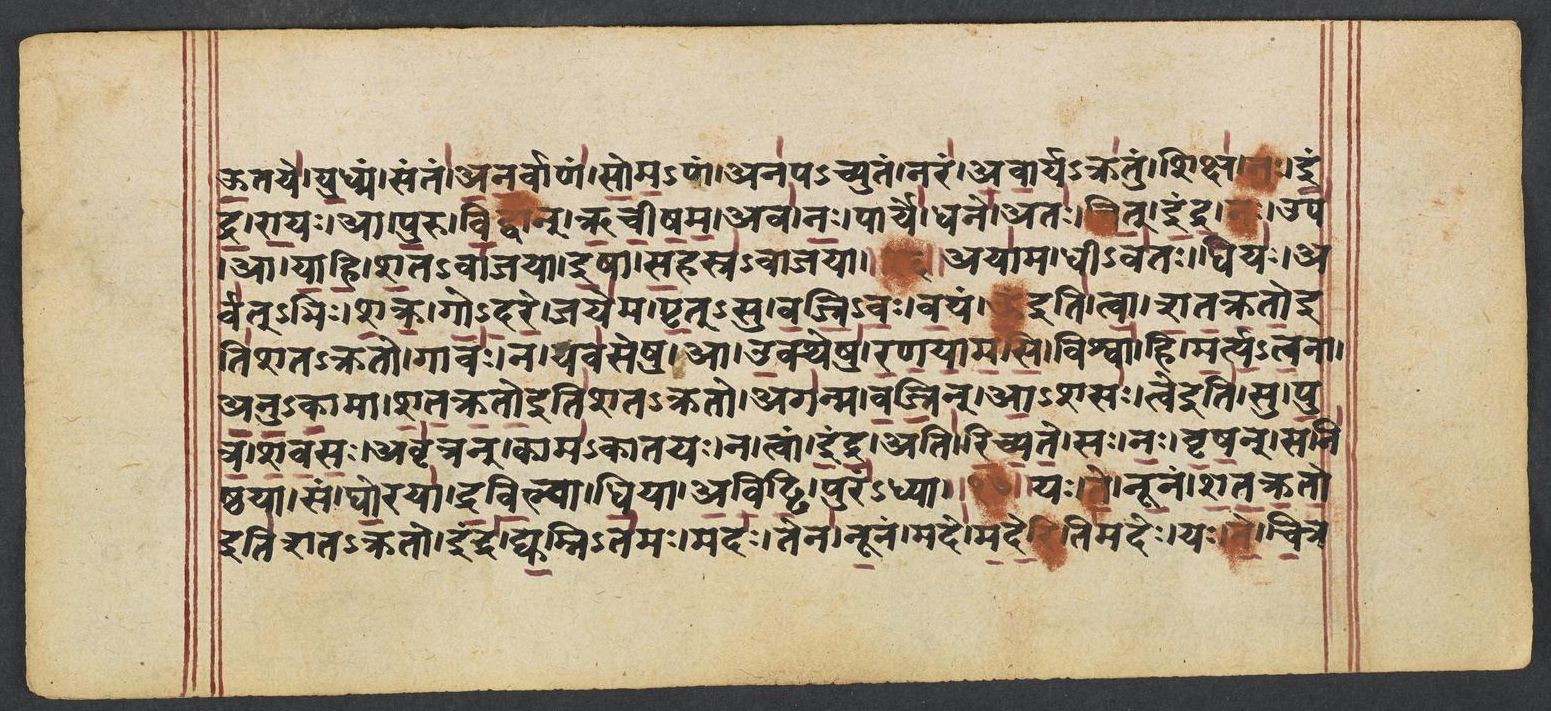
Penn Ms. Coll. 390 Item 41, fol. 654r (numbered 76r by the scribe) (OPenn image 654, lower leaf). Checked on the image: the Rigveda text on this page begins in RV 8.92.7 ‹ūtaye›. The next page with Rigveda text, fol. 654v (numbered 76v by the scribe), begins in RV 8.92.17 ‹-citraśravaḥ-tamaḥ yaḥ indra vṛtrahan-tamaḥ›. Verses 8.92.7-16 end on this page; 8.92.7 begins on fol. 653v (numbered 75v by the scribe).
7tyam u̍ vaḥ satrā̱sāha̱ṁ viśvā̍su gī̱rṣv āya̍tam | ā cyā̍vayasy ū̱taye̍ ||
8yu̱dhmaṁ santa̍m ana̱rvāṇa̍ṁ soma̱pām ana̍pacyutam | nara̍m avā̱ryakra̍tum ||
9śikṣā̍ ṇa indra rā̱ya ā pu̱ru vi̱dvām̐ ṛ̍cīṣama | avā̍ na̱ḥ pārye̱ dhane̍ ||
10ata̍ś cid indra ṇa̱ upā yā̍hi śa̱tavā̍jayā | i̱ṣā sa̱hasra̍vājayā ||
11ayā̍ma̱ dhīva̍to̱ dhiyo 'rva̍dbhiḥ śakra godare | jaye̍ma pṛ̱tsu va̍jrivaḥ ||
12va̱yam u̍ tvā śatakrato̱ gāvo̱ na yava̍se̱ṣv ā | u̱ktheṣu̍ raṇayāmasi ||
13viśvā̱ hi ma̍rtyatva̱nānu̍kā̱mā śa̍takrato | aga̍nma vajrinn ā̱śasa̍ḥ ||
14tve su pu̍tra śava̱so 'vṛ̍tra̱n kāma̍kātayaḥ | na tvām i̱ndrāti̍ ricyate ||
15sa no̍ vṛṣa̱n sani̍ṣṭhayā̱ saṁ gho̱rayā̍ dravi̱tnvā | dhi̱yāvi̍ḍḍhi̱ pura̍ṁdhyā ||
16yas te̍ nū̱naṁ śa̍takrata̱v indra̍ dyu̱mnita̍mo̱ mada̍ḥ | tena̍ nū̱nam made̍ madeḥ ||
Compare: Padapāṭha (word-by-word text written in the manuscript; Sansknet e-text via GRETIL)
7tyam | oṃ iti | vaḥ | satrāsaham | viśvāsu | gīrṣu | āyatam | ā | cyavayasi | ūtaye
8yudhmam | santam | anarvāṇam | soma-pām | anapa-cyutam | naram | avārya-kratum
9śikṣa | naḥ | indra | rāyaḥ | ā | puru | vidvān | ṛcīṣama | ava | naḥ | pārye | dhane
10ataḥ | cit | indra | naḥ | upa | ā | yāhi | śata-vājayā | iṣā | sahasra-vājayā
11ayāma | dhī-vataḥ | dhiyaḥ | arvat-bhiḥ | śakra | go--dare | jayema | pṛt-su | vajr i-vaḥ
12vayam | oṃ iti | tvā | śatakrato itiśata-krato | gāvaḥ | na | yavaseṣu | ā | uktheṣu | raṇayāmasi
13viśvā | hi | martya-tvanā | anu-kāmā | śatakrato itiśata-krato | aganma | vajrin | āśasaḥ
14tve iti | su | putra | śavasaḥ | avṛtran | kāma-kātayaḥ | na | tvām | indra | ati | ricyate
15saḥ | naḥ | vṛṣan | saniṣṭhayā | sam | ghorayā | dravitnvā | dhiyā | aviḍḍhi | puram-dhyā
16yaḥ | te | nūnam | śatakrato itiśata-krato | indra | dyumni-tamaḥ | madaḥ | tena | nūnam | made | madeḥ
7Thou speedest down to succour us this ever-conquering God of yours, Him who is drawn to all our songs
8The Warrior not to be restrained, the Soma-drinker ne'er o'erthrown, The Chieftain of resistless might.
9O Indra, send us riches, thou Omniscient, worthy of our praise: Help us in the decisive fray.
10Even thence, O Indra, come to us with food that gives a hundred powers, With food that gives a thousand powers.
11We sought the wisdom of the wise. Ṣakra, Kine-giver, Thunder-armed! May we with steeds o’ercome in fight.
12We make thee, Ṣatakratu, find enjoyment in the songs we sing, Like cattle in the pasture lands.
13For, Ṣatakratu, Thunder-armed, all that we craved, as men are wont, All that we hoped, have we attained.
14Those, Son of Strength, are come to thee who cherish wishes in their hearts: O Indra, none excelleth thee.
15So, Hero, guard us with thy care, with thy most liberal providence, Speedy, and terrible to foes.
16O Ṣatakratu Indra, now rejoice with that carouse of thine Which is most splendid of them all;
Where on the image
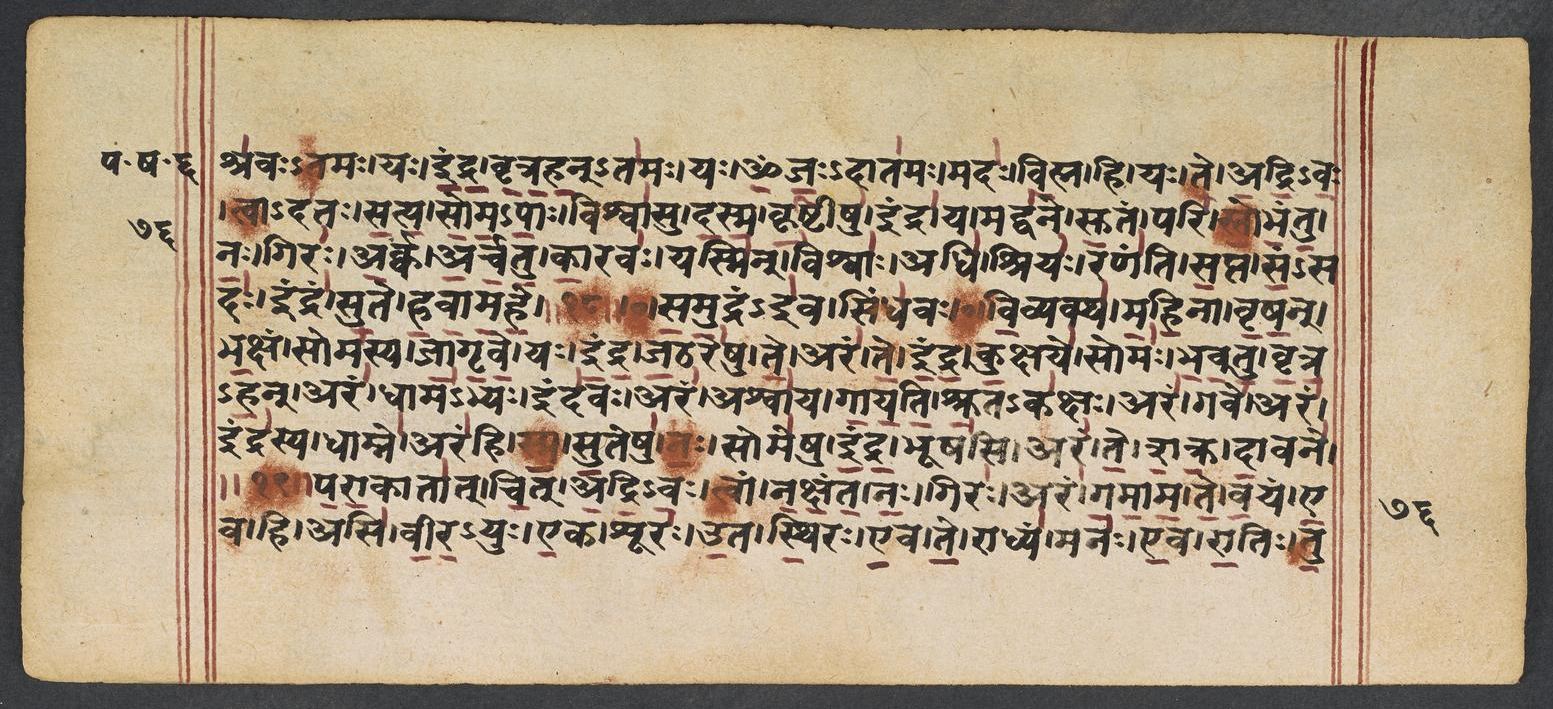
Penn Ms. Coll. 390 Item 41, fol. 654v (numbered 76v by the scribe) (OPenn image 655, upper leaf). Checked on the image: the Rigveda text on this page begins in RV 8.92.17 ‹-citraśravaḥ-tamaḥ yaḥ indra vṛtrahan-tamaḥ›. The next page with Rigveda text, fol. 655r (numbered 77r by the scribe), begins in RV 8.92.29 ‹-tuvi-magha viśvebhiḥ dhāyi dhātṛ-bhiḥ›. Verses 8.92.17-28 end on this page; 8.92.17 begins on fol. 654r (numbered 76r by the scribe).
17yas te̍ ci̱traśra̍vastamo̱ ya i̍ndra vṛtra̱hanta̍maḥ | ya o̍jo̱dāta̍mo̱ mada̍ḥ ||
18vi̱dmā hi yas te̍ adriva̱s tvāda̍ttaḥ satya somapāḥ | viśvā̍su dasma kṛ̱ṣṭiṣu̍ ||
19indrā̍ya̱ madva̍ne su̱tam pari̍ ṣṭobhantu no̱ gira̍ḥ | a̱rkam a̍rcantu kā̱rava̍ḥ ||
20yasmi̱n viśvā̱ adhi̱ śriyo̱ raṇa̍nti sa̱pta sa̱ṁsada̍ḥ | indra̍ṁ su̱te ha̍vāmahe ||
21trika̍drukeṣu̱ ceta̍naṁ de̱vāso̍ ya̱jñam a̍tnata | tam id va̍rdhantu no̱ gira̍ḥ ||
22ā tvā̍ viśa̱ntv inda̍vaḥ samu̱dram i̍va̱ sindha̍vaḥ | na tvām i̱ndrāti̍ ricyate ||
23vi̱vyaktha̍ mahi̱nā vṛ̍ṣan bha̱kṣaṁ soma̍sya jāgṛve | ya i̍ndra ja̱ṭhare̍ṣu te ||
24ara̍ṁ ta indra ku̱kṣaye̱ somo̍ bhavatu vṛtrahan | ara̱ṁ dhāma̍bhya̱ inda̍vaḥ ||
25ara̱m aśvā̍ya gāyati śru̱taka̍kṣo̱ ara̱ṁ gave̍ | ara̱m indra̍sya̱ dhāmne̍ ||
26ara̱ṁ hi ṣma̍ su̱teṣu̍ ṇa̱ḥ some̍ṣv indra̱ bhūṣa̍si | ara̍ṁ te śakra dā̱vane̍ ||
27pa̱rā̱kāttā̍c cid adriva̱s tvāṁ na̍kṣanta no̱ gira̍ḥ | ara̍ṁ gamāma te va̱yam ||
28e̱vā hy asi̍ vīra̱yur e̱vā śūra̍ u̱ta sthi̱raḥ | e̱vā te̱ rādhya̱m mana̍ḥ ||
Compare: Padapāṭha (word-by-word text written in the manuscript; Sansknet e-text via GRETIL)
17yaḥ | te | citraśravaḥ-tamaḥ | yaḥ | indra | vṛtrahan-tamaḥ | yaḥ | ojaḥ-dātamaḥ | madaḥ
18vidma | hi | yaḥ | te | adri-vaḥ | tvādattaḥ | satya | soma-pāḥ | viśvāsu | dasma | kṛṣṭiṣu
19indrāya | madvane | sutam | pari | stobhantu | naḥ | giraḥ | arkam | arcantu | kāravaḥ
20yasmin | viśvāḥ | adhi | śriyaḥ | raṇanti | sapta | sam-sadaḥ | indram | sute | havāmahe
21tri-kadrukeṣu | cetanam | devāsaḥ | yajñam | atnata | tam | it | vardhantu | naḥ | giraḥ
22ā | tvā | viśantu | indavaḥ | samudram-iva | sindhavaḥ | na | tvām | indra | ati | ricyate
23vivyaktha | mahinā | vṛṣan | bhakṣam | somasya | jāgṛve | yaḥ | indra | jaṭhareṣu | te
24aram | te | indra | kukṣaye | somaḥ | bhavatu | vṛtra-han | aram | dhāma-bhyaḥ | indavaḥ
25aram | aśvāya | gāyati | śruta-kakṣaḥ | aram | gave | aram | indrasya | dhāmne
26aram | hi | sma | suteṣu | naḥ | someṣu | indra | bhūṣasi | aram | te | śakra | dāvane
27parākāttāt | cit | adri-vaḥ | tvām | nakṣanta | naḥ | giraḥ | aram | gamāma | te | vayam
28eva | hi | asi | vīra-yuḥ | eva | śūraḥ | uta | sthiraḥ | eva | te | rādhyam | manaḥ
17Even, Indra, that carouse which slays the Vritras best, most widely famed, Best giver of thy power and might.
18For that which is thy gift we know, true Soma-drinker, Thunder-armed, Mighty One, amid all the folk.
19For Indra, Lover of Carouse, loud be our songs about the juice: Let poets sing the song of praise.
20We summon Indra to the draught, in whom all glories rest, in whom The seven communities rejoice.
21At the Trikadrukas the Gods span sacrifice that stirs the mind: Let our songs aid and prosper it.
22Let the drops pass within thee as the rivers flow into the sea: O Indra, naught excelleth thee.
23Thou, wakeful Hero, by thy might hast taken food of Soma juice, Which, Indra, is within thee now.
24O Indra, Vritra-slayer, let Soma be ready for thy maw, The drops be ready for thy forms.
25Now Ṣrutakaksha sings his song that cattle and the steed may come, That Indra’s very self may come.
26Here, Indra, thou art ready by our Soma juices shed for thee, Ṣakra, at hand that thou mayst give.
27Even from far away our songs reach thee, O Caster of the Stone: May we come very close to thee.
28For so thou art the hero’s Friend, a Hero, too, art thou, and strong: So may thine heart be won to us.
Where on the image
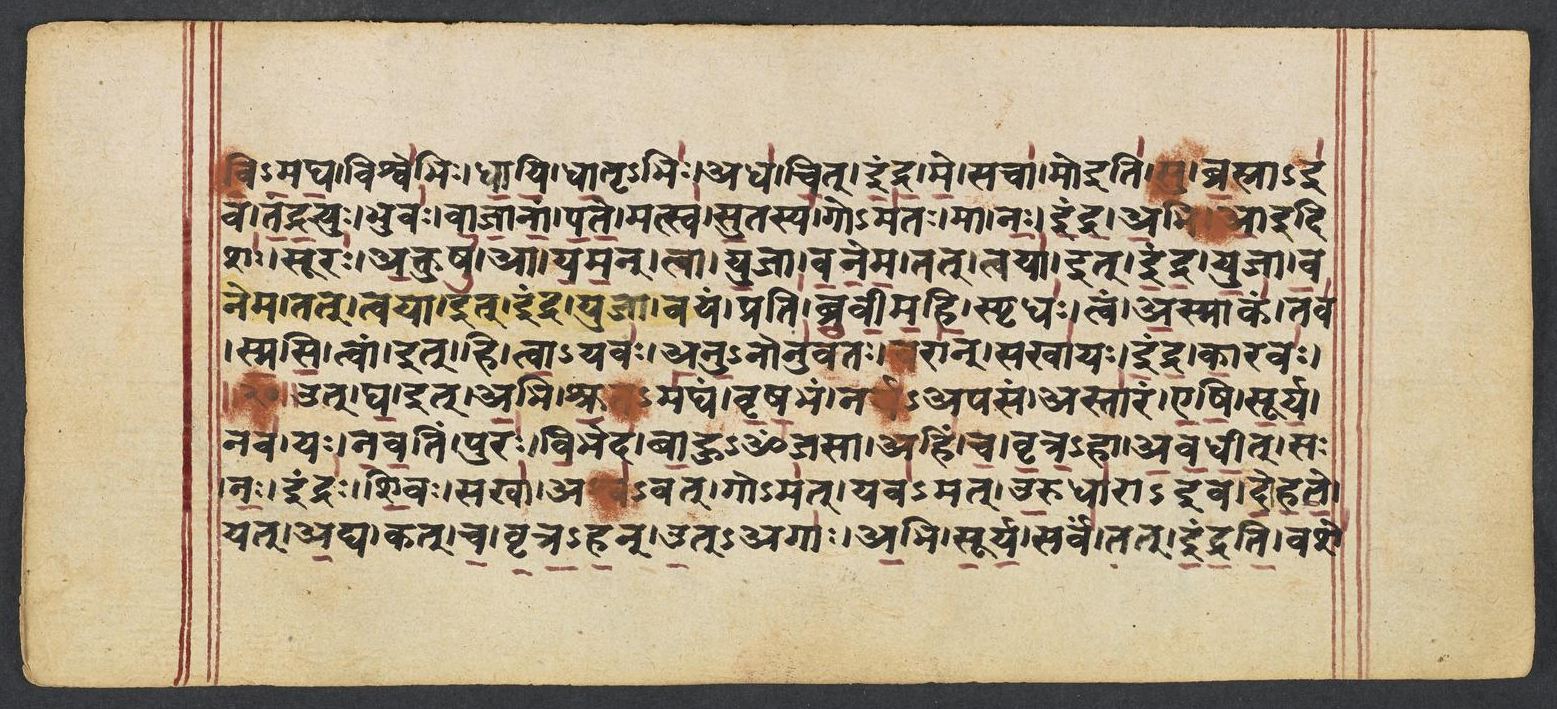
Penn Ms. Coll. 390 Item 41, fol. 655r (numbered 77r by the scribe) (OPenn image 655, lower leaf). Checked on the image: the Rigveda text on this page begins in RV 8.92.29 ‹-tuvi-magha viśvebhiḥ dhāyi dhātṛ-bhiḥ›. The next page with Rigveda text, fol. 655v (numbered 77v by the scribe), begins in RV 8.93.5 ‹yat vā pra-vṛddha sat-pate›. Verses 8.92.29-33 end on this page; 8.92.29 begins on fol. 654v (numbered 76v by the scribe).
29e̱vā rā̱tis tu̍vīmagha̱ viśve̍bhir dhāyi dhā̱tṛbhi̍ḥ | adhā̍ cid indra me̱ sacā̍ ||
30mo ṣu bra̱hmeva̍ tandra̱yur bhuvo̍ vājānām pate | matsvā̍ su̱tasya̱ goma̍taḥ ||
31mā na̍ indrā̱bhy ā̱3̱̍diśa̱ḥ sūro̍ a̱ktuṣv ā ya̍man | tvā yu̱jā va̍nema̱ tat ||
32tvayed i̍ndra yu̱jā va̱yam prati̍ bruvīmahi̱ spṛdha̍ḥ | tvam a̱smāka̱ṁ tava̍ smasi ||
33tvām id dhi tvā̱yavo̍ 'nu̱nonu̍vata̱ś carā̍n | sakhā̍ya indra kā̱rava̍ḥ ||
Compare: Padapāṭha (word-by-word text written in the manuscript; Sansknet e-text via GRETIL)
29eva | rātiḥ | tuvi-magha | viśvebhiḥ | dhāyi | dhātṛ-bhiḥ | adha | cit | indra | me | sacā
30mo iti | su | brahmāiva | tandrayuḥ | bhuvaḥ | vājānām | pate | matsva | sutasya | go--mataḥ
31mā | naḥ | indra | abhi | ādiśaḥ | sūraḥ | aktuṣu | ā | yaman | tvā | yujā | vanema | tat
32tvayā | it | indra | yujā | vayam | prati | bruvīmahi | spṛdhaḥ | tvam | asmākam | tava | smasi
33tvām | it | hi | tvāyavaḥ | anu-nonuvataḥ | carān | sakhāyaḥ | indra | kāravaḥ
29So hath the offering, wealthiest Lord, been paid by all the worshippers: So dwell thou, Indra, even with me.
30He not thou like a slothful priest, O Lord of spoil and wealth: rejoice In the pressed Soma blent with milk.
31O Indra, let not ill designs surround us in the sunbeams' light: This may we gain with thee for Friend.
32With thee to help us, Indra, let us answer all our enemies: For thou art ours and we are thine.
33Indra, the poets and thy friends, faithful to thee, shall loudly sing Thy praises as they follow thee.
Notes
- Sanskrit: Aufrecht's edition (1877) with the Vedic accents, as entered by van Nooten and Holland (GRETIL).
- English: Ralph T. H. Griffith, The Hymns of the Rigveda (1889-1892; 2nd ed. 1896-1897), from the VedaWeb digital text; OCR slips in that text were corrected against the printed 2nd edition (data/sources/rigveda/griffith_errata.json).
- Padapāṭha (edition text): Sansknet e-text via GRETIL (CC BY-NC-SA 4.0).
Cite
Sources
- Source: Penn Ms. Coll. 390 Item 41 (undated (catalogued with Penn's 18th-19th c. Vedic manuscripts)), OPenn, Public Domain Mark + Aufrecht's accented text (GRETIL) + Griffith's English (VedaWeb) (holding institution)
- Critical edition: Aufrecht (1877), accented e-text via GRETIL
← previous · → next · v cycle view · l back to library