Rigveda 8.93: To Indra
Introduction
Rigveda 8.93 is a hymn of 34 verses addressed to Indra. It stands in book (maṇḍala) 8, the book of the Kaṇva and Aṅgiras poets. The Rigveda is the oldest collection of Sanskrit hymns, composed in the second half of the second millennium BCE and handed down orally for many centuries before it was written down.
The manuscript shown is Penn Ms. Coll. 390 Item 41 (University of Pennsylvania), an undated paper manuscript of the padapāṭha (the word-by-word recitation text, in which every word is written separately and compounds are split) of the whole Ṛgveda in Devanāgarī, 884 leaves in fascicles, 7-9 lines to the page, accents in red; this hymn stands on fol. 655r-656v. Each section below gives the verses that end on one page; the page boundaries were read on the images (the opening words of every page), not counted out. Where the manuscript is a padapāṭha (the word-by-word recitation text), the section shows Aufrecht's continuous (saṃhitā) text first and, as the edition text, the padapāṭha of the same verses, which is the form written on the page.
How was this verified? (Provenance)
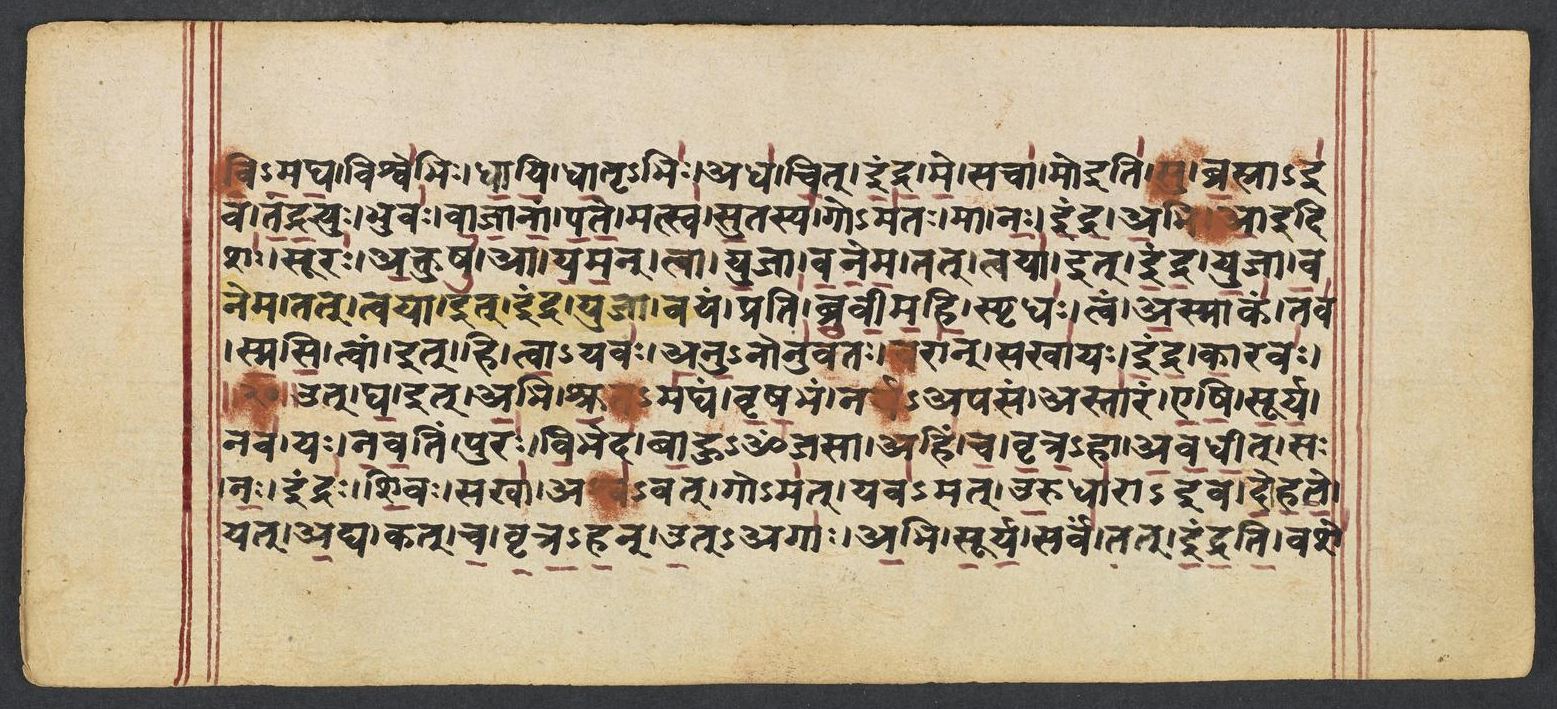
Where on the image
Penn Ms. Coll. 390 Item 41, fol. 655r (numbered 77r by the scribe) (OPenn image 655, lower leaf). Checked on the image: the Rigveda text on this page begins in RV 8.92.29 ‹-tuvi-magha viśvebhiḥ dhāyi dhātṛ-bhiḥ›. The next page with Rigveda text, fol. 655v (numbered 77v by the scribe), begins in RV 8.93.5 ‹yat vā pra-vṛddha sat-pate›. Verses 8.93.1-4 end on this page.
1ud ghed a̱bhi śru̱tāma̍ghaṁ vṛṣa̱bhaṁ naryā̍pasam | astā̍ram eṣi sūrya ||
2nava̱ yo na̍va̱tim puro̍ bi̱bheda̍ bā̱hvo̍jasā | ahi̍ṁ ca vṛtra̱hāva̍dhīt ||
3sa na̱ indra̍ḥ śi̱vaḥ sakhāśvā̍va̱d goma̱d yava̍mat | u̱rudhā̍reva dohate ||
4yad a̱dya kac ca̍ vṛtrahann u̱dagā̍ a̱bhi sū̍rya | sarva̱ṁ tad i̍ndra te̱ vaśe̍ ||
Compare: Padapāṭha (word-by-word text written in the manuscript; Sansknet e-text via GRETIL)
1ut | gha | it | abhi | śruta-magham | vṛṣabham | narya-apasam | astāram | eṣi | sūyar
2nava | yaḥ | navatim | puraḥ | bibheda | bāhu-ojasā | ahim | ca | vṛtra-hā | avadhīt
3saḥ | naḥ | indraḥ | śivaḥ | sakhā | aśva-vat | go--mat | yava-mat | urudhārāiva | dohate
4yat | adya | kat | ca | vṛtra-han | ut-agāḥ | abhi | sūrya | sarvam | tat | indra | te | vaśe
1Sûrya, thou mountest up to meet the Hero famous for his wealth, Who hurls the bolt and works for man
2Him who with might of both his arms brake nine-and-ninety castles down, Slew Vr̥itra and smote Ahi dead.
3This Indra is our gracious Friend. He sends us in a full broad stream Riches in horses, kine, and corn.
4Whatever, Vr̥itra-slayer! thou, Sûrya, hast risen upon to-day, That, Indra, all is in thy power.
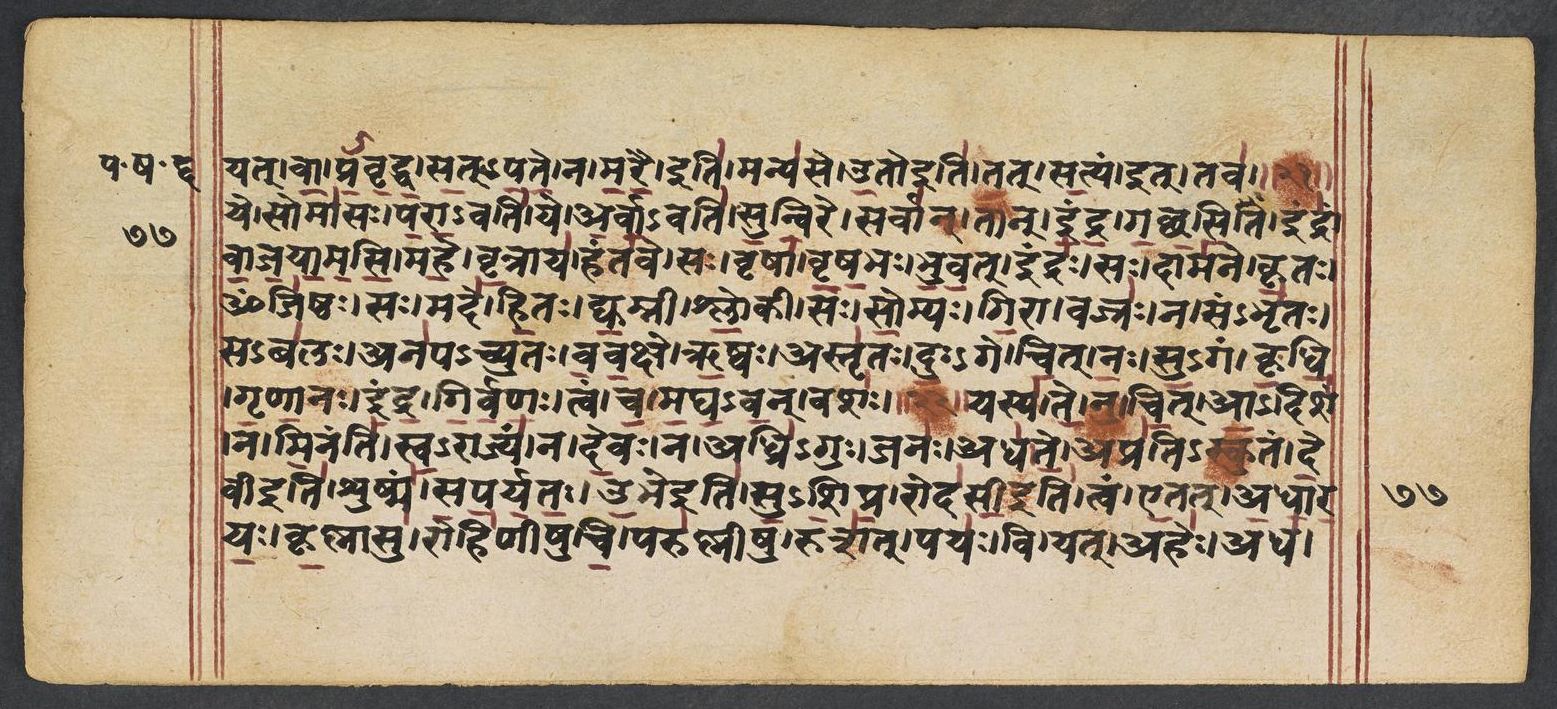
Where on the image
Penn Ms. Coll. 390 Item 41, fol. 655v (numbered 77v by the scribe) (OPenn image 656, upper leaf). Checked on the image: the Rigveda text on this page begins in RV 8.93.5 ‹yat vā pra-vṛddha sat-pate›. The next page with Rigveda text, fol. 656r (numbered 78r by the scribe), begins in RV 8.93.14 ‹tviṣaḥ viśve devāsaḥ akramuḥ›. Verses 8.93.5-13 end on this page.
5yad vā̍ pravṛddha satpate̱ na ma̍rā̱ iti̱ manya̍se | u̱to tat sa̱tyam it tava̍ ||
6ye somā̍saḥ parā̱vati̱ ye a̍rvā̱vati̍ sunvi̱re | sarvā̱m̐s tām̐ i̍ndra gacchasi ||
7tam indra̍ṁ vājayāmasi ma̱he vṛ̱trāya̱ hanta̍ve | sa vṛṣā̍ vṛṣa̱bho bhu̍vat ||
8indra̱ḥ sa dāma̍ne kṛ̱ta oji̍ṣṭha̱ḥ sa made̍ hi̱taḥ | dyu̱mnī ślo̱kī sa so̱myaḥ ||
9gi̱rā vajro̱ na sambhṛ̍ta̱ḥ saba̍lo̱ ana̍pacyutaḥ | va̱va̱kṣa ṛ̱ṣvo astṛ̍taḥ ||
10du̱rge ci̍n naḥ su̱gaṁ kṛ̍dhi gṛṇā̱na i̍ndra girvaṇaḥ | tvaṁ ca̍ maghava̱n vaśa̍ḥ ||
11yasya̍ te̱ nū ci̍d ā̱diśa̱ṁ na mi̱nanti̍ sva̱rājya̍m | na de̱vo nādhri̍gu̱r jana̍ḥ ||
12adhā̍ te̱ apra̍tiṣkutaṁ de̱vī śuṣma̍ṁ saparyataḥ | u̱bhe su̍śipra̱ roda̍sī ||
13tvam e̱tad a̍dhārayaḥ kṛ̱ṣṇāsu̱ rohi̍ṇīṣu ca | paru̍ṣṇīṣu̱ ruśa̱t paya̍ḥ ||
Compare: Padapāṭha (word-by-word text written in the manuscript; Sansknet e-text via GRETIL)
5yat | vā | pra-vṛddha | sat-pate | na | marai | iti | manyase | uto iti | tat | satyam | it | tava
6ye | somāsaḥ | parāvati | ye | arvāvati | sunvire | sarvān | tān | indra | gacchasi
7tam | indram | vājayāmasi | mahe | vṛtrāya | hantave | saḥ | vṛṣā | vṛṣabhaḥ | bhuvat
8indraḥ | saḥ | dāmane | kṛtaḥ | ojiṣṭhaḥ | saḥ | made | hitaḥ | dyumnī | ślokī | saḥ | somyaḥ
9girā | vajraḥ | na | sam-bhṛtaḥ | sa-balaḥ | anapa-cyutaḥ | vavakṣe | ṛṣvaḥ | astṛtaḥ
10duḥ-ge | cit | naḥ | su-gam | kṛdhi | gṛṇānaḥ | indra | girvaṇaḥ | tvam | ca | magha-van | vaśaḥ
11yasya | te | nu | cit | ādiśam | na | minanti | sva-rājyam | na | devaḥ | na | adhri-guḥ | janaḥ
12adha | te | aprati-skutam | devī iti | śuṣmam | saparyataḥ | ubhe iti | su-śipra | rodasiiti
13tvam | etat | adhārayaḥ | kṛṣṇāsu | rohiṇīṣu | ca | paruṣṇīṣu | ruśat | payaḥ
5When, Mighty One, Lord of the brave, thou thinkest thus, I shall not die, That thought of thine is true indeed.
6Thou, Indra, goest unto all Soma libations shed for thee, Both far away and near at hand.
7We make this Indra very strong to strike the mighty Vr̥itra dead: A vigorous Hero shall he be.
8Indra was made for giving, set, most mighty, o'er the joyous draught. Bright, meet for Soma, famed in song.
9By song as 'twere, the powerful bolt which none may parry was prepared Lofty, invincible he grew.
10Indra, Song-lover, lauded, make even in the wilds fair ways for us, Whenever, Maghavan, thou wilt.
11Thou whose commandment and behest of sovran sway none disregards, Neither audacious man nor God.
12And both these Goddesses, Earth, Heaven, Lord of the beauteous helm! revere Thy might which no one may resist.
13Thou in the black cows and the red and in the cows with spotted skin This white milk hast deposited.
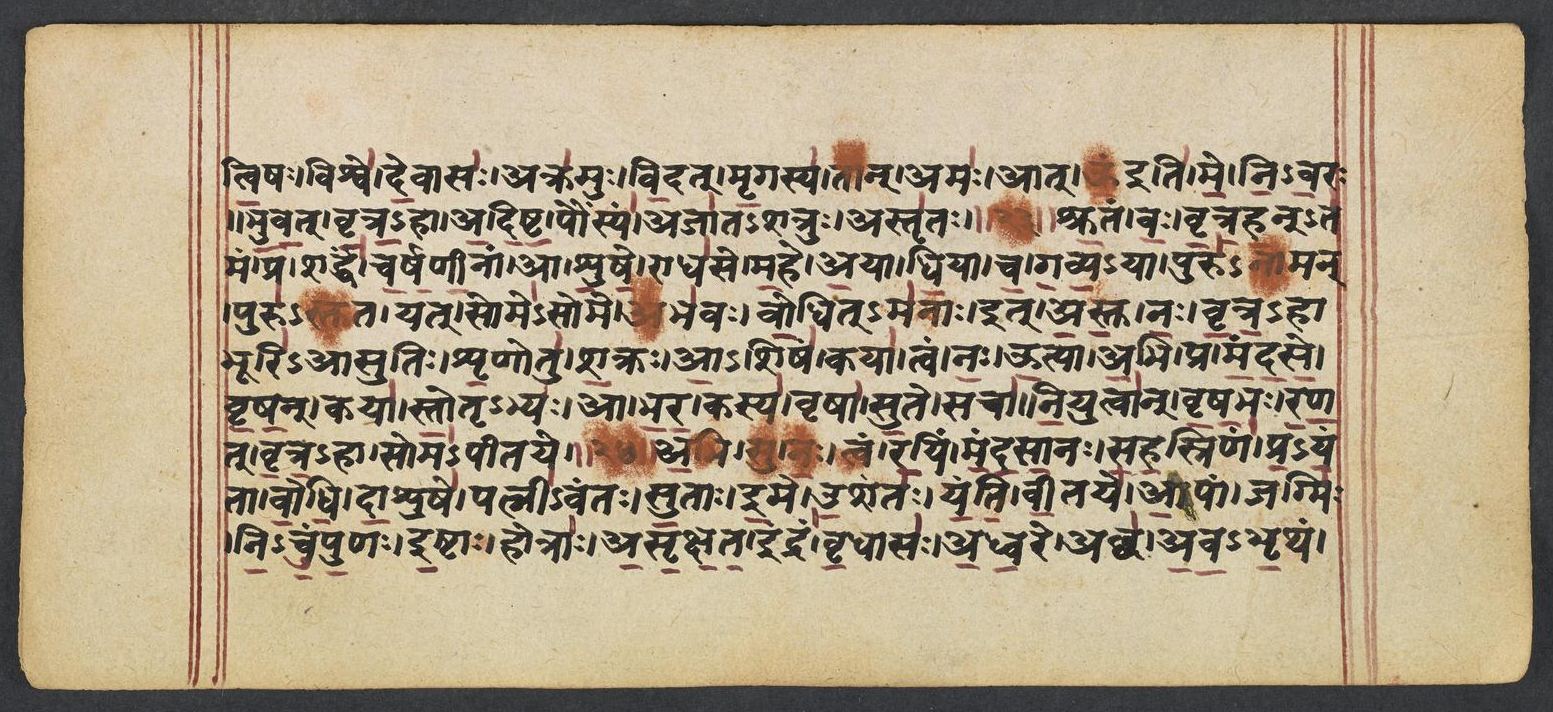
Where on the image
Penn Ms. Coll. 390 Item 41, fol. 656r (numbered 78r by the scribe) (OPenn image 656, lower leaf). Checked on the image: the Rigveda text on this page begins in RV 8.93.14 ‹tviṣaḥ viśve devāsaḥ akramuḥ›. The next page with Rigveda text, fol. 656v (numbered 78v by the scribe), begins in RV 8.93.24 ‹hitam›. Verses 8.93.14-23 end on this page; 8.93.14 begins on fol. 655v (numbered 77v by the scribe).
14vi yad ahe̱r adha̍ tvi̱ṣo viśve̍ de̱vāso̱ akra̍muḥ | vi̱dan mṛ̱gasya̱ tām̐ ama̍ḥ ||
15ād u̍ me niva̱ro bhu̍vad vṛtra̱hādi̍ṣṭa̱ pauṁsya̍m | ajā̍taśatru̱r astṛ̍taḥ ||
16śru̱taṁ vo̍ vṛtra̱hanta̍ma̱m pra śardha̍ṁ carṣaṇī̱nām | ā śu̍ṣe̱ rādha̍se ma̱he ||
17a̱yā dhi̱yā ca̍ gavya̱yā puru̍ṇāma̱n puru̍ṣṭuta | yat some̍-soma̱ ābha̍vaḥ ||
18bo̱dhinma̍nā̱ id a̍stu no vṛtra̱hā bhūryā̍sutiḥ | śṛ̱ṇotu̍ śa̱kra ā̱śiṣa̍m ||
19kayā̱ tvaṁ na̍ ū̱tyābhi pra ma̍ndase vṛṣan | kayā̍ sto̱tṛbhya̱ ā bha̍ra ||
20kasya̱ vṛṣā̍ su̱te sacā̍ ni̱yutvā̍n vṛṣa̱bho ra̍ṇat | vṛ̱tra̱hā soma̍pītaye ||
21a̱bhī ṣu ṇa̱s tvaṁ ra̱yim ma̍ndasā̱naḥ sa̍ha̱sriṇa̍m | pra̱ya̱ntā bo̍dhi dā̱śuṣe̍ ||
22patnī̍vantaḥ su̱tā i̱ma u̱śanto̍ yanti vī̱taye̍ | a̱pāṁ jagmi̍r nicumpu̱ṇaḥ ||
23i̱ṣṭā hotrā̍ asṛkṣa̱tendra̍ṁ vṛ̱dhāso̍ adhva̱re | acchā̍vabhṛ̱tham oja̍sā ||
Compare: Padapāṭha (word-by-word text written in the manuscript; Sansknet e-text via GRETIL)
14vi | yat | ahe | adha | tviṣaḥ | viśve | devāsaḥ | akramuḥ | vidat | mṛgasya | tān | amaḥ
15āt | oṃ iti | me | ni-varaḥ | bhuvat | vṛtra-hā | adiṣṭa | paiṃsyam | ajāta-śatruḥ | astṛtaḥ
16śrutam | vaḥ | vṛtrahan-tamam pra śardhañ carṣaṇīnām | ā śuṣerādhase mahe
17ayā | dhiyā | ca | gavya-yā | puru-nāman | puru-stuta | yat | some--some | ā | abhavaḥ
18bodhit-manāḥ | it | astu | naḥ | vṛtra-hā | bhūri-āsutiḥ | śṛṇotu | śukraḥ | āśiṣam
19kayā | tvam | naḥ | ūtyā | abhi | pra | mandase | vṛṣan | kayā | stotṛ-bhyaḥ | ā | bhara
20kasya | vṛṣā | sute | sacā | niyutvān | vṛṣabhaḥ | raṇat | vṛtra-hā | soma-pītaye
21abhi | su | naḥ | tvam | rayim | mandasānaḥ | sahasriṇam | pra-yantā | bodhi | dāśuṣe
22patnī-vantaḥ | sutāḥ | ime | uśantaḥ | yanti | vītaye | apām | jagmiḥ | ni-cumpuṇaḥ
23iṣṭāḥ | hotrāḥ | asṛkṣata | indram | vṛdhāsaḥ | adhvare | accha | ava-bhṛtham | ojasā
14When in their terror all the Gods shrank from the Dragon’s furious might, Fear of the monster fell on them.
15Then he was my Defender, then, Invincible, whose foe is not, The Vritra-slayer showed his might.
16Him your best Vritra-slayer, him the famous Champion of mankind I urge to great munificence,
17To come, Much-lauded! Many-named! with this same thought that longs for milk, Whene’er the Soma juice is shed.
18Much-honoured by libations, may the Vritra-slayer wake for us: May Ṣakra listen to our prayers.
19O Hero, with what aid dost thou delight us, with what succour bring Riches to those who worship thee?
20With whose libation joys the Strong, the Hero with his team who quells The foe, to drink the Soma juice?
21Rejoicing in thy spirit bring thousandfold opulence to us: Enrich thy votary with gifts.
22These juices with their wedded wives flow to enjoyment lovingly: To waters speeds the restless one.
23Presented strengthening gifts have sent Indra away at sacrifice, With might, unto the cleansing bath.
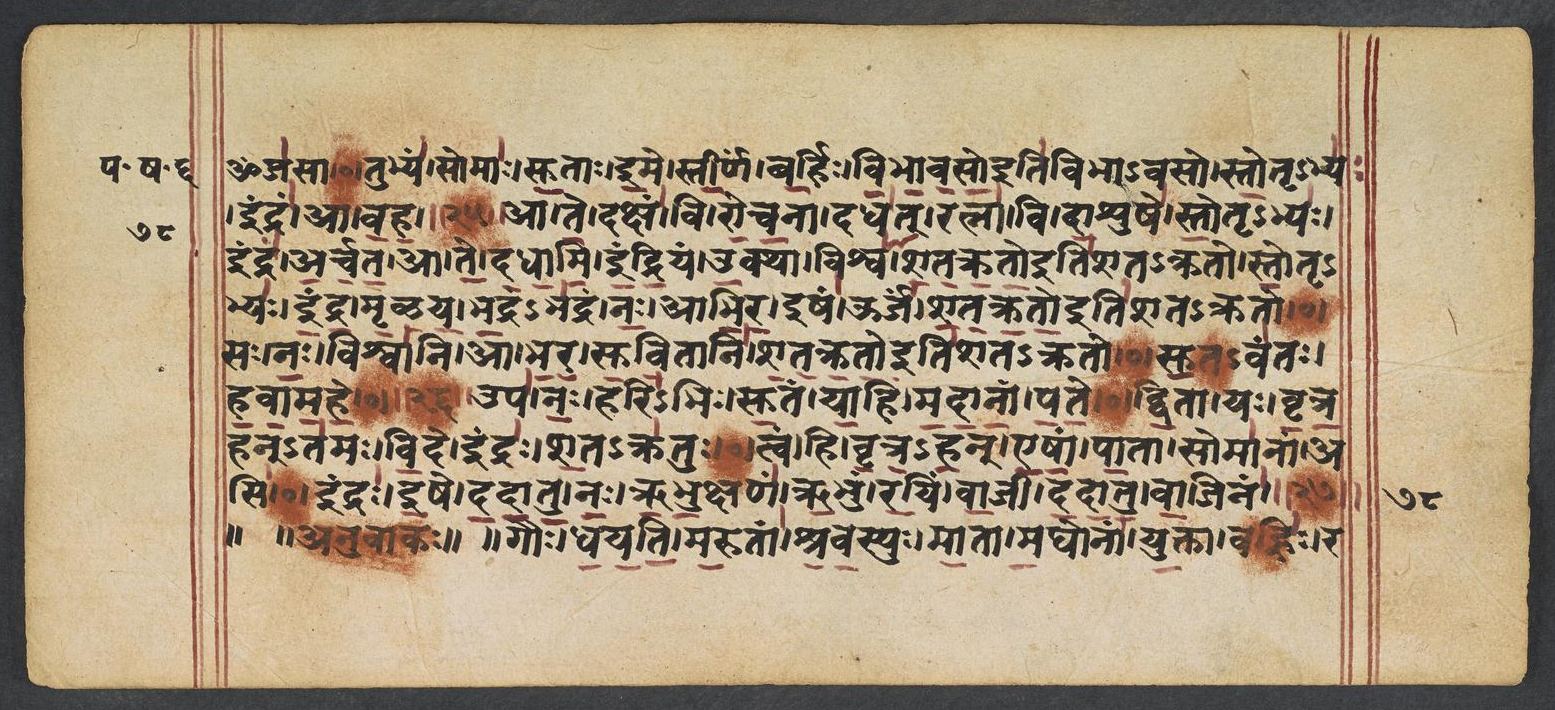
Where on the image
Penn Ms. Coll. 390 Item 41, fol. 656v (numbered 78v by the scribe) (OPenn image 657, upper leaf). Checked on the image: the Rigveda text on this page begins in RV 8.93.24 ‹hitam›. The next page with Rigveda text, fol. 657r (numbered 79r by the scribe), begins in RV 8.94.1 ‹-rathānām›. Verses 8.93.24-34 end on this page; 8.93.24 begins on fol. 656r (numbered 78r by the scribe).
24i̱ha tyā sa̍dha̱mādyā̱ harī̱ hira̍ṇyakeśyā | vo̱ḻhām a̱bhi prayo̍ hi̱tam ||
25tubhya̱ṁ somā̍ḥ su̱tā i̱me stī̱rṇam ba̱rhir vi̍bhāvaso | sto̱tṛbhya̱ indra̱m ā va̍ha ||
26ā te̱ dakṣa̱ṁ vi ro̍ca̱nā dadha̱d ratnā̱ vi dā̱śuṣe̍ | sto̱tṛbhya̱ indra̍m arcata ||
27ā te̍ dadhāmīndri̱yam u̱kthā viśvā̍ śatakrato | sto̱tṛbhya̍ indra mṛḻaya ||
28bha̱dram-bha̍draṁ na̱ ā bha̱reṣa̱m ūrja̍ṁ śatakrato | yad i̍ndra mṛ̱ḻayā̍si naḥ ||
29sa no̱ viśvā̱ny ā bha̍ra suvi̱tāni̍ śatakrato | yad i̍ndra mṛ̱ḻayā̍si naḥ ||
30tvām id vṛ̍trahantama su̱tāva̍nto havāmahe | yad i̍ndra mṛ̱ḻayā̍si naḥ ||
31upa̍ no̱ hari̍bhiḥ su̱taṁ yā̱hi ma̍dānām pate | upa̍ no̱ hari̍bhiḥ su̱tam ||
32dvi̱tā yo vṛ̍tra̱hanta̍mo vi̱da indra̍ḥ śa̱takra̍tuḥ | upa̍ no̱ hari̍bhiḥ su̱tam ||
33tvaṁ hi vṛ̍trahann eṣām pā̱tā somā̍nā̱m asi̍ | upa̍ no̱ hari̍bhiḥ su̱tam ||
34indra̍ i̱ṣe da̍dātu na ṛbhu̱kṣaṇa̍m ṛ̱bhuṁ ra̱yim | vā̱jī da̍dātu vā̱jina̍m ||
Compare: Padapāṭha (word-by-word text written in the manuscript; Sansknet e-text via GRETIL)
24iha | tyā | sadha-mādyā | harī iti | hiraṇya-keśyā | voḷhām | abhi | prayaḥ | hitam
25tubhyam | somāḥ | sutāḥ | ime | stīrṇam | barhiḥ | vibhāvaso itivibhāvaso | stotṛ-bhyaḥ | indram | ā | vaha
26ā | te | dakṣam | vi | rocanā | dadhat | ratnā | vi | dāśuṣe | stotṛ-bhyaḥ | indram | arcata
27ā | te | dadhāmi | indriyam | ukthā | viśvā | śatakrato itiśata-krato | stotṛ-bhyaḥ | indra | mṛḷaya
28bhadram-bhadram | naḥ | ā | bhara | iṣam | ūrjam | śatakrato itiśata-krato | yat | indra | mṛḷayāsi | naḥ
29saḥ | naḥ | viśvāni | ā | bhara | suvitāni | śatakrato itiśata-krato | yat | indra | mṛḷayāsi | naḥ
30tvām | it | vṛtrahan-tama | suta-vantaḥ | havāmahe | yat | indra | mṛḷayāsi | naḥ
31upa | naḥ | hari-bhiḥ | sutam | yāhi | madānām | pate | upa | naḥ | hari-bhiḥ | sutam
32dvitā | yaḥ | vṛtrahan-tamaḥ | vide | indraḥ | śata-kratuḥ | upa | naḥ | hari-bhiḥ | sutam
33tvam | hi | vṛtra-han | eṣām | pātā | somānām | asi | upa | naḥ | hari-bhiḥ | sutam
34indraḥ | iṣe | dadātu | naḥ | ṛbhukṣaṇam | ṛbhum | rayim | vājī | dadātu | vājinam
24These two who share his feast, Bay Steeds with golden manes, shall bring him to The banquet that is laid for him.
25For thee, O Lord of Light, are shed these Soma-drops, and grass is strewn: Bring Indra to his worshippers.
26May Indra give thee skill and lights of heaven, wealth to his votary And priests who praise him: laud ye him.
27O Ṣatakratu, wondrous strength and all our lauds I bring to thee: Be gracious to thy worshippers.
28Bring to us all things excellent, O Ṣatakratu, food and strength; For, Indra, thou art kind to us.
29O Ṣatakratu, bring to us all blessings, all felicity: For, Indra, thou art kind to us.
30Bearing the Soma juice we call, best Vritra-slayer, unto thee: For, Indra, thou art kind to us.
31Come, Lord of rapturous joys, to our libation with thy Bay Steeds, come To our libation with thy Steeds.
32Known as best Vritra-slayer erst, as Indra Ṣatakratu, come With Bay Steeds to the juice we shed.
33O Vritra-slayer, thou art he who drinks these drops of Soma: come With Bay Steeds to the juice we shed.
34May Indra give, to aid us, wealth handy that rules the Skilful Ones: Yea, may the Strong give potent wealth.
Notes
- Sanskrit: Aufrecht's edition (1877) with the Vedic accents, as entered by van Nooten and Holland (GRETIL).
- English: Ralph T. H. Griffith, The Hymns of the Rigveda (1889-1892; 2nd ed. 1896-1897), from the VedaWeb digital text; OCR slips in that text were corrected against the printed 2nd edition (data/sources/rigveda/griffith_errata.json).
- Padapāṭha (edition text): Sansknet e-text via GRETIL (CC BY-NC-SA 4.0).
Cite
Sources
- Source: Penn Ms. Coll. 390 Item 41 (undated (catalogued with Penn's 18th-19th c. Vedic manuscripts)), OPenn, Public Domain Mark + Aufrecht's accented text (GRETIL) + Griffith's English (VedaWeb) (holding institution)
- Critical edition: Aufrecht (1877), accented e-text via GRETIL
← previous · → next · v cycle view · l back to library