Rigveda 8.94: To the Maruts
Introduction
Rigveda 8.94 is a hymn of 12 verses addressed to the Maruts. It stands in book (maṇḍala) 8, the book of the Kaṇva and Aṅgiras poets. The Rigveda is the oldest collection of Sanskrit hymns, composed in the second half of the second millennium BCE and handed down orally for many centuries before it was written down.
The manuscript shown is Penn Ms. Coll. 390 Item 41 (University of Pennsylvania), an undated paper manuscript of the padapāṭha (the word-by-word recitation text, in which every word is written separately and compounds are split) of the whole Ṛgveda in Devanāgarī, 884 leaves in fascicles, 7-9 lines to the page, accents in red; this hymn stands on fol. 656v-657r. Each section below gives the verses that end on one page; the page boundaries were read on the images (the opening words of every page), not counted out. Where the manuscript is a padapāṭha (the word-by-word recitation text), the section shows Aufrecht's continuous (saṃhitā) text first and, as the edition text, the padapāṭha of the same verses, which is the form written on the page.
How was this verified? (Provenance)
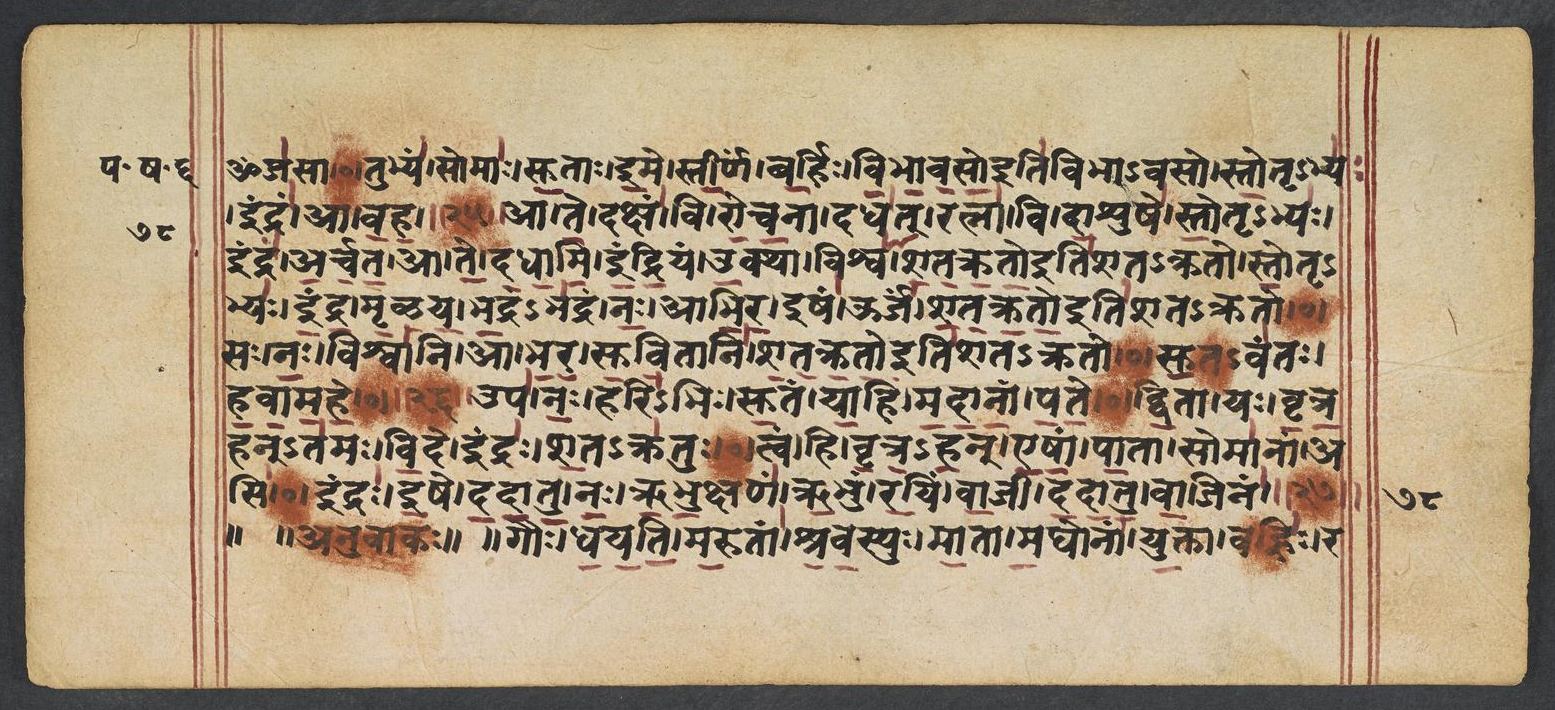
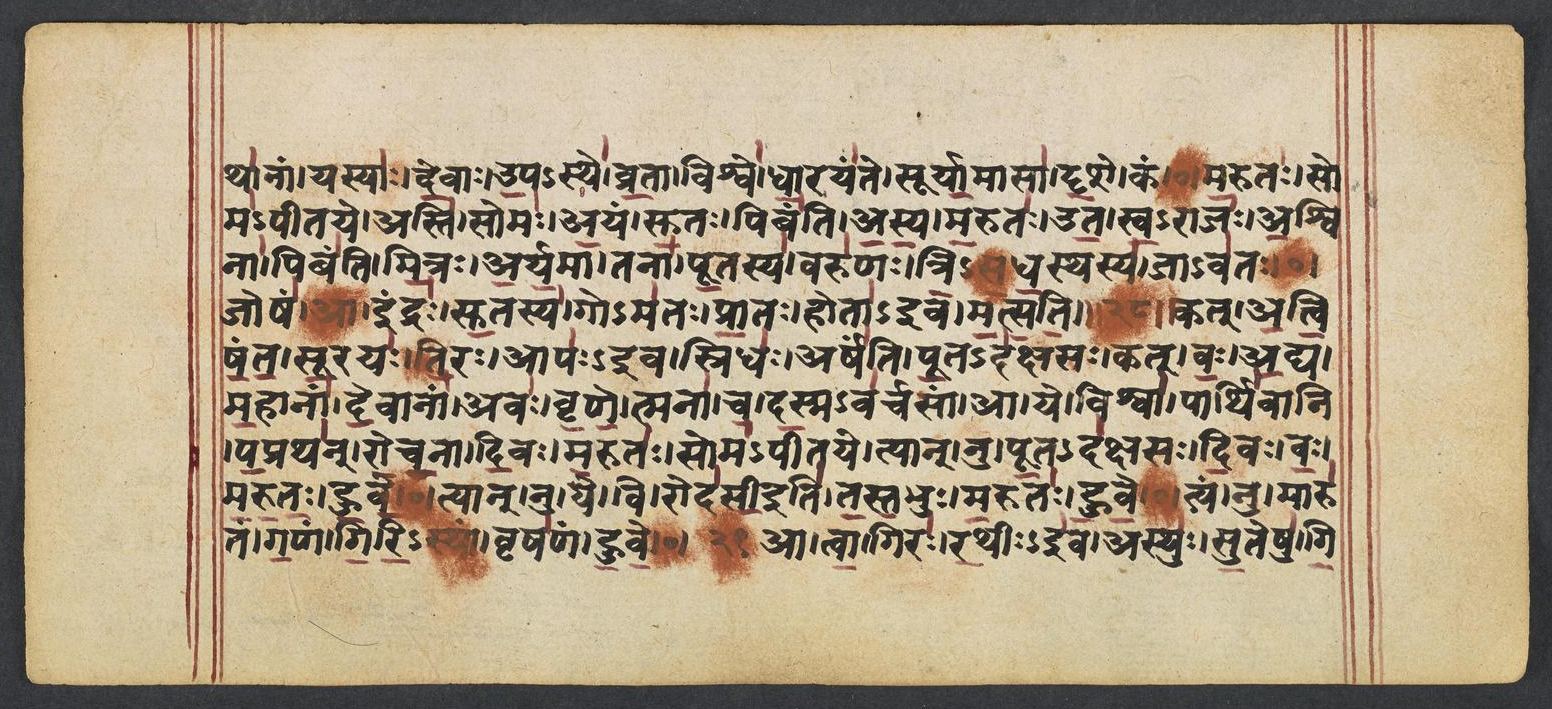
Where on the image
Penn Ms. Coll. 390 Item 41, fol. 657r (numbered 79r by the scribe) (OPenn image 657, lower leaf). Checked on the image: the Rigveda text on this page begins in RV 8.94.1 ‹-rathānām›. The next page with Rigveda text, fol. 657v (numbered 79v by the scribe), begins in RV 8.95.1 ‹-girvaṇaḥ abhi tvā sam›. Verses 8.94.1-12 end on this page; 8.94.1 begins on fol. 656v (numbered 78v by the scribe).
1gaur dha̍yati ma̱rutā̍ṁ śrava̱syur mā̱tā ma̱ghonā̍m | yu̱ktā vahnī̱ rathā̍nām ||
2yasyā̍ de̱vā u̱pasthe̍ vra̱tā viśve̍ dhā̱raya̍nte | sūryā̱māsā̍ dṛ̱śe kam ||
3tat su no̱ viśve̍ a̱rya ā sadā̍ gṛṇanti kā̱rava̍ḥ | ma̱ruta̱ḥ soma̍pītaye ||
4asti̱ somo̍ a̱yaṁ su̱taḥ piba̍nty asya ma̱ruta̍ḥ | u̱ta sva̱rājo̍ a̱śvinā̍ ||
5piba̍nti mi̱tro a̍rya̱mā tanā̍ pū̱tasya̱ varu̍ṇaḥ | tri̱ṣa̱dha̱sthasya̱ jāva̍taḥ ||
6u̱to nv a̍sya̱ joṣa̱m ām̐ indra̍ḥ su̱tasya̱ goma̍taḥ | prā̱tar hote̍va matsati ||
7kad a̍tviṣanta sū̱raya̍s ti̱ra āpa̍ iva̱ sridha̍ḥ | arṣa̍nti pū̱tada̍kṣasaḥ ||
8kad vo̍ a̱dya ma̱hānā̍ṁ de̱vānā̱m avo̍ vṛṇe | tmanā̍ ca da̱smava̍rcasām ||
9ā ye viśvā̱ pārthi̍vāni pa̱pratha̍n roca̱nā di̱vaḥ | ma̱ruta̱ḥ soma̍pītaye ||
10tyān nu pū̱tada̍kṣaso di̱vo vo̍ maruto huve | a̱sya soma̍sya pī̱taye̍ ||
11tyān nu ye vi roda̍sī tasta̱bhur ma̱ruto̍ huve | a̱sya soma̍sya pī̱taye̍ ||
12tyaṁ nu māru̍taṁ ga̱ṇaṁ gi̍ri̱ṣṭhāṁ vṛṣa̍ṇaṁ huve | a̱sya soma̍sya pī̱taye̍ ||
Compare: Padapāṭha (word-by-word text written in the manuscript; Sansknet e-text via GRETIL)
1gauḥ | dhayati | marutām | śravasyuḥ | matā | maghonām | yuktā | vahniḥ | rathānām
2yasyāḥ | devāḥ | upa-sthe | vratā | viśve | dhārayante | sūryāmāsā | dṛśe | kam
3tat | su | naḥ | viśve | aryaḥ | ā | sadā | gṛṇanti | kāravaḥ | marutaḥ | soma-pītaye
4asti | somaḥ | ayam | sutaḥ | pibanti | asya | marutaḥ | uta | sva-rājaḥ | aśvinā
5pibanti | mitraḥ | aryamā | tanā | pūtasya | varuṇaḥ | tri-sadhasthasya | jāvataḥ
6uto iti | nu | asya | joṣam | ā | indraḥ | sutasya | go--mataḥ | prātaḥ | hotāiva | matsati
7kat | atviṣanta | sūrayaḥ | tiraḥ | āpaḥ-iva | sridhaḥ | arṣanti | pūta-dakṣasaḥ
8kat | vaḥ | adya | mahānām | devānām | avaḥ | vṛṇe | tmanā | ca | dasma-varcasām
9ā | ye | viśvā | pārthivāni | paprathan | rocanā | divaḥ | marutaḥ | soma-pītaye
10tyān | nu | pūta-dakṣasaḥ | divaḥ | vaḥ | marutaḥ | huve | asya | somasya | pītaye
11tyān | nu | ye | vi | rodasī iti | tastabhuḥ | marutaḥ | huve | asya | somasya | pītaye
12tyam | nu | mārutam | gaṇam | giri-sthām | vṛṣaṇam | huve | asya | somasya | pītaye
1THE Cow, the famous Mother of the wealthy Maruts, pours her milk: Both horses of the cars are yoked,–
2She in whose bosom all the Gods, and Sun and Moon for men to see, Maintain their everlasting Laws.
3This all the pious sing to us, and sacred poets evermore: The Maruts to the Soma-draught
4Here is the Soma ready pressed of this the Maruts drink, of this Self-luminous the Aṣvins drink.
5Of this, moreover, purified, set in three places, procreant, Drink Varuṇa, Mitra, Aryaman.
6And Indra, like the Herald Priest, desirous of the milky juice, At early morn will quaff thereof.
7When have the Princes gleamed and shone through waters as through troops of foes? When hasten they whose might is pure?
8What favour do I claim this day of you great Deities, you who are Wondrously splendid in yourselves?
9I call, to drink the Soma, those Maruts who spread all realms of earth And luminous regions of the sky.
10You, even such, pure in your might, you, O ye Maruts, I invoke From heaven to drink this Soma juice.
11The Maruts, those who have sustained and propped the heavens and earth apart, I call to drink this Soma juice.
12That vigorous baud of Maruts that abideth in the mountains, I Invoke to drink this Soma juice.
Notes
- Sanskrit: Aufrecht's edition (1877) with the Vedic accents, as entered by van Nooten and Holland (GRETIL).
- English: Ralph T. H. Griffith, The Hymns of the Rigveda (1889-1892; 2nd ed. 1896-1897), from the VedaWeb digital text; OCR slips in that text were corrected against the printed 2nd edition (data/sources/rigveda/griffith_errata.json).
- Padapāṭha (edition text): Sansknet e-text via GRETIL (CC BY-NC-SA 4.0).
Cite
Sources
- Source: Penn Ms. Coll. 390 Item 41 (undated (catalogued with Penn's 18th-19th c. Vedic manuscripts)), OPenn, Public Domain Mark + Aufrecht's accented text (GRETIL) + Griffith's English (VedaWeb) (holding institution)
- Critical edition: Aufrecht (1877), accented e-text via GRETIL
← previous · → next · v cycle view · l back to library