Rigveda 8.95: To Indra
Introduction
Rigveda 8.95 is a hymn of 9 verses addressed to Indra. It stands in book (maṇḍala) 8, the book of the Kaṇva and Aṅgiras poets. The Rigveda is the oldest collection of Sanskrit hymns, composed in the second half of the second millennium BCE and handed down orally for many centuries before it was written down.
The manuscript shown is Penn Ms. Coll. 390 Item 41 (University of Pennsylvania), an undated paper manuscript of the padapāṭha (the word-by-word recitation text, in which every word is written separately and compounds are split) of the whole Ṛgveda in Devanāgarī, 884 leaves in fascicles, 7-9 lines to the page, accents in red; this hymn stands on fol. 657r-658r. Each section below gives the verses that end on one page; the page boundaries were read on the images (the opening words of every page), not counted out. Where the manuscript is a padapāṭha (the word-by-word recitation text), the section shows Aufrecht's continuous (saṃhitā) text first and, as the edition text, the padapāṭha of the same verses, which is the form written on the page.
How was this verified? (Provenance)
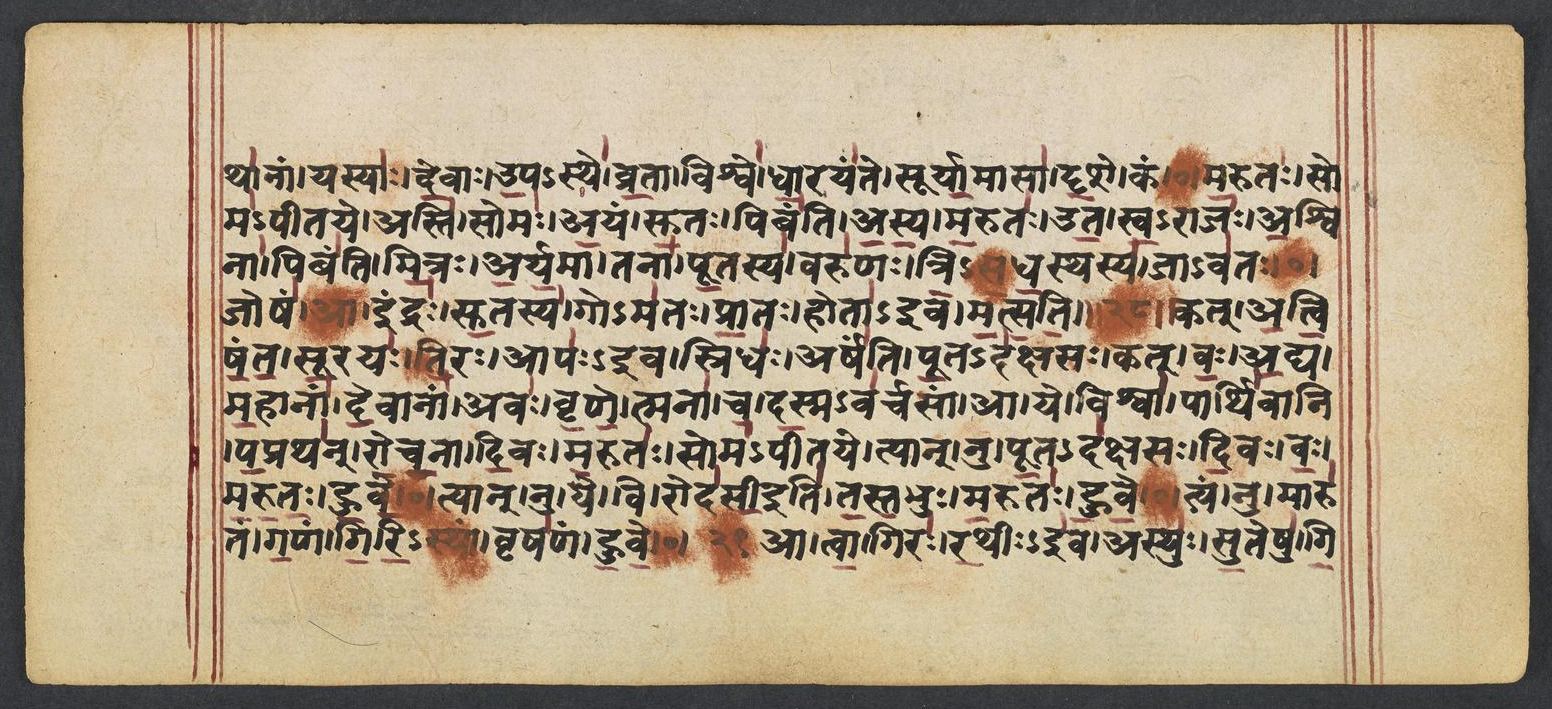
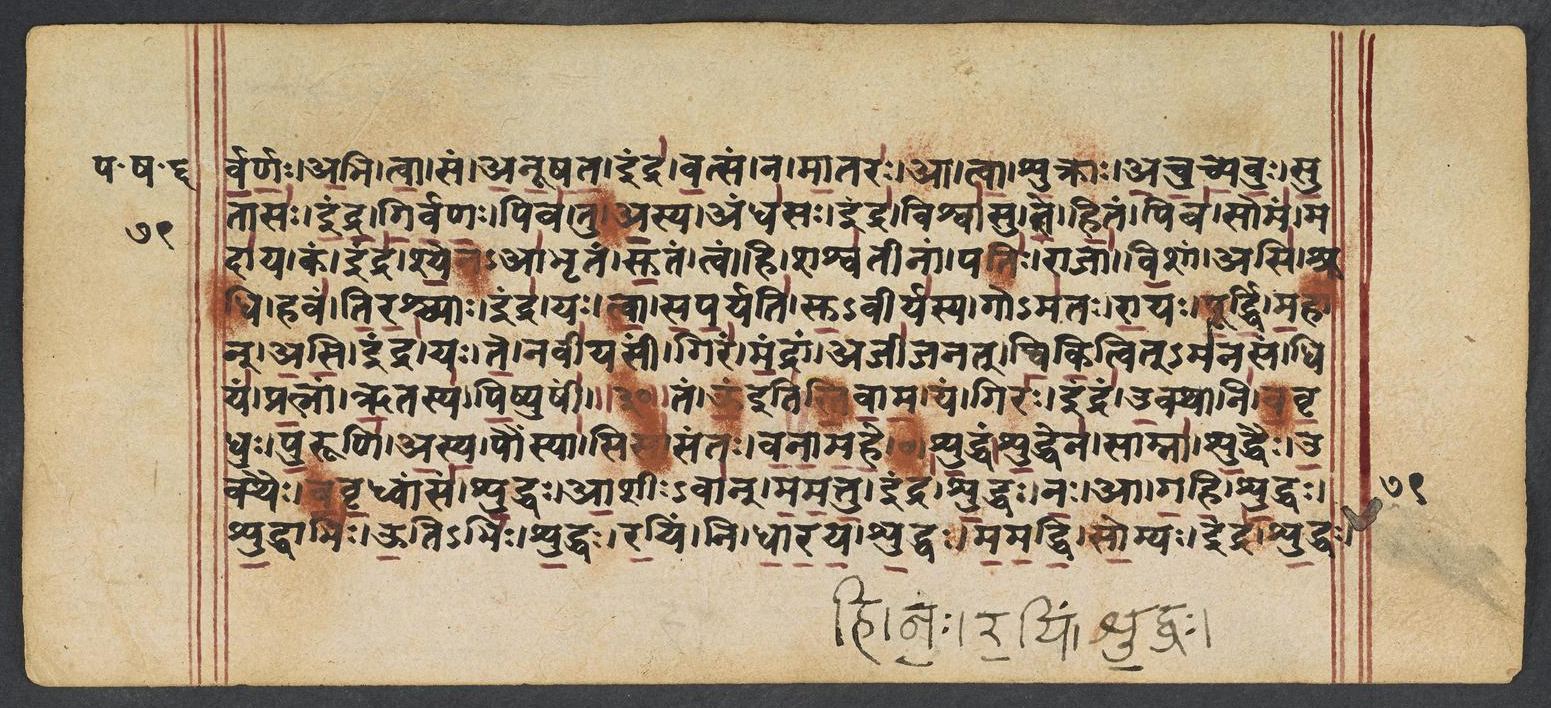
Where on the image
Penn Ms. Coll. 390 Item 41, fol. 657v (numbered 79v by the scribe) (OPenn image 658, upper leaf). Checked on the image: the Rigveda text on this page begins in RV 8.95.1 ‹-girvaṇaḥ abhi tvā sam›. The next page with Rigveda text, fol. 658r (numbered 80r by the scribe), begins in RV 8.95.9 ‹ratnāni dāśuṣe śuddhaḥ vṛtrāṇi›. Verses 8.95.1-8 end on this page; 8.95.1 begins on fol. 657r (numbered 79r by the scribe).
1ā tvā̱ giro̍ ra̱thīr i̱vāsthu̍ḥ su̱teṣu̍ girvaṇaḥ | a̱bhi tvā̱ sam a̍nūṣa̱tendra̍ va̱tsaṁ na mā̱tara̍ḥ ||
2ā tvā̍ śu̱krā a̍cucyavuḥ su̱tāsa̍ indra girvaṇaḥ | pibā̱ tv a1̱̍syāndha̍sa̱ indra̱ viśvā̍su te hi̱tam ||
3pibā̱ soma̱m madā̍ya̱ kam indra̍ śye̱nābhṛ̍taṁ su̱tam | tvaṁ hi śaśva̍tīnā̱m patī̱ rājā̍ vi̱śām asi̍ ||
4śru̱dhī hava̍ṁ tira̱ścyā indra̱ yas tvā̍ sapa̱ryati̍ | su̱vīrya̍sya̱ goma̍to rā̱yas pū̍rdhi ma̱hām̐ a̍si ||
5indra̱ yas te̱ navī̍yasī̱ṁ gira̍m ma̱ndrām ajī̍janat | ci̱ki̱tvinma̍nasa̱ṁ dhiya̍m pra̱tnām ṛ̱tasya̍ pi̱pyuṣī̍m ||
6tam u̍ ṣṭavāma̱ yaṁ gira̱ indra̍m u̱kthāni̍ vāvṛ̱dhuḥ | pu̱rūṇy a̍sya̱ pauṁsyā̱ siṣā̍santo vanāmahe ||
7eto̱ nv indra̱ṁ stavā̍ma śu̱ddhaṁ śu̱ddhena̱ sāmnā̍ | śu̱ddhair u̱kthair vā̍vṛ̱dhvāṁsa̍ṁ śu̱ddha ā̱śīrvā̍n mamattu ||
8indra̍ śu̱ddho na̱ ā ga̍hi śu̱ddhaḥ śu̱ddhābhi̍r ū̱tibhi̍ḥ | śu̱ddho ra̱yiṁ ni dhā̍raya śu̱ddho ma̍maddhi so̱myaḥ ||
Compare: Padapāṭha (word-by-word text written in the manuscript; Sansknet e-text via GRETIL)
1ā | tvā | giraḥ | rathīḥ-iva | asthuḥ | suteṣu | girvaṇaḥ | abhi | tvā | sam | anūṣata | indra | vatsam | na | mātaraḥ
2ā | tvā | śukrāḥ | acucyavuḥ | sutāsaḥ | indra | girvaṇaḥ | piba | tu | asya | andhasaḥ | indra | viśvāsu | te | hitam
3piba | somam | madāya | kam | indra | śyena-ābhṛtam | sutam | tvam | hi | śaśvatīnām | patiḥ | rājā | viśām | asi
4śrudhi | havam | tiraścyāḥ | indra | yaḥ | tvā | saparyati | su-vīryasya | go--mataḥ | rāyaḥ | pūrdhi | mahān | asi
5indra | yaḥ | te | navīyasīm | giram | mandrām | ajījanat | cikitvit-manasam | dh iyam | pratnām | ṛtasya | pipyuṣīm
6tam | oṃ iti | stavāma | yam | giraḥ | indram | ukthāni | vavṛdhuḥ | purūṇi | asya | paiṃsyā | sisāsantaḥ | vanāmahe
7eto iti | nu | indram | stavāma | śuddham | śuddhena | sāmnā | śuddhaiḥ | ukthaiḥ | vavṛdhvāṃsam | śuddhaḥ | āśīḥ-vān | mamattu
8indra | śuddhaḥ | naḥ | ā | gahi | śuddhaḥ | śuddhābhiḥ | ūti-bhiḥ | śuddhaḥ | rayim | ni | dhāraya | śuddhaḥ | mamaddhi | somyaḥ
1SONG-LOVER! like a charioteer come songs to thee when Soma flows. O Indra, they have called to thee as mother-kine unto their calves.
2Bright juices hitherward have sped thee, Indra, Lover of the Song. Drink, Indra, of this flowing sap: in every house 'tis set for thee.
3Drink Soma to inspirit thee, juice, Indra, which the Falcon brought: For thou art King and Sovran Lord of all the families of men.
4O Indra, hear Tiraṣchî's call, the call of him who serveth thee. Satisfy him with wealth of kine and valiant offspring: Great art thou.
5For he, O Indra, hath produced for thee the newest gladdening song, A hymn that springs from careful thought, ancient, and full of sacred truth.
6That Indra will we laud whom songs and hymns of praise have magnified. Striving to win, we celebrate his many deeds of hero might.
7Come now and let us glorify pure Indra with pure Sâma hymns. Let the pure milky draught delight him strengthened by pure songs of praise.
8O Indra, come thou pure to us, with pure assistance, pure thyself. Pure, send thou riches down to us, and, meet for Soma, pure, be glad.
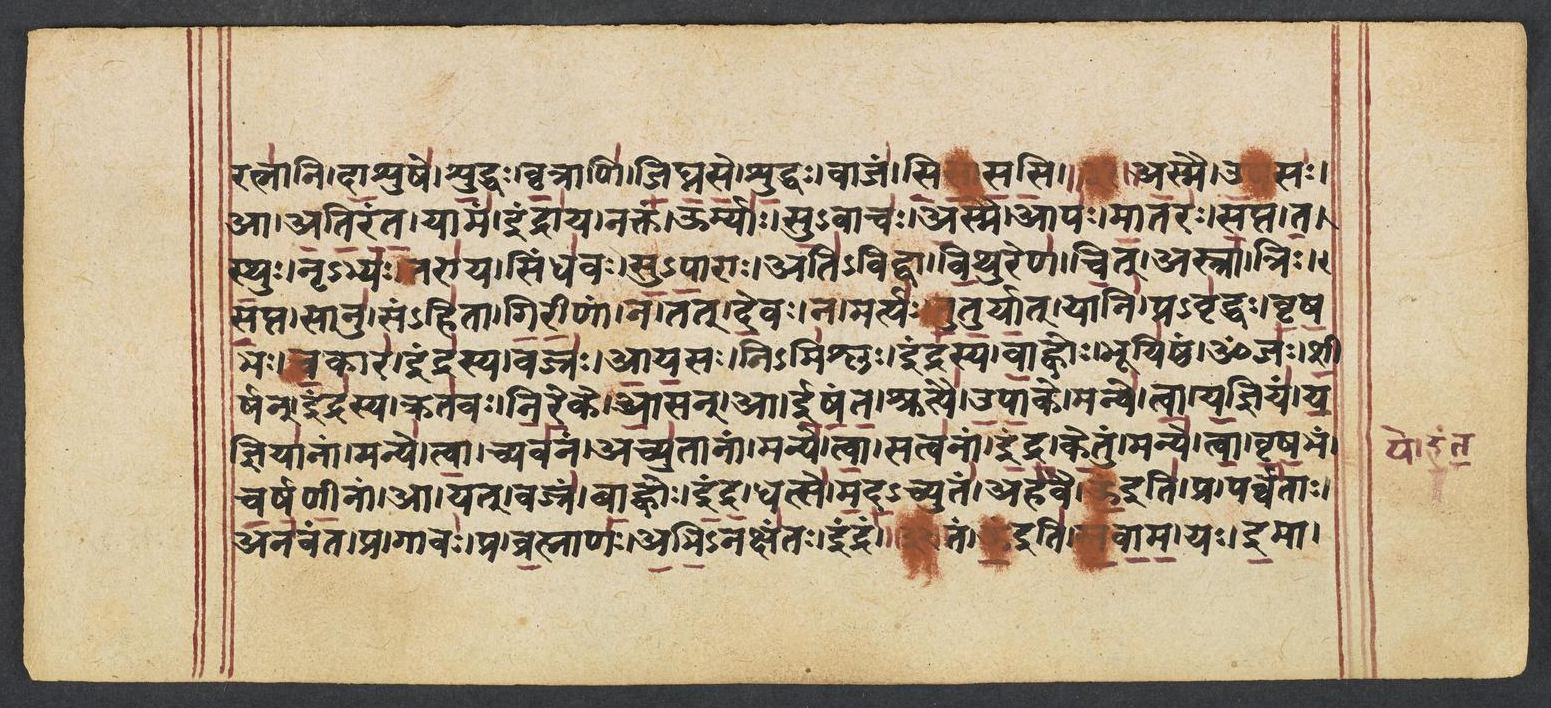
Where on the image
Penn Ms. Coll. 390 Item 41, fol. 658r (numbered 80r by the scribe) (OPenn image 658, lower leaf). Checked on the image: the Rigveda text on this page begins in RV 8.95.9 ‹ratnāni dāśuṣe śuddhaḥ vṛtrāṇi›. The next page with Rigveda text, fol. 658v (numbered 80v by the scribe), begins in RV 8.96.6 ‹jajāna viśvā jātāni avarāṇi›. Verse 8.95.9 ends on this page; 8.95.9 begins on fol. 657v (numbered 79v by the scribe).
9indra̍ śu̱ddho hi no̍ ra̱yiṁ śu̱ddho ratnā̍ni dā̱śuṣe̍ | śu̱ddho vṛ̱trāṇi̍ jighnase śu̱ddho vāja̍ṁ siṣāsasi ||
Compare: Padapāṭha (word-by-word text written in the manuscript; Sansknet e-text via GRETIL)
9indra | śuddhaḥ | hi | naḥ | rayim | śuddhaḥ | ratnāni | dāśuṣe | śuddhaḥ | vṛtrāṇi | jighnase | śuddhaḥ | vājam | sisāsasi
9O Indra, pure, vouchsafe us wealth, and, pure, enrich the worshipper. Pure, thou dost strike the Vr̥itras dead, and strivest, pure, to win the spoil.
Notes
- Sanskrit: Aufrecht's edition (1877) with the Vedic accents, as entered by van Nooten and Holland (GRETIL).
- English: Ralph T. H. Griffith, The Hymns of the Rigveda (1889-1892; 2nd ed. 1896-1897), from the VedaWeb digital text; OCR slips in that text were corrected against the printed 2nd edition (data/sources/rigveda/griffith_errata.json).
- Padapāṭha (edition text): Sansknet e-text via GRETIL (CC BY-NC-SA 4.0).
Cite
Sources
- Source: Penn Ms. Coll. 390 Item 41 (undated (catalogued with Penn's 18th-19th c. Vedic manuscripts)), OPenn, Public Domain Mark + Aufrecht's accented text (GRETIL) + Griffith's English (VedaWeb) (holding institution)
- Critical edition: Aufrecht (1877), accented e-text via GRETIL
← previous · → next · v cycle view · l back to library