Rigveda 8.96: To Indra
Introduction
Rigveda 8.96 is a hymn of 21 verses addressed to Indra. It stands in book (maṇḍala) 8, the book of the Kaṇva and Aṅgiras poets. The Rigveda is the oldest collection of Sanskrit hymns, composed in the second half of the second millennium BCE and handed down orally for many centuries before it was written down.
The manuscript shown is Penn Ms. Coll. 390 Item 41 (University of Pennsylvania), an undated paper manuscript of the padapāṭha (the word-by-word recitation text, in which every word is written separately and compounds are split) of the whole Ṛgveda in Devanāgarī, 884 leaves in fascicles, 7-9 lines to the page, accents in red; this hymn stands on fol. 658r-659v. Each section below gives the verses that end on one page; the page boundaries were read on the images (the opening words of every page), not counted out. Where the manuscript is a padapāṭha (the word-by-word recitation text), the section shows Aufrecht's continuous (saṃhitā) text first and, as the edition text, the padapāṭha of the same verses, which is the form written on the page.
How was this verified? (Provenance)
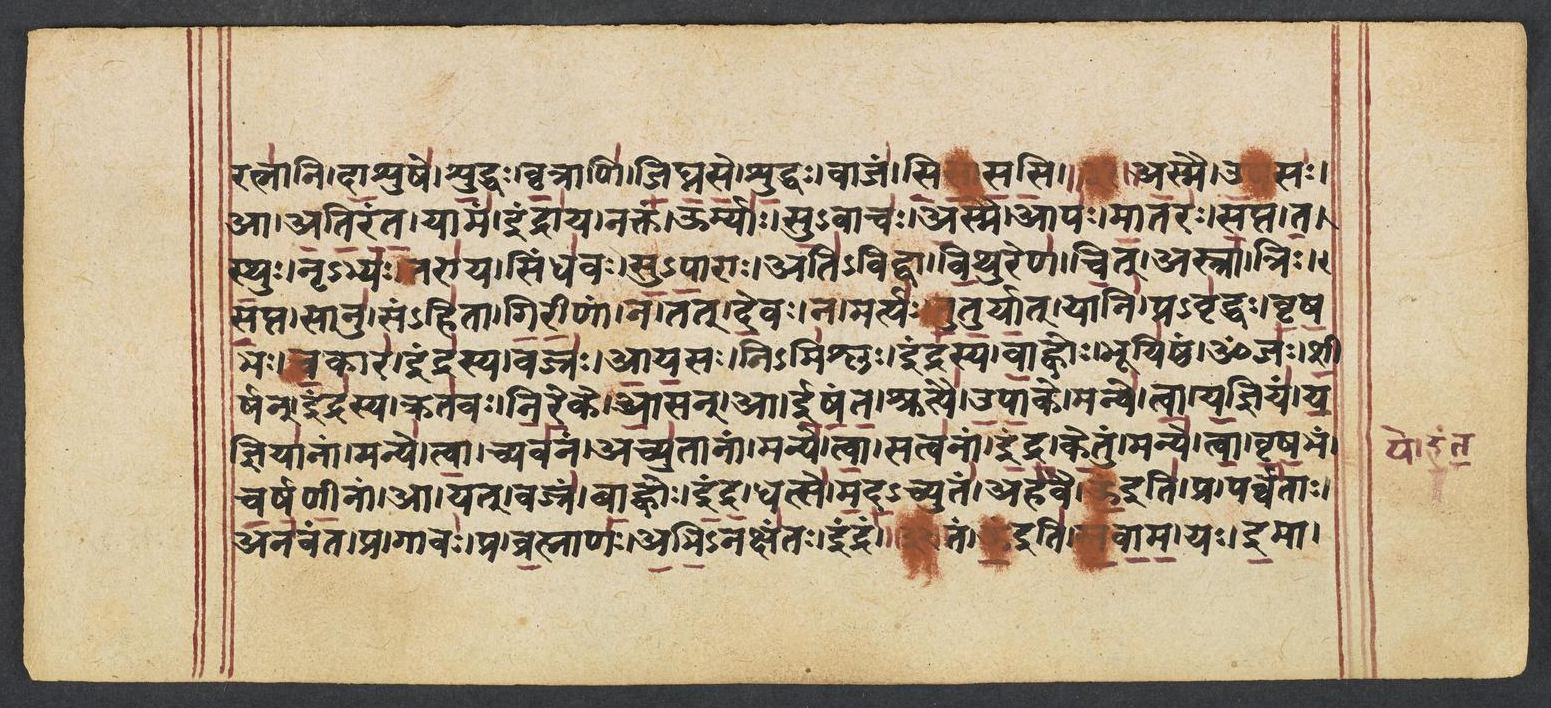
Where on the image
Penn Ms. Coll. 390 Item 41, fol. 658r (numbered 80r by the scribe) (OPenn image 658, lower leaf). Checked on the image: the Rigveda text on this page begins in RV 8.95.9 ‹ratnāni dāśuṣe śuddhaḥ vṛtrāṇi›. The next page with Rigveda text, fol. 658v (numbered 80v by the scribe), begins in RV 8.96.6 ‹jajāna viśvā jātāni avarāṇi›. Verses 8.96.1-5 end on this page.
1a̱smā u̱ṣāsa̱ āti̍ranta̱ yāma̱m indrā̍ya̱ nakta̱m ūrmyā̍ḥ su̱vāca̍ḥ | a̱smā āpo̍ mā̱tara̍ḥ sa̱pta ta̍sthu̱r nṛbhya̱s tarā̍ya̱ sindha̍vaḥ supā̱rāḥ ||
2ati̍viddhā vithu̱reṇā̍ ci̱d astrā̱ triḥ sa̱pta sānu̱ saṁhi̍tā girī̱ṇām | na tad de̱vo na martya̍s tuturyā̱d yāni̱ pravṛ̍ddho vṛṣa̱bhaś ca̱kāra̍ ||
3indra̍sya̱ vajra̍ āya̱so nimi̍śla̱ indra̍sya bā̱hvor bhūyi̍ṣṭha̱m oja̍ḥ | śī̱rṣann indra̍sya̱ krata̍vo nire̱ka ā̱sann eṣa̍nta̱ śrutyā̍ upā̱ke ||
4manye̍ tvā ya̱jñiya̍ṁ ya̱jñiyā̍nā̱m manye̍ tvā̱ cyava̍na̱m acyu̍tānām | manye̍ tvā̱ satva̍nām indra ke̱tum manye̍ tvā vṛṣa̱bhaṁ ca̍rṣaṇī̱nām ||
5ā yad vajra̍m bā̱hvor i̍ndra̱ dhatse̍ mada̱cyuta̱m aha̍ye̱ hanta̱vā u̍ | pra parva̍tā̱ ana̍vanta̱ pra gāva̱ḥ pra bra̱hmāṇo̍ abhi̱nakṣa̍nta̱ indra̍m ||
Compare: Padapāṭha (word-by-word text written in the manuscript; Sansknet e-text via GRETIL)
1asmai | uṣasaḥ | ā | atiranta | yāmam | indrāya | naktam | ūrmyāḥ | su-vācaḥ | asmai | āpaḥ | mātaraḥ | sapta | tasthuḥ | nṛ-bhyaḥ | tarāya | sindhavaḥ | su-pārāḥ
2ati-viddhā | vithureṇa | cit | asrā | triḥ | sapta | sānu | sam-hitā | girīṇām | na | tat | devaḥ | na | martyaḥ | tuturyāt | yāni | pra-vṛddhaḥ | vṛṣabhaḥ | cakāra
3indrasya | vajraḥ | āyasaḥ | ni-miślaḥ | indrasya | bāhvoḥ | bhūyiṣṭham | ojaḥ | śīrṣan | indrasya | kratavaḥ | nireke | āsan | ā | īṣanta | śrutyai | upāke
4manye | tvā | yajñiyam | yajñiyānām | manye | tvā | cyavanam | acyutānām | manye | tvā | satvanām | indra | ketum | manye | tvā | vṛṣabham | carṣaṇīnām
5ā | yat | vajram | bāhvoḥ | indra | dhatse | mada-cyutam | ahaye | hantavai | oṃ iti | pra | parvatāḥ | anavanta | pra | gāvaḥ | pra | brahmāṇaḥ | abhi-nakṣantaḥ | indram
1FOR him the Mornings made their courses longer, and Nights with pleasant voices spake to Indra. For him the Floods stood still, the Seven Mothers, Streams easy for the heroes to pass over.
2The Darter penetrated, though in trouble, thrice-seven close-pressed ridges of the mountains. Neither might God nor mortal man accomplish what the Strong Hero wrought in full-grown vigour.
3The mightiest force is Indra's bolt of iron when firmly grasped in both the arms of Indra. His head and mouth have powers that pass all others, and all his people hasten near to listen.
4I count thee as the Holiest of the Holy, the caster-down of what hath ne'er been shaken. I count thee as the Banner of the heroes, I count thee as the Chief of all men living.
5What time, O Indra, in thine arms thou tookest thy wildly rushing bolt to Slay the Dragon, The mountains roared, the cattle loudly bellowed, the Brahmans with their hymns drew nigh to Indra.
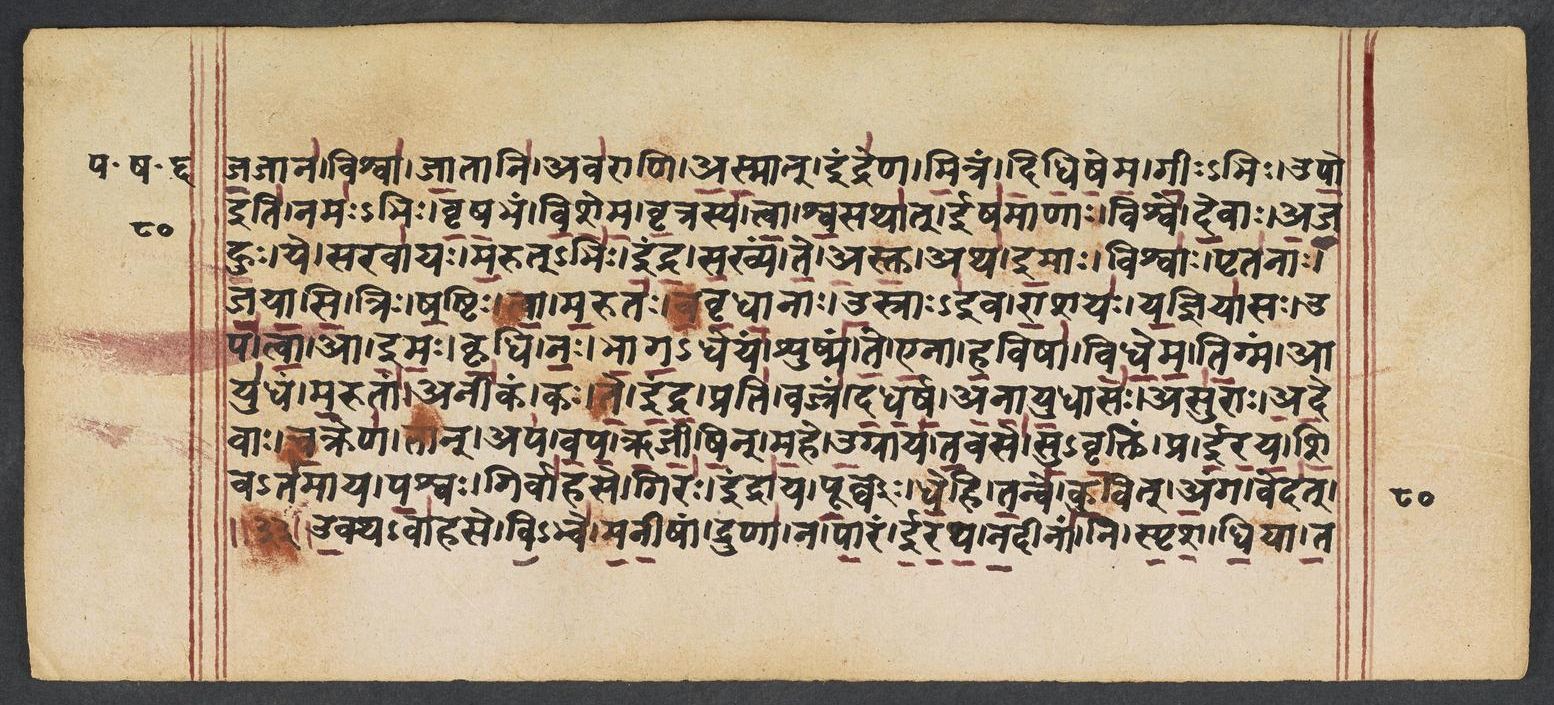
Where on the image
Penn Ms. Coll. 390 Item 41, fol. 658v (numbered 80v by the scribe) (OPenn image 659, upper leaf). Checked on the image: the Rigveda text on this page begins in RV 8.96.6 ‹jajāna viśvā jātāni avarāṇi›. The next page with Rigveda text, fol. 659r (numbered 81r by the scribe), begins in RV 8.96.11 ‹-tanvi śrutasya juṣṭa-tarasya kuvit›. Verses 8.96.6-10 end on this page; 8.96.6 begins on fol. 658r (numbered 80r by the scribe).
6tam u̍ ṣṭavāma̱ ya i̱mā ja̱jāna̱ viśvā̍ jā̱tāny ava̍rāṇy asmāt | indre̍ṇa mi̱traṁ di̍dhiṣema gī̱rbhir upo̱ namo̍bhir vṛṣa̱bhaṁ vi̍śema ||
7vṛ̱trasya̍ tvā śva̱sathā̱d īṣa̍māṇā̱ viśve̍ de̱vā a̍jahu̱r ye sakhā̍yaḥ | ma̱rudbhi̍r indra sa̱khyaṁ te̍ a̱stv athe̱mā viśvā̱ḥ pṛta̍nā jayāsi ||
8triḥ ṣa̱ṣṭis tvā̍ ma̱ruto̍ vāvṛdhā̱nā u̱srā i̍va rā̱śayo̍ ya̱jñiyā̍saḥ | upa̱ tvema̍ḥ kṛ̱dhi no̍ bhāga̱dheya̱ṁ śuṣma̍ṁ ta e̱nā ha̱viṣā̍ vidhema ||
9ti̱gmam āyu̍dham ma̱rutā̱m anī̍ka̱ṁ kas ta̍ indra̱ prati̱ vajra̍ṁ dadharṣa | a̱nā̱yu̱dhāso̱ asu̍rā ade̱vāś ca̱kreṇa̱ tām̐ apa̍ vapa ṛjīṣin ||
10ma̱ha u̱grāya̍ ta̱vase̍ suvṛ̱ktim prera̍ya śi̱vata̍māya pa̱śvaḥ | girvā̍hase̱ gira̱ indrā̍ya pū̱rvīr dhe̱hi ta̱nve̍ ku̱vid a̱ṅga veda̍t ||
Compare: Padapāṭha (word-by-word text written in the manuscript; Sansknet e-text via GRETIL)
6tam | oṃ iti | stavāma | yaḥ | imā | jajāna | viśvā | jātāni | avarāṇi | asmāt | indreṇa | mitram | didhiṣema | gīḥ-bhiḥ | upo iti | namaḥ-bhiḥ | vṛṣabham | viśema
7vṛtrasya | tvā | śvasathāt | īṣamāṇāḥ | viśve | devāḥ | ajahuḥ | ye | sakhāyaḥ | marut-bhiḥ | indra | sakhyam | te | astu | atha | imāḥ | viśvāḥ | pṛtanāḥ | jayāsi
8triḥ | ṣaṣṭiḥ | tvā | marutaḥ | vavṛdhānāḥ | usrāḥ-iva | rāśayaḥ | yajñiyāsaḥ | upa | tvā | imaḥ | kṛdhi | naḥ | bhāga-dheyam | śuṣmam | te | enā | haviṣā | vidhema
9tigmam | āyudham | marutām | anīkam | kaḥ | te | indra | prati | vajram | dadharṣa | anāyudhāsaḥ | asurāḥ | adevāḥ | cakreṇa | tān | apa | vapa | ṛjīṣin
10mahe | ugrāya | tavase | su-vṛktim | pra | īraya | śiva-tamāya | paśvaḥ | givārhase | giraḥ | indrāya | pūrvīḥ | dhehi | tanve | kuvit | aṅga | vedat
6Let us praise him who made these worlds and creatures, all things that after him sprang into being. May we win Mitra with our songs, and Indra, and. wait upon our Lord with adoration.
7Flying in terror from the snort of Vr̥itra, all Deities who were thy friends forsook thee. So, Indra, be thy friendship with the Maruts: in all these battles thou shalt be the victor.
8Thrice-sixty Maruts, waxing strong, were with thee, like piles of beaming light, worthy of worship. We come to thee: grant us a happy portion. Let us adore thy might with this oblation.
9A sharpened weapon is the host of Maruts. Who, Indra, dares withstand thy bolt of thunder? Weaponless are the Asuras, the godless: scatter them with thy wheel, Impetuous Hero.
10To him the Strong and Mighty, most auspicious, send up the beauteous hymn for sake of cattle. Lay on his body many songs for Indra invoked with song, for will not he regard them
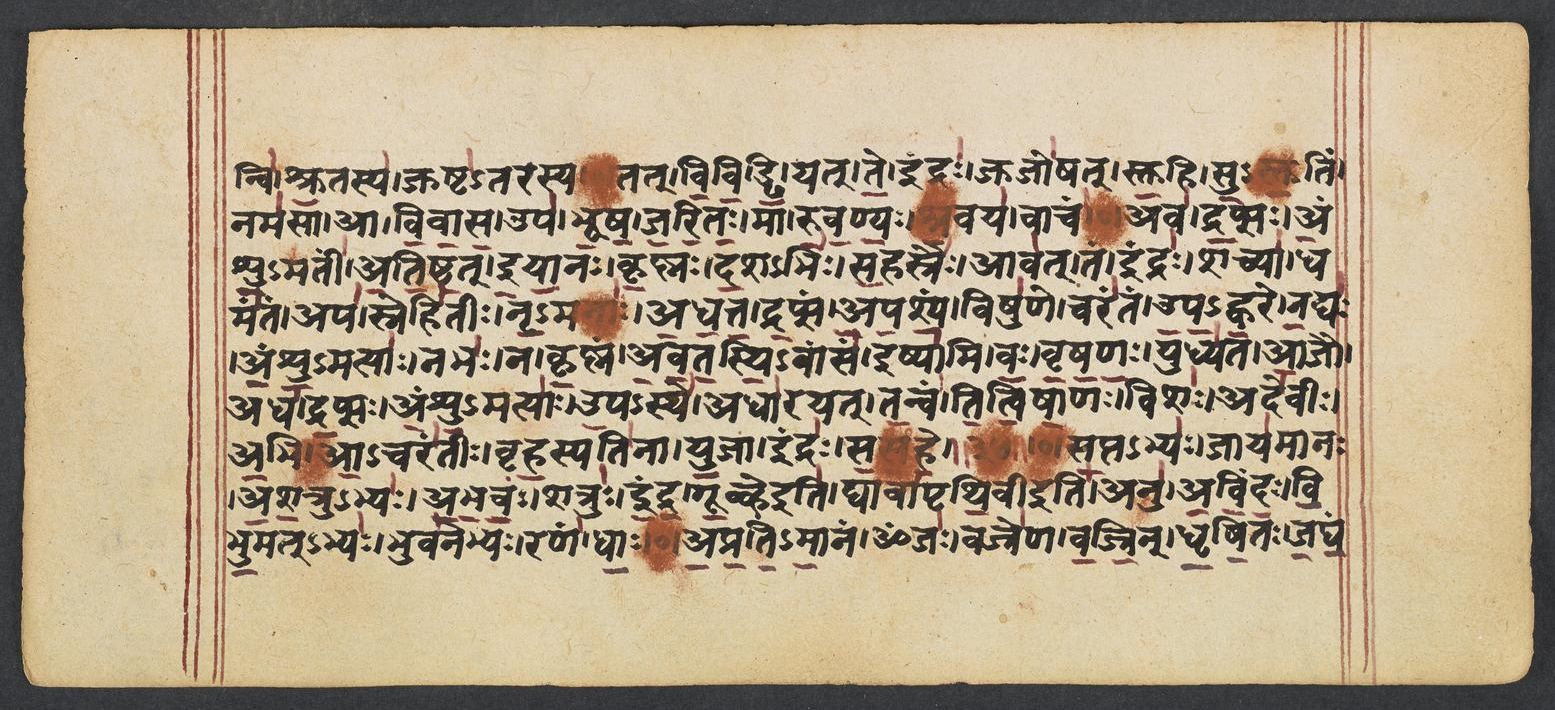
Where on the image
Penn Ms. Coll. 390 Item 41, fol. 659r (numbered 81r by the scribe) (OPenn image 659, lower leaf). Checked on the image: the Rigveda text on this page begins in RV 8.96.11 ‹-tanvi śrutasya juṣṭa-tarasya kuvit›. The next page with Rigveda text, fol. 659v (numbered 81v by the scribe), begins in RV 8.96.17 ‹-jaghantha tvam śuṣṇasya ava›. Verses 8.96.11-16 end on this page; 8.96.11 begins on fol. 658v (numbered 80v by the scribe).
11u̱kthavā̍hase vi̱bhve̍ manī̱ṣāṁ druṇā̱ na pā̱ram ī̍rayā na̱dīnā̍m | ni spṛ̍śa dhi̱yā ta̱nvi̍ śru̱tasya̱ juṣṭa̍tarasya ku̱vid a̱ṅga veda̍t ||
12tad vi̍viḍḍhi̱ yat ta̱ indro̱ jujo̍ṣat stu̱hi su̍ṣṭu̱tiṁ nama̱sā vi̍vāsa | upa̍ bhūṣa jarita̱r mā ru̍vaṇyaḥ śrā̱vayā̱ vāca̍ṁ ku̱vid a̱ṅga veda̍t ||
13ava̍ dra̱pso a̍ṁśu̱matī̍m atiṣṭhad iyā̱naḥ kṛ̱ṣṇo da̱śabhi̍ḥ sa̱hasrai̍ḥ | āva̱t tam indra̱ḥ śacyā̱ dhama̍nta̱m apa̱ snehi̍tīr nṛ̱maṇā̍ adhatta ||
14dra̱psam a̍paśya̱ṁ viṣu̍ṇe̱ cara̍ntam upahva̱re na̱dyo̍ aṁśu̱matyā̍ḥ | nabho̱ na kṛ̱ṣṇam a̍vatasthi̱vāṁsa̱m iṣyā̍mi vo vṛṣaṇo̱ yudhya̍tā̱jau ||
15adha̍ dra̱pso a̍ṁśu̱matyā̍ u̱pasthe 'dhā̍rayat ta̱nva̍ṁ titviṣā̱ṇaḥ | viśo̱ ade̍vīr a̱bhy ā̱3̱̍cara̍ntī̱r bṛha̱spati̍nā yu̱jendra̍ḥ sasāhe ||
16tvaṁ ha̱ tyat sa̱ptabhyo̱ jāya̍māno 'śa̱trubhyo̍ abhava̱ḥ śatru̍r indra | gū̱ḻhe dyāvā̍pṛthi̱vī anv a̍vindo vibhu̱madbhyo̱ bhuva̍nebhyo̱ raṇa̍ṁ dhāḥ ||
Compare: Padapāṭha (word-by-word text written in the manuscript; Sansknet e-text via GRETIL)
11uktha-vāhase | vi-bhve | manīṣām | druṇā | na | pāram | īraya | nadīnām | ni | spṛśa | dhiyā | tanvi | śrutasya | juṣṭa-tarasya | kuvit | aṅga | vedat
12tat | viviḍḍhi | yat | te | indraḥ | jujoṣat | stuhi | su-stutim | namasā | vivāsa | upa | bhūṣa | jaritaḥ | mā | ruvaṇyaḥ | śrāvayā | vācam | kuvit | aṅga | vedat
13ava | drapsaḥ | aṃśu-matīm | atiṣṭhat | iyānaḥ | kṛṣṇaḥ | daśa-bhiḥ | sahasraiḥ | āvat | tam | indraḥ | śacyā | dhamantam | apa | snehitīḥ | nṛ-manāḥ | adhatta
14drapsam | apaśyam | viṣuṇe | carantam | upa-hvare | nadyaḥ | aṃśu-matyāḥ | nabhaḥ | na | kṛṣṇam | avatasthi-vāṃsam | iṣyāmi | vaḥ | vṛṣaṇaḥ | yudhyata | ājau
15adha | drapsaḥ | aṃśu-matyāḥ | upa-sthe | adhārayat | tanvam | titviṣāṇaḥ | viśaḥ | adevīḥ | abhi | ācarantīḥ | bṛhaspatinā | yujā | indraḥ | sasahe
16tvam | ha | tyat | sapta-bhyaḥ | jāyamānaḥ | aśatru-bhyaḥ | abhavaḥ | śatruḥ | indra | gūḷhe | dyāvāpṛthivī iti | anu | avindaḥ | vibhmat-bhyaḥ | bhuvanebhyaḥ | raṇam | dhāḥ
11To him, the Mighty, who accepts laudation, send forth thy thought as by a boat o’er rivers, Stir with thy hymn the body of the Famous and Dearest One, for will not he regard it?
12Serve him with gifts of thine which Indra welcomes: praise with fair praise, invite him with thine homage. Draw near, O singer, and refrain from outcry. Make thy voice heard, for will not he regard it?
13The Black Drop sank in Anṣumatîs bosom, advancing with ten thousand round about it. Indra with might longed for it as it panted: the hero-hearted laid aside his weapons.
14I saw the Drop in the far distance moving, on the slope bank of Anṣumatîs river, Like a black cloud that sank into the water. Heroes, I send you forth. Go, fight in battle.
15And then the Drop in Anṣumatîs bosom, splendid with light, assumed its proper body; And Indra, with Br̥ihaspati to aid him, conquered the godless tribes that came against him.
16Then, at thy birth, thou wast the foeman, Indra, of those the seven who ne'er had met a rival. The hidden Pair, the Heaven and Earth, thou foundest, and to the mighty worlds thou gavest pleasure.
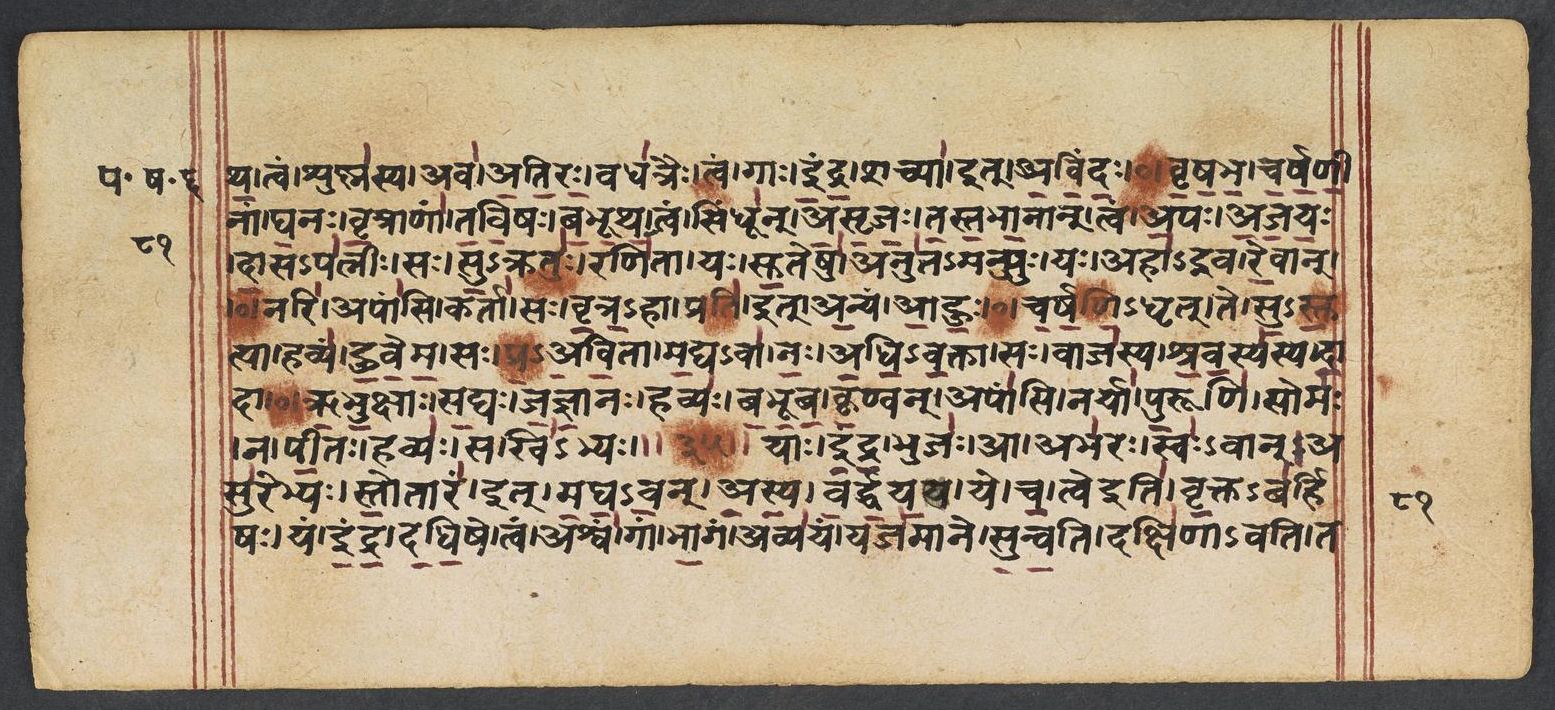
Where on the image
Penn Ms. Coll. 390 Item 41, fol. 659v (numbered 81v by the scribe) (OPenn image 660, upper leaf). Checked on the image: the Rigveda text on this page begins in RV 8.96.17 ‹-jaghantha tvam śuṣṇasya ava›. The next page with Rigveda text, fol. 660r (numbered 82r by the scribe), begins in RV 8.97.2 ‹-tasmin tam dhehi mā›. Verses 8.96.17-21 end on this page; 8.96.17 begins on fol. 659r (numbered 81r by the scribe).
17tvaṁ ha̱ tyad a̍pratimā̱nam ojo̱ vajre̍ṇa vajrin dhṛṣi̱to ja̍ghantha | tvaṁ śuṣṇa̱syāvā̍tiro̱ vadha̍trai̱s tvaṁ gā i̍ndra̱ śacyed a̍vindaḥ ||
18tvaṁ ha̱ tyad vṛ̍ṣabha carṣaṇī̱nāṁ gha̱no vṛ̱trāṇā̍ṁ tavi̱ṣo ba̍bhūtha | tvaṁ sindhū̍m̐r asṛjas tastabhā̱nān tvam a̱po a̍jayo dā̱sapa̍tnīḥ ||
19sa su̱kratū̱ raṇi̍tā̱ yaḥ su̱teṣv anu̍ttamanyu̱r yo ahe̍va re̱vān | ya eka̱ in nary apā̍ṁsi̱ kartā̱ sa vṛ̍tra̱hā pratīd a̱nyam ā̍huḥ ||
20sa vṛ̍tra̱hendra̍ś carṣaṇī̱dhṛt taṁ su̍ṣṭu̱tyā havya̍ṁ huvema | sa prā̍vi̱tā ma̱ghavā̍ no 'dhiva̱ktā sa vāja̍sya śrava̱sya̍sya dā̱tā ||
21sa vṛ̍tra̱hendra̍ ṛbhu̱kṣāḥ sa̱dyo ja̍jñā̱no havyo̍ babhūva | kṛ̱ṇvann apā̍ṁsi̱ naryā̍ pu̱rūṇi̱ somo̱ na pī̱to havya̱ḥ sakhi̍bhyaḥ ||
Compare: Padapāṭha (word-by-word text written in the manuscript; Sansknet e-text via GRETIL)
17tvam | ha | tyat | aprati-mānam | ojaḥ | vajreṇa | vajrin | dhṛṣitaḥ | jaghantha | tvam | śuṣṇasya | ava | atiraḥ | vadhatraiḥ | tvam | gāḥ | indra | śacyā | it | avindaḥ
18tvam | ha | tyat | vṛṣabha | carṣaṇīnām | ghanaḥ | vṛtrāṇām | taviṣaḥ | babhūtha | tvam | sindhūn | asṛjaḥ | tastabhānān | tvam | apaḥ | ajayaḥ | dāsa-patnīḥ
19saḥ | su-kratuḥ | raṇitā | yaḥ | suteṣu | anutta-manyuḥ | yaḥ | ahāiva | revān | yaḥ | ekaḥ | it | nari | apāṃsi | kartā | saḥ | vṛtra-hā | prati | it | anyam | āhuḥ
20saḥ | vṛtra-hā | indraḥ | carṣaṇi-dhṛt | tam | su-stutyā | havyam | huvema | saḥ | pra-avitā | magha-vā | naḥ | adhi-vaktā | saḥ | vājasya | śravasyasya | dātā
21saḥ | vṛtra-hā | indraḥ | ṛbhukṣāḥ | sadyaḥ | jajñānaḥ | havyaḥ | babhūva | kṛṇvan | apāṃsi | naryā | purūṇi | somaḥ | na | pītaḥ | havyaḥ | sakhi-bhyaḥ
17So, Thunder-armed! thou with thy bolt of thunder didst boldly smite that power which none might equal; With weapons broughtest low the phght of Sushna, and, Indra, foundest by thy strength the cattle.
18Then wast thou, Chieftain of all living mortals, the very mighty slayer of the Vritras. Then didst thou set the obstructed rivers flowing, and win the floods that were enthralled by Dâsas.
19Most wise is he, rejoicing in libations, splendid as day, resistless in his anger. He only doth great deeds, the only Hero, sole Vritra-slayer he, with none beside him.
20Indra is Vritra’s slayer, man’s sustainer: he must be called; with fair praise let us call him. Maghavan is our Helper, our Protector, giver of spoil and wealth to make us famous.
21This Indra, Vritra-slayer, this Ribhukshan, even at his birth, was meet for invocation. Doer of many deeds for man’s advantage, like Soma quaffed, for friends we must invoke him.
Notes
- Sanskrit: Aufrecht's edition (1877) with the Vedic accents, as entered by van Nooten and Holland (GRETIL).
- English: Ralph T. H. Griffith, The Hymns of the Rigveda (1889-1892; 2nd ed. 1896-1897), from the VedaWeb digital text; OCR slips in that text were corrected against the printed 2nd edition (data/sources/rigveda/griffith_errata.json).
- Padapāṭha (edition text): Sansknet e-text via GRETIL (CC BY-NC-SA 4.0).
Cite
Sources
- Source: Penn Ms. Coll. 390 Item 41 (undated (catalogued with Penn's 18th-19th c. Vedic manuscripts)), OPenn, Public Domain Mark + Aufrecht's accented text (GRETIL) + Griffith's English (VedaWeb) (holding institution)
- Critical edition: Aufrecht (1877), accented e-text via GRETIL
← previous · → next · v cycle view · l back to library