Rigveda 8.97: To Indra
Introduction
Rigveda 8.97 is a hymn of 15 verses addressed to Indra. It stands in book (maṇḍala) 8, the book of the Kaṇva and Aṅgiras poets. The Rigveda is the oldest collection of Sanskrit hymns, composed in the second half of the second millennium BCE and handed down orally for many centuries before it was written down.
The manuscript shown is Penn Ms. Coll. 390 Item 41 (University of Pennsylvania), an undated paper manuscript of the padapāṭha (the word-by-word recitation text, in which every word is written separately and compounds are split) of the whole Ṛgveda in Devanāgarī, 884 leaves in fascicles, 7-9 lines to the page, accents in red; this hymn stands on fol. 659v-660v. Each section below gives the verses that end on one page; the page boundaries were read on the images (the opening words of every page), not counted out. Where the manuscript is a padapāṭha (the word-by-word recitation text), the section shows Aufrecht's continuous (saṃhitā) text first and, as the edition text, the padapāṭha of the same verses, which is the form written on the page.
How was this verified? (Provenance)
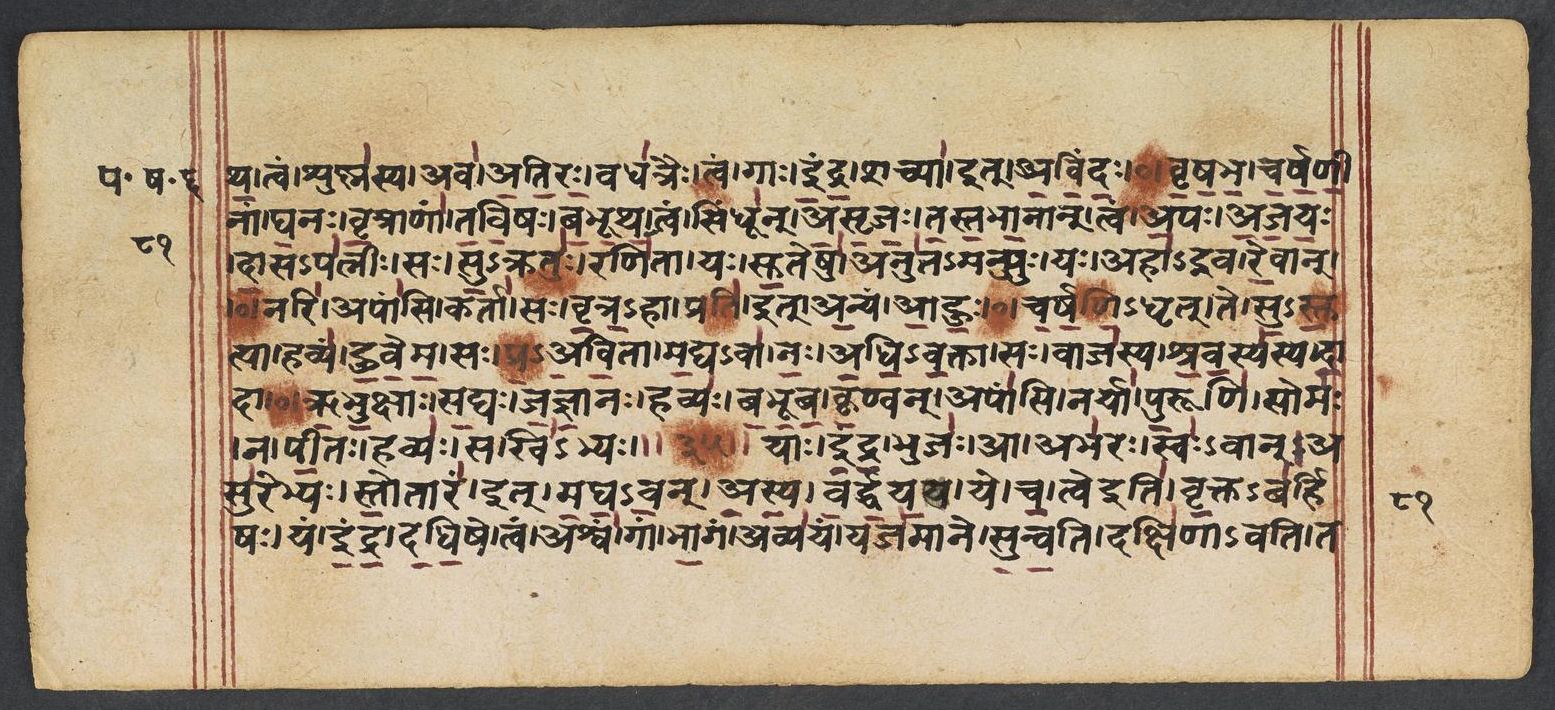
Where on the image
Penn Ms. Coll. 390 Item 41, fol. 659v (numbered 81v by the scribe) (OPenn image 660, upper leaf). Checked on the image: the Rigveda text on this page begins in RV 8.96.17 ‹-jaghantha tvam śuṣṇasya ava›. The next page with Rigveda text, fol. 660r (numbered 82r by the scribe), begins in RV 8.97.2 ‹-tasmin tam dhehi mā›. Verse 8.97.1 ends on this page.
1yā i̍ndra̱ bhuja̱ ābha̍ra̱ḥ sva̍rvā̱m̐ asu̍rebhyaḥ | sto̱tāra̱m in ma̍ghavann asya vardhaya̱ ye ca̱ tve vṛ̱ktaba̍rhiṣaḥ ||
Compare: Padapāṭha (word-by-word text written in the manuscript; Sansknet e-text via GRETIL)
1yāḥ | indra | bhujaḥ | ā | abharaḥ | svaḥ-vān | asurebhyaḥ | stotāram | it | magha-van | asya | vardhaya | ye | ca | tve iti | vṛkta-barhiṣaḥ
1O INDRA, Lord of Light, what joys thou broughtest from the Asuras, Prosper therewith, O Maghavan, him who lauds that deed, and those whose grass is trimmed for thee.
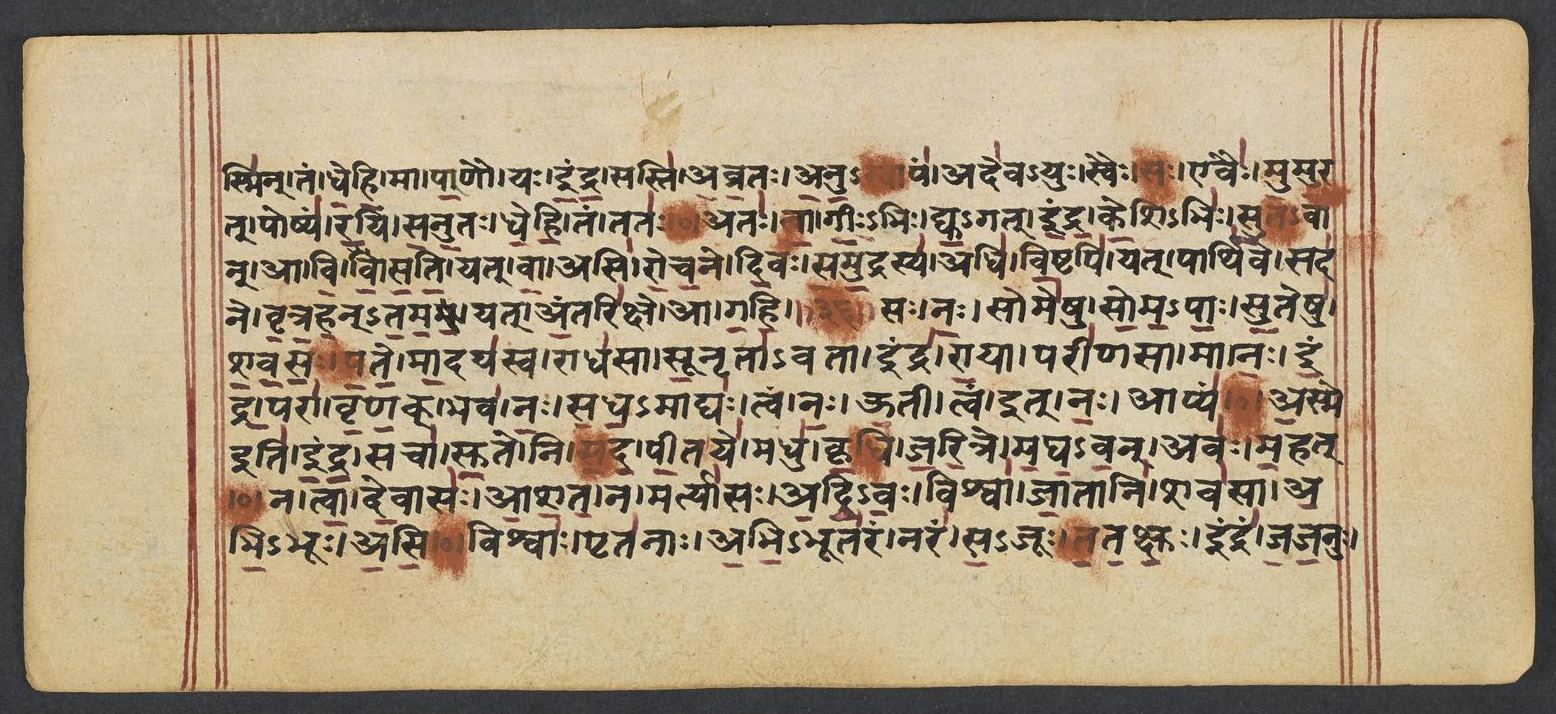
Where on the image
Penn Ms. Coll. 390 Item 41, fol. 660r (numbered 82r by the scribe) (OPenn image 660, lower leaf). Checked on the image: the Rigveda text on this page begins in RV 8.97.2 ‹-tasmin tam dhehi mā›. The next page with Rigveda text, fol. 660v (numbered 82v by the scribe), begins in RV 8.97.10 ‹ca rājase kratvā variṣṭham›. Verses 8.97.2-9 end on this page; 8.97.2 begins on fol. 659v (numbered 81v by the scribe).
2yam i̍ndra dadhi̱ṣe tvam aśva̱ṁ gām bhā̱gam avya̍yam | yaja̍māne sunva̱ti dakṣi̍ṇāvati̱ tasmi̱n taṁ dhe̍hi̱ mā pa̱ṇau ||
3ya i̍ndra̱ sasty a̍vra̱to̍ 'nu̱ṣvāpa̱m ade̍vayuḥ | svaiḥ ṣa evai̍r mumura̱t poṣya̍ṁ ra̱yiṁ sa̍nu̱tar dhe̍hi̱ taṁ tata̍ḥ ||
4yac cha̱krāsi̍ parā̱vati̱ yad a̍rvā̱vati̍ vṛtrahan | ata̍s tvā gī̱rbhir dyu̱gad i̍ndra ke̱śibhi̍ḥ su̱tāvā̱m̐ ā vi̍vāsati ||
5yad vāsi̍ roca̱ne di̱vaḥ sa̍mu̱drasyādhi̍ vi̱ṣṭapi̍ | yat pārthi̍ve̱ sada̍ne vṛtrahantama̱ yad a̱ntari̍kṣa̱ ā ga̍hi ||
6sa na̱ḥ some̍ṣu somapāḥ su̱teṣu̍ śavasas pate | mā̱daya̍sva̱ rādha̍sā sū̱nṛtā̍va̱tendra̍ rā̱yā parī̍ṇasā ||
7mā na̍ indra̱ parā̍ vṛṇa̱g bhavā̍ naḥ sadha̱mādya̍ḥ | tvaṁ na̍ ū̱tī tvam in na̱ āpya̱m mā na̍ indra̱ parā̍ vṛṇak ||
8a̱sme i̍ndra̱ sacā̍ su̱te ni ṣa̍dā pī̱taye̱ madhu̍ | kṛ̱dhī ja̍ri̱tre ma̍ghava̱nn avo̍ ma̱had a̱sme i̍ndra̱ sacā̍ su̱te ||
9na tvā̍ de̱vāsa̍ āśata̱ na martyā̍so adrivaḥ | viśvā̍ jā̱tāni̱ śava̍sābhi̱bhūr a̍si̱ na tvā̍ de̱vāsa̍ āśata ||
Compare: Padapāṭha (word-by-word text written in the manuscript; Sansknet e-text via GRETIL)
2yam | indra | dadhiṣe | tvam | aśvam | gām | bhāgam | avyayam | yajamāne | sunvat i | dakṣiṇāvati | tasmin | tam | dhehi | mā | paṇau
3yaḥ | indra | sasti | avrataḥ | anu-svāpam | adeva-yuḥ | svaiḥ | saḥ | evaiḥ | mumurat | poṣyam | rayim | sanutaḥ | dhehi | tam | tataḥ
4yat | śakra | asi | parāvati | yat | arvāvati | vṛtra-han | ataḥ | tvā | gīḥ-bhi ḥ | dyu-gat | indra | keśi-bhiḥ | suta-vān | ā | vivāsati
5yat | vā | asi | rocane | divaḥ | samudrasya | adhi | viṣṭapi | yat | pārthive | sadane | vṛtrahan-tama | yat | antarikṣe | ā | gahi
6saḥ | naḥ | someṣu | soma-pāḥ | suteṣu | śavasaḥ | pate | mādayasva | rādhasā | sūnṛtāvatā | indra | rāyā | parīṇasā
7mā | naḥ | indra | parā | vṛṇak | bhava | naḥ | sadha-mādyaḥ | tvam | naḥ | ūtī | tvam | it | naḥ | āpyam | mā | naḥ | indra | parā | vṛṇak
8asme iti | indra | sacā | sute | ni | ṣada | pītaye | madhu | kṛdhi | jaritre | magha-van | avaḥ | mahat | asme iti | indra | sacā | sute
9na | tvā | devāsaḥ | āśata | na | martyāsaḥ | adri-vaḥ | viśvā | jātāni | śavasā | abhi-bhūḥ | asi | na | tvā | devāsaḥ | āśata
2The unwasting share of steeds and kine which, Indra, thou hast fast secured, Grant to the worshipper who presses Soma and gives guerdon, not unto the churl.
3The riteless, godless man who sleeps, O Indra, his unbroken sleep, – May he by following his own devices die. Hide from him wealth that nourishes.
4Whether, O Ṣakra, thou be far, or, Vritra-slayer, near at hand, Thence by heaven-reaching songs he who hath pressed the juice invites thee with thy long-maned Steeds.
5Whether thou art in heaven's bright sphere, or in the basin of the sea; Whether, chief Vr̥itra-slayer, in some place on earth, or in the firmament, approach.
6Thou Soma-drinker, Lord of Strength, beside our flowing Soma juice Delight us with thy bounty rich in pleasantness, O Indra, with abundant wealth.
7O Indra, turn us not away: be the companion of our feast. For thou art our protection, yea, thou art our kin: O Indra, turn us not away.
8Sit down with us, O Indra, sit beside the juice to drink the meath. Show forth great favour to the singer, Maghavan; Indra, with us, beside the juice.
9O Caster of the Stone, nor Gods nor mortals have attained to thee. Thou in thy might surpassest all that hath been made: the Gods have not attained to thee.
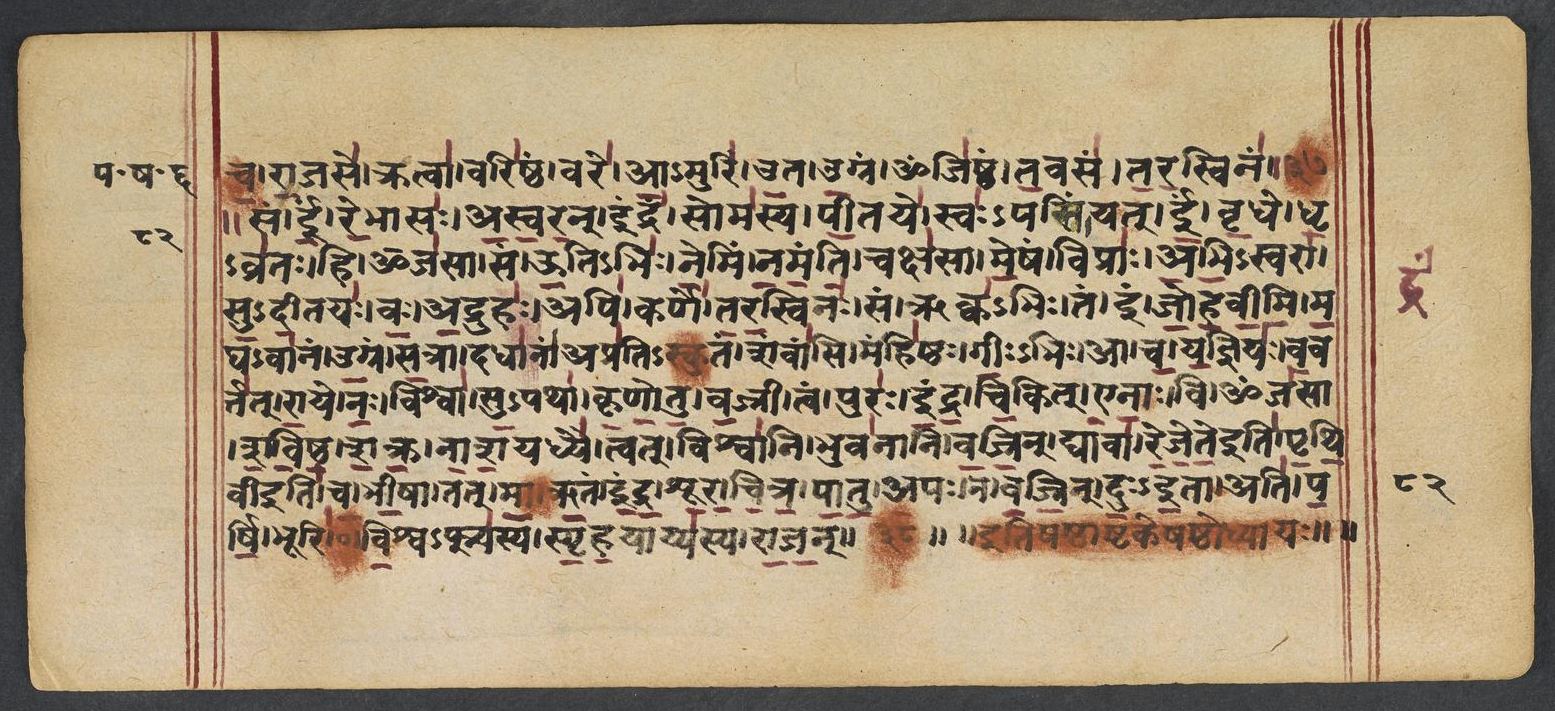
Where on the image
Penn Ms. Coll. 390 Item 41, fol. 660v (numbered 82v by the scribe) (OPenn image 661, upper leaf). Checked on the image: the Rigveda text on this page begins in RV 8.97.10 ‹ca rājase kratvā variṣṭham›. The next page with Rigveda text, fol. 661v (numbered 83v by the scribe), begins in RV 8.98.1 ‹indrāya sāma gāyata viprāya›. Verses 8.97.10-15 end on this page; 8.97.10 begins on fol. 660r (numbered 82r by the scribe).
10viśvā̱ḥ pṛta̍nā abhi̱bhūta̍ra̱ṁ nara̍ṁ sa̱jūs ta̍takṣu̱r indra̍ṁ jaja̱nuś ca̍ rā̱jase̍ | kratvā̱ vari̍ṣṭha̱ṁ vara̍ ā̱muri̍m u̱togram oji̍ṣṭhaṁ ta̱vasa̍ṁ tara̱svina̍m ||
11sam ī̍ṁ re̱bhāso̍ asvara̱nn indra̱ṁ soma̍sya pī̱taye̍ | sva̍rpati̱ṁ yad ī̍ṁ vṛ̱dhe dhṛ̱tavra̍to̱ hy oja̍sā̱ sam ū̱tibhi̍ḥ ||
12ne̱miṁ na̍manti̱ cakṣa̍sā me̱ṣaṁ viprā̍ abhi̱svarā̍ | su̱dī̱tayo̍ vo a̱druho 'pi̱ karṇe̍ tara̱svina̱ḥ sam ṛkva̍bhiḥ ||
13tam indra̍ṁ johavīmi ma̱ghavā̍nam u̱graṁ sa̱trā dadhā̍na̱m apra̍tiṣkuta̱ṁ śavā̍ṁsi | maṁhi̍ṣṭho gī̱rbhir ā ca̍ ya̱jñiyo̍ va̱varta̍d rā̱ye no̱ viśvā̍ su̱pathā̍ kṛṇotu va̱jrī ||
14tvam pura̍ indra ci̱kid e̍nā̱ vy oja̍sā śaviṣṭha śakra nāśa̱yadhyai̍ | tvad viśvā̍ni̱ bhuva̍nāni vajri̱n dyāvā̍ rejete pṛthi̱vī ca̍ bhī̱ṣā ||
15tan ma̍ ṛ̱tam i̍ndra śūra citra pātv a̱po na va̍jrin duri̱tāti̍ parṣi̱ bhūri̍ | ka̱dā na̍ indra rā̱ya ā da̍śasyer vi̱śvapsnya̍sya spṛha̱yāyya̍sya rājan ||
Compare: Padapāṭha (word-by-word text written in the manuscript; Sansknet e-text via GRETIL)
10viśvāḥ | pṛtanāḥ | abhi-bhūtaram | naram | sa-jūḥ | tatakṣuḥ | indram | jajanuḥ | ca | rājase | kratvā | variṣṭham | vare | āmurim | uta | ugram | ojiṣṭham | tavasam | tarasvinam
11sam | īm | rebhāsaḥ | asvaran | indram | somasya | pītaye | svaḥ-patim | yat | īm | vṛdhe | dhṛta-vrataḥ | hi | ojasā | sam | ūti-bhiḥ
12nemim | namanti | cakṣasā | meṣam | viprāḥ | abhi-svarā | su-dītayaḥ | vaḥ | adruhaḥ | api | karṇe | tarasvinaḥ | sam | ṛkva-bhiḥ
13tam | indram | johavīmi | magha-vānam | ugram | satrā | dadhānam | aprati-skutam | śavāṃsi | maṃhiṣṭhaḥ | gīḥ-bhiḥ | ā | ca | yajñiyaḥ | vavartat | rāye | naḥ | v iśvā | su-pathā | kṛṇotu | vajrī
14tvam | puraḥ | indra | cikit | enāḥ | vi | ojasā | saviṣṭha | śakra | nāśayadhyai | tvat | viśvāni | bhuvanāni | vajrin | dyāvā | rejeteiti | pṛthivī iti | ca | bhīṣā
15tat | mā | ṛtam | indra | śūra | citra | pātu | apaḥ | na | vajrin | duḥ-itā | ati | parṣ i | bhūri | kadā | naḥ | indra | rāyaḥ | ā | daśasyeḥ | viśva-psnyasya | spṛhayāyyasya | rājan
10Of one accord they made and formed for kingship Indra, the Hero who in all encounters overcometh, Most eminent for power, destroyer in the conflict, fierce and exceeding strong, stalwart and full of vigour.
11Bards joined in song to Indra so that he might drink the Soma juice, The Lord of Light, that he whose laws stand fast might aid with power and with the help he gives.
12The holy sages form a ring, looking and singing to the Ram. Inciters, full of vigour, not to be deceived, are with the chanters, nigh to hear.
13Loudly I call that Indra, Maghavan the Mighty, who evermore possesses power, ever resistless. Holy, most liberal, may he lead us on to riches, and, Thunder-armed, make all our pathways pleasant for us.
14Thou knowest well, O Ṣakra, thou Most Potent, with thy strength, Indra, to destroy these castles. Before thee, Thunder-armed! all beings tremble: the heavens and earth before thee shake with terror.
15May thy truth, Indra, Wondrous Hero! be my guard: bear me o’er much woe, Thunderer! as over floods. When, Indra, wilt thou honour us with opulence, all-nourishing and much-to-be-desired, O King ?
Notes
- Sanskrit: Aufrecht's edition (1877) with the Vedic accents, as entered by van Nooten and Holland (GRETIL).
- English: Ralph T. H. Griffith, The Hymns of the Rigveda (1889-1892; 2nd ed. 1896-1897), from the VedaWeb digital text; OCR slips in that text were corrected against the printed 2nd edition (data/sources/rigveda/griffith_errata.json).
- Padapāṭha (edition text): Sansknet e-text via GRETIL (CC BY-NC-SA 4.0).
Cite
Sources
- Source: Penn Ms. Coll. 390 Item 41 (undated (catalogued with Penn's 18th-19th c. Vedic manuscripts)), OPenn, Public Domain Mark + Aufrecht's accented text (GRETIL) + Griffith's English (VedaWeb) (holding institution)
- Critical edition: Aufrecht (1877), accented e-text via GRETIL
← previous · → next · v cycle view · l back to library