Rigveda 9.100: To Soma
Introduction
Rigveda 9.100 is a hymn of 9 verses addressed to Soma. It stands in book (maṇḍala) 9, the hymns to Soma Pavamāna. The Rigveda is the oldest collection of Sanskrit hymns, composed in the second half of the second millennium BCE and handed down orally for many centuries before it was written down.
The manuscript shown is Penn Ms. Coll. 390 Item 41 (University of Pennsylvania), an undated paper manuscript of the padapāṭha (the word-by-word recitation text, in which every word is written separately and compounds are split) of the whole Ṛgveda in Devanāgarī, 884 leaves in fascicles, 7-9 lines to the page, accents in red; this hymn stands on fol. 731r-731v. Each section below gives the verses that end on one page; the page boundaries were read on the images (the opening words of every page), not counted out. Where the manuscript is a padapāṭha (the word-by-word recitation text), the section shows Aufrecht's continuous (saṃhitā) text first and, as the edition text, the padapāṭha of the same verses, which is the form written on the page.
How was this verified? (Provenance)
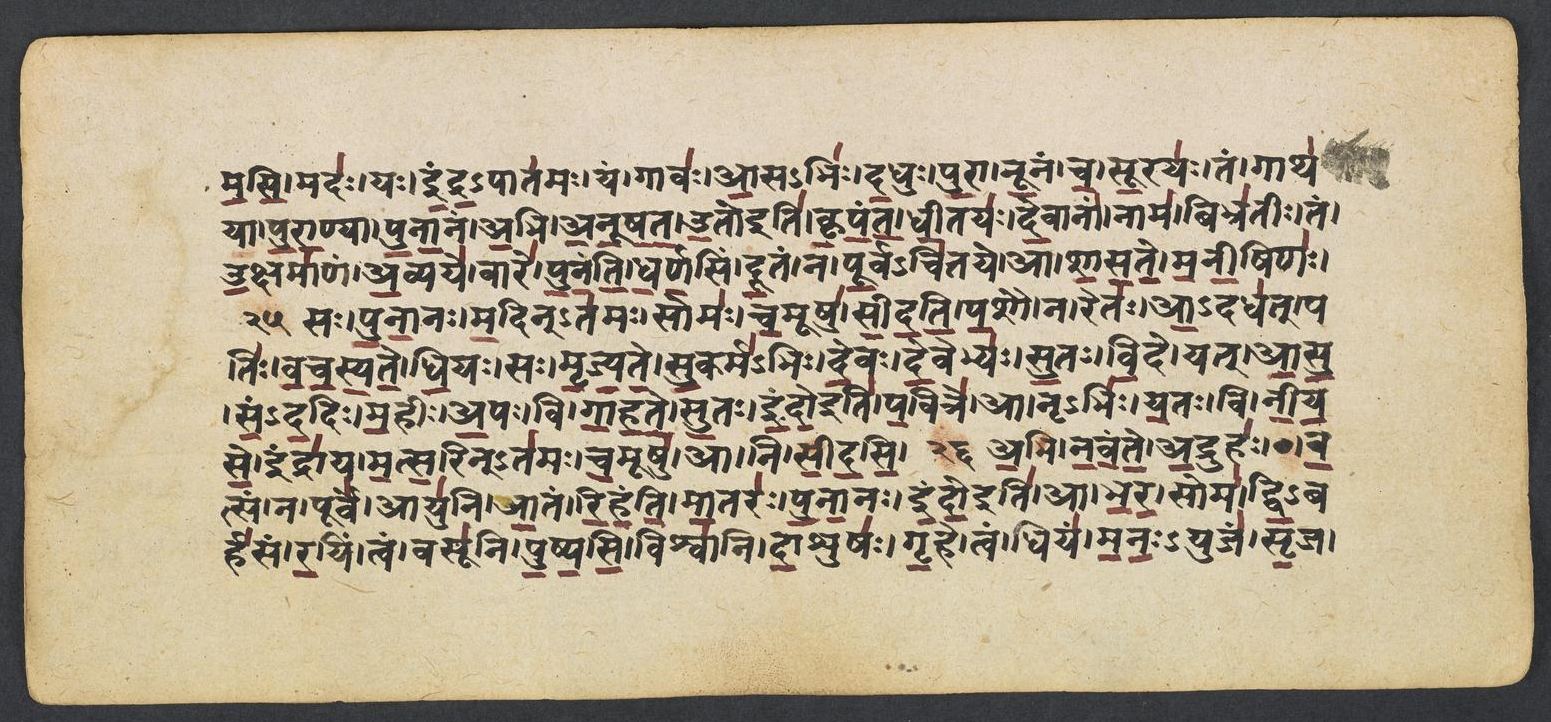
Where on the image
Penn Ms. Coll. 390 Item 41, fol. 731r (numbered 48r by the scribe) (OPenn image 731, lower leaf). Checked on the image: the Rigveda text on this page begins in RV 9.99.3 ‹-marjayāmasi madaḥ yaḥ indra-pātamaḥ›. The next page with Rigveda text, fol. 731v (numbered 48v by the scribe), begins in RV 9.100.3 ‹vṛṣṭim na tanyatuḥ tvam›. Verses 9.100.1-2 end on this page.
1a̱bhī na̍vante a̱druha̍ḥ pri̱yam indra̍sya̱ kāmya̍m | va̱tsaṁ na pūrva̱ āyu̍ni jā̱taṁ ri̍hanti mā̱tara̍ḥ ||
2pu̱nā̱na i̍nda̱v ā bha̍ra̱ soma̍ dvi̱barha̍saṁ ra̱yim | tvaṁ vasū̍ni puṣyasi̱ viśvā̍ni dā̱śuṣo̍ gṛ̱he ||
Compare: Padapāṭha (word-by-word text written in the manuscript; Sansknet e-text via GRETIL)
1abhi | navante | adruhaḥ | priyam | indrasya | kāmyam | vatsam | na | pūrve | āyuni | jātam | rihanti | mātaraḥ
2punānaḥ | indo iti | ā | bhara | soma | dvi-barhasam | rayim | tvam | vasūni | puṣyasi | viśvāni | dāśuṣaḥ | gṛhe
1THE Guileless Ones are singing praise to Indra's well beloved Friend, As, in the morning of its life, the mothers lick the new-born calf.
2O Indu, while they cleanse thee bring, O Soma, doubly-waxing wealth Thou in the worshipper's abode causest all treasures to increase.
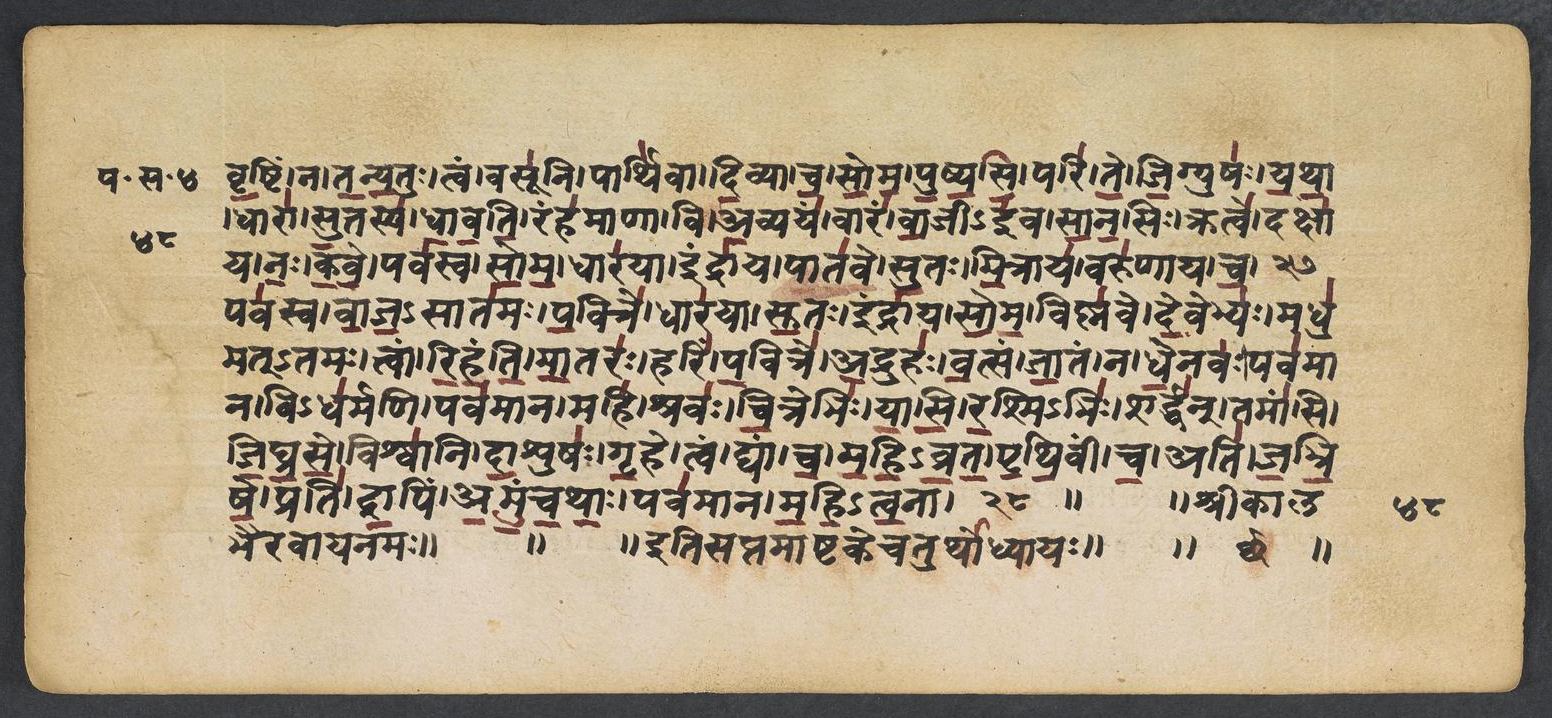
Where on the image
Penn Ms. Coll. 390 Item 41, fol. 731v (numbered 48v by the scribe) (OPenn image 732, upper leaf). Checked on the image: the Rigveda text on this page begins in RV 9.100.3 ‹vṛṣṭim na tanyatuḥ tvam›. The next page with Rigveda text, fol. 732v (numbered 49v by the scribe), begins in RV 9.101.1 ‹puraḥ-jitī vaḥ andhasaḥ sutāya›. Verses 9.100.3-9 end on this page; 9.100.3 begins on fol. 731r (numbered 48r by the scribe).
3tvaṁ dhiya̍m mano̱yuja̍ṁ sṛ̱jā vṛ̱ṣṭiṁ na ta̍nya̱tuḥ | tvaṁ vasū̍ni̱ pārthi̍vā di̱vyā ca̍ soma puṣyasi ||
4pari̍ te ji̱gyuṣo̍ yathā̱ dhārā̍ su̱tasya̍ dhāvati | raṁha̍māṇā̱ vy a1̱̍vyaya̱ṁ vāra̍ṁ vā̱jīva̍ sāna̱siḥ ||
5kratve̱ dakṣā̍ya naḥ kave̱ pava̍sva soma̱ dhāra̍yā | indrā̍ya̱ pāta̍ve su̱to mi̱trāya̱ varu̍ṇāya ca ||
6pava̍sva vāja̱sāta̍maḥ pa̱vitre̱ dhāra̍yā su̱taḥ | indrā̍ya soma̱ viṣṇa̍ve de̱vebhyo̱ madhu̍mattamaḥ ||
7tvāṁ ri̍hanti mā̱taro̱ hari̍m pa̱vitre̍ a̱druha̍ḥ | va̱tsaṁ jā̱taṁ na dhe̱nava̱ḥ pava̍māna̱ vidha̍rmaṇi ||
8pava̍māna̱ mahi̱ śrava̍ś ci̱trebhi̍r yāsi ra̱śmibhi̍ḥ | śardha̱n tamā̍ṁsi jighnase̱ viśvā̍ni dā̱śuṣo̍ gṛ̱he ||
9tvaṁ dyāṁ ca̍ mahivrata pṛthi̱vīṁ cāti̍ jabhriṣe | prati̍ drā̱pim a̍muñcathā̱ḥ pava̍māna mahitva̱nā ||
Compare: Padapāṭha (word-by-word text written in the manuscript; Sansknet e-text via GRETIL)
3tvam | dhiyam | manaḥ-yujam | sṛja | vṛṣṭim | na | tanyatuḥ | tvam | vasūni | pārthivā | divyā | ca | soma | puṣyasi
4pari | te | jigyuṣaḥ | yathā | dhārā | sutasya | dhāvati | raṃhamāṇā | vi | avyayam | vāram | vājī-iva | sānasiḥ
5kratve | dakṣāya | naḥ | kave | pavasva | soma | dhārayā | indrāya | pātave | sutaḥ | mitrāya | varuṇāya | ca
6pavasva | vāja-sātamaḥ | pavitre | dhārayā | sutaḥ | indrāya | soma | viṣṇave | devebhyaḥ | madhumat-tamaḥ
7tvām | rihanti | mātaraḥ | harim | pavitre | adruhaḥ | vatsam | jātam | na | dhenavaḥ | pavamāna | vi-dharmaṇi
8pavamāna | mahi | śravaḥ | citrebhiḥ | yāsi | raśmi-bhiḥ | śardhan | tamāṃsi | jighnase | viśvāni | dāśuṣaḥ | gṛhe
9tvam | dyām | ca | mahi-vrata | pṛthivīm | ca | ati | jabhriṣe | prati | drāpim | amuñcathāḥ | pavamāna | mahi-tvanās
3Set free the. song which mind hath yoked, even as thunder frees the rain: All treasures of the earth and heaven, O Soma, thou dost multiply.
4Thy stream when thou art pressed runs on like some victorious warrior's steed Hastening onward through the fleece like a fierce horse who wins the prize.
5Flow on, Sage Soma, with thy stream to give us mental power and strength, Effused for Indra, for his drink, for Mitra and for Varuṇa.
6Flow to the filter with thy stream, effused, best winner, thou, of spoil, O Soma, as most rich in sweets for Indra, Vishṇu, and the Gods.
7The mothers, void of guiles, caress thee Golden-coloured, in the sieve, As cows, O Pavamâna, lick the new-born calf, as Law commands.
8Thou, Pavamâna, movest on with wondrous rays to great renown. Striving within the votary's house thou drivest all the glooms away.
9Lord of great sway, thou liftest thee above the heavens, above the earth. Thou, Pavamâna hast assumed thy coat of mail in majesty.
Notes
- Sanskrit: Aufrecht's edition (1877) with the Vedic accents, as entered by van Nooten and Holland (GRETIL).
- English: Ralph T. H. Griffith, The Hymns of the Rigveda (1889-1892; 2nd ed. 1896-1897), from the VedaWeb digital text; OCR slips in that text were corrected against the printed 2nd edition (data/sources/rigveda/griffith_errata.json).
- Padapāṭha (edition text): Sansknet e-text via GRETIL (CC BY-NC-SA 4.0).
Cite
Sources
- Source: Penn Ms. Coll. 390 Item 41 (undated (catalogued with Penn's 18th-19th c. Vedic manuscripts)), OPenn, Public Domain Mark + Aufrecht's accented text (GRETIL) + Griffith's English (VedaWeb) (holding institution)
- Critical edition: Aufrecht (1877), accented e-text via GRETIL
← previous · → next · v cycle view · l back to library