Rigveda 9.101: To Soma
Introduction
Rigveda 9.101 is a hymn of 16 verses addressed to Soma. It stands in book (maṇḍala) 9, the hymns to Soma Pavamāna. The Rigveda is the oldest collection of Sanskrit hymns, composed in the second half of the second millennium BCE and handed down orally for many centuries before it was written down.
The manuscript shown is Penn Ms. Coll. 390 Item 41 (University of Pennsylvania), an undated paper manuscript of the padapāṭha (the word-by-word recitation text, in which every word is written separately and compounds are split) of the whole Ṛgveda in Devanāgarī, 884 leaves in fascicles, 7-9 lines to the page, accents in red; this hymn stands on fol. 732v-733v. Each section below gives the verses that end on one page; the page boundaries were read on the images (the opening words of every page), not counted out. Where the manuscript is a padapāṭha (the word-by-word recitation text), the section shows Aufrecht's continuous (saṃhitā) text first and, as the edition text, the padapāṭha of the same verses, which is the form written on the page.
How was this verified? (Provenance)
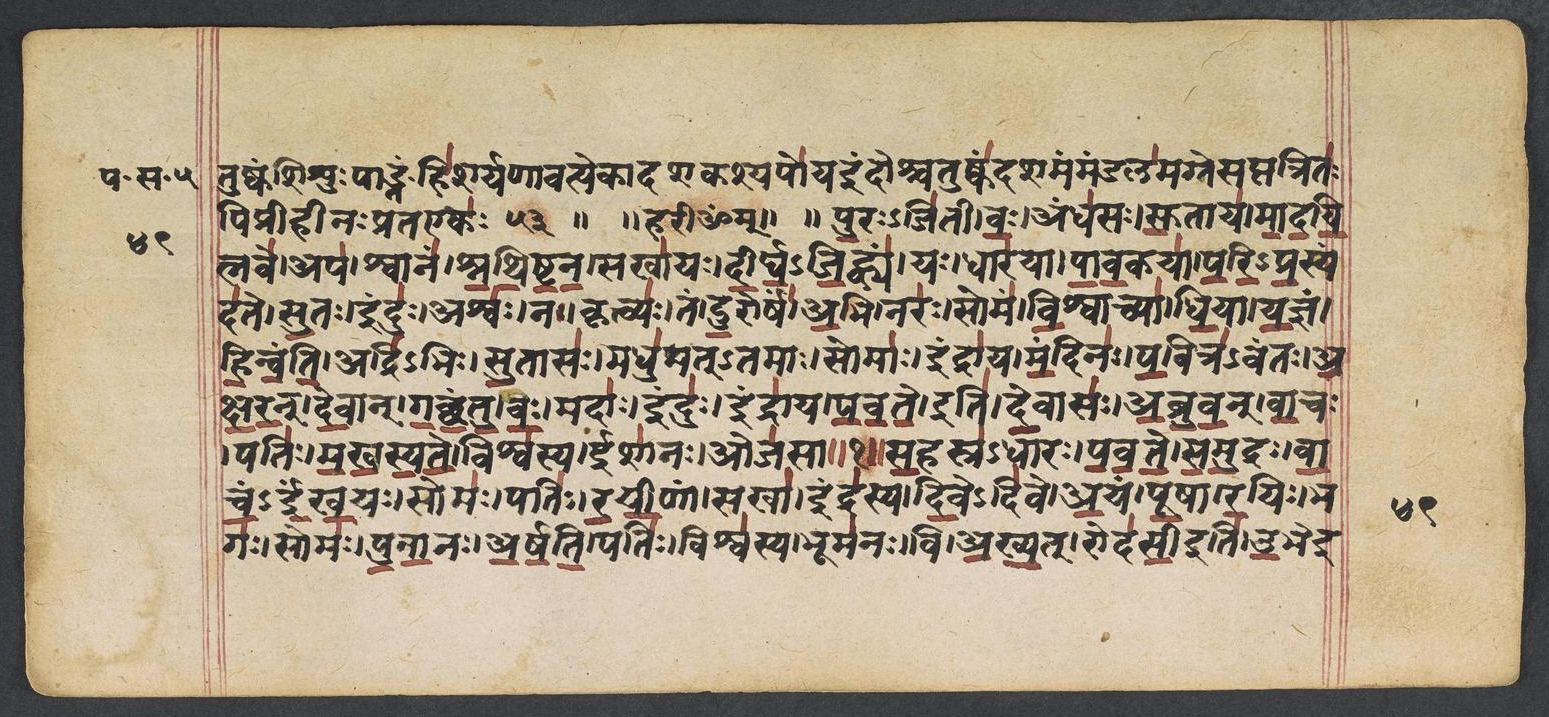
Where on the image
Penn Ms. Coll. 390 Item 41, fol. 732v (numbered 49v by the scribe) (OPenn image 733, upper leaf). Checked on the image: the Rigveda text on this page begins in RV 9.101.1 ‹puraḥ-jitī vaḥ andhasaḥ sutāya›. Line 1 ends the anukramaṇī; 9.101.1 (puraḥjitī vaḥ andhasaḥ) begins in line 2 after hariḥ oṃ. The next page with Rigveda text, fol. 733r (numbered 50r by the scribe), begins in RV 9.101.8 ‹-iti priyāḥ anūṣata gāvaḥ›. Verses 9.101.1-7 end on this page.
1pu̱roji̍tī vo̱ andha̍saḥ su̱tāya̍ mādayi̱tnave̍ | apa̱ śvāna̍ṁ śnathiṣṭana̱ sakhā̍yo dīrghaji̱hvya̍m ||
2yo dhāra̍yā pāva̱kayā̍ paripra̱syanda̍te su̱taḥ | indu̱r aśvo̱ na kṛtvya̍ḥ ||
3taṁ du̱roṣa̍m a̱bhī nara̱ḥ soma̍ṁ vi̱śvācyā̍ dhi̱yā | ya̱jñaṁ hi̍nva̱nty adri̍bhiḥ ||
4su̱tāso̱ madhu̍mattamā̱ḥ somā̱ indrā̍ya ma̱ndina̍ḥ | pa̱vitra̍vanto akṣaran de̱vān ga̍cchantu vo̱ madā̍ḥ ||
5indu̱r indrā̍ya pavata̱ iti̍ de̱vāso̍ abruvan | vā̱cas pati̍r makhasyate̱ viśva̱syeśā̍na̱ oja̍sā ||
6sa̱hasra̍dhāraḥ pavate samu̱dro vā̍camīṅkha̱yaḥ | soma̱ḥ patī̍ rayī̱ṇāṁ sakhendra̍sya di̱ve-di̍ve ||
7a̱yam pū̱ṣā ra̱yir bhaga̱ḥ soma̍ḥ punā̱no a̍rṣati | pati̱r viśva̍sya̱ bhūma̍no̱ vy a̍khya̱d roda̍sī u̱bhe ||
Compare: Padapāṭha (word-by-word text written in the manuscript; Sansknet e-text via GRETIL)
1puraḥ-jitī | vaḥ | andhasaḥ | sutāya | mādayitnave | apa | śvānam | śnathiṣṭana | sakhāyaḥ | dīrgha-jihvyam
2yaḥ | dhārayā | pāvakayā | pari-prasyandate | sutaḥ | induḥ | aśvaḥ | na | kṛtvyaḥ
3tam | duroṣam | abhi | naraḥ | somam | viśvācyā | dhiyā | yajñam | hinvanti | adri-bhiḥ
4sutāsaḥ | madhumat-tamāḥ | somāḥ | indrāya | mandinaḥ | pavitra-vantaḥ | akṣaran | devān | gacchantu | vaḥ | madāḥ
5induḥ | indrāya | pavate | iti | devāsaḥ | abruvan | vācaḥ | patiḥ | makhasyate | viśvasya | īśānaḥ | ojasā
6sahasra-dhāraḥ | pavate | samudraḥ | vācam-īṅkhayaḥ | somaḥ | patiḥ | rayīṇām | sakhā | indrasya | dive-dive
7ayam | pūṣā | rayiḥ | bhagaḥ | somaḥ | punānaḥ | arṣati | patiḥ | viśvasya | bhūmanaḥ | vi | akhyat | rodasī iti | ubhe iti
1FOR first possession of your juice, for the exhilarating drink, Drive ye away the dog, my friends, drive ye the long-tongued dog away.
2He who with purifying stream, effused, comes flowing hitherward, Indu, is like an able steed.
3The men with all-pervading song send unassailable Soma forth, By pressing-stones, to sacrifice.
4The Somas, very rich in sweets, for which the sieve is destined, flow, Effused, the source of Indra's joy: may your strong juices reach the Gods.
5Indu flows on for Indra's sake: thus have the Deities declared. The Lord of Speech exerts himself, Ruler of all, because of might.
6Inciter of the voice of song, with thousand streams the ocean flows, Even Soma, Lord of opulence, the Friend of Indra, day by day.
7As Pûshan, Fortune, Bhaga, comes this Soma while they make him pure. He, Lord of the multitude, hath looked upon the earth and heaven.
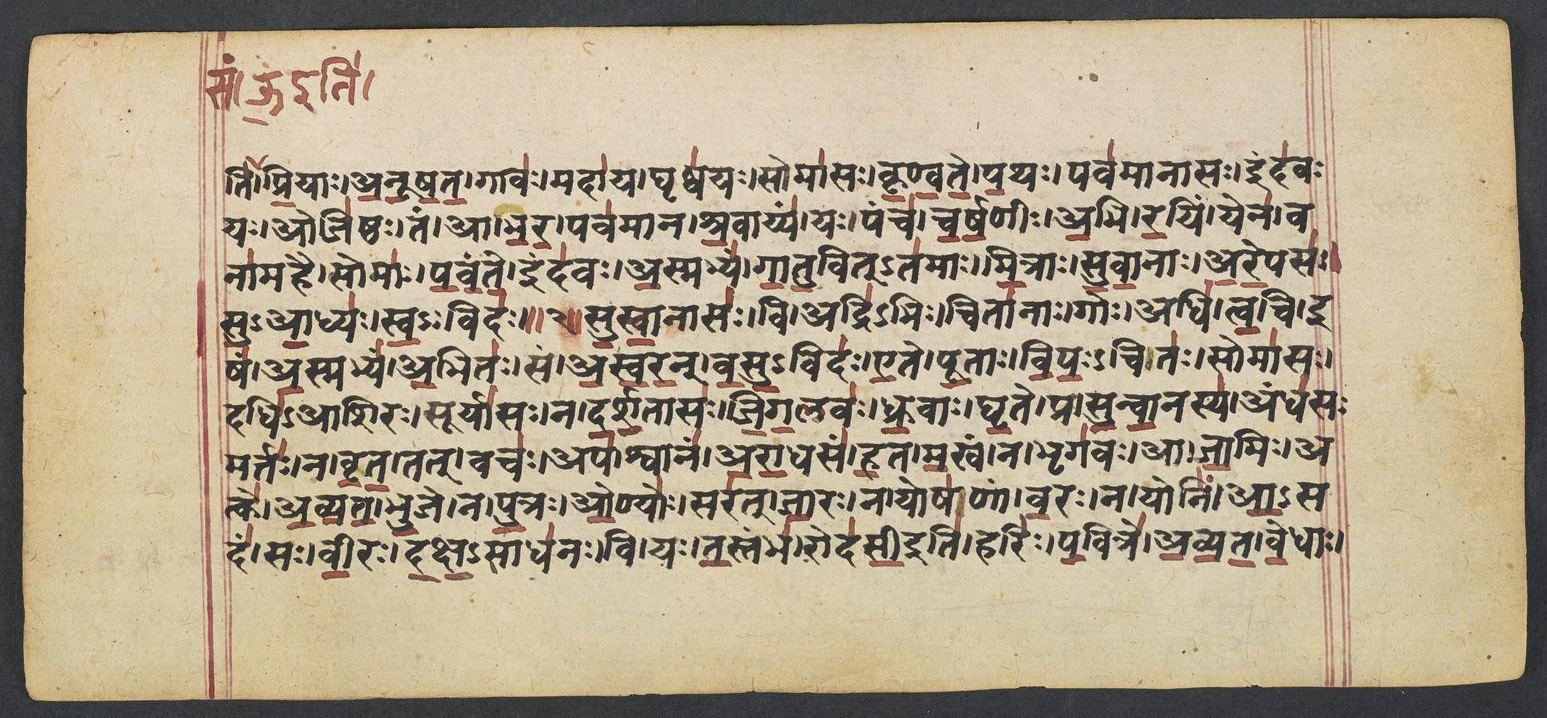
Where on the image
Penn Ms. Coll. 390 Item 41, fol. 733r (numbered 50r by the scribe) (OPenn image 733, lower leaf). Checked on the image: the Rigveda text on this page begins in RV 9.101.8 ‹-iti priyāḥ anūṣata gāvaḥ›. The next page with Rigveda text, fol. 733v (numbered 50v by the scribe), begins in RV 9.101.15 ‹na yonim āsadam›. Verses 9.101.8-14 end on this page; 9.101.8 begins on fol. 732v (numbered 49v by the scribe).
8sam u̍ pri̱yā a̍nūṣata̱ gāvo̱ madā̍ya̱ ghṛṣva̍yaḥ | somā̍saḥ kṛṇvate pa̱thaḥ pava̍mānāsa̱ inda̍vaḥ ||
9ya oji̍ṣṭha̱s tam ā bha̍ra̱ pava̍māna śra̱vāyya̍m | yaḥ pañca̍ carṣa̱ṇīr a̱bhi ra̱yiṁ yena̱ vanā̍mahai ||
10somā̍ḥ pavanta̱ inda̍vo̱ 'smabhya̍ṁ gātu̱vitta̍māḥ | mi̱trāḥ su̍vā̱nā a̍re̱pasa̍ḥ svā̱dhya̍ḥ sva̱rvida̍ḥ ||
11su̱ṣvā̱ṇāso̱ vy adri̍bhi̱ś citā̍nā̱ gor adhi̍ tva̱ci | iṣa̍m a̱smabhya̍m a̱bhita̱ḥ sam a̍svaran vasu̱vida̍ḥ ||
12e̱te pū̱tā vi̍pa̱ścita̱ḥ somā̍so̱ dadhyā̍śiraḥ | sūryā̍so̱ na da̍rśa̱tāso̍ jiga̱tnavo̍ dhru̱vā ghṛ̱te ||
13pra su̍nvā̱nasyāndha̍so̱ marto̱ na vṛ̍ta̱ tad vaca̍ḥ | apa̱ śvāna̍m arā̱dhasa̍ṁ ha̱tā ma̱khaṁ na bhṛga̍vaḥ ||
14ā jā̱mir atke̍ avyata bhu̱je na pu̱tra o̱ṇyo̍ḥ | sara̍j jā̱ro na yoṣa̍ṇāṁ va̱ro na yoni̍m ā̱sada̍m ||
Compare: Padapāṭha (word-by-word text written in the manuscript; Sansknet e-text via GRETIL)
8sam | oṃ iti | priyāḥ | anūṣata | gāvaḥ | madāya | ghṛṣvayaḥ | somāsaḥ | kṛṇvate | pathaḥ | pavamānāsaḥ | indavaḥ
9yaḥ | ojiṣṭhaḥ | tam | ā | bhara | pavamāna | śravāyyam | yaḥ | pañca | carṣaṇīḥ | abhi | rayim | yena | vanāmahai
10somāḥ | pavante | indavaḥ | asmabhyam | gātuvit-tamāḥ | mitrāḥ | suvānāḥ | arepasaḥ | su-ādhyaḥ | svaḥ-vidaḥ
11susvāṇāsaḥ | vi | adri-bhiḥ | citānāḥ | goḥ | adhi | tvaci | iṣam | asmabhyam | abhitaḥ | sam | asvaran | vasu-vidaḥ
12ete | pūtāḥ | vipaḥ-citaḥ | somāsaḥ | dadhi-āśiraḥ | sūryāsaḥ | na | darśatāsaḥ | jigatnavaḥ | dhruvāḥ | ghṛte
13pra | sunvānasya | andhasaḥ | martaḥ | na | vṛta | tat | vacaḥ | apa | śvānam | arādhasam | hata | makham | na | bhṛgavaḥ
14ā | jāmiḥ | atke | avyata | bhuje | na | putraḥ | oṇyoḥ | sarat | jāraḥ | na | yoṣaṇām | varaḥ | na | yonim | āsadam
8The dear cows lowed in joyful mood together to the gladdening drink. The drops as they were purified, the Soma juices, made them paths.
9O Pavamâna, bring the juice, the mightiest, worthy to be famed, Which the Five Tribes have over them, whereby we may win opulence.
10For us the Soma juices flow, the drops best furtherers of our weal, Effused as friends without a spot, benevolent, finders of the light.
11Effused by means of pressing-stones, upon the ox-hide visible, They, treasure-finders, have announced food unto us from every side.
12Tlese Soma juices, skilled in song, purified, blent with milk and curd, When moving and when firmly laid in oil, resemble lovely Suns.
13Let not the power of men restrain the voice of the outpouring juice: As Bhr̥igu's sons chased Makha, so drive ye the greedy hound away.
14The Friend hath wrapped him in his robe, as in his parents arms, a son. He went, as lover to a dame, to take his station suitor-like.
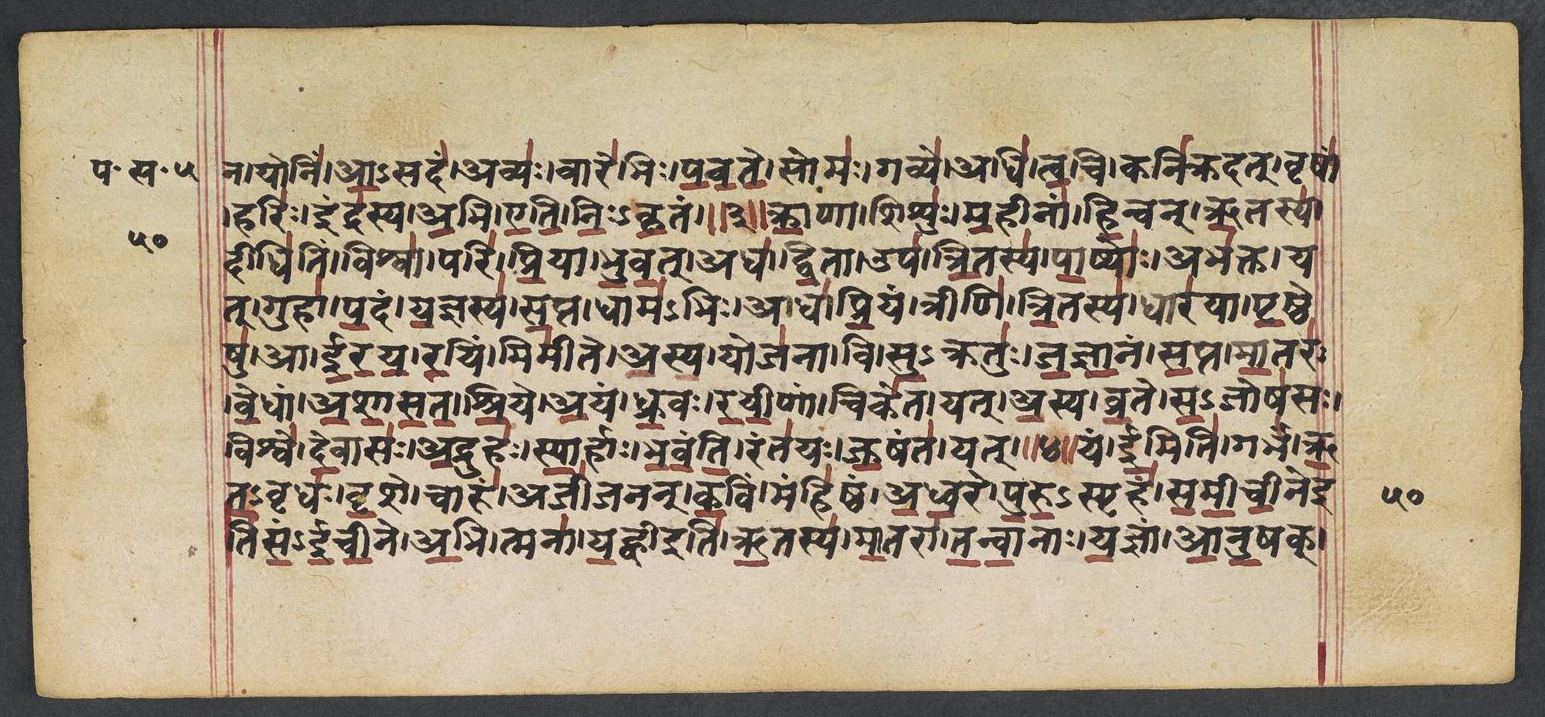
Where on the image
Penn Ms. Coll. 390 Item 41, fol. 733v (numbered 50v by the scribe) (OPenn image 734, upper leaf). Checked on the image: the Rigveda text on this page begins in RV 9.101.15 ‹na yonim āsadam›. The next page with Rigveda text, fol. 734r (numbered 51r by the scribe), begins in RV 9.102.7 ‹yat añjate›. Verses 9.101.15-16 end on this page; 9.101.15 begins on fol. 733r (numbered 50r by the scribe).
15sa vī̱ro da̍kṣa̱sādha̍no̱ vi yas ta̱stambha̱ roda̍sī | hari̍ḥ pa̱vitre̍ avyata ve̱dhā na yoni̍m ā̱sada̍m ||
16avyo̱ vāre̍bhiḥ pavate̱ somo̱ gavye̱ adhi̍ tva̱ci | kani̍krada̱d vṛṣā̱ hari̱r indra̍syā̱bhy e̍ti niṣkṛ̱tam ||
Compare: Padapāṭha (word-by-word text written in the manuscript; Sansknet e-text via GRETIL)
15saḥ | vīraḥ | dakṣa-sādhanaḥ | vi | yaḥ | tastambha | rodasī iti | hariḥ | pavitre | avyata | vedhāḥ | na | yonim | āsadam
16avyaḥ | vārebhiḥ | pavate | somaḥ | gavye | adhi | tvaci | kanikradat | vṛṣā | hariḥ | indrasya | abhi | eti | niḥ-kṛtam
15That Hero who produces strength, he who hath propped both worlds apart, Gold-hued, hath wrapped him in the sieve, to settle, priest-like, in his place.
16Soma upon the ox's skin through the sheep's wool flows purified. Bellowing out, the Tawny Steer goes on to Indra's special place.
Notes
- Sanskrit: Aufrecht's edition (1877) with the Vedic accents, as entered by van Nooten and Holland (GRETIL).
- English: Ralph T. H. Griffith, The Hymns of the Rigveda (1889-1892; 2nd ed. 1896-1897), from the VedaWeb digital text; OCR slips in that text were corrected against the printed 2nd edition (data/sources/rigveda/griffith_errata.json).
- Padapāṭha (edition text): Sansknet e-text via GRETIL (CC BY-NC-SA 4.0).
Cite
Sources
- Source: Penn Ms. Coll. 390 Item 41 (undated (catalogued with Penn's 18th-19th c. Vedic manuscripts)), OPenn, Public Domain Mark + Aufrecht's accented text (GRETIL) + Griffith's English (VedaWeb) (holding institution)
- Critical edition: Aufrecht (1877), accented e-text via GRETIL
← previous · → next · v cycle view · l back to library