Rigveda 9.102: To Soma
Introduction
Rigveda 9.102 is a hymn of 8 verses addressed to Soma. It stands in book (maṇḍala) 9, the hymns to Soma Pavamāna. The Rigveda is the oldest collection of Sanskrit hymns, composed in the second half of the second millennium BCE and handed down orally for many centuries before it was written down.
The manuscript shown is Penn Ms. Coll. 390 Item 41 (University of Pennsylvania), an undated paper manuscript of the padapāṭha (the word-by-word recitation text, in which every word is written separately and compounds are split) of the whole Ṛgveda in Devanāgarī, 884 leaves in fascicles, 7-9 lines to the page, accents in red; this hymn stands on fol. 733v-734r. Each section below gives the verses that end on one page; the page boundaries were read on the images (the opening words of every page), not counted out. Where the manuscript is a padapāṭha (the word-by-word recitation text), the section shows Aufrecht's continuous (saṃhitā) text first and, as the edition text, the padapāṭha of the same verses, which is the form written on the page.
How was this verified? (Provenance)
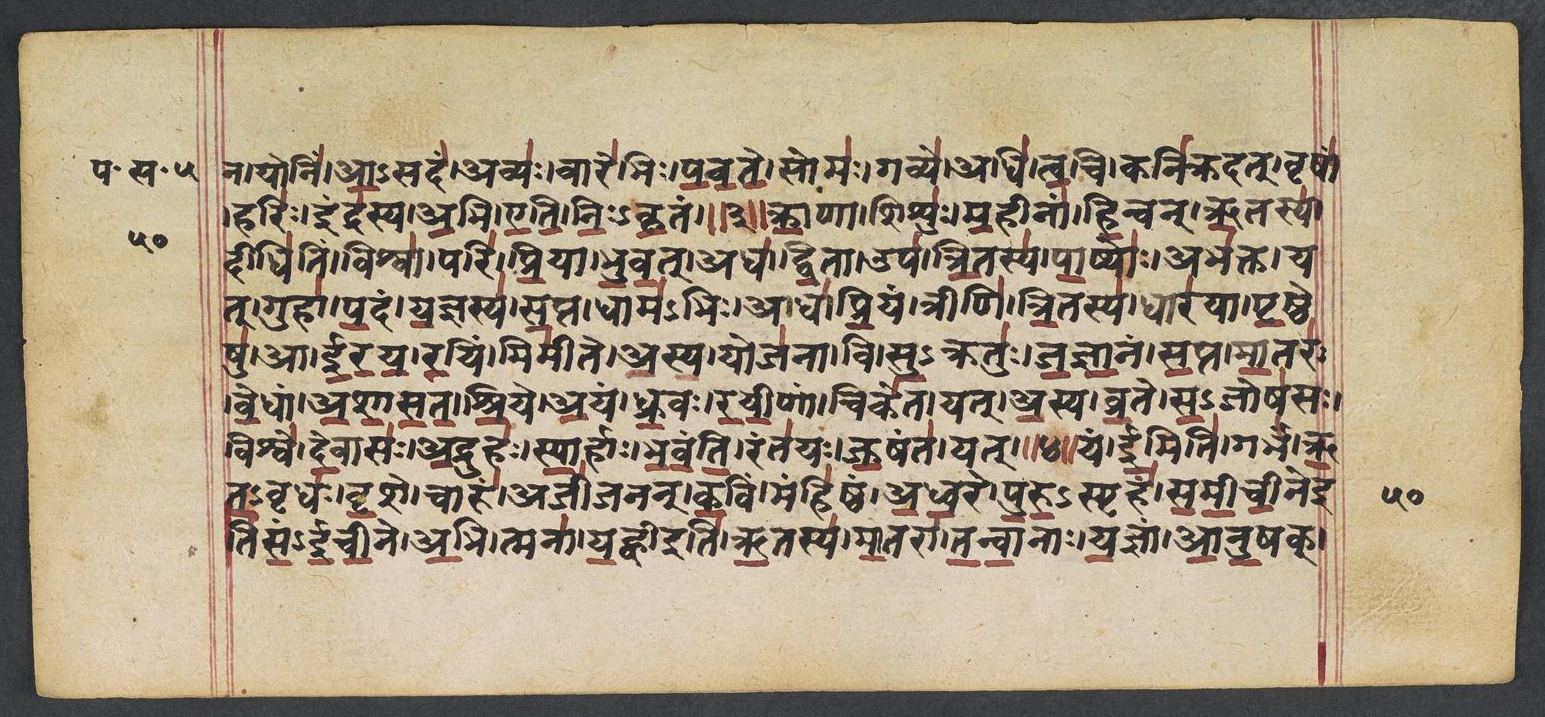
Where on the image
Penn Ms. Coll. 390 Item 41, fol. 733v (numbered 50v by the scribe) (OPenn image 734, upper leaf). Checked on the image: the Rigveda text on this page begins in RV 9.101.15 ‹na yonim āsadam›. The next page with Rigveda text, fol. 734r (numbered 51r by the scribe), begins in RV 9.102.7 ‹yat añjate›. Verses 9.102.1-6 end on this page.
1krā̱ṇā śiśu̍r ma̱hīnā̍ṁ hi̱nvann ṛ̱tasya̱ dīdhi̍tim | viśvā̱ pari̍ pri̱yā bhu̍va̱d adha̍ dvi̱tā ||
2upa̍ tri̱tasya̍ pā̱ṣyo̱3̱̍r abha̍kta̱ yad guhā̍ pa̱dam | ya̱jñasya̍ sa̱pta dhāma̍bhi̱r adha̍ pri̱yam ||
3trīṇi̍ tri̱tasya̱ dhāra̍yā pṛ̱ṣṭheṣv era̍yā ra̱yim | mimī̍te asya̱ yoja̍nā̱ vi su̱kratu̍ḥ ||
4ja̱jñā̱naṁ sa̱pta mā̱taro̍ ve̱dhām a̍śāsata śri̱ye | a̱yaṁ dhru̱vo ra̍yī̱ṇāṁ cike̍ta̱ yat ||
5a̱sya vra̱te sa̱joṣa̍so̱ viśve̍ de̱vāso̍ a̱druha̍ḥ | spā̱rhā bha̍vanti̱ ranta̍yo ju̱ṣanta̱ yat ||
6yam ī̱ garbha̍m ṛtā̱vṛdho̍ dṛ̱śe cāru̱m ajī̍janan | ka̱vim maṁhi̍ṣṭham adhva̱re pu̍ru̱spṛha̍m ||
Compare: Padapāṭha (word-by-word text written in the manuscript; Sansknet e-text via GRETIL)
1krāṇā | śiśuḥ | mahīnām | hinvan | ṛtasya | dīdhitim | viśvā | pari | priyā | bhuvat | adha | dvitā
2upa | tritasya | pāṣyoḥ | abhakta | yat | guhā | padam | yajñasya | sapta | dhāma-bhiḥ | adha | priyam
3trīṇi | tritasya | dhārayā | pṛṣṭheṣu | ā | īraya | rayim | mimīte | asya | yojanā | vi | su-kratuḥ
4jajñānam | sapta | mātaraḥ | vedhām | aśāsata | śriye | ayam | dhruvaḥ | rayīṇām | ciketa | yat
5asya | vrate | sa-joṣasaḥ | viśve | devāsaḥ | adruhaḥ | spārhāḥ | bhavanti | rantayaḥ | juṣanta | yat
6yam | īm iti | garbham | ṛta-vṛdhaḥ | dṛśe | cārum | ajījanan | kavim | maṃhiṣṭham | adhvare | puru-spṛham
1THE Child, when blended with the streams, speeding the plan of sacrifice, Surpasses all things that are dear, yea, from of old.
2The place, near the two pressing-stones of Trita, hath he occupied, Secret and dear through seven lights of sacrifice.
3Urge to three courses, on the heights of Trita, riches in a stream. He who is passing wise measures his courses out.
4Even at his birth the Mothers Seven taught him, for glory, like a sage, So that he, firm and sure, hath set his mind on wealth.
5Under his sway, of one accord, are all the guileless Deities: Warriors to be envied, they, when they are pleased.
6The Babe whom they who strengthen Law have generated fair to see, Much longed for at the sacrifice, most liberal Sage,–
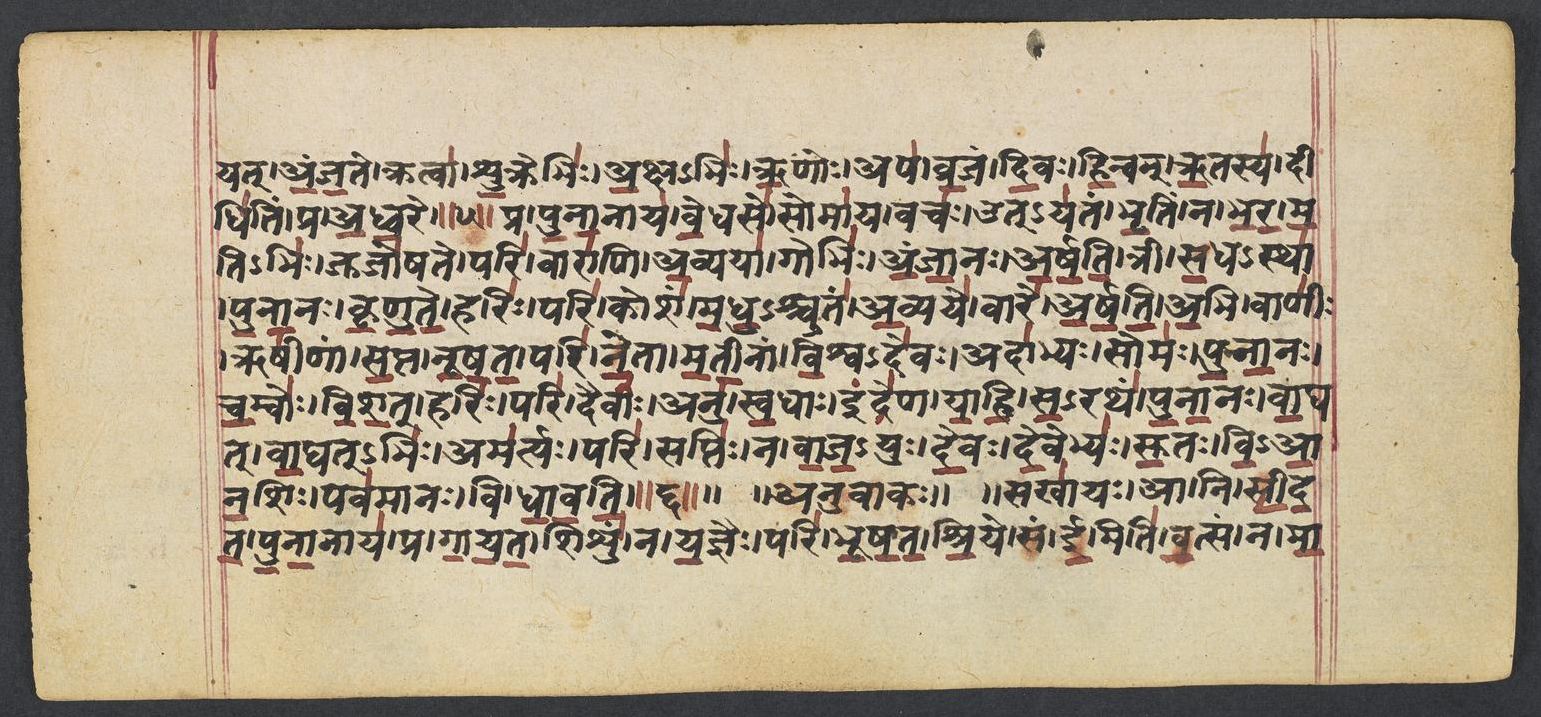
Where on the image
Penn Ms. Coll. 390 Item 41, fol. 734r (numbered 51r by the scribe) (OPenn image 734, lower leaf). Checked on the image: the Rigveda text on this page begins in RV 9.102.7 ‹yat añjate›. The next page with Rigveda text, fol. 734v (numbered 51v by the scribe), begins in RV 9.104.2 ‹-mātṛ-bhiḥ sṛjata gaya-sādhanam deva-avyam›. Verses 9.102.7-8 end on this page; 9.102.7 begins on fol. 733v (numbered 50v by the scribe).
7sa̱mī̱cī̱ne a̱bhi tmanā̍ ya̱hvī ṛ̱tasya̍ mā̱tarā̍ | ta̱nvā̱nā ya̱jñam ā̍nu̱ṣag yad a̍ñja̱te ||
8kratvā̍ śu̱krebhi̍r a̱kṣabhi̍r ṛ̱ṇor apa̍ vra̱jaṁ di̱vaḥ | hi̱nvann ṛ̱tasya̱ dīdhi̍ti̱m prādhva̱re ||
Compare: Padapāṭha (word-by-word text written in the manuscript; Sansknet e-text via GRETIL)
7samīcīne itisam-īcīne | abhi | tmanā | yahvī | ṛtasya | mātarā | tanvānāḥ | yajñam | ānuṣak | yat | añjate
8kratvā | śukrebhiḥ | akṣa-bhiḥ | ṛṇoḥ | apa | vrajam | divaḥ | hinvan | ṛtasya | dīditim | pra | adhvare
7To him, united, of themselves, come the young Parents of the rite, When they adorn him, duly weaving sacrifice.
8With wisdom and with radiant eyes unbar to us the stall of heaven, Speeding at solemn rite the plan of Holy Law.
Notes
- Sanskrit: Aufrecht's edition (1877) with the Vedic accents, as entered by van Nooten and Holland (GRETIL).
- English: Ralph T. H. Griffith, The Hymns of the Rigveda (1889-1892; 2nd ed. 1896-1897), from the VedaWeb digital text; OCR slips in that text were corrected against the printed 2nd edition (data/sources/rigveda/griffith_errata.json).
- Padapāṭha (edition text): Sansknet e-text via GRETIL (CC BY-NC-SA 4.0).
Cite
Sources
- Source: Penn Ms. Coll. 390 Item 41 (undated (catalogued with Penn's 18th-19th c. Vedic manuscripts)), OPenn, Public Domain Mark + Aufrecht's accented text (GRETIL) + Griffith's English (VedaWeb) (holding institution)
- Critical edition: Aufrecht (1877), accented e-text via GRETIL
← previous · → next · v cycle view · l back to library