Rigveda 9.108: To Soma
Introduction
Rigveda 9.108 is a hymn of 16 verses addressed to Soma. It stands in book (maṇḍala) 9, the hymns to Soma Pavamāna. The Rigveda is the oldest collection of Sanskrit hymns, composed in the second half of the second millennium BCE and handed down orally for many centuries before it was written down.
The manuscript shown is Penn Ms. Coll. 390 Item 41 (University of Pennsylvania), an undated paper manuscript of the padapāṭha (the word-by-word recitation text, in which every word is written separately and compounds are split) of the whole Ṛgveda in Devanāgarī, 884 leaves in fascicles, 7-9 lines to the page, accents in red; this hymn stands on fol. 737v-738v. Each section below gives the verses that end on one page; the page boundaries were read on the images (the opening words of every page), not counted out. Where the manuscript is a padapāṭha (the word-by-word recitation text), the section shows Aufrecht's continuous (saṃhitā) text first and, as the edition text, the padapāṭha of the same verses, which is the form written on the page.
How was this verified? (Provenance)
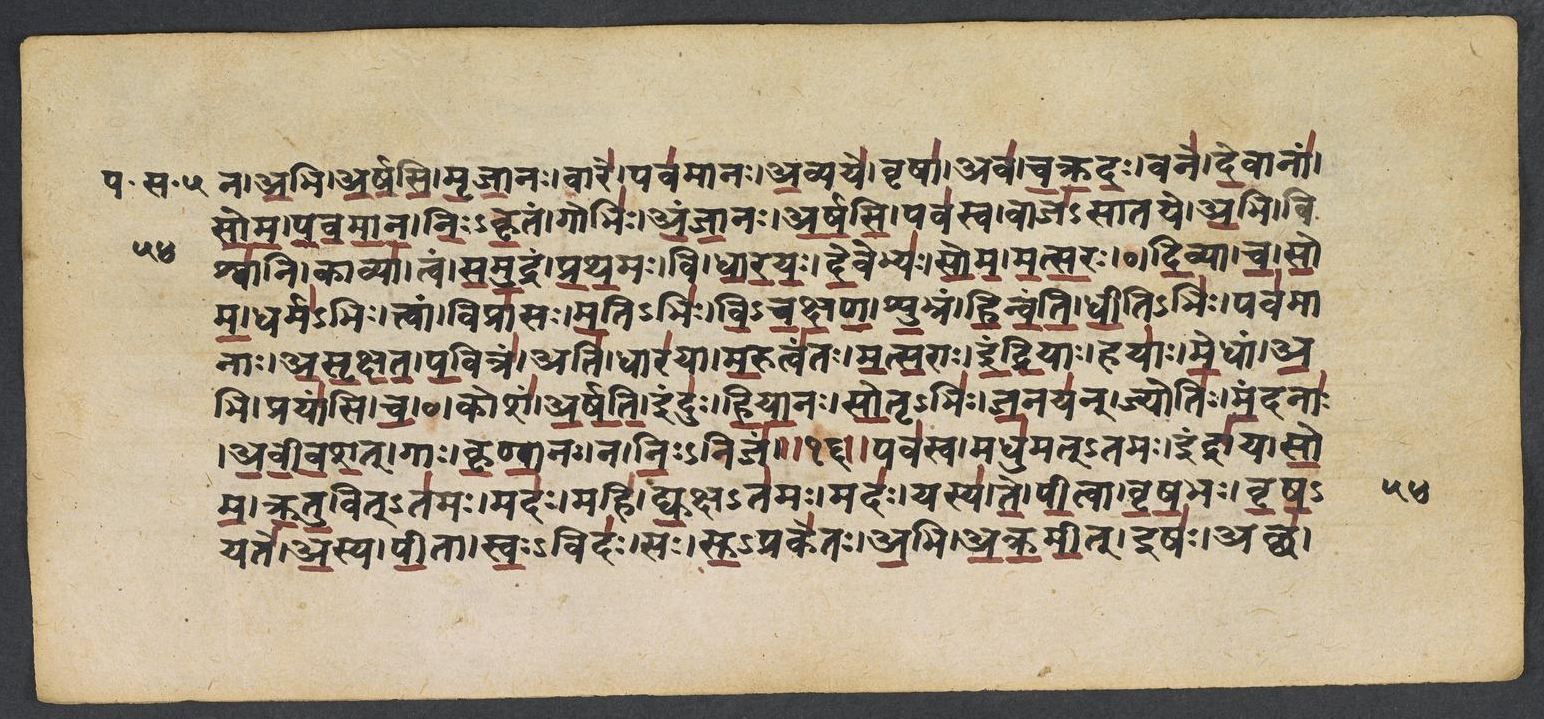
Where on the image
Penn Ms. Coll. 390 Item 41, fol. 737v (numbered 54v by the scribe) (OPenn image 738, upper leaf). Checked on the image: the Rigveda text on this page begins in RV 9.107.21 ‹-pavamāna abhi arṣasi›. The next page with Rigveda text, fol. 738r (numbered 55r by the scribe), begins in RV 9.108.2 ‹vājam na etaśaḥ›. Verse 9.108.1 ends on this page.
1pava̍sva̱ madhu̍mattama̱ indrā̍ya soma kratu̱vitta̍mo̱ mada̍ḥ | mahi̍ dyu̱kṣata̍mo̱ mada̍ḥ ||
Compare: Padapāṭha (word-by-word text written in the manuscript; Sansknet e-text via GRETIL)
1pavasva | madhumat-tamaḥ | indrāya | soma | kratuvit-tamaḥ | madaḥ | mahi | dyukṣa-tamaḥ | madaḥ
1FOR Indra, flow thou Soma on, as gladdening juice most sweet, intelligent, Great, cheering, dwelling most in heaven.
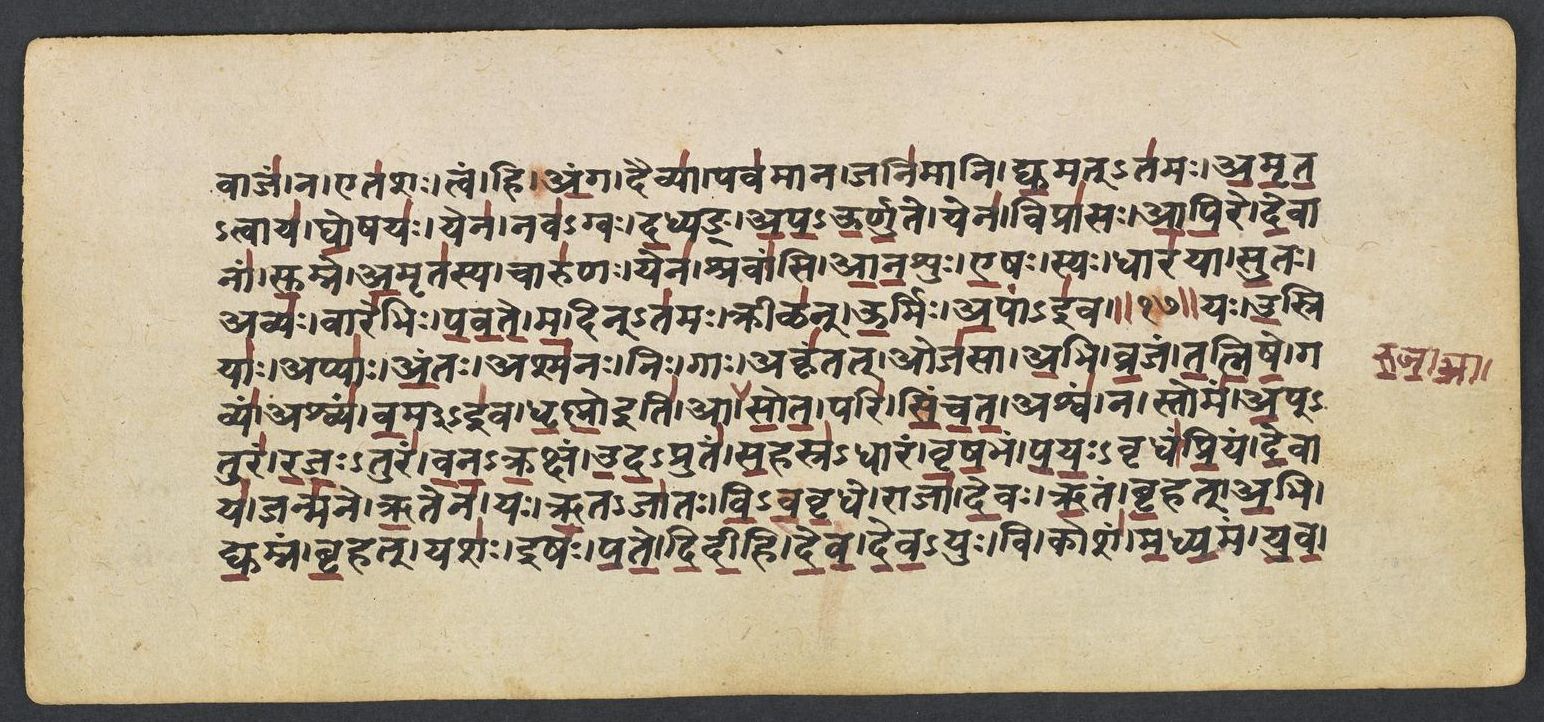
Where on the image
Penn Ms. Coll. 390 Item 41, fol. 738r (numbered 55r by the scribe) (OPenn image 738, lower leaf). Checked on the image: the Rigveda text on this page begins in RV 9.108.2 ‹vājam na etaśaḥ›. The next page with Rigveda text, fol. 738v (numbered 55v by the scribe), begins in RV 9.108.10 ‹ā vacyasva su-dakṣa camvoḥ›. Verses 9.108.2-9 end on this page; 9.108.2 begins on fol. 737v (numbered 54v by the scribe).
2yasya̍ te pī̱tvā vṛ̍ṣa̱bho vṛ̍ṣā̱yate̱ 'sya pī̱tā sva̱rvida̍ḥ | sa su̱prake̍to a̱bhy a̍kramī̱d iṣo 'cchā̱ vāja̱ṁ naita̍śaḥ ||
3tvaṁ hy a1̱̍ṅga daivyā̱ pava̍māna̱ jani̍māni dyu̱matta̍maḥ | a̱mṛ̱ta̱tvāya̍ gho̱ṣaya̍ḥ ||
4yenā̱ nava̍gvo da̱dhyaṅṅ a̍porṇu̱te yena̱ viprā̍sa āpi̱re | de̱vānā̍ṁ su̱mne a̱mṛta̍sya̱ cāru̍ṇo̱ yena̱ śravā̍ṁsy āna̱śuḥ ||
5e̱ṣa sya dhāra̍yā su̱to 'vyo̱ vāre̍bhiḥ pavate ma̱dinta̍maḥ | krīḻa̍nn ū̱rmir a̱pām i̍va ||
6ya u̱sriyā̱ apyā̍ a̱ntar aśma̍no̱ nir gā akṛ̍nta̱d oja̍sā | a̱bhi vra̱jaṁ ta̍tniṣe̱ gavya̱m aśvya̍ṁ va̱rmīva̍ dhṛṣṇa̱v ā ru̍ja ||
7ā so̍tā̱ pari̍ ṣiñca̱tāśva̱ṁ na stoma̍m a̱ptura̍ṁ raja̱stura̍m | va̱na̱kra̱kṣam u̍da̱pruta̍m ||
8sa̱hasra̍dhāraṁ vṛṣa̱bham pa̍yo̱vṛdha̍m pri̱yaṁ de̱vāya̱ janma̍ne | ṛ̱tena̱ ya ṛ̱tajā̍to vivāvṛ̱dhe rājā̍ de̱va ṛ̱tam bṛ̱hat ||
9a̱bhi dyu̱mnam bṛ̱had yaśa̱ iṣa̍s pate didī̱hi de̍va deva̱yuḥ | vi kośa̍m madhya̱maṁ yu̍va ||
Compare: Padapāṭha (word-by-word text written in the manuscript; Sansknet e-text via GRETIL)
2yasya | te | pītvā | vṛṣabhaḥ | vṛṣa-yate | asya | pītā | svaḥ-vidaḥ | saḥ | su-praketaḥ | abhi | akramīt | iṣaḥ | accha | vājam | na | etaśaḥ
3tvam | hi | aṅga | daivyā | pavamāna | janimāni | dyumat-tamaḥ | amṛta-tvāya | ghoṣayaḥ
4yena | nava-gvaḥ | dadhyaṅ | apa-ūrṇute | yena | viprāsaḥ | āpire | devānām | sumne | amṛtasya | cāruṇaḥ | yena | śravāṃsi | ānaśuḥ
5eṣaḥ | syaḥ | dhārayā | sutaḥ | avyaḥ | vārebhiḥ | pavate | madin-tamaḥ | krīḷan | ūrmiḥ | apām-iva
6yaḥ | usriyāḥ | apyāḥ | antaḥ | aśmanaḥ | niḥ | gāḥ | akṛṇtat | ojasā | abhi | vrajam | tatniṣe | gavyam | aśvyam | varmī-iva | dhṛṣṇo iti | ā | ruja
7ā | sota | pari | siñcata | aśvam | na | stomam | ap-turam | rajaḥ-turam | vana-krakṣam | uda-prutam
8sahasra-dhāram | vṛṣabham | payaḥ-vṛdham | priyam | devāya | janmane | ṛtena | yaḥ | ṛta-jātaḥ | vi-vavṛdhe | rājā | devaḥ | ṛtam | bṛhat
9abhi | dyumnam | bṛhat | yaśaḥ | iṣaḥ | pate | didīhi | deva | deva-yuḥ | vi | kośam | madhyamam | yuva
2Thou, of whom having drunk the Steer acts like a steer. drinking of this that finds the light, He, Excellently Wise, is come to strengthening food, to spoil and wealth like Etaṣa.
3For, verily, Pavamâna, thou hast, splendidest, called all the generations of The Gods to immortality.
4By whom Dadhyac Navagva opens fastened doors, by whom the sages gained their wish, By whom they won the fame of lovely Amrita in the felicity of Gods.
5Effused, he floweth in a stream, best rapture-giver, in the long wool of the sheep, Sporting, as 'twere the waters' wave.
6He who from out the rocky cavern took with might the red refulgent watery Cows, Thou masterest the stable full of kine and steeds: burst it, brave Lord, like one in mail.
7Press ye and pour him, like a steed, laudworthy, speeding through the region and the flood, Who swims in water, roan in wood;
8Increaser of the water, Steer with thousand streams, dear to the race of Deities; Who born in Law hath waxen mighty by the Law, King, God, and lofty Ordinance.
9Make splendid glory shine on us, thou Lord of strengthening food, God, as the Friend of Gods: Unclose the fount of middle air.
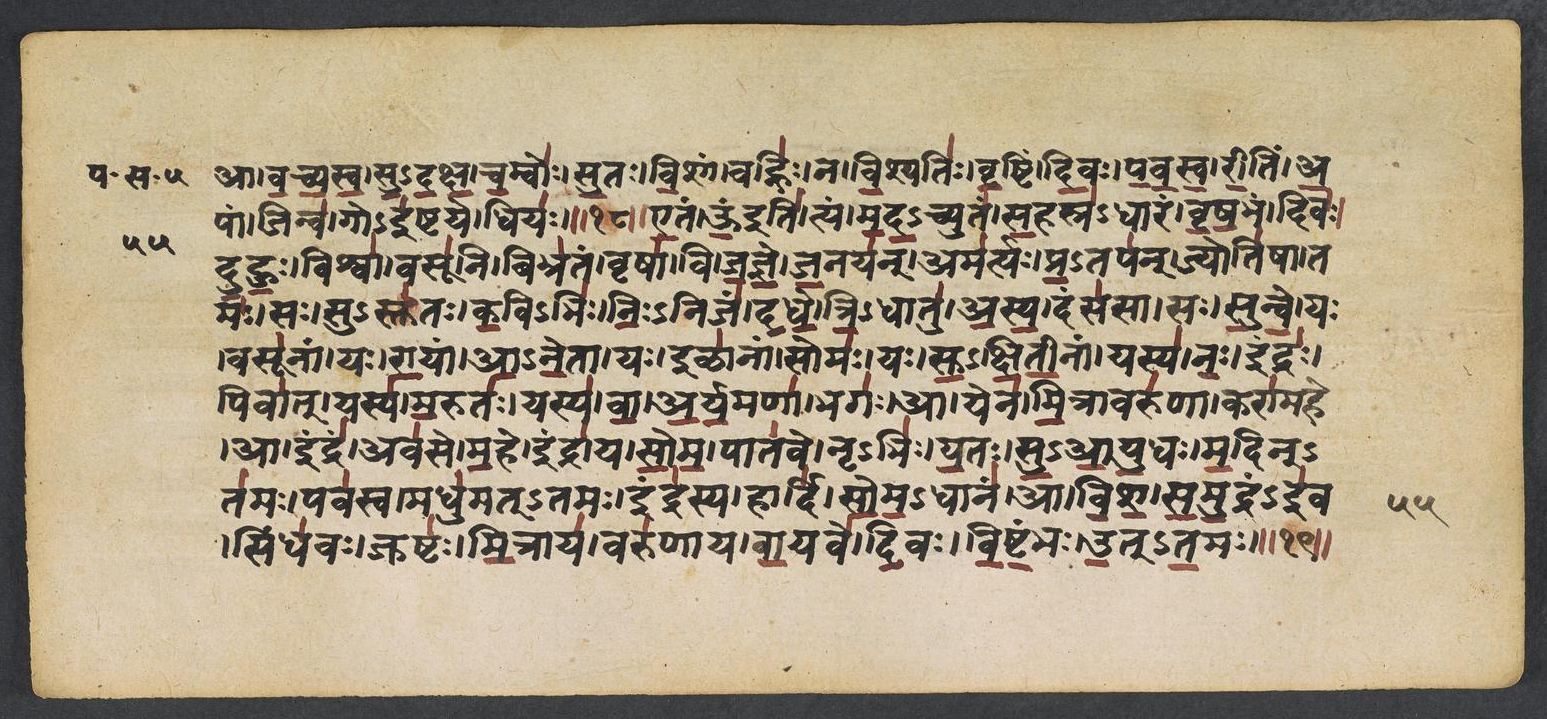
Where on the image
Penn Ms. Coll. 390 Item 41, fol. 738v (numbered 55v by the scribe) (OPenn image 739, upper leaf). Checked on the image: the Rigveda text on this page begins in RV 9.108.10 ‹ā vacyasva su-dakṣa camvoḥ›. The next page with Rigveda text, fol. 739r (numbered 56r by the scribe), begins in RV 9.109.1 ‹pari pra dhanva indrāya›. Verses 9.108.10-16 end on this page.
10ā va̍cyasva sudakṣa ca̱mvo̍ḥ su̱to vi̱śāṁ vahni̱r na vi̱śpati̍ḥ | vṛ̱ṣṭiṁ di̱vaḥ pa̍vasva rī̱tim a̱pāṁ jinvā̱ gavi̍ṣṭaye̱ dhiya̍ḥ ||
11e̱tam u̱ tyam ma̍da̱cyuta̍ṁ sa̱hasra̍dhāraṁ vṛṣa̱bhaṁ divo̍ duhuḥ | viśvā̱ vasū̍ni̱ bibhra̍tam ||
12vṛṣā̱ vi ja̍jñe ja̱naya̱nn ama̍rtyaḥ pra̱tapa̱ñ jyoti̍ṣā̱ tama̍ḥ | sa suṣṭu̍taḥ ka̱vibhi̍r ni̱rṇija̍ṁ dadhe tri̱dhātv a̍sya̱ daṁsa̍sā ||
13sa su̍nve̱ yo vasū̍nā̱ṁ yo rā̱yām ā̍ne̱tā ya iḻā̍nām | somo̱ yaḥ su̍kṣitī̱nām ||
14yasya̍ na̱ indra̱ḥ pibā̱d yasya̍ ma̱ruto̱ yasya̍ vārya̱maṇā̱ bhaga̍ḥ | ā yena̍ mi̱trāvaru̍ṇā̱ karā̍maha̱ endra̱m ava̍se ma̱he ||
15indrā̍ya soma̱ pāta̍ve̱ nṛbhi̍r ya̱taḥ svā̍yu̱dho ma̱dinta̍maḥ | pava̍sva̱ madhu̍mattamaḥ ||
16indra̍sya̱ hārdi̍ soma̱dhāna̱m ā vi̍śa samu̱dram i̍va̱ sindha̍vaḥ | juṣṭo̍ mi̱trāya̱ varu̍ṇāya vā̱yave̍ di̱vo vi̍ṣṭa̱mbha u̍tta̱maḥ ||
Compare: Padapāṭha (word-by-word text written in the manuscript; Sansknet e-text via GRETIL)
10ā | vacyasva | su-dakṣa | camvoḥ | sutaḥ | viśām | vahniḥ | na | viśpatiḥ | vṛṣṭim | divaḥ | pavasva | rītim | apām | jinva | go-iṣṭaye | dhiyaḥ
11etam | oṃ iti | tyam | mada-cyutam | sahasra-dhāram | vṛṣabham | divaḥ | duhuḥ | viśvā | vasūni | bibhratam
12vṛṣā | vi | jajñe | janayan | amartyaḥ | pra-tapan | jyotiṣā | tamaḥ | saḥ | su-stutaḥ | kavi-bhiḥ | niḥ-nijam | dadhe | tri-dhātu | asya | daṃsasā
13saḥ | sunve | yaḥ | vasūnām | yaḥ | rāyām | ānetā | yaḥ | iḷānām | somaḥ | yaḥ | su-kṣitīnām
14yasya | naḥ | indraḥ | pibāt | yasya | marutaḥ | yasya | vā | aryamaṇā | bhagaḥ | ā | yena | mitrāvaruṇā | karāmahe | ā | indram | avase | mahe
15indrāya | soma | pātave | nṛ-bhiḥ | yataḥ | su-āyudhaḥ | madin-tamaḥ | pavasva | madhumat-tamaḥ
16indrasya | hārdi | soma-dhānam | ā | viśa | samudram-iva | sindhavaḥ | juṣṭaḥ | mitrāya | varuṇāya | vāyave | divaḥ | viṣṭambhaḥ | ut-tamaḥ
10Roll onward to the bowls, O Mighty One, effused, as Prince supporter of the tribes. Pour on us rain from heaven, send us the waters' flow: incite our thoughts to win the spoil.
11They have drained him the Steer of heaven, him with a thousand streams, distilling rapturous joy, Him who brings all things excellent.
12The Mighty One was born Immortal, giving life, lightening darkness with his shine. Wcll-praised by. sages he hath. by his wondrous power assumed the Threefold as his robe.
13Effused is he who brings good things, who brings us bounteous gifts and sweet refreshing food, Soma who brings us quiet homes:
14He whom our Indra and the Marut host shall drink, Bhaga shall drink with Aryaman, By whom we bring to us Mitra and Varuṇa and Indra for our great defence.
15Soma, for Indra's drink do thou, led by the men, well-wcaponcd and most gladdening, Flow on with greatest store of sweets.
16Enter the Soma-holder, even Indra's heart, as rivers pass into the sea, Acceptable to Mitra, Vâyu, Varuṇa, the noblest Pillar of the heavens.
Notes
- Sanskrit: Aufrecht's edition (1877) with the Vedic accents, as entered by van Nooten and Holland (GRETIL).
- English: Ralph T. H. Griffith, The Hymns of the Rigveda (1889-1892; 2nd ed. 1896-1897), from the VedaWeb digital text; OCR slips in that text were corrected against the printed 2nd edition (data/sources/rigveda/griffith_errata.json).
- Padapāṭha (edition text): Sansknet e-text via GRETIL (CC BY-NC-SA 4.0).
Cite
Sources
- Source: Penn Ms. Coll. 390 Item 41 (undated (catalogued with Penn's 18th-19th c. Vedic manuscripts)), OPenn, Public Domain Mark + Aufrecht's accented text (GRETIL) + Griffith's English (VedaWeb) (holding institution)
- Critical edition: Aufrecht (1877), accented e-text via GRETIL
← previous · → next · v cycle view · l back to library