Rigveda 9.110: To Soma
Introduction
Rigveda 9.110 is a hymn of 12 verses addressed to Soma. It stands in book (maṇḍala) 9, the hymns to Soma Pavamāna. The Rigveda is the oldest collection of Sanskrit hymns, composed in the second half of the second millennium BCE and handed down orally for many centuries before it was written down.
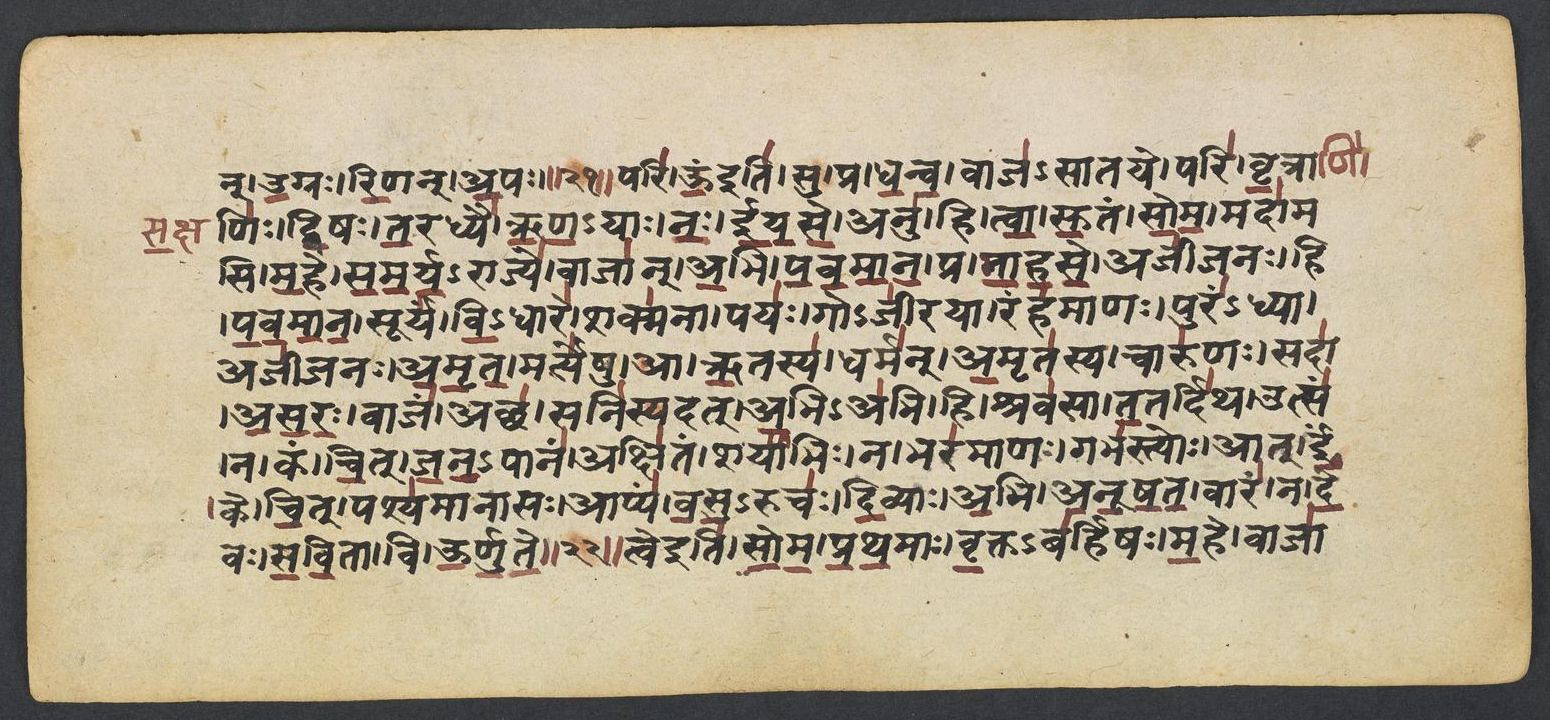
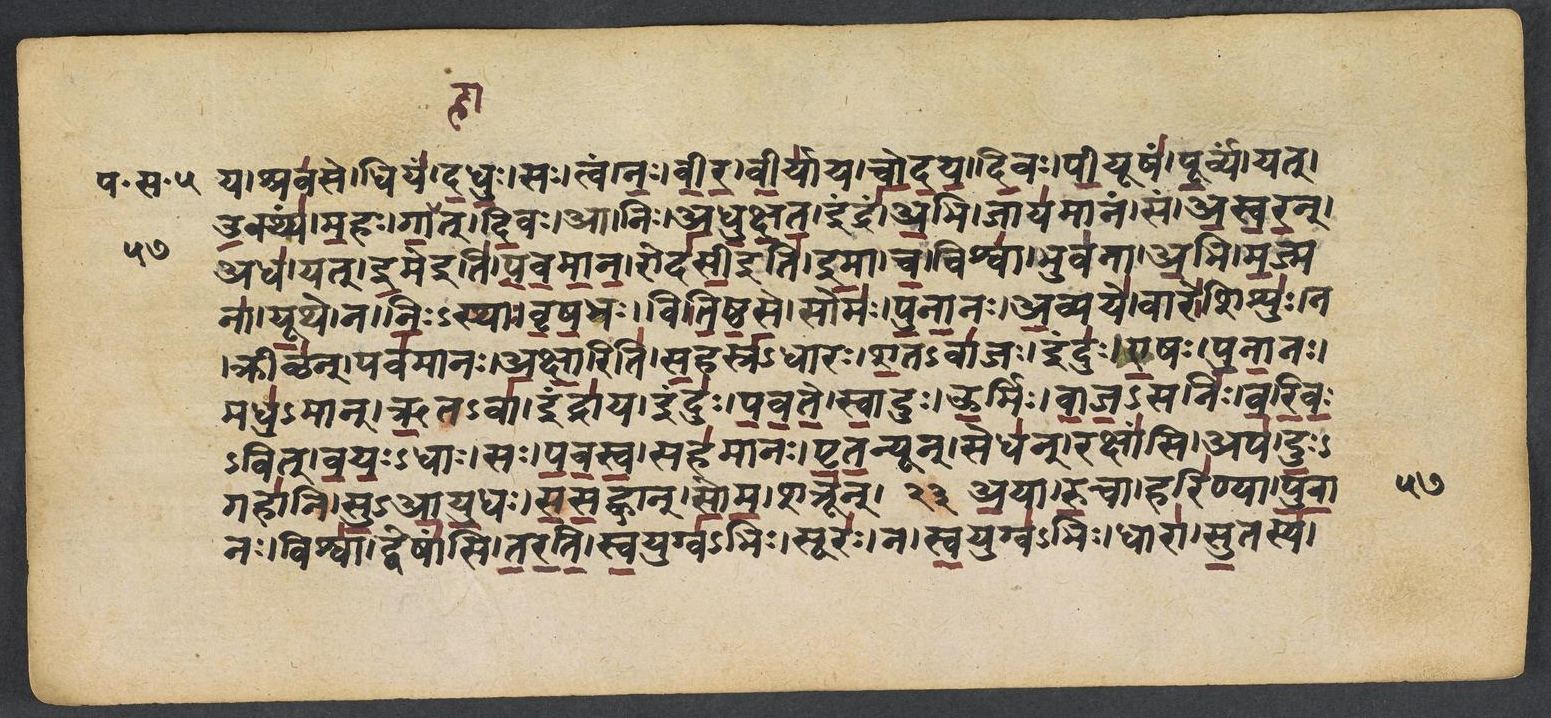
The manuscript shown is Penn Ms. Coll. 390 Item 41 (University of Pennsylvania), an undated paper manuscript of the padapāṭha (the word-by-word recitation text, in which every word is written separately and compounds are split) of the whole Ṛgveda in Devanāgarī, 884 leaves in fascicles, 7-9 lines to the page, accents in red; this hymn stands on fol. 740r-740v. Each section below gives the verses that end on one page; the page boundaries were read on the images (the opening words of every page), not counted out. Where the manuscript is a padapāṭha (the word-by-word recitation text), the section shows Aufrecht's continuous (saṃhitā) text first and, as the edition text, the padapāṭha of the same verses, which is the form written on the page.
How was this verified? (Provenance)
Where on the image
Penn Ms. Coll. 390 Item 41, fol. 740r (numbered 57r by the scribe) (OPenn image 740, lower leaf). Checked on the image: the Rigveda text on this page begins in RV 9.109.22 ‹-śrīṇan ugraḥ riṇan apaḥ›. The next page with Rigveda text, fol. 740v (numbered 57v by the scribe), begins in RV 9.110.7 ‹-vājāya śravase dhiyam dadhuḥ›. Verses 9.110.1-6 end on this page.
1pary ū̱ ṣu pra dha̍nva̱ vāja̍sātaye̱ pari̍ vṛ̱trāṇi̍ sa̱kṣaṇi̍ḥ | dvi̱ṣas ta̱radhyā̍ ṛṇa̱yā na̍ īyase ||
2anu̱ hi tvā̍ su̱taṁ so̍ma̱ madā̍masi ma̱he sa̍marya̱rājye̍ | vājā̍m̐ a̱bhi pa̍vamāna̱ pra gā̍hase ||
3ajī̍jano̱ hi pa̍vamāna̱ sūrya̍ṁ vi̱dhāre̱ śakma̍nā̱ paya̍ḥ | gojī̍rayā̱ raṁha̍māṇa̱ḥ pura̍ṁdhyā ||
4ajī̍jano amṛta̱ martye̱ṣv ām̐ ṛ̱tasya̱ dharma̍nn a̱mṛta̍sya̱ cāru̍ṇaḥ | sadā̍saro̱ vāja̱m acchā̱ sani̍ṣyadat ||
5a̱bhy-a̍bhi̱ hi śrava̍sā ta̱tardi̱thotsa̱ṁ na kaṁ ci̍j jana̱pāna̱m akṣi̍tam | śaryā̍bhi̱r na bhara̍māṇo̱ gabha̍styoḥ ||
6ād ī̱ṁ ke ci̱t paśya̍mānāsa̱ āpya̍ṁ vasu̱ruco̍ di̱vyā a̱bhy a̍nūṣata | vāra̱ṁ na de̱vaḥ sa̍vi̱tā vy ū̍rṇute ||
Compare: Padapāṭha (word-by-word text written in the manuscript; Sansknet e-text via GRETIL)
1pari | oṃ iti | su | pra | dhanva | vāja-sātaye | pari | vṛtrāṇi | sakṣaṇiḥ | dviṣaḥ | taradhyai | ṛṇa-yāḥ | naḥ | īyase
2anu | hi | tvā | sutam | soma | madāmasi | mahe | samarya-rājye | vājān | abhi | pavamāna | pra | gāhase
3ajījanaḥ | hi | pavamāna | sūryam | vi-dhāre | śakmanā | payaḥ | go-jīrayā | raṃhamāṇaḥ | purandhyā
4ajījanaḥ | amṛta | martyeṣu | ā | ṛtasya | dharman | amṛtasya | cāruṇaḥ | sadā | asaraḥ | vājam | accha | sanisyadat
5abhi-abhi | hi | śravasā | tatarditha | utsam | na | kam | cit | jana-pānam | akṣitam | śaryābhiḥ | na | bharamāṇaḥ | gabhastyoḥ
6āt | īm | ke | cit | paśyamānāsaḥ | āpyam | vasu-rucaḥ | divyāḥ | abhi | anūṣata | vāram | na | devaḥ | savitā | vi | ūrṇute
1O'ERPOWERING Vr̥itras, forward run to win great strength: Thou speedest to subdue like one exacting debts.
2In thee, effused, O Soma, we rejoice ourselves for great supremacy in fight. Thou, Pavamâna, enterest into mighty deeds,
3O Pavamâna, thou didst generate the Sun, and spread the moisture out with power, Hasting to us with plenty vivified with milk.
4Thou didst produce him, Deathless God mid mortal men for maintenance of Law and lovely Amrit: Thou evermore hast moved making strength flow to us.
5All round about hast thou with glory pierced for us as 'twere a never-failing well for men to drink, Borne on thy way in fragments from the presser's arms.
6Then, beautifully radiant, certain Heavenly Ones, have sung to him their kinship as they looked thereon, And Savitar the God opens as 'twere a stall.
Where on the image
Penn Ms. Coll. 390 Item 41, fol. 740v (numbered 57v by the scribe) (OPenn image 741, upper leaf). Checked on the image: the Rigveda text on this page begins in RV 9.110.7 ‹-vājāya śravase dhiyam dadhuḥ›. The next page with Rigveda text, fol. 741r (numbered 58r by the scribe), begins in RV 9.111.1 ‹rocate punānaḥ aruṣaḥ hariḥ›. Verses 9.110.7-12 end on this page; 9.110.7 begins on fol. 740r (numbered 57r by the scribe).
7tve so̍ma pratha̱mā vṛ̱ktaba̍rhiṣo ma̱he vājā̍ya̱ śrava̍se̱ dhiya̍ṁ dadhuḥ | sa tvaṁ no̍ vīra vī̱ryā̍ya codaya ||
8di̱vaḥ pī̱yūṣa̍m pū̱rvyaṁ yad u̱kthya̍m ma̱ho gā̱hād di̱va ā nir a̍dhukṣata | indra̍m a̱bhi jāya̍māna̱ṁ sam a̍svaran ||
9adha̱ yad i̱me pa̍vamāna̱ roda̍sī i̱mā ca̱ viśvā̱ bhuva̍nā̱bhi ma̱jmanā̍ | yū̱the na ni̱ṣṭhā vṛ̍ṣa̱bho vi ti̍ṣṭhase ||
10soma̍ḥ punā̱no a̱vyaye̱ vāre̱ śiśu̱r na krīḻa̱n pava̍māno akṣāḥ | sa̱hasra̍dhāraḥ śa̱tavā̍ja̱ indu̍ḥ ||
11e̱ṣa pu̍nā̱no madhu̍mām̐ ṛ̱tāvendrā̱yendu̍ḥ pavate svā̱dur ū̱rmiḥ | vā̱ja̱sani̍r varivo̱vid va̍yo̱dhāḥ ||
12sa pa̍vasva̱ saha̍mānaḥ pṛta̱nyūn sedha̱n rakṣā̱ṁsy apa̍ du̱rgahā̍ṇi | svā̱yu̱dhaḥ sā̍sa̱hvān so̍ma̱ śatrū̍n ||
Compare: Padapāṭha (word-by-word text written in the manuscript; Sansknet e-text via GRETIL)
7tve iti | soma | prathamāḥ | vṛkta-barhiṣaḥ | mahe | vājāya | śravase | dhiyam | dadhuḥ | saḥ | tvam | naḥ | vīra | vīryāya | codaya
8divaḥ | pīyūṣam | pūrvyam | yat | ukthyam | mahaḥ | gāhāt | divaḥ | ā | niḥ | adhukṣata | indram | abhi | jāyamānam | sam | asvaran
9adha | yat | ime iti | pavamāna | rodasī iti | imā | ca | viśvā | bhuvanā | abhi | jajmanā | yūthe | na | niḥ-sthāḥ | vṛṣabhaḥ | vi | tiṣṭhase
10somaḥ | punānaḥ | avyaye | vāre | śiśuḥ | na | krīḷan | pavamānaḥ | akṣāriti | sahasra-dhāraḥ | śata-vājaḥ | induḥ
11eṣaḥ | punānaḥ | madhu-mān | ṛta-vā | indrāya | induḥ | pavate | svāduḥ | ūrmiḥ | vāja-saniḥ | varivaḥ-vit | vayaḥ-dhāḥ
12saḥ | pavasva | sahamānaḥ | pṛtanyūn | sedhan | rakṣāṃsi | apa | duḥ-gahāṇi | su-āyudhaḥ | sasahvān | soma | śatrūn
7Soma, the men of old whose grass was trimmed addressed the hymn to thee for mighty strength and for renown: So, Hero, urge us onward to heroic power.
8They have drained forth from out the great depth of the sky the old primeval milk of heaven that claims the laud: They lifted up their voice to Indra athis birth.
9As long as thou, O Pavamâna, art above this earth and heaven and all existence in thy might, Thou standest like a Bull the chief amid the herd.
10In the sheep's wool hath Soma Pavamâna flowed, while they cleanse him, like a playful infant, Indu with hundred powers and hundred currents.
11Holy and sweet, while purified, this Indu flows on, a wave of pleasant taste, to Indra,– Strength-winner, Treasure-finder, Life. bestower.
12So flow thou on, subduing our assailants, chasing the demons hard to beencountered, Well-armed and conquering our foes, O Soma.
Notes
- Sanskrit: Aufrecht's edition (1877) with the Vedic accents, as entered by van Nooten and Holland (GRETIL).
- English: Ralph T. H. Griffith, The Hymns of the Rigveda (1889-1892; 2nd ed. 1896-1897), from the VedaWeb digital text; OCR slips in that text were corrected against the printed 2nd edition (data/sources/rigveda/griffith_errata.json).
- Padapāṭha (edition text): Sansknet e-text via GRETIL (CC BY-NC-SA 4.0).
Cite
Sources
- Source: Penn Ms. Coll. 390 Item 41 (undated (catalogued with Penn's 18th-19th c. Vedic manuscripts)), OPenn, Public Domain Mark + Aufrecht's accented text (GRETIL) + Griffith's English (VedaWeb) (holding institution)
- Critical edition: Aufrecht (1877), accented e-text via GRETIL
← previous · → next · v cycle view · l back to library