Rigveda 9.2: To Soma
Introduction
Rigveda 9.2 is a hymn of 10 verses addressed to Soma. It stands in book (maṇḍala) 9, the hymns to Soma Pavamāna. The Rigveda is the oldest collection of Sanskrit hymns, composed in the second half of the second millennium BCE and handed down orally for many centuries before it was written down.
The manuscript shown is Penn Ms. Coll. 390 Item 41 (University of Pennsylvania), an undated paper manuscript of the padapāṭha (the word-by-word recitation text, in which every word is written separately and compounds are split) of the whole Ṛgveda in Devanāgarī, 884 leaves in fascicles, 7-9 lines to the page, accents in red; this hymn stands on fol. 667v-668r. Each section below gives the verses that end on one page; the page boundaries were read on the images (the opening words of every page), not counted out. Where the manuscript is a padapāṭha (the word-by-word recitation text), the section shows Aufrecht's continuous (saṃhitā) text first and, as the edition text, the padapāṭha of the same verses, which is the form written on the page.
How was this verified? (Provenance)
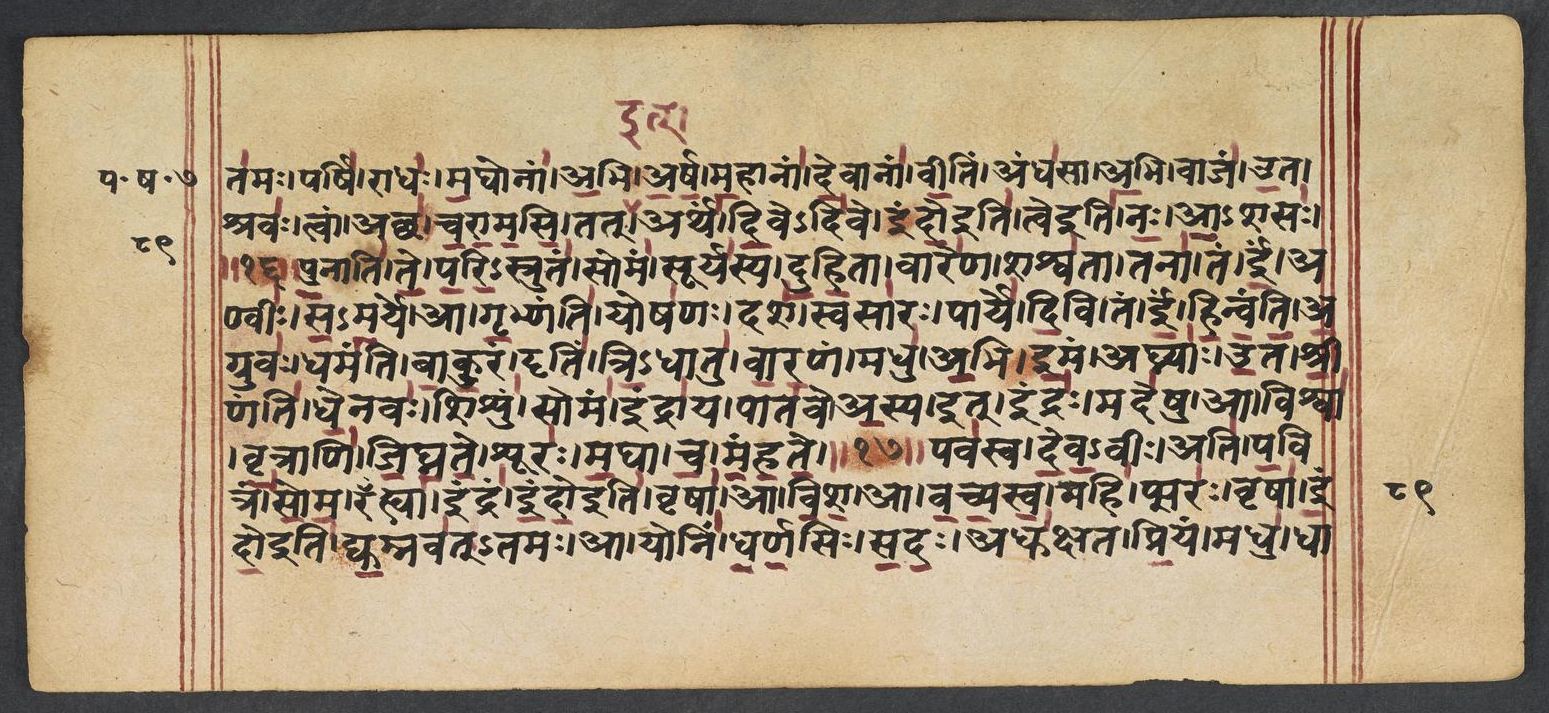
Where on the image
Penn Ms. Coll. 390 Item 41, fol. 667v (numbered 89v by the scribe) (OPenn image 668, upper leaf). Checked on the image: the Rigveda text on this page begins in RV 9.1.3 ‹-vṛtrahan-tamaḥ parṣi rādhaḥ maghonām›. The next page with Rigveda text, fol. 668r (numbered 90r by the scribe), begins in RV 9.2.3 ‹-dhārā sutasya vedhasaḥ apaḥ›. Verses 9.2.1-2 end on this page.
1pava̍sva deva̱vīr ati̍ pa̱vitra̍ṁ soma̱ raṁhyā̍ | indra̍m indo̱ vṛṣā vi̍śa ||
2ā va̍cyasva̱ mahi̱ psaro̱ vṛṣe̍ndo dyu̱mnava̍ttamaḥ | ā yoni̍ṁ dharṇa̱siḥ sa̍daḥ ||
Compare: Padapāṭha (word-by-word text written in the manuscript; Sansknet e-text via GRETIL)
1pavasva | deva-vīḥ | ati | pavitram | soma | raṃhyā | indram | indo iti | vṛṣā | ā | viśa
2ā | vacyasva | mahi | psaraḥ | vṛṣā | indo iti | dyumnavat-tamaḥ | ā | yonim | dharṇasiḥ | sadaḥ
1Soma, flow on, inviting Gods, speed to the purifying cloth: Pass into Indra, as a Bull.
2As mighty food speed hitherward, Indu, as a most splendid Steer: Sit in thy place as one with strength.
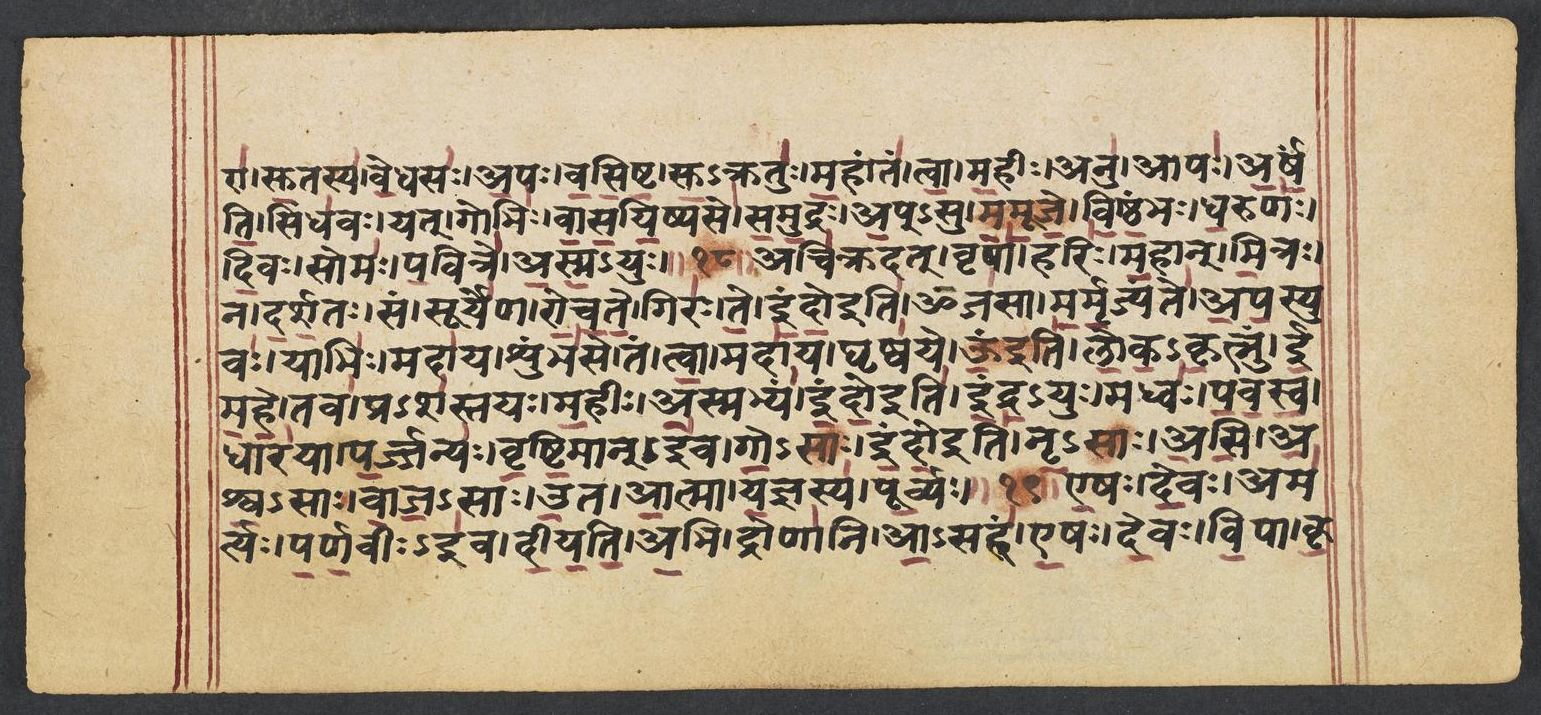
Where on the image
Penn Ms. Coll. 390 Item 41, fol. 668r (numbered 90r by the scribe) (OPenn image 668, lower leaf). Checked on the image: the Rigveda text on this page begins in RV 9.2.3 ‹-dhārā sutasya vedhasaḥ apaḥ›. The next page with Rigveda text, fol. 668v (numbered 90v by the scribe), begins in RV 9.3.2 ‹-kṛtaḥ ati hvarāṃsi dhāvati›. Verses 9.2.3-10 end on this page; 9.2.3 begins on fol. 667v (numbered 89v by the scribe).
3adhu̍kṣata pri̱yam madhu̱ dhārā̍ su̱tasya̍ ve̱dhasa̍ḥ | a̱po va̍siṣṭa su̱kratu̍ḥ ||
4ma̱hānta̍ṁ tvā ma̱hīr anv āpo̍ arṣanti̱ sindha̍vaḥ | yad gobhi̍r vāsayi̱ṣyase̍ ||
5sa̱mu̱dro a̱psu mā̍mṛje viṣṭa̱mbho dha̱ruṇo̍ di̱vaḥ | soma̍ḥ pa̱vitre̍ asma̱yuḥ ||
6aci̍krada̱d vṛṣā̱ hari̍r ma̱hān mi̱tro na da̍rśa̱taḥ | saṁ sūrye̍ṇa rocate ||
7gira̍s ta inda̱ oja̍sā marmṛ̱jyante̍ apa̱syuva̍ḥ | yābhi̱r madā̍ya̱ śumbha̍se ||
8taṁ tvā̱ madā̍ya̱ ghṛṣva̍ya u lokakṛ̱tnum ī̍mahe | tava̱ praśa̍stayo ma̱hīḥ ||
9a̱smabhya̍m indav indra̱yur madhva̍ḥ pavasva̱ dhāra̍yā | pa̱rjanyo̍ vṛṣṭi̱mām̐ i̍va ||
10go̱ṣā i̍ndo nṛ̱ṣā a̍sy aśva̱sā vā̍ja̱sā u̱ta | ā̱tmā ya̱jñasya̍ pū̱rvyaḥ ||
Compare: Padapāṭha (word-by-word text written in the manuscript; Sansknet e-text via GRETIL)
3adhukṣata | priyam | madhu | dhārā | sutasya | vedhasaḥ | apaḥ | vasiṣṭa | su-kratuḥ
4mahāntam | tvā | mahīḥ | anu | āpaḥ | arṣanti | sindhavaḥ | yat | gobhiḥ | vāsayiṣyase
5samudraḥ | ap-su | mamṛje | viṣṭambhaḥ | dharuṇaḥ | divaḥ | somaḥ | pavitre | asma-yuḥ
6acikradat | vṛṣā | hariḥ | mahān | mitraḥ | na | darśataḥ | sam | sūryeṇa | rocate
7giraḥ | te | indo iti | ojasā | marmṛjyante | apasyuvaḥ | yābhiḥ | madāya | śumbhase
8tam | tvā | madāya | ghṛṣvaye | oṃ iti | loka-kṛtnum | īmahe | tava | pra-śastayaḥ | mahīḥ
9asmabhyam | indo iti | indra-yuḥ | madhvaḥ | pavasva | dhārayā | parjanyaḥ | vṛṣṭimān-iva
10go-sāḥ | indo iti | nṛ-sāḥ | asi | aśva-sāḥ | vāja-sāḥ | uta | ātmā | yajñasya | pūrvyaḥ
3The well-loved meath was made to flow, the stream of the creative juice ne Sage drew waters to himself.
4The mighty waters, yea, the floods accompany thee Mighty One, When thou wilt clothe thee with the milk.
5The lake is brightened in the floods. Soma, our Friend, heaven's prop and stay, Falls on the purifying cloth.
6The tawny Bull hath bellowed, fair as mighty Mitra to behold: He shines together with the Sun.
7Songs, Indu, active in their might are beautified for thee, wherewith Thou deckest thee for our delight.
8To thee who givest ample room we pray, to win the joyous draught: Great are the praises due to thee.
9Indu as, Indra's Friend, on us pour with a stream of sweetness, like Parjanya sender of the rain.
10Winner of kine, Indu, art thou, winner of heroes, steeds, and strength Primeval Soul of sacrifice.
Notes
- Sanskrit: Aufrecht's edition (1877) with the Vedic accents, as entered by van Nooten and Holland (GRETIL).
- English: Ralph T. H. Griffith, The Hymns of the Rigveda (1889-1892; 2nd ed. 1896-1897), from the VedaWeb digital text; OCR slips in that text were corrected against the printed 2nd edition (data/sources/rigveda/griffith_errata.json).
- Padapāṭha (edition text): Sansknet e-text via GRETIL (CC BY-NC-SA 4.0).
Cite
Sources
- Source: Penn Ms. Coll. 390 Item 41 (undated (catalogued with Penn's 18th-19th c. Vedic manuscripts)), OPenn, Public Domain Mark + Aufrecht's accented text (GRETIL) + Griffith's English (VedaWeb) (holding institution)
- Critical edition: Aufrecht (1877), accented e-text via GRETIL
← previous · → next · v cycle view · l back to library