Rigveda 9.62: To Soma
Introduction
Rigveda 9.62 is a hymn of 30 verses addressed to Soma. It stands in book (maṇḍala) 9, the hymns to Soma Pavamāna. The Rigveda is the oldest collection of Sanskrit hymns, composed in the second half of the second millennium BCE and handed down orally for many centuries before it was written down.
The manuscript shown is Penn Ms. Coll. 390 Item 41 (University of Pennsylvania), an undated paper manuscript of the padapāṭha (the word-by-word recitation text, in which every word is written separately and compounds are split) of the whole Ṛgveda in Devanāgarī, 884 leaves in fascicles, 7-9 lines to the page, accents in red; this hymn stands on fol. 690r-691v. Each section below gives the verses that end on one page; the page boundaries were read on the images (the opening words of every page), not counted out. Where the manuscript is a padapāṭha (the word-by-word recitation text), the section shows Aufrecht's continuous (saṃhitā) text first and, as the edition text, the padapāṭha of the same verses, which is the form written on the page.
How was this verified? (Provenance)
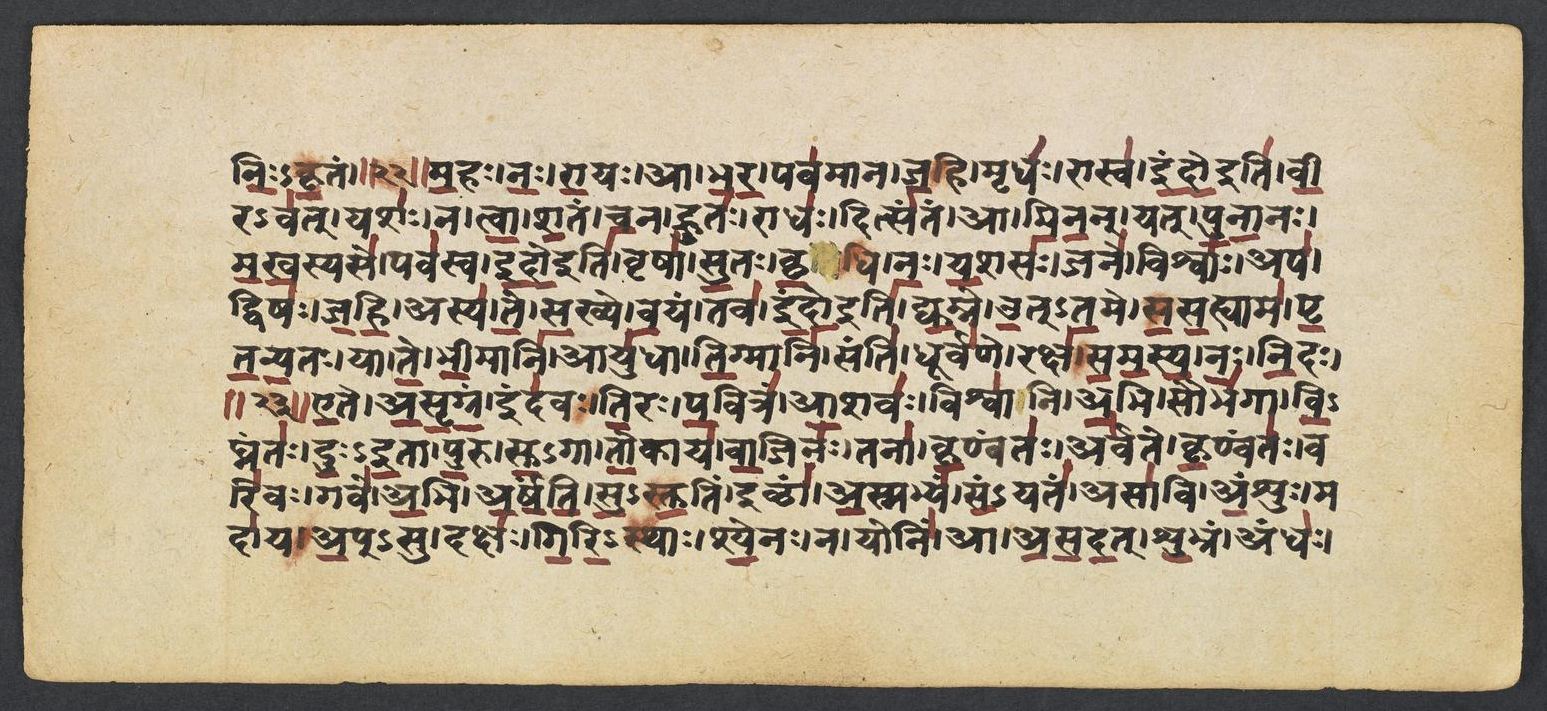
Where on the image
Penn Ms. Coll. 390 Item 41, fol. 690r (numbered 7r by the scribe) (OPenn image 690, lower leaf). Checked on the image: the Rigveda text on this page begins in RV 9.61.25 ‹niḥ-kṛtam›. The next page with Rigveda text, fol. 690v (numbered 7v by the scribe), begins in RV 9.62.5 ‹deva-vātam ap-su dhūtaḥ nṛ-bhiḥ›. Verses 9.62.1-4 end on this page.
1e̱te a̍sṛgra̱m inda̍vas ti̱raḥ pa̱vitra̍m ā̱śava̍ḥ | viśvā̍ny a̱bhi saubha̍gā ||
2vi̱ghnanto̍ duri̱tā pu̱ru su̱gā to̱kāya̍ vā̱jina̍ḥ | tanā̍ kṛ̱ṇvanto̱ arva̍te ||
3kṛ̱ṇvanto̱ vari̍vo̱ gave̱ 'bhy a̍rṣanti suṣṭu̱tim | iḻā̍m a̱smabhya̍ṁ sa̱ṁyata̍m ||
4asā̍vy a̱ṁśur madā̍yā̱psu dakṣo̍ giri̱ṣṭhāḥ | śye̱no na yoni̱m āsa̍dat ||
Compare: Padapāṭha (word-by-word text written in the manuscript; Sansknet e-text via GRETIL)
1ete | asṛgram | indavaḥ | tiraḥ | pavitram | āśavaḥ | viśvāni | abhi | saubhagā
2vi-ghnantaḥ | duḥ-itā | puru | su-gā | tokāya | vājinaḥ | tanā | kṛṇvantaḥ | arvate
3kṛṇvantaḥ | varivaḥ | gave | abhi | arṣanti | su-stutim | iḷām | asmabhyam | sam-yatam
4asāvi | aṃśuḥ | madāya | ap-su | dakṣaḥ | giri-sthāḥ | śyenaḥ | na | yonim | ā | asadat
1THESE rapid Soma-drops have been poured through the purifying sieve To bring us all felicities.
2Dispelling manifold mishap, giving the courser's progeny, Yea, and the warrior steed, success.
3Bringing prosperity to kine, they make perpetual Iḷâ flow To us for noble eulogy.
4Strong, mountain-born, the stalk hath been pressed in the streams for rapturous joy: Hawk-like he settles in his home.
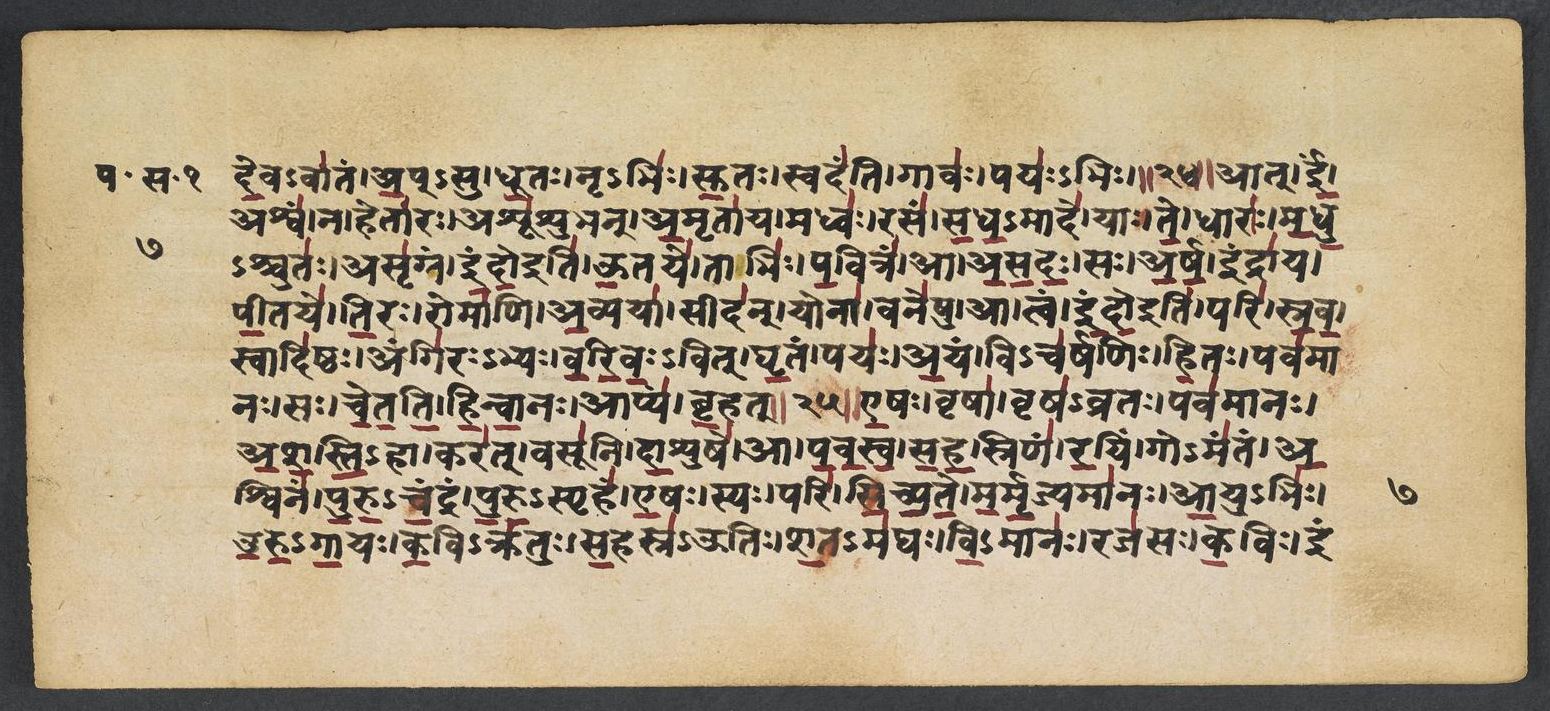
Where on the image
Penn Ms. Coll. 390 Item 41, fol. 690v (numbered 7v by the scribe) (OPenn image 691, upper leaf). Checked on the image: the Rigveda text on this page begins in RV 9.62.5 ‹deva-vātam ap-su dhūtaḥ nṛ-bhiḥ›. The next page with Rigveda text, fol. 691r (numbered 8r by the scribe), begins in RV 9.62.14 ‹-indrāya pavate madaḥ›. Verses 9.62.5-13 end on this page; 9.62.5 begins on fol. 690r (numbered 7r by the scribe).
5śu̱bhram andho̍ de̱vavā̍tam a̱psu dhū̱to nṛbhi̍ḥ su̱taḥ | svada̍nti̱ gāva̱ḥ payo̍bhiḥ ||
6ād ī̱m aśva̱ṁ na hetā̱ro 'śū̍śubhann a̱mṛtā̍ya | madhvo̱ rasa̍ṁ sadha̱māde̍ ||
7yās te̱ dhārā̍ madhu̱ścuto 'sṛ̍gram inda ū̱taye̍ | tābhi̍ḥ pa̱vitra̱m āsa̍daḥ ||
8so a̱rṣendrā̍ya pī̱taye̍ ti̱ro romā̍ṇy a̱vyayā̍ | sīda̱n yonā̱ vane̱ṣv ā ||
9tvam i̍ndo̱ pari̍ srava̱ svādi̍ṣṭho̱ aṅgi̍robhyaḥ | va̱ri̱vo̱vid ghṛ̱tam paya̍ḥ ||
10a̱yaṁ vica̍rṣaṇir hi̱taḥ pava̍māna̱ḥ sa ce̍tati | hi̱nvā̱na āpya̍m bṛ̱hat ||
11e̱ṣa vṛṣā̱ vṛṣa̍vrata̱ḥ pava̍māno aśasti̱hā | kara̱d vasū̍ni dā̱śuṣe̍ ||
12ā pa̍vasva saha̱sriṇa̍ṁ ra̱yiṁ goma̍ntam a̱śvina̍m | pu̱ru̱śca̱ndram pu̍ru̱spṛha̍m ||
13e̱ṣa sya pari̍ ṣicyate marmṛ̱jyamā̍na ā̱yubhi̍ḥ | u̱ru̱gā̱yaḥ ka̱vikra̍tuḥ ||
Compare: Padapāṭha (word-by-word text written in the manuscript; Sansknet e-text via GRETIL)
5śubhram | andhaḥ | deva-vātam | ap-su | dhūtaḥ | nṛ-bhiḥ | sutaḥ | svadanti | gāvaḥ | payaḥ-bhiḥ
6āt | īm | aśvam | na | hetāraḥ | aśūśubhan | amṛtāya | madhvaḥ | rasam | sadha-māde
7yāḥ | te | dhārāḥ | madhu-ścutaḥ | asṛgram | indo iti | ūtaye | tābhiḥ | pavitram | ā | asadaḥ
8saḥ | arṣa | indrāya | pītaye | tiraḥ | romāṇi | avyayā | sīdan | yonā | vaneṣu | ā
9tvam | indo iti | pari | srava | svādiṣṭhaḥ | aṅgiraḥ-bhyaḥ | varivaḥ-vit | ghṛtam | payaḥ
10ayam | vi-carṣaṇiḥ | hitaḥ | pavamānaḥ | saḥ | cetati | hinvānaḥ | āpyam | bṛhat
11eṣaḥ | vrṣā | vṛṣa-vrataḥ | pavamānaḥ | aśasti-hā | karat | vasūni | dāśuṣe
12ā | pavasva | sahasriṇam | rayim | go-mantam | aśvinam | puru-candram | puru-spṛham
13eṣaḥ | syaḥ | pari | sicyate | marmṛjyamānaḥ | āyu-bhiḥ | uru-gāyaḥ | kavi-kratuḥ
5Fair is the God-loved juice; the plant is washed in waters, pressed by men The milch-kine sweeten it with milk.
6As drivers deck a courser, so have they adorned the meath's juice for Ambrosia, for the festival.
7Thou, Indu, with thy streams that drop sweet juices, which were poured for help, Hast settled in the cleansing sieve.
8So flow thou onward through the fleece, for Indra flow, to be his drink, Finding thine home in vats of wood.
9As giving room and freedom, as most sweet, pour butter forth and milk, O Indu, for the Angirases.
10Most active and benevolent, this Pavamâna, sent to us For lofty friendship, meditates.
11Queller of curses, mighty, with strong sway, this Pavamâna shall Bring treasures to the worshipper.
12Pour thou upon us thousandfold possessions, both of kine and steeds, Exceeding glorious, much-desired.
13Wandering far, with wise designs, the juice here present is effused, Made beautiful by living men.
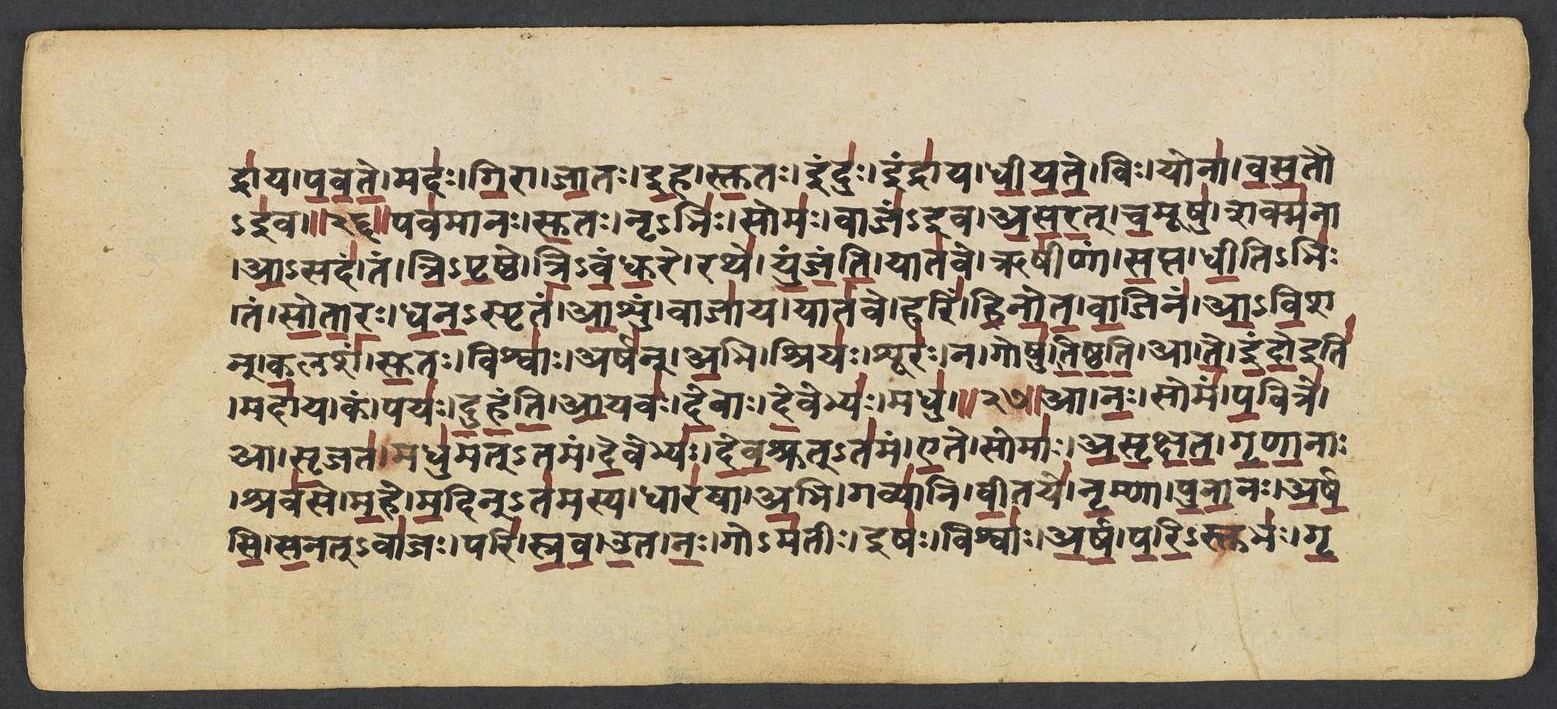
Where on the image
Penn Ms. Coll. 390 Item 41, fol. 691r (numbered 8r by the scribe) (OPenn image 691, lower leaf). Checked on the image: the Rigveda text on this page begins in RV 9.62.14 ‹-indrāya pavate madaḥ›. The next page with Rigveda text, fol. 691v (numbered 8v by the scribe), begins in RV 9.62.24 ‹-gṛṇānaḥ jamat-agninā›. Verses 9.62.14-23 end on this page; 9.62.14 begins on fol. 690v (numbered 7v by the scribe).
14sa̱hasro̍tiḥ śa̱tāma̍gho vi̱māno̱ raja̍saḥ ka̱viḥ | indrā̍ya pavate̱ mada̍ḥ ||
15gi̱rā jā̱ta i̱ha stu̱ta indu̱r indrā̍ya dhīyate | vir yonā̍ vasa̱tāv i̍va ||
16pava̍mānaḥ su̱to nṛbhi̱ḥ somo̱ vāja̍m ivāsarat | ca̱mūṣu̱ śakma̍nā̱sada̍m ||
17taṁ tri̍pṛ̱ṣṭhe tri̍vandhu̱re rathe̍ yuñjanti̱ yāta̍ve | ṛṣī̍ṇāṁ sa̱pta dhī̱tibhi̍ḥ ||
18taṁ so̍tāro dhana̱spṛta̍m ā̱śuṁ vājā̍ya̱ yāta̍ve | hari̍ṁ hinota vā̱jina̍m ||
19ā̱vi̱śan ka̱laśa̍ṁ su̱to viśvā̱ arṣa̍nn a̱bhi śriya̍ḥ | śūro̱ na goṣu̍ tiṣṭhati ||
20ā ta̍ indo̱ madā̍ya̱ kam payo̍ duhanty ā̱yava̍ḥ | de̱vā de̱vebhyo̱ madhu̍ ||
21ā na̱ḥ soma̍m pa̱vitra̱ ā sṛ̱jatā̱ madhu̍mattamam | de̱vebhyo̍ deva̱śrutta̍mam ||
22e̱te somā̍ asṛkṣata gṛṇā̱nāḥ śrava̍se ma̱he | ma̱dinta̍masya̱ dhāra̍yā ||
23a̱bhi gavyā̍ni vī̱taye̍ nṛ̱mṇā pu̍nā̱no a̍rṣasi | sa̱nadvā̍ja̱ḥ pari̍ srava ||
Compare: Padapāṭha (word-by-word text written in the manuscript; Sansknet e-text via GRETIL)
14sahasra-ūtiḥ | śata-maghaḥ | vi-mānaḥ | rajasaḥ | kaviḥ | indrāya | pavate | madaḥ
15girā | jātaḥ | iha | stutaḥ | induḥ | indrāya | dhīyate | viḥ | yonā | vasatau-iva
16pavamānaḥ | sutaḥ | nṛ-bhiḥ | somaḥ | vājam-iva | asarcat | camūṣu | śakmanā | āsadam
17tam | tri-pṛṣṭhe | tri-bandhure | rathe | yuñjanti | yātave | ṛṣīṇām | sapta | dhīti-bhiḥ
18tam | sotāraḥ | dhana-spṛtam | āśum | vājāya | yātave | harim | hinota | vājinam
19ā-viśan | kalaśam | sutaḥ | viśvā | arṣan | abhi | śriyaḥ | śūraḥ | na | goṣu | tiṣṭhati
20ā | te | indo iti | madāya | kam | payaḥ | duhanti | āyavaḥ | devāḥ | devebhyaḥ | madhu
21ā | naḥ | somam | pavitre | ā | sṛjata | madhumat-tamam | devebhyaḥ | devaśrut-tamam
22ete | somāḥ | asṛkṣata | gṛṇānāḥ | śravase | mahe | madin-tamasya | dhārayā
23abhi | gavyāni | vītaye | nṛmṇā | punānaḥ | arṣasi | sanat-vājaḥ | pari | srava
14For Indra flows the gladdening drink, the measurer of the region, Sage, With countless wealth and endless help.
15Born on the mountain, lauded here, Indu for Indra is set down, As in her sheltering nest a bird.
16Pressed by the men, as 'twere to war hath Soma Pavamâna sped, To rest with might within the vats.
17That he may move, they yoke him to the three-backed triple-seated car By the Seven R̥ishis' holy songs.
18Drive ye that Tawny Courser, O ye pressers, on his way to war, Swift Steed who carries off the spoil.
19Pouring all glories hither, he, effused and entering the jar, Stands like a hero mid the kine.
20Indu, the living men milk out thy juice to make the rapturous draught: Gods for the Gods milk out the meath.
21Pour for the Gods into the sieve our Soma very rich in sweets, Him whom the Gods most gladly hear.
22Into his stream who gladdens best these Soma juices have been poured, Lauded with songs for lofty fame.
23Thou flowest to enjoy the milk, and bringest valour, being cleansed: Winning the spoil flow hitherward.
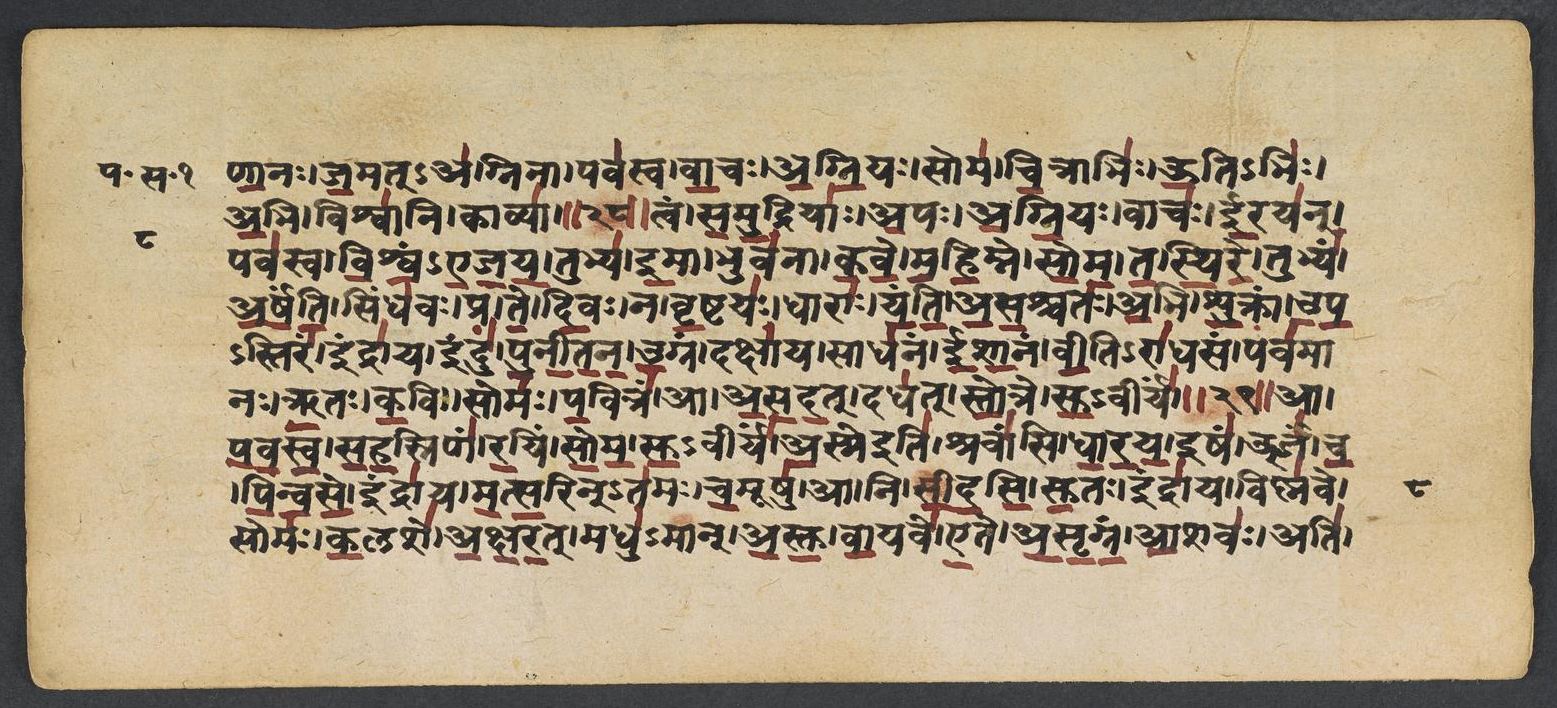
Where on the image
Penn Ms. Coll. 390 Item 41, fol. 691v (numbered 8v by the scribe) (OPenn image 692, upper leaf). Checked on the image: the Rigveda text on this page begins in RV 9.62.24 ‹-gṛṇānaḥ jamat-agninā›. The next page with Rigveda text, fol. 692r (numbered 9r by the scribe), begins in RV 9.63.4 ‹hvarāṃsi babhravaḥ somāḥ ṛtasya›. Verses 9.62.24-30 end on this page; 9.62.24 begins on fol. 691r (numbered 8r by the scribe).
24u̱ta no̱ goma̍tī̱r iṣo̱ viśvā̍ arṣa pari̱ṣṭubha̍ḥ | gṛ̱ṇā̱no ja̱mada̍gninā ||
25pava̍sva vā̱co a̍gri̱yaḥ soma̍ ci̱trābhi̍r ū̱tibhi̍ḥ | a̱bhi viśvā̍ni̱ kāvyā̍ ||
26tvaṁ sa̍mu̱driyā̍ a̱po̍ 'gri̱yo vāca̍ ī̱raya̍n | pava̍sva viśvamejaya ||
27tubhye̱mā bhuva̍nā kave mahi̱mne so̍ma tasthire | tubhya̍m arṣanti̱ sindha̍vaḥ ||
28pra te̍ di̱vo na vṛ̱ṣṭayo̱ dhārā̍ yanty asa̱ścata̍ḥ | a̱bhi śu̱krām u̍pa̱stira̍m ||
29indrā̱yendu̍m punītano̱graṁ dakṣā̍ya̱ sādha̍nam | ī̱śā̱naṁ vī̱tirā̍dhasam ||
30pava̍māna ṛ̱taḥ ka̱viḥ soma̍ḥ pa̱vitra̱m āsa̍dat | dadha̍t sto̱tre su̱vīrya̍m ||
Compare: Padapāṭha (word-by-word text written in the manuscript; Sansknet e-text via GRETIL)
24uta | naḥ | go-matīḥ | iṣaḥ | viśvāḥ | arṣa | pari-stubhaḥ | gṛṇānaḥ | jamat-agninā
25pavasva | vācaḥ | agniyaḥ | soma | citrābhiḥ | ūti-bhiḥ | abhi | viśvāni | kāvyā
26tvam | samudriyāḥ | apaḥ | agriyaḥ | vācaḥ | īrayan | pavasva | viśvam-ejaya
27tubhya | imā | bhuvanā | kave | mahimne | soma | tasthire | tubhyam | arṣanti | sindhavaḥ
28pra | te | divaḥ | na | vṛṣṭayaḥ | dhārāḥ | yanti | asaścataḥ | abhi | śukrām | upa-stiram
29indrāya | indum | punītana | ugram | dakṣāya | sādhanam | īśānam | vīti-rādhasam
30pavamānaḥ | ṛtaḥ | kaviḥ | somaḥ | pavitram | ā | asadat | dadhat | stotre | su-vīryam
24And, hymned by Jamadagnis, let all nourishment that kine supply, And general praises, flow to us.
25Soma, as leader of the song flow onward with thy wondrous aids, For holy lore of every kind.
26Do thou as leader of the song, stirring the waters of the sea, Flow onward, thou who movest all.
27O Soma, O thou Sage, these worlds stand ready to attest thy might: For thy behoof the rivers flow.
28Like showers of rain that fall from heaven thy streams perpetually flow To the bright fleece spread under them.
29For potent Indra purify Indu effectual and strong, Enjoyment-giver, Mighty Lord.
30Soma, true, Pavamâna, Sage, is seated in the cleansing sieve, Giving his praiser hero strength.
Notes
- Sanskrit: Aufrecht's edition (1877) with the Vedic accents, as entered by van Nooten and Holland (GRETIL).
- English: Ralph T. H. Griffith, The Hymns of the Rigveda (1889-1892; 2nd ed. 1896-1897), from the VedaWeb digital text; OCR slips in that text were corrected against the printed 2nd edition (data/sources/rigveda/griffith_errata.json).
- Padapāṭha (edition text): Sansknet e-text via GRETIL (CC BY-NC-SA 4.0).
Cite
Sources
- Source: Penn Ms. Coll. 390 Item 41 (undated (catalogued with Penn's 18th-19th c. Vedic manuscripts)), OPenn, Public Domain Mark + Aufrecht's accented text (GRETIL) + Griffith's English (VedaWeb) (holding institution)
- Critical edition: Aufrecht (1877), accented e-text via GRETIL
← previous · → next · v cycle view · l back to library