Rigveda 9.64: To Soma
Introduction
Rigveda 9.64 is a hymn of 30 verses addressed to Soma. It stands in book (maṇḍala) 9, the hymns to Soma Pavamāna. The Rigveda is the oldest collection of Sanskrit hymns, composed in the second half of the second millennium BCE and handed down orally for many centuries before it was written down.
The manuscript shown is Penn Ms. Coll. 390 Item 41 (University of Pennsylvania), an undated paper manuscript of the padapāṭha (the word-by-word recitation text, in which every word is written separately and compounds are split) of the whole Ṛgveda in Devanāgarī, 884 leaves in fascicles, 7-9 lines to the page, accents in red; this hymn stands on fol. 693r-694v. Each section below gives the verses that end on one page; the page boundaries were read on the images (the opening words of every page), not counted out. Where the manuscript is a padapāṭha (the word-by-word recitation text), the section shows Aufrecht's continuous (saṃhitā) text first and, as the edition text, the padapāṭha of the same verses, which is the form written on the page.
How was this verified? (Provenance)
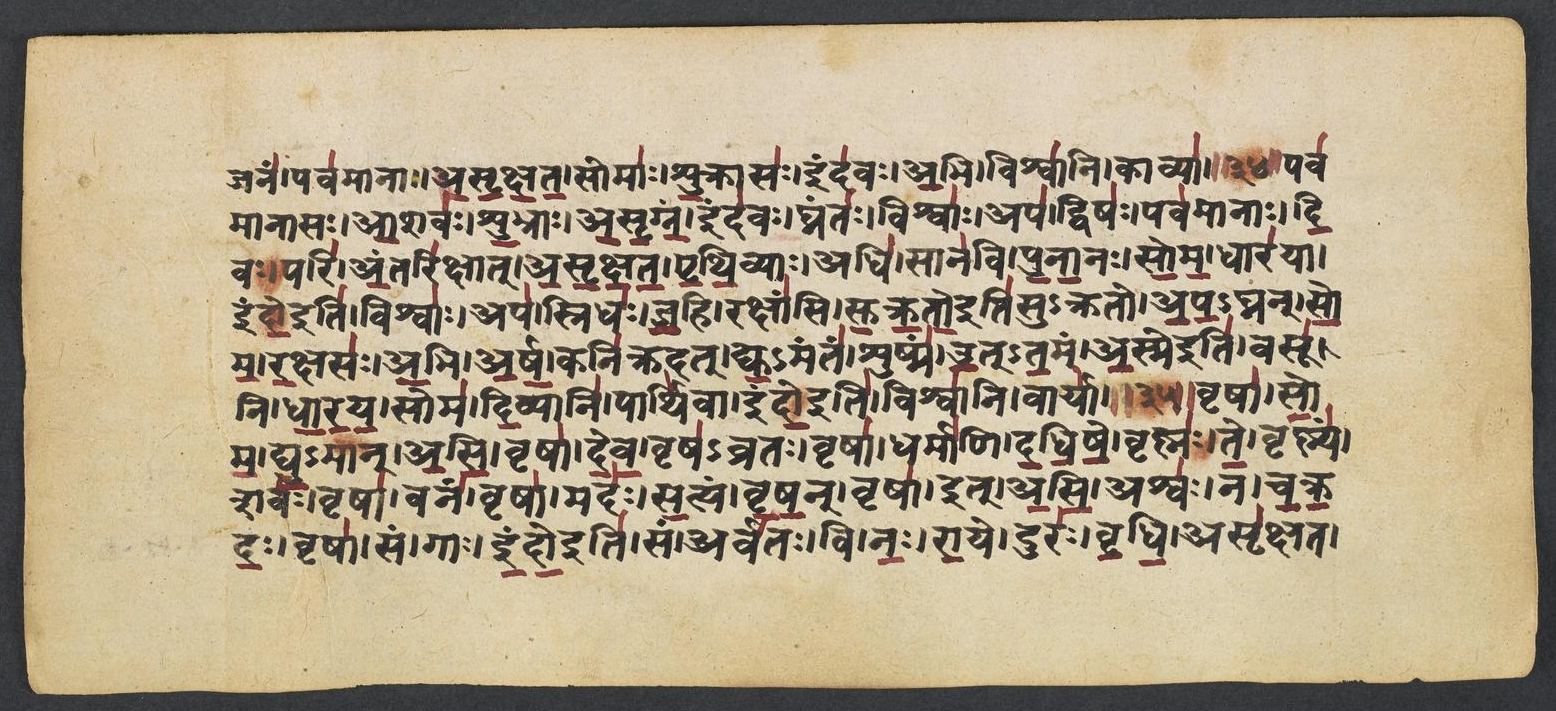
Where on the image
Penn Ms. Coll. 390 Item 41, fol. 693r (numbered 10r by the scribe) (OPenn image 693, lower leaf). Checked on the image: the Rigveda text on this page begins in RV 9.63.24 ‹janam›. The next page with Rigveda text, fol. 693v (numbered 10v by the scribe), begins in RV 9.64.4 ‹pra vājinaḥ gavyā somāsaḥ›. Verses 9.64.1-3 end on this page.
1vṛṣā̍ soma dyu̱mām̐ a̍si̱ vṛṣā̍ deva̱ vṛṣa̍vrataḥ | vṛṣā̱ dharmā̍ṇi dadhiṣe ||
2vṛṣṇa̍s te̱ vṛṣṇya̱ṁ śavo̱ vṛṣā̱ vana̱ṁ vṛṣā̱ mada̍ḥ | sa̱tyaṁ vṛ̍ṣa̱n vṛṣed a̍si ||
3aśvo̱ na ca̍krado̱ vṛṣā̱ saṁ gā i̍ndo̱ sam arva̍taḥ | vi no̍ rā̱ye duro̍ vṛdhi ||
Compare: Padapāṭha (word-by-word text written in the manuscript; Sansknet e-text via GRETIL)
1vṛṣā | soma | dyu-mān | asi | vṛṣā | deva | vṛṣa-vrataḥ | vṛṣā | dharmāṇi | dadhiṣe
2vṛṣṇaḥ | te | vṛṣṇyam | śavaḥ | vṛṣā | vanam | vṛṣā | madaḥ | satyam | vṛṣan | vṛṣā | it | asi
3aśvaḥ | na | cakradaḥ | vṛṣā | sam | gāḥ | indo iti | sam | arvataḥ | vi | naḥ | rāye | duraḥ | vṛdhi
1Soma, thou art a splendid Steer, a Steer, O God, with steerlike sway: Thou as a Steer ordainest laws.
2Steer-strong thy might is as a steer's, steerstrong thywood, steer-like thy drink A Steer indeed, O Steer, art thou.
3Thou, Indu, as a vigorous horse, hast neighed together steeds and kine: Unbar for us the doors to wealth.
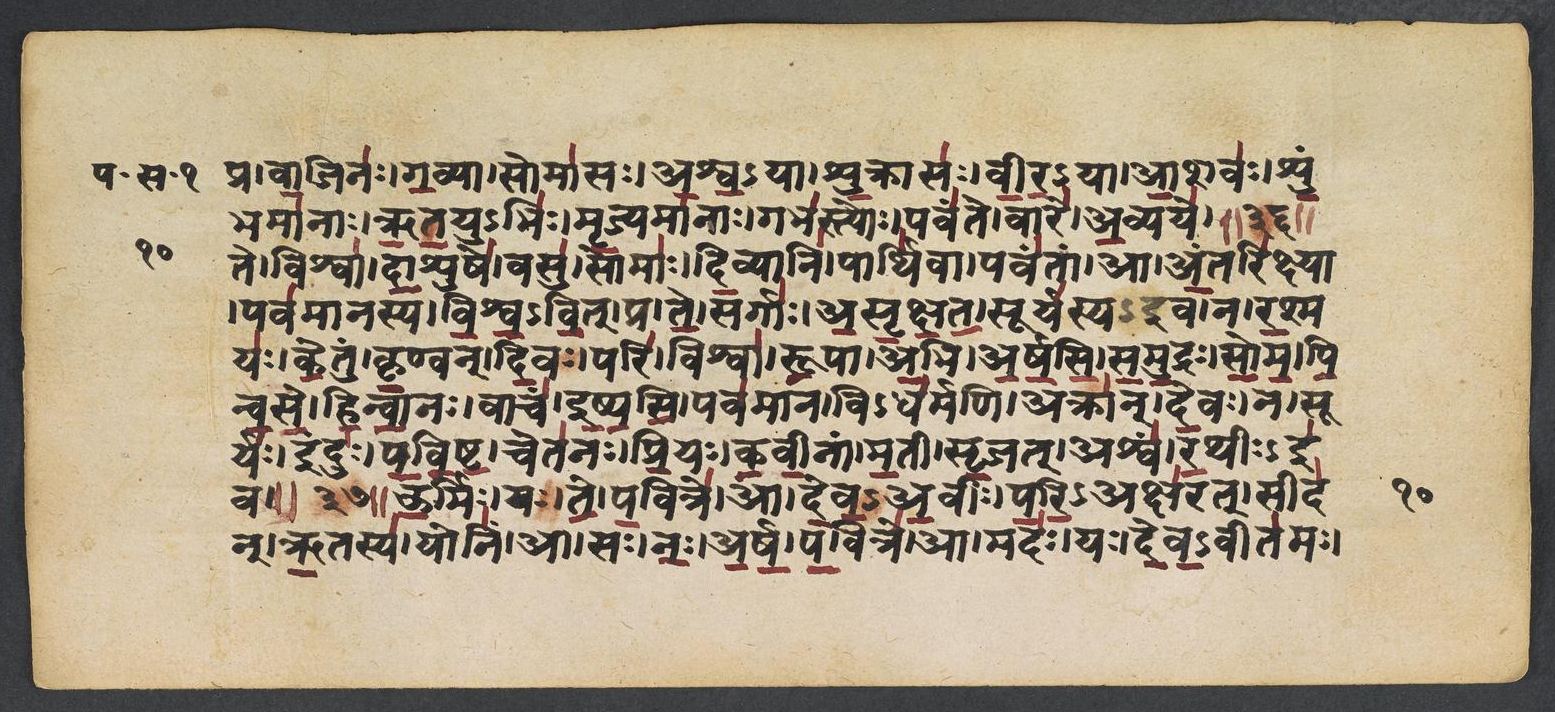
Where on the image
Penn Ms. Coll. 390 Item 41, fol. 693v (numbered 10v by the scribe) (OPenn image 694, upper leaf). Checked on the image: the Rigveda text on this page begins in RV 9.64.4 ‹pra vājinaḥ gavyā somāsaḥ›. The next page with Rigveda text, fol. 694r (numbered 11r by the scribe), begins in RV 9.64.12 ‹indo iti indrāya pītaye›. Verses 9.64.4-11 end on this page; 9.64.4 begins on fol. 693r (numbered 10r by the scribe).
4asṛ̍kṣata̱ pra vā̱jino̍ ga̱vyā somā̍so aśva̱yā | śu̱krāso̍ vīra̱yāśava̍ḥ ||
5śu̱mbhamā̍nā ṛtā̱yubhi̍r mṛ̱jyamā̍nā̱ gabha̍styoḥ | pava̍nte̱ vāre̍ a̱vyaye̍ ||
6te viśvā̍ dā̱śuṣe̱ vasu̱ somā̍ di̱vyāni̱ pārthi̍vā | pava̍ntā̱m āntari̍kṣyā ||
7pava̍mānasya viśvavi̱t pra te̱ sargā̍ asṛkṣata | sūrya̍syeva̱ na ra̱śmaya̍ḥ ||
8ke̱tuṁ kṛ̱ṇvan di̱vas pari̱ viśvā̍ rū̱pābhy a̍rṣasi | sa̱mu̱draḥ so̍ma pinvase ||
9hi̱nvā̱no vāca̍m iṣyasi̱ pava̍māna̱ vidha̍rmaṇi | akrā̍n de̱vo na sūrya̍ḥ ||
10indu̍ḥ paviṣṭa̱ ceta̍naḥ pri̱yaḥ ka̍vī̱nām ma̱tī | sṛ̱jad aśva̍ṁ ra̱thīr i̍va ||
11ū̱rmir yas te̍ pa̱vitra̱ ā de̍vā̱vīḥ pa̱ryakṣa̍rat | sīda̍nn ṛ̱tasya̱ yoni̱m ā ||
Compare: Padapāṭha (word-by-word text written in the manuscript; Sansknet e-text via GRETIL)
4asṛkṣata | pra | vājinaḥ | gavyā | somāsaḥ | aśva-yā | śukrāsaḥ | vīra-yā | āśavaḥ
5śumbhamānāḥ | ṛtayu-bhiḥ | mṛjyamānāḥ | gabhastyoḥ | pavante | vāre | avyaye
6te | viśvā | dāśuṣe | vasu | somāḥ | divyāni | pārthivā | pavantām | ā | antarikṣyā
7pavamānasya | viśva-vit | pra | te | sargāḥ | asṛkṣata | sūryasya-iva | na | raśmayaḥ
8ketum | kṛṇvan | divaḥ | pari | viśvā | rūpā | abhi | ārṣasi | samudraḥ | soma | pinvase
9hinvānaḥ | vācam | iṣyasi | pavamāna | vi-dharmaṇi | akrān | devaḥ | na | sūryaḥ
10induḥ | paviṣṭa | cetanaḥ | priyaḥ | kavīnām | matī | sṛjat | aśvam | rathīḥ-iva
11ūrmiḥ | yaḥ | te | pavitre | ā | dava-avīḥ | pari-akṣarat | sīdan | ṛtasya | yonim | ā
4Out of desire of cows and steeds and horses. potent Soma-drops, Brilliant and swift, have been effused.
5They purified in both the hands, made beautiful by holy men, Flow onward to the fleecy cloth.
6These Soma juices shall pour forth all treasures for the worshipper From heaven and earth and firmament.
7The streams of Pavamâna, thine, Finder of all, have been effused, Even as Sûrya's rays of light.
8Making the light that shines from heaven thou flowest on to every form Soma, thou swellest like a sea.
9Urged on thou sendest out thy voice, O Pavamâna; thou hast moved, Like the God Sûrya, to the sieve.
10Indu, Enlightener, Friend, hath been purified by the sages' hymns: So starts the charioteer his steed-
11Thy God-delighting wave which hath flowed to purifying sieve, Alighting in the home of Law.
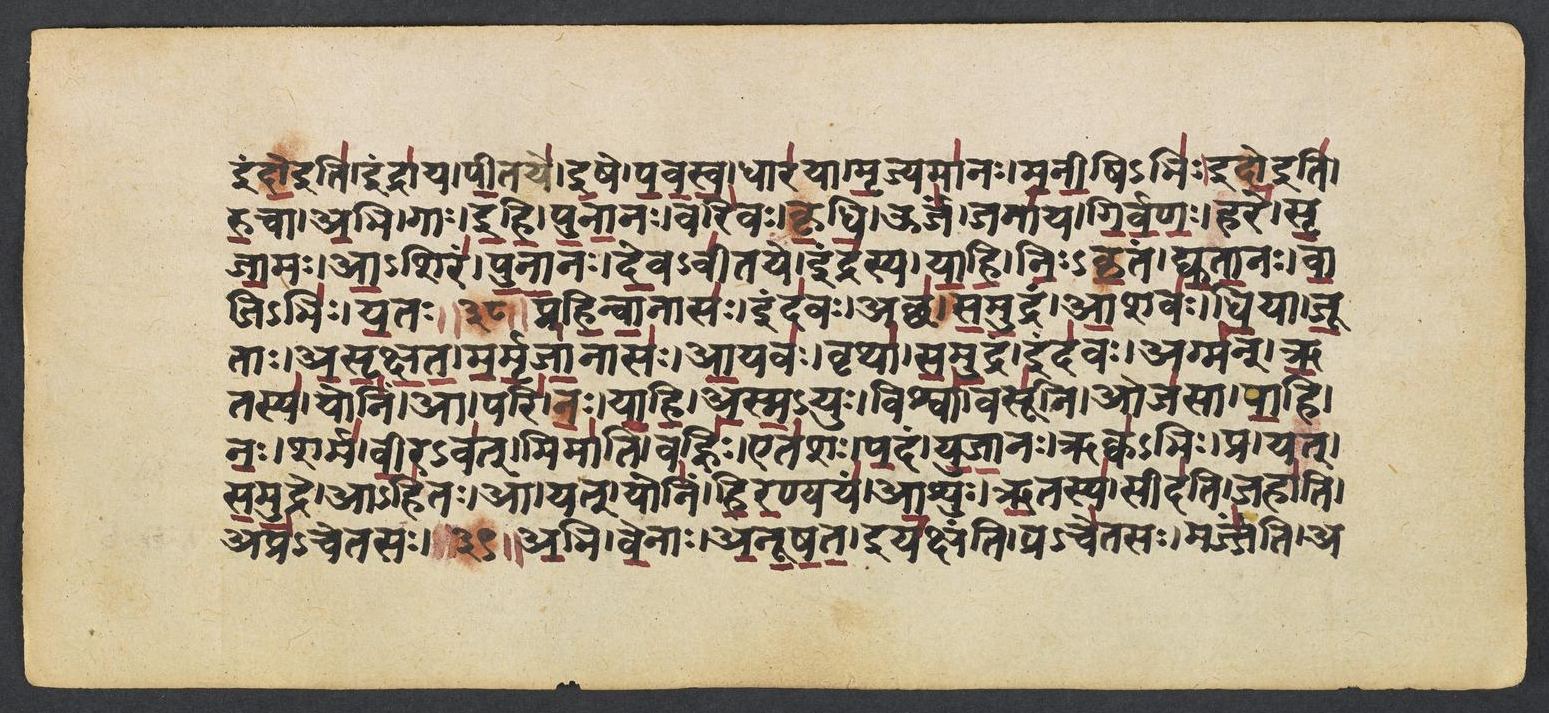
Where on the image
Penn Ms. Coll. 390 Item 41, fol. 694r (numbered 11r by the scribe) (OPenn image 694, lower leaf). Checked on the image: the Rigveda text on this page begins in RV 9.64.12 ‹indo iti indrāya pītaye›. The next page with Rigveda text, fol. 694v (numbered 11v by the scribe), begins in RV 9.64.21 ‹-avi-cetasaḥ›. Verses 9.64.12-20 end on this page; 9.64.12 begins on fol. 693v (numbered 10v by the scribe).
12sa no̍ arṣa pa̱vitra̱ ā mado̱ yo de̍va̱vīta̍maḥ | inda̱v indrā̍ya pī̱taye̍ ||
13i̱ṣe pa̍vasva̱ dhāra̍yā mṛ̱jyamā̍no manī̱ṣibhi̍ḥ | indo̍ ru̱cābhi gā i̍hi ||
14pu̱nā̱no vari̍vas kṛ̱dhy ūrja̱ṁ janā̍ya girvaṇaḥ | hare̍ sṛjā̱na ā̱śira̍m ||
15pu̱nā̱no de̱vavī̍taya̱ indra̍sya yāhi niṣkṛ̱tam | dyu̱tā̱no vā̱jibhi̍r ya̱taḥ ||
16pra hi̍nvā̱nāsa̱ inda̱vo 'cchā̍ samu̱dram ā̱śava̍ḥ | dhi̱yā jū̱tā a̍sṛkṣata ||
17ma̱rmṛ̱jā̱nāsa̍ ā̱yavo̱ vṛthā̍ samu̱dram inda̍vaḥ | agma̍nn ṛ̱tasya̱ yoni̱m ā ||
18pari̍ ṇo yāhy asma̱yur viśvā̱ vasū̱ny oja̍sā | pā̱hi na̱ḥ śarma̍ vī̱rava̍t ||
19mimā̍ti̱ vahni̱r eta̍śaḥ pa̱daṁ yu̍jā̱na ṛkva̍bhiḥ | pra yat sa̍mu̱dra āhi̍taḥ ||
20ā yad yoni̍ṁ hira̱ṇyaya̍m ā̱śur ṛ̱tasya̱ sīda̍ti | jahā̱ty apra̍cetasaḥ ||
Compare: Padapāṭha (word-by-word text written in the manuscript; Sansknet e-text via GRETIL)
12saḥ | naḥ | arṣa | pavitre | ā | madaḥ | yaḥ | deva-vītamaḥ | indo iti | indrāya | pītaye
13iṣe | pavasva | dhārayā | mṛjyamānaḥ | manīṣi-bhiḥ | indo iti | rucā | abhi | gāḥ | ihi
14punānaḥ | varivaḥ | kṛdhi | ūrjam | janāya | girvaṇaḥ | hare | sṛjānaḥ | āśiram
15punānaḥ | deva-vītaye | indrasya | yāhi | niḥ-kṛtam | dyutānaḥ | vāji-bhiḥ | yataḥ
16pra | hinvānāsaḥ | indavaḥ | accha | samudram | āśavaḥ | dhiyā | jūtāḥ | asṛkṣata
17marmṛjānāsaḥ | āyavaḥ | vṛthā | samudram | indavaḥ | agman | ṛtasya | yonim | ā
18pari | naḥ | yāhi | asma-yuḥ | viśvā | vasūni | ojasā | pāhi | naḥ | śarma | vīra-vat
19mimāti | vahniḥ | etaśaḥ | padam | yujānaḥ | ṛkva-bhiḥ | pra | yat | samudre | āhitaḥ
20ā | yat | yonim | hiraṇyayam | āśuḥ | ṛtasya | sīdati | jahāti | apra-cetasaḥ
12Flow to our sieve, a gladdening draught that hath most intercourse with Gods, Indu, to Indra for his drink.
13Flow onward with a stream for food, made beautiful by sapient men: Indu with sheen approach the milk.
14While thou art cleansed, Song-Lover, bring comfort and vigour to the folk, Poured, Tawny One! on milk and curds.
15Purified for the feast of Gods, go thou to Indra's special place, Resplendent, guided by the strong.
16Accelerated by the hymn, the rapid drops of Soma juice Have flowed, urged onward, to the lake.
17Easily have the living drops, made beautiful, approached the lake, Yea, to the place of sacrifice.
18Compass about, our faithful Friend, all our possessions with thy might: Guard, hero like, our sheltering home.
19Loud neighs the Courser Etaṣa, with singers, harnessed for the place, Guided for travel to the lake.
20What time the Swift One resteth in the golden place of sacrifice, He leaves the foolish far away.
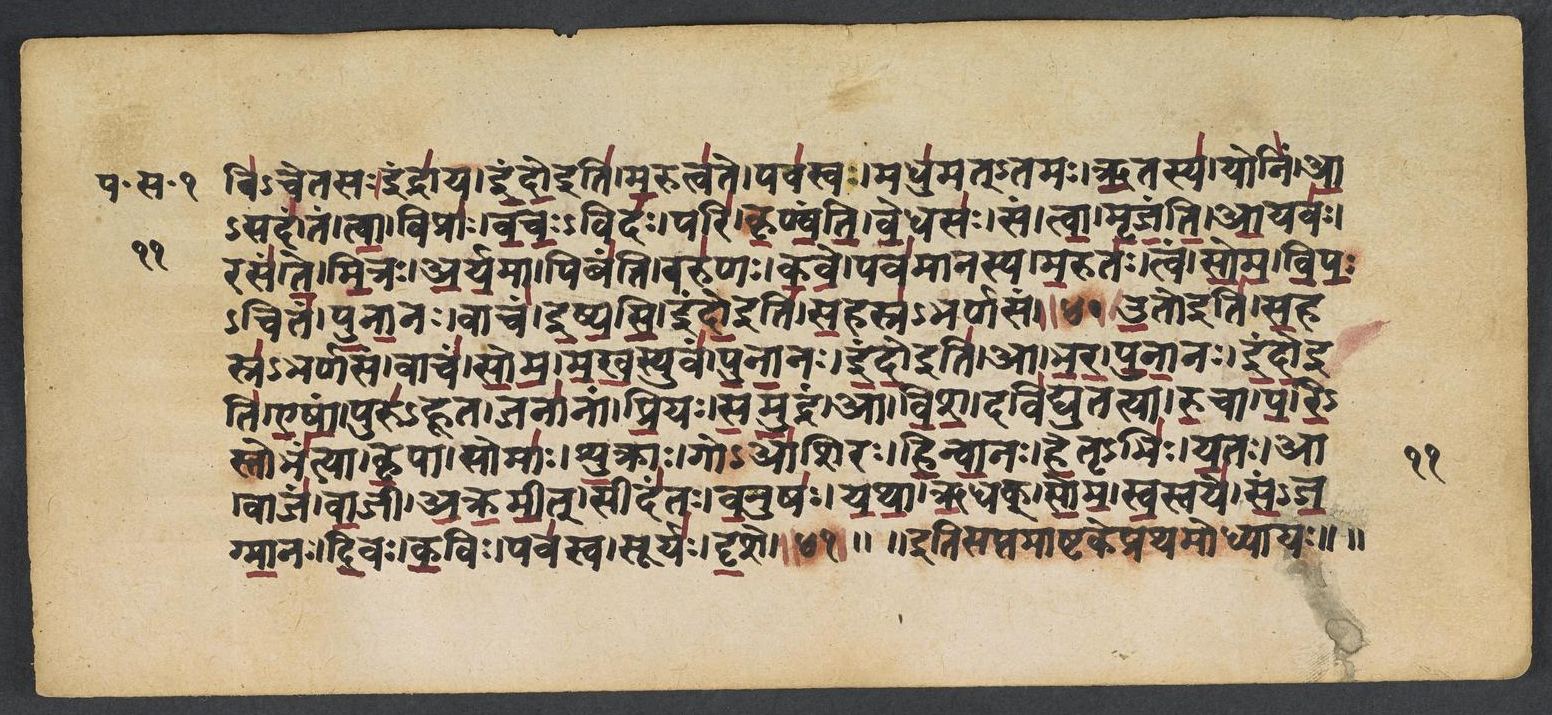
Where on the image
Penn Ms. Coll. 390 Item 41, fol. 694v (numbered 11v by the scribe) (OPenn image 695, upper leaf). Checked on the image: the Rigveda text on this page begins in RV 9.64.21 ‹-avi-cetasaḥ›. The next page with Rigveda text, fol. 695r (numbered 12r by the scribe), begins in RV 9.65.1 ‹hinvanti sūram usrayaḥ svasāraḥ›. Verses 9.64.21-30 end on this page; 9.64.21 begins on fol. 694r (numbered 11r by the scribe).
21a̱bhi ve̱nā a̍nūṣa̱teya̍kṣanti̱ prace̍tasaḥ | majja̱nty avi̍cetasaḥ ||
22indrā̍yendo ma̱rutva̍te̱ pava̍sva̱ madhu̍mattamaḥ | ṛ̱tasya̱ yoni̍m ā̱sada̍m ||
23taṁ tvā̱ viprā̍ vaco̱vida̱ḥ pari̍ ṣkṛṇvanti ve̱dhasa̍ḥ | saṁ tvā̍ mṛjanty ā̱yava̍ḥ ||
24rasa̍ṁ te mi̱tro a̍rya̱mā piba̍nti̱ varu̍ṇaḥ kave | pava̍mānasya ma̱ruta̍ḥ ||
25tvaṁ so̍ma vipa̱ścita̍m punā̱no vāca̍m iṣyasi | indo̍ sa̱hasra̍bharṇasam ||
26u̱to sa̱hasra̍bharṇasa̱ṁ vāca̍ṁ soma makha̱syuva̍m | pu̱nā̱na i̍nda̱v ā bha̍ra ||
27pu̱nā̱na i̍ndav eṣā̱m puru̍hūta̱ janā̍nām | pri̱yaḥ sa̍mu̱dram ā vi̍śa ||
28davi̍dyutatyā ru̱cā pa̍ri̱ṣṭobha̍ntyā kṛ̱pā | somā̍ḥ śu̱krā gavā̍śiraḥ ||
29hi̱nvā̱no he̱tṛbhi̍r ya̱ta ā vāja̍ṁ vā̱jy a̍kramīt | sīda̍nto va̱nuṣo̍ yathā ||
30ṛ̱dhak so̍ma sva̱staye̍ saṁjagmā̱no di̱vaḥ ka̱viḥ | pava̍sva̱ sūryo̍ dṛ̱śe ||
Compare: Padapāṭha (word-by-word text written in the manuscript; Sansknet e-text via GRETIL)
21abhi | venāḥ | anūṣata | iyakṣanti | pra-cetasaḥ | majjanti | avi-cetasaḥ
22indrāya | indo iti | marutvate | pavasva | madhumat-tamaḥ | ṛtasya | yonim | āsadam
23tam | tvā | viprāḥ | vacaḥ-vidaḥ | pari | kṛṇvanti | vedhasaḥ | sam | tvā | mṛjanti | āyavaḥ
24rasam | te | mitraḥ | aryamā | pibanti | varuṇaḥ | kave | pavamānasya | marutaḥ
25tvam | soma | vipaḥ-citam | punānaḥ | vācam | iṣyasi | indo iti | sahasra-bharṇasam
26uto iti | sahasra-bharṇasam | vācam | soma | makhasyuvam | punānaḥ | indo iti | ā | bhara
27punānaḥ | indo iti | eṣām | puru-hūta | janānām | priyaḥ | samudram | ā | viśa
28davidyutatyā | rucā | pari-stobhantyā | kṛpā | somāḥ | śukrāḥ | go-āśiraḥ
29hinvānaḥ | hetṛ-bhiḥ | yataḥ | ā | vājam | vājī | akramīt | sīdantaḥ | vanuṣaḥ | yathā
30ṛdhak | soma | svastaye | sam-jagmānaḥ | divaḥ | kaviḥ | pavasva | sūryaḥ | dṛśe
21The friends have sung in unison, the prudent wish to sacrifice: Down sink the unintelligent.
22For Indra girt by Maruts, flow, thou Indu, very rich in sweets, To sit in place of sacrifice.
23Controlling priests and sages skilled in holy song adorn thee well: The living make thee beautiful.
24Aryaman, Mitra, Varuṇa drink Pavamâna's juice, yea, thine: O Sage, the Maruts drink thereof.
25O Soma, Indu, thou while thou art purified urgest onward speech. Thousandfold, with the lore of hymns.
26Yea, Soma, Indu, while thou art purified do thou bring to us Speech thousandfold that longs for war.
27O Indu, Much-invoked, while thou art purifying, as the Friend. Of these men enter thou the lake.
28Bright are these Somas blent with milk, with light that flashes brilliantly. And form that utters loud acclaim.
29Led by his drivers, and sent forth, the Strong Steed hath come nigh for spoil, Like warriors when they stand arrayed.
30Specially, Soma, coming as a Sage from heaven to prosper us, Flow like the Sun for us to see.
Notes
- Sanskrit: Aufrecht's edition (1877) with the Vedic accents, as entered by van Nooten and Holland (GRETIL).
- English: Ralph T. H. Griffith, The Hymns of the Rigveda (1889-1892; 2nd ed. 1896-1897), from the VedaWeb digital text; OCR slips in that text were corrected against the printed 2nd edition (data/sources/rigveda/griffith_errata.json).
- Padapāṭha (edition text): Sansknet e-text via GRETIL (CC BY-NC-SA 4.0).
Cite
Sources
- Source: Penn Ms. Coll. 390 Item 41 (undated (catalogued with Penn's 18th-19th c. Vedic manuscripts)), OPenn, Public Domain Mark + Aufrecht's accented text (GRETIL) + Griffith's English (VedaWeb) (holding institution)
- Critical edition: Aufrecht (1877), accented e-text via GRETIL
← previous · → next · v cycle view · l back to library