Rigveda 9.65: To Soma
Introduction
Rigveda 9.65 is a hymn of 30 verses addressed to Soma. It stands in book (maṇḍala) 9, the hymns to Soma Pavamāna. The Rigveda is the oldest collection of Sanskrit hymns, composed in the second half of the second millennium BCE and handed down orally for many centuries before it was written down.
The manuscript shown is Penn Ms. Coll. 390 Item 41 (University of Pennsylvania), an undated paper manuscript of the padapāṭha (the word-by-word recitation text, in which every word is written separately and compounds are split) of the whole Ṛgveda in Devanāgarī, 884 leaves in fascicles, 7-9 lines to the page, accents in red; this hymn stands on fol. 695r-696v. Each section below gives the verses that end on one page; the page boundaries were read on the images (the opening words of every page), not counted out. Where the manuscript is a padapāṭha (the word-by-word recitation text), the section shows Aufrecht's continuous (saṃhitā) text first and, as the edition text, the padapāṭha of the same verses, which is the form written on the page.
How was this verified? (Provenance)
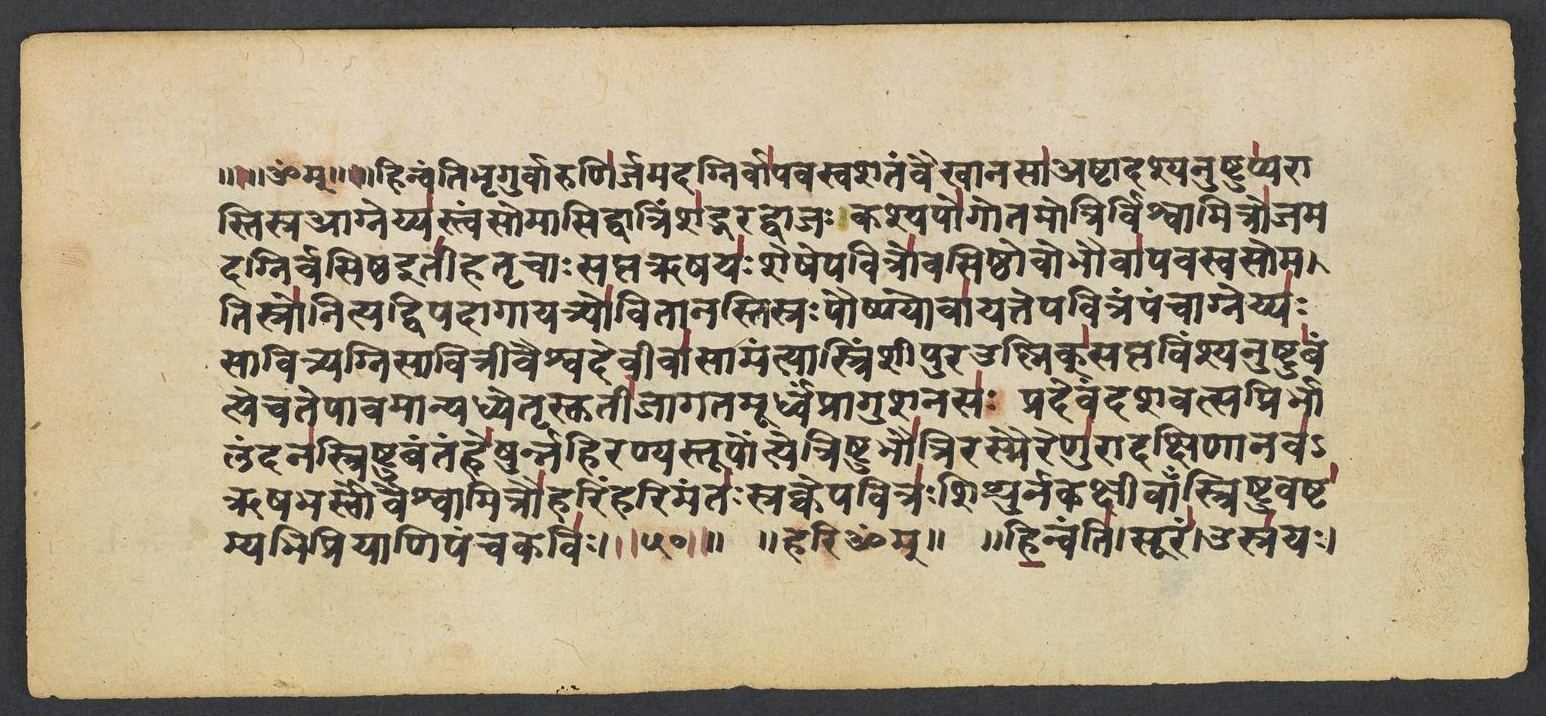
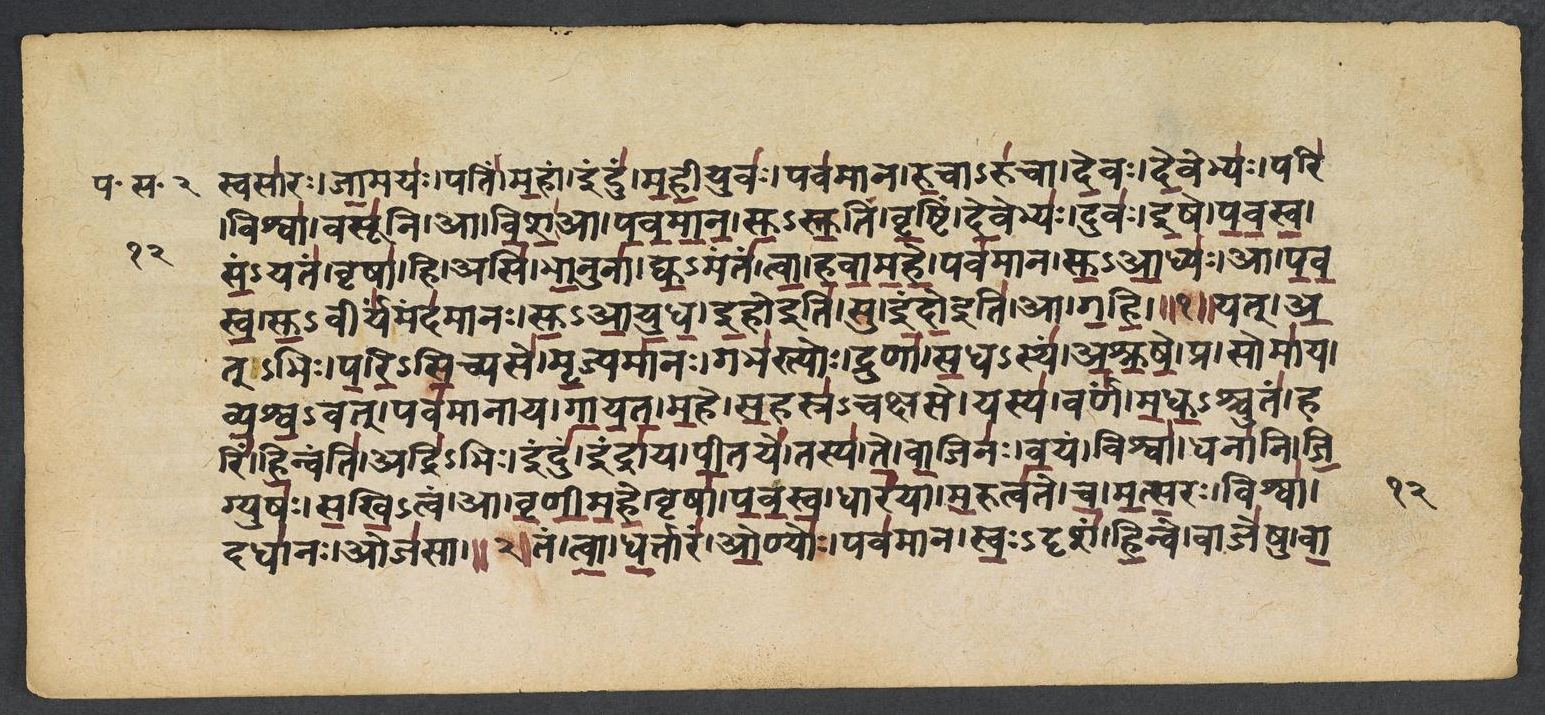
Where on the image
Penn Ms. Coll. 390 Item 41, fol. 695v (numbered 12v by the scribe) (OPenn image 696, upper leaf). Checked on the image: the Rigveda text on this page begins in RV 9.65.1 ‹svasāraḥ jāmayaḥ patim mahām›. The next page with Rigveda text, fol. 696r (numbered 13r by the scribe), begins in RV 9.65.11 ‹-vājinam›. Verses 9.65.1-10 end on this page; 9.65.1 begins on fol. 695r (numbered 12r by the scribe).
1hi̱nvanti̱ sūra̱m usra̍ya̱ḥ svasā̍ro jā̱maya̱s pati̍m | ma̱hām indu̍m mahī̱yuva̍ḥ ||
2pava̍māna ru̱cā-ru̍cā de̱vo de̱vebhya̱s pari̍ | viśvā̱ vasū̱ny ā vi̍śa ||
3ā pa̍vamāna suṣṭu̱tiṁ vṛ̱ṣṭiṁ de̱vebhyo̱ duva̍ḥ | i̱ṣe pa̍vasva sa̱ṁyata̍m ||
4vṛṣā̱ hy asi̍ bhā̱nunā̍ dyu̱manta̍ṁ tvā havāmahe | pava̍māna svā̱dhya̍ḥ ||
5ā pa̍vasva su̱vīrya̱m manda̍mānaḥ svāyudha | i̱ho ṣv i̍nda̱v ā ga̍hi ||
6yad a̱dbhiḥ pa̍riṣi̱cyase̍ mṛ̱jyamā̍no̱ gabha̍styoḥ | druṇā̍ sa̱dhastha̍m aśnuṣe ||
7pra somā̍ya vyaśva̱vat pava̍mānāya gāyata | ma̱he sa̱hasra̍cakṣase ||
8yasya̱ varṇa̍m madhu̱ścuta̱ṁ hari̍ṁ hi̱nvanty adri̍bhiḥ | indu̱m indrā̍ya pī̱taye̍ ||
9tasya̍ te vā̱jino̍ va̱yaṁ viśvā̱ dhanā̍ni ji̱gyuṣa̍ḥ | sa̱khi̱tvam ā vṛ̍ṇīmahe ||
10vṛṣā̍ pavasva̱ dhāra̍yā ma̱rutva̍te ca matsa̱raḥ | viśvā̱ dadhā̍na̱ oja̍sā ||
Compare: Padapāṭha (word-by-word text written in the manuscript; Sansknet e-text via GRETIL)
1hinvanti | sūram | usrayaḥ | svasāraḥ | jāmayaḥ | patim | mahām | indum | mahīyuvaḥ
2pavamāna | rucārucā | devaḥ | devebhyaḥ | pari | viśvā | vasūni | ā | viśa
3ā | pavamāna | su-stutim | vṛṣṭim | devebhyaḥ | duvaḥ | iṣe | pavasva | sam-yatam
4vṛṣā | hi | asi | bhānunā | dyu-mantam | tvā | havāmahe | pavamāna | su-ādhyaḥ
5ā | pāvasva | su-vīryam | mandamānaḥ | su-āyudha | iho iti | su | indo iti | ā | gahi
6yat | at-bhiḥ | pari-sicyase | mṛjyamānaḥ | gabhastyoḥ | druṇā | sadha-stham | aśnuṣe
7pra | somāya | vyaśva-vat | pavamānāya | gāyata | mahe | sahasra-cakṣase
8yasya | varṇam | madhu-ścutam | harim | hinvanti | adri-bhiḥ | indum | indrāya | pītaye
9tasya | te | vājinaḥ | vayam | viśvā | dhanāni | jigyuṣaḥ | sakhi-tvam | ā | vṛṇīmahe
10vṛṣā | pavasva | dhārayā | marutvate | ca | matsaraḥ | viśvā | dadhānaḥ | ojasā
1THE, glittering maids send Sûra forth, the glorious sisters, close-allied, Send Indu forth, their mighty Lord.
2Pervade, O Pavamâna, all our treasures with repeated light, God, coming hither from the Gods.
3Pour on us, Pavamâna, rain, as service and rain praise for Gods: Pour all to be our nourishment.
4Thou art a Steer by lustre: we, O Pavamâna, faithfully Call upon thee the Splendid One.
5Do thou, rejoicing, nobly-armed! pour upon us heroic strength: O Indu, come thou bitherward.
6When thou art cleansed with both the hands and dipped in waters, with the wood. Thou comest to the gathering-place.
7Sing forth your songs, as Vyaṣva sang, to Soma Pavamâna, to, The Mighty One with thousand eyes;
8Whose coloured sap they drive with stones, the yellow meath-distilling juice, Indu for Indra, for his drink.
9We seek to gain the friendly love of thee that Strong and Mighty One, Of thee the winner of all wealth.
10Flow onward with thy stream, a Steer, inspiriting the Maruts' Lord, Winning all riches by thy might.
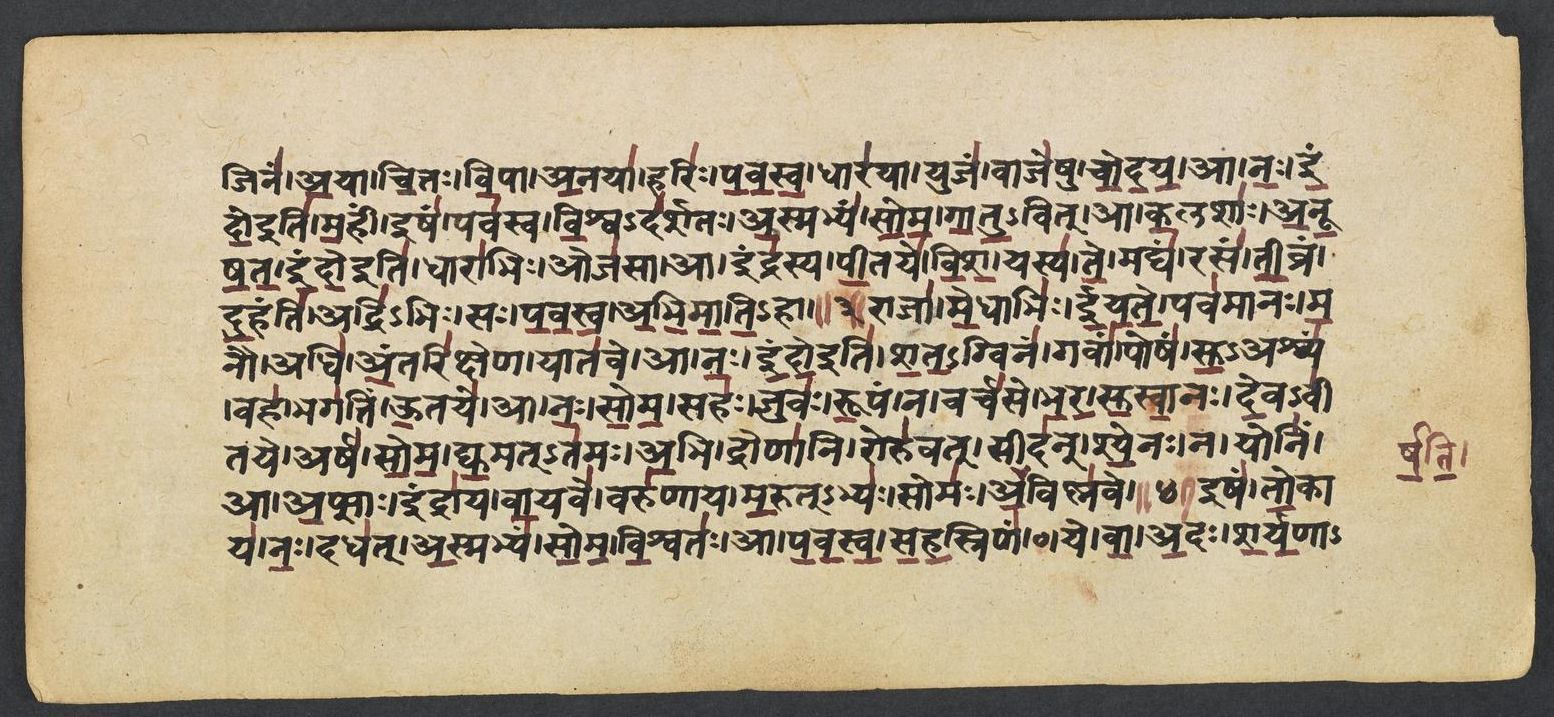
Where on the image
Penn Ms. Coll. 390 Item 41, fol. 696r (numbered 13r by the scribe) (OPenn image 696, lower leaf). Checked on the image: the Rigveda text on this page begins in RV 9.65.11 ‹-vājinam›. The next page with Rigveda text, fol. 696v (numbered 13v by the scribe), begins in RV 9.65.22 ‹-śaryaṇāvati›. Verses 9.65.11-21 end on this page; 9.65.11 begins on fol. 695v (numbered 12v by the scribe).
11taṁ tvā̍ dha̱rtāra̍m o̱ṇyo̱3̱̍ḥ pava̍māna sva̱rdṛśa̍m | hi̱nve vāje̍ṣu vā̱jina̍m ||
12a̱yā ci̱tto vi̱pānayā̱ hari̍ḥ pavasva̱ dhāra̍yā | yuja̱ṁ vāje̍ṣu codaya ||
13ā na̍ indo ma̱hīm iṣa̱m pava̍sva vi̱śvada̍rśataḥ | a̱smabhya̍ṁ soma gātu̱vit ||
14ā ka̱laśā̍ anūṣa̱tendo̱ dhārā̍bhi̱r oja̍sā | endra̍sya pī̱taye̍ viśa ||
15yasya̍ te̱ madya̱ṁ rasa̍ṁ tī̱vraṁ du̱hanty adri̍bhiḥ | sa pa̍vasvābhimāti̱hā ||
16rājā̍ me̱dhābhi̍r īyate̱ pava̍māno ma̱nāv adhi̍ | a̱ntari̍kṣeṇa̱ yāta̍ve ||
17ā na̍ indo śata̱gvina̱ṁ gavā̱m poṣa̱ṁ svaśvya̍m | vahā̱ bhaga̍ttim ū̱taye̍ ||
18ā na̍ḥ soma̱ saho̱ juvo̍ rū̱paṁ na varca̍se bhara | su̱ṣvā̱ṇo de̱vavī̍taye ||
19arṣā̍ soma dyu̱matta̍mo̱ 'bhi droṇā̍ni̱ roru̍vat | sīda̍ñ chye̱no na yoni̱m ā ||
20a̱psā indrā̍ya vā̱yave̱ varu̍ṇāya ma̱rudbhya̍ḥ | somo̍ arṣati̱ viṣṇa̍ve ||
21iṣa̍ṁ to̱kāya̍ no̱ dadha̍d a̱smabhya̍ṁ soma vi̱śvata̍ḥ | ā pa̍vasva saha̱sriṇa̍m ||
Compare: Padapāṭha (word-by-word text written in the manuscript; Sansknet e-text via GRETIL)
11tam | tvā | dhartāram | oṇyoḥ | pavamāna | svaḥ-dṛśam | hinve | vājeṣu | vājinam
12ayā | cittaḥ | vipā | anayā | hariḥ | pavasva | dhārayā | yujam | vājeṣu | codaya
13ā | naḥ | indo iti | mahīm | iṣam | pavasva | viśva-darśataḥ | asmabhyam | soma | gātu-vit
14ā | kalaśāḥ | anūṣata | indo iti | dhārābhiḥ | ojasā | ā | indrasya | pītaye | viśa
15yasya | te | madyam | rasam | tīvram | duhanti | adri-bhiḥ | saḥ | pavasva | abhi | māti-hā
16rājā | medhābhiḥ | īyate | pavamānaḥ | manau | adhi | antarikṣeṇa | yātave
17ā | naḥ | indo iti | śata-gvinam | gavām | poṣam | su-aśvyam | vaha | bhagattim | ūtaye
18ā | naḥ | soma | sahaḥ | juvaḥ | rūpam | na | varcase | bhara | susvānaḥ | deva-vītaye
19arṣa | soma | dyumat-tamaḥ | abhi | droṇāni | roruvat | sīdan | śyenaḥ | na | yonim | ā
20apsāḥ | indrāya | vāyave | varuṇāya | marut-bhyaḥ | somaḥ | arṣati | viṣṇave
21iṣam | tokāya | naḥ | dadhat | asmabhyam | soma | viśvataḥ | ā | pavasva | sahasriṇam
11I send thee forth to battle from the press, O Pavamâna, Strong, Sustainer, looker on the light.
12Acknowledged by this song of mine, flow, tawny-coloured, with thy stream Incite to battle thine ally.
13O Indu, visible to all pour out for us abundant food: Soma, be thou our prosperer.
14The pitchers, Indu, with thy streams have sung aloud in vigorous might Enter them, and let Indra drink.
15O thou whose potent gladdening juice they milk out with the stones, flow on, Destroyer of our enemies.
16King Pavamâna is implored with holy songs, on man's behalf, To travel through the firmament.
17Bring us, O Indu, hundredfold increase of kine, and noble steeds, The gift of fortune for our help.
18Pressed for the banquet of the Gods, O Soma, bring us might, and speed, Like beauty for a brilliant show.
19Soma, flow on exceeding bright with loud roar to the wooden vats, Falcon-like resting in thine home.
20Soma, the Water-winner flows to Indra, Vâyu, Varuṇa, To Vishṇu and the Marut host.
21Soma , bestowing food upon our progeny, from every sides, Pour on us riches thousandfold
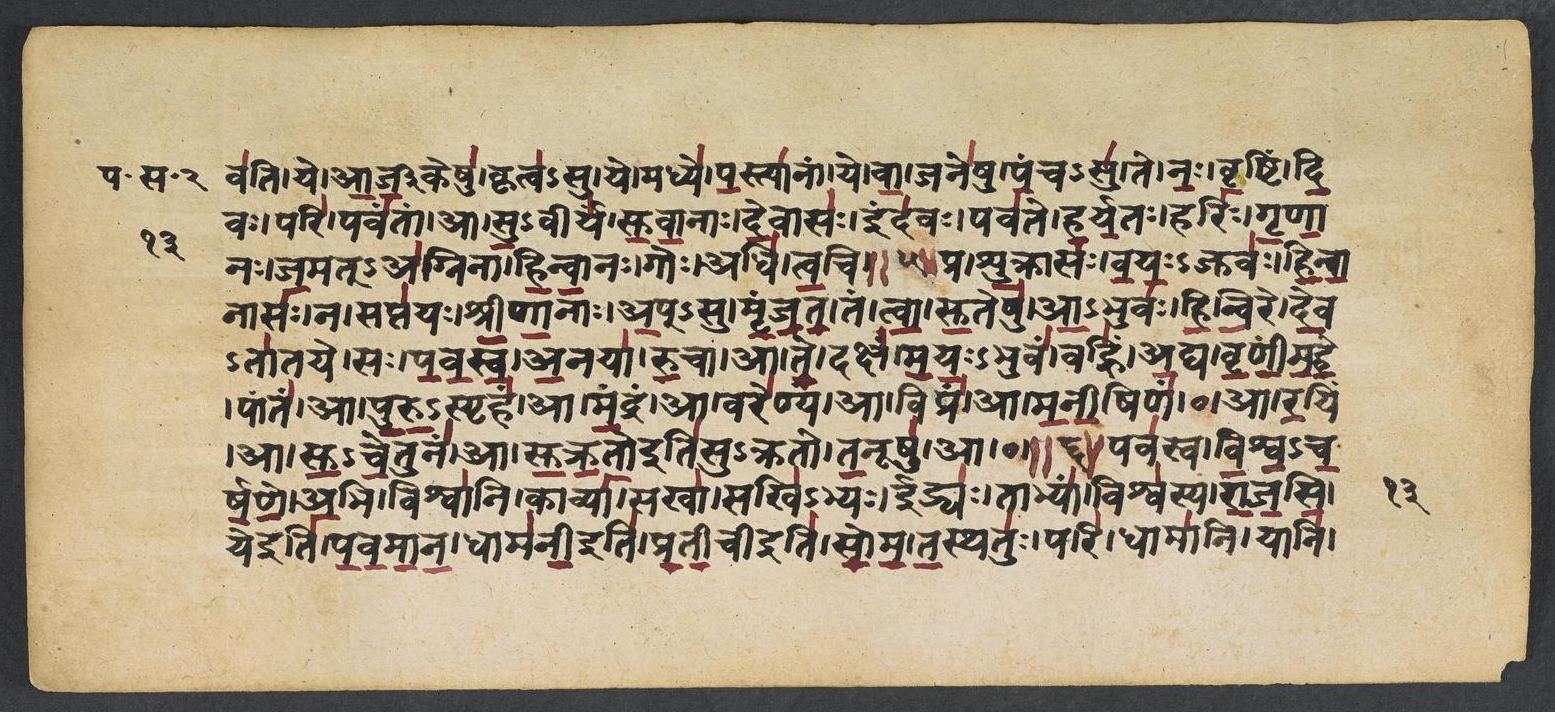
Where on the image
Penn Ms. Coll. 390 Item 41, fol. 696v (numbered 13v by the scribe) (OPenn image 697, upper leaf). Checked on the image: the Rigveda text on this page begins in RV 9.65.22 ‹-śaryaṇāvati›. The next page with Rigveda text, fol. 697r (numbered 14r by the scribe), begins in RV 9.66.3 ‹te tvam soma asi›. Verses 9.65.22-30 end on this page; 9.65.22 begins on fol. 696r (numbered 13r by the scribe).
22ye somā̍saḥ parā̱vati̱ ye a̍rvā̱vati̍ sunvi̱re | ye vā̱daḥ śa̍rya̱ṇāva̍ti ||
23ya ā̍rjī̱keṣu̱ kṛtva̍su̱ ye madhye̍ pa̱styā̍nām | ye vā̱ jane̍ṣu pa̱ñcasu̍ ||
24te no̍ vṛ̱ṣṭiṁ di̱vas pari̱ pava̍ntā̱m ā su̱vīrya̍m | su̱vā̱nā de̱vāsa̱ inda̍vaḥ ||
25pava̍te harya̱to hari̍r gṛṇā̱no ja̱mada̍gninā | hi̱nvā̱no gor adhi̍ tva̱ci ||
26pra śu̱krāso̍ vayo̱juvo̍ hinvā̱nāso̱ na sapta̍yaḥ | śrī̱ṇā̱nā a̱psu mṛ̍ñjata ||
27taṁ tvā̍ su̱teṣv ā̱bhuvo̍ hinvi̱re de̱vatā̍taye | sa pa̍vasvā̱nayā̍ ru̱cā ||
28ā te̱ dakṣa̍m mayo̱bhuva̱ṁ vahni̍m a̱dyā vṛ̍ṇīmahe | pānta̱m ā pu̍ru̱spṛha̍m ||
29ā ma̱ndram ā vare̍ṇya̱m ā vipra̱m ā ma̍nī̱ṣiṇa̍m | pānta̱m ā pu̍ru̱spṛha̍m ||
30ā ra̱yim ā su̍ce̱tuna̱m ā su̍krato ta̱nūṣv ā | pānta̱m ā pu̍ru̱spṛha̍m ||
Compare: Padapāṭha (word-by-word text written in the manuscript; Sansknet e-text via GRETIL)
22ye | somāsaḥ | parāvati | ye | arvāvati | sunvire | ye | vādaḥ | śaryaṇāvati
23ye | ārjīkeṣu | kṛtva-su | ye | madhye | pastyānām | ye | vā | janeṣu | pañca-su
24te | naḥ | vṛṣṭim | divaḥ | pari | pavantām | ā | su-vīryam | suvānāḥ | devāsaḥ | indavaḥ
25pavate | haryataḥ | hariḥ | gṛṇānaḥ | jamat-agninā | hinvānaḥ | goḥ | adhi | tvaci
26pra | śukrāsaḥ | vayaḥ-juvaḥ | hinvānāsaḥ | na | saptayaḥ | śrīṇānāḥ | ap-su | mṛñjata
27tam | tvā | suteṣu | ābhuvaḥ | hinvire | deva-tātaye | saḥ | pavasva | anayā | rucā
28ā | te | dakṣam | mayaḥ-bhuvam | vahnim | adya | vṛṇīmahe | pāntam | ā | puru-spṛham
29ā | mandram | ā | vareṇyam | ā | vipram | ā | manīṣiṇam | pāntam | ā | puru-spṛham
30ā | rayim | ā | su-cetunam | ā | sukrato itisu-krato | tanūṣu | ā | pāntam | ā | puru-spṛham
22The Soma juices which have been expressed afar or near at hand, Or there on Saryanavan's bank,
23Those pressed among Ârjîkas, pressed among the active, in men's homes, Or pressed among the Races Five-
24May these celestial drops, expressed, pour forth upon us, as they flow, Rain from the heavens and hero strength.
25Urged forward o'er the ox-hide flows the Lovely One of tawny hue, Lauded by Jamadagni's song.
26Like horses urged to speed, the drops, bright, stirring vital power, when blent With milk, are beautified in streams.
27So they who toil with juices send thee forward for the Gods' repast: So with this splendour flow thou on.
28We choose to-day that chariot-steed of thine, the Strong, that brings us bliss, The Guardian, the desire of all,
29The Excellent, the Gladdener, the Sage with heart that understands, The Guardian, the desire of all;
30Who for ourselves, O thou Most Wise, is wealth and fair intelligence, The Guardian, the desire of all.
Notes
- Sanskrit: Aufrecht's edition (1877) with the Vedic accents, as entered by van Nooten and Holland (GRETIL).
- English: Ralph T. H. Griffith, The Hymns of the Rigveda (1889-1892; 2nd ed. 1896-1897), from the VedaWeb digital text; OCR slips in that text were corrected against the printed 2nd edition (data/sources/rigveda/griffith_errata.json).
- Padapāṭha (edition text): Sansknet e-text via GRETIL (CC BY-NC-SA 4.0).
Cite
Sources
- Source: Penn Ms. Coll. 390 Item 41 (undated (catalogued with Penn's 18th-19th c. Vedic manuscripts)), OPenn, Public Domain Mark + Aufrecht's accented text (GRETIL) + Griffith's English (VedaWeb) (holding institution)
- Critical edition: Aufrecht (1877), accented e-text via GRETIL
← previous · → next · v cycle view · l back to library