Rigveda 9.66: To Soma
Introduction
Rigveda 9.66 is a hymn of 30 verses addressed to Soma. It stands in book (maṇḍala) 9, the hymns to Soma Pavamāna. The Rigveda is the oldest collection of Sanskrit hymns, composed in the second half of the second millennium BCE and handed down orally for many centuries before it was written down.
The manuscript shown is Penn Ms. Coll. 390 Item 41 (University of Pennsylvania), an undated paper manuscript of the padapāṭha (the word-by-word recitation text, in which every word is written separately and compounds are split) of the whole Ṛgveda in Devanāgarī, 884 leaves in fascicles, 7-9 lines to the page, accents in red; this hymn stands on fol. 696v-698r. Each section below gives the verses that end on one page; the page boundaries were read on the images (the opening words of every page), not counted out. Where the manuscript is a padapāṭha (the word-by-word recitation text), the section shows Aufrecht's continuous (saṃhitā) text first and, as the edition text, the padapāṭha of the same verses, which is the form written on the page.
How was this verified? (Provenance)
Where on the image
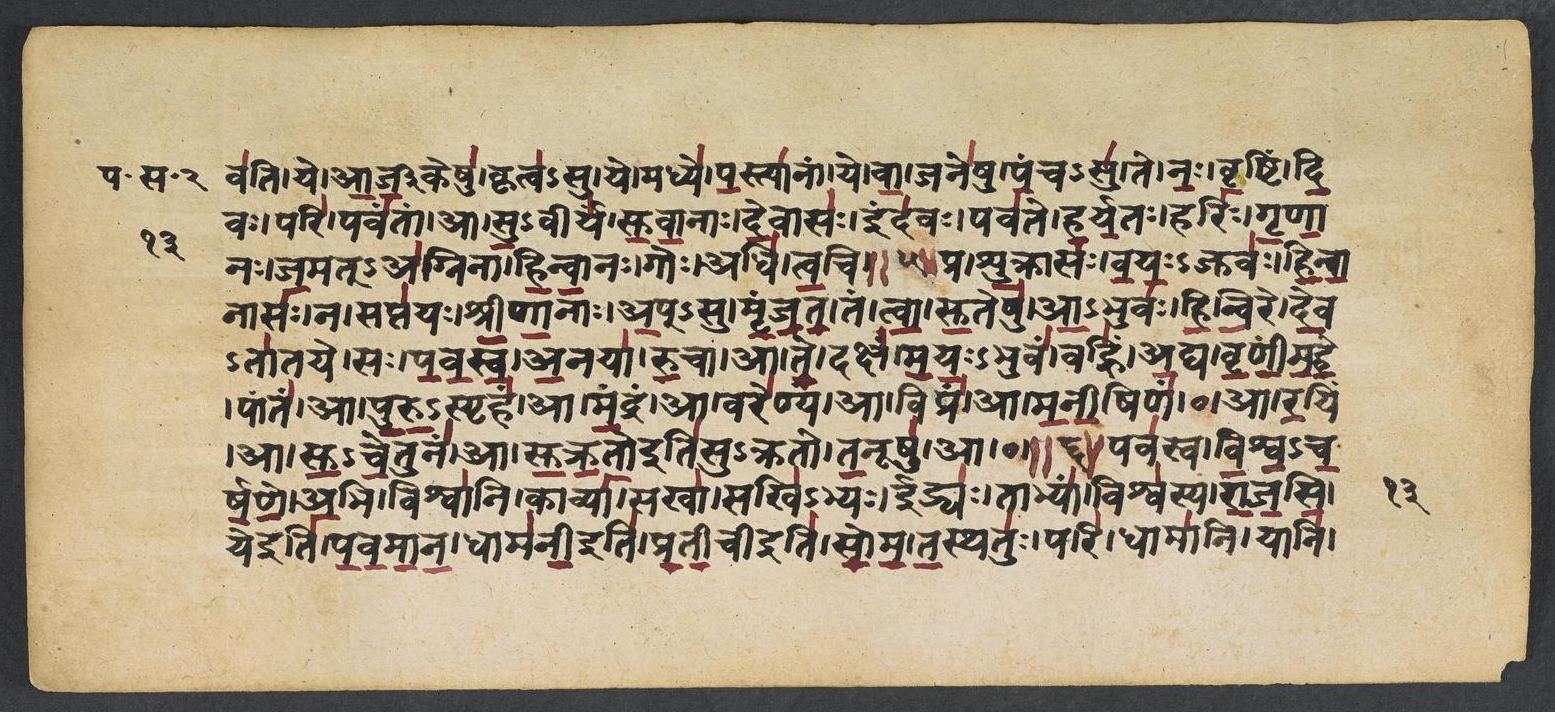
Penn Ms. Coll. 390 Item 41, fol. 696v (numbered 13v by the scribe) (OPenn image 697, upper leaf). Checked on the image: the Rigveda text on this page begins in RV 9.65.22 ‹-śaryaṇāvati›. The next page with Rigveda text, fol. 697r (numbered 14r by the scribe), begins in RV 9.66.3 ‹te tvam soma asi›. Verses 9.66.1-2 end on this page.
1pava̍sva viśvacarṣaṇe̱ 'bhi viśvā̍ni̱ kāvyā̍ | sakhā̱ sakhi̍bhya̱ īḍya̍ḥ ||
2tābhyā̱ṁ viśva̍sya rājasi̱ ye pa̍vamāna̱ dhāma̍nī | pra̱tī̱cī so̍ma ta̱sthatu̍ḥ ||
Compare: Padapāṭha (word-by-word text written in the manuscript; Sansknet e-text via GRETIL)
1pavasva | viśva-carṣaṇe | abhi | viśvāni | kāvyā | sakhā | sakhi-bhyaḥ | īḍyaḥ
2tābhyam | viśvasya | rājasi | ye | pavamāna | dhāmanī iti | pratīcī iti | soma | tasthatuḥ
1FOR holy lore of every sort, flow onward thou whom all men love. A Friend to be besought by friends.
2O'er all thou rulest with these Two which, Soma Pavamâna, stand, Turned, as thy stations, hitherward.
Where on the image
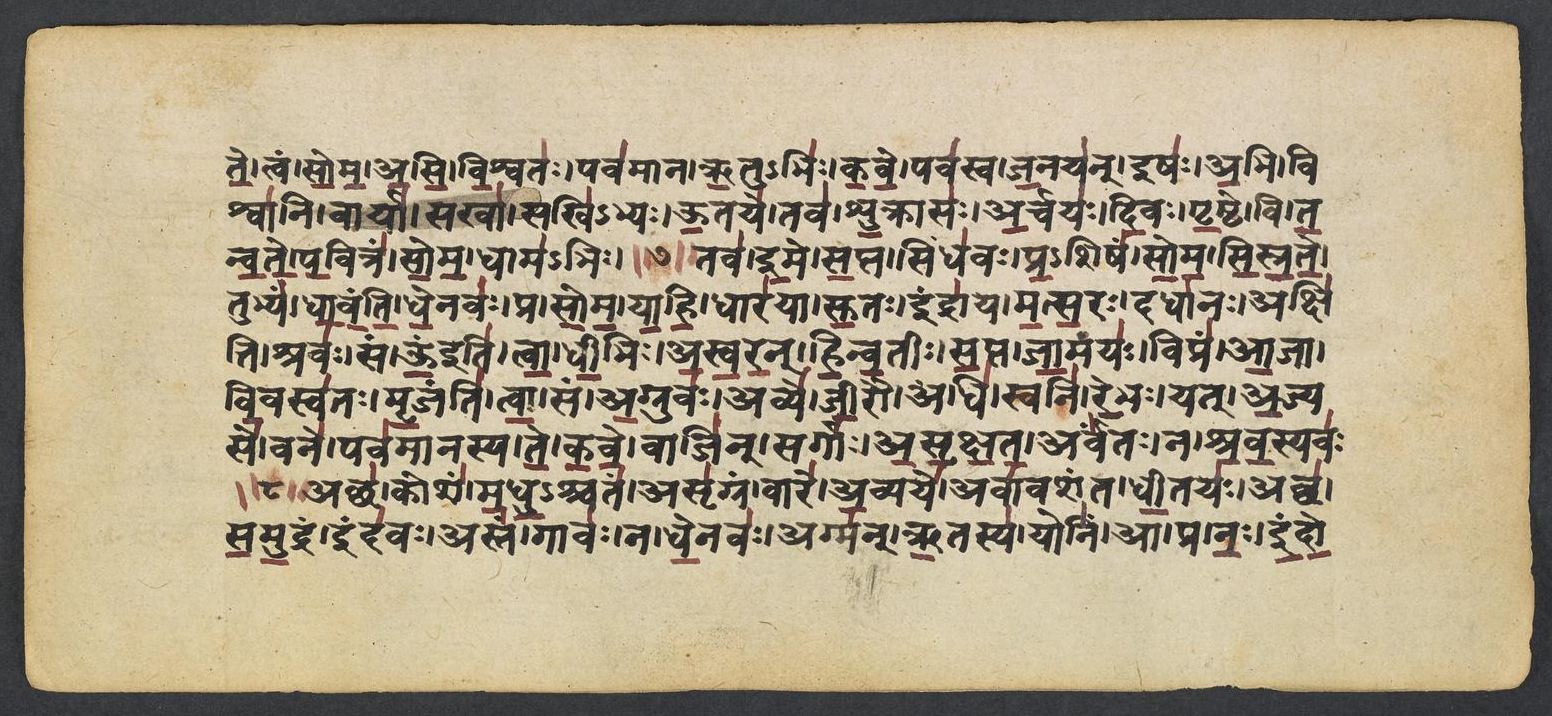
Penn Ms. Coll. 390 Item 41, fol. 697r (numbered 14r by the scribe) (OPenn image 697, lower leaf). Checked on the image: the Rigveda text on this page begins in RV 9.66.3 ‹te tvam soma asi›. The next page with Rigveda text, fol. 697v (numbered 14v by the scribe), begins in RV 9.66.13 ‹iti mahe raṇe āpaḥ›. Verses 9.66.3-12 end on this page; 9.66.3 begins on fol. 696v (numbered 13v by the scribe).
3pari̱ dhāmā̍ni̱ yāni̍ te̱ tvaṁ so̍māsi vi̱śvata̍ḥ | pava̍māna ṛ̱tubhi̍ḥ kave ||
4pava̍sva ja̱naya̱nn iṣo̱ 'bhi viśvā̍ni̱ vāryā̍ | sakhā̱ sakhi̍bhya ū̱taye̍ ||
5tava̍ śu̱krāso̍ a̱rcayo̍ di̱vas pṛ̱ṣṭhe vi ta̍nvate | pa̱vitra̍ṁ soma̱ dhāma̍bhiḥ ||
6tave̱me sa̱pta sindha̍vaḥ pra̱śiṣa̍ṁ soma sisrate | tubhya̍ṁ dhāvanti dhe̱nava̍ḥ ||
7pra so̍ma yāhi̱ dhāra̍yā su̱ta indrā̍ya matsa̱raḥ | dadhā̍no̱ akṣi̍ti̱ śrava̍ḥ ||
8sam u̍ tvā dhī̱bhir a̍svaran hinva̱tīḥ sa̱pta jā̱maya̍ḥ | vipra̍m ā̱jā vi̱vasva̍taḥ ||
9mṛ̱janti̍ tvā̱ sam a̱gruvo 'vye̍ jī̱rāv adhi̱ ṣvaṇi̍ | re̱bho yad a̱jyase̱ vane̍ ||
10pava̍mānasya te kave̱ vāji̱n sargā̍ asṛkṣata | arva̍nto̱ na śra̍va̱syava̍ḥ ||
11acchā̱ kośa̍m madhu̱ścuta̱m asṛ̍gra̱ṁ vāre̍ a̱vyaye̍ | avā̍vaśanta dhī̱taya̍ḥ ||
12acchā̍ samu̱dram inda̱vo 'sta̱ṁ gāvo̱ na dhe̱nava̍ḥ | agma̍nn ṛ̱tasya̱ yoni̱m ā ||
Compare: Padapāṭha (word-by-word text written in the manuscript; Sansknet e-text via GRETIL)
3pari | dhāmāni | yāni | te | tvam | soma | asi | viśvataḥ | pavamāna | ṛtu-bhiḥ | kave
4pavasva | janayan | iṣaḥ | abhi | viśvāni | vāryā | sakhā | sakhi-bhyaḥ | ūtaye
5tava | śukrāsaḥ | arcayaḥ | divaḥ | pṛṣṭhe | vi | tanvate | pavitram | soma | dhāma-bhiḥ
6tava | ime | sapta | sindhavaḥ | pra-śiṣam | soma | sisrate | tubhyam | dhāvanti | dhenavaḥ
7pra | sama | yāhi | dhārayā | sutaḥ | indrāya | matsaraḥ | dadhānaḥ | akṣiti | śravaḥ
8sam | oṃ iti | tvā | dhībhiḥ | asvaran | hinvatīḥ | sapta | jāmayaḥ | vipram | ājā | vivasvataḥ
9mṛjanti | tvā | sam | agruvaḥ | avye | jīrau | adhi | svani | rebhaḥ | yat | ajyase | vane
10pavamānasya | te | kave | vājin | sargāḥ | asṛkṣata | arvantaḥ | na | śravasyavaḥ
11accha | kośam | madhu-ścutam | asṛgram | vāre | avyaye | avāvaśanta | dhītayaḥ
12accha | samudram | indavaḥ | astam | gāvaḥ | na | dhenavaḥ | agman | ṛtasya | yonim | ā
3Wise Soma Pavamâna, thou encompassest on every side Thy stations as the seasons come.
4Flow onward, generating food, for precious boons of every kind, A Friend for friends, to be our help.
5Upon the lofty ridge of heaven thy bright rays with their essences, Soma, spread purifying power.
6O Soma, these Seven Rivers flow, as being thine, to give command: The Streams of milk run forth to thee.
7Flow onward, Soma in a stream, effused to gladden Indra's heart, Bringing imperishable fame.
8Driving thee in Vivasvan's course, the Seven Sisters with their hymns Made melody round thee the Sage.
9The virgins deck thee o'er fresh streams to drive thee to the sieve when thou, A singer, bathest in the wood.
10The streams of Pavamâna, thine, Sage, Mighty One, have pouredthem forth. Like coursers eager for renown.
11They have been poured upon the fleece towards the meath-distilling vat: The holy songs have sounded forth.
12Like milch-kine coming home, the drops of Soma juice have reached the lake, Have reached the place of sacrifice.
Where on the image
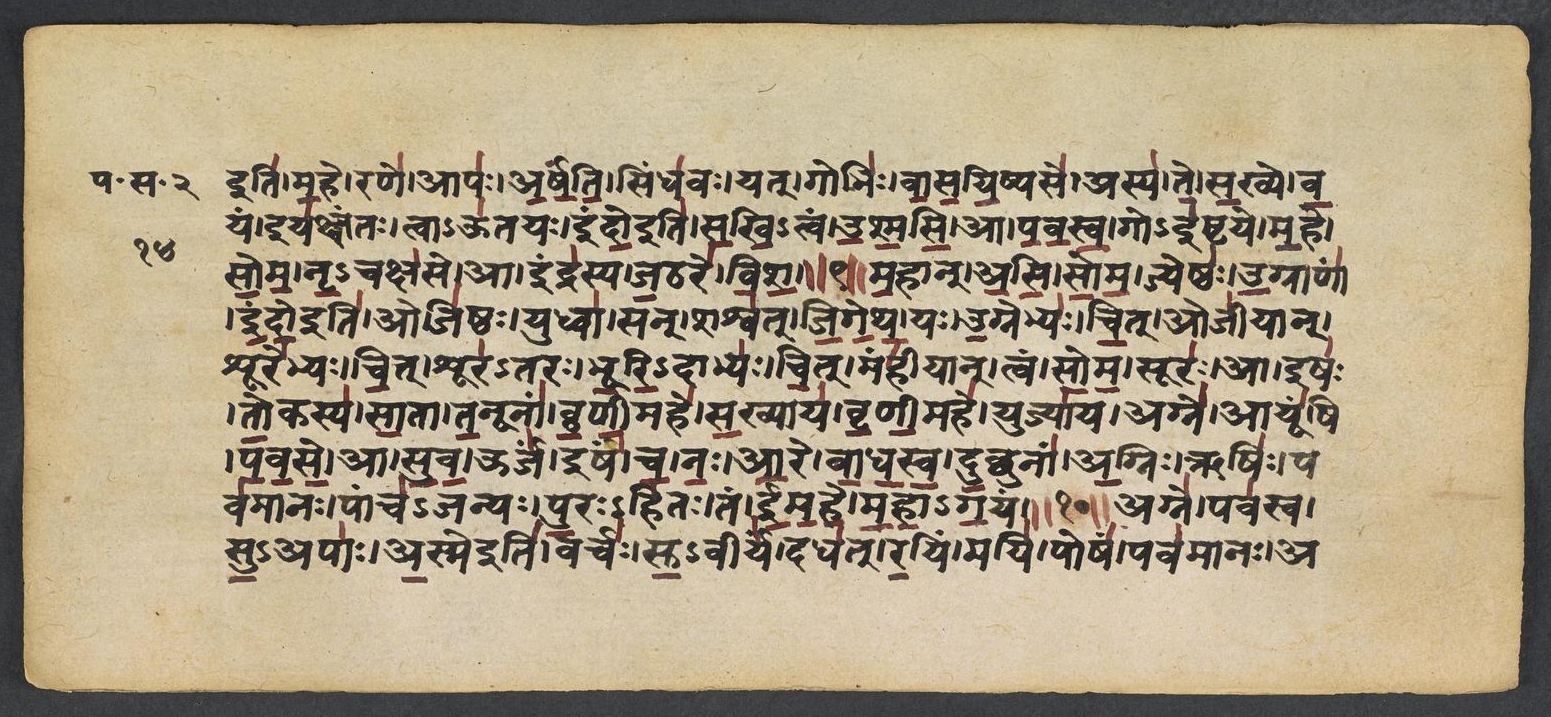
Penn Ms. Coll. 390 Item 41, fol. 697v (numbered 14v by the scribe) (OPenn image 698, upper leaf). Checked on the image: the Rigveda text on this page begins in RV 9.66.13 ‹iti mahe raṇe āpaḥ›. The next page with Rigveda text, fol. 698r (numbered 15r by the scribe), begins in RV 9.66.22 ‹-ati sridhaḥ abhi arṣati›. Verses 9.66.13-21 end on this page; 9.66.13 begins on fol. 697r (numbered 14r by the scribe).
13pra ṇa̍ indo ma̱he raṇa̱ āpo̍ arṣanti̱ sindha̍vaḥ | yad gobhi̍r vāsayi̱ṣyase̍ ||
14asya̍ te sa̱khye va̱yam iya̍kṣanta̱s tvota̍yaḥ | indo̍ sakhi̱tvam u̍śmasi ||
15ā pa̍vasva̱ gavi̍ṣṭaye ma̱he so̍ma nṛ̱cakṣa̍se | endra̍sya ja̱ṭhare̍ viśa ||
16ma̱hām̐ a̍si soma̱ jyeṣṭha̍ u̱grāṇā̍m inda̱ oji̍ṣṭhaḥ | yudhvā̱ sañ chaśva̍j jigetha ||
17ya u̱grebhya̍ś ci̱d ojī̍yā̱ñ chūre̍bhyaś ci̱c chūra̍taraḥ | bhū̱ri̱dābhya̍ś ci̱n maṁhī̍yān ||
18tvaṁ so̍ma̱ sūra̱ eṣa̍s to̱kasya̍ sā̱tā ta̱nūnā̍m | vṛ̱ṇī̱mahe̍ sa̱khyāya̍ vṛṇī̱mahe̱ yujyā̍ya ||
19agna̱ āyū̍ṁṣi pavasa̱ ā su̱vorja̱m iṣa̍ṁ ca naḥ | ā̱re bā̍dhasva du̱cchunā̍m ||
20a̱gnir ṛṣi̱ḥ pava̍māna̱ḥ pāñca̍janyaḥ pu̱rohi̍taḥ | tam ī̍mahe mahāga̱yam ||
21agne̱ pava̍sva̱ svapā̍ a̱sme varca̍ḥ su̱vīrya̍m | dadha̍d ra̱yim mayi̱ poṣa̍m ||
Compare: Padapāṭha (word-by-word text written in the manuscript; Sansknet e-text via GRETIL)
13pra | naḥ | indo iti | mahe | raṇe | āpaḥ | arṣanti | sindhavaḥ | yat | gobhiḥ | vāsayiṣyase
14asya | te | sakhye | vayam | iyakṣantaḥ | tvā-ūtayaḥ | indo iti | sakhi-tvam | uśmasi
15ā | pāvasva | go-iṣṭaye | mahe | soma | nṛ-cakṣase | ā | indrasya | jaṭhare | viśa
16mahān | asi | soma | jyeṣṭhaḥ | ugrāṇām | indo iti | ojiṣṭhaḥ | yudhvā | san | śaśvat | jigetha
17yaḥ | ugrebhyaḥ | cit | ojīyān | śūrebhyaḥ | cit | śūra-taraḥ | bhūri-dābhyaḥ | cit | maṃhīyān
18tvam | soma | sūraḥ | ā | iṣaḥ | tokasya | sātā | tanūnām | vṛṇīmahe | sakhyāya | vṛṇīmahe | yujyāya
19agne | āyūṃṣi | pavase | ā | suva | ūrjam | iṣam | ca | naḥ | āre | bādhasva | ducchunām
20agniḥ | ṛṣiḥ | pavamānaḥ | pāñca-janyaḥ | puraḥ-hitaḥ | tam | īmahe | mahāgayam
21agne | pavasva | su-apāḥ | asme iti | varcaḥ | su-vīryam | dadhat | rayim | mayi | poṣam
13O Indu, to our great delight the running waters flow to us, When thou wilt robe thyself in milk.
14In this thy friendship, and with thee to help us, fain to sacrifice, Indu, we crave thy friendly love.
15Flow on, O Soma, for the great Viewer of men, for gain of kine Enter thou into Indra's throat.
16Best art thou, Soma, of the great, Strongest of strong ones, Indu: thou As Warrior ever hast prevailed.
17Mightier even than the strong, more valiant even than the brave, More liberal than the bountiful,
18Soma, as Sura, bring us food, win offspring of our bodies: we Elect thee for our friendship, we elect thee for companionship.
19Agni, thou pourest life; send down upon us food and vigorous strength; Drive thou misfortune far away,
20Agni is Pavamâna, Sage, Chief Priest of all the Races Five: To him whose wealth is great we pray.
21Skilled in thy task, O Agni, pour splendour with hero strength on us, Granting me wealth that nourishes.
Where on the image
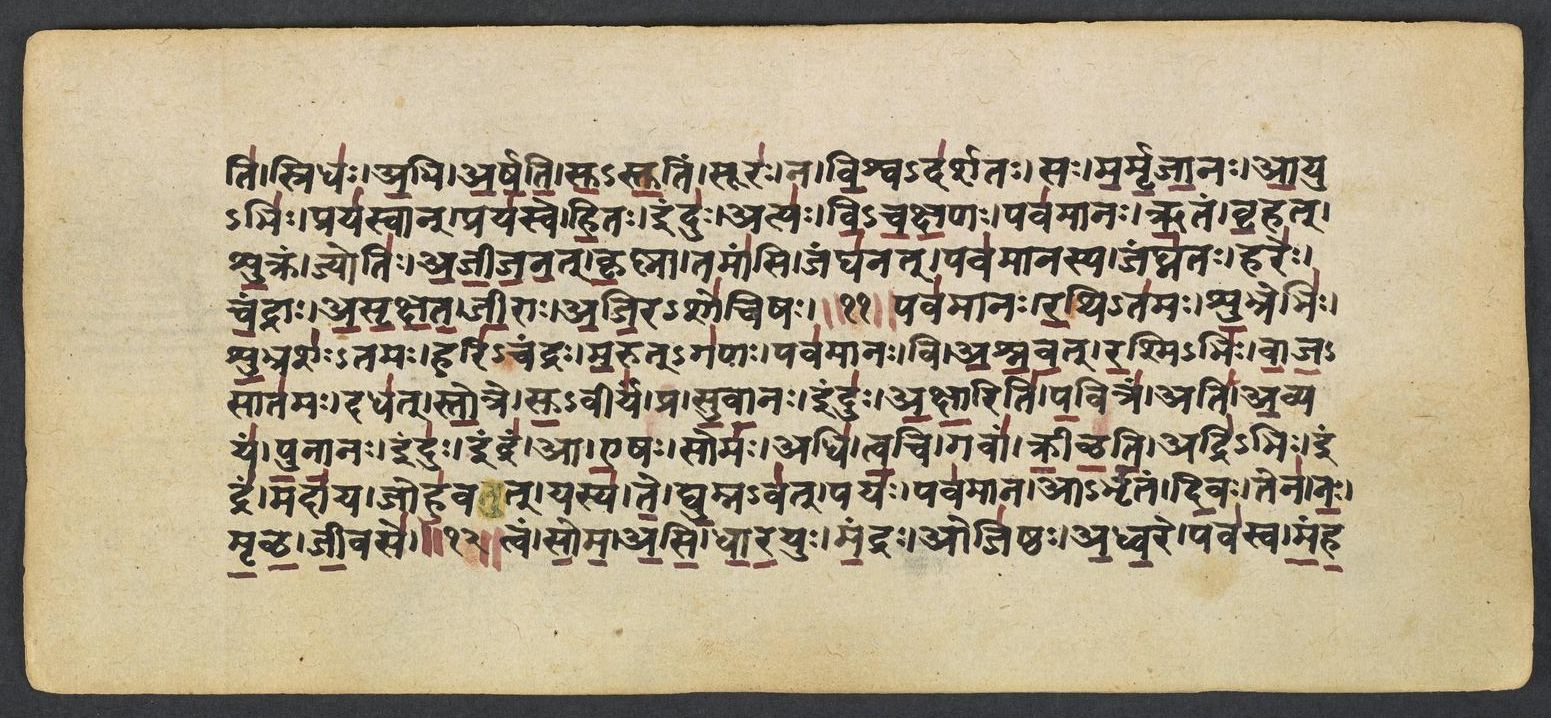
Penn Ms. Coll. 390 Item 41, fol. 698r (numbered 15r by the scribe) (OPenn image 698, lower leaf). Checked on the image: the Rigveda text on this page begins in RV 9.66.22 ‹-ati sridhaḥ abhi arṣati›. The next page with Rigveda text, fol. 698v (numbered 15v by the scribe), begins in RV 9.67.1 ‹-maṃhayat-rayiḥ›. Verses 9.66.22-30 end on this page; 9.66.22 begins on fol. 697v (numbered 14v by the scribe).
22pava̍māno̱ ati̱ sridho̱ 'bhy a̍rṣati suṣṭu̱tim | sūro̱ na vi̱śvada̍rśataḥ ||
23sa ma̍rmṛjā̱na ā̱yubhi̱ḥ praya̍svā̱n praya̍se hi̱taḥ | indu̱r atyo̍ vicakṣa̱ṇaḥ ||
24pava̍māna ṛ̱tam bṛ̱hac chu̱kraṁ jyoti̍r ajījanat | kṛ̱ṣṇā tamā̍ṁsi̱ jaṅgha̍nat ||
25pava̍mānasya̱ jaṅghna̍to̱ hare̍ś ca̱ndrā a̍sṛkṣata | jī̱rā a̍ji̱raśo̍ciṣaḥ ||
26pava̍māno ra̱thīta̍maḥ śu̱bhrebhi̍ḥ śu̱bhraśa̍stamaḥ | hari̍ścandro ma̱rudga̍ṇaḥ ||
27pava̍māno̱ vy a̍śnavad ra̱śmibhi̍r vāja̱sāta̍maḥ | dadha̍t sto̱tre su̱vīrya̍m ||
28pra su̍vā̱na indu̍r akṣāḥ pa̱vitra̱m aty a̱vyaya̍m | pu̱nā̱na indu̱r indra̱m ā ||
29e̱ṣa somo̱ adhi̍ tva̱ci gavā̍ṁ krīḻa̱ty adri̍bhiḥ | indra̱m madā̍ya̱ johu̍vat ||
30yasya̍ te dyu̱mnava̱t paya̱ḥ pava̍mā̱nābhṛ̍taṁ di̱vaḥ | tena̍ no mṛḻa jī̱vase̍ ||
Compare: Padapāṭha (word-by-word text written in the manuscript; Sansknet e-text via GRETIL)
22pavamānaḥ | ati | sridhaḥ | abhi | arṣati | su-stutim | sūraḥ | na | viśva-darśataḥ
23saḥ | marmṛjānaḥ | āyu-bhiḥ | prayasvān | prayase | hitaḥ | induḥ | atyaḥ | vi-cakṣaṇaḥ
24pavamānaḥ | ṛtam | bṛhat | śukram | jyotiḥ | ajījanat | kṛṣṇā | tamāṃsi | jaṅghanat
25pavamānasya | jaṅghnataḥ | hareḥ | candrāḥ | asṛkṣata | jīrāḥ | ajira-śociṣaḥ
26pavamānaḥ | rathi-tamaḥ | śubhrebhiḥ | śubhraśaḥ-tamaḥ | hari-candraḥ | marut-gaṇaḥ
27pavamānaḥ | vi | aśnavat | raśmi-bhiḥ | vāja-sātamaḥ | dadhat | stotre | su-vīryam
28pra | suvānaḥ | induḥ | akṣāriti | pavitram | ati | avyayam | punānaḥ | induḥ | indram | ā
29eṣaḥ | somaḥ | adhi | tvaci | gavām | krīḷati | adri-bhiḥ | indram | madāya | johuvat
30yasya | te | dyumna-vat | payaḥ | pavamāna | ābhṛtam | divaḥ | tena | naḥ | mṛḷa | jīvase
22Beyond his enemies away to sweet praise Pavamâna flows, Like Sûrya visible to all.
23Adorned by living men, set forth for entertainment, rich in food, Far-sighted Indu is a Steed.
24He, Pavamâna, hath produced the lofty Law, the brilliant light, Destroying darkness black of hue.
25From tawny Pavamâna, the Destroyer, radiant streams have sprung, Quick streams from him whose gleams are swift.
26Best rider of the chariot, praised with fairest praise mid beauteous ones, Gold-gleaming with the Marut host,
27May Pavamâna, best to win the booty, penetrate with rays, Giving the singer hero strength.
28Over the fleecy sieve hath flowed the drop effused: to Indra comes Indu while he is purified
29This Soma, through the pressing-stones, is sporting on the oxhide, and Summoning Indra to the draught.
30O Pavamâna, bless us, so that we may live, with that bright milk Of thine which hath been brought from heaven.
Notes
- Sanskrit: Aufrecht's edition (1877) with the Vedic accents, as entered by van Nooten and Holland (GRETIL).
- English: Ralph T. H. Griffith, The Hymns of the Rigveda (1889-1892; 2nd ed. 1896-1897), from the VedaWeb digital text; OCR slips in that text were corrected against the printed 2nd edition (data/sources/rigveda/griffith_errata.json).
- Padapāṭha (edition text): Sansknet e-text via GRETIL (CC BY-NC-SA 4.0).
Cite
Sources
- Source: Penn Ms. Coll. 390 Item 41 (undated (catalogued with Penn's 18th-19th c. Vedic manuscripts)), OPenn, Public Domain Mark + Aufrecht's accented text (GRETIL) + Griffith's English (VedaWeb) (holding institution)
- Critical edition: Aufrecht (1877), accented e-text via GRETIL
← previous · → next · v cycle view · l back to library