Rigveda 9.67: To Soma and other gods
Introduction
Rigveda 9.67 is a hymn of 32 verses addressed to Soma and other gods. It stands in book (maṇḍala) 9, the hymns to Soma Pavamāna. The Rigveda is the oldest collection of Sanskrit hymns, composed in the second half of the second millennium BCE and handed down orally for many centuries before it was written down.
The manuscript shown is Penn Ms. Coll. 390 Item 41 (University of Pennsylvania), an undated paper manuscript of the padapāṭha (the word-by-word recitation text, in which every word is written separately and compounds are split) of the whole Ṛgveda in Devanāgarī, 884 leaves in fascicles, 7-9 lines to the page, accents in red; this hymn stands on fol. 698r-700r. Each section below gives the verses that end on one page; the page boundaries were read on the images (the opening words of every page), not counted out. Where the manuscript is a padapāṭha (the word-by-word recitation text), the section shows Aufrecht's continuous (saṃhitā) text first and, as the edition text, the padapāṭha of the same verses, which is the form written on the page.
How was this verified? (Provenance)
Where on the image
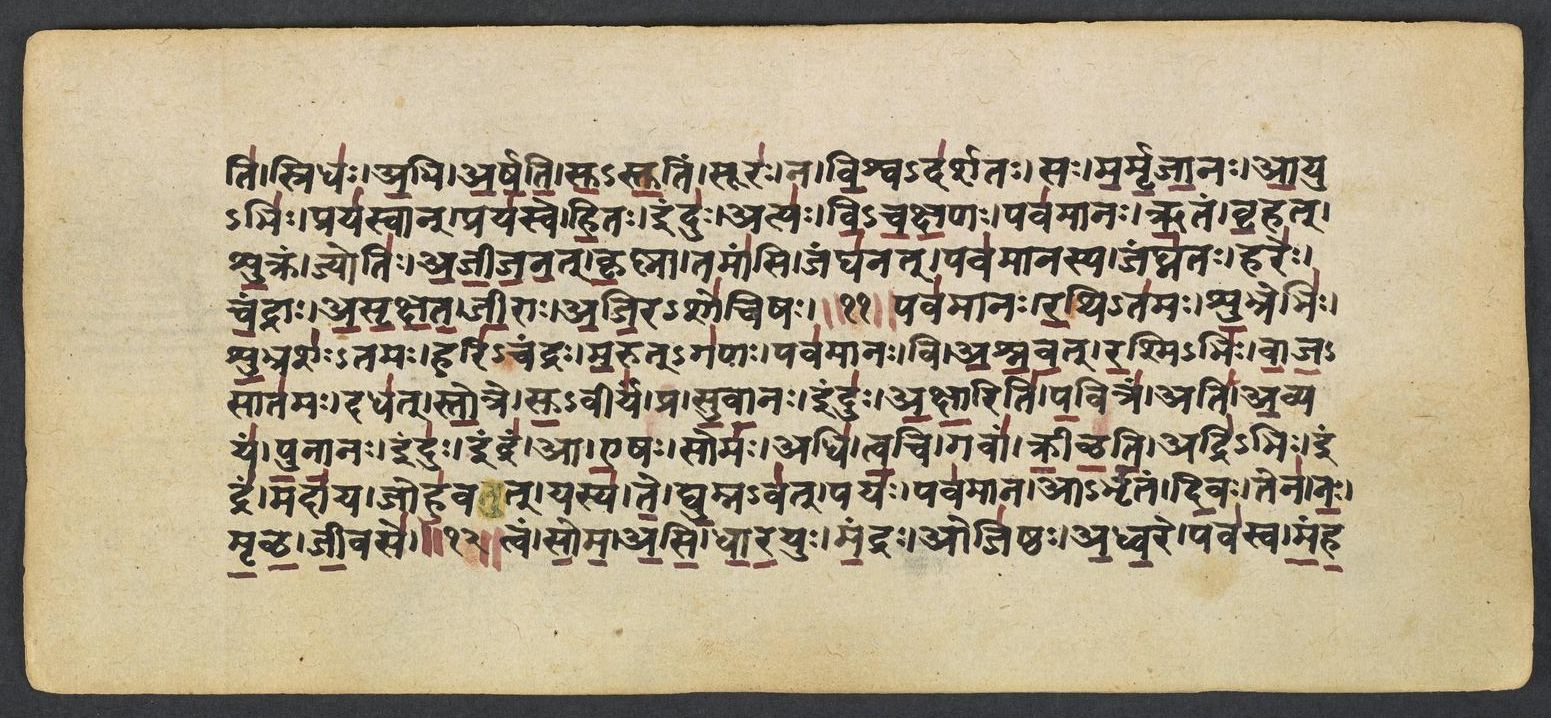
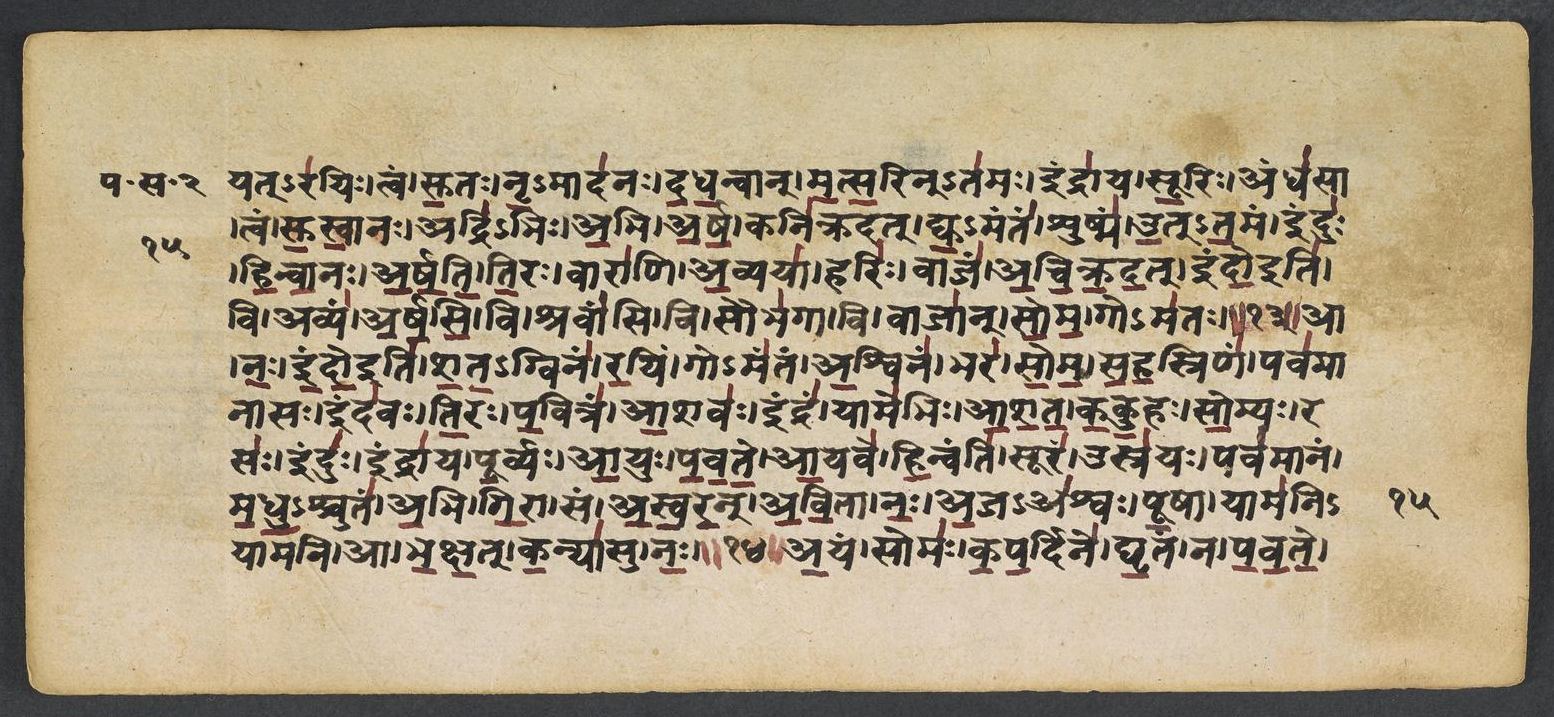
Penn Ms. Coll. 390 Item 41, fol. 698v (numbered 15v by the scribe) (OPenn image 699, upper leaf). Checked on the image: the Rigveda text on this page begins in RV 9.67.1 ‹-maṃhayat-rayiḥ›. The next page with Rigveda text, fol. 699r (numbered 16r by the scribe), begins in RV 9.67.11 ‹naḥ›. Verses 9.67.1-10 end on this page; 9.67.1 begins on fol. 698r (numbered 15r by the scribe).
1tvaṁ so̍māsi dhāra̱yur ma̱ndra oji̍ṣṭho adhva̱re | pava̍sva maṁha̱yadra̍yiḥ ||
2tvaṁ su̱to nṛ̱māda̍no dadha̱nvān ma̍tsa̱rinta̍maḥ | indrā̍ya sū̱rir andha̍sā ||
3tvaṁ su̍ṣvā̱ṇo adri̍bhir a̱bhy a̍rṣa̱ kani̍kradat | dyu̱manta̱ṁ śuṣma̍m utta̱mam ||
4indu̍r hinvā̱no a̍rṣati ti̱ro vārā̍ṇy a̱vyayā̍ | hari̱r vāja̍m acikradat ||
5indo̱ vy avya̍m arṣasi̱ vi śravā̍ṁsi̱ vi saubha̍gā | vi vājā̍n soma̱ goma̍taḥ ||
6ā na̍ indo śata̱gvina̍ṁ ra̱yiṁ goma̍ntam a̱śvina̍m | bharā̍ soma saha̱sriṇa̍m ||
7pava̍mānāsa̱ inda̍vas ti̱raḥ pa̱vitra̍m ā̱śava̍ḥ | indra̱ṁ yāme̍bhir āśata ||
8ka̱ku̱haḥ so̱myo rasa̱ indu̱r indrā̍ya pū̱rvyaḥ | ā̱yuḥ pa̍vata ā̱yave̍ ||
9hi̱nvanti̱ sūra̱m usra̍ya̱ḥ pava̍mānam madhu̱ścuta̍m | a̱bhi gi̱rā sam a̍svaran ||
10a̱vi̱tā no̍ a̱jāśva̍ḥ pū̱ṣā yāma̍ni-yāmani | ā bha̍kṣat ka̱nyā̍su naḥ ||
Compare: Padapāṭha (word-by-word text written in the manuscript; Sansknet e-text via GRETIL)
1tvam | soma | asi | dhārayuḥ | mandraḥ | ojiṣṭhaḥ | adhvare | pavasva | maṃhayat-rayiḥ
2tvam | sutaḥ | nṛ-mādanaḥ | dadhanvān | matsarin-tamaḥ | indrāya | sūriḥ | andhasā
3tvam | susvānaḥ | adri-bhiḥ | abhi | arṣa | kanikradat | dyu-mantam | śuṣmam | ut-tamam
4induḥ | hinvānaḥ | arṣati | tiraḥ | vārāṇi | avyayā | hariḥ | vājam | acikradat
5indo iti | vi | avyam | arṣasi | vi | śravāṃsi | vi | saubhagā | vi | vājān | soma | go-mataḥ
6ā | naḥ | indo iti | śata-gvinam | rayim | go-mantam | aśvinam | bhara | soma | sahasriṇam
7pavamānāsaḥ | indavaḥ | tiraḥ | pavitram | āśavaḥ | indram | yāmebhiḥ | āśata
8kakuhaḥ | somyaḥ | rasaḥ | induḥ | indrāya | pūrvyaḥ | āyuḥ | pavate | āyave
9hinvanti | sūram | usrayaḥ | pavamānam | madhu-ścutam | abhi | girā | sam | asvaran
10avitā | naḥ | aja-aśvaḥ | pūṣā | yāmani-yāmani | ā | bhakṣat | kanyāsu | naḥ
1THOU, Soma, hast a running stream, joyous, most strong at sacrifice: Flow bounteously bestowing wealth.
2Effused as cheerer of the men, flowing best gladdener, thou art A Prince to Indra with thy juice.
3Poured forth by pressing-stones, do thou with loud roar send us in a stream Most excellent illustrious might.
4Indu, urged forward, floweth through the fleecy cloth: the Tawny One With his loud roar hath brought as strength.
5Indu, thou flowest through the fleece, bringing felicities and fame, And, Soma, spoil and wealth in kine.
6Hither, O Indu, bring us wealth in steeds and cattle hundredfold: Bring wealth, O Soma, thousandfold.
7In purifying, through the sieve the rapid drops of'Soma juice Come nigh to Indra in their course.
8For Indra floweth excellent Indu, the noblest Soma juice The Living for the Living One.
9The glittering maids send Sura forth they with their song have sung aloud To Pavamâna dropping meath.
10May Pûshan, drawn by goats, be our protector, and on all his paths Bestow on us our share of maids.
Where on the image
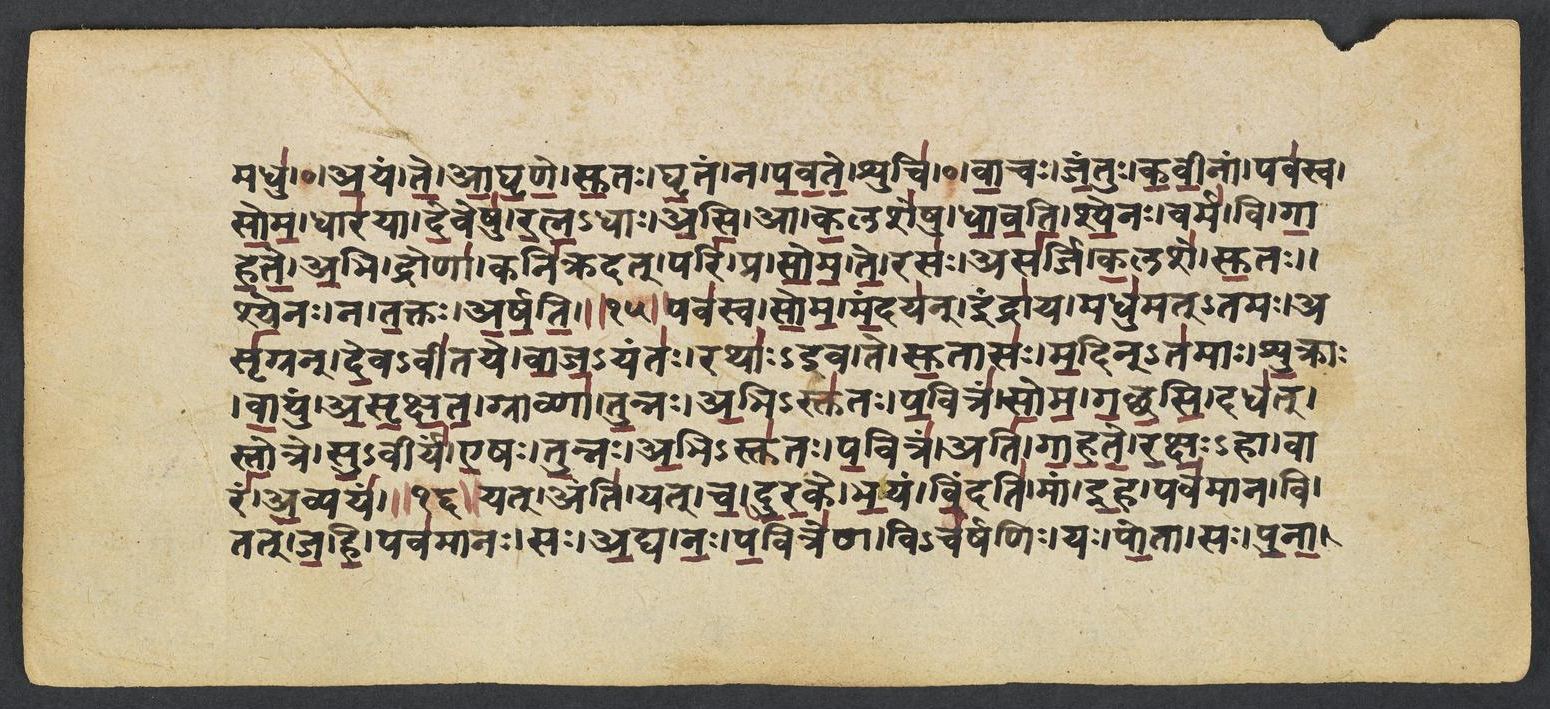
Penn Ms. Coll. 390 Item 41, fol. 699r (numbered 16r by the scribe) (OPenn image 699, lower leaf). Checked on the image: the Rigveda text on this page begins in RV 9.67.11 ‹naḥ›. The next page with Rigveda text, fol. 699v (numbered 16v by the scribe), begins in RV 9.67.22 ‹-punātu naḥ›. Verses 9.67.11-21 end on this page; 9.67.11 begins on fol. 698v (numbered 15v by the scribe).
11a̱yaṁ soma̍ḥ kapa̱rdine̍ ghṛ̱taṁ na pa̍vate̱ madhu̍ | ā bha̍kṣat ka̱nyā̍su naḥ ||
12a̱yaṁ ta̍ āghṛṇe su̱to ghṛ̱taṁ na pa̍vate̱ śuci̍ | ā bha̍kṣat ka̱nyā̍su naḥ ||
13vā̱co ja̱ntuḥ ka̍vī̱nām pava̍sva soma̱ dhāra̍yā | de̱veṣu̍ ratna̱dhā a̍si ||
14ā ka̱laśe̍ṣu dhāvati śye̱no varma̱ vi gā̍hate | a̱bhi droṇā̱ kani̍kradat ||
15pari̱ pra so̍ma te̱ raso 'sa̍rji ka̱laśe̍ su̱taḥ | śye̱no na ta̱kto a̍rṣati ||
16pava̍sva soma ma̱ndaya̱nn indrā̍ya̱ madhu̍mattamaḥ ||
17asṛ̍gran de̱vavī̍taye vāja̱yanto̱ rathā̍ iva ||
18te su̱tāso̍ ma̱dinta̍māḥ śu̱krā vā̱yum a̍sṛkṣata ||
19grāvṇā̍ tu̱nno a̱bhiṣṭu̍taḥ pa̱vitra̍ṁ soma gacchasi | dadha̍t sto̱tre su̱vīrya̍m ||
20e̱ṣa tu̱nno a̱bhiṣṭu̍taḥ pa̱vitra̱m ati̍ gāhate | ra̱kṣo̱hā vāra̍m a̱vyaya̍m ||
21yad anti̱ yac ca̍ dūra̱ke bha̱yaṁ vi̱ndati̱ mām i̱ha | pava̍māna̱ vi taj ja̍hi ||
Compare: Padapāṭha (word-by-word text written in the manuscript; Sansknet e-text via GRETIL)
11ayam | somaḥ | kapardine | ghṛtam | na | pavate | madhu | ā | bhakṣat | kanyāsu | naḥ
12ayam | te | āghṛṇe | sutaḥ | ghṛtam | na | pavate | śuci | ā | bhakṣat | kanyāsu | naḥ
13vācaḥ | jantuḥ | kavīnām | pavasva | soma | dhārayā | deveṣu | ratna-dhāḥ | asi
14ā | kalaśeṣu | dhāvati | śyenaḥ | varma | vi | gāhate | abhi | droṇā | kanikradat
15pari | pra | soma | te | rasaḥ | asarji | kalaśe | sutaḥ | śyenaḥ | na | taktaḥ | arṣati
16pavasva | soma | mandayan | indrāya | madhumat-tamaḥ
17asṛgran | deva-vītaye | vāja-yantaḥ | rathāḥ-iva
18te | sutāsaḥ | madin-tamāḥ | śukrāḥ | vāyum | asṛkṣata
19grāvṇā | tunnaḥ | abhi-stutaḥ | pavitram | soma | gacchasi | dadhat | stotre | su-vīryam
20eṣaḥ | tunnaḥ | abhi-stutaḥ | pavitram | ati | gāhate | rakṣaḥ-hā | vāram | avyayam
21yat | anti | yat | ca | dūrake | bhayam | vindati | mām | iha | pavamāna | vi | tat | jahi
11This Soma flows like gladdening oil for him who wears the braided locks: He shall give us our share of maids.
12This Soma juice, O glowing God, flows like pure oil, effused for thee: He shall give us our share of maids.
13Flow onward, Soma, in thy stream, begetter of the sages' speech: Wealth-giver among Gods art thou.
14The Falcon dips within the jars: he wrap.him in his robe and goes Loud roaring to the vats of wood.
15Soma, thy juice hath been effused and poured into the pitcher: like A rapid hawk it rushes on.
16For Indra flow most rich in sweets, O Soma, bringing him delight.
17They were sent forth to feast the Gods, like chariots that display their strength.
18Brilliant, best givers of delight, these juices have sent Vâyu forth.
19Bruised by the press-stones and extolled, Soma, thou goest to the sieve, Giving the worshipper hero strength.
20This juice bruised by the pressing-stones and lauded passes through the sieve, Slayer of demons, through the fleece.
21O Pavamâna, drive away the danger, whether near at hand Or far remote, that finds me here.
Where on the image
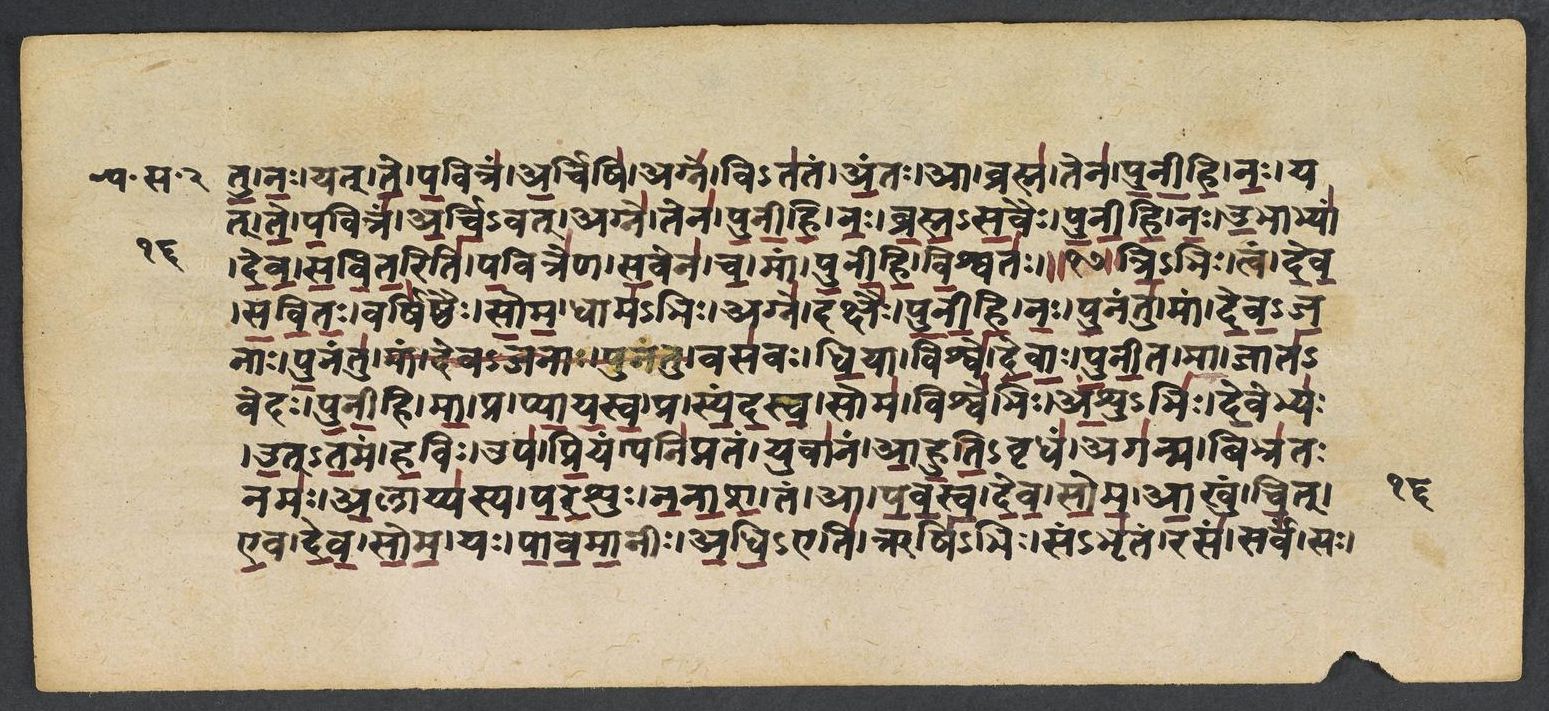
Penn Ms. Coll. 390 Item 41, fol. 699v (numbered 16v by the scribe) (OPenn image 700, upper leaf). Checked on the image: the Rigveda text on this page begins in RV 9.67.22 ‹-punātu naḥ›. The next page with Rigveda text, fol. 700r (numbered 17r by the scribe), begins in RV 9.67.31 ‹pūtam aśnāti svaditam mātariśvanā›. Verses 9.67.22-30 end on this page; 9.67.22 begins on fol. 699r (numbered 16r by the scribe).
22pava̍māna̱ḥ so a̱dya na̍ḥ pa̱vitre̍ṇa̱ vica̍rṣaṇiḥ | yaḥ po̱tā sa pu̍nātu naḥ ||
23yat te̍ pa̱vitra̍m a̱rciṣy agne̱ vita̍tam a̱ntar ā | brahma̱ tena̍ punīhi naḥ ||
24yat te̍ pa̱vitra̍m arci̱vad agne̱ tena̍ punīhi naḥ | bra̱hma̱sa̱vaiḥ pu̍nīhi naḥ ||
25u̱bhābhyā̍ṁ deva savitaḥ pa̱vitre̍ṇa sa̱vena̍ ca | mām pu̍nīhi vi̱śvata̍ḥ ||
26tri̱bhiṣ ṭvaṁ de̍va savita̱r varṣi̍ṣṭhaiḥ soma̱ dhāma̍bhiḥ | agne̱ dakṣai̍ḥ punīhi naḥ ||
27pu̱nantu̱ māṁ de̍vaja̱nāḥ pu̱nantu̱ vasa̍vo dhi̱yā | viśve̍ devāḥ punī̱ta mā̱ jāta̍vedaḥ punī̱hi mā̍ ||
28pra pyā̍yasva̱ pra sya̍ndasva̱ soma̱ viśve̍bhir a̱ṁśubhi̍ḥ | de̱vebhya̍ utta̱maṁ ha̱viḥ ||
29upa̍ pri̱yam pani̍pnata̱ṁ yuvā̍nam āhutī̱vṛdha̍m | aga̍nma̱ bibhra̍to̱ nama̍ḥ ||
30a̱lāyya̍sya para̱śur na̍nāśa̱ tam ā pa̍vasva deva soma | ā̱khuṁ ci̍d e̱va de̍va soma ||
Compare: Padapāṭha (word-by-word text written in the manuscript; Sansknet e-text via GRETIL)
22pavamānaḥ | saḥ | adya | naḥ | pavitreṇa | vi-carṣaṇiḥ | yaḥ | potā | saḥ | punātu | naḥ
23yat | te | pavitram | arciṣi | agne | vi-tatam | antaḥ | ā | brahma | tena | punīhi | naḥ
24yat | te | pavitram | arci-vat | agne | tena | punīhi | naḥ | brahma-savaiḥ | punīhi | naḥ
25ubhābhyām | deva | savitaḥ | pavitreṇa | savena | ca | mām | punīhi | viśvataḥ
26tri-bhiḥ | tvam | deva | savitaḥ | varṣiṣṭhaiḥ | soma | dhāma-bhiḥ | agne | dakṣaiḥ | punīhi | naḥ
27punantu | mām | deva-janāḥ | punantu | vasavaḥ | dhiyā | viśve | devāḥ | punīta | mā | jāta-vedaḥ | punīhi | mā
28pra | pyāyasva | pra | syandasva | soma | viśvebhiḥ | aṃśu-bhiḥ | devebhyaḥ | ut-tamam | haviḥ
29upa | priyam | panipnatam | yuvānam | āhuti-vṛdham | aganma | bibhrataḥ | namaḥ
30alāyyasya | paraśuḥ | nanāśa | tam | ā | pavasva | deva | soma | ākhum | cit | eva | deva | soma
22This day may Pavamâna cleanse us with his purifying power, Most active purifying Priest.
23O Agni, with the cleansing light diffused through all thy fiery glow, Purify thou this prayer of ours.
24Cleanse us with thine own cleansing power, O Agni, that is bright with flame, And by libations poured to thee.
25Savitar, God, by both of these, libation, purifying power, Purify me on every side.
26Cleanse us, God Savitar, with Three, O Soma, with sublimest forms, Agni, with forms of power and might.
27May the Gods' company make me clean, and Vasus make rue pure by song. Purify me, ye General Gods; O Jâtavedas, make me pure.
28Fill thyself full of juice, flow forth, O Soma, thou with all thy stalks, The best oblation to the Gods.
29We with our homage have approached the Friend who seeks our wondering praise, Young, strengthener of the solemn rite.
30Lost is Alâyya's axe. O Soma, God do thou send it back hither in thy flow Even, Soma, God, if 'twere a mole.
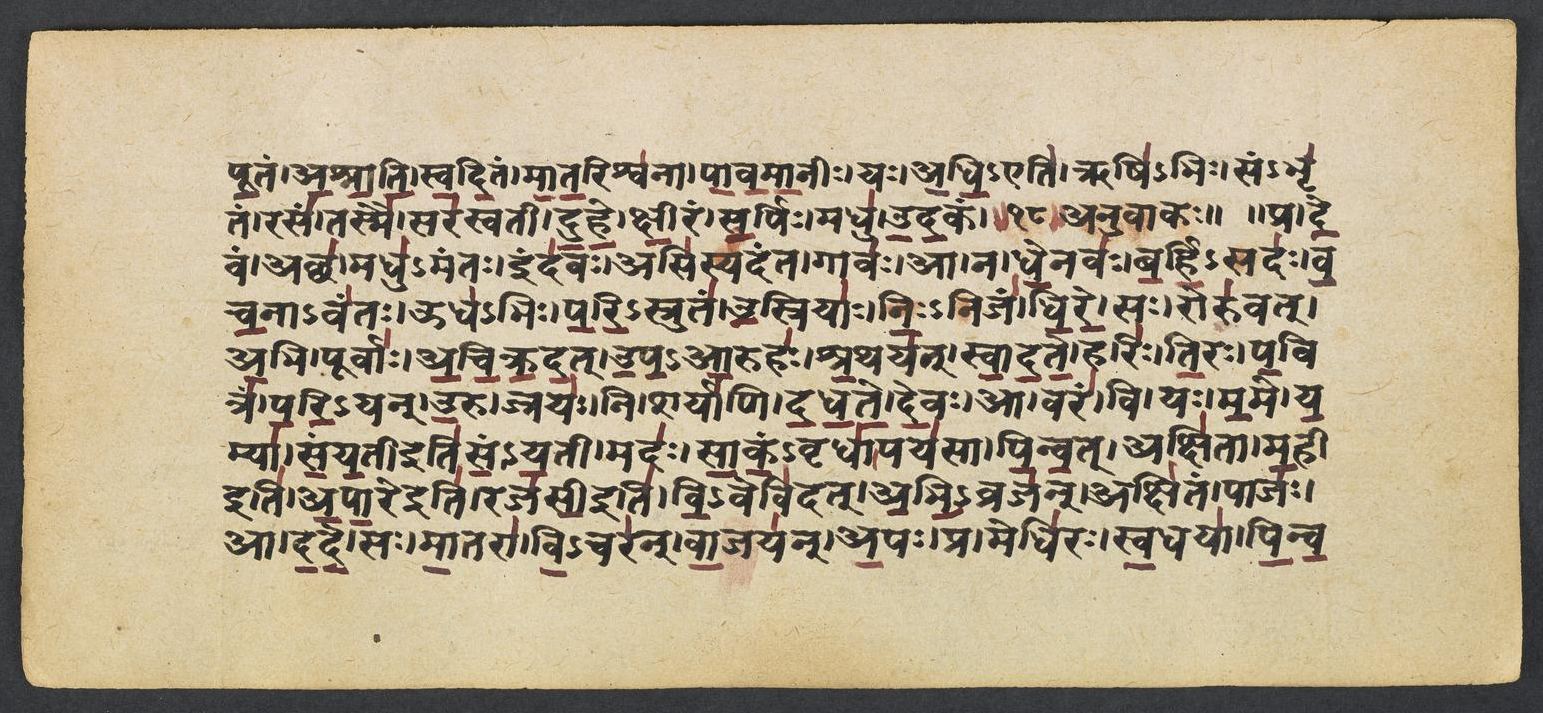
Where on the image
Penn Ms. Coll. 390 Item 41, fol. 700r (numbered 17r by the scribe) (OPenn image 700, lower leaf). Checked on the image: the Rigveda text on this page begins in RV 9.67.31 ‹pūtam aśnāti svaditam mātariśvanā›. The next page with Rigveda text, fol. 700v (numbered 17v by the scribe), begins in RV 9.68.4 ‹-pinvate padam aṃśuḥ yavena›. Verses 9.67.31-32 end on this page; 9.67.31 begins on fol. 699v (numbered 16v by the scribe).
31yaḥ pā̍vamā̱nīr a̱dhyety ṛṣi̍bhi̱ḥ sambhṛ̍ta̱ṁ rasa̍m | sarva̱ṁ sa pū̱tam a̍śnāti svadi̱tam mā̍ta̱riśva̍nā ||
32pā̱va̱mā̱nīr yo a̱dhyety ṛṣi̍bhi̱ḥ sambhṛ̍ta̱ṁ rasa̍m | tasmai̱ sara̍svatī duhe kṣī̱raṁ sa̱rpir madhū̍da̱kam ||
Compare: Padapāṭha (word-by-word text written in the manuscript; Sansknet e-text via GRETIL)
31yaḥ | pāvamānīḥ | adhi-eti | ṛṣi-bhiḥ | sam-bhṛtam | rasam | sarvam | saḥ | pūtam | aśnāti | svaditam | mātariśvanā
32pāvamānīḥ | yaḥ | adhi-eti | ṛṣi-bhiḥ | sam-bhṛtam | rasam | tasmai | sarasvatī | duhe | kṣīram | sarpiḥ | madhu | udakam
31The man who reads the essence stored by saints, the Pâvamânî hymns, Tastes food completely purified, made sweet by Mâtariṣvan's touch.
32Whoever reads the essence stored by saints, the Pâvamânî hymns, Sarasvatî draws forth for him water and butter, milk and meath.
Notes
- Sanskrit: Aufrecht's edition (1877) with the Vedic accents, as entered by van Nooten and Holland (GRETIL).
- English: Ralph T. H. Griffith, The Hymns of the Rigveda (1889-1892; 2nd ed. 1896-1897), from the VedaWeb digital text; OCR slips in that text were corrected against the printed 2nd edition (data/sources/rigveda/griffith_errata.json).
- Padapāṭha (edition text): Sansknet e-text via GRETIL (CC BY-NC-SA 4.0).
Cite
Sources
- Source: Penn Ms. Coll. 390 Item 41 (undated (catalogued with Penn's 18th-19th c. Vedic manuscripts)), OPenn, Public Domain Mark + Aufrecht's accented text (GRETIL) + Griffith's English (VedaWeb) (holding institution)
- Critical edition: Aufrecht (1877), accented e-text via GRETIL
← previous · → next · v cycle view · l back to library