Rigveda 9.68: To Soma
Introduction
Rigveda 9.68 is a hymn of 10 verses addressed to Soma. It stands in book (maṇḍala) 9, the hymns to Soma Pavamāna. The Rigveda is the oldest collection of Sanskrit hymns, composed in the second half of the second millennium BCE and handed down orally for many centuries before it was written down.
The manuscript shown is Penn Ms. Coll. 390 Item 41 (University of Pennsylvania), an undated paper manuscript of the padapāṭha (the word-by-word recitation text, in which every word is written separately and compounds are split) of the whole Ṛgveda in Devanāgarī, 884 leaves in fascicles, 7-9 lines to the page, accents in red; this hymn stands on fol. 700r-701r. Each section below gives the verses that end on one page; the page boundaries were read on the images (the opening words of every page), not counted out. Where the manuscript is a padapāṭha (the word-by-word recitation text), the section shows Aufrecht's continuous (saṃhitā) text first and, as the edition text, the padapāṭha of the same verses, which is the form written on the page.
How was this verified? (Provenance)
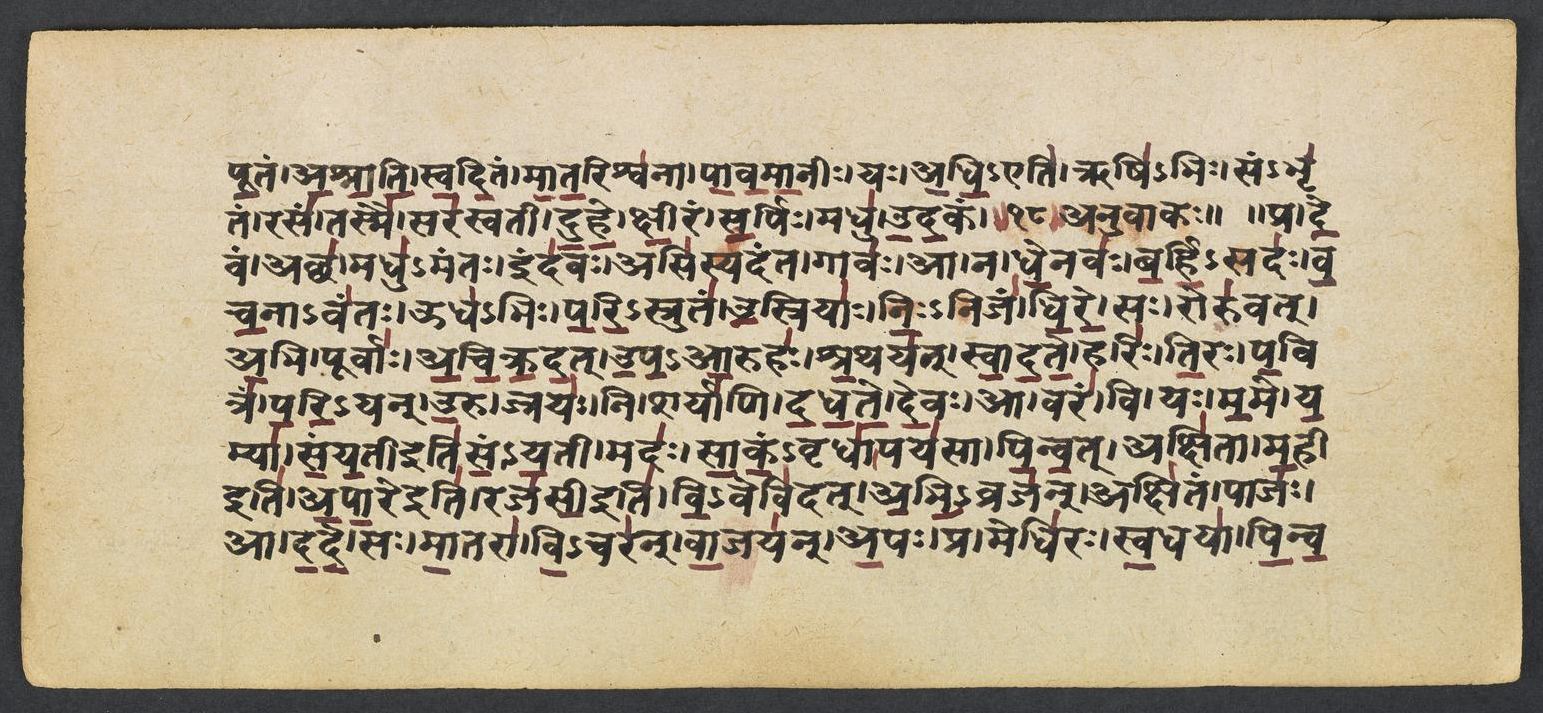
Where on the image
Penn Ms. Coll. 390 Item 41, fol. 700r (numbered 17r by the scribe) (OPenn image 700, lower leaf). Checked on the image: the Rigveda text on this page begins in RV 9.67.31 ‹pūtam aśnāti svaditam mātariśvanā›. The next page with Rigveda text, fol. 700v (numbered 17v by the scribe), begins in RV 9.68.4 ‹-pinvate padam aṃśuḥ yavena›. Verses 9.68.1-3 end on this page.
1pra de̱vam acchā̱ madhu̍manta̱ inda̱vo 'si̍ṣyadanta̱ gāva̱ ā na dhe̱nava̍ḥ | ba̱rhi̱ṣado̍ vaca̱nāva̍nta̱ ūdha̍bhiḥ pari̱sruta̍m u̱sriyā̍ ni̱rṇija̍ṁ dhire ||
2sa roru̍vad a̱bhi pūrvā̍ acikradad upā̱ruha̍ḥ śra̱thaya̍n svādate̱ hari̍ḥ | ti̱raḥ pa̱vitra̍m pari̱yann u̱ru jrayo̱ ni śaryā̍ṇi dadhate de̱va ā vara̍m ||
3vi yo ma̱me ya̱myā̍ saṁya̱tī mada̍ḥ sāka̱ṁvṛdhā̱ paya̍sā pinva̱d akṣi̍tā | ma̱hī a̍pā̱re raja̍sī vi̱vevi̍dad abhi̱vraja̱nn akṣi̍ta̱m pāja̱ ā da̍de ||
Compare: Padapāṭha (word-by-word text written in the manuscript; Sansknet e-text via GRETIL)
1pra | devam | accha | madhu-mantaḥ | indavaḥ | asisyadanta | gāvaḥ | ā | na | dhenavaḥ | barhi-sadaḥ | vacanāvantaḥ | ūdha-bhiḥ | pari-srutam | usriyāḥ | niḥ-nijam | dhire
2saḥ | roruvat | abhi | pūrvāḥ | acikradat | upa-āruhaḥ | śrathayan | svādate | hariḥ | tiraḥ | pavitram | pari-yan | uru | jrayaḥ | ni | śaryāṇi | dadhate | devaḥ | ā | varam
3vi | yaḥ | mame | yamyā | saṃyatī itisam-yatī | madaḥ | sākām-vṛdhā | payasā | pinvat | akṣitā | mahī iti | apāre iti | rajasī iti | vi-vevidat | abhi-vrajan | akṣitam | pājaḥ | ā | dade
1THE drops of Soma juice like cows who yield their milk have flowed forth, rich in meath, unto the Shining One, And, seated on the grass, raising their voice, assumed the milk, the covering robe wherewith the udders stream.
2He bellows with a roar around the highest twigs: the Tawny One is sweetened as he breaks them up. Then passing through the sieve into the ample room, the God throws off the dregs according to his wish.
3The gladdening drink that measured out the meeting Twins fills full with milk the Eternal Everwaxing Pair. Bringing to light the Two great Regions limitless, moving above them he gained sheen that never fades.
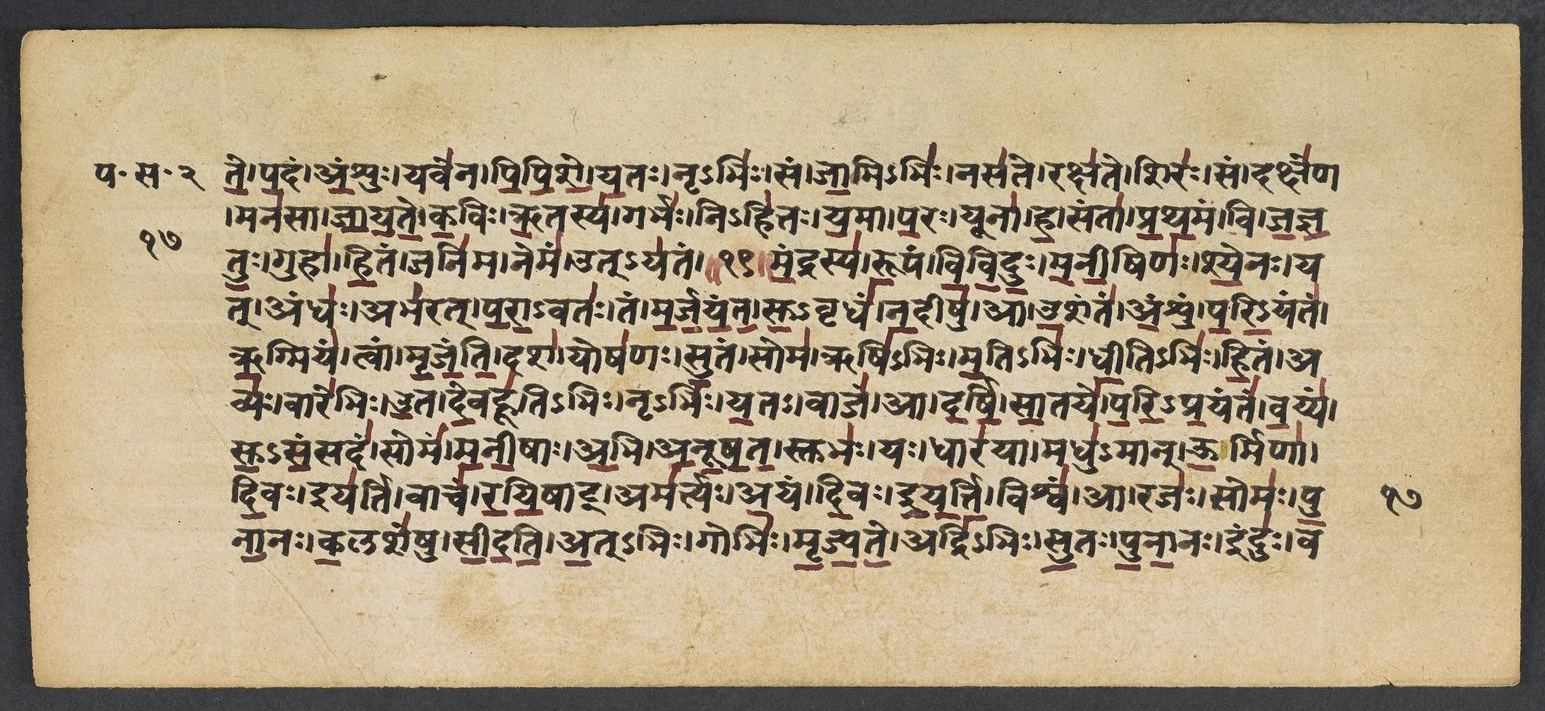
Where on the image
Penn Ms. Coll. 390 Item 41, fol. 700v (numbered 17v by the scribe) (OPenn image 701, upper leaf). Checked on the image: the Rigveda text on this page begins in RV 9.68.4 ‹-pinvate padam aṃśuḥ yavena›. The next page with Rigveda text, fol. 701r (numbered 18r by the scribe), begins in RV 9.68.9 ‹-varivaḥ vidat priyam›. Verses 9.68.4-8 end on this page; 9.68.4 begins on fol. 700r (numbered 17r by the scribe).
4sa mā̱tarā̍ vi̱cara̍n vā̱jaya̍nn a̱paḥ pra medhi̍raḥ sva̱dhayā̍ pinvate pa̱dam | a̱ṁśur yave̍na pipiśe ya̱to nṛbhi̱ḥ saṁ jā̱mibhi̱r nasa̍te̱ rakṣa̍te̱ śira̍ḥ ||
5saṁ dakṣe̍ṇa̱ mana̍sā jāyate ka̱vir ṛ̱tasya̱ garbho̱ nihi̍to ya̱mā pa̱raḥ | yūnā̍ ha̱ santā̍ pratha̱maṁ vi ja̍jñatu̱r guhā̍ hi̱taṁ jani̍ma̱ nema̱m udya̍tam ||
6ma̱ndrasya̍ rū̱paṁ vi̍vidur manī̱ṣiṇa̍ḥ śye̱no yad andho̱ abha̍rat parā̱vata̍ḥ | tam ma̍rjayanta su̱vṛdha̍ṁ na̱dīṣv ām̐ u̱śanta̍m a̱ṁśum pa̍ri̱yanta̍m ṛ̱gmiya̍m ||
7tvām mṛ̍janti̱ daśa̱ yoṣa̍ṇaḥ su̱taṁ soma̱ ṛṣi̍bhir ma̱tibhi̍r dhī̱tibhi̍r hi̱tam | avyo̱ vāre̍bhir u̱ta de̱vahū̍tibhi̱r nṛbhi̍r ya̱to vāja̱m ā da̍rṣi sā̱taye̍ ||
8pa̱ri̱pra̱yanta̍ṁ va̱yya̍ṁ suṣa̱ṁsada̱ṁ soma̍m manī̱ṣā a̱bhy a̍nūṣata̱ stubha̍ḥ | yo dhāra̍yā̱ madhu̍mām̐ ū̱rmiṇā̍ di̱va iya̍rti̱ vāca̍ṁ rayi̱ṣāḻ ama̍rtyaḥ ||
Compare: Padapāṭha (word-by-word text written in the manuscript; Sansknet e-text via GRETIL)
4saḥ | mātarā | vi-caran | vāja-yan | apaḥ | pra | medhiraḥ | svadhayā | pinvate | padam | aṃśuḥ | yavena | pipiśe | yataḥ | nṛ-bhiḥ | sam | jāmi-bhiḥ | nasate | rakṣate | śiraḥ
5sam | dakṣeṇa | manasā | jāyate | kaviḥ | ṛtasya | garbhaḥ | ni-hitaḥ | yamā | paraḥ | yūnā | ha | santā | prathamam | vi | jajñatuḥ | guhā | hitam | janima | nemam | ut-yatam
6mandrasya | rūpam | vividuḥ | manīṣiṇaḥ | śyenaḥ | yat | andhaḥ | abharat | parāvataḥ | tam | marjayanta | su-vṛdham | nadīṣu | ā | uśantam | aṃśum | pari-yantam | ṛgmiyam
7tvām | mṛjanti | daśa | yoṣaṇaḥ | sutam | soma | ṛṣi-bhiḥ | mati-bhiḥ | dhīti-bhiḥ | hitam | avyaḥ | vārebhiḥ | uta | devahūti-bhiḥ | nṛ-bhiḥ | yataḥ | vājam | ā | darṣi | sātaye
8pari-prayantam | vayyam | su-saṃsadam | somam | manīṣāḥ | abhi | anūṣata | stubhaḥ | yaḥ | dhārayā | madhu-mān | ūrmiṇā | divaḥ | iyarti | vācam | rayiṣāṭ | amartyaḥ
4Wandering through, the Parents, strengthening the floods, the Sage makes his place swell with his own native might. The stalk is mixed with grain: he comes led by the men together with the sisters, and preserves the Head.
5With energetic intellect the Sage is born, deposited as germ of Law, far from the Twins. They being young at first showed visibly distinct the Creature that is half-concealed and halfexposed.
6The sages knew the form of him the Gladdener, what time the Falcon brought the plant from far away. Him who assures success they beautified in streams, the stalk who yearned therefor, mighty and meet for praise.
7Together with the R̥ishis, with their prayers and hymns ten women deck thee, Soma, friendly when effused. Led by the men, with invocations of the Gods, through the fleece, thou hast given us strength to win the spoil.
8Songs resonant with praise have celebrated him. Soma, Friend, springing forth with his fair company. Even him who rich in meath, with undulating stream, Winnner of Wealth, Immortal, sends his voice from heaven,
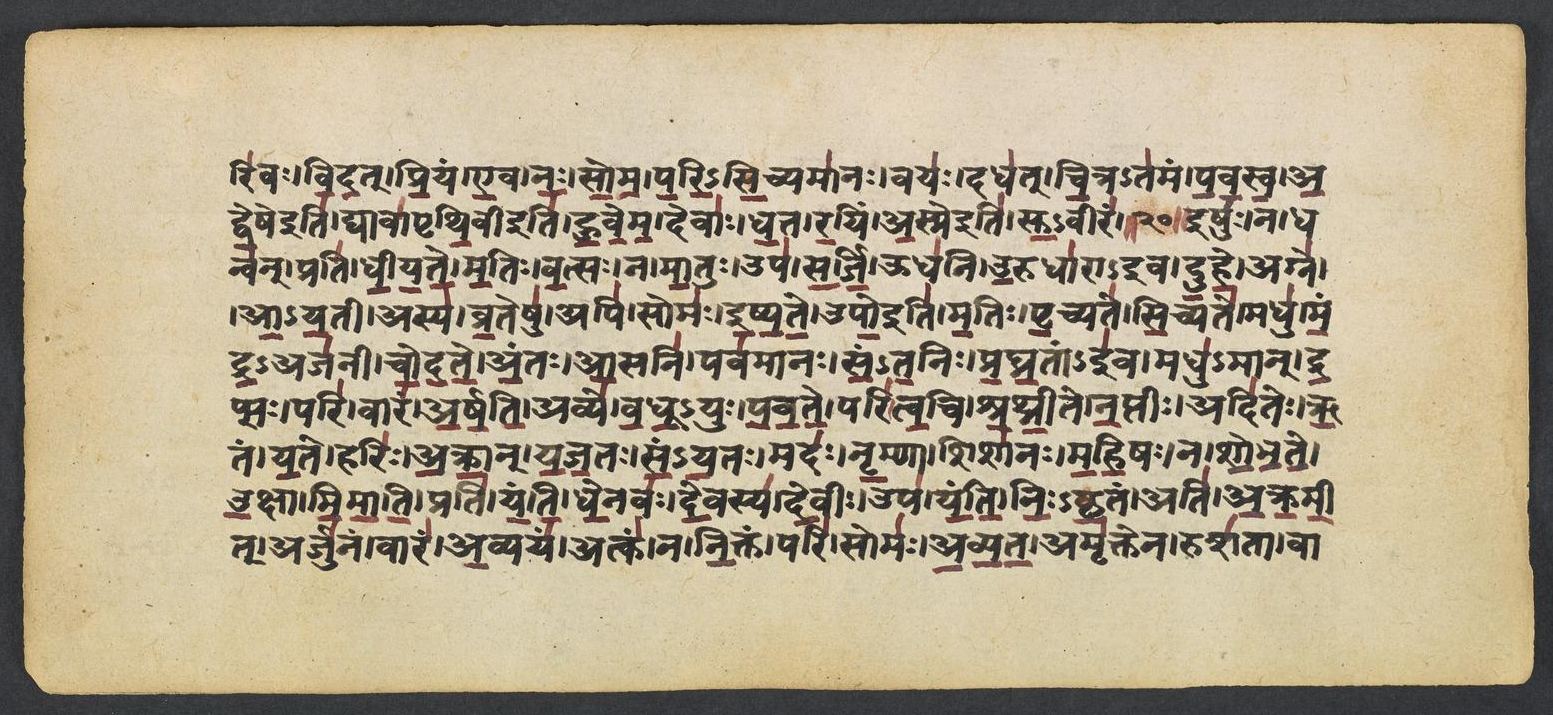
Where on the image
Penn Ms. Coll. 390 Item 41, fol. 701r (numbered 18r by the scribe) (OPenn image 701, lower leaf). Checked on the image: the Rigveda text on this page begins in RV 9.68.9 ‹-varivaḥ vidat priyam›. The next page with Rigveda text, fol. 701v (numbered 18v by the scribe), begins in RV 9.69.5 ‹-vāsasā hariḥ amartyaḥ niḥ-nijānaḥ›. Verses 9.68.9-10 end on this page; 9.68.9 begins on fol. 700v (numbered 17v by the scribe).
9a̱yaṁ di̱va i̍yarti̱ viśva̱m ā raja̱ḥ soma̍ḥ punā̱naḥ ka̱laśe̍ṣu sīdati | a̱dbhir gobhi̍r mṛjyate̱ adri̍bhiḥ su̱taḥ pu̍nā̱na indu̱r vari̍vo vidat pri̱yam ||
10e̱vā na̍ḥ soma pariṣi̱cyamā̍no̱ vayo̱ dadha̍c ci̱trata̍mam pavasva | a̱dve̱ṣe dyāvā̍pṛthi̱vī hu̍vema̱ devā̍ dha̱tta ra̱yim a̱sme su̱vīra̍m ||
Compare: Padapāṭha (word-by-word text written in the manuscript; Sansknet e-text via GRETIL)
9ayam | divaḥ | iyarti | viśvam | ā | rajaḥ | somaḥ | punānaḥ | kalaśeṣu | sīdati | at-bhiḥ | gobhiḥ | mṛjyate | adri-bhiḥ | sutaḥ | punānaḥ | induḥ | varivaḥ | vidat | priyam
10eva | naḥ | soma | pari-sicyamānaḥ | vayaḥ | dadhat | citra-tamam | pavasva | adveṣe | dyāvāpṛthivī iti | huvema | devāḥ | dhatta | rayim | asme iti | su-vīram
9He sends it into all the region forth from heaven. Soma, while he is filtered, settles in the jars. With milk and waters is he decked when pressed with stones: Indu, when purified, shall find sweet rest and room.
10Even thus poured forth How on thy way, O Soma, vouchsafing us most manifold lively vigour. We will invoke benevolent Earth and Heaven. Give us, ye Gods, riches with noble heroes.
Notes
- Sanskrit: Aufrecht's edition (1877) with the Vedic accents, as entered by van Nooten and Holland (GRETIL).
- English: Ralph T. H. Griffith, The Hymns of the Rigveda (1889-1892; 2nd ed. 1896-1897), from the VedaWeb digital text; OCR slips in that text were corrected against the printed 2nd edition (data/sources/rigveda/griffith_errata.json).
- Padapāṭha (edition text): Sansknet e-text via GRETIL (CC BY-NC-SA 4.0).
Cite
Sources
- Source: Penn Ms. Coll. 390 Item 41 (undated (catalogued with Penn's 18th-19th c. Vedic manuscripts)), OPenn, Public Domain Mark + Aufrecht's accented text (GRETIL) + Griffith's English (VedaWeb) (holding institution)
- Critical edition: Aufrecht (1877), accented e-text via GRETIL
← previous · → next · v cycle view · l back to library