Rigveda 9.69: To Soma
Introduction
Rigveda 9.69 is a hymn of 10 verses addressed to Soma. It stands in book (maṇḍala) 9, the hymns to Soma Pavamāna. The Rigveda is the oldest collection of Sanskrit hymns, composed in the second half of the second millennium BCE and handed down orally for many centuries before it was written down.
The manuscript shown is Penn Ms. Coll. 390 Item 41 (University of Pennsylvania), an undated paper manuscript of the padapāṭha (the word-by-word recitation text, in which every word is written separately and compounds are split) of the whole Ṛgveda in Devanāgarī, 884 leaves in fascicles, 7-9 lines to the page, accents in red; this hymn stands on fol. 701r-702r. Each section below gives the verses that end on one page; the page boundaries were read on the images (the opening words of every page), not counted out. Where the manuscript is a padapāṭha (the word-by-word recitation text), the section shows Aufrecht's continuous (saṃhitā) text first and, as the edition text, the padapāṭha of the same verses, which is the form written on the page.
How was this verified? (Provenance)
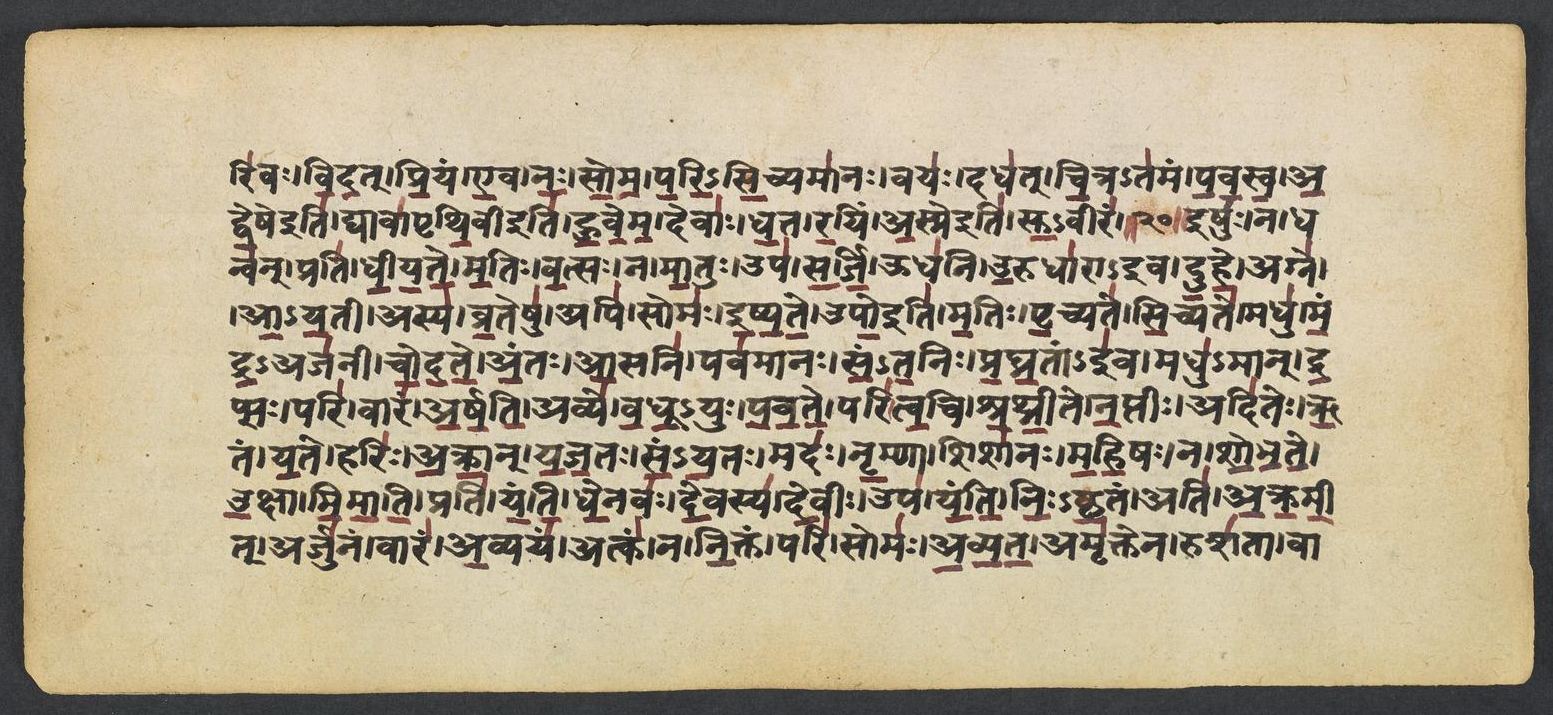
Where on the image
Penn Ms. Coll. 390 Item 41, fol. 701r (numbered 18r by the scribe) (OPenn image 701, lower leaf). Checked on the image: the Rigveda text on this page begins in RV 9.68.9 ‹-varivaḥ vidat priyam›. The next page with Rigveda text, fol. 701v (numbered 18v by the scribe), begins in RV 9.69.5 ‹-vāsasā hariḥ amartyaḥ niḥ-nijānaḥ›. Verses 9.69.1-4 end on this page.
1iṣu̱r na dhanva̱n prati̍ dhīyate ma̱tir va̱tso na mā̱tur upa̍ sa̱rjy ūdha̍ni | u̱rudhā̍reva duhe̱ agra̍ āya̱ty asya̍ vra̱teṣv api̱ soma̍ iṣyate ||
2upo̍ ma̱tiḥ pṛ̱cyate̍ si̱cyate̱ madhu̍ ma̱ndrāja̍nī codate a̱ntar ā̱sani̍ | pava̍mānaḥ saṁta̱niḥ pra̍ghna̱tām i̍va̱ madhu̍mān dra̱psaḥ pari̱ vāra̍m arṣati ||
3avye̍ vadhū̱yuḥ pa̍vate̱ pari̍ tva̱ci śra̍thnī̱te na̱ptīr adi̍ter ṛ̱taṁ ya̱te | hari̍r akrān yaja̱taḥ sa̍ṁya̱to mado̍ nṛ̱mṇā śiśā̍no mahi̱ṣo na śo̍bhate ||
4u̱kṣā mi̍māti̱ prati̍ yanti dhe̱navo̍ de̱vasya̍ de̱vīr upa̍ yanti niṣkṛ̱tam | aty a̍kramī̱d arju̍na̱ṁ vāra̍m a̱vyaya̱m atka̱ṁ na ni̱ktam pari̱ somo̍ avyata ||
Compare: Padapāṭha (word-by-word text written in the manuscript; Sansknet e-text via GRETIL)
1iṣuḥ | na | dhanvan | prati | dhīyate | matiḥ | vatsaḥ | na | mātuḥ | upa | sarji | ūrdhani | urudhārā-iva | duhe | agre | āyatī | asya | vrateṣu | api | somaḥ | iṣyate
2upo iti | matiḥ | pṛcyate | siayate | madhu | mandra-ajanī | codate | antaḥ | āsani | pavamānaḥ | sam-taniḥ | praghnatām-iva | madhu-mān | drapsaḥ | pari | vāram | arṣati
3avye | vadhū-yuḥ | pavate | pari | tvaci | śrathnāīte | naptīḥ | aditeḥ | ṛtam | yate | hariḥ | akrān | yajataḥ | sam-yataḥ | madaḥ | nṛmnā | śiśānaḥ | mahiṣaḥ | na | śobhate
4ukṣā | mimāti | prati | yanti | dhenavaḥ | devasya | devīḥ | upa | yanti | niḥ-kṛtam | ati | akramīt | arjunam | vāram | avyayam | atkam | na | niktam | pari | somaḥ | avyata
1LAID like an arrow on the bow the hymn hath been loosed like a young calf to the udder of its dam. As one who cometh first with full stream she is milked the Soma is impelled to this man's holy rites.
2The thought is deeply fixed; the savoury juice is shed; the tongue with joyous sound is stirring in the mouth; And Pavamâna, like the shout of combatants, the drop rising in sweet juice, is flowing through the fleece.
3He flows about the sheep-skin, longing for a bride: he looses Aditi's Daughters for the worshipper. The sacred drink hath come, gold-tinted, well-restrained: like a strong Bull he shines, whetting his manly might.
4The Bull is bellowing; the Cows are coming nigh: the Goddesses approach the God's own restingplace. Onward hath Soma passed through the sheep's fair bright fleece, and hath, as 'twere, endued a garment newly washed.
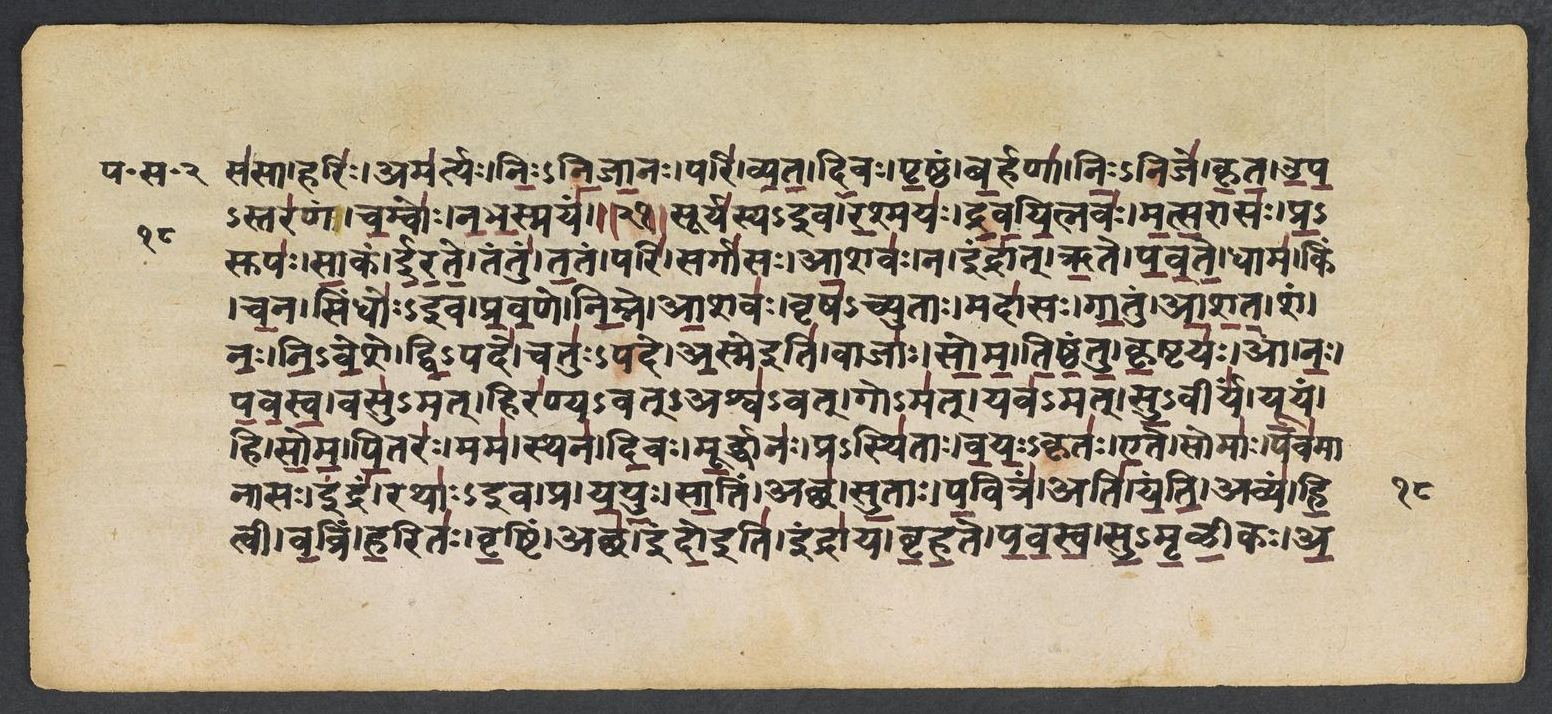
Where on the image
Penn Ms. Coll. 390 Item 41, fol. 701v (numbered 18v by the scribe) (OPenn image 702, upper leaf). Checked on the image: the Rigveda text on this page begins in RV 9.69.5 ‹-vāsasā hariḥ amartyaḥ niḥ-nijānaḥ›. The next page with Rigveda text, fol. 702r (numbered 19r by the scribe), begins in RV 9.69.10 ‹-anavadyaḥ riśādāḥ bhara candrāṇi›. Verses 9.69.5-9 end on this page; 9.69.5 begins on fol. 701r (numbered 18r by the scribe).
5amṛ̍ktena̱ ruśa̍tā̱ vāsa̍sā̱ hari̱r ama̍rtyo nirṇijā̱naḥ pari̍ vyata | di̱vas pṛ̱ṣṭham ba̱rhaṇā̍ ni̱rṇije̍ kṛtopa̱stara̍ṇaṁ ca̱mvo̍r nabha̱smaya̍m ||
6sūrya̍syeva ra̱śmayo̍ drāvayi̱tnavo̍ matsa̱rāsa̍ḥ pra̱supa̍ḥ sā̱kam ī̍rate | tantu̍ṁ ta̱tam pari̱ sargā̍sa ā̱śavo̱ nendrā̍d ṛ̱te pa̍vate̱ dhāma̱ kiṁ ca̱na ||
7sindho̍r iva prava̱ṇe ni̱mna ā̱śavo̱ vṛṣa̍cyutā̱ madā̍so gā̱tum ā̍śata | śaṁ no̍ nive̱śe dvi̱pade̱ catu̍ṣpade̱ 'sme vājā̍ḥ soma tiṣṭhantu kṛ̱ṣṭaya̍ḥ ||
8ā na̍ḥ pavasva̱ vasu̍ma̱d dhira̍ṇyava̱d aśvā̍va̱d goma̱d yava̍mat su̱vīrya̍m | yū̱yaṁ hi so̍ma pi̱taro̱ mama̱ sthana̍ di̱vo mū̱rdhāna̱ḥ prasthi̍tā vaya̱skṛta̍ḥ ||
9e̱te somā̱ḥ pava̍mānāsa̱ indra̱ṁ rathā̍ iva̱ pra ya̍yuḥ sā̱tim accha̍ | su̱tāḥ pa̱vitra̱m ati̍ ya̱nty avya̍ṁ hi̱tvī va̱vriṁ ha̱rito̍ vṛ̱ṣṭim accha̍ ||
Compare: Padapāṭha (word-by-word text written in the manuscript; Sansknet e-text via GRETIL)
5amṛktena | ruśatā | vāsasā | hariḥ | amartyaḥ | niḥ-nijānaḥ | pari | vyata | divaḥ | pṛṣṭham | barhaṇā | niḥ-nije | kṛta | upa-staraṇam | camvoḥ | nabhasmayam
6sūryasya-iva | raśmayaḥ | dravayitnavaḥ | matsarāsaḥ | pra-supaḥ | sākam | īrate | tantum | tatam | pari | sargāsaḥ | āśavaḥ | na | indrāt | ṛte | pavate | dhāma | kim | cana
7sindhoḥ-iva | pravaṇe | nimne | āśavaḥ | vṛṣa-cyutāḥ | madāsaḥ | gātum | āśata | śam | naḥ | ni-veśe | dvi-pade | catuḥ-pade | asme iti | vājāḥ | soma | tiṣṭhantu | kṛṣṭayaḥ
8ā | naḥ | pavasva | vasu-mat | hiraṇya-vat | aśva-vat | go-mat | yava-mat | su-vīryam | yūyam | hi | soma | pitaraḥ | mama | sthana | divaḥ | mūrdhānaḥ | pra-sthitāḥ | vayaḥ-kṛtaḥ
9ete | somāḥ | pavamānāsaḥ | indram | rathāḥ-iva | pra | yayuḥ | sātim | accha | sutāḥ | pavitram | ati | yanti | avyam | hitvī | vavrim | haritaḥ | vṛṣṭim | accha
5The golden-hued, Immortal, newly bathed, puts on a brightly shining vesture that is never harmed. He made the ridge of heaven to be his radiant robe, by sprinkling of the bowls from moisture of the sky.
6Even as the beams of Sûrya, urging men to speed, that cheer and send to sleep, together rush they forth, These swift outpourings in long course of holy rites: no form save only Indra shows itself so pure.
7As down the steep slope of a river to the vale, drawn from the Steer the swift strong draughts have found a way. Well be it with the men and cattle in our home. May powers, O Soma, may the people stay with us.
8Pour out upon us wealth in goods, in gold, in steeds, in cattle and in corn, and great heroic strength. Ye, Soma, are my Fathers, lifted up on high as heads of heaven and makers of the strength of life.
9These Pavamânas here, these drops of Soma, to Indra have sped forth like cars to booty. Effused, they pass the cleansing fleece, while, gold-hued, they cast their covering off to pour the rain down.
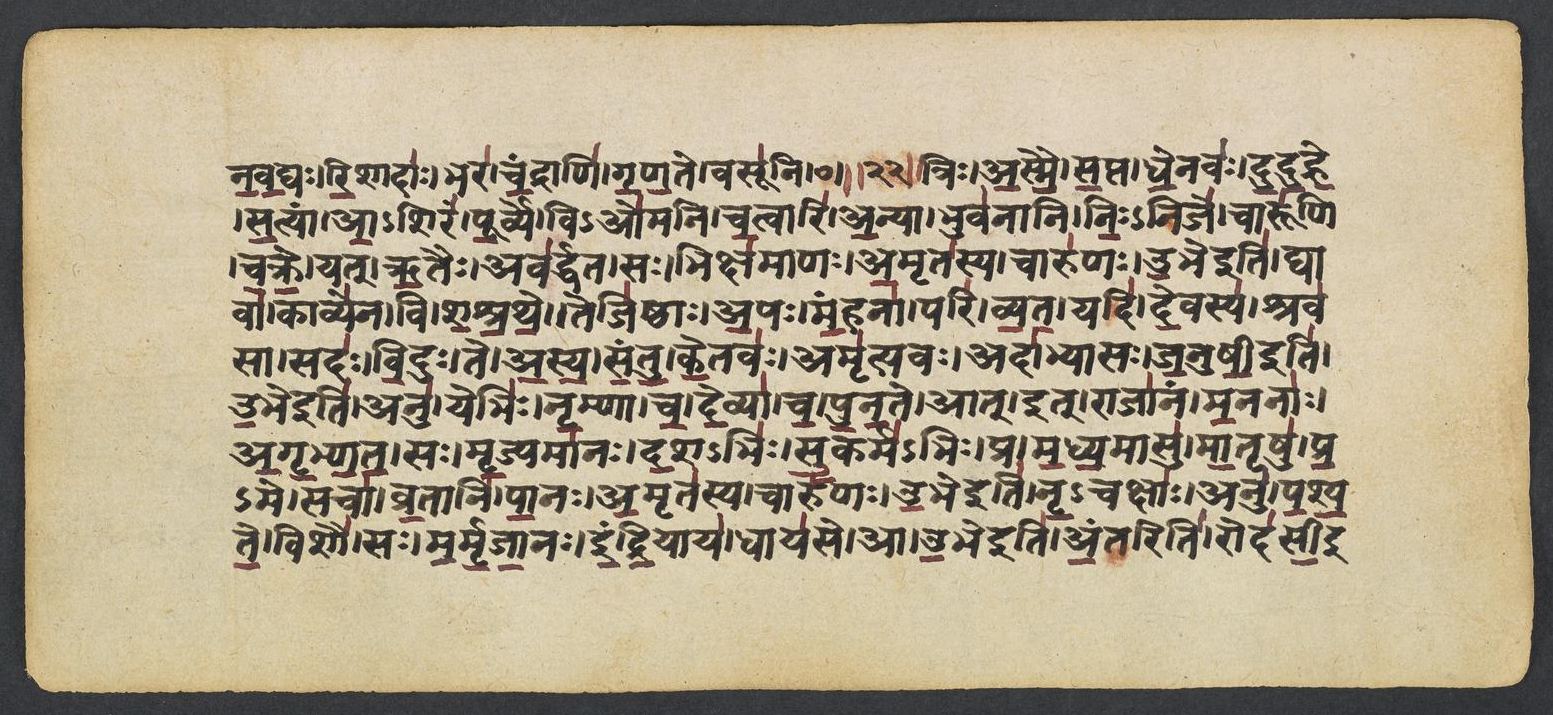
Where on the image
Penn Ms. Coll. 390 Item 41, fol. 702r (numbered 19r by the scribe) (OPenn image 702, lower leaf). Checked on the image: the Rigveda text on this page begins in RV 9.69.10 ‹-anavadyaḥ riśādāḥ bhara candrāṇi›. The next page with Rigveda text, fol. 702v (numbered 19v by the scribe), begins in RV 9.70.5 ‹-iti harṣate hitaḥ vṛṣā›. Verse 9.69.10 ends on this page; 9.69.10 begins on fol. 701v (numbered 18v by the scribe).
10inda̱v indrā̍ya bṛha̱te pa̍vasva sumṛḻī̱ko a̍nava̱dyo ri̱śādā̍ḥ | bharā̍ ca̱ndrāṇi̍ gṛṇa̱te vasū̍ni de̱vair dyā̍vāpṛthivī̱ prāva̍taṁ naḥ ||
Compare: Padapāṭha (word-by-word text written in the manuscript; Sansknet e-text via GRETIL)
10indo iti | indrāya | bṛhate | pavasva | su-mṛḷīkaḥ | anavadyaḥ | riśādāḥ | bhara | candrāṇi | gṛṇate | vasūni | devaiḥ | dyāvāpṛthivī iti | pra | avatam | naḥ
10O Indu, flow thou on for lofty Indra, flow blameless, very gracious, foe-destroyer. Bring splendid treasures to the man who lauds thee. O Heaven and Earth, with all the Gods protect. us.
Notes
- Sanskrit: Aufrecht's edition (1877) with the Vedic accents, as entered by van Nooten and Holland (GRETIL).
- English: Ralph T. H. Griffith, The Hymns of the Rigveda (1889-1892; 2nd ed. 1896-1897), from the VedaWeb digital text; OCR slips in that text were corrected against the printed 2nd edition (data/sources/rigveda/griffith_errata.json).
- Padapāṭha (edition text): Sansknet e-text via GRETIL (CC BY-NC-SA 4.0).
Cite
Sources
- Source: Penn Ms. Coll. 390 Item 41 (undated (catalogued with Penn's 18th-19th c. Vedic manuscripts)), OPenn, Public Domain Mark + Aufrecht's accented text (GRETIL) + Griffith's English (VedaWeb) (holding institution)
- Critical edition: Aufrecht (1877), accented e-text via GRETIL
← previous · → next · v cycle view · l back to library