Rigveda 9.70: To Soma
Introduction
Rigveda 9.70 is a hymn of 10 verses addressed to Soma. It stands in book (maṇḍala) 9, the hymns to Soma Pavamāna. The Rigveda is the oldest collection of Sanskrit hymns, composed in the second half of the second millennium BCE and handed down orally for many centuries before it was written down.
The manuscript shown is Penn Ms. Coll. 390 Item 41 (University of Pennsylvania), an undated paper manuscript of the padapāṭha (the word-by-word recitation text, in which every word is written separately and compounds are split) of the whole Ṛgveda in Devanāgarī, 884 leaves in fascicles, 7-9 lines to the page, accents in red; this hymn stands on fol. 702r-703r. Each section below gives the verses that end on one page; the page boundaries were read on the images (the opening words of every page), not counted out. Where the manuscript is a padapāṭha (the word-by-word recitation text), the section shows Aufrecht's continuous (saṃhitā) text first and, as the edition text, the padapāṭha of the same verses, which is the form written on the page.
How was this verified? (Provenance)
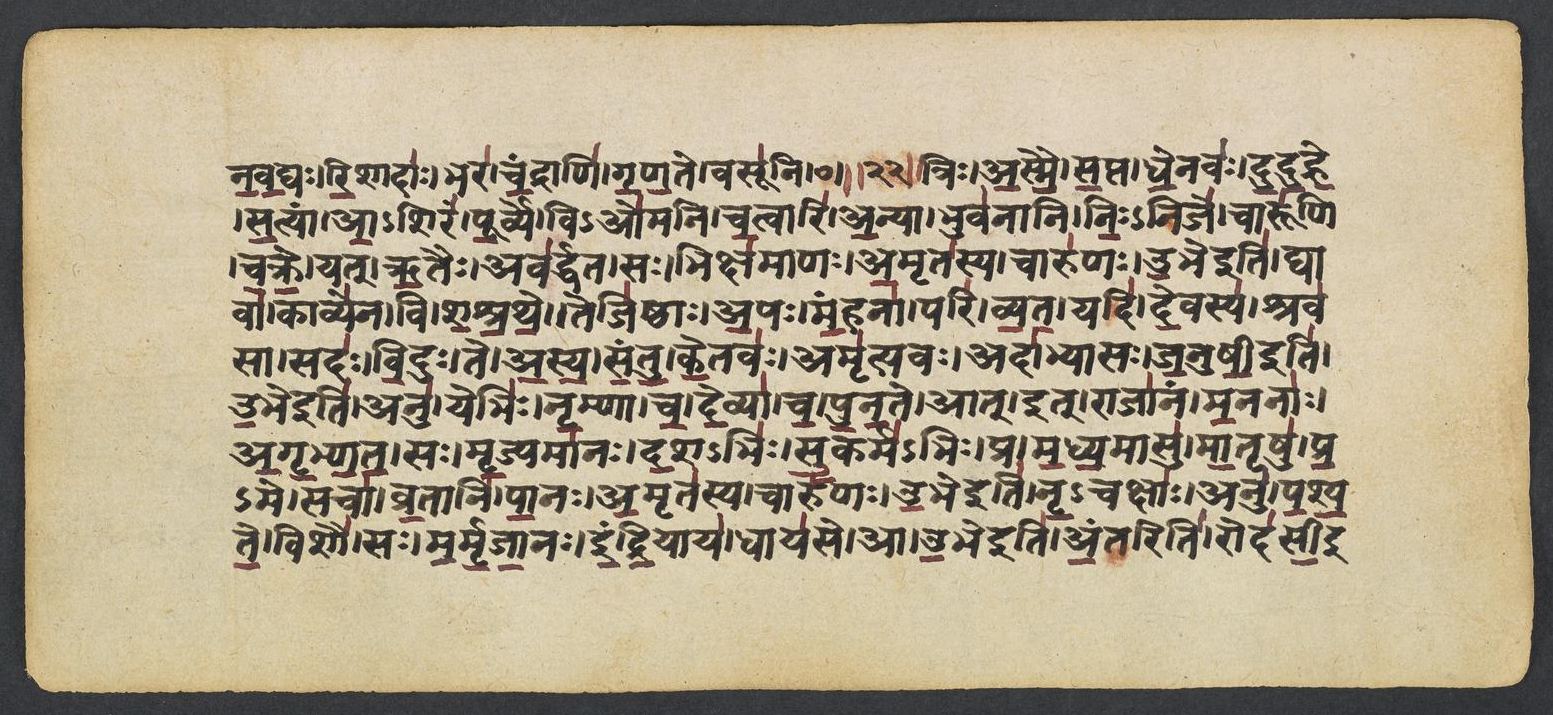
Where on the image
Penn Ms. Coll. 390 Item 41, fol. 702r (numbered 19r by the scribe) (OPenn image 702, lower leaf). Checked on the image: the Rigveda text on this page begins in RV 9.69.10 ‹-anavadyaḥ riśādāḥ bhara candrāṇi›. The next page with Rigveda text, fol. 702v (numbered 19v by the scribe), begins in RV 9.70.5 ‹-iti harṣate hitaḥ vṛṣā›. Verses 9.70.1-4 end on this page.
1trir a̍smai sa̱pta dhe̱navo̍ duduhre sa̱tyām ā̱śira̍m pū̱rvye vyo̍mani | ca̱tvāry a̱nyā bhuva̍nāni ni̱rṇije̱ cārū̍ṇi cakre̱ yad ṛ̱tair ava̍rdhata ||
2sa bhikṣa̍māṇo a̱mṛta̍sya̱ cāru̍ṇa u̱bhe dyāvā̱ kāvye̍nā̱ vi śa̍śrathe | teji̍ṣṭhā a̱po ma̱ṁhanā̱ pari̍ vyata̱ yadī̍ de̱vasya̱ śrava̍sā̱ sado̍ vi̱duḥ ||
3te a̍sya santu ke̱tavo 'mṛ̍tya̱vo 'dā̍bhyāso ja̱nuṣī̍ u̱bhe anu̍ | yebhi̍r nṛ̱mṇā ca̍ de̱vyā̍ ca puna̱ta ād id rājā̍nam ma̱nanā̍ agṛbhṇata ||
4sa mṛ̱jyamā̍no da̱śabhi̍ḥ su̱karma̍bhi̱ḥ pra ma̍dhya̱māsu̍ mā̱tṛṣu̍ pra̱me sacā̍ | vra̱tāni̍ pā̱no a̱mṛta̍sya̱ cāru̍ṇa u̱bhe nṛ̱cakṣā̱ anu̍ paśyate̱ viśau̍ ||
Compare: Padapāṭha (word-by-word text written in the manuscript; Sansknet e-text via GRETIL)
1triḥ | asmai | sapta | dhenavaḥ | duduhre | satyām | āśiram | pūrvye | vyomani | catvāri | anyā | bhuvanāni | nirṇije | cārūṇi | cakre | yat | ṛtaiḥ | avardhata
2saḥ | bhikṣamāṇaḥ | amṛtasya | cāruṇaḥ | ubhe iti | dyāvā | kāvyena | vi | śaśrathe | tejiṣṭhāḥ | apaḥ | maṃhanā | pari | vyata | yadi | devasya | śravasā | sadaḥ | viduḥ
3te | asya | santu | ketavaḥ | amṛtyavaḥ | adābhyāsaḥ | januṣī iti | ubhe iti | anu | yebhiḥ | nṛmṇā | ca | devyā | ca | punate | āt | it | rājānam | mananāḥ | agṛbhṇata
4saḥ | mṛjyamānaḥ | daśa-bhiḥ | sukarma-bhiḥ | pra | madhyamāsu | mātṛṣu | pra-me | sacā | vratāni | pānaḥ | amṛtasya | cāruṇaḥ | ubhe iti | nṛ-cakṣāḥ | anu | paśyate | viśau
1THE three times seven Milch-kine in the eastern heaven have for this Soma poured the genuine milky draught. Four other beauteous Creatures hath he made for his adornment, when he waxed in strength through holy rites.
2Longing for lovely Amrit, by his wisdom he divided, each apart from other, earth and heaven. He gladly wrapped himself in the most lucid floods, when through their glory they found the God's resting-place.
3May those his brilliant rays he ever free from death, inviolate, for both classes of created things,– Rays wherewith powers of men and Gods are purified. Yea, even for this have sageswelcomed him as King.
4He, while he is adorned by the ten skilful ones, that he too in the Midmost Mothers may create, While he is watching o'er the lovely Amrit's ways, looks on both races as Beholder of mankind.
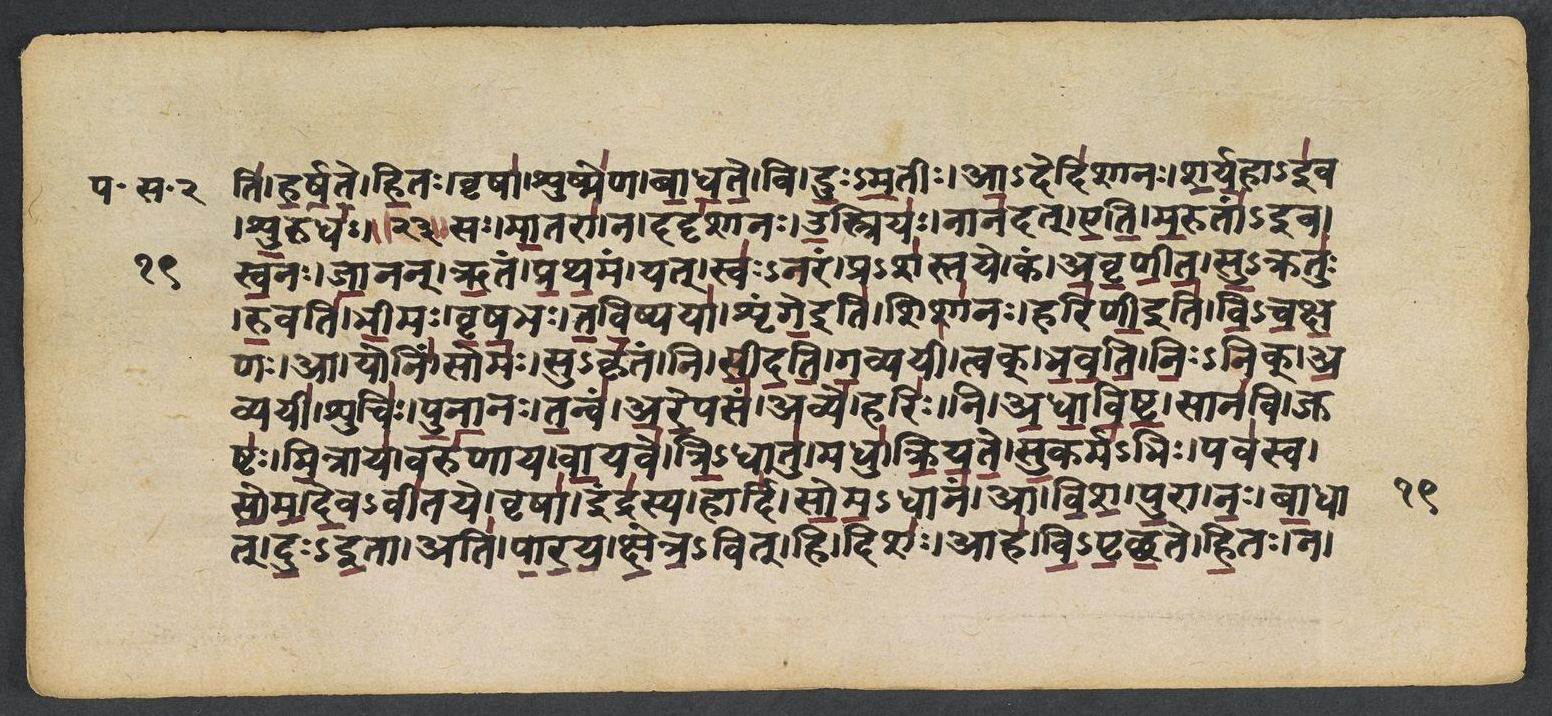
Where on the image
Penn Ms. Coll. 390 Item 41, fol. 702v (numbered 19v by the scribe) (OPenn image 703, upper leaf). Checked on the image: the Rigveda text on this page begins in RV 9.70.5 ‹-iti harṣate hitaḥ vṛṣā›. The next page with Rigveda text, fol. 703r (numbered 20r by the scribe), begins in RV 9.70.10 ‹saptiḥ abhi vājam arṣa›. Verses 9.70.5-9 end on this page; 9.70.5 begins on fol. 702r (numbered 19r by the scribe).
5sa ma̍rmṛjā̱na i̍ndri̱yāya̱ dhāya̍sa̱ obhe a̱ntā roda̍sī harṣate hi̱taḥ | vṛṣā̱ śuṣme̍ṇa bādhate̱ vi du̍rma̱tīr ā̱dedi̍śānaḥ śarya̱heva̍ śu̱rudha̍ḥ ||
6sa mā̱tarā̱ na dadṛ̍śāna u̱sriyo̱ nāna̍dad eti ma̱rutā̍m iva sva̱naḥ | jā̱nann ṛ̱tam pra̍tha̱maṁ yat sva̍rṇara̱m praśa̍staye̱ kam a̍vṛṇīta su̱kratu̍ḥ ||
7ru̱vati̍ bhī̱mo vṛ̍ṣa̱bhas ta̍vi̱ṣyayā̱ śṛṅge̱ śiśā̍no̱ hari̍ṇī vicakṣa̱ṇaḥ | ā yoni̱ṁ soma̱ḥ sukṛ̍ta̱ṁ ni ṣī̍dati ga̱vyayī̱ tvag bha̍vati ni̱rṇig a̱vyayī̍ ||
8śuci̍ḥ punā̱nas ta̱nva̍m are̱pasa̱m avye̱ hari̱r ny a̍dhāviṣṭa̱ sāna̍vi | juṣṭo̍ mi̱trāya̱ varu̍ṇāya vā̱yave̍ tri̱dhātu̱ madhu̍ kriyate su̱karma̍bhiḥ ||
9pava̍sva soma de̱vavī̍taye̱ vṛṣendra̍sya̱ hārdi̍ soma̱dhāna̱m ā vi̍śa | pu̱rā no̍ bā̱dhād du̍ri̱tāti̍ pāraya kṣetra̱vid dhi diśa̱ āhā̍ vipṛccha̱te ||
Compare: Padapāṭha (word-by-word text written in the manuscript; Sansknet e-text via GRETIL)
5saḥ | marmṛjānaḥ | indriyāya | dhāyase | ā | ubhe iti | antariti | rodasī iti | harṣate | hitaḥ | vṛṣā | śuṣmeṇa | bādhate | vi | duḥ-matīḥ | ādediśānaḥ | śayarhā-iva | śurudhaḥ
6saḥ | mātarā | na | dadṛśānaḥ | usriyaḥ | nānadat | eti | marutām-iva | svanaḥ | jānan | ṛtam | prathamam | yat | svaḥ-naram | pra-śastaye | kam | avṛṇīta | su-kratuḥ
7ruvati | bhīmaḥ | vṛṣabhaḥ | taviṣyayā | śṛṅgeiti | śiśānaḥ | hariṇī iti | vi-cakṣaṇaḥ | ā | yonim | somaḥ | su-kṛtam | ni | sīdati | gavyayī | tvak | bhavati | niḥ-nik | avyayī
8śuciḥ | punānaḥ | tanvam | arepasam | avye | hariḥ | ni | adhāviṣṭa | sānavi | juṣṭaḥ | mitrāya | varuṇāya | vāyave | tri-dhātu | madhu | kriyate | sukarma-bhiḥ
9pavasva | soma | deva-vītaye | vṛṣā | indrasya | hārdi | soma-dhānam | ā | viśa | purā | naḥ | bādhāt | duḥ-itā | ati | pāraya | kṣetra-vit | hi | diśaḥ | āha | vi-pṛcchate
5He, while he is adorned to stream forth mighty strength, rejoices in his place between the earth and heaven. The Steer dispels the evil-hearted with his might, aiming at offerings as an archer at the game.
6Beholding, as it were, Two Mother Cows, the Steer goes roaring on his way even as the Maruts roar. Knowing Eternal Law, the earliest light of heaven, he, passing wise, was chosen out to tell it forth.
7The fearful Bull is bellowing with violent might, far-sighted, sharpening his yellowcoloured horns. Soma assumes his seat in the well-fashioned place: the cowhide and the sheepskin are his ornament.
8Bright, making pure his body free from spot and stain, on the sheep's back the Golden-coloured hath flowed down. Acceptable to Mitra, Vâyu, Varuṇa, he is prepared as threefold meal by skilful men.
9Flow on for the God's banquet, Soma, as a Steer, and enter Indra's heart, the Soma's reservoir. Bear us beyond misfortune ere we be oppressed: the man who knows the land directs the man who asks.
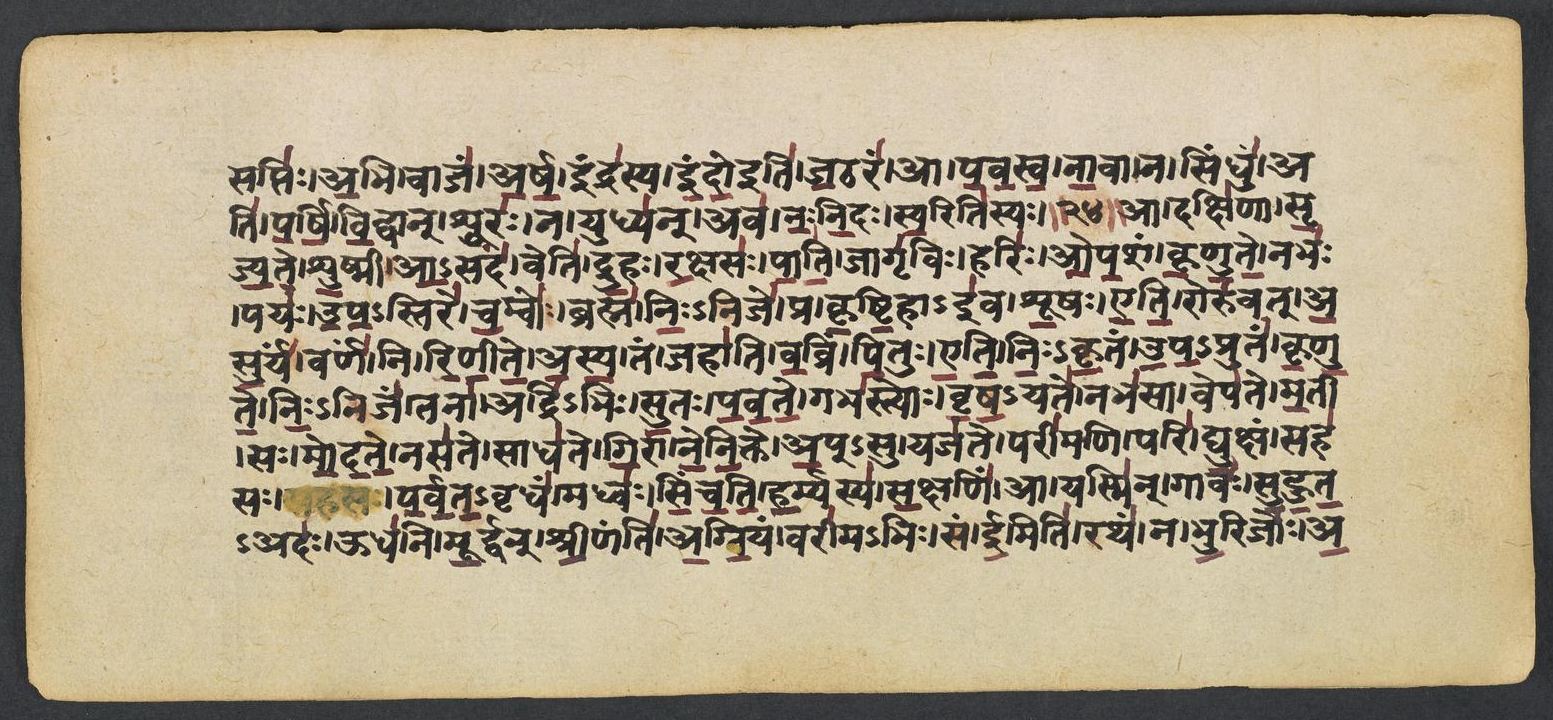
Where on the image
Penn Ms. Coll. 390 Item 41, fol. 703r (numbered 20r by the scribe) (OPenn image 703, lower leaf). Checked on the image: the Rigveda text on this page begins in RV 9.70.10 ‹saptiḥ abhi vājam arṣa›. The next page with Rigveda text, fol. 703v (numbered 20v by the scribe), begins in RV 9.71.5 ‹-aheṣata daśa svasāraḥ aditeḥ›. Verse 9.70.10 ends on this page; 9.70.10 begins on fol. 702v (numbered 19v by the scribe).
10hi̱to na sapti̍r a̱bhi vāja̍m a̱rṣendra̍syendo ja̱ṭhara̱m ā pa̍vasva | nā̱vā na sindhu̱m ati̍ parṣi vi̱dvāñ chūro̱ na yudhya̱nn ava̍ no ni̱daḥ spa̍ḥ ||
Compare: Padapāṭha (word-by-word text written in the manuscript; Sansknet e-text via GRETIL)
10hitaḥ | na | saptiḥ | abhi | vājam | arṣa | ndrasya | indo iti | jaṭharam | ā | pavasva | nāvā | na | sindhum | ati | parṣi | vidvān | śūraḥ | na | yudhyan | ava | naḥ | nidaḥ | sparitispaḥ
10Urged like a car-steed flow to strength, O Soma: Indu, flow onward to the throat of Indra. Skilled, bear us past, as in a boat o'er water: as battling Hero save us from the foeman.
Notes
- Sanskrit: Aufrecht's edition (1877) with the Vedic accents, as entered by van Nooten and Holland (GRETIL).
- English: Ralph T. H. Griffith, The Hymns of the Rigveda (1889-1892; 2nd ed. 1896-1897), from the VedaWeb digital text; OCR slips in that text were corrected against the printed 2nd edition (data/sources/rigveda/griffith_errata.json).
- Padapāṭha (edition text): Sansknet e-text via GRETIL (CC BY-NC-SA 4.0).
Cite
Sources
- Source: Penn Ms. Coll. 390 Item 41 (undated (catalogued with Penn's 18th-19th c. Vedic manuscripts)), OPenn, Public Domain Mark + Aufrecht's accented text (GRETIL) + Griffith's English (VedaWeb) (holding institution)
- Critical edition: Aufrecht (1877), accented e-text via GRETIL
← previous · → next · v cycle view · l back to library