Rigveda 9.71: To Soma
Introduction
Rigveda 9.71 is a hymn of 9 verses addressed to Soma. It stands in book (maṇḍala) 9, the hymns to Soma Pavamāna. The Rigveda is the oldest collection of Sanskrit hymns, composed in the second half of the second millennium BCE and handed down orally for many centuries before it was written down.
The manuscript shown is Penn Ms. Coll. 390 Item 41 (University of Pennsylvania), an undated paper manuscript of the padapāṭha (the word-by-word recitation text, in which every word is written separately and compounds are split) of the whole Ṛgveda in Devanāgarī, 884 leaves in fascicles, 7-9 lines to the page, accents in red; this hymn stands on fol. 703r-703v. Each section below gives the verses that end on one page; the page boundaries were read on the images (the opening words of every page), not counted out. Where the manuscript is a padapāṭha (the word-by-word recitation text), the section shows Aufrecht's continuous (saṃhitā) text first and, as the edition text, the padapāṭha of the same verses, which is the form written on the page.
How was this verified? (Provenance)
Where on the image
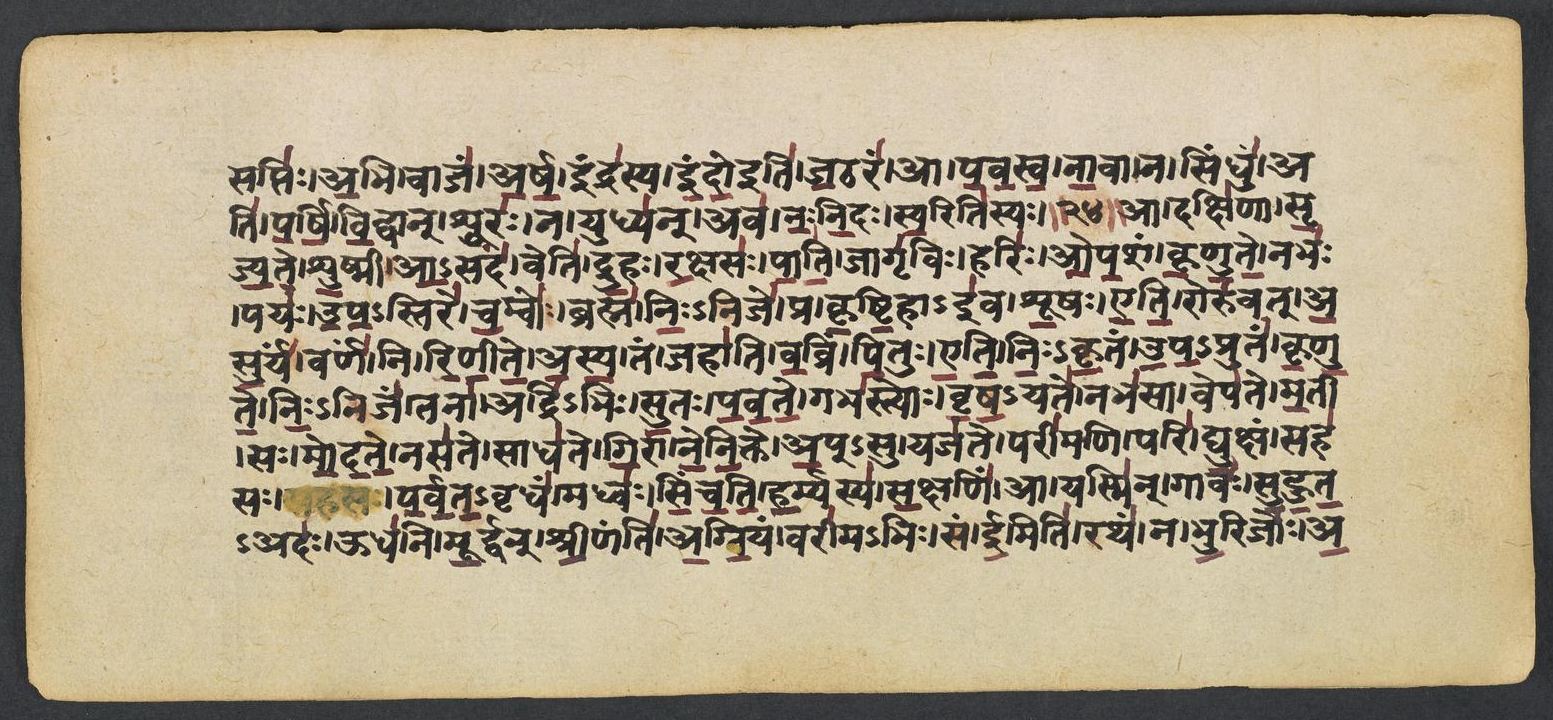
Penn Ms. Coll. 390 Item 41, fol. 703r (numbered 20r by the scribe) (OPenn image 703, lower leaf). Checked on the image: the Rigveda text on this page begins in RV 9.70.10 ‹saptiḥ abhi vājam arṣa›. The next page with Rigveda text, fol. 703v (numbered 20v by the scribe), begins in RV 9.71.5 ‹-aheṣata daśa svasāraḥ aditeḥ›. Verses 9.71.1-4 end on this page.
1ā dakṣi̍ṇā sṛjyate śu̱ṣmy ā̱3̱̍sada̱ṁ veti̍ dru̱ho ra̱kṣasa̍ḥ pāti̱ jāgṛ̍viḥ | hari̍r opa̱śaṁ kṛ̍ṇute̱ nabha̱s paya̍ upa̱stire̍ ca̱mvo̱3̱̍r brahma̍ ni̱rṇije̍ ||
2pra kṛ̍ṣṭi̱heva̍ śū̱ṣa e̍ti̱ roru̍vad asu̱rya1̱̍ṁ varṇa̱ṁ ni ri̍ṇīte asya̱ tam | jahā̍ti va̱vrim pi̱tur e̍ti niṣkṛ̱tam u̍pa̱pruta̍ṁ kṛṇute ni̱rṇija̱ṁ tanā̍ ||
3adri̍bhiḥ su̱taḥ pa̍vate̱ gabha̍styor vṛṣā̱yate̱ nabha̍sā̱ vepa̍te ma̱tī | sa mo̍date̱ nasa̍te̱ sādha̍te gi̱rā ne̍ni̱kte a̱psu yaja̍te̱ parī̍maṇi ||
4pari̍ dyu̱kṣaṁ saha̍saḥ parvatā̱vṛdha̱m madhva̍ḥ siñcanti ha̱rmyasya̍ sa̱kṣaṇi̍m | ā yasmi̱n gāva̍ḥ suhu̱tāda̱ ūdha̍ni mū̱rdhañ chrī̱ṇanty a̍gri̱yaṁ varī̍mabhiḥ ||
Compare: Padapāṭha (word-by-word text written in the manuscript; Sansknet e-text via GRETIL)
1ā | dakṣiṇā | sṛjyate | śuṣmī | āsadam | veti | druhaḥ | rakṣasaḥ | pāti | jāgṛviḥ | hariḥ | opaśam | kṛṇute | nabhaḥ | payaḥ | upa-stire | camvoḥ | brahma | niḥ-nije
2pra | kṛṣṭihā-iva | śūṣaḥ | eti | roruvat | asuryam | varṇam | ni | riṇīte | asya | tam | jahāti | vavrim | pituḥ | eti | niḥ-kṛtam | upa-prutam | kṛṇute | niḥ-nijam | tanā
3adri-bhiḥ | sutaḥ | pavate | gabhastyoḥ | vṛṣāyate | nabhasā | vepate | matī | saḥ | modate | nasate | sādhate | girā | nenikte | ap-su | yajate | parīmaṇi
4pari | dyukṣam | sahasaḥ | parvata-vṛdham | madhvaḥ | siñcanti | harmyasya | sakṣaṇim | ā | yasmin | gāvaḥ | suhuta-ādaḥ | ūdhani | mūrdhan | śrīṇanti | agriyam | varīma-bhiḥ
1THE guerdon is bestowed: the Mighty takes his Seat, and, ever-Watchful, guards from fiend and evil sprite. Gold-hued, he makes the cloud his diadem, the milk his carpet in both worlds, and prayer his robe of state.
2Strong, bellowing, he goes, like one who slays the folk; he lets this hue of Asuras flow off from him, Throws off his covering, seeks his father's meeting-place, and thus makes for himself the bright robe he assumes.
3Onward he flows, from both the hands, pressed out with stones: excited by the prayer, the water makes him wild. He frolics and draws near, completes his work with song, and bathes in streams to satisfy the worshipper.
4They pour out meath around the Master of the house, Celestial Strengthener of the mountain that gives might; In whom, through his great powers, oblation-eating cows in their uplifted udder mix their choicest milk.
Where on the image
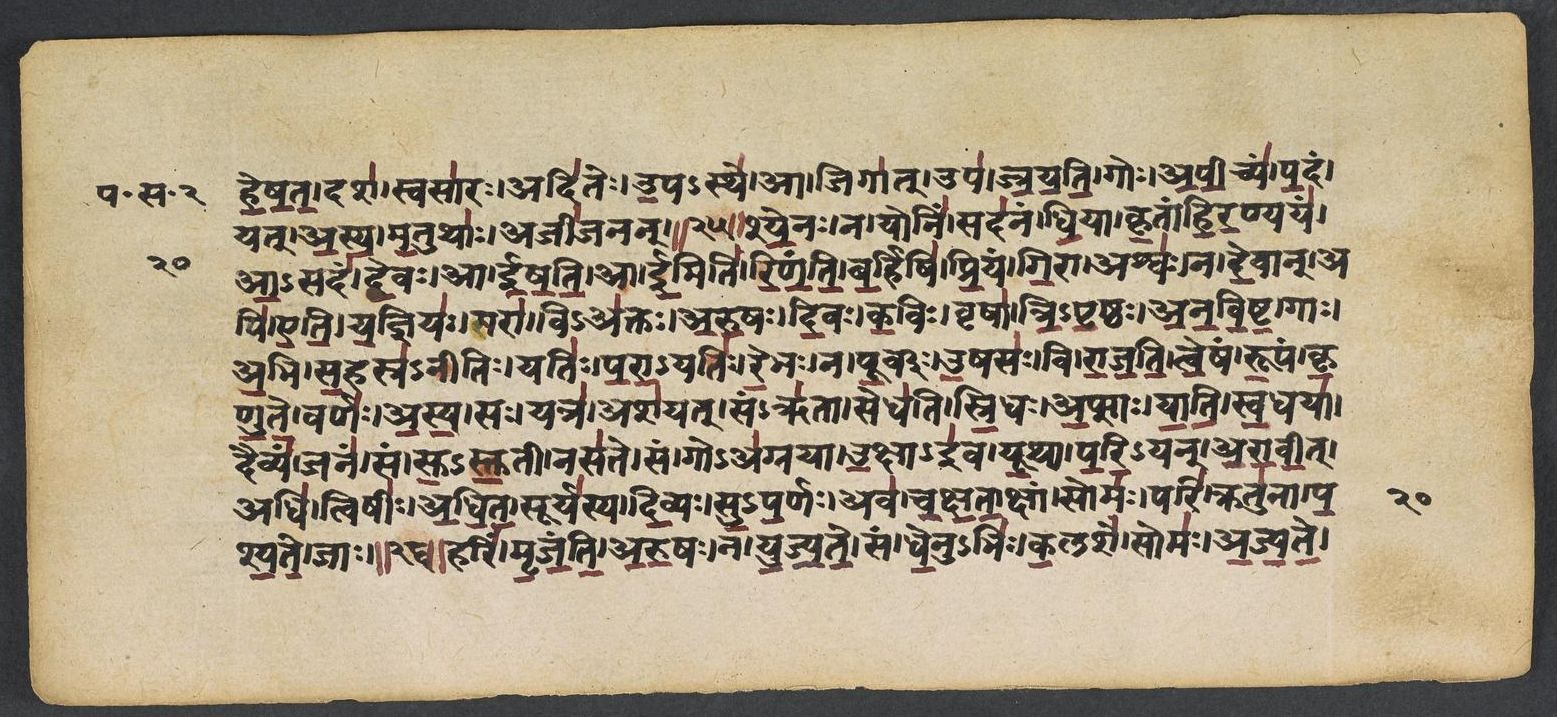
Penn Ms. Coll. 390 Item 41, fol. 703v (numbered 20v by the scribe) (OPenn image 704, upper leaf). Checked on the image: the Rigveda text on this page begins in RV 9.71.5 ‹-aheṣata daśa svasāraḥ aditeḥ›. The next page with Rigveda text, fol. 704r (numbered 21r by the scribe), begins in RV 9.72.1 ‹ut vācam īrayati hinvate›. Verses 9.71.5-9 end on this page; 9.71.5 begins on fol. 703r (numbered 20r by the scribe).
5sam ī̱ ratha̱ṁ na bhu̱rijo̍r aheṣata̱ daśa̱ svasā̍ro̱ adi̍ter u̱pastha̱ ā | jigā̱d upa̍ jrayati̱ gor a̍pī̱cya̍m pa̱daṁ yad a̍sya ma̱tuthā̱ ajī̍janan ||
6śye̱no na yoni̱ṁ sada̍naṁ dhi̱yā kṛ̱taṁ hi̍ra̱ṇyaya̍m ā̱sada̍ṁ de̱va eṣa̍ti | e ri̍ṇanti ba̱rhiṣi̍ pri̱yaṁ gi̱rāśvo̱ na de̱vām̐ apy e̍ti ya̱jñiya̍ḥ ||
7parā̱ vya̍kto aru̱ṣo di̱vaḥ ka̱vir vṛṣā̍ tripṛ̱ṣṭho a̍naviṣṭa̱ gā a̱bhi | sa̱hasra̍ṇīti̱r yati̍ḥ parā̱yatī̍ re̱bho na pū̱rvīr u̱ṣaso̱ vi rā̍jati ||
8tve̱ṣaṁ rū̱paṁ kṛ̍ṇute̱ varṇo̍ asya̱ sa yatrāśa̍ya̱t samṛ̍tā̱ sedha̍ti sri̱dhaḥ | a̱psā yā̍ti sva̱dhayā̱ daivya̱ṁ jana̱ṁ saṁ su̍ṣṭu̱tī nasa̍te̱ saṁ goa̍grayā ||
9u̱kṣeva̍ yū̱thā pa̍ri̱yann a̍rāvī̱d adhi̱ tviṣī̍r adhita̱ sūrya̍sya | di̱vyaḥ su̍pa̱rṇo 'va̍ cakṣata̱ kṣāṁ soma̱ḥ pari̱ kratu̍nā paśyate̱ jāḥ ||
Compare: Padapāṭha (word-by-word text written in the manuscript; Sansknet e-text via GRETIL)
5sam | īm iti | ratham | na | bhurijoḥ | aheṣata | daśa | svasāraḥ | aditeḥ | upa-sthe | ā | jigāt | upa | jrayati | goḥ | apīcyam | padam | yat | asya | matuthāḥ | ajījanan
6śyenaḥ | na | yonim | sadanam | dhiyā | kṛtam | hiraṇyayam | āsadam | devaḥ | ā | īṣati | ā | īm iti | riṇanti | barhiṣi | priyam | girā | aśvaḥ | na | devān | api | eti | yajñiyaḥ
7parā | vi-aktaḥ | aruṣaḥ | divaḥ | kaviḥ | vṛṣā | tri-pṛṣṭhaḥ | anaviṣṭa | gāḥ | abhi | sahasra-nītiḥ | yatiḥ | parāyatiḥ | rebhaḥ | na | pūrvīḥ | uṣasaḥ | vi | rājati
8tveṣam | rūpam | kṛṇute | varṇaḥ | asya | saḥ | yatra | aśayat | sam-ṛtā | sedhati | sridhaḥ | apsāḥ | yāti | svadhayā | daivyam | janam | sam | su-stutī | nasate | sam | go-agrayā
9ukṣā-iva | yūthā | pari-yan | arāvīt | adhi | tviṣīḥ | adhita | sūryasya | divyaḥ | su-parṇaḥ | ava | cakṣata | kṣām | somaḥ | pari | kratunā | paśyate | jāḥ
5They, the ten sisters, on the lap of Aditi, have sent him forward like a car from both the arms. He wanders and comes near the Cow's mysterious place, even the place which his inventions have produced.
6Like as a falcon to his home, so speeds the God to his own golden wisely-tashioned place to rest. With song they urge the darling to the sacred grass: the Holy One goes like a courser to the Gods.
7From far away, from heaven, the redhued noted Sage, Steer of the triple height, hath sung unto the kine. With thousand guidings he, leading this way and that, shines, as a singer, splendidly through many a morn.
8His covering assumes a radiant hue; where'er he comes into the fight he drives the foe afar. The Winner of the Floods, with food he seeks the host of heaven, he comes to praises glorified with milk.
9Like a bull roaming round the herds he bellows: he hath assumed the brilliancy of Sûrya. Down to the earth hath looked the heavenly Falcon: Soma with wisdom views all living creatures.
Notes
- Sanskrit: Aufrecht's edition (1877) with the Vedic accents, as entered by van Nooten and Holland (GRETIL).
- English: Ralph T. H. Griffith, The Hymns of the Rigveda (1889-1892; 2nd ed. 1896-1897), from the VedaWeb digital text; OCR slips in that text were corrected against the printed 2nd edition (data/sources/rigveda/griffith_errata.json).
- Padapāṭha (edition text): Sansknet e-text via GRETIL (CC BY-NC-SA 4.0).
Cite
Sources
- Source: Penn Ms. Coll. 390 Item 41 (undated (catalogued with Penn's 18th-19th c. Vedic manuscripts)), OPenn, Public Domain Mark + Aufrecht's accented text (GRETIL) + Griffith's English (VedaWeb) (holding institution)
- Critical edition: Aufrecht (1877), accented e-text via GRETIL
← previous · → next · v cycle view · l back to library