Rigveda 9.72: To Soma
Introduction
Rigveda 9.72 is a hymn of 9 verses addressed to Soma. It stands in book (maṇḍala) 9, the hymns to Soma Pavamāna. The Rigveda is the oldest collection of Sanskrit hymns, composed in the second half of the second millennium BCE and handed down orally for many centuries before it was written down.
The manuscript shown is Penn Ms. Coll. 390 Item 41 (University of Pennsylvania), an undated paper manuscript of the padapāṭha (the word-by-word recitation text, in which every word is written separately and compounds are split) of the whole Ṛgveda in Devanāgarī, 884 leaves in fascicles, 7-9 lines to the page, accents in red; this hymn stands on fol. 703v-704v. Each section below gives the verses that end on one page; the page boundaries were read on the images (the opening words of every page), not counted out. Where the manuscript is a padapāṭha (the word-by-word recitation text), the section shows Aufrecht's continuous (saṃhitā) text first and, as the edition text, the padapāṭha of the same verses, which is the form written on the page.
How was this verified? (Provenance)
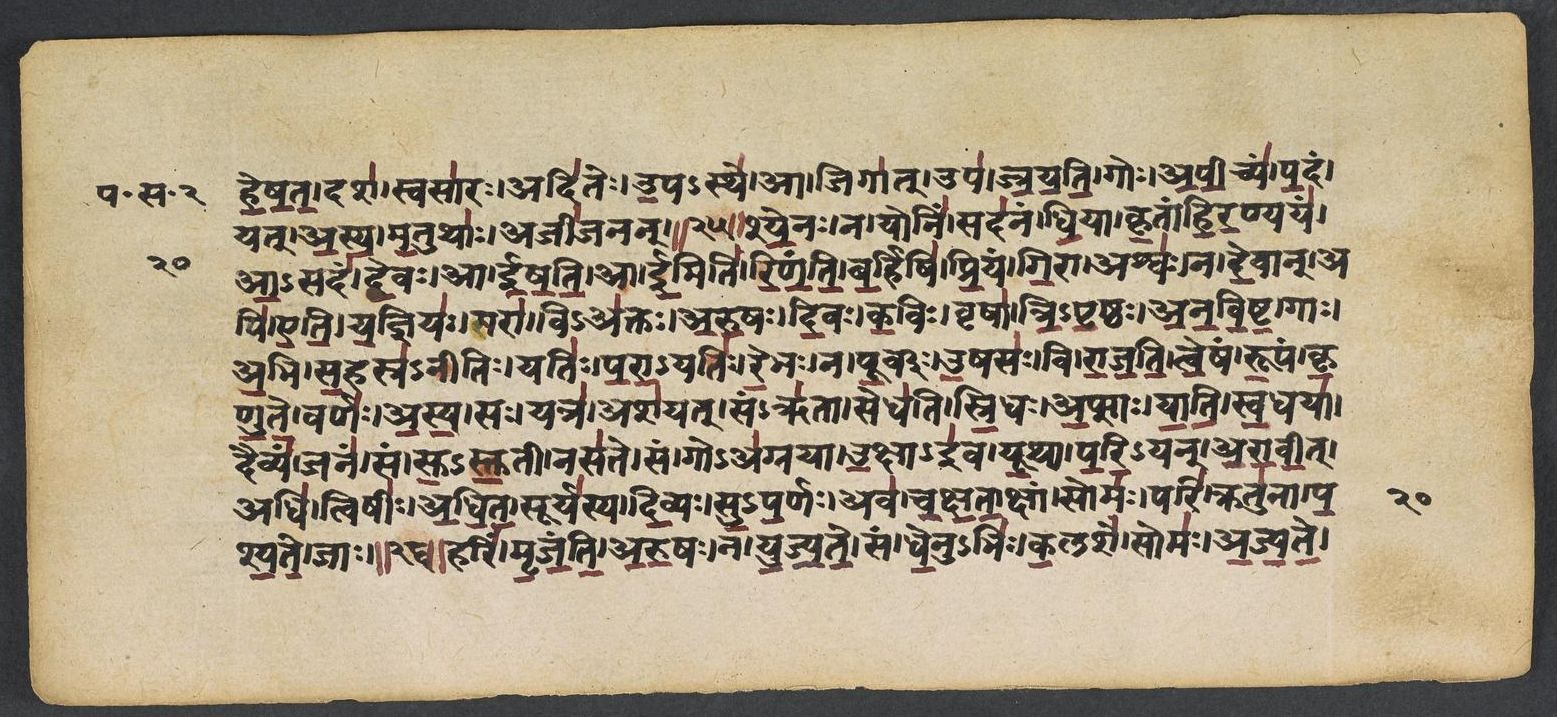
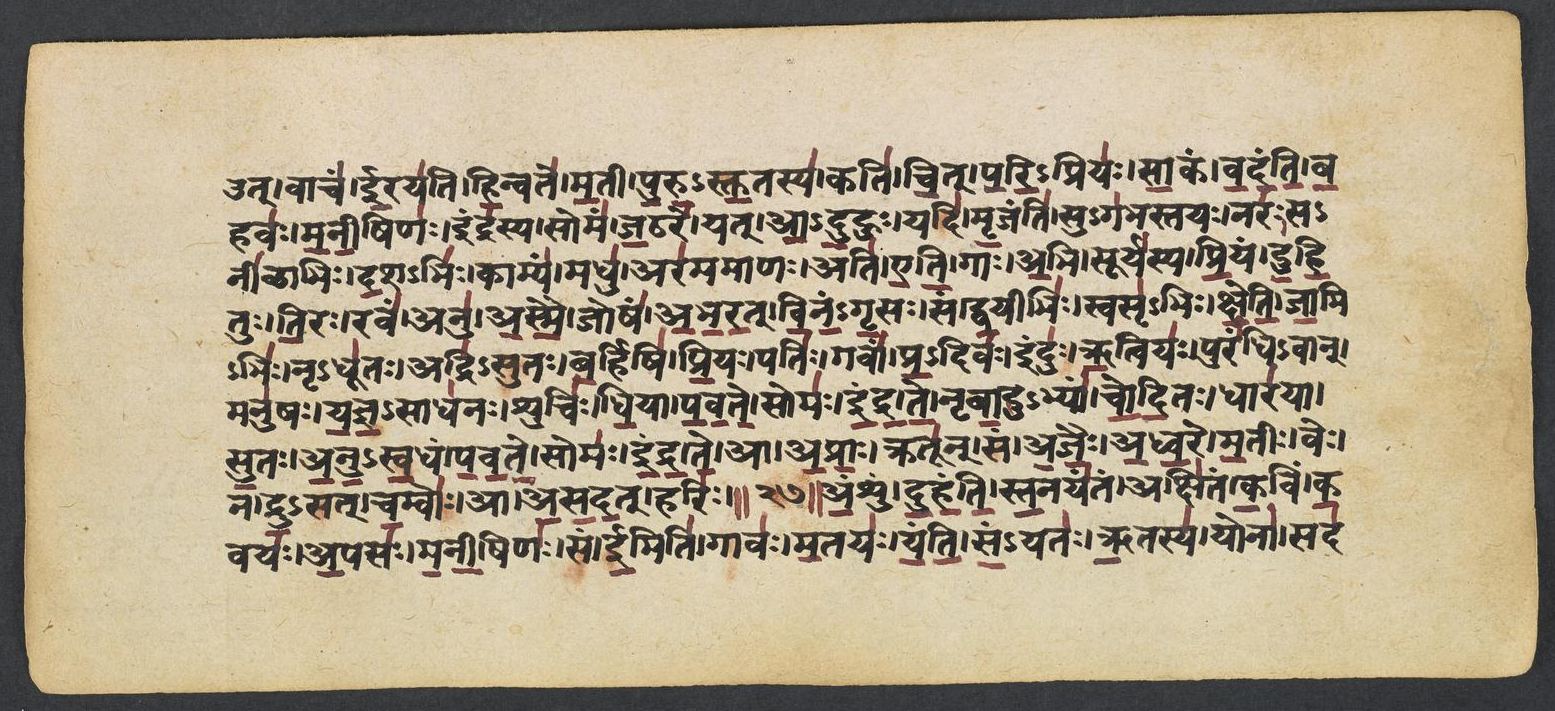
Where on the image
Penn Ms. Coll. 390 Item 41, fol. 704r (numbered 21r by the scribe) (OPenn image 704, lower leaf). Checked on the image: the Rigveda text on this page begins in RV 9.72.1 ‹ut vācam īrayati hinvate›. The next page with Rigveda text, fol. 704v (numbered 21v by the scribe), begins in RV 9.72.6 ‹-sadane punaḥ-bhuvaḥ›. Verses 9.72.1-5 end on this page; 9.72.1 begins on fol. 703v (numbered 20v by the scribe).
1hari̍m mṛjanty aru̱ṣo na yu̍jyate̱ saṁ dhe̱nubhi̍ḥ ka̱laśe̱ somo̍ ajyate | ud vāca̍m ī̱raya̍ti hi̱nvate̍ ma̱tī pu̍ruṣṭu̱tasya̱ kati̍ cit pari̱priya̍ḥ ||
2sā̱kaṁ va̍danti ba̱havo̍ manī̱ṣiṇa̱ indra̍sya̱ soma̍ṁ ja̱ṭhare̱ yad ā̍du̱huḥ | yadī̍ mṛ̱janti̱ suga̍bhastayo̱ nara̱ḥ sanī̍ḻābhir da̱śabhi̱ḥ kāmya̱m madhu̍ ||
3ara̍mamāṇo̱ aty e̍ti̱ gā a̱bhi sūrya̍sya pri̱yaṁ du̍hi̱tus ti̱ro rava̍m | anv a̍smai̱ joṣa̍m abharad vinaṁgṛ̱saḥ saṁ dva̱yībhi̱ḥ svasṛ̍bhiḥ kṣeti jā̱mibhi̍ḥ ||
4nṛdhū̍to̱ adri̍ṣuto ba̱rhiṣi̍ pri̱yaḥ pati̱r gavā̍m pra̱diva̱ indu̍r ṛ̱tviya̍ḥ | pura̍ṁdhivā̱n manu̍ṣo yajña̱sādha̍na̱ḥ śuci̍r dhi̱yā pa̍vate̱ soma̍ indra te ||
5nṛbā̱hubhyā̍ṁ codi̱to dhāra̍yā su̱to̍ 'nuṣva̱dham pa̍vate̱ soma̍ indra te | āprā̱ḥ kratū̱n sam a̍jair adhva̱re ma̱tīr ver na dru̱ṣac ca̱mvo̱3̱̍r āsa̍da̱d dhari̍ḥ ||
Compare: Padapāṭha (word-by-word text written in the manuscript; Sansknet e-text via GRETIL)
1harim | mṛjanti | aruṣaḥ | na | yujyate | sam | dhenu-bhiḥ | kalaśe | somaḥ | ajyate | ut | vācam | īrayati | hinvate | matī | puru-stutasya | kati | cit | pari-priyaḥ
2sākam | vadanti | bahavaḥ | manīṣiṇaḥ | indrasya | somam | jaṭhare | yat | āduhuḥ | yadi | mṛjanti | su-gabhastayaḥ | naraḥ | sa-nīḷābhiḥ | daśa-bhiḥ | kāmyam | madhu
3aramamāṇaḥ | ati | eti | gāḥ | abhi | sūryasya | priyam | duhituḥ | tiraḥ | ravam | anu | asmai | joṣam | abharat | vinam-gṛsaḥ | sam | dvayībhiḥ | svasṛ-bhiḥ | kṣeti | jāmi-bhiḥ
4nṛ-dhūtaḥ | adri-sutaḥ | barhiṣi | priyaḥ | patiḥ | gavām | pra-divaḥ | induḥ | ṛtviyaḥ | purandhi-vān | manuṣaḥ | yajña-sādhanaḥ | śuciḥ | dhiyā | pavate | somaḥ | indra | te
5nṛbāhu-bhyām | coditaḥ | dhārayā | sutaḥ | anu-svadham | pavate | somaḥ | indra | te | ā | aprāḥ | kratūn | sam | ajaiḥ | adhvare | matīḥ | veḥ | na | druṣat | camvoḥ | ā | asadat | hariḥ
1THEY cleanse the Gold-hued: like a red Steed is he yoked, and Soma in the jar is mingled with the milk. He sendeth out his voice, and many loving friends of him the highly lauded hasten with their songs.
2The many sages utter words in unison, while into Indra's throat they pour the Soma juice, When, with the ten that dwell together closely joined, the men whose hands are skilful cleanse the lovely meath.
3He goes upon his way, unresting, to the cows, over the roaring sound which Sûrya's Daughter loves. The Falcon brought it to him for his own delight: now with the twofold kindred sisters is his home.
4Washed by the men, stone-pressed, dear on the holy grass, faithful to seasons, Lord of cattle from of old, Most liberal, completing sacrifice for men, O Indra, pure bright Soma, Indu, flows for thee.
5O Indra, urged by arms of men and poured in streams, Soma flows on for thee after.his Godlike kind. Plans thou fulfillest, gatherest thoughts for sacrifice: in the bowls sits the Gold-hued like a roosting bird.
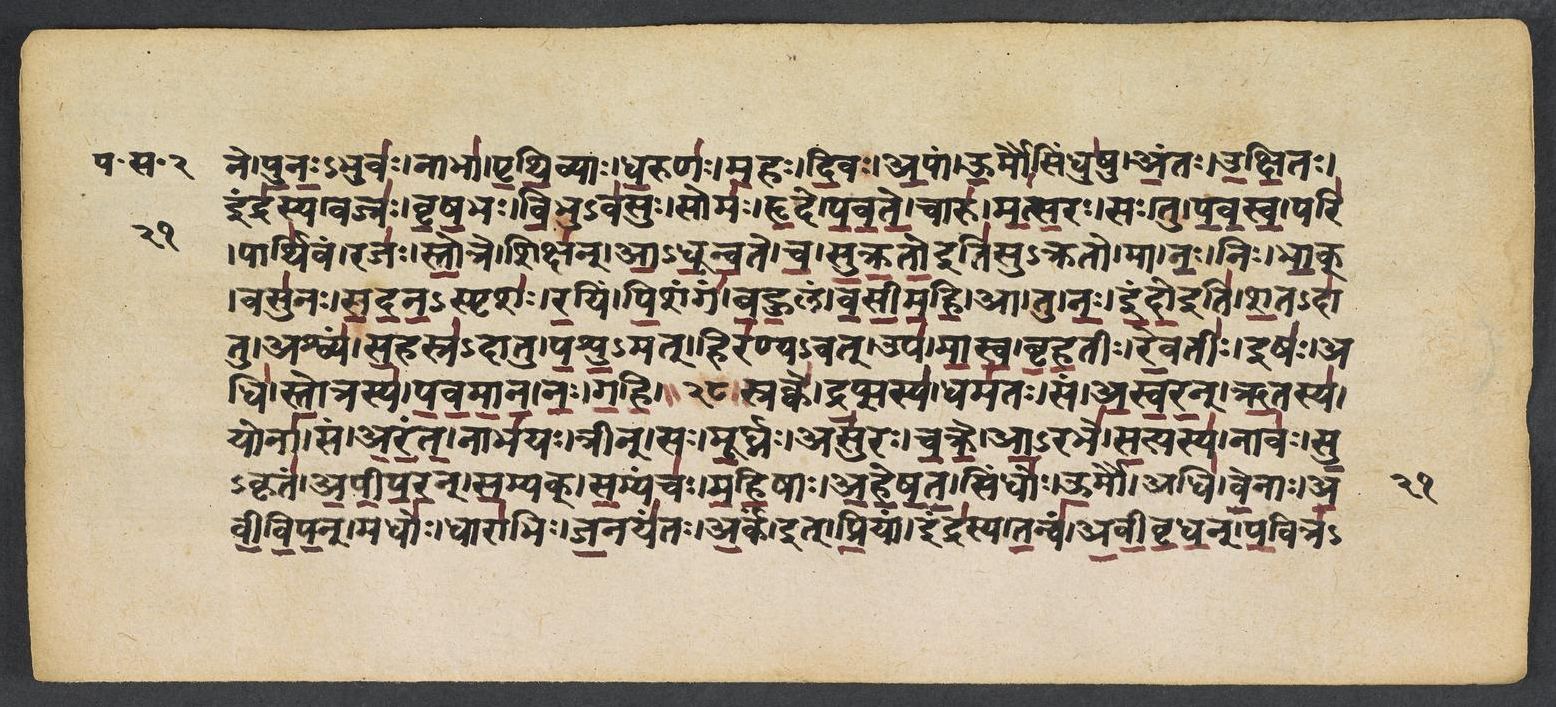
Where on the image
Penn Ms. Coll. 390 Item 41, fol. 704v (numbered 21v by the scribe) (OPenn image 705, upper leaf). Checked on the image: the Rigveda text on this page begins in RV 9.72.6 ‹-sadane punaḥ-bhuvaḥ›. The next page with Rigveda text, fol. 705r (numbered 22r by the scribe), begins in RV 9.73.3 ‹-pavitra-vantaḥ pari vācam āsate›. Verses 9.72.6-9 end on this page; 9.72.6 begins on fol. 704r (numbered 21r by the scribe).
6a̱ṁśuṁ du̍hanti sta̱naya̍nta̱m akṣi̍taṁ ka̱viṁ ka̱vayo̱ 'paso̍ manī̱ṣiṇa̍ḥ | sam ī̱ gāvo̍ ma̱tayo̍ yanti sa̱ṁyata̍ ṛ̱tasya̱ yonā̱ sada̍ne puna̱rbhuva̍ḥ ||
7nābhā̍ pṛthi̱vyā dha̱ruṇo̍ ma̱ho di̱vo̱3̱̍ 'pām ū̱rmau sindhu̍ṣv a̱ntar u̍kṣi̱taḥ | indra̍sya̱ vajro̍ vṛṣa̱bho vi̱bhūva̍su̱ḥ somo̍ hṛ̱de pa̍vate̱ cāru̍ matsa̱raḥ ||
8sa tū pa̍vasva̱ pari̱ pārthi̍va̱ṁ raja̍ḥ sto̱tre śikṣa̍nn ādhūnva̱te ca̍ sukrato | mā no̱ nir bhā̱g vasu̍naḥ sādana̱spṛśo̍ ra̱yim pi̱śaṅga̍m bahu̱laṁ va̍sīmahi ||
9ā tū na̍ indo śa̱tadā̱tv aśvya̍ṁ sa̱hasra̍dātu paśu̱mad dhira̍ṇyavat | upa̍ māsva bṛha̱tī re̱vatī̱r iṣo 'dhi̍ sto̱trasya̍ pavamāna no gahi ||
Compare: Padapāṭha (word-by-word text written in the manuscript; Sansknet e-text via GRETIL)
6aṃśum | duhanti | stanayantam | akṣitam | kavim | kavayaḥ | apasaḥ | manīṣiṇaḥ | sam | īm iti | gāvaḥ | matayaḥ | yanti | sam-yataḥ | ṛtasya | yonā | sadane | punaḥ-bhuvaḥ
7nābhā | pṛthivyāḥ | dharuṇaḥ | mahaḥ | divaḥ | apām | ūrmau | sindhuṣu | antaḥ | ukṣitaḥ | indrasya | vajraḥ | vṛṣabhaḥ | vibhu-vasuḥ | somaḥ | hṛde | pavate | cāru | matsaraḥ
8saḥ | tu | pavasva | pari | pārthivam | rajaḥ | stotre | śikṣan | ādhūnvate | ca | sukrato itisu-krato | mā | naḥ | niḥ | bhāk | vasunaḥ | sādana-spṛśaḥ | rayim | piśaṅgam | bahulam | vasīmahi
9ā | tu | naḥ | indo iti | śata-dātu | aśvyam | sahasra-dātu | paśu-mat | hiraṇya-vat | upa | māsva | bṛhatīḥ | revatīḥ | iṣaḥ | adhi | stotrasya | pavamāna | naḥ | gahi
6Sages well-skilled in work, intelligent, drain out the stalk that roars, the Sage, the Everlasting One. The milk, the hymns unite them with him in the place of sacrifice, his seat who is produced anew.
7Earth's central point, sustainer of the mighty heavens, distilled into the streams, into the waters' wave, As Indra's thunderbolt, Steer with farspreading wealth, Soma is flowing on to make the heart rejoice.
8Over the earthly region flow thou on thy way, helping the praiser and the pourer, thou Most Wise. Let us not lack rich treasure reaching to our home, and may we clothe ourselves in manifold bright wealth.
9Hither, O Indu, unto us a hundred gifts of steeds, a thousand gifts of cattle and of gold, Measure thou forth, yea, splendid ample strengthening food do thou, O Pavamâna, heed this laud of ours.
Notes
- Sanskrit: Aufrecht's edition (1877) with the Vedic accents, as entered by van Nooten and Holland (GRETIL).
- English: Ralph T. H. Griffith, The Hymns of the Rigveda (1889-1892; 2nd ed. 1896-1897), from the VedaWeb digital text; OCR slips in that text were corrected against the printed 2nd edition (data/sources/rigveda/griffith_errata.json).
- Padapāṭha (edition text): Sansknet e-text via GRETIL (CC BY-NC-SA 4.0).
Cite
Sources
- Source: Penn Ms. Coll. 390 Item 41 (undated (catalogued with Penn's 18th-19th c. Vedic manuscripts)), OPenn, Public Domain Mark + Aufrecht's accented text (GRETIL) + Griffith's English (VedaWeb) (holding institution)
- Critical edition: Aufrecht (1877), accented e-text via GRETIL
← previous · → next · v cycle view · l back to library